CHINA TELECOM(00728)
Search documents
510亿元,十余家央企联合出资!央企战略性新兴产业发展专项基金来了
券商中国· 2025-10-29 15:01
Core Viewpoint - The establishment of the Central Enterprise Strategic Emerging Industry Development Fund (referred to as "Central Enterprise New Fund") is a significant initiative aimed at accelerating the development of strategic emerging industries in China, with a first-phase fundraising target of 51 billion yuan [2][5]. Group 1: Fund Overview - The Central Enterprise New Fund has successfully raised an initial capital of 51 billion yuan, with contributions from over ten central enterprises including China Mobile, Sinopec, and China National Petroleum [2][6]. - The fund is managed by China Guoxin, which is responsible for its fundraising and operational management [2][5]. - The fund's management structure is established as a company, with a newly formed private equity fund management company overseeing its operations [7]. Group 2: Strategic Focus - The fund will primarily support industries such as artificial intelligence, high-end equipment, quantum technology, and future energy, information, and manufacturing sectors [5][6]. - The initiative aims to create a strategic innovation ecosystem that integrates technology innovation, capital operation, and industrial empowerment, fostering a multiplier effect in the industry [4][5]. Group 3: Government and Corporate Support - The initiative is backed by the State-owned Assets Supervision and Administration Commission (SASAC), emphasizing the importance of the fund in optimizing the layout and structure of state-owned enterprises [4][5]. - Beijing's government is committed to providing support and services for the development of the Central Enterprise New Fund, aligning with the spirit of the 20th National Congress of the Communist Party [4].
我国IPv6活跃用户数达8.65亿,居世界第一位
Xin Lang Cai Jing· 2025-10-29 07:30
Core Insights - The fourth China IPv6 Innovation Development Conference released the "China IPv6 Development Report (2025)", highlighting significant advancements in IPv6 development in China, with key indicators showing rapid growth and a positive development trend [1] Group 1: Key Development Indicators - As of September 2025, the number of active IPv6 users in China reached 865 million, a 294-fold increase from 2.93 million in 2017, with a user penetration rate of 77.02% [1] - The proportion of IPv6 traffic in total mobile and fixed network traffic reached 34.02%, with mobile network IPv6 traffic averaging 69.02%, a nearly 14-fold increase since the end of 2019 [1] - In February 2023, mobile network IPv6 traffic surpassed 50% for the first time, marking a historic shift where IPv6 traffic exceeded IPv4 traffic [1] Group 2: Network Infrastructure Upgrades - Major telecom companies in China have completed IPv6 upgrades across their backbone networks, metropolitan area networks, and 4G networks, with all new 5G networks and gigabit optical networks also supporting IPv6 [3] - By September 2025, the international IPv6 bandwidth of the three major telecom companies reached 11.32 Tbps, over 100 times the capacity in 2019 [3] Group 3: Application Infrastructure Improvements - All major telecom companies have completed IPv6 upgrades for their data centers and DNS, with over 95% of cloud products now supporting IPv6 [5] - The IPv6 support rate for major content delivery networks (CDN) reached 94.93% as of September 2025, with enhanced capabilities for IPv6 traffic acceleration [5] Group 4: Terminal Support Capabilities - All new mobile terminals since 2019 are configured to support both IPv4 and IPv6, with major smartphone brands enabling IPv6 by default [7] - As of September 2025, the IPv6 activation rate for home gateways reached 96.86%, and over 90% of home routers in use support IPv6 [7] Group 5: Expanding Application Depth and Breadth - Government websites and services have significantly improved their IPv6 support, with over 95% of county-level government portals now IPv6 compatible [9] - The IPv6 support rate for the top 200 apps and 100 commercial websites in China reached 97.33%, with an average IPv6 traffic share of 74.51% for these apps [9] Group 6: Technological Innovation and Standards - A comprehensive IPv6 evolution technology system has been established, with over 1,000 deployments across various sectors, including government, finance, and education [11] - By September 2025, China had published 138 IPv6 industry standards and initiated 52 national standards, enhancing the IPv6 standard system [12] Group 7: Security Enhancement - The management and supervision of IPv6 network security have improved, with over 3,000 malicious IPv6 address segments monitored and over 20,000 incidents of controlled IPv6 botnets addressed [14] - The release of national standards for IPv6 network security devices has led to comprehensive coverage of IPv6 functionalities in mainstream security products [15] Group 8: Pilot Demonstrations and Promotion - The central government has initiated pilot projects to enhance IPv6 deployment, with significant increases in IPv6 traffic in selected cities [16] - Various forums and promotional activities have been organized to raise awareness and acceptance of IPv6 across different sectors [17]
235只港股获南向资金大比例持有
Sou Hu Cai Jing· 2025-10-29 02:15
Group 1 - The overall shareholding ratio of southbound funds in Hong Kong Stock Connect stocks is 18.97%, with 235 stocks having a shareholding ratio exceeding 20% [1] - As of October 28, southbound funds hold a total of 4,796.11 million shares, accounting for 18.97% of the total share capital of the eligible stocks, with a total market value of 62,349.33 billion HKD, representing 14.49% of the total market value [1] - The highest shareholding ratio by southbound funds is in China Telecom, with 9,879.07 million shares held, representing 71.18% of the issued shares [2] Group 2 - Southbound funds with a shareholding ratio exceeding 20% are mainly concentrated in the healthcare, industrial, and financial sectors, with 55, 35, and 34 stocks respectively [2] - Among the stocks with over 20% shareholding by southbound funds, 125 are AH concept stocks, making up 53.19% of that group [1] - The top stocks by southbound fund shareholding include China Telecom, COSCO Shipping Energy, and GCL-Poly Energy, all with over 70% shareholding [2][3]
智通港股通持股解析|10月29日
智通财经网· 2025-10-29 00:31
Core Insights - The top three companies by Hong Kong Stock Connect holding ratios are China Telecom (00728) at 71.18%, COSCO Shipping Energy (01138) at 70.26%, and GCL-Poly Energy (01330) at 70.25% [1] - In the last five trading days, the largest increases in holding amounts were seen in CNOOC (00883) with an increase of 3.009 billion, SMIC (00981) with 1.746 billion, and Meituan-W (03690) with 1.364 billion [1] - The largest decreases in holding amounts were recorded for Hua Hong Semiconductor (01347) at -1.499 billion, Stone Pharmaceutical (01093) at -1.209 billion, and China Biologic Products (01177) at -0.606 billion [3] Group 1: Top Holding Ratios - China Telecom (00728) holds 9.879 billion shares, representing 71.18% [1] - COSCO Shipping Energy (01138) holds 911 million shares, representing 70.26% [1] - GCL-Poly Energy (01330) holds 284 million shares, representing 70.25% [1] Group 2: Recent Increases in Holdings - CNOOC (00883) saw an increase of 3.009 billion, with a change of 15.08289 million shares [1] - SMIC (00981) increased by 1.746 billion, with a change of 2.18015 million shares [1] - Meituan-W (03690) increased by 1.364 billion, with a change of 1.36405 million shares [1] Group 3: Recent Decreases in Holdings - Hua Hong Semiconductor (01347) decreased by 1.499 billion, with a change of -1.74038 million shares [3] - Stone Pharmaceutical (01093) decreased by 1.209 billion, with a change of -15.71580 million shares [3] - China Biologic Products (01177) decreased by 0.606 billion, with a change of -8.61388 million shares [3]
eSIM商用试验启动 带动国产软件与系统发展
Xin Lang Cai Jing· 2025-10-28 23:39
Core Viewpoint - The approval for commercial trials of eSIM mobile services has been granted to China Unicom, China Mobile, and China Telecom, highlighting the technological advantages of eSIM cards such as card-free activation and seamless global roaming, which cater to diverse communication needs and present opportunities for domestic software and systems [1] Group 1 - eSIM technology is integrated into mobile chips, eliminating the need for physical SIM cards, thus enhancing convenience and flexibility for users [1] - The adoption of eSIM technology promotes the lightweight design of terminal devices and increases collaboration opportunities within the industry chain [1] - Currently, eSIM phones are utilized in the Internet of Things (IoT) sector, with plans for future expansion to more devices, providing innovative development space for China Mobile, Unicom, and Telecom [1]
乘“数”追“新” 筑“基”引“智”
Zhong Guo Zheng Quan Bao· 2025-10-28 21:11
Core Points - Lhasa is positioning its digital economy as one of its three pillar industries, aiming to enhance regional competitiveness through a dual approach of "bringing in" and "going out" [2][12] - The digital economy in Lhasa has shown significant growth, with revenue from digital economy enterprises reaching 5.753 billion yuan from January to August 2025, and the number of such enterprises totaling 35, accounting for 58.33% of the total in Tibet [1][2] - The establishment of a regional international communication business outlet and the completion of a national internet backbone connection point are key developments in Lhasa's digital infrastructure [1][2] Digital Infrastructure Development - Lhasa has built a data center with an investment of 739 million yuan, which is the only A-level data center in Tibet, designed to support the next generation of low-carbon intelligent data centers [3] - The city has established 7,486 5G base stations, achieving a 98.7% coverage rate in administrative villages [1][3] - The "Future Network Plateau Innovation Laboratory" was established in May 2023 to foster collaboration in digital industries between Lhasa and Jiangsu [1][2] Industry Transformation and Digitalization - Traditional industries in Lhasa are embracing digital transformation, with companies like Tibet Huatai Long Mining developing smart mining plans with an investment of approximately 330 million yuan [5] - The Lhasa Economic Development Zone is actively promoting digital transformation among enterprises, enhancing their market competitiveness and contributing to sustainable economic development [4][5] Government Initiatives and Policies - Lhasa's government has implemented a "1+6+N" policy framework to support businesses, providing comprehensive assistance in areas such as funding, space, cost reduction, and talent support [9][10] - The "Galsang Flower Action" plan offers 71 targeted policies to assist enterprises in areas like listing and financial support [9][10] - The city has signed cooperation agreements with multiple companies, totaling nearly 3 billion yuan, to strengthen the foundation for digital economic development [8][12] Clean Energy and Cost Advantages - Lhasa's clean energy projects, such as the 200 MW photovoltaic power generation project, are crucial for providing low-cost electricity to support digital economy initiatives [11][12] - The city benefits from natural conditions that lower operational costs for data centers, including low temperatures that reduce cooling expenses [12] Future Outlook - Lhasa aims to integrate into the national "East Data West Computing" strategy and advance its "Digital Prosperity City" initiative, focusing on high-quality development of the digital economy [12] - The government plans to enhance the overall digital transformation across various sectors, including economy, politics, culture, society, and ecology [12]
港股通红利ETF广发(520900)跌0.74%,成交额4547.33万元
Xin Lang Cai Jing· 2025-10-28 13:40
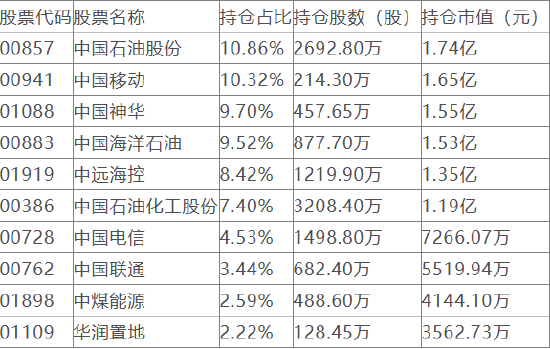
Core Viewpoint - The Guangfa CSI National New Hong Kong Stock Connect Central State-Owned Enterprises Dividend ETF (520900) has experienced a decline in both share count and total assets in 2024, indicating potential challenges in attracting investor interest [1][2]. Fund Overview - The fund was established on June 26, 2024, with an annual management fee of 0.50% and a custody fee of 0.10% [1]. - As of October 27, 2024, the fund's total share count is 1.593 billion shares, with a total asset size of 1.703 billion yuan [1]. - The fund's share count has decreased by 36.42% and total assets by 26.58% since December 31, 2024 [1]. Liquidity Analysis - Over the last 20 trading days, the fund has accumulated a total trading volume of 1.108 billion yuan, averaging 55.42 million yuan per day [1]. - Year-to-date, the fund has seen a total trading volume of 18.107 billion yuan, with an average daily trading volume of 91.92 million yuan across 197 trading days [1]. Fund Management - The current fund managers are Huo Huaming and Lü Xin, with respective management periods yielding returns of 8.60% and 22.17% [2]. - Huo Huaming has managed the fund since its inception, while Lü Xin is set to manage it starting April 30, 2025 [2]. Top Holdings - The fund's major holdings include: - China Petroleum & Chemical Corporation (10.86% holding) - China Mobile (10.32% holding) - China Shenhua Energy (9.70% holding) - CNOOC Limited (9.52% holding) - COSCO Shipping Holdings (8.42% holding) - China Petroleum & Chemical Corporation (7.40% holding) - China Telecom (4.53% holding) - China Unicom (3.44% holding) - China Coal Energy (2.59% holding) - China Resources Land (2.22% holding) [2][3].
工信部公示重要名单!
中国能源报· 2025-10-28 12:18
Core Points - The Ministry of Industry and Information Technology has announced the public consultation period for the 2025 National Green Data Center list, which will run from October 28 to November 3, 2025 [1][3]. Group 1: Announcement Details - The announcement is based on a joint notice from multiple government departments regarding the organization of the 2025 National Green Data Center recommendation work [3]. - Feedback on the list can be submitted in writing to the Ministry of Industry and Information Technology during the public consultation period [3]. Group 2: Data Center List - The list includes various data centers categorized by industry, such as industrial, telecommunications, energy, internet, finance, and public institutions [5][6][7][8]. - Notable entries in the telecommunications sector include China Telecom's multiple data centers across different regions, such as the Hangzhou Intelligent Computing Center and the Wuxi International Data Center [5][6]. - The energy sector features data centers like the State Power Investment Corporation's Guian Data Center and the Southern Power Grid's Green Smart Data Center [6][7]. - The internet sector includes significant projects like the Douyin-Zhonglian Green Big Data Industrial Base [7]. - Financial institutions are represented by data centers such as the Bank of Communications' data center in Pujiang [8].
智通港股通持股解析|10月28日
智通财经网· 2025-10-28 00:32
Core Insights - The top three companies by Hong Kong Stock Connect holding ratios are China Telecom (71.16%), Gree Power Environmental (70.40%), and COSCO Shipping Energy (70.32%) [1] - In the last five trading days, the largest increases in holding amounts were seen in CNOOC (+2.948 billion), Pop Mart (+2.005 billion), and SMIC (+1.319 billion) [1] - The largest decreases in holding amounts were recorded for Hua Hong Semiconductor (-1.093 billion), Hang Seng China Enterprises (-603 million), and CSPC Pharmaceutical (-596 million) [2] Group 1: Hong Kong Stock Connect Holding Ratios - China Telecom (00728) has a holding ratio of 71.16% with 9.876 billion shares [1] - Gree Power Environmental (01330) has a holding ratio of 70.40% with 285 million shares [1] - COSCO Shipping Energy (01138) has a holding ratio of 70.32% with 911 million shares [1] Group 2: Recent Increases in Holdings - CNOOC (00883) saw an increase of 2.948 billion in holding amount, with a change of 14.69495 million shares [1] - Pop Mart (09992) experienced an increase of 2.005 billion in holding amount, with a change of 8.5892 million shares [1] - SMIC (00981) had an increase of 1.319 billion in holding amount, with a change of 1.59294 million shares [1] Group 3: Recent Decreases in Holdings - Hua Hong Semiconductor (01347) had a decrease of 1.093 billion in holding amount, with a change of -12.6364 million shares [2] - Hang Seng China Enterprises (02828) saw a decrease of 603 million in holding amount, with a change of -6.2396 million shares [2] - CSPC Pharmaceutical (01093) experienced a decrease of 596 million in holding amount, with a change of -7.65722 million shares [2]
告别“插卡时代”,eSIM将怎样影响我们的生活?
Xin Hua Wang· 2025-10-28 00:06
Core Insights - The introduction of eSIM technology by major Chinese telecom operators marks a significant shift from traditional SIM cards to embedded SIMs, enhancing convenience and flexibility for users [1][5] Group 1: Benefits for Consumers - eSIM technology eliminates concerns about losing or damaging physical SIM cards, allowing users to activate services quickly through QR codes without incurring card fees [2] - For frequent travelers, eSIM enables easy access to both domestic and international services without the need to purchase local physical SIM cards, streamlining connectivity while abroad [2] Group 2: Flexibility for Devices - eSIM supports a wide range of devices, including smartwatches and tablets, with operators offering dual-device and independent number services, enhancing the versatility of connected devices [3] Group 3: Industry Development - eSIM technology allows telecom operators to manage user data remotely, reducing operational costs and enabling manufacturers to innovate by removing SIM card slots, leading to sleeker designs and improved product features [4] - In industrial applications, eSIM's durability in harsh environments supports the advancement of IoT devices, facilitating the smart upgrade of traditional industries [4]