AIDC

Search documents
中国电信:派息分红比率持续提高,AI时代下向Token经营转型(简体版)-20260401
First Shanghai Securities· 2026-04-01 05:40
中国电信(0728) 更新报告 买入 2026 年 4 月 1 日 派息分红比率持续提高,AI 时代下向 Token 经营转型 ➢ 风险提示:AIDC 和云业务发展不及预期,ARPU 值下降及竞争加剧等。 罗凡环 852-2532 1539 Simon.luo@firstshanghai.com.hk 李京霖 852-25321957 Jinglin.li@firstshanghai.com.hk 主要数据 | 行业 | 电讯服务 | | --- | --- | | 股价 | 4.8 港元 | | 目标价 | 6.0 港元 | | | (+26%) | | 股票代码 | 728.HK | | 已发行股本 | 915.07 亿股 | | 市值 | 4400 亿港元 | | 52 周高/低 | 6.3/4.8 港元 | | 每股净现值 | 5.6 港元 | | 主要股东 | 中国电信集团:63.9% | | | 广晟控股集团有限公 | | | 司:5.2% | | 盈利摘要 | | | | | | 股价表现 | | | | | | | | | | | | | --- | --- | --- | --- | --- ...

中国电信:派息分红比率持续提高,AI时代下向Token经营转型(繁体版)-20260401
First Shanghai Securities· 2026-04-01 05:40
中國電信(0728) 更新報告 買入 2026 年 4 月 1 日 派息分紅比率持續提高,AI 時代下向 Token 經營轉型 ➢ 風險提示:AIDC 和雲業務發展不及預期,ARPU 值下降及競爭加劇等。 羅凡環 852-2532 1539 Simon.luo@firstshanghai.com.hk 李京霖 852-25321957 Jinglin.li@firstshanghai.com.hk 主要資料 | 行業 | 電訊服務 | | --- | --- | | 股價 | 4.8 港元 | | 目標價 | 6.0 港元 | | | (+26%) | | 股票代碼 | 728.HK | | 已發行股本 | 915.07 億股 | | 市值 | 4400 億港元 | | 52 周高/低 | 6.3/4.8 港元 | | 每股淨現值 | 5.6 港元 | | 主要股東 | 中國電信集團:63.9% | | | 廣晟控股集團有限公 | | | 司:5.2% | | 盈利摘要 | | | | | | | | | | | | | | | | | | | | 股價表現 | | --- | --- | --- | --- ...
光大证券晨会速递-20260326
EBSCN· 2026-03-26 01:27
分析师点评 市场数据 行业研究 【高端制造】26 年 1-2 月整体出口开门红,欧洲细分市场出口表现强劲——高端制造 行业海关总署出口月报(2026 年 1-2 月)(买入) 2026 年 1-2 月,电动工具、手动工具、草坪割草机出口额累计同比分别增长 7%、53%、 38%,其中草坪割草机出口至欧洲的金额累计同比+57%;叉车、机床、工业缝纫机、 矿山机械出口额同比分别增长 25%、16%、13%、32%。26 年 1-2 月高端机械整体 出口开门红,欧洲细分市场出口表现强劲。建议关注巨星科技、景津装备等。 公司研究 【石化】打造供应链护城河,高油价背景气头烯烃优势凸显——卫星化学(002648.SZ) 2025 年年报点评(买入) 油价上涨带动烯烃产业链产品价格大幅上涨,公司盈利能力提升,我们上调公司 2026-2027 年盈利预测,新增 2028 年盈利预测,预计 2026-2028 年公司归母净利润 分别为 75.88 亿元(上调 9%)/87.39 亿元(上调 6%)/92.92 亿元,折合 EPS 分别 为 2.25/2.59/2.76 元。维持"买入"评级。 风险提示:原油价格大幅波动风险,下 ...


未知机构:天风通信润泽科技AIDC算力中心规模交付推动发展国产算力空间广阔A-20260227
未知机构· 2026-02-27 02:20
Summary of Conference Call Records Company and Industry Involved - The conference call discusses **Runze Technology**, a leading player in the **AIDC (Artificial Intelligence Data Center)** and **IDC (Internet Data Center)** sectors, focusing on the growth of domestic computing power and the application of liquid cooling technology [1][2][3]. Core Points and Arguments 1. **Growth Driven by AIDC and Computing Power Business** - Runze Technology is expected to see significant growth in net profit attributable to shareholders in 2025, primarily due to non-recurring gains from public REITs issuance. The AIDC business is a key driver, with approximately **220 MW** of new computing power centers expected to be delivered in 2025, including a leading **100 MW** intelligent computing center [1]. 2. **Strong Demand from Domestic Clients** - The company benefits from increasing demand from major domestic clients, which is expected to drive high growth momentum in performance. The company has a robust reserve of energy resources and leads the industry in single-unit AIDC scale [1][3]. 3. **Optimized Client Structure and Increased Supply Capacity** - With the ongoing national expansion and optimization of the client structure, the high-performance computing supply capacity is anticipated to be further released, leading to steady growth in intelligent computing service revenue [2]. 4. **Milestone in Domestic Computing Power Supply** - Major companies like ByteDance and Alibaba are expected to increase their investments in domestic computing power, with ByteDance reportedly placing orders for **hundreds of billions** in domestic chips and initiating large-scale IDC tenders. Alibaba is also expected to increase its investment beyond the previously announced **380 billion** over three years, indicating a robust growth outlook for infrastructure demand [2]. 5. **Continuous Investment in AI by Major Players** - Companies such as Tencent and various AI model manufacturers are making significant progress in AI investments, which is expected to drive demand for both chips and IDC infrastructure. Tencent's mixed Yuan model and other AI models are anticipated to evolve rapidly, contributing to the overall growth in the sector [2]. Other Important but Potentially Overlooked Content - Runze Technology is positioned as a leading domestic computing power provider with a strong and stable growth trajectory. The company has an excellent client structure and ample energy resources, which provide flexibility for expansion. The computing power business is expected to benefit significantly from the rapid development of domestic computing power, making it a key focus for investors [3].
630亿衡阳女老板 拿下大湾区算力资产
2 1 Shi Ji Jing Ji Bao Dao· 2026-02-25 16:11
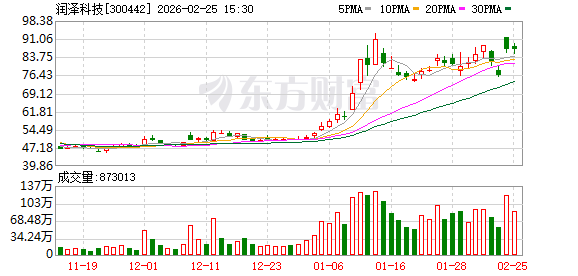
Core Viewpoint - The company, Runze Technology, led by CEO Zhou Chaonan, is making significant moves in the computing power sector by acquiring the remaining 42.56% stake in Guangdong Runhui, aiming to enhance its market position and operational efficiency [2][5][12]. Group 1: Acquisition Details - Runze Technology's stock surged 13.5% upon resuming trading, with a market capitalization exceeding 140 billion yuan, and Zhou holds a 44.55% stake valued at approximately 63 billion yuan [2]. - The acquisition will allow Runze Technology to gain 100% control over Guangdong Runhui, which is a key player in providing computing center solutions [4][5]. - The company plans to finance the acquisition through a convertible bond issuance and is expected to prepare over 2.5 billion yuan for the transaction [9][11][12]. Group 2: Strategic Advantages - Guangdong Runhui's strategic location near major cities like Guangzhou and Shenzhen enhances its ability to meet the high-speed and low-latency demands of AI applications [6][8]. - The asset's scarcity is bolstered by its early acquisition of critical resources such as land and energy, creating a competitive barrier in the market [7]. - The acquisition is expected to strengthen Runze Technology's service capabilities for top-tier internet companies and cloud service providers in the Greater Bay Area [8]. Group 3: Business Performance and Future Outlook - Runze Technology anticipates a nearly twofold increase in net profit for 2025, projected between 5 billion and 5.3 billion yuan, largely due to its successful REITs issuance [13]. - The AIDC (Intelligent Computing Center) business is a significant growth driver, contributing over 30% of revenue with a year-on-year growth of 36.95% [13][15]. - The company is focusing on transforming its business model to enhance profitability and customer retention in the intelligent computing sector [13][18]. Group 4: Leadership and Family Involvement - Zhou Chaonan, the founder and CEO, has been instrumental in the company's growth since its inception in 2009, leveraging the AI boom [19][20]. - Family members, including her son and daughter-in-law, hold significant positions within the company, collectively owning 56.5% of the shares, valued at around 80 billion yuan [27][30].

未知机构:国金计算机科技坚守产业逻辑国内算力吹哨人复盘近期观点-20260213
未知机构· 2026-02-13 01:55
Summary of Conference Call Notes Industry Overview - The focus is on the domestic computing power industry chain, which is expected to experience a "high prosperity trend" due to significant changes in supply and demand dynamics [1][2]. Core Insights and Arguments - **Key Turning Point in 2026**: The year 2026 is identified as a pivotal moment for "training + inference" dual resonance, with the continuation of multi-modal scaling laws and the explosive growth of AI applications leading to a steeper-than-expected demand curve [2]. - **Supply Side Improvements**: The supply side benefits from the maturity of domestic chips, the release of wafer production capacity, and the alleviation of overseas chip supply bottlenecks [2]. - **Industry Growth**: This environment is expected to drive sectors such as AIDC (Artificial Intelligence Data Center), cloud and computing services, power equipment, and servers into a cycle of simultaneous volume and price increases, particularly benefiting leading cloud service providers (CSPs) [2]. Market Validation - The company's viewpoints have been progressively validated in the market due to their foresight: - On January 4, a computer annual strategy report was released, indicating a clear AI path for 2026, emphasizing the critical role of computing power and predicting a high expansion rate for domestic computing [3]. - On January 11, an in-depth industry report highlighted the onset of competition for AI entry points and increased capital expenditure (CAPEX) willingness among major companies, signaling an imminent explosion in domestic computing power [3]. - A conference call on January 12 detailed the growth potential and development path of domestic computing [3]. - On January 26, amidst market fluctuations, another call was held to assert the belief in computing power, predicting inflation in domestic cloud services [3]. - On February 8, insights on "AI comic + domestic computing" opportunities were shared, promoting AIDC and cloud service sectors [3]. Related Companies - The following companies are identified as relevant to the discussed trends: Dongyangguang, Cambrian, Haiguang Information, Wangsu Technology, Runze Technology, Xiechuang Data, Huafeng Technology, Shenzhou Digital, Dazhi Technology, Runjian Shares, Kehua Data, SMIC, Huahong Semiconductor, Zhongke Shuguang, Hesheng New Materials, Aofei Data, Youkede, Capital Online, Yunsai Zhili, Ruisheng Intelligent, Inspur Information, Weichai Heavy Industry, and Oulu Tong [3]. Risk Factors - Potential risks include slower-than-expected AI advancement, intensified industry competition, and macroeconomic fluctuations [4].
鹏扬基金张勋:AI领域投资仍处于上半场,继续把握AI基础设施景气机会,关注AI应用进展
Zhong Zheng Wang· 2026-02-10 13:40
Core Viewpoint - AI investment is still in its early stages, with different development paces observed between domestic and international markets [1] Investment Stages - AI investment is categorized into three stages: "0-1 stage," "1-10 stage," and "10-N stage" [1] - Currently, international markets are in the "1-10 stage," focusing on infrastructure development, while domestic markets have just completed the "0-1 stage" [1] - The latter half of AI investment, which is expected to be more promising, has yet to begin [1] Investment Directions - In the AI infrastructure sector, key areas of focus include computing power, storage, and AIDC (Artificial Intelligence Data Center) [1] - The AI application sector is just starting to develop, with potential investment opportunities in AI edge computing, embodied intelligence, AI programming, and AI search advancements [1]
未知机构:海外云服务商及算力涨价近期多个海外云服务商及算力相关服务出现涨价-20260202
未知机构· 2026-02-02 02:10
Summary of Conference Call Records Industry Overview - The records discuss the cloud services and semiconductor industries, particularly focusing on pricing trends and demand dynamics related to AI and optical components. Key Points Cloud Services Pricing Trends - Recent price increases have been observed among multiple overseas cloud service providers and related computational power services. Google has raised global data transmission service prices, with North America seeing a 100% increase. Amazon has also increased EC2 capacity block instance prices [1] - AIDC prices exhibit quarterly volatility, with significant price increases expected starting from Q3 and Q4 of 2025. In Q1 2023, a price spike occurred due to major companies building AI computational power clusters [1] - CPU prices are anticipated to rise significantly starting January 2026, with market expectations indicating a sustained upward pricing trend [1] AI-Driven Demand for Computational Power - The demand for AI computational power is evolving, transitioning from training to inference by the second half of 2025, with a shift to the Agent era expected in 2026. This transition is projected to substantially increase computational power demand [2] - The Agent era will drive demand in three main areas: - Increased resource consumption in multi-turn dialogue scenarios - High concurrency scenarios resembling multiple virtual employees working simultaneously, leading to a significant rise in CPU demand - The need for high precision in task flow restoration, which will accelerate storage demand due to the accumulation of task flow errors [2] - The explosive demand is causing supply shortages, leading to price increases in upstream storage, CPU, and AIDC sectors, which will eventually affect cloud service pricing [2] Cloud Service Price Increase Expectations - The imbalance in supply and demand is the core logic behind the price increases in cloud services. The upward pressure from upstream price increases is expected to be passed down, resulting in higher cloud service prices [2] - Overseas cloud service providers are likely to show price increase signs soon, while domestic cloud services may follow suit after 2026, indicating a strong sustainability in the overall price increase trend [2] Optical Fiber Pricing Dynamics - Traditional G652G optical fiber is currently experiencing rapid price increases, driven by structural changes on both supply and demand sides: - Supply has been stabilized and is relatively low due to continuous capacity clearance from 2018-2019 and 2022-2024 - Demand is significantly boosted by the development of AI and drone industries, particularly for high-end optical fibers in North America and domestic G6PA1 products, leading to a supply-demand gap in traditional optical fibers [2] Optical Chip Supply and Demand - The demand for optical modules is projected to be around 20-30 million units for 1.6T modules and 40-50 million units for 800G modules in 2026, with expectations of doubling by 2027 [3] - The value of optical chips in optical modules is increasing with product generational upgrades, with current 200G high-end optical chip prices doubling compared to 100G [3] - Supply constraints are influenced by long delivery cycles for core equipment and rising costs due to increased prices of upstream indium phosphide substrates, with a current optical chip shortage of 25%-30% [3] Isolator and Upstream Material Price Increases - Isolators, which protect light sources and enhance signal integrity, are in demand in line with laser usage. The production of the core material, the Faraday rotator, is dominated by two overseas companies, while domestic production is gradually increasing [3] - Prices for Faraday rotators have been rising since Q3 2025, with upstream rare earth material prices also on the rise, further driving up isolator prices in 2026 [4]
1月27日早餐 | AI应用迎多个催化;多个有色金属继续大涨
Xuan Gu Bao· 2026-01-27 00:01
Market Overview - US stock markets closed higher, with the Dow Jones up 0.64%, Nasdaq up 0.43%, and S&P 500 up 0.50% [1] - Silver experienced its strongest intraday surge since 2008 but later retraced gains, while gold surpassed the $5000 mark for the first time [2] - US natural gas prices surged nearly 30% [2] Corporate Developments - Trump administration is implementing a $1.6 billion debt and equity investment plan to acquire a 10% stake in USA Rare Earth [4] - Nvidia invested $2 billion in CoreWeave and is launching an independent CPU chip [5] - Nvidia plans to enter the Arm PC chip market, with Lenovo and Dell likely to be the first adopters [6] - Microsoft released its second-generation AI chip, Maia 200, aiming to reduce dependency on Nvidia [7] - SoftBank has paused its $50 billion data center acquisition of Switch [8] Industry Trends - The North Sea wind energy initiative is driving industry commitments to invest €9.5 billion [11] - The European Parliament has postponed its decision on whether to restore approval for the US-EU trade agreement [12] - The potential for a new US government shutdown is estimated at nearly 80% according to market predictions [13] Domestic Developments - The Ministry of Commerce announced the launch of a national digital trade demonstration zone and the establishment of relevant standards [14] - The AI healthcare sector is rapidly evolving, with Amazon's One Medical launching an AI health assistant that integrates with its existing medical services [19][20] - The digital trade sector is expected to grow significantly, with cross-border e-commerce reaching a total import and export volume of 2.75 trillion yuan by 2025 [21] Company Announcements - Zijin Mining plans to acquire 100% of United Gold for 28 billion yuan, with gold resources of 533 tons expected by the end of 2024 [22] - Dinglong Co. intends to acquire 70% of Haofei New Materials for 630 million yuan, a leading company in new lithium battery dispersants [22] - Haike New Source signed a long-term cooperation agreement with BYD for the supply of at least 100,000 tons of electrolyte solvent annually [22] - Chuanhuan Technology plans to invest 1.1 billion yuan to build a manufacturing headquarters in East China [22] - Longyuan Donggu's subsidiary received a notification for a project with a lifecycle sales amount estimated between 2.2 billion to 3 billion yuan [22] - Ruixin Microelectronics expects a net profit of 1.023 billion to 1.103 billion yuan for 2025, a year-on-year increase of 71.97% to 85.42% [22] - Multiple companies, including Multi-Fluorine and Lantian Electronics, are projecting significant profit increases for 2025 due to market demand in sectors like new energy and AI [23][24]







继续看好光纤光缆和AIDC
2026-01-26 15:54
Summary of Conference Call Notes Industry and Company Involved - The focus is on the **fiber optic cable** and **AIDC (Artificial Intelligence Data Center)** sectors, with specific mention of companies like **Changfei Fiber**, **Hengtong Optic-Electric**, **Zhongtian Technology**, and **Fenghuo Communication**. Core Points and Arguments - **Fiber Optic Price Surge**: The price of fiber optics has significantly increased due to rising demand from operators and AI, particularly driven by overseas data center construction for the 657A1 type fiber. The supply remains tight due to low willingness from domestic and foreign manufacturers to expand production and a contraction in supply caused by bankruptcies in the industry [1][4][5]. - **Impact of AWS Price Increase**: AWS's decision to raise GPU capacity block prices indicates a potential increase in AI cloud infrastructure costs, which is favorable for the domestic AI industry chain. The H200 incident's impact is diminishing, and the development of domestic computing cards is driving AIDC demand [1][8]. - **AIDC Market Dynamics**: Recent changes in the AIDC sector include some companies increasing delivery volumes, leading to a tight supply-demand balance. If demand continues to grow and energy consumption is strictly controlled, prices may rise. Notably, AIGC prices in Hong Kong have surged significantly, with some companies receiving demand guidance for 2027 that is several times that of 2024 and 2025 [1][11]. - **Investment Recommendations**: Short-term investment suggestions prioritize AI giants (Alibaba, Tencent, ByteDance), followed by AIDC (data centers, liquid cooling, power supply), then network components (switches, chips, optical modules, copper connections), and finally computing (chips, servers, server power supplies) [1][13]. Other Important but Potentially Overlooked Content - **Performance of Related Companies**: Companies like Changfei Fiber, Hengtong Optic-Electric, Zhongtian Technology, and Fenghuo Communication are expected to benefit significantly from the current price increases in fiber optics, with leading firms' cost prices between 14-15 yuan and second-tier firms at 17-18 yuan, indicating substantial profit margins [1][6]. - **Monitoring Factors for Fiber Market Trends**: Key factors to watch include upcoming telecom procurement and the impact of AI on the prices of 652D and 657A1 fiber types. Continuous tracking of the industry chain is crucial due to the unpredictable nature of raw material prices [1][7]. - **Future AIDC Developments**: The growth of domestic computing cards is directly linked to increased demand for data center infrastructure, with major brands like Huawei and Alibaba having significant needs. The successful distribution of H200 cards could further benefit the domestic AI and computing chains [1][10]. - **Investment Focus in Communication Sector**: Investors should pay close attention to the satellite communication sector, AIDC, domestic AI chains, and fiber optic sectors, as these areas are experiencing significant short-term marginal changes [1][14].