CHINA UNICOM(00762)

Search documents
扛稳中央企业责任 更好服务河南发展——习近平对中央企业工作作出的重要指示在驻豫央企中引发热烈反响
He Nan Ri Bao· 2025-12-24 00:00
Group 1 - Central enterprises in Henan province express strong commitment to align with President Xi Jinping's directives, focusing on enhancing core functions and competitiveness to contribute to local development and modernization efforts [1][2][3] - China Unicom's Henan branch aims to leverage its advantages in technology and innovation, particularly in AI and low-altitude economy, to support the province's economic goals and establish itself as a world-class technology service provider [1] - Agricultural Bank of China emphasizes its role in supporting high-quality development in Henan, focusing on modern agriculture, ecological protection, urban construction, and inclusive finance to enhance social welfare [2] Group 2 - Sinopec's Henan branch plans to utilize its industry chain advantages and energy supply capabilities to transition towards a comprehensive energy service provider, focusing on oil, gas, and new energy [3] - China Yituo, a key player in the agricultural machinery industry, commits to advancing core technology and high-end intelligent agricultural equipment to ensure national food security during the 14th Five-Year Plan [4] - Companies like Xuchang Transformer and China Railway Engineering Equipment are dedicated to technological innovation and international market expansion, aiming to enhance their product quality and global competitiveness in their respective fields [4]

用智慧织网,以温情相伴
Xin Lang Cai Jing· 2025-12-23 22:11
Core Insights - The article highlights the exceptional service and efficiency of a technician named Zhu Xiaorui, who has developed a unique approach to enhance customer satisfaction in the telecommunications industry [1][2][3][4][5] Group 1: Service Efficiency - Zhu Xiaorui completed a network installation in just 28 minutes, significantly below the company's standard time, showcasing his expertise and preparation [1] - He created a "three-stage efficiency work method" that includes preparation, precise execution, and post-service follow-up, which has kept his average installation time among the best in the region [1] Group 2: Emergency Response - Zhu Xiaorui is known for his rapid response to service calls, such as arriving at a customer's home within 10 minutes to resolve a network issue during an online class [2] - He carries extra replacement parts in his toolkit to minimize customer wait times during emergencies [2] Group 3: Community Engagement - Zhu Xiaorui has established a strong rapport with the elderly in his community, often going beyond his job description to assist them with technology-related issues [2][4] - He distributes "love service cards" with his contact information to elderly residents, ensuring they can reach him for help [2] Group 4: Safety Protocols - Zhu Xiaorui adheres to strict safety protocols before each job, maintaining a record of zero safety incidents in his area [3] - He has developed a "home network security three-character mantra" to educate customers on safe internet practices [3] Group 5: Value-Added Services - Zhu Xiaorui has taken on the role of a "smart living consultant," identifying community needs and launching initiatives like "Silver Age Digital Classroom" to help elderly residents bridge the digital divide [4] - He collaborates with local store managers to provide tailored services based on community feedback [4] Group 6: Mentorship and Legacy - Zhu Xiaorui has transitioned from a skilled technician to a mentor, training new employees and forming a technical service group that offers free network checks and information sessions [5] - His commitment to service has earned him recognition from the community, reflecting the warmth and connectivity he fosters through his work [5]
筑牢“信息生命线”,长沙联通圆满完成全省高层建筑灭火救援综合演练通信保障任务
Chang Sha Wan Bao· 2025-12-23 10:35
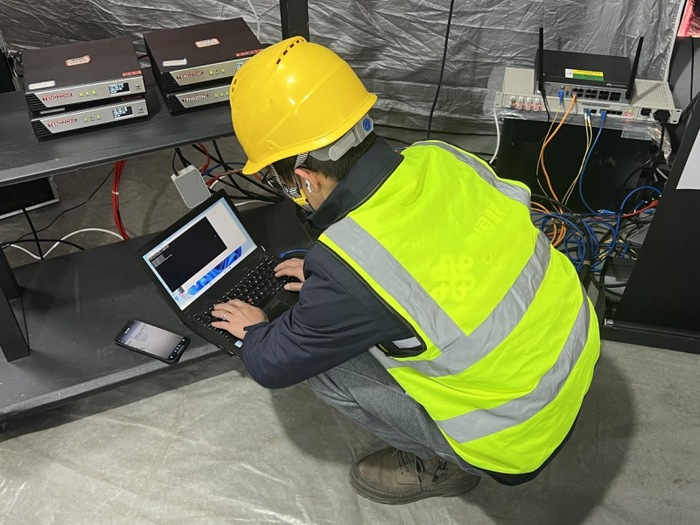
长沙晚报掌上长沙12月23日讯(通讯员 徐诚 刘浩博)12月20日下午,全省高层建筑灭火救援综合演练 在长沙举行。作为现场通信保障的主力单位,长沙联通以快速响应能力和扎实技术支撑,圆满完成演练 核心区域网络重保任务,为应急指挥体系构建起一条高效稳定的"信息生命线"。 本次演练作为湖南省近年来规模最大、情景最复杂的高层灭火救援演练之一,共设24个实战科目,涉及 51家单位、超500名参演人员,并集中投入无人机、消防机器狗等一系列新型智能装备。多装备协同、 高密度传输、实时调度的复杂场景,对通信网络的稳定性和低时延提出了极高要求。 为全力保障演练指挥调度畅通,长沙联通迅速成立专项保障团队,提前制定周密保障方案,调配优势资 源,为演练指挥部开辟专属通信通道。长沙联通提供的连接"长沙市应急指挥部"与"现场指挥部"的电路 专线,凭借高可靠、低时延、强安全的特性,成为指挥指令、现场图像、关键数据即时传输的"信息大 动脉",有力支撑应急指挥部实时掌握现场态势、实现统一决策与快速响应。 此外,为满足指挥团队实时信息调取与协同办公需求,长沙联通还专门开通了高品质互联网专线,保障 各类信息查询、文件传输及协同作业顺畅进行,显著提 ...

港股通央企红利ETF天弘(159281)涨0.40%,成交额3407.89万元
Xin Lang Cai Jing· 2025-12-23 07:12
Group 1 - The Tianhong CSI Hong Kong Stock Connect Central State-Owned Enterprises Dividend ETF (159281) closed at a 0.40% increase with a trading volume of 34.08 million yuan on December 23 [1] - The fund was established on August 20, 2025, with an annual management fee of 0.50% and a custody fee of 0.10% [1] - As of December 22, the fund's latest share count was 341 million shares, with a total size of 340 million yuan [1] Group 2 - The fund's recent trading activity shows a cumulative trading amount of 615 million yuan over the last 20 trading days, with an average daily trading amount of 30.75 million yuan [1] - The current fund manager is He Yuxuan, who has managed the fund since its inception, with a return of -0.22% during the management period [1] Group 3 - The top holdings of the fund include COSCO Shipping Holdings, Orient Overseas International, China National Foreign Trade Transportation Group, PetroChina, CITIC Bank, CNOOC, China Shenhua Energy, People's Insurance Company of China, China Unicom, and Agricultural Bank of China, with respective holding percentages [2] - The largest holding is COSCO Shipping Holdings at 0.85%, followed by Orient Overseas International at 0.40% and China National Foreign Trade Transportation Group at 0.33% [2]


坚持稳中求进提质增效进一步激发高质量发展动力活力
Xin Lang Cai Jing· 2025-12-22 19:20
来到西宁海关,罗东川认真听取全省外贸运行和智慧海关监管系统建设介绍后指出,要依托青海"一带 一路"重要节点和向西开放前沿优势,持续优化口岸营商环境,深化智慧海关建设,提升通关便利化水 平,助力我省外贸企业拓市场、稳订单、增效益,切实把高原资源能源优势转化为外贸发展新动能,推 动青海外向型经济高质量发展。 张锦刚参加。 在中国铁路青藏集团有限公司,罗东川实地了解全省铁路货物运输、路网调度情况。他强调,要保障群 众平安便捷出行和重点物资运输畅通,助力企业降低物流成本,推动路网枢纽数智化建设走在前,在服 务融入国家重大战略工程上积极作为,凝心聚力谱写好新时代"天路"篇章,为青藏高原生态保护和高质 量发展提供有力支撑。 在中国联通三江源国家大数据基地,罗东川详细了解算电协同、算力产业和数字经济发展情况。他强 调,要着眼发展新质生产力,强化科技创新和产业创新深度融合,积极探索绿电直连算力中心发展模 式,提升算力基础设施建设水平,吸引更多优质企业和项目落地,坚定不移推动绿色化、集约化、智能 化发展,为青海加快打造绿色算电协同发展示范区注入强劲动力。 来到青海泰丰先行锂能科技有限公司,罗东川详细了解企业发展历程、生产运营和 ...

人民日报点名运营商“套路”:新老用户有别,合约捆绑成常态
3 6 Ke· 2025-12-21 23:55
Core Viewpoint - The article highlights the hidden traps in mobile service plans offered by telecom operators, emphasizing the disparity in treatment between new and existing customers, and the complexity of contract terms that often lead to consumer dissatisfaction [3][20][22] Group 1: Issues with Mobile Plans - Consumers are increasingly cautious about mobile plans due to hidden costs and complex terms, leading to a tedious selection process [1][3] - The article criticizes telecom operators for practices such as "easy upgrades but difficult downgrades," "differential treatment for new and old users," and "contract bundling" [3][20] - Operators often promote attractive features like extensive free calling minutes or large data allowances, but these benefits are typically limited to the first year, with subsequent costs potentially increasing significantly [4][6] Group 2: Consumer Experience - Existing customers are often treated as stable revenue sources, while new users are targeted with enticing offers, creating a perception that older customers can bear higher costs [6][13] - Many consumers report difficulties when attempting to downgrade their plans, facing obstacles such as unavailability of options online or being redirected to customer service without resolution [9][12] - The emergence of "fee reduction" services on e-commerce platforms indicates widespread frustration among consumers, who seek assistance in navigating the complexities of telecom offerings [12] Group 3: Industry Dynamics - The mobile communication market in China has shifted from a growth phase to a saturation phase, with net user growth stagnating, prompting operators to focus on increasing average monthly revenue per user [13][20] - Despite ongoing government policies promoting lower prices and better services, operators continue to rely on complex pricing strategies to maintain revenue, which may not be sustainable in the long term [20][22] - The article suggests that as consumer awareness of billing practices increases, there may be a trend towards switching operators, especially with new policies facilitating easier number portability [20][22]



央企战新基金完成备案,此前三大运营商认购合计90亿元
Nan Fang Du Shi Bao· 2025-12-19 12:49
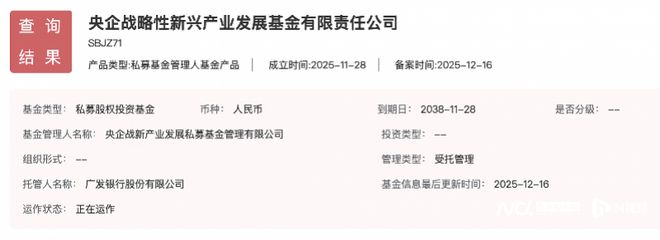
Core Viewpoint - The establishment of the Central Enterprise Strategic Emerging Industry Development Fund aims to accelerate the development of strategic emerging industries in China, with a total initial scale of 51 billion RMB and a focus on key sectors such as artificial intelligence, aerospace, and quantum technology [1][2][4]. Group 1: Fund Details - The fund has completed registration with a total capital of 51 billion RMB, managed by a private equity fund management company and supported by 15 central enterprises [2][3]. - The fund's investment period is set for 5 years, with a total management and exit period of 8 years, extendable to 15 years [1]. - Major contributors include China Mobile Capital with 6 billion RMB, China Telecom Group with 1.5 billion RMB, and China Unicom Innovation and Entrepreneurship Investment with 1.5 billion RMB [1][3]. Group 2: Strategic Objectives - The fund is designed to support the central enterprises in enhancing their core capabilities and competitiveness by addressing industrial weaknesses and promoting innovation [1][2]. - It aims to align with national strategic needs, focusing on strengthening and supplementing the industrial chain while promoting high-level self-reliance in key areas [2][4]. - The fund will explore new tracks in future industries, integrating innovation and industrial chains to foster deep collaboration [4]. Group 3: Investment Collaboration - China Unicom has disclosed its overall investment collaboration with private equity funds, totaling approximately 9.87 billion RMB across 8 partnerships [7]. - The latest investment was made in the Cheng Tong Science and Technology Investment Fund (Jiangsu) with an amount of 1 billion RMB [7].
北京联通智家工程师以匠心服务守护百姓智慧生活
Xin Hua She· 2025-12-18 05:20
Core Viewpoint - The article highlights the dedication and professionalism of Beijing Unicom's Smart Home Engineers, who provide essential services to ensure stable network connections and enhance the quality of life for residents in the community [1][2][4]. Group 1: Service Commitment - Beijing Unicom's Smart Home Engineers are committed to delivering high-quality service, ensuring that families enjoy a stable network connection, which is crucial for their daily lives [1][5]. - The engineers actively engage in community projects, such as the heating system upgrade in the Jiu Xian Qiao area, where they successfully resolved technical issues, significantly reducing the project timeline [2][4]. Group 2: Customer Interaction - Engineers like Luo Fuming demonstrate meticulous service by addressing specific customer issues, such as improving the network stability for a local supermarket, which enhances the shopping experience for the community [3][5]. - The actions of engineers, such as Wang Yue returning a lost phone to its owner, reflect the company's commitment to building trust and a sense of community among residents [4][6]. Group 3: Professionalism and Expertise - The engineers utilize their technical skills to solve complex network problems, showcasing their expertise and dedication to customer satisfaction [5][6]. - Their proactive approach in addressing customer needs exemplifies a strong sense of responsibility and professionalism, reinforcing the company's reputation as a reliable service provider [2][5].
2025年世界品牌500强榜单发布 中国50个品牌上榜
Xin Hua Cai Jing· 2025-12-17 14:25
Core Insights - The 2025 World Brand 500 list was released, featuring 50 Chinese brands, highlighting China's growing global brand influence [1] Industry Summary - The ranking evaluates brands based on their global influence, focusing on market share, brand loyalty, and global leadership [1] - A total of 33 automotive and parts brands topped the list, followed by 30 energy and food & beverage brands, and 29 banking brands [1] - The retail, computer, and communications sectors each had 27 brands represented [1] - There has been a significant increase in AI-related technology brands on the list, reflecting the impact of the AI era [1] - Overall, there is a noted decline in rankings for food & beverage and luxury brands due to sluggish consumer growth globally [1] Company Summary - A total of 23 new brands were added to the list this year, with three new Chinese entrants: CATL, China Unicom, and Tongding, showcasing advancements in new energy, infrastructure, and information communication sectors [1]


XAIR大会发布多项“AI+制造”成果
Zhong Guo Hua Gong Bao· 2025-12-17 02:52
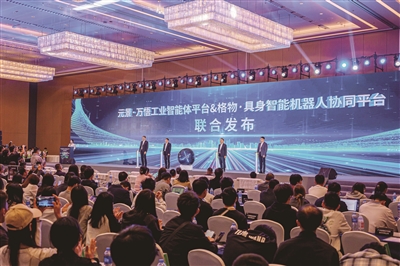
Group 1 - The 2025 Guangdong-Hong Kong-Macao Greater Bay Area Artificial Intelligence and Robotics Industry Conference was held from December 12 to 14, showcasing the latest achievements in the integration of AI and manufacturing [1] - The conference highlighted the construction achievements of the "National Artificial Intelligence Pilot Base," which is the only national-level pilot platform focusing on mobile terminals, co-built by Shenzhen and Dongguan, and constructed by China Unicom [1] - The base aims to enhance "terminal innovation" and "manufacturing efficiency" by establishing five foundational capabilities: computing power, data, models, applications, and security [1] Group 2 - Guangdong Unicom, in collaboration with various organizations, launched the "Guangdong Artificial Intelligence + Manufacturing Industry Alliance" to tackle common technical challenges and promote resource collaboration and achievement transformation [2] - The alliance includes partnerships with major companies such as Huawei, TCL, Midea, and others to accelerate the transformation of technological achievements into industrial practices [2] - Two platforms were officially launched: the "Yuanjing·Wanwuh Industrial Intelligence Platform" and the "Ge Wu·Embodied Intelligent Robot Collaborative Platform," aimed at empowering the entire production process with intelligent capabilities [1][2]