CHINA UNICOM(00762)

Search documents
一财主播说 | 增值税率“升档”三大运营商早盘集体受挫
Di Yi Cai Jing· 2026-02-02 04:17
今天早盘,三大电信运营商集体走弱,跌幅均超4%。消息面上,中国移动、中国联通、中国电信2月1 日同步发布公告,自2026年1月1日起,手机流量、短信等业务适用的税目由增值电信服务调整为基础电 信服务,税率由6%升至9%。这一调整将对公司收入及利润产生一定影响。据悉,此次调整本质是税 目"归位",而非新增税负,税目"归位"将进一步明确基础通信服务的公共属性,有助于推动运营商更加 聚焦网络建设、服务保障等核心主业。中国电信、中国联通在公告中表示,将聚焦于"连接"、"算 力"、"服务"、"安全"等核心领域。中国移动则表示,将致力于做强做优通信服务、算力服务与智能服 务。税率调整本身不直接涉及消费者资费的变化。 ...



恒科指跌3%
Xin Lang Cai Jing· 2026-02-02 03:12
来源:格隆汇APP 格隆汇2月2日|港股主要指数走低,恒生科技指数跌幅扩大至3%,恒指跌超2%。华虹半导体跌超 10%,中国联通跌超9%,小鹏汽车跌超8%,中国电信跌超7%,蔚来、比亚迪股份跌超5%。 ...


中国三大运营商集体下跌,基础电信服务增值税率上调至9%,将影响公司营收和利润
Zhi Tong Cai Jing· 2026-02-02 03:01
中国移动、中国联通、中国电信2月1日相继发布公告,电信服务增值税税目适用范围调整,税率由6%调整为9%, 将对公司收入及利润产生影响。业内人士分析,此次调整本质是税目"归位",而非新增税负,是税收政策对电信业 务属性的合理界定。税目"归位"进一步明确了基础通信服务的公共属性,将推动运营商更加聚焦网络建设、服务保 障等核心主业,减少同质化营销竞争,提升行业整体运营效率,助力数字经济基础设施高质量发展。 中国三大运营商港股早盘低开,截至发稿, 跌近10%, 跌超8%, 跌超4%。 编辑/jayden | 代碼 | 名稱 | 最新價 | 漲跌額 | 漲跌幅 ◆ | 成交額 | 總市值 | | --- | --- | --- | --- | --- | --- | --- | | 00762 | 中國聯通 | 7.160 | -0.790 | -9.94% | 2.57億 | 2190.83億 | | 00728 | 中國電信 | 4.920 | -0.460 | -8.55% | 1.22億 | 4502.15億 | | 00941 | 中國移動 | 76.600 | -3.200 | -4.01% | 6.59億 ...


外围,突增变数!全线大跌!上海黄金交易所,突发公告!
券商中国· 2026-02-02 02:53
Core Viewpoint - The article discusses a significant decline in various sectors of the A-share market, particularly in precious metals and energy, driven by external market pressures and changes in liquidity conditions [1][2][3]. Group 1: Market Reactions - The precious metals sector in A-shares experienced a sharp decline, with multiple stocks hitting the daily limit down, including companies like Xiaocheng Technology and Zhaojin Gold [1]. - The oil and gas sector also faced severe losses, with companies such as Tongyuan Petroleum and Zhongman Petroleum hitting the daily limit down due to a drop in natural gas prices influenced by warmer weather forecasts [2]. - Commodity futures markets saw widespread declines, with major contracts like silver and gold futures hitting limit down, reflecting a broader market sell-off [2]. Group 2: External Influences - The U.S. leveraged loan index has fallen to its lowest point since April 2025, indicating potential liquidity issues in the market, which is further corroborated by a significant drop in the cryptocurrency market [3]. - The adjustment of margin levels and price limits for silver contracts by the Shanghai Gold Exchange suggests increased volatility and risk in the precious metals market [1]. Group 3: Liquidity Concerns - A report from Tianfeng Securities highlights that the U.S. dollar liquidity index has dropped to -60%, indicating extreme tightening that could impact global assets [5]. - The potential appointment of Kevin Warsh as the new Federal Reserve Chair has raised concerns about a hawkish monetary policy, which could lead to further tightening and affect market expectations for interest rates [6].




三大运营商早盘低开 基础电信服务增值税率上调至9% 将影响公司营收和利润
Zhi Tong Cai Jing· 2026-02-02 02:25
三大运营商早盘低开,截至发稿,中国联通(600050)(00762)跌7.04%,报7.39港元;中国电信 (601728)(00728)跌6.32%,报5.04港元;中国移动(600941)(00941)跌2.26%,报78港元。 中国移动、中国联通、中国电信2月1日相继发布公告,电信服务增值税税目适用范围调整,税率由6% 调整为9%,将对公司收入及利润产生影响。业内人士分析,此次调整本质是税目"归位",而非新增税 负,是税收政策对电信业务属性的合理界定。税目"归位"进一步明确了基础通信服务的公共属性,将推 动运营商更加聚焦网络建设、服务保障等核心主业,减少同质化营销竞争,提升行业整体运营效率,助 力数字经济基础设施高质量发展。 消息面上,财政部、国家税务总局近日发布了《关于增值税征税具体范围有关事项的公告》,规定自 2026年1月1日起,利用固网、移动网、卫星、互联网,提供手机流量服务、短信和彩信服务、互联网宽 带接入服务的业务活动适用的税目由增值电信服务调整为基础电信服务,对应增值税税率由6%调整为 9%。 ...

港股三大中资电信股重挫
Jin Rong Jie· 2026-02-02 02:19
Group 1 - The core viewpoint of the article highlights a significant decline in the stock prices of major Chinese telecom companies, with China Unicom falling over 9%, China Telecom over 8%, and China Mobile over 4% [1] Group 2 - The recent announcement by the Ministry of Finance and the State Taxation Administration regarding the adjustment of VAT rates for telecom services is a key factor influencing the market [1] - Starting from January 1, 2026, the tax category for services such as mobile data, SMS, MMS, and internet broadband access will change from value-added telecom services to basic telecom services, resulting in an increase in VAT rate from 6% to 9% [1]
黄金、有色金属板块掀跌停潮,两大牛股复牌跌停
Di Yi Cai Jing· 2026-02-02 01:45
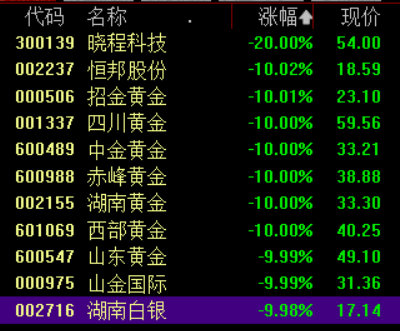
Group 1: Market Overview - The gold and non-ferrous metal sectors experienced significant declines, with multiple stocks hitting the daily limit down, including Hunan Gold, Xiaocheng Technology, and Western Gold [1][2] - International gold and silver prices saw substantial drops on January 30, marking some of the largest single-day declines in decades due to profit-taking and short-term futures traders closing long positions [1] Group 2: Stock Performance - Xiaocheng Technology's stock fell by 20.00% to 54.00, while Hunan Gold and Western Gold both dropped by 10.00% to 33.30 and 40.25 respectively [2] - The Shanghai Composite Index decreased by 0.93% to 4079.71, while the Shenzhen Component Index fell by 0.54% to 14128.87, contrasting with a 0.65% increase in the ChiNext Index [3][4] Group 3: Sector Analysis - The market saw a wave of limit-downs in the gold and base metal sectors, with oil, gas, chemicals, agriculture, coal, and steel industries also experiencing notable declines [4] - Conversely, sectors such as photovoltaic and ultra-high voltage themes showed resilience and strength amid the broader market downturn [4] Group 4: Additional Market Movements - The Hong Kong stock market opened lower, with the Hang Seng Index down 1.06% and the Hang Seng Tech Index down 1.29%, influenced by significant drops in major telecom operators [8][9] - The People's Bank of China conducted a 750 billion yuan reverse repurchase operation at an interest rate of 1.40%, with 1505 billion yuan of reverse repos maturing on the same day [7]

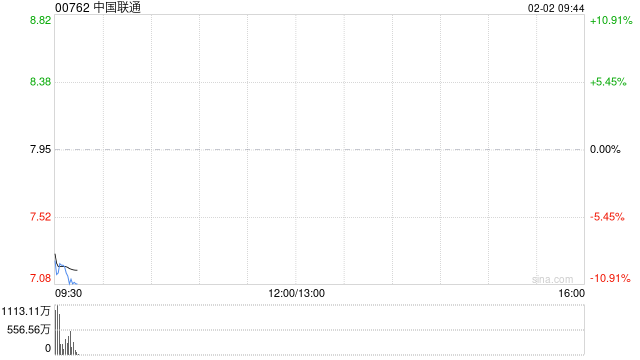
港股电讯服务市场集体下挫 中国联通跌超10% 基础电信服务增值税率上调至9%
Xin Lang Cai Jing· 2026-02-02 01:44
Group 1 - The Hong Kong telecommunications service market experienced a collective decline, with China Unicom falling over 10%, China Telecom dropping over 8%, and China Mobile decreasing over 4% [1][5]. - The total market capitalization of the telecommunications sector is approximately 3.96 trillion [2]. - The trading volume for the sector was 1.46 billion, with a total transaction amount of 22.83 billion [2]. Group 2 - A recent announcement from the Ministry of Finance and the State Taxation Administration stated that starting January 1, 2026, the tax category for services such as mobile data, SMS, and internet broadband will change from value-added telecommunications services to basic telecommunications services, with the VAT rate increasing from 6% to 9% [7].
【公告精选】赛力斯1月汽车销量同比增长104.85%
Xin Lang Cai Jing· 2026-02-02 01:39
Hot Topics - Jia Mei Packaging's stock trading suspension review has concluded, and the stock will resume trading tomorrow [1] - Fenglong Co., Ltd.'s stock trading suspension review has concluded, and the stock will resume trading tomorrow [2] - Hongbaoli does not produce epoxy propylene products, and its subsidiary's related project has entered the preliminary preparation stage for trial production [2] - Hunan Gold's future market price for gold products has uncertainty regarding whether it can continue to rise or maintain high levels [2] - Tongding Interconnection's current operating conditions are normal, with no significant changes in the internal and external operating environment [3] - Tiandi Online's recent operating conditions and internal and external operating environment show no significant changes [4] - Dayue City reports no significant changes in its recent operating conditions and internal and external environment [5] - Huangtai Liquor Industry is not involved in hot concept matters, and its current operating conditions are normal [6] Performance - Leshan Electric Power reported a net profit of 23.4023 million yuan for 2025, an increase of 3.68% year-on-year [7] - Great Wall Motors sold 90,300 vehicles in January, a year-on-year increase of 11.59% [8] - Seres sold 45,900 vehicles in January, a year-on-year increase of 104.85% [9] - GAC Group sold 116,600 vehicles in January, a year-on-year increase of 18.47% [10] - BAIC Blue Valley's subsidiary sold 8,073 vehicles in January, a year-on-year increase of 11.83% [11] Shareholding Changes - Chipone Technology's shareholders plan to reduce their holdings by no more than 1.95% of the company's shares [30] Share Buybacks - Chuzhou Dongfeng's controlling shareholder proposed to repurchase shares worth 50 million to 100 million yuan [31] - GoerTek has increased the total amount for share repurchase from no less than 500 million yuan (inclusive) and no more than 1 billion yuan (inclusive) to no less than 1 billion yuan (inclusive) and no more than 1.5 billion yuan (inclusive) [31] Contract Awards - Jerry Holdings' wholly-owned subsidiary signed a sales contract for gas turbine generator sets worth approximately 1.265 billion yuan with a U.S. client [32] - Fulongma is expected to win four sanitation service projects in January, with a total first-year service fee of 83.5364 million yuan [34] Equity Changes - Yanzhou Coal Mining is transferring 100% equity of Xintai Coal [33] Mergers and Acquisitions - BGI Genomics plans to acquire 100% equity of Sanjian Qifa and 100% equity of BGI Xufeng to integrate two cutting-edge technology platforms in spatial omics and nanopore sequencing [34] Refinancing - Sanjia Technology (rights protection) plans to issue shares to its controlling shareholder to raise no more than 300 million yuan for working capital and repaying bank loans [35] Other - Fushikong's actual controller, chairman, and general manager Chen Yongliang has been placed under detention [36] - China Mobile's VAT tax category adjustment will change the applicable VAT rate from 6% to 9% [37] - China Telecom's VAT tax category adjustment will impact the company's revenue and profits [38] - China Unicom's VAT tax category adjustment will change the applicable VAT rate from 6% to 9% [39] - Nanwang Energy's price policy adjustment for pumped storage and new energy storage will increase uncertainty in revenue and profits from pumped storage power stations [39] - Wanbangde has completed the enrollment of 100 subjects for the clinical trials of Shishan Jianjia controlled-release tablets phases II and III [39] - Penghui Energy has submitted an application for issuing H-shares and listing on the Hong Kong Stock Exchange [40] - Haichuang Pharmaceutical has passed the GMP compliance inspection for drugs [41]




港股早评:三大指数低开逾1%,金银继续跳水黄金股重挫,宁德时代开涨近2%
Ge Long Hui· 2026-02-02 01:34
以金银为首的大宗商品继续下跌,上周五大跌的港股三大指数低开,恒指跌1.06%,国指跌1.35%,恒 生科技指数跌1.29%。权重科技股集体低迷,阿里巴巴、网易跌超2.4%;金银继续跳水,黄金股领衔有 色金属股下挫,其中灵宝黄金大跌近14%,中国黄金国际大跌超12%,山东黄金、紫金矿业、赤峰黄金 等多股跌超9%以上;三大运营商宣布调整电信服务增值税税率,由6%调至9%,三大电信股低开,中国 联通跌超7%。另外,生物医药股、锂电池概念股多数上涨,其中宁德时代涨近2%。(格隆汇) ...