Workflow
PETROCHINA(00857)
icon
Search documents
港股28日跌0.33% 收报26346.14点
Xin Hua Wang· 2025-10-28 13:04
Core Points - The Hang Seng Index fell by 87.56 points, a decrease of 0.33%, closing at 26,346.14 points [1] - The total turnover on the main board was HKD 242.7 billion [1] - The Hang Seng China Enterprises Index dropped by 91.43 points, closing at 9,375.79 points, a decline of 0.97% [1] - The Hang Seng Tech Index decreased by 77.64 points, closing at 6,093.44 points, a drop of 1.26% [1] Blue Chip Stocks - Tencent Holdings fell by 1.68%, closing at HKD 645 [1] - Hong Kong Exchanges and Clearing decreased by 0.41%, closing at HKD 432.4 [1] - China Mobile rose by 0.41%, closing at HKD 85.55 [1] - HSBC Holdings increased by 4.41%, closing at HKD 106.5 [1] Local Hong Kong Stocks - Cheung Kong Holdings rose by 1.15%, closing at HKD 38.86 [1] - Sun Hung Kai Properties increased by 0.74%, closing at HKD 95.8 [1] - Henderson Land Development fell by 0.14%, closing at HKD 28.22 [1] Chinese Financial Stocks - Bank of China rose by 0.45%, closing at HKD 4.44 [1] - China Construction Bank increased by 0.25%, closing at HKD 7.9 [1] - Industrial and Commercial Bank of China fell by 0.33%, closing at HKD 6.06 [1] - Ping An Insurance rose by 0.27%, closing at HKD 56.15 [1] - China Life Insurance decreased by 0.71%, closing at HKD 25.04 [1] Oil and Petrochemical Stocks - China Petroleum & Chemical Corporation fell by 0.24%, closing at HKD 4.22 [1] - China National Petroleum Corporation rose by 0.13%, closing at HKD 8 [1] - CNOOC Limited decreased by 0.55%, closing at HKD 19.95 [1]
中国石油长庆油田第一采气厂妙手治理长停井“沉睡储量”变“实效增量”
Core Insights - The revival of the Jing**-**well, which had been inactive for 337 days due to wellbore issues, marks a significant achievement for the Changqing Oilfield's first gas production plant, with current daily output stabilizing at 20,000 cubic meters [1][4] - The plant has established a special task force for the recovery of long-dormant wells, focusing on revitalizing "sleeping reserves" as a key strategy for increasing production [1][3] Group 1: Recovery Strategies - The recovery of long-dormant wells was prioritized as an annual key task, with 502 dormant wells reviewed and 342 selected for targeted recovery based on remaining reserves and recovery conditions [3] - Techniques such as pressure maintenance work, oil pipe perforation, and nitrogen gas lifting have been successfully implemented in wells like Jing77-62H1, showcasing effective technical recovery methods [3] Group 2: Tailored Approaches - A categorized treatment approach was adopted, with specific recovery plans tailored to individual well conditions, ensuring efficient and effective recovery [3] - The plant has added 144 dormant wells to its recovery plan from March to September, with 117 wells already having recovery plans established [3] Group 3: Long-term Stability - The plant emphasizes the importance of not only reviving wells but also maintaining their production, implementing strict management and monitoring protocols [4] - As of October 24, the plant has successfully restored 440 dormant wells, contributing a total gas output of 609 million cubic meters, transforming previously inactive assets into substantial production support [4]
新疆油田勘探开发70周年:立足国家所需 服务能源安全
Ren Min Ri Bao· 2025-10-28 09:09
Core Viewpoint - The Xinjiang Oilfield has developed over 70 years, becoming a crucial contributor to China's energy security, evolving from the first major oil field in the country to a significant player in both oil and gas production [1][2][3][4][5][6] Group 1: Historical Development - The Xinjiang Oilfield was established in 1955 with the discovery of the Karamay No. 1 well, marking the birth of China's first major oil field [2] - By 1960, the oilfield accounted for 39% of the national oil production, significantly supporting the Daqing oil campaign [2] - The oilfield has produced a cumulative total of 180 million tons of crude oil by the end of the 20th century, establishing a complete oil industry system [3] Group 2: Technological Advancements - The introduction of advanced exploration technologies such as digital logging and 3D seismic significantly improved exploration accuracy [3] - Major discoveries include the Cainan Oilfield in 1991 and the Karamay Gas Field in 2008, marking significant milestones in exploration [4] - The development of the "fan-controlled accumulation" theory and associated technologies for the Mahu Oilfield has advanced traditional oil-finding concepts [4][6] Group 3: Production Achievements - The Xinjiang Oilfield became the first in western China to produce over 10 million tons of crude oil annually in 2002, with production reaching 12.47 million tons in 2019 [4] - Cumulative production has reached 470 million tons of crude oil and 112.1 billion cubic meters of natural gas over its 70-year history [6] Group 4: Environmental and Green Initiatives - In 2019, the oilfield closed 284 oil-water wells to restore the ecological environment, reducing crude oil production by 69,000 tons annually [4] - The establishment of a coal-electricity CCUS integrated demonstration project and the launch of a solar thermal replacement project for heavy oil extraction reflect the commitment to green development [6] Group 5: Future Prospects - The Xinjiang Oilfield aims to enhance energy security through high-quality development, with plans to produce 14.86 million tons of crude oil and 4.51 billion cubic meters of natural gas in 2024 [5][6] - The construction of the largest gas storage facility in China, with a working gas volume of 4.5 billion cubic meters, supports energy supply security [6]
中国石油长庆油田采气三厂对骨架管网开展深度“体检”
Zhong Guo Fa Zhan Wang· 2025-10-28 08:02
Core Viewpoint - The article emphasizes the importance of the skeleton pipeline network in ensuring stable gas supply during winter, highlighting the proactive measures taken by the company to maintain operational efficiency and meet downstream gas demand [1][2]. Group 1: Operational Measures - The company has completed cleaning operations on 11 main pipelines, removing a total of 452.95 cubic meters of accumulated liquid to eliminate transportation bottlenecks [1]. - A comprehensive winter supply plan has been developed, with detailed task indicators and a management mechanism that ensures production tasks are delegated from top to bottom, facilitating stable production and supply [1][2]. Group 2: Technological and Maintenance Efforts - The company organized insulation work on 3,582 meters of pipelines and 1,205 valves, along with timely updates to emergency reserve materials to ensure equipment operates normally during winter [2]. - A digital production command system is utilized for real-time monitoring of gas wells, pipelines, and equipment, with increased frequency of inspections and 24-hour monitoring in key areas [2]. Group 3: Production Optimization - A technical task force has been established to implement targeted strategies for both new and old wells based on their production contributions, focusing on fine maintenance and enhancing production through a lifecycle drainage and gas extraction system [2].
新疆油田勘探开发70周年
Ren Min Ri Bao· 2025-10-28 00:29
Core Viewpoint - The Xinjiang Oilfield has developed significantly over 70 years, becoming a crucial contributor to China's energy security, transitioning from a major oil field to a comprehensive oil and gas production area, and embracing green and low-carbon transformation initiatives [1][2][3][4]. Group 1: Historical Development - The Xinjiang Oilfield was established in 1955 with the discovery of the Karamay Oilfield, which marked the beginning of large-scale oil production in China [1]. - By 1960, the oilfield's production accounted for 39% of the national output, supporting significant national oil campaigns [1]. - The oilfield has produced a cumulative total of 470 million tons of crude oil and 112.1 billion cubic meters of natural gas over its 70-year history [4]. Group 2: Technological Advancements - Significant breakthroughs in exploration technology, such as digital logging and 3D seismic methods, have greatly improved exploration accuracy [2]. - The introduction of foreign investment and advanced technologies during the reform era has established a market-oriented operational framework [2]. - Innovative techniques, including SAGD technology and theories related to reservoir formation, have reached international advanced levels [3]. Group 3: Production Achievements - The Xinjiang Oilfield became the first in western China to exceed an annual crude oil production of 10 million tons in 2002, maintaining over 12 million tons in 2019 [3]. - In 2024, the oilfield is projected to produce 14.86 million tons of crude oil and 4.51 billion cubic meters of natural gas, establishing a demonstration area for shale oil production [3][4]. Group 4: Green and Low-Carbon Initiatives - The oilfield has implemented a CCUS project that captures and stores 350,000 tons of CO2 annually and has developed solar power generation exceeding 520 million kilowatt-hours [4]. - The establishment of the largest gas storage facility in China, with a working gas capacity of 4.5 billion cubic meters, enhances energy security for the region [4]. - The Xinjiang Oilfield is committed to ecological restoration, having decommissioned 284 oil and water wells to protect local wildlife habitats [3].
我国最大超深油田注气先导试验获突破
Core Insights - The Fuman Oilfield, China's largest ultra-deep oilfield, has achieved significant breakthroughs in enhanced oil recovery through pilot tests in the Fuyuan 210 and Mandeep 4 units [1] Group 1: Enhanced Oil Recovery Techniques - The Fuyuan 210 unit utilized a "high injection, low production" model, injecting nearly 50 million cubic meters of gas, resulting in an additional oil output of 34,000 tons and a threefold increase in daily oil production, achieving an annual capacity of 40,000 tons [1] - The Mandeep 4 unit employed a "top gas injection, bottom water injection, and intermediate oil extraction" approach, effectively controlling decline rates, with an expected increase in recovery rates by over 17 percentage points [1] Group 2: Research and Development Collaboration - Since the breakthrough in 2020, the research team from the China Petroleum Exploration and Development Research Institute has collaborated closely with the China Petroleum Ultra-deep Complex Oil and Gas Reservoir Exploration and Development Technology R&D Center [1] - The team developed intelligent characterization and dynamic-static reserve evaluation technologies for fault-controlled fracture-cavity reservoirs, improving the static reserve matching rate by over 20% [1] - The integration of discrete fracture-cavity medium multi-phase multi-scale coupling geological modeling and numerical simulation technology has upgraded the simulator to handle oil-gas-water three-phase interactions, revealing fluid flow patterns in fault-controlled fracture-cavity units [1]
做好冬供准备 大港油田储气库群完成注气
Xin Hua She· 2025-10-27 19:16
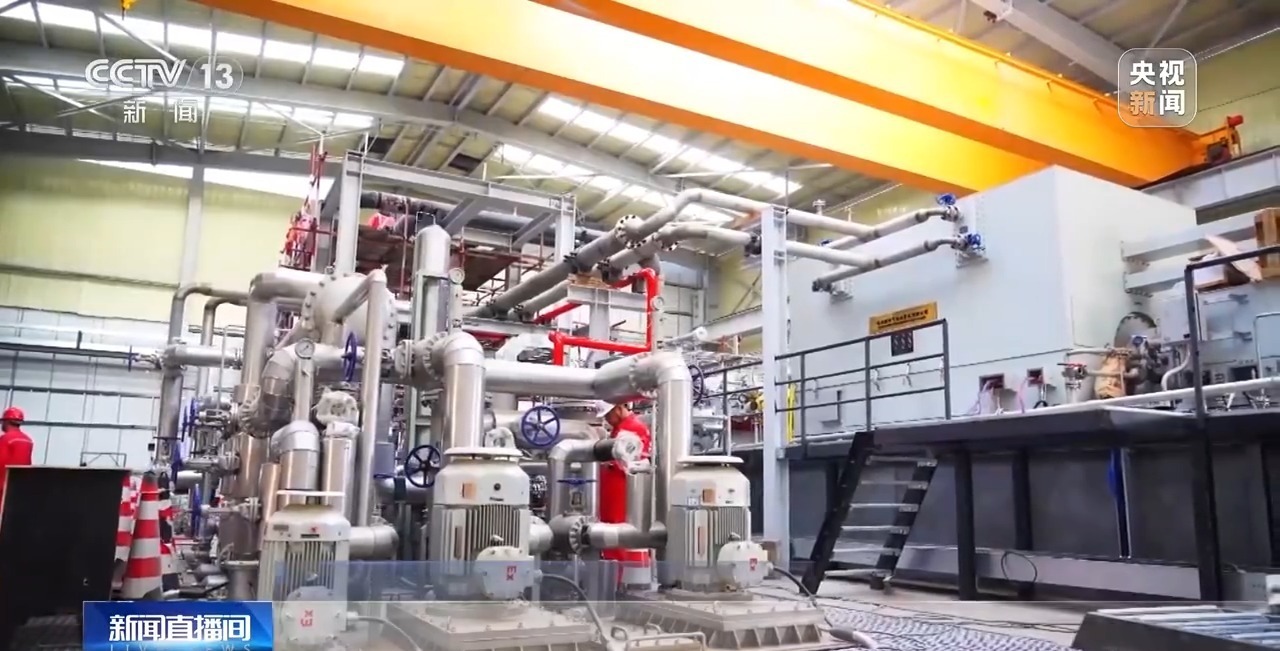
Core Viewpoint - The Dagang Oilfield gas storage facilities have exceeded their annual gas injection targets, ensuring a reliable gas supply for the Beijing-Tianjin-Hebei region during the upcoming winter [1] Group 1: Gas Storage Operations - The Dagang Oilfield gas storage facilities, located in Tianjin Binhai New Area, include underground storage sites such as Dazhangtuo, Bannan, and Lujiao River [1] - The gas storage facilities have operated safely and steadily for over 9,100 days [1] - Since the gas injection commenced on March 22, the facilities have maximized injection efficiency, achieving a record daily injection of 21.16 million cubic meters, surpassing 20 million cubic meters for 10 consecutive days [1] Group 2: Future Developments - The Dagang Oilfield is accelerating the maintenance of its gas injection and production systems, focusing on the inspection and adjustment of compressor units, injection well control valves, and safety release systems to ensure readiness for operation [1] - Future construction will focus on the Chenghai and Qianmiqiao gas storage facilities to further strengthen regional gas supply [1]
China Leads World’s Underground Gas Storage Buildup
Yahoo Finance· 2025-10-27 16:30
Core Insights - China has significantly increased its underground gas storage capacity, ranking 6th globally as of 2025, with an addition of 6 billion cubic meters (bcm) since 2022 [1][2][3] Group 1: Global Gas Storage Capacity - As of 2025, there are 699 underground natural gas storage facilities worldwide, with a total working gas volume of 424 bcm, reflecting an increase of 10 bcm since 2022 [1] - The top five countries with the largest gas storage capacity are the United States, Russia, Ukraine, Canada, and Germany, while China has moved up to 6th place [2] Group 2: China's Gas Storage Expansion - China's expansion of underground gas storage is aimed at reducing exposure to the volatile spot LNG market, potentially decreasing the need for LNG cargo imports [3] - PetroChina has acquired three natural gas storage facilities from its parent company CNPC, enhancing its capacity and control over the gas supply chain [4] Group 3: Energy Security and Demand Management - The operationalization of China's first underground salt cavern gas storage facility marks a significant boost in managing peak demand and ensuring energy security [5] - CNPC anticipates that natural gas demand will accelerate through the second half of the decade, despite competition from electric vehicles [4]
股票行情快报:中国石油(601857)10月27日主力资金净卖出8987.42万元
Sou Hu Cai Jing· 2025-10-27 12:05
证券之星消息,截至2025年10月27日收盘,中国石油(601857)报收于9.17元,上涨1.21%,换手率 0.1%,成交量168.46万手,成交额15.35亿元。 | | | | | 日期 收盘价 涨跌幅 主力净流入 主力净占比 游资净点比 散户净流入 散户净占比 | | | | | | --- | --- | --- | --- | --- | --- | --- | --- | --- | | 2025-10-27 | 9.17 | 1.21% | -8987.42万 | -5.86% | 7069.82万 | 4.61% | 1917.60万 | 1.25% | | 2025-10-24 | 9.06 | -1.31% | -8463.41万 | -5.30% | 1929.39万 | 1.21% | 6534.02万 | 4.09% | | 2025-10-23 | | 9.18 3.15% | 1.42亿 | 5.86% | -1.08亿 | -4.46% | -3369.20万 | -1.39% | | 2025-10-22 | 8.90 | 1.60% | -2970.72万 | -1.8 ...
港股通央企红利ETF天弘(159281)涨1.07%,成交额7428.65万元
Xin Lang Cai Jing· 2025-10-27 07:18
Core Viewpoint - The Tianhong CSI Hong Kong Stock Connect Central State-Owned Enterprises Dividend ETF (159281) has shown a positive performance with a closing increase of 1.07% on October 27, 2023, and a trading volume of 74.2865 million yuan [1]. Group 1: Fund Overview - The Tianhong CSI Hong Kong Stock Connect Central State-Owned Enterprises Dividend ETF was established on August 20, 2025, with an annual management fee of 0.50% and a custody fee of 0.10% [1]. - The fund's performance benchmark is the CSI Hong Kong Stock Connect Central State-Owned Enterprises Dividend Index return (adjusted for valuation exchange rate) [1]. - As of October 24, 2023, the fund has a total of 278 million shares and a total size of 285 million yuan [1]. Group 2: Liquidity and Trading Activity - Over the last 20 trading days, the Tianhong ETF has accumulated a trading amount of 1.123 billion yuan, with an average daily trading amount of 56.1485 million yuan [1]. Group 3: Fund Management - The current fund manager is He Yuxuan, who has managed the fund since its inception on August 20, 2025, achieving a return of 2.31% during the management period [1]. Group 4: Top Holdings - The top holdings of the Tianhong ETF include: - COSCO Shipping Holdings (0.85% holding, 291.75 thousand yuan market value) - Orient Overseas International (0.40% holding, 137.17 thousand yuan market value) - China Foreign Transport (0.33% holding, 113.96 thousand yuan market value) - China National Petroleum (0.32% holding, 109.73 thousand yuan market value) - CITIC Bank (0.32% holding, 111.36 thousand yuan market value) - CNOOC (0.29% holding, 100.41 thousand yuan market value) - China Shenhua Energy (0.29% holding, 98.26 thousand yuan market value) - China People's Insurance Group (0.29% holding, 101.07 thousand yuan market value) - China Unicom (0.28% holding, 95.28 thousand yuan market value) - Agricultural Bank of China (0.27% holding, 93.39 thousand yuan market value) [2].