INNOVENT BIO(01801)

Search documents
医药健康行业研究:Q4基金医药持仓情况出炉,关注板块调整后布局机遇
SINOLINK SECURITIES· 2026-01-25 07:50
Investment Rating - The report suggests a positive outlook for the innovative drug sector, indicating it will continue to be a core investment direction in 2026 due to the maturation of the industry chain and normalization of medical insurance negotiations [4]. Core Insights - The public fund's pharmaceutical holdings decreased to 8.11% in Q4 2025, down by 1.66 percentage points (pp) from the previous quarter. Excluding actively managed pharmaceutical funds, the holdings dropped to 3.90%, a decrease of 1.36pp [11][12]. - The innovative drug ETF reached a scale of 100.62 billion yuan in Q4, accounting for 13.11% of the pharmaceutical fund, which is a slight decrease of 1.35pp [13][15]. - The CXO sector saw a decline in holdings due to geopolitical disturbances, while the medical device sector benefited from innovations like brain-computer interfaces and surgical robots, leading to an increase in holdings [14][17]. - The report highlights the acquisition of PART by GSK for $2.2 billion to strengthen its position in the IgE antibody market, with the core product Ozureprubart showing significant market potential [2][31]. - The oral weight loss drug Wegovy has shown strong early commercial progress, with retail prescriptions reaching approximately 3,071 in the first four days post-launch, nearly three times that of its competitor Zepbound [2][31]. Summary by Sections Pharmaceutical Sector - The report indicates a significant decrease in public fund holdings in the pharmaceutical sector, with a noted resilience in the innovative drug segment [11][14]. - The report emphasizes the importance of focusing on leading companies with core pipeline competitiveness and global layout capabilities for investment [4]. Medical Devices - The introduction of new pricing guidelines for auxiliary medical services is expected to accelerate the adoption of innovative products in the medical device sector [3][17]. - The report suggests monitoring domestic leading companies in this sector for increasing product penetration [3]. Drugstores - The report discusses the potential for leading drugstore companies to increase market share, supported by recent government policies promoting high-quality development in the retail pharmaceutical industry [3][17]. - Specific companies like Yifeng Pharmacy and Dazhenglin are highlighted as having low valuations and significant cost reduction achievements [3]. CXO and Pharmaceutical Supply Chain - Several CXO companies have released optimistic earnings forecasts for 2025, indicating a clear upward trend in industry prosperity [2][31]. - The report recommends active investment in this sector due to the positive signals regarding industry growth [2][31].



创新药还能加仓?这场会定调2026
Jing Ji Guan Cha Wang· 2026-01-24 10:07
Core Insights - The 2026 JPM conference showcased a positive outlook for Chinese innovative pharmaceutical companies, with significant interest from multinational corporations in collaboration opportunities [2][3][4] - Chinese companies are shifting from merely licensing patents to deeper involvement in clinical development and commercialization in international markets [3][8] - The FDA's stance at JPM was relatively moderate, acknowledging the R&D efficiency of Chinese companies and suggesting improvements in approval processes using AI [3][6] Group 1: Conference Overview - The JPM conference, held in San Francisco, attracted numerous founders, executives, and investors from Chinese innovative pharmaceutical companies, indicating a vibrant atmosphere compared to previous years [2][5] - The event has evolved from a small gathering to a major industry benchmark, with participation from nearly all multinational pharmaceutical companies [5][10] - The number of attendees increased significantly in 2026, reflecting a more optimistic market sentiment compared to the previous year [5][10] Group 2: Market Trends - The Chinese innovative drug sector experienced a substantial stock price increase from March to August 2025, driven by business development (BD) transactions and foreign capital inflow, but faced a market correction afterward [4][11] - The interest in Chinese assets is growing, with many multinational companies expressing intentions for mergers and acquisitions (M&A) and BD transactions [11][12] - The trend of Chinese companies seeking deeper engagement in global markets is evident, moving beyond simple patent licensing to collaborative operational models [8][9] Group 3: Regulatory Environment - FDA officials at JPM highlighted the efficiency of Chinese clinical trials, with China completing Phase I trials in four weeks compared to much longer timelines in the U.S. [6][12] - The FDA's comments suggested a focus on optimizing clinical trial approval processes rather than emphasizing protectionist policies [5][6] Group 4: Future Outlook - The absence of major transactions at JPM 2026 was noted, but many multinational companies expressed a willingness to explore significant deals in the near future [11][12] - The upcoming expiration of patents for several blockbuster drugs is expected to drive increased M&A activity as companies seek to replenish their pipelines [12][13] - The trend of U.S. biotech firms considering establishing operations in China to leverage R&D efficiencies is emerging, indicating a shift in cross-border collaboration dynamics [10][11]



兴证策略:2025年四季度主动权益基金管理规模小幅下降 四季度存量基金的赎回压力仍然较大
Sou Hu Cai Jing· 2026-01-23 12:38
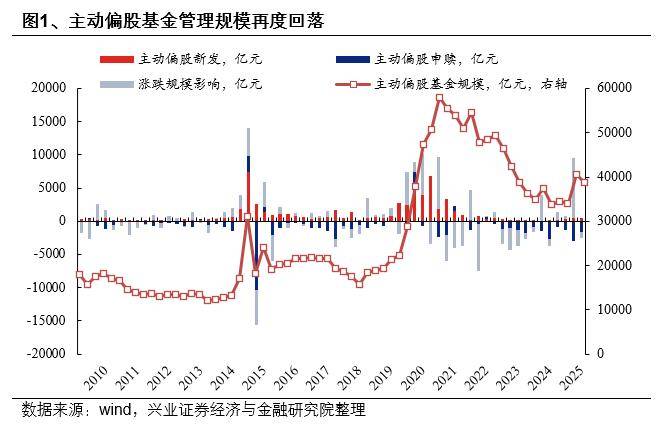
Group 1 - The active equity fund management scale decreased slightly in Q4 2025, primarily due to significant redemption pressure from existing funds, resulting in a net redemption of 165.6 billion yuan [1] - The total management scale of three types of active equity funds (ordinary stock, mixed equity, and flexible allocation) decreased by 189.8 billion yuan, with new active equity fund issuance at 56.2 billion yuan [1] - The active equity fund's position in Q4 2025 decreased by 0.83 percentage points to 86.62%, remaining at the second-highest level in history [2] Group 2 - In terms of sector allocation, the proportion of the ChiNext board increased by 1.24 percentage points to 24.98%, while the main board and Sci-Tech Innovation board saw declines [5][8] - The allocation to the main board decreased by 0.30 percentage points to 58.21%, indicating a further increase in underweight [8] - Active equity funds increased their positions in cyclical and financial real estate sectors while reducing exposure to technology growth and pharmaceuticals [11] Group 3 - The active equity funds increased their allocation in the non-ferrous metals, communication, and non-bank financial sectors, with increases of 2.26 percentage points, 1.85 percentage points, and 0.87 percentage points respectively [13] - The funds reduced their positions in electronics, pharmaceuticals, media, power equipment, and computers, with reductions of 1.72 percentage points, 1.54 percentage points, and 1.16 percentage points respectively [13] - Excluding thematic/sector funds, the active equity funds still increased their positions in non-ferrous metals, communication, and non-bank financial sectors [14] Group 4 - The allocation to the TMT sector slightly decreased in Q4 2025, with the configuration coefficient at 1.48, indicating room for further improvement [29] - Within the TMT sector, active equity funds increased their holdings in communication equipment and components while reducing positions in consumer electronics and semiconductors [32] - The dividend sector's allocation stabilized and increased, with the low-volatility dividend index rising by 1.7 percentage points to 4.3% [37] Group 5 - The top five stocks in active equity funds in Q4 2025 included Zhongji Xuchuang, Xinyi Sheng, Dongshan Precision, China Ping An, and Zijin Mining, with respective increases in holding ratios [43] - The top ten holdings accounted for 4.83%, 4.01%, and 3.97% of the total market value of the funds [46] - The concentration of individual stocks in active equity funds increased slightly, while the concentration of industries showed a mixed trend [49] Group 6 - The Hong Kong stock allocation of active equity funds decreased to 15.98%, down from 19.09%, with a total holding value of 302.9 billion yuan [51] - The funds increased their positions in the healthcare, materials, and energy sectors while reducing exposure to consumer discretionary and information technology sectors [54] - Tencent maintained its position as the largest holding in Hong Kong stocks, with a market value of 57.3 billion yuan [56]





医保执行价腰斩超半,KRAS G12C抑制剂市场开启“贴身肉搏战”
3 6 Ke· 2026-01-22 07:37
Core Insights - The introduction of new pricing for lung cancer drugs, particularly the KRAS G12C inhibitors, has significantly reduced costs for patients, with prices dropping by nearly 70% for some medications [2][4][7] - The 2025 medical insurance directory includes 50 innovative drugs, with nearly half being cancer treatments, highlighting a focus on unmet clinical needs [2] - The competitive landscape for KRAS G12C inhibitors is intensifying, with companies now competing on clinical efficacy and commercial execution rather than just pricing [5][7][8] Pricing and Market Impact - The price of Fluorouracil has decreased from approximately 24,900 yuan to 5,790.4 yuan per box, resulting in a 68.87% reduction [7] - Patients previously faced annual treatment costs of 223,200 yuan, which can now be reduced to approximately 20,845.44 yuan after insurance reimbursement, saving over 200,000 yuan annually [4] - The entry of these drugs into the insurance system is expected to reshape market dynamics and increase competition among pharmaceutical companies [4][8] Competitive Landscape - The KRAS G12C inhibitors market is characterized by three main products: Fluorouracil, Goresir, and Gexoriser, all approved for similar indications, creating a "three-legged" competitive structure [6] - The market for KRAS G12C inhibitors is not overly saturated, with the mutation occurring in about 14% of non-small cell lung cancer cases, and approximately 4.3% in the Chinese population [6] - Companies are focusing on differentiating their products through clinical evidence and effective management of side effects to establish a preferred choice among doctors and patients [7][8] Future Directions - Companies are exploring combination therapies and expanding indications beyond non-small cell lung cancer to other cancers like colorectal and pancreatic cancer, which may significantly increase market potential [13] - The focus on overcoming drug resistance and enhancing efficacy through partnerships and global market strategies is seen as essential for long-term success [13] - The competitive focus is shifting towards who can provide better clinical outcomes and safety profiles, indicating a new phase in the market dynamics for KRAS G12C inhibitors [7][8]


智通港股通持股解析|1月22日
智通财经网· 2026-01-22 00:31
Group 1 - The top three companies by Hong Kong Stock Connect holding ratios are China Telecom (00728) at 70.91%, Green Power Environmental (01330) at 69.45%, and Tianjin Chuangye Environmental (01065) at 67.62% [1][2] - The largest increases in holding amounts over the last five trading days were seen in Alibaba-W (09988) with an increase of 2.229 billion, SMIC (00981) with an increase of 1.693 billion, and Huahong Semiconductor (01347) with an increase of 1.379 billion [1][2] - The largest decreases in holding amounts over the last five trading days were recorded for China Mobile (00941) with a decrease of 2.613 billion, UBTECH (09880) with a decrease of 787 million, and Kuaishou-W (01024) with a decrease of 739 million [1][3] Group 2 - The latest holding ratio rankings for Hong Kong Stock Connect show that China Telecom holds 9.842 billion shares, Green Power Environmental holds 0.281 billion shares, and Tianjin Chuangye Environmental holds 0.230 billion shares [2] - The top ten companies with the largest increases in holdings over the last five trading days include Tencent Holdings (00700) with an increase of 917 million and China Construction Bank (00939) with an increase of 866 million [2] - The top ten companies with the largest decreases in holdings over the last five trading days also include Alibaba Health (00241) with a decrease of 665 million and China Hongqiao (01378) with a decrease of 647 million [3]



兴证全球基金谢治宇:重点配置海外算力、半导体设备等领域
Sou Hu Cai Jing· 2026-01-22 00:21
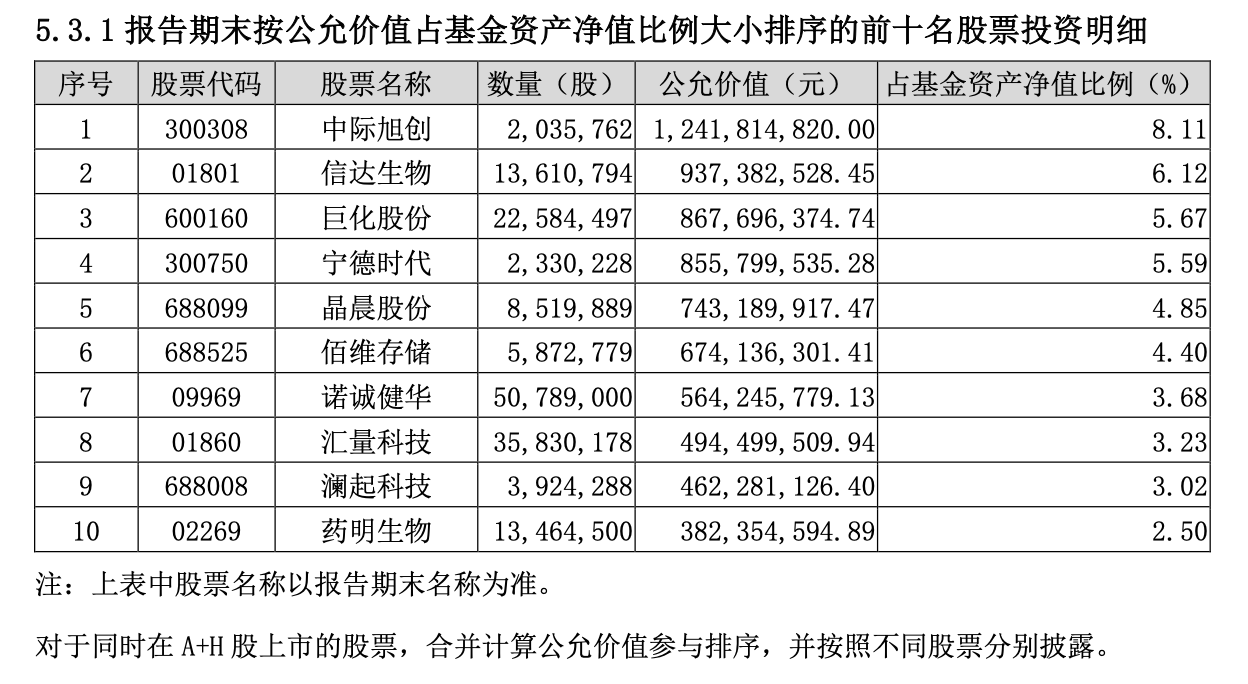
Core Insights - The report highlights significant investments made by fund manager Xie Zhiyu in various technology sectors, particularly in overseas computing power and semiconductor equipment, indicating a strategic focus on high-growth areas for 2026 [1][2] Investment Strategy - The funds managed by Xie Zhiyu, namely Xingquan He Yi and Xingquan He Run, have newly increased their positions in companies such as Baiwei Storage, Huiliang Technology, and WuXi Biologics, while also increasing their holdings in CATL [1] - The report emphasizes the importance of tracking core competitive trends in companies over a longer cycle to identify investment opportunities arising from technological transformations and sectoral rebounds [2] Sector Performance - The overseas computing power sector, particularly in optical modules, is experiencing record highs due to increased orders from major clients and advancements in new technologies [1] - Domestic supply chain leaders are gaining more influence on the international stage, especially in the optical module and PCB sectors, while also achieving breakthroughs in liquid cooling and power supply [1] - The AI-driven capital expenditure surge is creating challenges such as power shortages and storage deficits overseas, leading to heightened demand in domestic energy storage, gas turbines, and related industries [1] Company Holdings - The report lists significant stock holdings, including: - Zhongji Xuchuang: 2,035,762 shares valued at approximately 1.24 billion yuan - CATL: 2,330,228 shares valued at approximately 855.8 million yuan - Baiwei Storage: 5,872,779 shares valued at approximately 674.1 million yuan - Huiliang Technology: 35,830,178 shares valued at approximately 494.5 million yuan - WuXi Biologics: 13,464,500 shares valued at approximately 382.4 million yuan [3]



智通港股通资金流向统计(T+2)|1月22日





智通财经网· 2026-01-21 23:35
Group 1 - The top three companies with net inflow of southbound funds are SMIC (00981) with 458 million, Sanhua Intelligent Control (02050) with 405 million, and Hua Hong Semiconductor (01347) with 390 million [1] - The top three companies with net outflow of southbound funds are China Mobile (00941) with -601 million, UBTECH (09880) with -516 million, and Sanofi (01530) with -357 million [1] - In terms of net inflow ratio, Haitian Flavoring (03288) leads with 76.61%, followed by Southern Hong Kong Stock Connect (03432) with 62.50%, and CIMC (02039) with 59.57% [1] Group 2 - The top ten companies by net inflow include Tencent Holdings (00700) with 272 million and Alibaba-W (09988) with 263 million [2] - The top ten companies by net outflow include Meituan-W (03690) with -287 million and Bilibili-W (09626) with -242 million [2] - The top three companies with the highest net outflow ratio are Dekang Agriculture (02419) at -50.69%, Sanofi (01530) at -47.05%, and Jianfa International Group (01908) at -45.45% [3]
短期港股因“存款搬家”搅动 2026年生物医药板块值得期待
Xin Lang Cai Jing· 2026-01-21 10:25
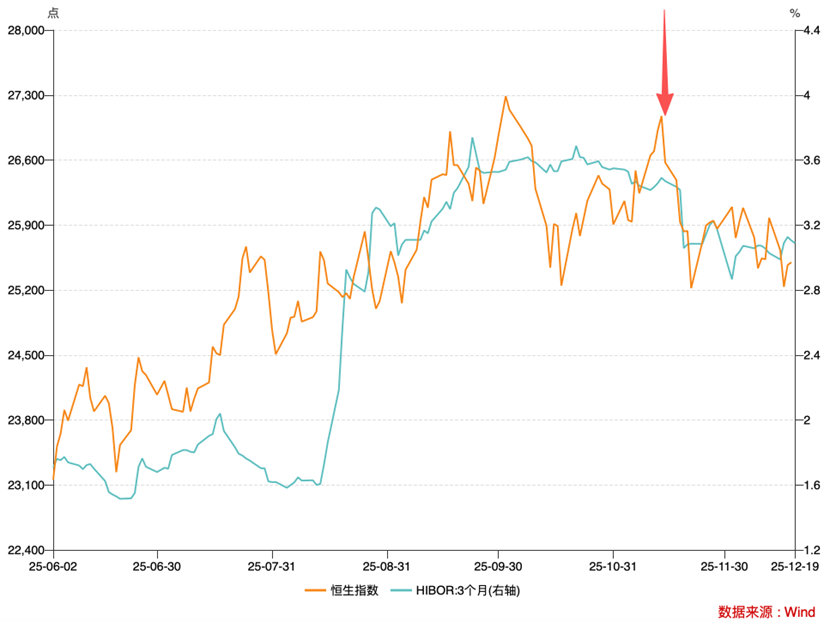
Core Insights - Recent fluctuations in the Hong Kong stock market are primarily driven by liquidity contraction due to deposit migration, which is not expected to alter the positive mid-to-long-term trend [2][27] - The risks associated with this liquidity contraction are anticipated to ease with the new Federal Reserve chair's influence [2][27] - The biopharmaceutical sector in Hong Kong is expected to have significant highlights in 2026 [2][27] Short-term Market Fluctuations - The root cause of recent volatility in the Hong Kong stock market is identified as "deposit migration" leading to liquidity shrinkage [3][28] - The offshore RMB was previously viewed as a liquidity anchor for the Hong Kong market, creating a chain reaction that benefits the capital market [5][28] - The decline in HIBOR (Hong Kong Interbank Offered Rate) has not translated into improved liquidity for the stock market, as it is primarily driven by capital outflow rather than liquidity enhancement [11][35] Impact of Southbound Capital - The inflow of southbound capital has contracted, causing significant disturbances to the Hong Kong market [9][32] - Concerns over potential fund outflows arise from the over-allocation of mainland active equity funds to Hong Kong stocks, which could lead to rebalancing [8][32] Biopharmaceutical Sector Outlook - The biopharmaceutical sector is highlighted as a key area of focus for 2026, with expectations of no "black swan" events in the short term [16][39] - The new procurement rules for medical insurance in China are expected to favor small and medium-sized enterprises, leading to improved financial performance in 2026 [41][45] - Specific companies recommended for investment include: - **Innovent Biologics (09696.HK)**: Anticipated to reach significant milestones in 2026 with ongoing collaborations [46] - **Lee's Pharmaceutical (00950.HK)**: Currently has a low P/E ratio and is actively expanding its business [47] - **China Biologic Products (01177.HK)**: Focused on various therapeutic areas and has recently received approval for a new drug [47]

2025年药品BD出海总结
Southwest Securities· 2026-01-20 11:37
Investment Rating - The report indicates a significant acceleration in BD (Business Development) overseas for Chinese innovative drugs, suggesting a positive investment outlook for the industry [3]. Core Insights - The number of BD projects, upfront payments, and total amounts for Chinese pharmaceutical companies significantly increased in 2025, with 165 projects, over $7.03 billion in upfront payments (up 226.8% year-on-year), and a total amount of $136.68 billion (up 192.2% year-on-year) [2][7]. - The report highlights a focus on dual antibodies (双抗), antibody-drug conjugates (ADC), GLP-1 receptor agonists (GLP1RA), and small nucleic acids as key areas for BD overseas [2][3]. Summary by Sections BD Project Growth - In 2025, the quarterly breakdown of BD projects shows 41, 43, 30, and 51 projects in Q1, Q2, Q3, and Q4 respectively, with significant year-on-year increases [2][7]. - Upfront payments for each quarter were $0.9 billion, $2.0 billion, $1.86 billion, and $2.27 billion, reflecting substantial growth rates [2][7]. Outbound BD Models - The predominant model for BD remains license in/out, while the NewCo/Co-CoJV model is gaining attention, with limited successful cases of independent commercialization [2][12][13]. - In 2025, MNCs (Multinational Corporations) accounted for $4.71 billion in upfront payments, representing 67% of total BD upfront payments [12]. Key Drug Categories - Dual antibodies saw a remarkable increase, with $3.5 billion in upfront payments (up 414.7%) and a total amount of $21.85 billion (up 361.5%) in 2025 [2][18]. - ADCs emerged as a significant focus, with $1.63 billion in upfront payments (up 676.2%) and a total amount of $21.13 billion (up 390.6%) [2][26]. - GLP-1RA projects achieved $470 million in upfront payments, marking a 109.8% increase, with a total amount of $9.6 billion [2]. NewCo Model - The NewCo model has facilitated overseas BD, with a total of $350 million in upfront payments and $13.74 billion in potential total amounts from 2023 to 2025 [17]. - In 2025, NewCo projects secured $110 million in upfront payments and $4.76 billion in potential total amounts [17]. Clinical Development Stages - Approximately 62% of molecules were in early clinical stages (pre-clinical to before Phase II) at the time of BD, indicating a trend towards early-stage licensing [8][9].

速递|信达生物玛仕度肽新适应症临床获批,押注减重+降压协同价值
GLP1减重宝典· 2026-01-20 09:12
Core Viewpoint - The article discusses the approval of a new clinical study for the drug Mashtudipeptide by Innovent Biologics, targeting blood pressure control in overweight or obese patients with hypertension, indicating a strategic upgrade in disease combination management within the crowded GLP-1 market [4][5]. Group 1: Clinical Development - Innovent Biologics has received approval for Mashtudipeptide injection to conduct a clinical study focused on hypertension combined with overweight or obesity [4]. - This clinical design signals a shift from viewing GLP-1 drugs solely as weight loss tools to recognizing them as platforms for managing metabolic diseases [5]. Group 2: Market Dynamics - The competition in the GLP-1 sector has evolved from focusing on weight loss efficacy to emphasizing safety and tolerability, and now to demonstrating clinical value in managing multiple comorbidities [6]. - Conditions such as hypertension, cardiovascular risks, fatty liver, and sleep apnea are emerging as new battlegrounds for GLP-1 drugs [6]. Group 3: Future Implications - As more indications are pursued, the competition will shift from merely comparing weight loss outcomes to a comprehensive evaluation of real-world disease burden and long-term outcomes [8]. - Innovent's focus on hypertension in obese populations exemplifies this trend towards a more integrated approach in the GLP-1 competitive landscape [8].