INNOVENT BIO(01801)

Search documents
信达生物涨近3% IBI3003获美国FDA快速通道资格认定 治疗多发性骨髓瘤
Zhi Tong Cai Jing· 2026-01-28 02:30
Core Viewpoint - Cinda Biologics (01801) shares rose nearly 3%, currently up 2.2% at HKD 83.6, with a trading volume of HKD 204 million [1] Group 1: Company Developments - Cinda Biologics announced that its anti-GPRC5D/BCMA/CD3 trispecific antibody IBI3003 received Fast Track Designation from the U.S. FDA on January 27, 2026 [1] - The intended indication for IBI3003 is for relapsed or refractory multiple myeloma (R/R MM) patients who have undergone at least four lines of treatment, including a proteasome inhibitor (Pl), an immunomodulatory drug (IMiD), and an anti-CD38 monoclonal antibody [1] - IBI3003 is developed using Cinda Biologics' proprietary Sanbody platform and is currently undergoing Phase I/II clinical trials in China, Australia, and soon in the U.S. to explore its efficacy and safety in R/R MM [1]
Q4公募基金整体和全基医药重仓持仓均创18年以来新低:医药行业25Q4基金持仓分析
Huafu Securities· 2026-01-27 07:30
Investment Rating - The report maintains an "Outperform" rating for the pharmaceutical industry [1] Core Insights - The overall and weighted holdings of public funds in the pharmaceutical sector reached a new low since 2018 in Q4 2025, with the pharmaceutical heavy holdings accounting for 8.0% of all public funds, down 1.7 percentage points quarter-on-quarter [2][9] - The total scale of pharmaceutical funds in Q4 2025 was 394.6 billion yuan, a decrease of 9.2% from the previous quarter, with active pharmaceutical funds at 177.7 billion yuan, down 14% [20] - The proportion of passive pharmaceutical funds has increased significantly from 18% in Q1 2018 to 55% in Q4 2025, indicating a shift towards passive investment strategies in the sector [20] Fund Holdings Analysis - In Q4 2025, the pharmaceutical sector saw a decrease in active fund holdings, with active pharmaceutical funds accounting for 33% of the total pharmaceutical heavy holdings, up 2 percentage points, while non-pharmaceutical active funds accounted for 26%, down 5.1 percentage points [3][13] - The top five holdings by market value in public funds included Heng Rui Medicine (31.7 billion), WuXi AppTec (29.6 billion), and Innovent Biologics (16.6 billion) [6] - The top three increases in active fund holdings were for Tigermed (1.7 billion), Yimeng Biologics (1.4 billion), and CSPC Pharmaceutical Group (1.3 billion) [6] Sector-Specific Trends - The report highlights a shift in fund holdings towards innovative drugs and CXO services, while traditional Chinese medicine and high-value consumables are underweighted [6] - The report notes that the proportion of holdings in traditional Chinese medicine and biotech has increased, while holdings in BioPharma and CXO have decreased significantly [6][28] - The overall market value of holdings in the Bio-Tech sector reached 7.25% in Q4 2025, marking the highest level since Q1 2018, with active pharmaceutical funds holding 4.9% [28]




华福证券:医药生物业新技术全面突破 战略看多中国创新出海
智通财经网· 2026-01-27 03:02
Core Viewpoint - By 2025, China's innovative pharmaceuticals are expected to demonstrate significant global competitiveness, with record overseas transactions and many companies turning profitable [1][2]. Domestic Review - The global competitiveness of Chinese innovative drugs is highlighted, with a record-breaking overseas transaction total exceeding $135 billion in 2025, and upfront payments reaching $7 billion. The average deal size has increased from $600 million to $900 million [2]. - A comprehensive support system from policy, including review and approval processes to medical insurance payments, is being established, leading to a rapid increase in market share for innovative drugs, particularly in oncology and immunology, which now exceeds 32% [2]. - Companies like BeiGene and Innovent Biologics have already turned profitable, with others like CanSino Biologics and Zai Lab expected to follow suit in the next three years, indicating a positive cycle of capital influx, R&D iteration, and value realization [2]. Overseas Review - The S&P Biotechnology Index has risen over 50% from its bottom in the second half of 2025, driven by interest rate cuts that have shifted funds from tech stocks to biotech [3]. - Major pharmaceutical companies (MNCs) are actively pursuing mergers and acquisitions to supplement their pipelines, particularly in oncology and immunology, as they face a "patent cliff" with key drugs like Keytruda and Opdivo losing patent protection by 2027-2028 [3]. Assessment - Chinese companies are becoming significant partners for the top 20 MNCs, with Chinese transaction amounts accounting for 40% of the global innovative drug market. China is transitioning from a "fast-follower" to a "smart-innovator" in fields like PD-1 bispecific antibodies, ADCs, and small nucleic acids, leading in pipeline numbers and clinical progress [4]. - The speed and cost advantages of Chinese innovative drug companies are notable, with patient recruitment occurring at 2-5 times the speed of international counterparts and costs being half that of Western companies [4]. Key Tracks and Investment Opportunities - Bispecific antibodies are expected to surpass $120 billion in global sales, with Chinese companies leading the development of second-generation IO products [5]. - ADCs are seeing significant contributions from China, with over half of the global pipeline, and are expected to achieve proof of concept (POC) validation by 2026 [5]. - Combination therapies in oncology are showing synergistic effects, with key clinical data expected in 2026 [5]. - The market for iRAS inhibitors is projected to exceed $8 billion in the U.S., with critical breakthroughs anticipated in 2026 [5]. - Small nucleic acids are expanding into broader applications, with key products expected to commercialize and deliver critical data in 2026 [5]. - Protein degradation technologies are advancing rapidly, with numerous autoimmune disease targets expected to yield data in 2026 [5]. - The metabolic and cardiovascular fields are also poised for breakthroughs, with new targets addressing issues like muscle loss associated with GLP-1 therapies [5]. Main Lines and Recommended Focus - Recommended companies in the bispecific antibody space include CanSino Biologics, Innovent Biologics, and others [7]. - ADC-focused companies include I-Mab, Kelun-Biotech, and others [7]. - Small nucleic acid companies to watch include Ribobio, BIBO, and others [7]. - Strategic combinations to consider include CanSino Biologics, BeiGene, and others [8]. - Flexible combinations include BIBO, Eifang Biologics, and others [8]. - Stable combinations include Hengrui Medicine, China National Pharmaceutical Group, and others [8].

智通港股通持股解析|1月27日




智通财经网· 2026-01-27 00:35
Core Insights - The top three companies by Hong Kong Stock Connect holding ratios are China Telecom (00728) at 70.93%, Green Power Environmental (01330) at 69.24%, and Kaisa New Energy (01108) at 67.38% [1] - The largest increases in holding amounts over the last five trading days were seen in the Tracker Fund of Hong Kong (02800) with an increase of +39.90 billion, Alibaba - W (09988) with +25.75 billion, and Hang Seng China Enterprises (02828) with +17.81 billion [2][3] - The largest decreases in holding amounts over the last five trading days were recorded for China Mobile (00941) with a decrease of -26.23 billion, Jiangxi Copper (00358) with -6.57 billion, and Innovent Biologics (01801) with -6.42 billion [2][3] Group 1: Top Holdings - China Telecom (00728) has a holding of 98.44 billion shares, representing 70.93% [1] - Green Power Environmental (01330) has a holding of 2.80 billion shares, representing 69.24% [1] - Kaisa New Energy (01108) has a holding of 1.68 billion shares, representing 67.38% [1] Group 2: Recent Increases - Tracker Fund of Hong Kong (02800) saw an increase of +39.90 billion in holding amount, with a change of +14,788.85 million shares [2] - Alibaba - W (09988) experienced an increase of +25.75 billion, with +1,558.44 million shares added [2] - Hang Seng China Enterprises (02828) had an increase of +17.81 billion, with +1,901.82 million shares added [2] Group 3: Recent Decreases - China Mobile (00941) had a decrease of -26.23 billion in holding amount, with a reduction of -3,328.74 million shares [3] - Jiangxi Copper (00358) saw a decrease of -6.57 billion, with -1,400.63 million shares reduced [3] - Innovent Biologics (01801) experienced a decrease of -6.42 billion, with -786.74 million shares reduced [3]
Innovent Announces IBI3003 (GPRC5D/BCMA/CD3 Trispecific Antibody) Receives Fast Track Designation from the U.S. FDA for Relapsed or Refractory Multiple Myeloma
Prnewswire· 2026-01-27 00:00
Core Viewpoint - Innovent Biologics has received Fast Track Designation from the U.S. FDA for its tri-specific antibody IBI3003, aimed at treating relapsed or refractory multiple myeloma in patients who have undergone multiple prior therapies [1][3]. Company Overview - Innovent Biologics, founded in 2011, focuses on developing high-quality biopharmaceuticals for various diseases, including cancer and autoimmune disorders. The company has launched 18 products and has multiple assets in clinical trials [7]. Product Development - IBI3003, developed using Innovent's proprietary Sanbody® platform, is currently in Phase 1/2 clinical trials in China, Australia, and soon in the United States. It targets both GPRC5D and BCMA to enhance treatment efficacy [2][4]. Clinical Trial Results - Clinical data presented at the ASH Annual Meeting indicated that IBI3003 has a tolerable safety profile and promising efficacy, with an overall response rate of 83.3% in patients treated at a specific dose level. The drug showed effectiveness even in high-risk patients [3][5]. Fast Track Designation - The Fast Track Designation is intended to expedite the development and review of drugs addressing serious conditions. This designation allows for more frequent interactions with the FDA, potentially accelerating clinical development [3].


小核酸赛道,挤满了下一代大药
Ge Long Hui· 2026-01-26 21:06
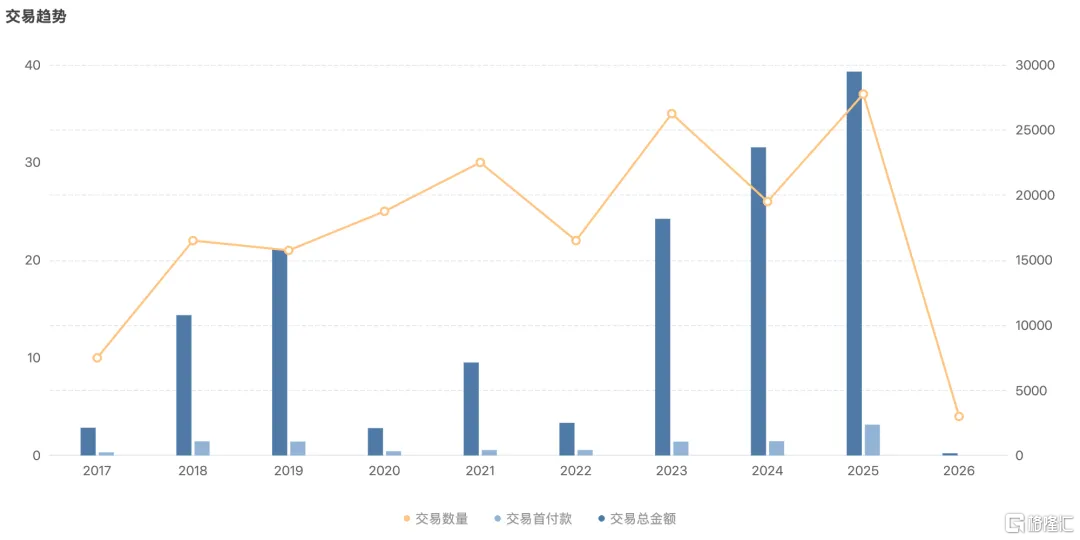
Core Insights - The small nucleic acid drug sector is experiencing a significant surge, marking the beginning of a golden era driven by technological breakthroughs and capital enthusiasm [2][11][22] Industry Developments - On January 5, 2026, Sanofi's APOC3 siRNA drug Plozasiran was approved for domestic market use to treat hyperlipidemia [1] - On January 9, 2026, Rebio Biotech, known as "China's first small nucleic acid stock," successfully listed on the Hong Kong Stock Exchange, with its stock price soaring by 40% on the first day, leading to a market capitalization exceeding 13 billion HKD [1] - China National Pharmaceutical Group announced a 1.2 billion CNY acquisition of Hegia Biotech, securing the world's first clinically validated liver-targeted delivery platform capable of annual dosing [1] Market Trends - The global small nucleic acid drug market has seen nearly 100 business development (BD) collaborations in the past three years, with transaction numbers and amounts increasing annually, reaching over 30 BD deals in 2025 totaling nearly 30 billion USD [4][9] - Notable transactions in 2025 included Novartis acquiring Avidity Biosciences for 12 billion USD and multiple other significant deals involving RNA therapies [7][9] Clinical Advancements - Ionis's APOC3 ASO drug Olezarsen showed promising results in reducing triglyceride levels by up to 72% in patients with severe hypertriglyceridemia, leading to an increase in peak annual sales forecast from 1.5 billion USD to 2.5 billion USD [12] - GSK's ASO therapy Bepirovirsen is expected to be the first drug to achieve functional cure for chronic hepatitis B, with a peak annual sales potential of 2 billion USD [12] Emerging Opportunities - The small nucleic acid drugs are expanding into various therapeutic areas, including obesity and kidney diseases, with promising results from clinical trials demonstrating significant weight loss and metabolic health improvements [13][15] - The number of small nucleic acid drugs in development globally has surpassed 1,200, with siRNA and ASO therapies being the most prominent [17] Strategic Collaborations - Domestic companies are increasingly recognized for their innovative value in small nucleic acid drugs, with active BD transactions, including significant collaborations by Rebio Biotech and other firms [18][21] - Companies like Saintin Biotech are forming strategic partnerships with major pharmaceutical firms to advance their small nucleic acid drug pipelines [19] Conclusion - The convergence of technological advancements, capital influx, and successful clinical outcomes is propelling small nucleic acid drugs into a pivotal position within the pharmaceutical industry, with China poised to become a global innovation hub [22]




2026年中国心脑血管药物行业市场政策汇总、产业链图谱、市场规模、竞争格局及发展趋势分析:需求群体庞大[图]
Chan Ye Xin Xi Wang· 2026-01-26 01:40
Core Insights - The aging population in China is leading to an increase in cardiovascular diseases, with rising prevalence of chronic conditions such as hypertension and hyperlipidemia, driving demand for cardiovascular drugs [1][8] - There is a significant increase in health awareness among residents, leading to earlier screening and treatment of cardiovascular diseases, which expands the applicable population for cardiovascular medications [1][8] - The implementation of centralized drug procurement policies is causing a downward trend in drug prices, putting pressure on the overall market size, which is projected to decline to 954.1 billion yuan for traditional Chinese medicine and 1,415.8 billion yuan for chemical drugs by 2025 [1][8] Market Overview - Cardiovascular diseases encompass both cardiovascular and cerebrovascular diseases, primarily caused by conditions like hyperlipidemia, blood viscosity, atherosclerosis, and hypertension [2] - Cardiovascular drugs are classified into two main categories: cardiovascular system drugs and cerebrovascular system drugs, targeting various heart and brain-related conditions [2] Policy Environment - The pharmaceutical manufacturing industry, including cardiovascular drugs, is a key focus of national policy support, with various regulations aimed at correcting malpractices and promoting industry development [3][4] Industry Chain - The upstream of the cardiovascular drug industry includes chemical raw materials, traditional Chinese medicinal materials, and pharmaceutical packaging materials, while the midstream involves research, production, and registration processes [4][5] Demand Dynamics - Cardiovascular diseases are the leading cause of death in China, with hypertension cases expected to reach 370 million and coronary heart disease cases at 30 million by 2025, indicating a growing demand for cardiovascular medications [6][8] Competitive Landscape - The market has developed a dual competitive structure, with foreign companies dominating the chemical drug sector and local companies leading in traditional Chinese medicine, creating a competitive environment [10] - Notable domestic players include Shijiazhuang Pharmaceutical Group and Shandong Buchang Pharmaceutical, which have established strong market positions through unique products and effective distribution networks [10][11] Development Trends - The industry is shifting from reliance on generic drugs to innovation, focusing on high-value drug development, including targeted and biological drugs [12] - There is a growing integration of chronic disease management with digital tools, enhancing patient adherence and treatment precision [13] - Policy reforms are reshaping market dynamics, emphasizing high clinical value drugs and expanding the market for basic medications in primary healthcare [14] - The industry is moving towards a collaborative ecosystem, with increased internationalization efforts and participation in global clinical trials [15]



狂揽1357亿美元,谁是2025中国创新药出海“最贵”十单?
3 6 Ke· 2026-01-26 01:08
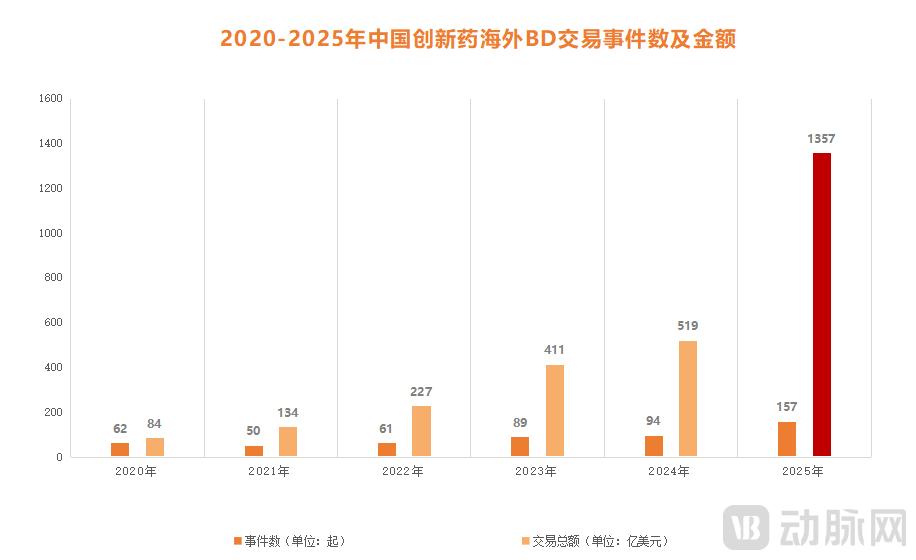
Core Insights - In 2025, China achieved a record high in overseas business development (BD) transactions for innovative drugs, with 157 deals totaling $135.655 billion, including an upfront payment of $7 billion [1][3][16] - The year 2025 marked a significant shift in the BD landscape, transitioning from a "1.0 era" of simple asset sales to a "2.0 era" characterized by deeper partnerships and higher value creation [5][16] Transaction Overview - The top three BD transactions in 2025 included a $13 billion deal between Qide Pharma and Biohaven & AimedBio, a $12.5 billion deal between Hengrui and GSK, and a $11.4 billion deal between Innovent Biologics and Takeda [2][11] - China accounted for 49% of the global total for BD transactions in 2025, surpassing the United States for the first time [2][11] Financial Metrics - The total upfront payments for BD transactions in China reached $7 billion in 2025, nearly doubling from $4.1 billion in 2024, with individual transaction upfront payment ratios increasing to approximately 5.2%-6.7% [7][16] - Milestone payments also saw significant activity, with at least 10 transactions triggering milestone payments in 2025, indicating a trend towards more structured financial agreements [9][16] Therapeutic Areas and Pipeline Stages - Oncology remained the primary focus of BD transactions, accounting for 51.4% of deals, although other areas such as immunology and metabolic diseases gained traction, rising to 34.1% [11][13] - The distribution of pipeline stages showed a shift towards later-stage projects, with 22% of transactions involving Phase III or marketed products, reflecting a preference for assets with established clinical data [13][16] Collaboration Models - The "Co-Co" model, which emphasizes joint development and commercialization, emerged as a new strategic direction in 2025, complementing traditional "License-out" and "NewCo" models [15][16] - This evolution in collaboration models indicates a trend towards deeper partnerships, allowing for shared risks and rewards, and enhancing the overall value proposition of BD transactions [15][16] Future Outlook - The demand for Chinese innovative drugs is expected to remain strong in 2026, driven by the approaching patent cliffs and increasing global competition, suggesting continued activity in BD transactions [21][22] - The industry is anticipated to further mature, focusing on quality and value in BD transactions, with an emphasis on long-term collaboration and mutual benefits [21][22]
智通港股通持股解析|1月26日
智通财经网· 2026-01-26 00:32
Core Insights - The top three companies by Hong Kong Stock Connect holding ratios are China Telecom (00728) at 70.92%, Green Power Environmental (01330) at 69.34%, and Kaisa Group Holdings (01108) at 67.61% [1][2] - The largest increases in holding amounts over the last five trading days were seen in the following companies: Yingfu Fund (02800) with an increase of 4.041 billion, Hang Seng China Enterprises (02828) with 1.783 billion, and Alibaba - W (09988) with 1.455 billion [1][2] - The largest decreases in holding amounts over the last five trading days were recorded for China Mobile (00941) with a decrease of 2.395 billion, Innovent Biologics (01801) with 589 million, and UBTECH Robotics (09880) with 556 million [1][3] Group 1: Hong Kong Stock Connect Holding Ratios - China Telecom (00728) has a holding of 9.843 billion shares, representing 70.92% [2] - Green Power Environmental (01330) has a holding of 280 million shares, representing 69.34% [2] - Kaisa Group Holdings (01108) has a holding of 169 million shares, representing 67.61% [2] Group 2: Recent Increases in Holdings - Yingfu Fund (02800) saw an increase of 4.041 billion in holding amount, with a change of 14.9907 million shares [2] - Hang Seng China Enterprises (02828) increased by 1.783 billion, with a change of 1.8975 million shares [2] - Alibaba - W (09988) increased by 1.455 billion, with a change of 0.8637 million shares [2] Group 3: Recent Decreases in Holdings - China Mobile (00941) experienced a decrease of 2.395 billion, with a change of -3.01224 million shares [3] - Innovent Biologics (01801) saw a decrease of 589 million, with a change of -0.70319 million shares [3] - UBTECH Robotics (09880) had a decrease of 556 million, with a change of -0.38639 million shares [3]
QDII基金交出亮眼“成绩单”后市看好创新药和科技方向
Shang Hai Zheng Quan Bao· 2026-01-25 14:24
Group 1 - The QDII funds have shown impressive performance since 2025, with an average net value increase of 27.9%, particularly driven by funds heavily invested in Hong Kong innovative pharmaceuticals [2] - Notable funds such as Huatai-PB Korea Semiconductor ETF and E Fund Global Growth Select Mixed A have seen net value increases of 127.55% and 102.91% respectively, with several other funds also exceeding 80% growth [2] - The top holdings of these high-performing funds predominantly include Hong Kong innovative pharmaceutical stocks, with examples like Kelun-Botai Biotech and Innovent Biologics among the top five holdings of Huatai-PB Hong Kong Advantage Select Mixed A [2] Group 2 - The technology sector is also a key focus for many high-performing products, with E Fund Global Growth Select Mixed A holding major global tech stocks such as TSMC and Google-A among its top ten holdings [3] - Fund managers express optimism for the future of the innovative pharmaceutical and technology sectors, citing a recent phase of adjustment in the innovative drug industry as a temporary market sentiment issue rather than a fundamental change [4][5] - The innovative drug sector's valuation has become attractive, with expectations of upward potential, and the industry is anticipated to show resilience and technological attributes over the next 2 to 3 years [5] Group 3 - The pharmaceutical industry is expected to see positive changes in 2026, with contract development organizations (CXO) gaining confidence from solid data, and new technologies like artificial intelligence and brain-machine interfaces opening new application scenarios [5] - The semiconductor sector, particularly in storage, is projected to continue its cycle, with local market trends favoring leading storage manufacturers and potential IPOs supporting capacity expansion [6]