
BBMG(02009)

Search documents
金隅集团(02009) - 关於聘任公司副总经理的公告
2025-12-10 10:56
本公告乃北京金隅集團股份有限公司(「本公司」)按香港聯合交易所有限公司證券上市規則 第13.10B條發出。 香港交易及結算所有限公司及香港聯合交易所有限公司對本公告的內容概不負責,對其準確 性或完整性亦不發表任何聲明,並明確表示,概不會就本公告全部或任何部分內容而產生或 因依賴該等內容而引致的任何損失承擔任何責任。 北 京 金 隅 集 團 股 份 有 限 公 司 BBMG Corporation* (於中華人民共和國註冊成立的股份有限公司) (股份代號:2009) 海外監管公告 茲載列本公司於二零二五年十二月十日在中華人民共和國上海證券交易所網站刊登關於聘 任公司副總經理的公告,僅供參閱。 承董事會命 北京金隅集團股份有限公司 主席 姜英武 於本公告日期,本公司執行董事為姜英武、顧昱及鄭寶金;非執行董事為孔慶輝、顧鐵民及 趙新軍;以及獨立非執行董事為劉太剛、洪永淼、譚建方及尹援平。 * 僅供識別 证券代码:601992 证券简称:金隅集团 公告编号:临 2025-053 北京金隅集团股份有限公司 中國北京,二零二五年十二月十日 根据《公司法》、公司《章程》等相关规定,董事会聘任徐传辉 先生为公司副总经理,任期 ...
金隅集团:聘任徐传辉为副总经理
Xin Lang Cai Jing· 2025-12-10 10:50
金隅集团12月10日公告,公司董事会召开第七届董事会第十八次会议,审议通过了《关于聘任副总经理 的议案》,聘任徐传辉为公司副总经理,任期与第七届董事会任期一致。同时徐传辉不再担任公司总经 理助理职务。 ...
金隅集团:聘任徐传辉为公司副总经理
Mei Ri Jing Ji Xin Wen· 2025-12-10 10:47
Group 1 - The core point of the article is the appointment of Xu Chuanhui as the Deputy General Manager of Jinyu Group, with a term aligned with the seventh board of directors [1] - For the fiscal year 2024, Jinyu Group's revenue composition is as follows: new building materials account for 71.04%, real estate development for 30.19%, and internal offsets at -1.23% [1] - As of the report date, Jinyu Group has a market capitalization of 17.8 billion yuan [1]
金隅集团(601992) - 北京金隅集团股份有限公司关于聘任公司副总经理的公告
2025-12-10 10:46
证券代码:601992 证券简称:金隅集团 公告编号:临 2025-053 北京金隅集团股份有限公司 关于聘任公司副总经理的公告 本公司董事会及全体董事保证本公告内容不存在虚假记载、误导性陈述或者 重大遗漏,并对其内容的真实性、准确性和完整性承担个别及连带责任。 公司董事会薪酬与提名委员会已对该议案进行了审议,认为徐传 辉先生具备与其行使职权相适应的任职条件,其任职资格符合《公司 法》《上海证券交易所股票上市规则》等相关法律、法规和规范性文 件的规定,不存在受到中国证券监督管理委员会、上海证券交易所处 罚的情形,同意提交董事会审议。 特此公告。 附件:徐传辉先生简历 北京金隅集团股份有限公司董事会 二〇二五年十二月十一日 附件: 徐传辉先生简历 北京金隅集团股份有限公司(以下简称 "本公司""公司") 董事会于 2025 年 12 月 10 日召开了第七届董事会第十八次会议,审 议通过了《关于聘任副总经理的议案》。 根据《公司法》、公司《章程》等相关规定,董事会聘任徐传辉 先生为公司副总经理,任期与第七届董事会任期一致。同时徐传辉先 生不再担任公司总经理助理职务。 1972 年 8 月出生,现任本公司副总经理 ...
北京金隅集团股份有限公司李妍:绿色化的非遗是具有当代生命力的非遗
Zhong Guo Jin Rong Xin Xi Wang· 2025-12-10 07:56
Core Viewpoint - The integration of traditional craftsmanship with zero-carbon technology is essential for the survival and development of heritage crafts in the contemporary era, as highlighted by Beijing Jinyu Group's initiative to create a "zero-carbon factory" [1][4]. Group 1: Strategic Transformation - The decision to establish a "zero-carbon factory" represents a disruptive strategic transformation driven by macro trends, including China's dual carbon goals and related policies that necessitate the transition of high-energy-consuming traditional manufacturing [4]. - The internal need for revitalizing heritage crafts is emphasized, as traditional techniques must adapt to modern environmental standards to survive and thrive in contemporary society [4]. - The combination of "heritage" and "zero-carbon" significantly enhances the brand value and market competitiveness of Jinyu's glass products, opening up broader market opportunities in high-end cultural creation, green architecture, and cultural tourism [4]. Group 2: Technical Challenges and Solutions - The core principle during the zero-carbon transformation is to maintain the essence and quality of the craftsmanship while innovating external technical methods [5]. - The strategy involves preserving traditional kiln structures while implementing efficient flue gas treatment and photovoltaic systems to achieve zero carbon emissions, likened to equipping ancient kilns with "environmental lungs" [6]. - The quantification of "fire control" is identified as a major technical challenge, which has been addressed by integrating temperature sensors into key kiln positions to digitize the firing process, thus combining traditional expertise with modern data [6]. Group 3: Future Goals and Vision - The company aims to establish a benchmark for the green transformation of traditional heritage industries and achieve a sustainable integration of culture, commerce, and tourism [7]. - Plans include annual zero-carbon factory certification and the development of high-value "zero-carbon + heritage" educational services, expanding the park's role from a production base to a green cultural experience destination [7]. - The vision is to create a virtuous cycle of "green investment—brand enhancement—market expansion—revenue feedback," ensuring sustainable funding and development for both zero-carbon initiatives and heritage preservation [7].


中建金隅两大新盘海淀宝山上演“盯防战”
Bei Jing Shang Bao· 2025-12-08 15:46
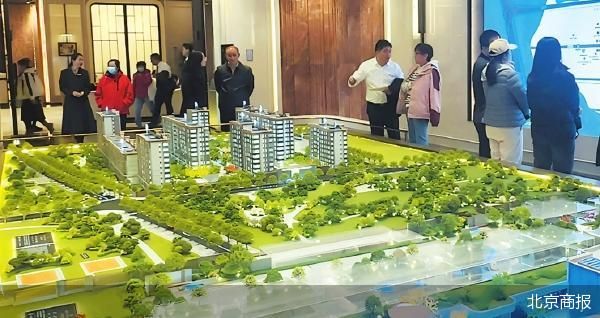
Core Insights - The article discusses the competitive landscape between two residential projects in Haidian, Beijing: Beijing Yu · Haihui and China State Construction's Yipin · Haicheng Yuanzheng, both targeting the improvement housing market with overlapping customer bases [1][3]. Pricing Strategy - Both projects were acquired at competitive prices, with Beijing Yu · Haihui at 33.64 billion yuan (1.48% premium) and China State Construction at 27.78 billion yuan (1.76% premium) [3]. - The average selling price for Yipin · Haicheng Yuanzheng is set between 90,100 to 96,500 yuan per square meter, while Beijing Yu · Haihui ranges from 90,800 to 97,700 yuan per square meter [4]. - Yipin · Haicheng Yuanzheng offers a 9.1% discount, while Beijing Yu · Haihui provides a 10% discount, creating a significant price difference despite the small percentage difference in discount [4][5]. Product Differentiation - Yipin · Haicheng Yuanzheng has a wider range of unit sizes starting from 99 square meters, catering to a broader market, while Beijing Yu · Haihui focuses on larger units of 108, 129, and 145 square meters [3]. - The projects differ in their interior finishes, with Yipin · Haicheng Yuanzheng using differentiated standards based on unit size, while Beijing Yu · Haihui maintains uniform high-end finishes across all units [6][7]. Community Amenities - Yipin · Haicheng Yuanzheng features a larger clubhouse of approximately 2,600 square meters with diverse amenities including a swimming pool and private dining areas, enhancing its community appeal [7]. - Beijing Yu · Haihui's clubhouse is smaller at 1,700 square meters and lacks a swimming pool, focusing instead on sports facilities [7]. Light and Layout Considerations - The building layout of Yipin · Haicheng Yuanzheng results in some units experiencing reduced sunlight due to their positioning, while Beijing Yu · Haihui's design allows for better natural light [8][9]. - Both projects meet planning standards for spacing and light, but Beijing Yu · Haihui is noted for superior daylight hours [9]. Market Positioning - The competition between these two projects reflects broader trends in the real estate market, emphasizing the importance of product differentiation, pricing strategies, and community amenities in attracting buyers [8][9].
金隅集团:公司通过北京京国管股权投资基金(有限合伙)间接持有北京蓝箭鸿擎科技有限公司0.35%股权
Mei Ri Jing Ji Xin Wen· 2025-12-05 11:09
每经AI快讯,有投资者在投资者互动平台提问:请问贵公司是否通过北京京国管股权投资基金(有限 合伙)参股北京蓝箭鸿擎科技有限公司? 金隅集团(601992.SH)12月5日在投资者互动平台表示,公司通过北京京国管股权投资基金(有限合 伙)间接持有北京蓝箭鸿擎科技有限公司0.35%股权,持股比例很低。 (文章来源:每日经济新闻) ...
金隅集团:公司未开展机器人、算力相关业务
Mei Ri Jing Ji Xin Wen· 2025-12-05 11:09
Core Viewpoint - The company, Jinju Group (601992.SH), confirmed that it does not engage in any robotics or computing power-related industries [1] Group 1 - Investors inquired about the company's involvement in robotics and computing power sectors [1] - The company responded on December 5, stating that it has not developed any related businesses [1]
金隅集团(601992.SH):公司未开展机器人相关产业
Ge Long Hui· 2025-12-05 10:37
Group 1 - The company, Jinju Group (601992.SH), stated on the investor interaction platform that it has not engaged in the robotics-related industry [1]
港股概念追踪 传统“反内卷”重塑格局 水泥去产能进程有望加速(附概念股)
Jin Rong Jie· 2025-12-04 01:05
Group 1 - The Ministry of Ecology and Environment has issued the "Quota Allocation Plan" for carbon emissions trading in the steel, cement, and aluminum smelting industries for 2024 and 2025, which is based on the successful experience of the power generation sector [1] - The quota allocation will be linked to actual production levels without setting an absolute cap on total carbon emissions, aiming to encourage advanced practices and penalize laggards [1] - The plan requires newly included industries to complete their first quota compliance within the year, with government oversight to ensure timely compliance and maintain the integrity of the carbon trading market [1] Group 2 - Tianfeng Securities reports that over 85% of clinker production lines in northern provinces are currently offline due to winter production restrictions, with plans for further shutdowns in December [2] - The report indicates that the cement industry's bottom-line profitability is supported, and by 2025, leading companies will begin to address excess production capacity, with a total of 52.5 million tons of capacity being replaced and 83.59 million tons exiting the market [2] - The actual effects of production capacity management are expected to become evident in 2026 [2] Group 3 - Related Hong Kong stocks in the cement sector include Huaxin Cement (06655), China National Building Material (03323), Conch Cement (00914), China Resources Cement Technology (01313), and others [3]