INTEL(04335)

Search documents
报道:关键制程技术遇阻,英特尔下一代PC芯片进展堪忧
Hua Er Jie Jian Wen· 2025-08-05 12:33
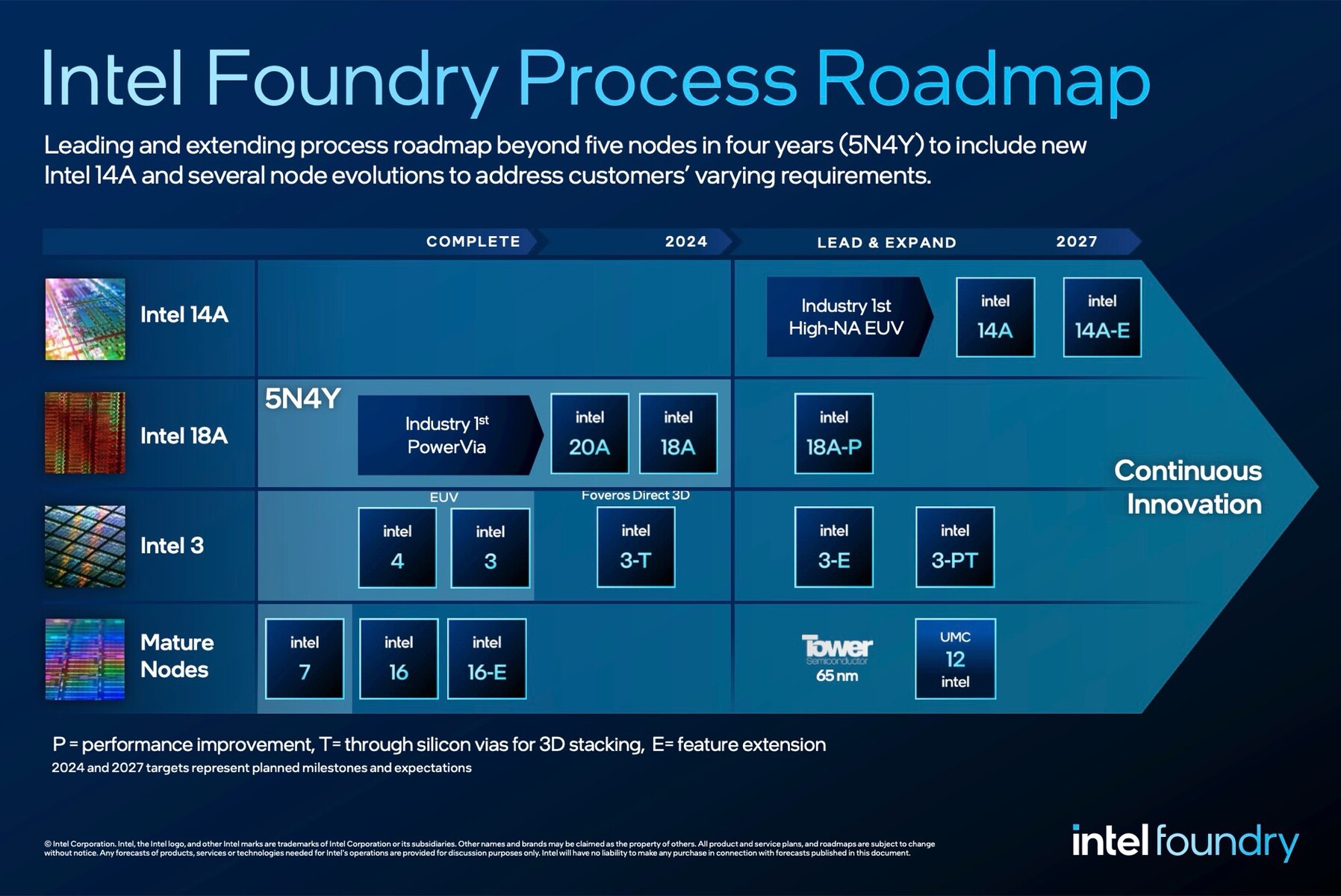
Core Insights - Intel is facing significant setbacks in its efforts to regain its dominance in chip manufacturing, particularly with the 18A process for the "Panther Lake" laptop chips, which has low yield rates [1][2] - The company had previously committed to large-scale production of the 18A process by 2025, aiming to attract external clients for its nascent foundry business [1][5] - Intel's CFO acknowledged that the production is still in the early stages and that yield improvements are expected by the end of the year, but profitability remains uncertain [1][2] Yield Challenges - Yield is a critical indicator of chip manufacturing efficiency and profitability, with the "Panther Lake" chip's yield reportedly increasing from about 5% to only 10% since last year [2] - The defect density of the "Panther Lake" chip is approximately three times the acceptable level for large-scale production, with Intel's historical target being over 50% yield before entering mass production [2][3] - Despite the CFO's claims that yield is better than reported, he did not provide specific figures and emphasized the need for further improvements [2] Technical Risks - The challenges faced by Intel in the 18A process stem from the aggressive introduction of multiple unproven technologies, which poses significant manufacturing risks [3] - This strategy is seen as a high-risk gamble, with the potential for failure if yield rates do not improve significantly before the product launch [3] Impact on Foundry Business - The success or failure of "Panther Lake" is crucial for Intel's foundry business, which aims to compete with TSMC in contract manufacturing [5] - Achieving mass production of "Panther Lake" would serve as a key validation of the 18A process's capabilities, attracting external customers [5] - Intel has warned that if the next-generation 14A process fails to secure external foundry business, the company may completely exit the advanced manufacturing sector [5]

对话英特尔中国区客户端业务部总经理:要加大在电竞市场的投入
Hua Er Jie Jian Wen· 2025-08-05 09:58
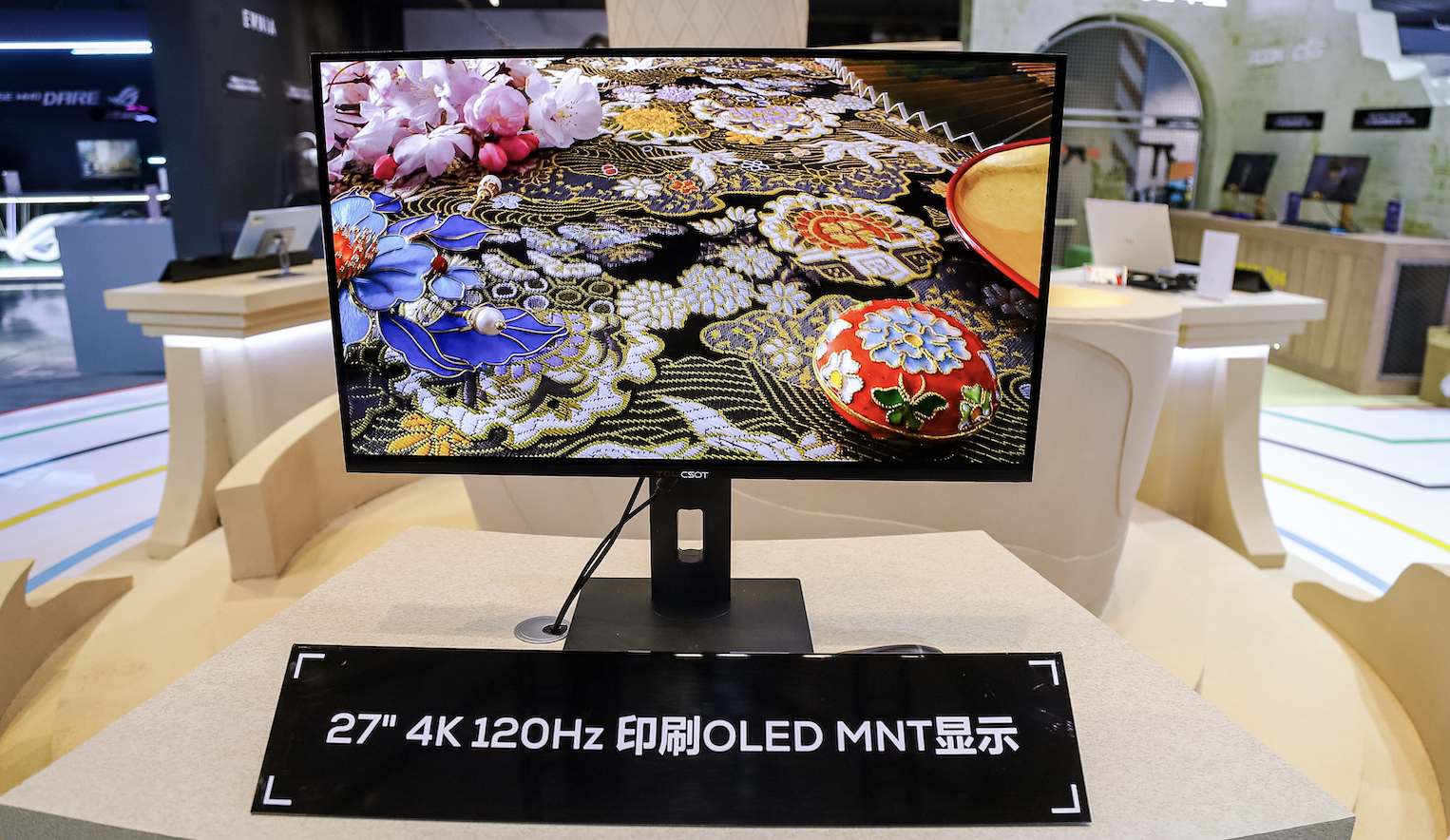
Core Insights - The collaboration between Intel and TCL Huaxing is deepening to meet the rising demand for gaming monitors, with a focus on enhancing user experience and market presence in the esports sector [2][4]. Group 1: Collaboration and Innovation - Intel aims to partner with a wide range of ecosystem partners, including TCL Huaxing, to cater to the needs of esports players and enhance its investment in the esports market [2]. - The collaboration includes joint development of green all-in-one technology and sponsorship of esports events, utilizing TCL Huaxing's screens for competitions [2][3]. - Both companies plan to drive continuous innovation in gaming monitors through technology complementarity, focusing on AI to enhance display experiences [2][3]. Group 2: Industry Standards and User Experience - Intel and TCL Huaxing intend to promote standardization in the esports industry, including display resolutions, to adapt to the rapidly maturing market [3]. - The gaming experience is viewed as a comprehensive one, requiring collaboration across the entire industry chain to optimize user experience [3][4]. - The partnership aims to enhance immersive experiences in gaming, addressing the need for high-quality displays and stable frame rates [3][4]. Group 3: Market Growth and Demand - The esports monitor market is experiencing rapid growth, with TCL Huaxing holding the global market share and shipment volume for esports monitors for three consecutive years [4][5]. - The overall retail market for monitors in mainland China saw a total sales volume of 6.42 million units in the first half of 2025, marking a year-on-year increase of 29.7% [6]. - Factors driving the growth of the esports monitor market include the development of the esports industry, decreasing prices, improved product performance, and expanded application scenarios [6]. Group 4: Future Plans - TCL Huaxing plans to continue developing a range of esports products to meet global consumer demands across various devices [6]. - The company aims to leverage diverse technologies to enrich and expand the esports display segment, facilitating new growth opportunities [6].


惠誉下调英特尔(INTC.US)信用评级至“BBB”,展望“负面”
Zhi Tong Cai Jing· 2025-08-05 07:48
惠誉表示:"信用指标仍然疲软,需要更强劲的终端市场、成功的产品推广,以及未来12-24个月的净债 务削减,才能使EBITDA杠杆率恢复到与评级一致的水平。" 惠誉补充道,英特尔更为灵活的代工策略将未来资本支出与已确定的客户需求挂钩,"这是一个净信贷 利好因素",但这也凸显了该公司技术路线图所带来更高的执行风险。 该评级机构还指出,来自恩智浦(NXPI.US)、博通(AVGO.US)以及AMD(AMD.US)等同行的竞争日益激 烈。 (原标题:惠誉下调英特尔(INTC.US)信用评级至"BBB",展望"负面") 智通财经APP获悉,惠誉评级将英特尔(INTC.US)的长期发行人违约评级(IDR)和高级无抵押债券评级 从"BBB+"下调至"BBB",仅比垃圾级高出两个级别,并确认其短期IDR和商业票据评级为"F2"。惠誉 还表示,英特尔的评级展望为"负面",反映出需求环境比此前预期的更为严峻,这限制了该科技巨头的 盈利增长。 惠誉还表示,鉴于台积电(TSM.US)拥有更出色的自由现金流状况和良好的信用指标,英特尔在运营和 财务方面仍逊于台积电。 不过,惠誉称英特尔的流动性状况"稳健"。截至6月28日,英特尔持有2 ...
屋漏偏逢连夜雨!英特尔惨遭惠誉降级,已接近“垃圾债”边缘
Feng Huang Wang· 2025-08-05 05:40
Core Viewpoint - Fitch downgraded Intel's credit rating from BBB+ to BBB with a negative outlook, indicating significant challenges in maintaining market demand and financial stability [1][3] Group 1: Credit Rating and Financial Challenges - Intel's credit rating downgrade places it just two notches above junk status, highlighting the company's struggles [1] - The company reported substantial losses in its recent Q2 FY2025 earnings, with a stock price decline of 11.36% over the past month, reducing its market capitalization to $85.3 billion [2] - Despite a slight revenue recovery, Intel's massive losses and restructuring efforts remain focal points for market observers [2] Group 2: Competitive Landscape - Intel faces increasing competition from rivals such as NXP Semiconductors, Broadcom, and AMD, which exacerbates its operational pressures [3] - The demand growth in the global consumer electronics and enterprise markets is slowing, further complicating Intel's recovery efforts [3] - Fitch noted that while Intel holds a strong market position in personal computers and traditional enterprise servers, it faces fierce competition from Qualcomm and AMD in the PC sector [3] Group 3: Financial Health and Outlook - Fitch analysts indicated that Intel's credit metrics remain weak, and the company must improve its end-market performance, successfully upgrade products, and reduce net debt over the next 12-14 months to regain its previous rating [3] - Intel's liquidity is described as "solid," with $21.2 billion in cash, cash equivalents, and short-term investments, along with $7 billion in unused credit as of June 28 [3] - Previous downgrades by S&P Global and Moody's also reflect ongoing concerns about Intel's financial stability and operational execution risks [4]
全球半导体及半导体设备_如果英特尔放弃…… 会怎样-Global Semiconductors and Semicap Equipment_ What happens if Intel gives up_
2025-08-05 03:20
Summary of Key Points from the Conference Call Industry Overview - The discussion centers around the **semiconductor industry**, particularly focusing on **Intel** and its potential shift towards becoming a **fabless company** if it fails to secure a major external customer for its 14A and subsequent nodes [2][9]. Core Insights and Arguments 1. **Intel's Strategic Shift**: Intel may cease pursuing its 14A node and subsequent nodes, which could lead to it becoming a fabless company. This shift would have significant implications for the semiconductor supply chain [2][9]. 2. **Impact on Wafer Fabrication Equipment (WFE)**: Intel is a major player in semiconductor capital expenditure, contributing **20-25%** of logic foundry capex and **10-15%** of total semiconductor capex. A shift to fabless would negatively impact the WFE market, particularly for EUV supply chain companies like **Lasertec** and **ASML** [3][14]. 3. **EUV Supply Chain Exposure**: Companies like Lasertec and ASML are significantly exposed to Intel, with Lasertec deriving approximately **40%** of its backlog from Intel. ASML, while having a lower revenue contribution, still relies on Intel for **15-20%** of its EUV revenue [3][4][19]. 4. **Beneficiaries of Intel's Potential Fabless Model**: If Intel becomes fabless, companies such as **TSMC**, **Samsung Foundry**, and **Hoya** are expected to benefit. Hoya, in particular, could see its market share in EUV mask blanks grow from **70% to 100%** if Intel stops internal manufacturing [4][5][9]. 5. **Long-term Market Dynamics**: The transition may create a time lag for TSMC and Samsung to redesign chips and build capacity, but TSMC is well-positioned to benefit from Intel's potential fabless status. Samsung Foundry is also expected to gain from this shift [5][9]. 6. **Intel's Challenges**: The potential move to fabless raises concerns about Intel's competitiveness against AMD and could disrupt its product roadmap. The uncertainty surrounding this transition may deter major customers from partnering with Intel [6][7][9]. Additional Important Insights - **Market Performance Ratings**: The report includes performance ratings for various companies, with **TSMC** rated as Outperform with a price target of **NT$1,260.00**, and **Samsung** also rated as Outperform with a price target of **KRW 78,000**. Intel is rated as Market-Perform with a target price of **$21.00**, reflecting a significant decline of **51.8%** [10][11][12]. - **Investment Implications**: The report suggests avoiding Intel due to the substantial disruption and uncertainty surrounding its business model and stock performance. Conversely, TSMC, Samsung Foundry, and Hoya are seen as potential investment opportunities [9]. This summary encapsulates the critical points discussed in the conference call, highlighting the implications of Intel's strategic decisions on the semiconductor industry and related companies.
电竞产业连续两年增长,完美和英特尔等厂商宣布加码
Di Yi Cai Jing· 2025-08-02 14:06
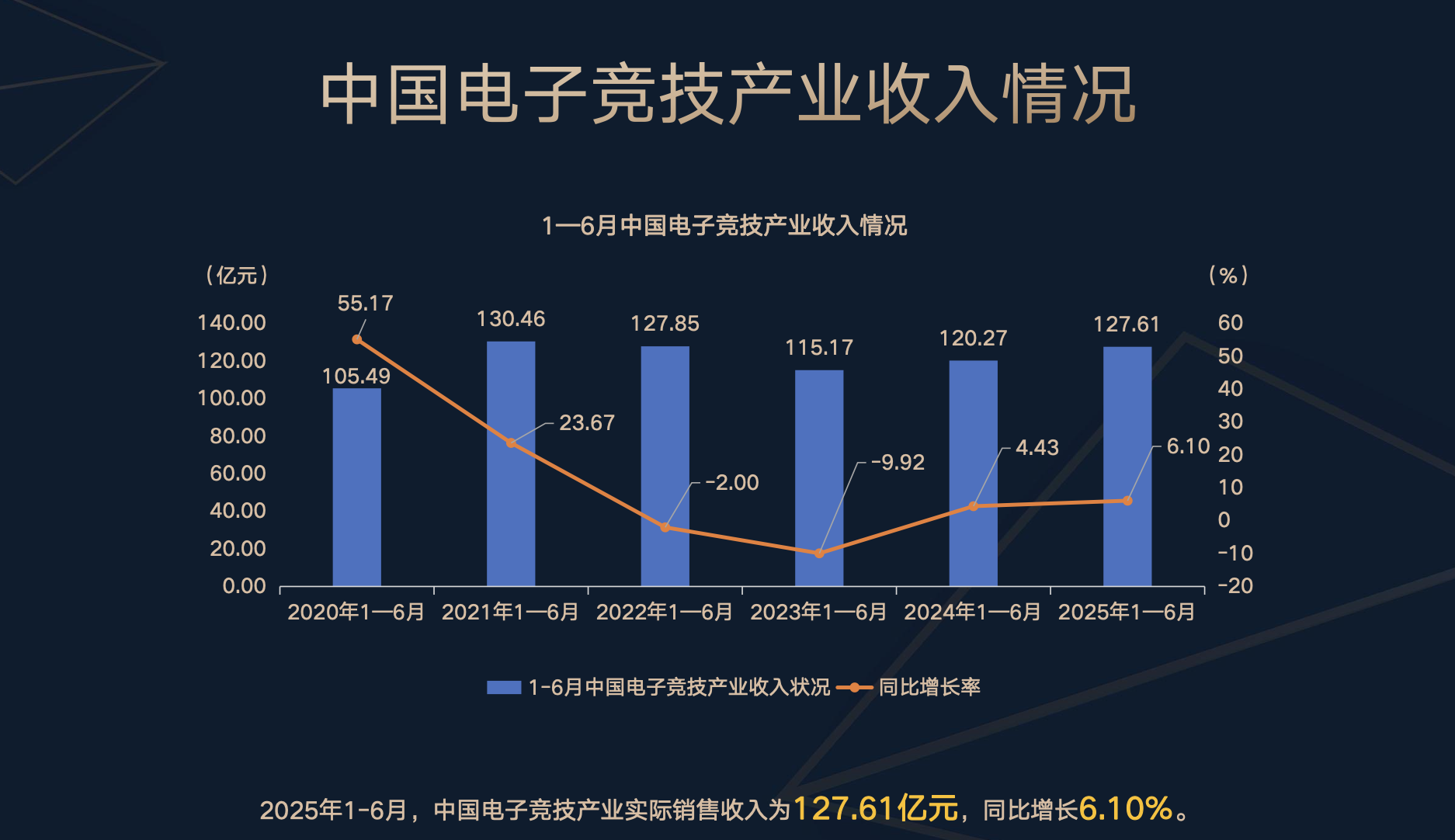
Core Insights - The Chinese esports industry is experiencing significant growth, with actual sales revenue reaching 12.76 billion yuan in the first half of 2025, marking a 6.1% year-on-year increase and a user base nearing 493 million [1][2] - The industry is recovering from a downturn in 2022-2023 and is now on a growth trajectory, coinciding with the overall recovery of the gaming market, which saw revenues of 168 billion yuan in the same period, a growth of over 14% [4][2] - Major hardware manufacturers are increasingly recognizing the potential of the esports market, with companies like Perfect World forming partnerships with industry giants such as Nvidia, Intel, and Samsung to expand the esports ecosystem [1][4] Industry Trends - The esports industry is evolving into a more mainstream and regulated sector, with a complete industrial chain encompassing products, events, live streaming, and clubs [4] - The demand for high-performance hardware is rising, as esports requires superior technology to minimize latency and enhance player performance, which is a key focus for companies like Nvidia and Intel [4][5] - The esports events are transitioning from niche interests to mainstream consumer experiences, with a growing need for deeper integration with traditional sports and unified global standards [6][7] Regional Developments - Shanghai remains a central hub for the esports industry, hosting 22.9% of offline esports events in the first half of 2025 and having the highest number of esports clubs in China [7] - The successful hosting of major events in Shanghai has attracted significant international attention, with nearly 90% of ticket sales coming from outside the city and substantial overseas participation [9] - The esports sector is contributing to urban development and cultural innovation, acting as a new engine for tourism and economic growth in cities like Shanghai [9]

英特尔(INTC.US)高层震荡:制造业务三名高管即将退休
智通财经网· 2025-08-01 13:48
Group 1 - Intel's manufacturing division is undergoing significant restructuring, with three senior executives set to retire as part of new CEO Pat Gelsinger's reform efforts [1] - The company plans to reduce its manufacturing capacity planning team and cut some engineering teams, indicating a shift in operational focus [1] - Intel announced a 15% workforce reduction, aiming to decrease its global employee count to approximately 75,000 by the end of the year [1] Group 2 - The development of Intel's next-generation 14A manufacturing process is contingent on securing a new key customer, with potential delays or termination of the project if this does not materialize [1] - CEO Pat Gelsinger highlighted the increased capital costs associated with the 14A process, emphasizing the need for substantial external customers to ensure acceptable returns on investment [1] - Reports indicate that Ericsson is in talks with Intel to invest hundreds of millions in its Network and Edge business, which is part of Intel's plan to spin off its network and communications business into a separate entity [1]
或暂缓14A工艺开发,英特尔断腕自救,陈立武能否力挽狂澜?
3 6 Ke· 2025-08-01 03:49
Core Viewpoint - Intel's new CEO, Chen Liwu, is implementing significant restructuring measures, including divesting non-core businesses, large-scale layoffs, and halting or canceling factory plans, which now extends to its core chip manufacturing business [1][5][9] Group 1: Business Strategy Changes - Chen Liwu emphasizes the need to divest non-core businesses, with notable actions including the sale of 51% of its FPGA subsidiary Altera for $4.46 billion and two rounds of sales totaling $1 billion for Mobileye shares [8] - A new round of layoffs is expected to affect approximately 15% of the workforce, totaling around 15,000 employees, alongside a significant reduction of about 50% in middle management levels [8] - The company has also canceled plans for a super chip factory in Magdeburg, Germany, and halted new construction in Poland, indicating a shift towards more economically rational investments [8][9] Group 2: Advanced Manufacturing Concerns - Intel's recent earnings call indicated that if the 14A (1.4nm) process does not attract significant external customers, the company may suspend or cancel its development, which could signify a retreat from leading-edge technology competition [1][4] - The potential abandonment of the 14A process would mark a significant shift in Intel's strategy, moving away from its IDM 2.0 model and undermining its position as a leading chip manufacturer [4][10] - Analysts have expressed skepticism about the interest from key customers in adopting the 14A process, particularly regarding high-profile clients like Nvidia and Apple [4] Group 3: Market Position and Future Outlook - Intel's market capitalization has significantly declined, dropping below $100 billion and even falling to around $70 billion, which is less than 60% of AMD's market value [9] - The company faces structural challenges as its x86 architecture is increasingly threatened by ARM architecture and RISC-V, impacting its competitive edge in various markets [16] - The shift away from advanced manufacturing could lead Intel to revert to an IDM 1.0 model, facing challenges in balancing its design and manufacturing divisions [16][17]