Chongqing Rural Commercial Bank(601077)

Search documents
渝农商行(601077) - 重庆农村商业银行股份有限公司关于董事、董事长任职资格获监管机构核准的公告
2026-01-08 10:00
重庆农村商业银行股份有限公司(以下简称"本行")于近日收到《重庆金 融监管局关于刘小军重庆农村商业银行股份有限公司董事、董事长任职资格的批 复》(渝金管复〔2026〕3 号),国家金融监督管理总局重庆监管局已核准刘小 军先生担任本行董事、董事长的任职资格,任职资格自即日起生效,任期至本行 第五届董事会任期届满之日止。 刘小军先生的简历详见本行于 2025 年 4 月 17 日在上海证券交易所网站 (www.sse.com.cn)披露的《重庆农村商业银行股份有限公司第五届董事会第五 十五次会议决议公告》。 特此公告。 证券代码:601077 证券简称:渝农商行 公告编号:2026-001 重庆农村商业银行股份有限公司 关于董事、董事长任职资格获监管机构核准的公告 本行董事会及全体董事保证本公告内容不存在任何虚假记载、误导性陈述或 者重大遗漏,并对其内容的真实性、准确性和完整性承担法律责任。 重庆农村商业银行股份有限公司董事会 2026 年 1 月 8 日 ...
渝农商行:董事长刘小军任职资格获核准
Xin Lang Cai Jing· 2026-01-08 09:49
渝农商行公告,国家金融监督管理总局重庆监管局已核准刘小军先生担任本行董事、董事长的任职资 格,任职资格自即日起生效,任期至本行第五届董事会任期届满之日止。 ...
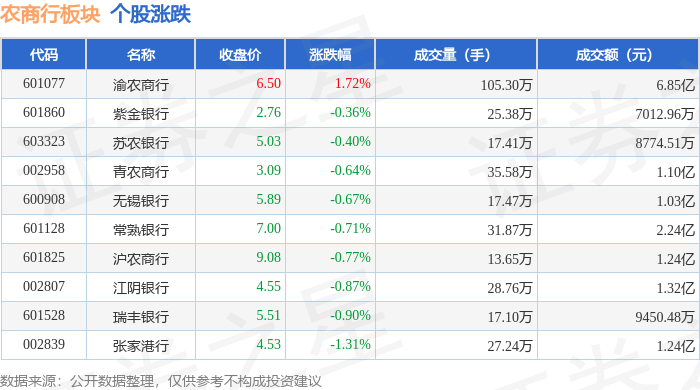
农商行板块1月8日跌0.18%,张家港行领跌,主力资金净流出3731.72万元
Zheng Xing Xing Ye Ri Bao· 2026-01-08 08:56
Core Viewpoint - The agricultural commercial bank sector experienced a slight decline of 0.18% on January 8, with Zhangjiagang Bank leading the drop [1] Group 1: Market Performance - The Shanghai Composite Index closed at 4082.98, down 0.07%, while the Shenzhen Component Index closed at 13959.48, down 0.51% [1] - The agricultural commercial bank sector's individual stock performance showed varied results, with Yunnan Agricultural Commercial Bank rising by 1.72% to a closing price of 6.50 [1] Group 2: Trading Volume and Turnover - The trading volume and turnover for various banks were reported, with Jiangyin Bank having a turnover of 1.32 billion and a trading volume of 287,600 shares [1] - The overall net outflow of main funds from the agricultural commercial bank sector was 37.32 million, while retail funds saw a net outflow of 18.16 million [1] Group 3: Fund Flow Analysis - The main fund inflow for Ruifeng Bank was 4.77 million, accounting for 5.04% of its total, while it faced a retail net outflow of 8.39 million [2] - Zhangjiagang Bank experienced a significant main fund outflow of 6.71 million, with retail investors also withdrawing 7.63 million [2]







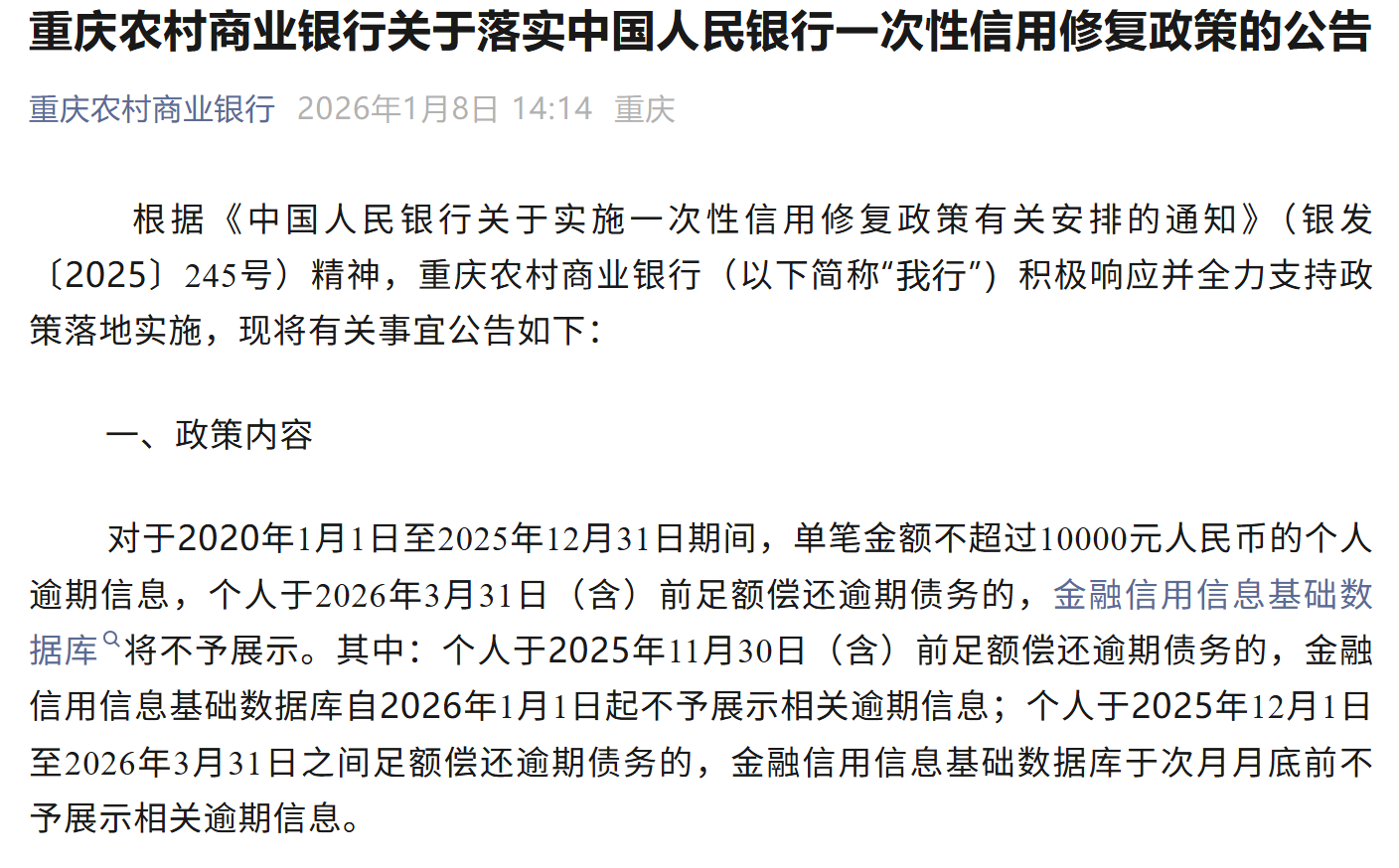
重庆农商银行:个人小额逾期可享 “免申即享” 信用修复
Jin Rong Jie· 2026-01-08 07:52
针对不法中介可能的违规操作,重庆农商银行提醒社会公众,需高度警惕打着"债务重组""征信洗白"等旗号的虚假宣传,切勿轻信"借新还旧""高息过桥垫 资"等诱导,避免造成财产损失和个人信息泄露。 1月8日,重庆农村商业银行通过官方公众号发布公告,根据《中国人民银行关于实施一次性信用修复政策有关安排的通知》(银发〔2025〕245号)要求, 该行全力支持该政策落地实施,明确符合条件的个人小额逾期信息可享信用修复,且实行"免申即享"机制。 公告明确了政策适用范围与修复规则:2020年1月1日至2025年12月31日期间发生的、单笔金额不超过10000元人民币的个人逾期信息,个人若在2026年3月31 日(含)前足额偿还逾期债务,金融信用信息基础数据库将不予展示相关逾期记录。其中,2025年11月30日(含)前足额还款的,自2026年1月1日起不再展 示该逾期信息;2025年12月1日至2026年3月31日期间足额还款的,金融信用信息基础数据库将于还款次月月底前完成逾期信息屏蔽。 该行特别提示,此次一次性信用修复政策无需个人主动申请或操作,将由中国人民银行征信中心对符合条件的逾期信息进行自动识别和统一技术处理。同时 强调 ...

按揭、信用卡、消费贷与经营贷深度:深度银行四大零售资产的风险分析框架
ZHONGTAI SECURITIES· 2026-01-07 11:17
Investment Rating - The report maintains an "Overweight" rating for the banking sector [2] Core Insights - The four categories of retail loans (mortgages, credit cards, consumer loans, and business loans) collectively constitute household liabilities, each with distinct collateral types, duration structures, and policy influences. The report aims to establish a risk framework for these retail assets and assess their impact on banking operations in the future [2][4] - Under stress testing, the non-performing loan (NPL) ratios for mortgages, credit cards, and consumer loans are projected to increase by 11, 12, and 20 basis points respectively in 2026, while the growth in non-performing amounts remains manageable. The overall quality of corporate assets is expected to continue improving, indicating a stable banking sector [2][4] - Retail asset risks are deemed controllable, with policies expected to maintain stability in the near term [2] Summary by Sections Retail Asset Analysis Framework: Collateral Types + Duration Structure + Policy Impact - The overall NPL ratio for retail loans of listed banks is estimated at 1.27% in the first half of 2025, slightly above the corporate NPL ratio of 1.26%, but the increase in NPL ratios is stabilizing. The composition of existing NPLs is 63% corporate and 37% retail, with business loans and mortgages showing higher proportions of both existing and newly added NPLs [2][12] - The report establishes a risk analysis framework for retail assets, highlighting the differences in collateral types, duration structures, and policy impacts among the four categories of retail loans [2][4] Consumer Loans: "High-Risk" Assets - The relationship between consumer loans and consumption trends is closely aligned, with notable deviations occurring during strict property purchase restrictions and regulatory cycles for online loans. The market structure for consumer credit (excluding credit cards and mortgages) shows that listed banks hold over 51.5% of the market, while non-listed banks account for 17% and other players for 31% [2][4] - The risk logic for consumer credit indicates that risk pricing is primarily determined by interest rates, which can be categorized into four tiers based on risk levels. The report estimates that 4.4% of consumer loans fall into the "high-risk" category, with commercial banks' high-risk consumer loans representing only 0.6% of their total consumer loans [2][4] Mortgage Loans: Risk Sources and International Comparisons - The primary sources of mortgage risk include negative cash flow and high loan-to-value (LTV) ratios, with 1.2% of respondents reporting monthly incomes below their mortgage payments. The report anticipates that the current high LTV portion, which constitutes 2.9% of total mortgage balances, will not necessarily lead to increased NPLs [2][4] - International comparisons indicate that mortgage NPL ratios in most countries remain below 2%, suggesting that the risks in the domestic market are manageable [2][4] Business Loans: High-Risk Assets - The report estimates that approximately 2 trillion yuan of high-risk business loans were outstanding at the end of 2021, with nearly one-third of these high-risk assets already exposed. The peak of risk exposure is expected in 2024 and the first half of 2025, with NPL ratios projected to rise by 18 basis points to 1.96% under stress testing conditions [2][4] Credit Cards: Early NPL Exposure - Credit cards have historically shown early exposure to NPLs, with the NPL ratio at 2.44% in the first half of 2025. The report notes that the net increase in credit card NPLs has significantly decreased, indicating that credit cards are not currently a major pressure point for banks [2][4] Investment Recommendations - The report suggests two main investment lines for bank stocks: focusing on regional banks with strong certainty and advantages, particularly in areas like Jiangsu, Shanghai, Chengdu, Shandong, and Fujian, and recommending large banks with high dividend yields such as Agricultural Bank, Construction Bank, and Industrial and Commercial Bank [2][4]





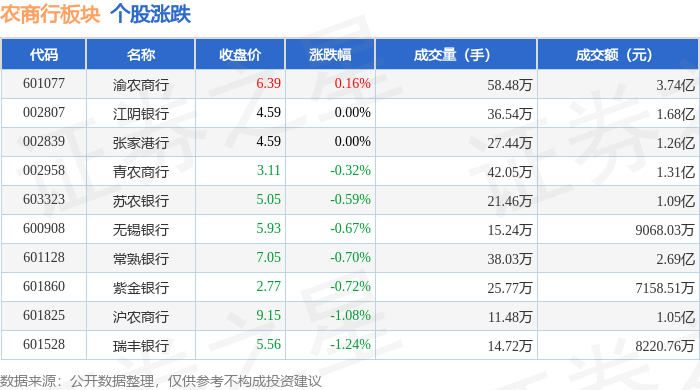
农商行板块1月7日跌0.57%,瑞丰银行领跌,主力资金净流入5042.72万元
Zheng Xing Xing Ye Ri Bao· 2026-01-07 08:58
Core Viewpoint - The rural commercial bank sector experienced a decline of 0.57% on January 7, with Ruifeng Bank leading the drop, while the Shanghai Composite Index rose by 0.05% and the Shenzhen Component Index increased by 0.06% [1] Group 1: Market Performance - The closing prices and performance of key rural commercial banks on January 7 are as follows: - Yunnan Rural Commercial Bank (601077) closed at 6.39, up by 0.16% - Jiangyin Bank (002807) closed at 4.59, unchanged - Zhangjiagang Bank (002839) closed at 4.59, unchanged - Qingnong Bank (002958) closed at 3.11, down by 0.32% - Sunan Bank (603323) closed at 5.05, down by 0.59% - Wuxi Bank (600908) closed at 5.93, down by 0.67% - Changshu Bank (601128) closed at 7.05, down by 0.70% - Zijin Bank (601860) closed at 2.77, down by 0.72% - Hunan Rural Commercial Bank (601825) closed at 9.15, down by 1.08% - Ruifeng Bank (601528) closed at 5.56, down by 1.24% [1] Group 2: Capital Flow - On January 7, the rural commercial bank sector saw a net inflow of 50.43 million yuan from main funds, while retail investors experienced a net outflow of 84.63 million yuan [1] - The capital flow for individual banks is as follows: - Zhangjiagang Bank (002839) had a main fund net inflow of 13.66 million yuan, but a retail net outflow of 13.84 million yuan - Changshu Bank (601128) had a main fund net inflow of 13.25 million yuan, with a retail net outflow of 22.78 million yuan - Qingnong Bank (002958) had a main fund net inflow of 12.24 million yuan, but a retail net outflow of 8.34 million yuan - Wuxi Bank (600908) had a main fund net inflow of 9.53 million yuan, with a retail net outflow of 6.99 million yuan [2]


3月末银行扎堆晒“成绩单” 2026机构仍看好银行板块
2 1 Shi Ji Jing Ji Bao Dao· 2026-01-06 09:09
Group 1 - The core viewpoint of the articles highlights the upcoming annual report disclosures of A-share listed banks, with Ping An Bank being the first to report on March 21, 2025, marking its second consecutive year of early disclosure [1][2] - The banking sector index increased by 12.05% in 2025, underperforming compared to the Shanghai and Shenzhen 300 index, which rose by 17.66% [3] - The total market capitalization of 42 A-share banks surpassed 15 trillion yuan, increasing by approximately 2.1 trillion yuan compared to the end of 2024 [3] Group 2 - Major state-owned banks are set to disclose their performance reports at the end of March, with a peak of 10 banks reporting on March 31, 2025 [2] - The performance of the banking sector in 2025 was driven by both funding and fundamental factors, with significant contributions from passive index funds and northbound capital [3] - A total of 35 out of 42 banks saw their stock prices rise, with Agricultural Bank of China leading with a 52.66% increase [3] Group 3 - Analysts expect the banking sector to maintain stable performance in 2026, supported by high dividend yields and a favorable market environment for dividend stocks [6] - The demand for high-dividend assets is anticipated to rise, particularly for stable state-owned banks, as new funds from the insurance industry are expected to exceed 2 trillion yuan in 2026 [7] - The banking sector is projected to experience a valuation recovery, with estimates suggesting a return to a price-to-book ratio of around 1 [7] Group 4 - Historical data indicates that the banking sector has a high success rate for absolute and excess returns before the Spring Festival, with an average absolute return of 4.4% [8] - Recommendations for stock allocation include a stable base of 30% in state-owned banks and a more aggressive 70% in quality joint-stock banks and city commercial banks [9]




大竹渝农商村镇银行4项违规被处罚 为渝农商行子公司
Zhong Guo Jing Ji Wang· 2026-01-06 06:36
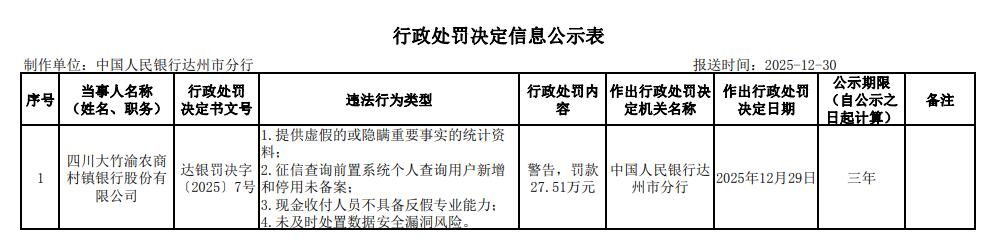
以下为原文: 中国经济网北京1月6日讯 中国人民银行达州市分行近日发布的行政处罚决定信息公示表(达银罚决字〔2025〕7号)显示,四川大竹渝农商 村镇银行股份有限公司存在以下违法行为类型:1.提供虚假的或隐瞒重要事实的统计资料;2.征信查询前置系统个人查询用户新增和停用未 备案;3.现金收付人员不具备反假专业能力;4.未及时处置数据安全漏洞风险。中国人民银行达州市分行对其警告,罚款27.51万元。 渝农商行(601077)2024年年度报告显示,四川大竹渝农商村镇银行股份有限公司是渝农商行的子公司,持股比例91%。 | 明上手段: 十四八尺次 < 川九月 | | | | TRANTH: 20GD 16 00 | | | | | | --- | --- | --- | --- | --- | --- | --- | --- | --- | | | 当事人名称 序号 | 行政处罚 | 违法行为类型 | 行政处罚内 作出行政处罚决 | | 作出行政处罚 | 公示期限 (自公示之 | 备注 | | | (姓名、职务) | 决定书文号 | | 答 | 定机关名称 | 决定日期 | 日起计算) | | | | | | 1 ...
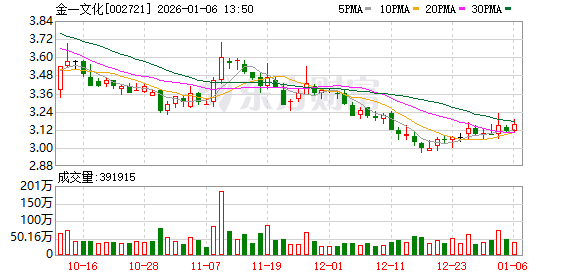
金一文化:开科唯识客户涵盖广西北部湾银行、贵州银行、桂林银行、渝农商行、柳州银行等金融机构
Mei Ri Jing Ji Xin Wen· 2026-01-06 05:49
Core Viewpoint - Jin Yi Culture (002721.SZ) is actively engaged in providing software development, technical services, operation maintenance, and consulting services primarily to financial institutions, focusing on wealth management and financial market solutions [2] Company Overview - The main business of Kai Ke Wei Shi is to offer software development and technical services in the fields of wealth management, financial markets, and payment clearing to banks and financial institutions [2] - Kai Ke Wei Shi's clients include several banks in the western region, such as Guangxi Beibu Gulf Bank, Guizhou Bank, Guilin Bank, Chongqing Rural Commercial Bank, and Liuzhou Bank [2]

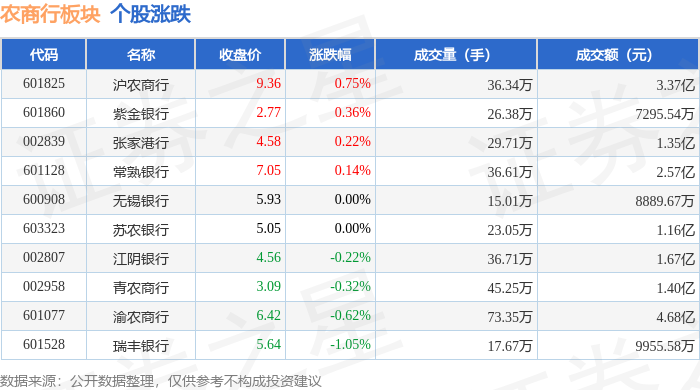
农商行板块1月5日涨0.09%,沪农商行领涨,主力资金净流入7699.1万元
Zheng Xing Xing Ye Ri Bao· 2026-01-05 09:09
Core Insights - The agricultural commercial bank sector experienced a slight increase of 0.09% on January 5, with Shanghai Agricultural Commercial Bank leading the gains [1] - The Shanghai Composite Index closed at 4023.42, up by 1.38%, while the Shenzhen Component Index closed at 13828.63, up by 2.24% [1] Stock Performance - Shanghai Agricultural Commercial Bank (601825) closed at 9.36, with a rise of 0.75% and a trading volume of 363,400 shares, totaling a transaction value of 337 million yuan [1] - Other notable banks include: - Zijin Bank (601860) at 2.77, up 0.36% with a transaction value of 72.96 million yuan [1] - Zhangjiagang Bank (002839) at 4.58, up 0.22% with a transaction value of 135 million yuan [1] - Changshu Bank (601128) at 7.05, up 0.14% with a transaction value of 257 million yuan [1] - Wuxi Bank (600908) remained unchanged at 5.93 with a transaction value of 88.9 million yuan [1] Capital Flow - The agricultural commercial bank sector saw a net inflow of 76.99 million yuan from institutional investors and 84.57 million yuan from retail investors, while individual investors had a net outflow of 162 million yuan [1] - Specific capital flows for key banks include: - Shanghai Agricultural Commercial Bank had a net inflow of 47.24 million yuan from institutional investors, but a net outflow of 54.86 million yuan from individual investors [2] - Changshu Bank saw a net inflow of 32.72 million yuan from institutional investors, with a net outflow of 33.53 million yuan from individual investors [2] - Suzhou Agricultural Bank had a net inflow of 13.51 million yuan from institutional investors, with a net outflow of 12.27 million yuan from individual investors [2]