
CEB BANK(601818)

Search documents
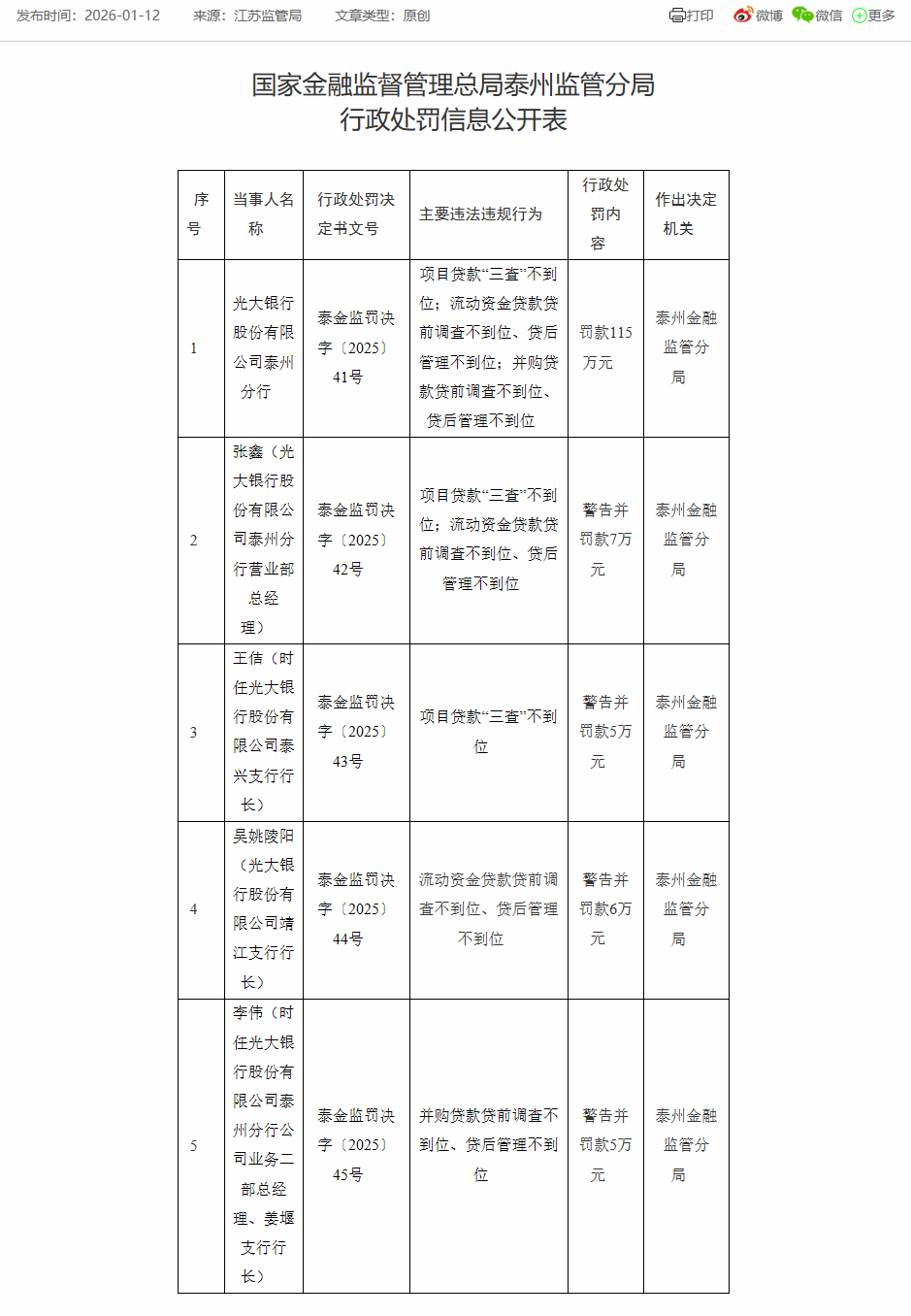
泰州分行被罚115万 光大银行开年已累计7度收监管处罚
Zhong Guo Jing Ji Wang· 2026-02-26 06:44
Core Viewpoint - The regulatory penalties imposed on China Everbright Bank highlight ongoing compliance issues, particularly in loan management practices across various branches, indicating a need for improved oversight and adherence to financial regulations [1][3][4][5][6][7][8] Group 1: Regulatory Penalties - The Taizhou branch of China Everbright Bank was fined 1.15 million yuan for inadequate loan management practices, including insufficient pre-loan investigations and post-loan management [1][2] - The Weihai branch faced a penalty of 350,000 yuan due to poor post-loan management of working capital loans [3] - The Datong branch was fined 400,000 yuan for inadequate post-loan management and imprudent management of forfaiting business [4] - The Quanzhou branch received a total fine of 1.2 million yuan for negligence in pre-loan investigations and post-loan management of personal operating loans and working capital loans [5] - The Jiaozuo branch was fined 600,000 yuan for inadequate post-loan management and inflating loan scales through improper practices [6] - The Daqing branch was fined 200,000 yuan for failing to conduct proper "three checks" in loan management [7] - Overall, the bank has faced regulatory penalties seven times this year, indicating a pattern of compliance issues [8] Group 2: Individual Accountability - Several individuals within the Taizhou branch were penalized, including the branch manager who received a warning and a fine of 70,000 yuan, and other branch leaders who were also fined for their roles in the compliance failures [1][2] - In the Weihai branch, the deputy general manager was fined 50,000 yuan for his involvement in the inadequate management of loans [3] - The Datong branch's product manager and the general manager of the retail department received warnings for their responsibilities in the bank's compliance failures [4] - The Quanzhou branch's management was similarly warned for their negligence in loan management practices [5] - The Jiaozuo branch's former manager and vice president were warned for their respective roles in the compliance issues [6] - The Daqing branch's management team received warnings for failing to adhere to proper loan management protocols [7]


赎回规模550亿元!银行优先股密集摘牌
Guo Ji Jin Rong Bao· 2026-02-25 13:18
Core Viewpoint - The recent wave of bank preferred stock redemptions reflects a strategic move by banks to upgrade their capital structures in response to a low interest rate environment [1][4]. Group 1: Redemption Trends - Since February, banks such as Everbright Bank and Ping An Bank have announced redemptions of preferred stocks totaling 55 billion yuan, following a previous redemption of 45.8 billion yuan by five city commercial banks at the end of last year [1][3]. - The total amount of bank preferred stocks redeemed since 2026 has exceeded 10 billion yuan, indicating a significant trend in the market [3]. Group 2: Reasons for Redemption - The primary reasons for the recent redemption wave include changes in the interest rate environment, a concentration of redemption windows, and the optimization of capital structures [4]. - Banks are opting to redeem high-cost preferred stocks and replace them with lower-cost instruments, which helps reduce funding costs and improve profitability [4]. Group 3: Market Impact - The redemption of preferred stocks is likely to lead to a reallocation of funds towards other capital instruments such as subordinated debt and perpetual bonds, which may enhance the market structure of debt and capital instruments [6]. - The shift towards lower-cost instruments is expected to support bank profitability and valuation, although it may not significantly alter fundamental trends [6]. Group 4: Future Outlook - Moving forward, banks are expected to favor issuing low-cost, market-oriented capital instruments, which may gradually diminish the importance of preferred stocks, although they will not completely exit the market [7]. - The issuance rhythm is anticipated to combine "maturity redemption + new issuance replacement," with a smoother pace rather than concentrated redemptions [7].

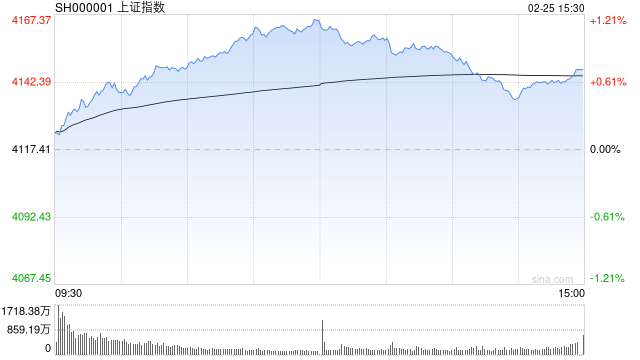
收评:深成指、创指双双涨超1% 涨价题材股集体爆发
Xin Lang Cai Jing· 2026-02-25 07:40
Core Viewpoint - The article discusses the upward trend in the stock market driven by cyclical price increases and the spread of AI, suggesting a potential for market fluctuations to rise ahead of the Two Sessions [1]. Market Performance - The three major stock indices collectively rose, with the Shanghai Composite Index closing at 4147.23 points, up 0.72%, the Shenzhen Component at 14475.87 points, up 1.29%, and the ChiNext Index at 3354.82 points, up 1.41% [3][13]. - Over 3700 stocks increased in value, indicating a predominance of gains in the market [3][13]. Sector Highlights - **Rare Earth Permanent Magnet Sector**: Stocks such as Baotou Steel and China Aluminum International saw significant gains, with prices for various rare earth products increasing post-holiday. For instance, the average price of praseodymium and neodymium oxide rose by 4.16 million yuan/ton [5][14]. - **Real Estate Sector**: Companies like I Love My Home and Hualian Holdings experienced stock price surges, supported by promotional activities from nearly 50 real estate firms in Guangzhou, offering over 140 properties with discounts [6][15]. Consumer Trends - **Restaurant Industry**: Goldman Sachs forecasts a 4.2% year-on-year growth in mainland China's restaurant sales, up from 3.2% last year. The report notes a stabilization in consumer demand and price increases due to rising operational and raw material costs [9][18]. - **Takeout Orders**: The increase in takeout orders is expected to impact profitability negatively, but ongoing high levels of subsidies and product variety expansion are anticipated to support same-store sales growth [9][18]. Institutional Insights - Zhongyuan Securities indicates that the inflow of funds into the market is expected to provide a solid foundation for upward market movements, with a likely scenario of wide fluctuations and structural differentiation in indices [10][19]. - Dongguan Securities highlights a general rise in global assets during the Spring Festival, with AI and resource products becoming market focal points, suggesting a high probability of index increases post-holiday [10][19].





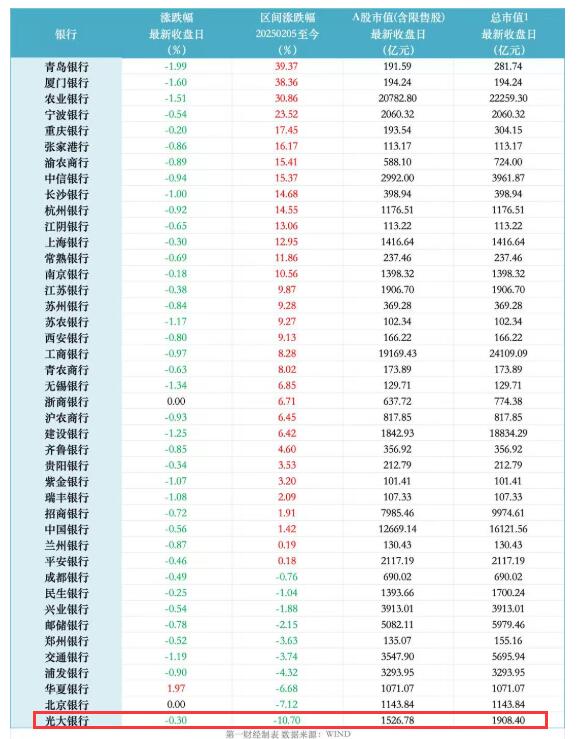
光大银行蛇年股价跌10.7% 夺A股42只银行股跌幅第1名
Zhong Guo Jing Ji Wang· 2026-02-24 23:11
Group 1 - The article discusses the performance of bank stocks in the year of the Snake (2025), highlighting that 10 bank stocks experienced declines, with China Everbright Bank showing the largest drop at 10.7% [1] - Among the 32 bank stocks that gained, the top three performers were Qingdao Bank, Xiamen Bank, and Agricultural Bank, each with increases exceeding 30% [1] - The article notes that Beijing Bank and Huaxia Bank also had significant declines, with both experiencing drops greater than 5% [1]
银行经营周期如何定价各类资产?
GF SECURITIES· 2026-02-24 12:04
Investment Rating - The report assigns a "Buy" rating for the banking sector, indicating an expectation of stock performance exceeding the market by more than 10% over the next 12 months [58]. Core Insights - In 2025, the banking sector's asset growth is projected to be 8.01%, an increase from 6.52% in 2024, driven by factors such as fiscal stimulus, cross-border capital inflows, and the activation of maturing deposits [5][13]. - The report identifies two key cycles affecting asset pricing in banking: the bank expansion cycle and the interest margin cycle, suggesting a comprehensive analysis of these cycles [5][13]. - The debt cycle is characterized as a fundamental aspect of the bank expansion cycle, with a model proposed by Dalio outlining seven stages of a typical debt cycle, which can be influenced by external debt reliance [16][19]. - The report anticipates limited upward space for the debt cycle in 2026, with government leverage expected to increase by 5.89%, lower than the 7.6% projected for 2025 [35][36]. - The banking interest margin cycle is expected to stabilize in 2025, following two complete cycles since 2010, with a correlation observed between bank interest margins and the 30Y-10Y government bond spread [41][45]. Summary by Sections Bank Expansion Cycle - The asset growth rates for different types of banks in 2025 are projected as follows: state-owned banks at 11%, joint-stock banks at 4.74%, city commercial banks at 9.68%, and rural commercial banks at 5.17%, all exceeding the average growth rate [5][13]. - The report emphasizes the importance of understanding the relationship between bank assets and liabilities, highlighting that credit and debt expansion are cyclical and self-reinforcing [15][16]. Debt Cycle Analysis - The report outlines that the current debt cycle, which began in 2022, has lasted 16 quarters, surpassing previous cycles, and indicates a shift in leverage dynamics among enterprises, government, and households [35][36]. - The analysis includes a comparison of deflationary and inflationary debt cycles, noting that the U.S. faces greater inflationary pressures due to higher external debt reliance compared to China [21][19]. Interest Margin Cycle - The report notes that the banking interest margin has experienced significant fluctuations since 2010, with a stabilization phase expected to begin in 2025 [41][45]. - It highlights the impact of loan repricing cycles on interest margins, with a notable decline in loan rates observed in recent years [49][50].




中国人民银行、金融监管总局 发布我国系统重要性银行名单
Jin Rong Shi Bao· 2026-02-24 01:28
Core Viewpoint - The People's Bank of China and the National Financial Regulatory Administration have conducted the 2025 assessment of systemically important banks, identifying 21 domestic banks categorized into five groups based on their systemic importance scores [1] Group 1: Assessment of Systemically Important Banks - A total of 21 domestic systemically important banks have been recognized, including 6 state-owned commercial banks, 10 joint-stock commercial banks, and 5 city commercial banks [1] - The banks are divided into five groups based on their systemic importance scores, with the first group consisting of 11 banks, the second group having 4 banks, the third group with 2 banks, the fourth group containing 4 banks, and the fifth group having no banks [1] Group 2: Breakdown of Bank Groups - The first group includes: China Minsheng Bank, China Everbright Bank, Ping An Bank, Huaxia Bank, Ningbo Bank, Jiangsu Bank, Beijing Bank, Nanjing Bank, Guangfa Bank, Zheshang Bank, and Shanghai Bank [1] - The second group consists of: Industrial Bank, China CITIC Bank, Shanghai Pudong Development Bank, and China Postal Savings Bank [1] - The third group includes: Bank of Communications and China Merchants Bank [1] - The fourth group comprises: Industrial and Commercial Bank of China, Bank of China, China Construction Bank, and Agricultural Bank of China [1] - The fifth group currently has no banks included [1] Group 3: Future Regulatory Actions - The People's Bank of China and the National Financial Regulatory Administration will implement additional regulatory measures for systemically important banks according to the "Regulations on Additional Supervision of Systemically Important Banks (Trial)" [1] - The aim is to enhance the synergy between macro-prudential management and micro-prudential supervision, ensuring the safe and sound operation of systemically important banks [1] - This initiative is intended to better support the high-quality development of the real economy [1]



兴业银行与光大银行:差异化竞争下的投资抉择
Sou Hu Cai Jing· 2026-02-22 16:54
Core Viewpoint - The article discusses the differentiated competitive paths of Industrial Bank and Everbright Bank, both of which are major financial institutions in China with asset scales exceeding one trillion yuan, highlighting their unique strengths and investment considerations for investors. Group 1: Financial Performance Comparison - As of the end of 2025, Industrial Bank's total assets reached 11.09 trillion yuan, with loan balances of 5.95 trillion yuan and deposit balances of 5.93 trillion yuan, while its market capitalization was approximately 391.3 billion yuan. In contrast, Everbright Bank's asset scale was around 7 trillion yuan, with a market capitalization of 152.7 billion yuan, indicating a significant disparity in scale [3]. - Industrial Bank achieved an operating income of 212.74 billion yuan and a net profit attributable to shareholders of 77.47 billion yuan in 2025, both showing positive growth, particularly a 7.3% year-on-year increase in revenue in the fourth quarter. Conversely, Everbright Bank experienced a 7.94% decline in revenue and a 3.63% drop in net profit in the first three quarters of 2025, facing challenges in performance recovery [3]. - Industrial Bank maintained a return on average equity (ROAE) of 9.15%, indicating strong capital efficiency, while the performance disparity reflects differences in business structure and customer base between the two banks [3]. Group 2: Asset Quality and Valuation - Both banks maintained relatively stable asset quality, with Industrial Bank's non-performing loan ratio at 1.08% and a high provision coverage ratio of 228.41%, demonstrating strong risk resilience. Although Everbright Bank did not disclose its latest non-performing loan data, historical data indicates its overall asset quality is manageable [4]. - Everbright Bank exhibits a stronger "undervalued high dividend" characteristic, with a price-to-book ratio of only 0.39 and a Hong Kong stock dividend yield of 6.09%, appealing to investors seeking stable cash flow. Industrial Bank, while having a slightly higher valuation, also maintains a price-to-book ratio of 0.48, which is at a historical low [4]. Group 3: Strategic Positioning - Industrial Bank continues to implement its "1234" strategy, focusing on becoming a green bank, wealth management bank, and investment bank, with significant advantages in green finance supporting various global projects. In contrast, Everbright Bank concentrates on the technology finance sector, emphasizing integrated circuits and artificial intelligence, leveraging the comprehensive financial advantages of Everbright Group to develop its "Sunshine Innovation" business [4]. - The choice between the two banks from an investment perspective depends on specific investor needs. For those prioritizing scale and comprehensive strength, Industrial Bank is the preferred choice due to its robust performance and clear strategic layout. For investors valuing valuation safety margins and willing to wait for fundamental recovery, Everbright Bank's low valuation and high dividend characteristics, along with potential breakthroughs in technology finance, are noteworthy [5].

年内近30家村镇银行注销解散
2 1 Shi Ji Jing Ji Bao Dao· 2026-02-18 08:02
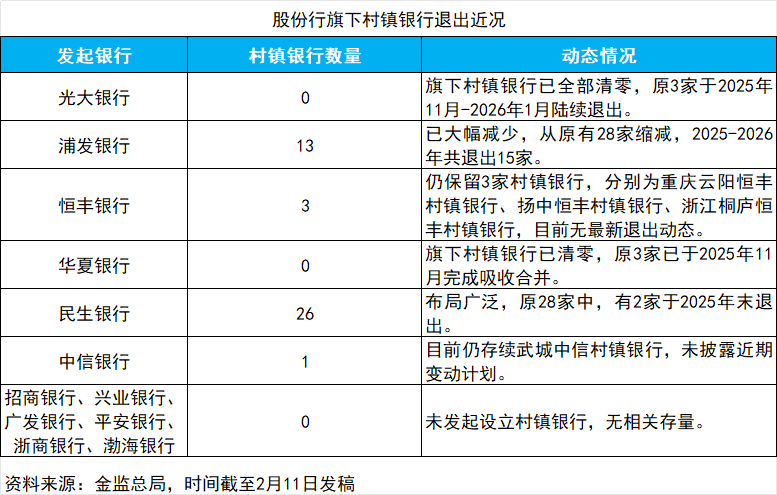
Group 1 - The core viewpoint of the articles indicates that the development phase of village banks is shifting from rapid expansion to a new stage of "precision and specialization" for high-quality development [2][5][10] - As of January 2026, Everbright Bank has completed the exit of all three of its village banks, achieving a total "zero" status for its village banking institutions [1][3] - Shanghai Pudong Development Bank is actively pursuing the "village to branch" model, having exited two village banks in early February 2026, making it one of the most active institutions in this regard [1][8] Group 2 - Nearly 30 village banks have been deregistered since the beginning of 2026, significantly higher than the same period last year, indicating a rapid acceleration in the reform process of village banks [1][5] - The restructuring of village banks is being driven by a combination of market-oriented and legal principles, with measures such as capital replenishment, mergers, and market exits being employed to mitigate risks [5][10] - The integration of village banks by joint-stock banks is part of a broader trend, with over 230 village banks undergoing restructuring through various methods in 2025 [5][9] Group 3 - The exit of village banks is characterized by a "proactive application + compliance approval" model, which has been established as a core principle for the orderly transition of rights and obligations [3][10] - The performance of the exited village banks showed a divergence in 2025, with some achieving profitability while others reported losses, highlighting the varying financial health of these institutions [4][9] - The integration process has led to significant differences in the attitudes and exit rhythms of 12 national joint-stock banks towards their village banks [6][9]

年内近30家村镇银行注销解散
21世纪经济报道· 2026-02-18 07:53
Core Viewpoint - The article highlights the accelerated pace of integration and exit of village banks by joint-stock banks, marking a shift from rapid expansion to a focus on high-quality development in the industry [1][6]. Group 1: Recent Developments in Village Bank Exits - As of the end of January 2026, Everbright Bank has completed the exit of its three village banks, achieving a total "zero" status for its village banking operations [1][3]. - Shanghai Pudong Development Bank (SPDB) is also actively pursuing the "village to branch" model, with two of its village banks exiting in early February 2026, making it one of the most active banks in this regard [1][5]. - Nearly 30 village banks have been deregistered since the beginning of 2026, significantly higher than the same period last year [1][6]. Group 2: Integration and Exit Strategies - The exit actions by Everbright Bank are characterized as a "proactive application + compliance approval" model, with the bank inheriting all rights and obligations of the exited banks [3][4]. - The trend indicates a shift towards a more specialized and high-quality development phase for village banks, as the government emphasizes risk management and transformation of local financial institutions [6][10]. - The restructuring of over 230 village banks in 2025 through mergers, acquisitions, and exits reflects a deep reshaping of the industry, driven by both state-owned and joint-stock banks [6][9]. Group 3: Differentiated Approaches Among Joint-Stock Banks - SPDB has notably accelerated its exit process, reducing its village banks from 28 to approximately 13, with significant exits occurring between July 2025 and February 2026 [8][9]. - In contrast, Minsheng Bank has retained a broader network of village banks, exiting only two out of 28, indicating a different strategic focus [9]. - Other banks like Huaxia Bank and several others have completed their exits, while some banks have not engaged in village banking at all, highlighting varied strategies across the sector [7][9]. Group 4: Implications for Industry Personnel - The integration and exit of village banks signal a transition for employees, potentially moving from subsidiary roles to formal positions within parent banks, which may offer better resources and processes [9][10]. - However, this transformation also poses challenges, including changes in job roles and assessment systems, as well as potential impacts on existing business structures and client relationships [9][10].
股份制银行差异化竞争,头部效应显著
Xin Lang Cai Jing· 2026-02-18 05:56
Core Insights - The mobile banking user base in China is expected to peak in 2025, shifting the industry focus from acquiring new users to enhancing existing user engagement [1] - Financial institutions must achieve extreme efficiency and precision in their ecosystems to survive in this new environment [1] Industry Overview - According to an iResearch report, joint-stock banks are adopting differentiated survival strategies, leading to significant head effects [1] - China Merchants Bank leads joint-stock banks with 71.854 million monthly active users (MAU), surpassing some state-owned banks due to its focus on wealth management and intelligent interaction [1] - Ping An Bank and CITIC Bank form the second tier, maintaining MAUs between 20 million and 30 million, with Ping An Bank leveraging AI to reconstruct service chains and CITIC Bank integrating consumer ecosystems [1] Competitive Landscape - Third-tier institutions, such as Minsheng Bank and Everbright Bank, have seen their MAUs drop to between 10 million and 20 million, indicating a tightening survival space [1] - Local banks are experiencing growth by focusing on their local markets, with city commercial banks like Jiangsu Bank and Beijing Bank maintaining MAUs above 3 million [1] - Among rural commercial banks and rural credit cooperatives, Fujian Rural Credit has surpassed 4.5 million MAUs, capturing traffic in county and rural areas [1] Challenges for Private Banks - The situation for private banks is dire, with the top 50 list for 2025 nearly extinct due to a lack of physical branches, local living ecosystems, and high customer acquisition costs, leading to a loss of competitiveness in the mobile banking sector [1] - In the era of stock competition, ecological and regional capabilities are becoming the key to success [1]

