
WANTAI BIOLOGICAL(603392)

Search documents
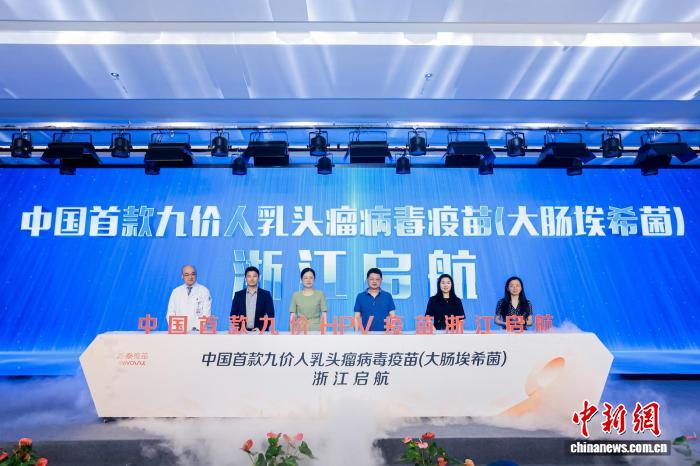
首款国产九价HPV疫苗落地浙江 专家:早接种早防护
Zhong Guo Xin Wen Wang· 2025-09-26 07:05
Core Viewpoint - The launch of the domestic nine-valent HPV vaccine in Zhejiang Province marks a significant advancement in cervical cancer prevention for eligible women aged 9 to 45, offering a more accessible and affordable option compared to imported vaccines [1][3]. Group 1: Vaccine Launch and Pricing - The domestic nine-valent HPV vaccine is priced at 499 yuan per dose, approximately 40% lower than similar imported vaccines, enhancing accessibility for eligible women [1][3]. - The first dose of the vaccine was administered to a high school student during the launch event, indicating the commencement of the vaccination program in Zhejiang [3]. Group 2: Health Impact and Clinical Trials - Cervical cancer incidence is rising, particularly among younger women, making early vaccination crucial for effective protection against HPV and cervical cancer [3][4]. - Clinical trials show that the domestic nine-valent HPV vaccine provides a 100% protection rate against persistent infections of high-risk types for cervical cancer over 12 months, establishing a strong preventive measure [4]. Group 3: Community Support and Initiatives - WanTai Biologics announced a donation of 6,000 doses of the bivalent HPV vaccine to the Zhejiang Cancer Foundation to support public health initiatives, particularly for underserved populations [4]. - The Zhejiang Cancer Foundation has implemented various programs to assist cancer patients and promote early detection and treatment, reinforcing the importance of community health initiatives [5]. Group 4: Future Plans and Goals - The vaccination program for the domestic nine-valent HPV vaccine is set to expand across Zhejiang starting in October, aiming to significantly increase the HPV vaccination rate in the province [5]. - The initiative is expected to contribute to the broader goal of eliminating cervical cancer in China, aligning with global public health objectives [5].


从盈利2.64亿元到亏损1.44亿元!万泰生物上市首份“亏损半年报”出炉,净利润暴跌155%
Hua Xia Shi Bao· 2025-09-24 03:44
Core Viewpoint - Wantaibio, once thriving with its domestic HPV vaccine, is now facing significant performance decline, reporting its first half-year loss since its IPO in 2020, with a net loss of 144 million yuan in the first half of 2025, a stark contrast to a profit of 264 million yuan in the same period last year [2][3] Financial Performance - In the first half of 2025, Wantaibio's revenue was only 844 million yuan, a year-on-year decrease of 38.25% [3] - The net profit attributable to shareholders was -144 million yuan, a decline of 155.30% year-on-year [3] - Excluding non-recurring gains and losses, the net profit dropped to -243 million yuan, a staggering decline of 481.93% [3] - Basic earnings per share were -0.11 yuan, down 152.38% year-on-year [3] - In Q2 2025, total revenue was 443 million yuan, a decrease of 27.81% year-on-year, with a net profit of -91.26 million yuan, down 167.72% [3] Market Dynamics - The significant decline in Wantaibio's performance is attributed to both external environmental changes and internal factors, with external changes being more pronounced [5] - Competition from international giants like Merck has intensified, impacting market share due to their brand influence and established marketing systems [5] - The implementation of centralized procurement policies has led to a decrease in product prices, significantly affecting revenue and profit [5] - Wantaibio's business model heavily relies on its bivalent HPV vaccine, making it vulnerable to market fluctuations and competitive pressures [5][6] HPV Vaccine Market Trends - The overall competition in China's HPV vaccine market is becoming increasingly fierce, with rising public health awareness leading to growing demand for HPV vaccines [6] - The bivalent HPV vaccine, once a market leader, is now facing challenges from the expanding supply and age range of the nine-valent vaccine, which offers broader protection [6][7] - The price war has intensified, with prices for the bivalent vaccine dropping significantly, impacting revenue [8] - Wantaibio's bivalent vaccine revenue contribution has plummeted from over 70% in 2021-2022 to less than 30% in 2024, with a 67.3% year-on-year decline in the first half of 2025 [7][9] Future Outlook - The future competition in the nine-valent HPV vaccine market will focus on pricing, effectiveness, production capacity, and sales channel optimization [10] - Wantaibio, despite being the first to report a nine-valent HPV vaccine, faces challenges from competitors and must improve in pricing, capacity, and sales channels to maintain a competitive edge [10] - The company's ability to commercialize the nine-valent vaccine and diversify its product matrix will be crucial for reversing its current performance decline [10]

疫苗降价潮
投资界· 2025-09-16 08:36
Core Viewpoint - The vaccine industry is experiencing a downturn, with significant revenue and profit declines among major companies, attributed to price wars, vaccine hesitancy, and intense competition [4][5][10][20]. Group 1: Industry Performance - In the first half of 2025, the overall vaccine revenue of listed companies in China decreased by 60% year-on-year, and net profit dropped by 113% [5]. - Major vaccine companies like Zhifei Biological and Wantai Biological reported their first half-year losses since going public, with net profits declining by 127% and 155% respectively [5][10]. - Only six out of 17 listed vaccine companies achieved profitability, with the highest profit being 122 million yuan from Chengda Biological [5]. Group 2: Price Wars - The price of flu vaccines has significantly dropped, with some prices reaching as low as 5.5 yuan per dose, leading to a continuous price war in the market [8][9]. - Wantai Biological's revenue from its main product, the bivalent HPV vaccine, fell by 38% to 844 million yuan, marking its first loss since listing [10]. - The price competition has also affected other vaccines, including HPV and shingles vaccines, with prices dropping dramatically in recent years [9][10][11]. Group 3: Vaccine Hesitancy - Vaccine hesitancy has become a significant issue, particularly for non-mandatory vaccines like HPV and flu vaccines, with many individuals expressing doubts about their effectiveness [13][14][15]. - The average flu vaccine coverage in China remains below 4%, significantly lower than in developed countries where it is around 50% [15]. - Factors contributing to vaccine hesitancy include dissatisfaction with COVID-19 vaccine outcomes, misinformation, and a lack of awareness regarding adult vaccinations [15][16]. Group 4: Future Outlook - Experts predict that the current downturn in the vaccine industry may last for five to ten years, with potential consolidation and elimination of weaker companies [20]. - The industry faces challenges in changing public perception and increasing adult vaccination rates, which are crucial for market expansion [20]. - The competition is expected to remain fierce, with many companies struggling to differentiate their products in a saturated market [19][20].






推广HPV疫苗,国际社会有哪些经验与教训?“政府主动推荐”缘何重要?
Di Yi Cai Jing· 2025-09-15 08:39
Core Viewpoint - The introduction of HPV vaccines into China's national immunization program is expected to lower market prices and improve accessibility, thereby enhancing women's health in China [1][5][6]. Group 1: National Immunization Program - China's National Health Commission announced the inclusion of HPV vaccination services for eligible girls in the national immunization program, marking the first expansion since 2008 [1]. - This move aligns with the WHO's strategy to accelerate the global elimination of cervical cancer, with over 140 countries already including HPV vaccines in their national programs [1][4]. - The inclusion of HPV vaccines in China's immunization program changes the previous situation of limited access and self-funded vaccinations [5]. Group 2: Global Context and Supply Issues - The global supply of HPV vaccines is currently insufficient, limiting the ability of some countries to expand their vaccination programs despite inclusion in national plans [2]. - Chinese-manufactured HPV vaccines, once pre-certified by WHO, are expected to improve supply and reduce costs, with Gavi promoting single-dose vaccination strategies to alleviate supply pressures [2][6]. Group 3: HPV Vaccine Efficacy and Global Disparities - HPV vaccines are one of the two vaccines that can completely prevent a type of cancer, with WHO recommending vaccination for girls aged 9 to 14 [4]. - Despite the vaccine's safety and efficacy, 85% of doses have been administered in high-income countries, while coverage in low- and middle-income countries remains below 10% [5]. - Cervical cancer continues to claim over 300,000 lives annually, predominantly in low- and middle-income countries, where high costs and limited supply hinder access to HPV vaccines [5]. Group 4: Lessons from Other Countries - Australia has successfully implemented a national HPV vaccination program since 2007, leading to a significant decrease in cervical cancer rates and aiming to eliminate the disease by 2035 [7]. - In contrast, Japan's hesitance due to concerns over adverse reactions led to a decline in vaccination rates and an increase in HPV infection rates [8][9]. - The experience of Japan highlights the importance of effective communication and management regarding vaccine safety to maintain public trust and vaccination coverage [9].
HPV疫苗将纳入国家免疫规划,生产企业做好准备了吗?
Bei Ke Cai Jing· 2025-09-14 10:35
Core Points - The inclusion of HPV vaccine in the national immunization program reflects the government's commitment to women's health and aims to accelerate the global goal of eliminating cervical cancer by 2030 [1][5][6] Group 1: HPV Vaccine Introduction and Strategy - The WHO's global strategy aims for 90% of girls to be vaccinated by age 15, 70% of women aged 35-45 to be screened, and 90% of diagnosed patients to receive treatment by 2030 [2] - Since the introduction of the HPV vaccine in China, annual vaccination doses and coverage rates have been increasing, but as of 2022, the first dose coverage was only 10.15% and the third dose was 6.21%, significantly below the global average [2][3] - The process of including the HPV vaccine in the national immunization program has gone through three phases over five years, starting with pilot programs and expanding to provincial and national levels [3][4] Group 2: Vaccine Production and Pricing - There are currently six HPV vaccines available in China, with significant price reductions observed, such as the two-valent HPV vaccine's price dropping to 27.5 yuan, which is less than one-tenth of its initial price [7][8] - The price of the two-valent HPV vaccine has decreased significantly since the introduction of domestic alternatives, making it more accessible and increasing the likelihood of its inclusion in the national immunization program [8][9] - Companies like Wantai and Watson have reported sufficient production capacity, with Wantai's two-valent HPV vaccine capable of producing 30 million doses annually [9][11] Group 3: Implementation and Public Awareness - Effective public awareness campaigns are essential to ensure high vaccination rates, addressing concerns about the differences between domestic and imported vaccines [12][14] - The government is encouraged to conduct thorough surveys to assess the target population's willingness to vaccinate and to implement a flexible supply mechanism based on actual demand [13][14] - A phased approach to vaccination is recommended to achieve the 90% target, focusing on systematic coverage of school-aged girls over several years [14]
商业头条No.91 | HPV疫苗二十年终破局
Xin Lang Cai Jing· 2025-09-13 05:04
Core Insights - The Chinese government has expanded its National Immunization Program for the first time in 18 years to include the HPV vaccine, aimed at protecting women's health [1][14][28] - The inclusion of the HPV vaccine is a response to the rising incidence of cervical cancer in China, with 150,700 new cases reported in 2022, indicating a trend towards younger patients [2][8] - The HPV vaccine is recognized as the most effective preventive measure against cervical cancer, which is primarily caused by high-risk HPV types [2][6] Vaccine Availability and Market Dynamics - Currently, six types of HPV vaccines are approved in China, including both imported and domestic options [4][5] - The demand for HPV vaccines has surged, but the penetration rate remains low, with only 10.15% of eligible women receiving the first dose in 2022 [8][10] - The price of imported HPV vaccines has been a barrier, with costs for a complete vaccination series reaching around 4,000 yuan, while domestic vaccines are priced lower [11][10] Public Awareness and Education - Public awareness and education about HPV and the vaccine are critical, as misinformation has led some women to avoid vaccination [12][13] - The government plans to enhance public education efforts to counteract vaccine hesitancy and misinformation [28][29] Implementation and Future Prospects - The inclusion of the HPV vaccine in the National Immunization Program is expected to significantly increase vaccination rates, similar to past experiences with other vaccines [30][31] - The government aims to achieve a high coverage rate by optimizing vaccination processes and encouraging local initiatives [28][21] - The introduction of domestic nine-valent HPV vaccines is anticipated to further improve access and affordability for the population [32]

中新健康丨HPV疫苗市场争夺白热化 政策调整对企业影响几何?
Zhong Guo Xin Wen Wang· 2025-09-12 15:21
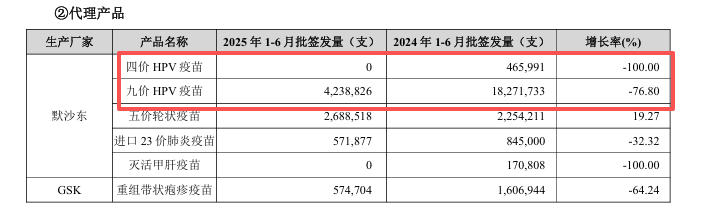
Core Viewpoint - The Chinese government is set to include HPV vaccination services for eligible girls in the national immunization program, which may positively impact the competitive landscape of the vaccine industry [1][3]. Group 1: Market Dynamics - The HPV vaccine market in China is transitioning from a "blue ocean" to a "red ocean," indicating increased competition among vaccine manufacturers [3]. - The introduction of domestic two-valent HPV vaccines has improved accessibility and affordability, breaking the previous monopoly of imported nine-valent vaccines [2][3]. - Financial data shows significant revenue declines for major players: Watson Bio's revenue dropped by 19.47% to 1.154 billion yuan, WanTai Bio's revenue fell by 38.25% to 844 million yuan, and Zhifei Biological's revenue decreased by 73.06% to 4.919 billion yuan in the first half of 2025 [3][4]. Group 2: Product and Pricing Information - WanTai Bio's nine-valent HPV vaccine "Xinkening®9" is priced at 499 yuan per dose, approximately 40% lower than imported alternatives [2]. - The batch issuance of Merck's four-valent HPV vaccine was zero in the first half of 2025, while the nine-valent vaccine saw a 76.8% decline in issuance compared to the previous year [4][5]. Group 3: Future Prospects - There is a strong possibility that the two-valent HPV vaccine will be included in the national immunization program, which could significantly boost sales [7]. - The male HPV vaccine market is also becoming competitive, with Merck expanding its HPV vaccine indications to males aged 9-26, while domestic companies are conducting clinical trials for male indications [8].

中新健康丨HPV疫苗市场争夺白热化,政策调整对企业影响几何?
Zhong Guo Xin Wen Wang· 2025-09-12 15:15
Group 1 - The Chinese government will introduce HPV vaccination services for eligible girls and include HPV vaccines in the national immunization program, which is expected to enhance women's health protection [1][3] - The market for HPV vaccines has shifted from a "blue ocean" to a "red ocean," indicating increased competition among vaccine manufacturers [6] - Domestic companies such as Wantai Biological Pharmacy and Watson Bio have received approvals for their HPV vaccines, breaking the previous monopoly held by Merck's Gardasil 9 [3][4] Group 2 - Financial data shows significant revenue declines for major vaccine manufacturers in the first half of 2025, with Watson Bio's revenue down 19.47% and Wantai Biological's down 38.25% [6][7] - The approval of male indications for HPV vaccines by Merck and ongoing clinical trials by domestic companies indicate a growing focus on the male market, which is expected to become highly competitive [9] - The inclusion of the bivalent HPV vaccine in the national immunization program could lead to increased sales through government procurement [8]

HPV疫苗将纳入国家免疫规划,疫苗企业业绩承压,政策红利或带来行业拐点?
3 6 Ke· 2025-09-12 11:16
Group 1: HPV Vaccine Inclusion in National Immunization Program - The National Health Commission announced the inclusion of HPV vaccination services for eligible girls in the national immunization program to enhance women's health protection [1][2] - Since 1978, China's immunization program has expanded from 4 vaccines to 14 vaccines preventing 15 infectious diseases [1] - HPV is a major cause of cervical cancer, and vaccination is a primary preventive measure, with existing vaccines effectively preventing over 70% of cervical cancer cases [1][2] Group 2: Cervical Cancer Statistics - In 2022, China reported 151,000 new cervical cancer cases, ranking fifth among female cancers, with 56,000 deaths, ranking sixth in female cancer mortality [2] Group 3: Free Vaccination Initiatives - Several regions have initiated free HPV vaccination programs, with Beijing starting free vaccinations for girls entering the first year of junior high school in 2025 [3] - As of August 2023, 18 provinces and several cities have included HPV vaccination in government initiatives, covering approximately 60% of eligible girls [3] Group 4: Market Dynamics and Company Performance - The inclusion of HPV vaccines in the national program is expected to improve public awareness and accessibility, potentially stabilizing sales for vaccine companies [4][5] - Companies like Watson Bio and Zhifei Biological have faced performance pressures due to declining public willingness to vaccinate and increased competition [7] - Watson Bio reported a revenue of 1.154 billion yuan in the first half of the year, down 19.47%, while Zhifei Biological's revenue was 4.919 billion yuan, down 73.06% [7] Group 5: Pricing and Competition - The first domestic two-valent HPV vaccine was priced at 499 yuan per dose, significantly lower than imported alternatives, which were priced over 1,300 yuan per dose [8] - The market for nine-valent HPV vaccines has become competitive, with companies like Zhifei Biological reducing prices and offering promotions to maintain market share [9]
HPV疫苗将纳入国家免疫规划 多地已开展免费接种服务
Zheng Quan Ri Bao· 2025-09-11 23:57
Core Points - The Chinese government is focusing on high-quality health initiatives during the "14th Five-Year Plan," with significant achievements in disease prevention and control [1] - The introduction of HPV vaccination services for eligible girls is a key initiative aimed at protecting women's health [1] Group 1: HPV Vaccination Initiatives - The national health authority is implementing free HPV vaccination services across various regions, with a focus on accessibility and convenience for the public [2] - The HPV vaccine included in the national immunization program is a bivalent vaccine, primarily targeting HPV types 16 and 18, which account for 70% to 80% of cervical cancer cases [2] - Approximately 60% of eligible girls in China are covered by the free vaccination policy, which has been adopted in 18 provinces and several cities [2] Group 2: Domestic Vaccine Development - The domestic bivalent HPV vaccine has proven to be effective and cost-efficient, significantly lowering vaccination costs and facilitating the establishment of a large-scale immunity barrier [3] - The launch of the first domestically developed nine-valent HPV vaccine, "Xinkening 9," marks a significant advancement in cervical cancer prevention, providing a broader range of protection [3][5] - The nine-valent HPV vaccine is priced at 499 yuan per dose, which is less than half the cost of imported alternatives, making it more accessible [3] Group 3: Production and Safety - The domestic vaccine manufacturer, Wantai Biological Pharmacy, has produced over 100 million doses of the HPV vaccine, all of which have passed national quality checks [4] - Clinical studies have shown that the domestic nine-valent HPV vaccine has comparable safety and efficacy to imported products, with a 100% seroconversion rate for all HPV types tested [5] - The successful launch of the domestic nine-valent HPV vaccine is expected to alleviate supply shortages and enhance vaccination willingness among eligible women, contributing to the goal of eliminating cervical cancer by 2050 [5]