
Cambricon(688256)

Search documents
财联社12月16日早间新闻精选
Xin Lang Cai Jing· 2025-12-16 00:16
Group 1 - The article emphasizes the importance of expanding domestic demand as a strategic initiative, advocating for a long-term mechanism to enhance consumer spending and confidence [1] - The China Securities Regulatory Commission (CSRC) is set to implement reforms to the ChiNext board and accelerate the rollout of the "1+6" reform measures for the Sci-Tech Innovation Board, aiming to enhance market stability and promote equity public funds [2] - The State Grid Corporation of China is focusing on building a new power system and energy framework to achieve carbon peak goals [3] Group 2 - The Ministry of Commerce and five other departments have issued an action plan to promote high-quality development in the service outsourcing sector, targeting the cultivation of internationally competitive leading enterprises by 2030 [4] - The State Administration of Foreign Exchange is emphasizing macro-prudential management of the foreign exchange market to maintain the stability of the RMB exchange rate and ensure a balanced international payment [5] - The first batch of L3 autonomous driving vehicles has received approval for road testing in designated areas of Beijing and Chongqing [6] Group 3 - There is a collective price increase trend among manufacturers of lithium iron phosphate cathode materials, expected to continue until the fourth quarter of next year [7] - The Henan Province Postal Regulations will take effect on March 1, 2026, imposing fines for unauthorized actions by express delivery companies [8] - Several companies, including Aerospace Electronics and TCL Technology, have announced significant capital investments and acquisitions, indicating active market movements [9] Group 4 - Nasdaq plans to submit a proposal to the SEC to extend trading hours for stocks and exchange-traded products from 16 to 23 hours per week [15] - STMicroelectronics has delivered over 5 billion RF antenna chips to SpaceX for its Starlink satellite network, with expectations to double deliveries by 2027 [17] - U.S. stock indices experienced collective declines, with the Dow Jones down 0.09%, Nasdaq down 0.59%, and S&P 500 down 0.16% [18]



OpenAI前CTO再创业,新产品接入Kimi K2 Thinking;谷歌NotebookLM集成至Gemini丨AIGC日报
创业邦· 2025-12-16 00:07
Group 1 - SenseTime launched Seko 2.0, the industry's first multi-episode generative AI model, which is based on its self-developed Seko series model. The model has successfully adapted to the domestic AI chip Cambricon, with a strategic cooperation established in October to optimize software and hardware integration [2] - Former OpenAI CTO Mira Murat has founded Thinking Machines Lab, with the latest product Tinker now valued at $50 billion. The product features the trillion-parameter Kimi K2 Thinking model, designed for long-duration reasoning and tool invocation [2] - Mill Electronics introduced the RK3576 AI edge computing box, which offers high computing power, low power consumption, and strong scalability, becoming a key tool for upgrading industrial vision, engineering machinery, and smart city sectors [2] Group 2 - Google integrated NotebookLM into Gemini, enhancing user interaction by allowing users to attach notes for additional context during conversations with AI chatbots [2]




中科寒武纪科技股份有限公司2025年第二次临时股东会决议公告
Shang Hai Zheng Quan Bao· 2025-12-15 20:34
Meeting Overview - The second extraordinary general meeting of shareholders was held on December 15, 2025, with no rejected proposals [2][5] - The meeting was convened by the board of directors and chaired by the chairman, utilizing a combination of on-site and online voting methods [3][4] Voting and Resolutions - A resolution to use capital reserves to offset losses was approved [5] - The company reported a cumulative undistributed profit of -2,778,372,367.65 yuan as of December 31, 2024, with a capital reserve balance of 9,624,727,732.70 yuan [9] Legal Compliance - The meeting's convening, holding, and voting procedures were confirmed to comply with relevant laws and regulations, ensuring the legitimacy of the attendees and the voting results [6] Notification to Creditors - The company notified creditors of the decision to use capital reserves to cover losses, allowing them to claim debts within specified timeframes [10][11] - Creditors must provide valid documentation to assert their claims, with specific requirements outlined for both corporate and individual creditors [12]
27.78亿元!扭亏后,寒武纪大动作!
Mei Ri Jing Ji Xin Wen· 2025-12-15 15:24
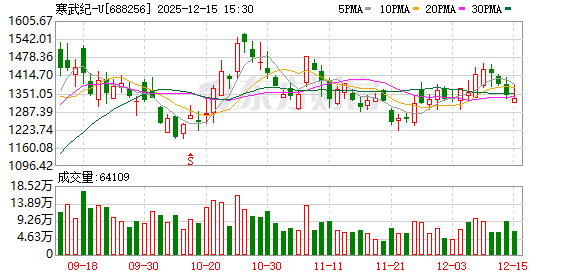
Core Viewpoint - The company plans to use its capital reserve of 27.78 billion yuan to offset its accumulated losses, as its undistributed profits were reported at -27.78 billion yuan as of December 31, 2024 [2][3][5]. Financial Summary - As of December 31, 2024, the company's financial statements show accumulated undistributed profits of -27.78 billion yuan, with a surplus reserve balance of 0 yuan and a capital reserve balance of 96.25 billion yuan [5][7]. - The negative undistributed profits are primarily due to cumulative losses from previous years, and the capital reserve to be used for loss compensation originates from shareholder contributions [5][7]. Regulatory Context - The new company law effective from July 1, 2024, stipulates that loss compensation should first utilize discretionary and statutory reserves, with capital reserves used only if those are insufficient [7]. Business Performance - For the first three quarters of 2025, the company reported revenues of 46.07 billion yuan, a year-on-year increase of 2386.38%, and a net profit of 16.05 billion yuan, compared to a loss of 7.245 billion yuan in the same period last year [7]. - The basic earnings per share were reported at 3.85 yuan [7]. Market Performance - As of December 15, the company's stock closed down 0.9% at 1331.9 yuan per share, with a total market capitalization of 561.6 billion yuan [7].
寒武纪:拟使用27.78亿资本公积金弥补累计亏损
Zheng Quan Shi Bao· 2025-12-15 15:24
12月15日晚,寒武纪公告,公司于2025年11月28日、2025年12月15日分别召开第三届董事会第一次会 议、2025年第二次临时股东会,审议通过了《关于使用公积金弥补亏损的议案》。 根据天健会计师事务所(特殊普通合伙)为公司出具的2024年度《审计报告》,截至2024年12月31日, 母公司财务报表累计未分配利润为-27.78亿元,盈余公积期末余额为0元,资本公积期末余额为96.25亿 元。 公司拟使用母公司资本公积27.78亿元用于弥补母公司累计亏损。本次公积金弥补亏损以公司2024年末 母公司未分配利润负数弥补至零为限。 来源:公司公告 (文章来源:证券时报) 根据相关规定,公司现通知债权人,可自接到通知之日起30日内或自公告披露之日起45日内要求公司清 偿债务或提供相应担保。 ...
寒武纪:拟使用27.78亿资本公积金弥补累计亏损
证券时报· 2025-12-15 15:21
12月15日晚,寒武纪公告,公司于2025年11月28日、2025年12月15日分别召开第三届董事会第一 次会议、2025年第二次临时股东会,审议通过了《关于使用公积金弥补亏损的议案》。 根据天健会计师事务所(特殊普通合伙)为公司出具的2024年度《审计报告》,截至2024年12月31 日,母公司财务报表累计未分配利润为- 27.78亿元 ,盈余公积期末余额为0元,资本公积期末余额为 96.25亿元 。 公司拟使用母公司资本公积27.78亿元用于弥补母公司累计亏损。本次公积金弥补亏损以公司2024年末母 公司未分配利润负数弥补至零为限。 根据相关规定,公司现通知债权人,可自接到通知之日起30日内或自公告披露之日起45日内要求公司清 偿债务或提供相应担保。 来源:公司公告 责编:叶舒筠 校对: 杨立林 版权声明 证券时报各平台所有原创内容,未经书面授权,任何单位及个人不得转载。我社保留追 究相关 行 为主体 法律责任的权利。 转载与合作可联系证券时报小助理,微信ID:SecuritiesTimes END 点击关键字可查看 潜望系列深度报道丨 股事会专栏 丨 投资小红书 丨 e公司调查 丨 时报会客厅 丨 十大 ...

扭亏后,寒武纪新动作
Shang Hai Zheng Quan Bao· 2025-12-15 14:48
Core Viewpoint - The company plans to use its capital reserve of 2.778 billion yuan to offset accumulated losses, aiming to bring its retained earnings to zero by the end of 2024 [2][5][7]. Group 1: Financial Measures - The company reported a cumulative retained earnings deficit of 2.778 billion yuan as of December 31, 2024, with a surplus reserve balance of 0 yuan and a capital reserve balance of 9.625 billion yuan [5]. - The capital reserve used for loss compensation originates entirely from capital contributions made by shareholders [5][7]. - The new company law effective July 1, 2024, stipulates that loss compensation must first utilize discretionary and statutory reserves, with capital reserves being used only if necessary [7]. Group 2: Performance and Future Outlook - In the first three quarters of the year, the company achieved a revenue of 4.607 billion yuan, representing a year-on-year increase of 2386.38%, and a net profit attributable to shareholders of 1.605 billion yuan, marking a turnaround from previous losses [7][8]. - The company's initiative to utilize capital reserves for loss compensation is expected to alleviate historical financial burdens, enhance investor returns, and facilitate high-quality development [8]. - The company’s main business involves the research, design, and sales of AI core chips for various applications, including cloud servers and edge computing devices [8].
沐曦股份 周三上市;寒武纪拟使用近28亿元资本公积金弥补亏损丨公告精选
2 1 Shi Ji Jing Ji Bao Dao· 2025-12-15 14:38
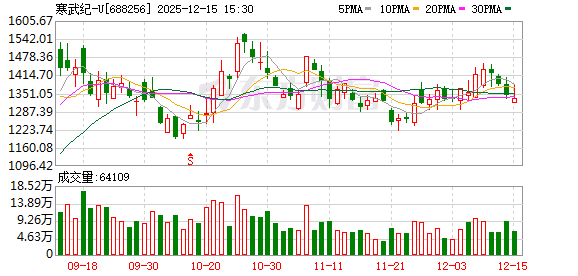
Group 1: Company Announcements - Muxi Co., Ltd. will list its shares on the Shanghai Stock Exchange's Sci-Tech Innovation Board on December 17, 2025, and will be classified under the Sci-Tech Growth Tier as it is not yet profitable [1] - Cambrian Technology plans to use 2.778 billion yuan from its capital reserve to cover cumulative losses, with a limit set to bring its negative retained earnings to zero by the end of 2024 [2] - TCL Technology's subsidiary, TCL Huaxing, intends to acquire a 10.7656% stake in Shenzhen Huaxing Semiconductor for 6.045 billion yuan, increasing its total stake to 94.9761% [2] - Yipin Hong plans to sell a 13.45% stake in its subsidiary Arthrosi Therapeutics for up to 1.5 billion USD, which includes an initial payment of 950 million USD and milestone payments of up to 550 million USD [3] - Jingjia Microelectronics announced that its subsidiary has successfully completed key stages of its AI SoC chip CH37 series, marking a significant project milestone [4] - Aerospace Electronics intends to inject 728 million yuan into its subsidiary, Aerospace Changzheng Rocket Technology, to enhance its commercial space industry capabilities [5] - Unigroup Guowei has established a Central Research Institute focusing on AI chip architectures and algorithms for applications in robotics and low-altitude vehicles [6] Group 2: Performance Metrics - Spring Airlines reported an 18.02% year-on-year increase in passenger turnover for November [7] - China Southern Airlines saw a 10.42% increase in passenger turnover for November 2025 [7] - Air China experienced a 10.1% rise in passenger turnover for November 2025 [7] - China Eastern Airlines reported a 10.35% increase in passenger turnover for November 2025 [7] - Xinhua Insurance's cumulative original insurance premium income grew by 16% from January to November [7] - Hainan Airport recorded a passenger throughput of 2.0909 million in November, an 8.16% year-on-year increase [7] Group 3: Mergers and Acquisitions - Luoyang Molybdenum's subsidiary plans to acquire a gold mine project for 1.015 billion USD [7] - Jiadu Technology intends to acquire 60% of Hisense Micro-Link for 79.2 million yuan [7] - Zhongtai Chemical plans to acquire 15.173% of Huatai Company for 1.2 billion yuan [7] - Tianfu Energy's Tianyuan Gas is set to acquire 100% of Chengtong Oil and Gas for 21.49 million yuan [7] - Taotao Vehicle's subsidiary plans to acquire 100% of Racka brand company for 15 million USD [7]
A股公告精选 | 沐曦股份(688802.SH)将于12月17日在科创板上市
智通财经网· 2025-12-15 12:17
Group 1 - Muxi Co., Ltd. will list its common stock on the Sci-Tech Innovation Board on December 17, 2025 [1] - Xinghua New Materials signed a strategic cooperation agreement with Guoteng Company to collaborate in the quantum technology field [2] - TCL Technology's subsidiary plans to acquire a 10.7656% stake in Shenzhen Huaxing Semiconductor for 60.45 billion RMB [3] Group 2 - Jingjia Micro's subsidiary has completed key stages of its edge AI SoC chip, marking a significant project breakthrough [4] - Cambricon plans to use 2.778 billion RMB of its capital reserve to offset losses [5] - Bojun Technology's subsidiary intends to invest 600 million RMB in an automotive lightweight component production base in Chongqing [6] Group 3 - Longqi Technology plans to invest approximately 1.5 billion RMB to build an AI + smart terminal digital benchmark factory in Nanchang [7] - Taili Technology signed a strategic cooperation framework agreement with Jinan University to establish an advanced functional materials research institute with an investment of 100 million RMB [8][9] - Pengding Holdings plans to invest a total of 4.297 billion RMB in a production facility in Thailand by 2026 [10] Group 4 - China Metallurgical Group reported a new contract amount of 958.13 billion RMB from January to November 2025, a decrease of 8.6% year-on-year [16] - 吉祥航空 reported an 8.92% year-on-year increase in passenger turnover in November 2025 [17] - Hainan Airport's passenger throughput reached 2.0909 million in November 2025, a year-on-year increase of 8.16% [20] Group 5 - Xinhua Insurance reported a cumulative original insurance premium income of 188.85 billion RMB from January to November 2025, a year-on-year increase of 16% [21] - Huafeng Aluminum's controlling shareholder plans to reduce its stake by up to 2.17% [22] - Digital Vision plans to repurchase shares worth 80 million to 120 million RMB [23]


12月15日晚间公告 | 寒武纪拟使用逾27亿元资本公积金弥补亏损;中钨高子公司新增AI PCB微钻产能6300万支/年
Xuan Gu Bao· 2025-12-15 12:01
百纳千成:筹划购买厦门众联世纪100%股权,股票停牌;后者是是一家以AI+大数据驱动的数智科技企 业。 二、并购 一、停牌 1、TCL科技:拟60.45亿元收购深圳华星半导体10.7656%股权。 2、涛涛车业:孙公司拟1500万美元收购Racka品牌公司100%股权。 3、佳都科技:拟7920万元收购海信微联60%股权,海信微联是一家主要从事轨道交通信号业务的国家 级高新技术企业。 三、回购、股权转让 1、数码视讯:拟8000万至1.2亿回购公司股份,回购价格不超过8.4元/股。 2、朗进科技:浙江经建投拟以不低于54元/股协议受让公司股份。 3、一品红:拟以1亿元-2亿元回购公司股份。 四、对外投资、日常经营 1、紫光国微:成立中央研究院,主要研究发展方向为具身机器人等应用的端侧AI芯片新架构、新模型 和高效算法研究等。 2、星华新材:与国腾公司签署战略合作协议,将在量子科技领域展开合作。 3、模塑科技:与国内某机器人公司签订了零部件采购框架协议,并于近日正式接到客户发出的人形机 器人外覆盖件小批量采购订单。 5、寒武纪:拟使用27.78亿元资本公积金弥补亏损。 6、航天电子:拟对航天火箭公司增资7.28 ...