TCL TECH.(000100)

Search documents
TCL创始人、董事长李东生:2025年公司研发费用预计将达到150亿元
Zheng Quan Ri Bao Wang· 2025-12-13 03:46
Core Insights - The 2025 TCL Global Technology Innovation Conference (TIC2025) was held in Guangzhou, focusing on the theme "AI for Real," discussing how AI can be applied in real-world scenarios to enhance efficiency and redefine various sectors such as transportation, health, and entertainment [1] - The global AI competition is intensifying, primarily centered around model parameters and computational infrastructure expansion, leading to issues like resource waste and lack of practical value creation [1] - TCL's founder and chairman, Li Dongsheng, emphasized the company's commitment to increasing AI investment, with R&D expenses expected to reach 15 billion yuan by 2025, aiming to transition from following and catching up to leading in key technology areas [1] Industry Trends - A significant number of Chinese companies are focusing on practical AI applications, integrating AI with the real economy to create tangible value, contrasting with the global trend of AI infrastructure investment and model competition [1] - The conference highlighted the importance of AI in driving innovation across the entire supply chain, manufacturing, and operational processes, enhancing efficiency and product development [1] - The ultimate goal of AI is to create measurable and sustainable value through real-world applications, rather than just generating hype or theoretical concepts [1] Key Developments - The conference announced ten exemplary AI application scenarios and initiated a global AI talent recruitment plan, showcasing advancements in multimodal models, AI-enabled material development, embodied intelligence, and digital twins [1] - Chinese Academy of Engineering academician Ding Wenhua stated that the arrival of large AI models necessitates practical applications across various industries, emphasizing the importance of AI in R&D and user interaction experiences [1]

AI早报 |京东正招募端侧AI芯片领域人才,中国联通人工智能产业创新大会在京举办
Xin Lang Cai Jing· 2025-12-13 00:18
Group 1 - JD is recruiting talent in the field of edge AI chips, focusing on integrated storage and computing AI chips for applications in robotics and smart home devices, offering salaries ranging from 40K to 100K times 20 [1] - OPPO is set to launch the "AI Miaot听" feature, which transforms articles into podcasts, enhancing user experience with a dual-person format and background music, catering to the growing preference for audio content consumption [1] - Baidu's founder, Li Yanhong, predicts that 2025 will be a pivotal year for AI application proliferation, emphasizing that the application layer will present the most opportunities for success [1] Group 2 - TCL's founder, Li Dongsheng, stated that AI, represented by large models and computing systems, is transitioning from concept to deep industrialization, becoming a key driver for future growth, with R&D expenses expected to reach 15 billion yuan by 2025 [2] - TCL aims to generate over 1 billion yuan in comprehensive benefits through the implementation of AI applications by 2025 [2] Group 3 - Beijing has launched its first online exhibition themed around AI science popularization, titled "Youth AI Adventure," providing resources for young people to understand and apply AI technology [3] - China Unicom held an AI industry innovation conference in Beijing, focusing on policy interpretation, capability release, case sharing, and ecosystem agreements to showcase its strategic layout and practical achievements in the AI field [4]


借力AI,TCL加速进军白电
Guan Cha Zhe Wang· 2025-12-12 15:10
Core Viewpoint - AI is transitioning from concept to deep industrialization, becoming a key driver for future growth, as emphasized by TCL's founder and chairman, Li Dongsheng, at the 2025 TIC [1] Group 1: Industry Landscape - TCL is shifting resources towards the white goods sector to compete against traditional giants like Midea, Gree, and Haier, as well as internet brands like Xiaomi [1][4] - The white goods market is characterized by a "Matthew effect," where the strong get stronger, making TCL's ambition to enter the top tier more urgent [4][10] Group 2: AI Implementation - TCL aims to utilize AI in practical applications for air conditioners, refrigerators, and washing machines, addressing the industry's pain points of "pseudo-intelligence" [3][5] - The company focuses on energy-saving solutions, achieving a 40% reduction in energy consumption for air conditioners through a combination of small models and reinforcement learning [5][9] Group 3: Product Innovations - TCL's washing machines tackle the "iron triangle" of speed, cleanliness, and energy efficiency, achieving a 5% reduction in energy consumption and a 10% decrease in washing time [5] - The refrigerator features dual magnetic preservation technology and a deep freeze function at -40°C, enhancing food preservation for up to 15 days [5] Group 4: User Experience - TCL has integrated AI voice assistants to simplify user interaction, allowing for natural language control of appliances [6] - The company offers tailored solutions for different scenarios, such as AI sleep mode for air conditioners and AI smart washing for washing machines [6] Group 5: Competitive Advantages - TCL's advantages stem from group-level technology reuse and channel integration, allowing for stable supply and cost control amid market fluctuations [9][10] - The company has established a comprehensive channel and after-sales service team, comparable to Midea and Haier, enhancing its competitive edge [9][10] Group 6: Market Position and Goals - TCL aims to rapidly enter the mid-to-high-end market, with a focus on promoting its ice-wash products [11] - The company recognizes challenges such as brand recognition and global market expansion, acknowledging a gap in technical capabilities compared to international benchmarks [13][14]

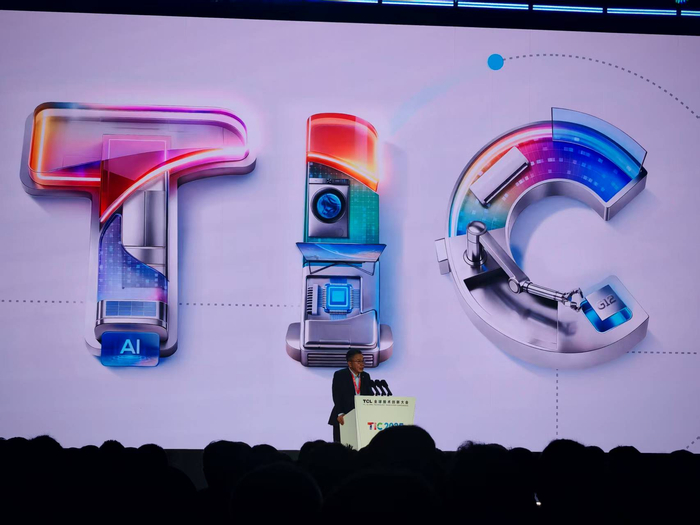
AI赋能由虚向实,TCL加速进军白电
Guan Cha Zhe Wang· 2025-12-12 15:08
Core Viewpoint - AI is transitioning from concept to deep industrialization, becoming a key driver for future growth, as emphasized by TCL's founder and chairman, Li Dongsheng, at the 2025 TIC [1] Group 1: Industry Landscape - TCL is shifting resources towards the white goods sector to compete against traditional giants like Midea, Gree, and Haier, as well as internet brands like Xiaomi [1][4] - The white goods market is characterized by a "Matthew effect," where the strong get stronger, making TCL's ambition to enter the top tier more urgent [4][10] Group 2: AI Implementation - TCL aims to utilize AI technology in air conditioners, refrigerators, and washing machines to differentiate itself in a saturated market [1][5] - The company focuses on practical AI applications rather than superficial "smart" features, addressing real user needs and enhancing product relevance [3][4] Group 3: Product Innovations - In air conditioning, TCL employs a "small model + reinforcement learning" approach to significantly reduce energy consumption, achieving a 40% reduction in initial hours and an additional 18% over time [5] - The washing machine addresses the "iron triangle" of speed, cleanliness, and resource efficiency, achieving a 5% reduction in energy consumption and a 10% decrease in wash time [5] - The refrigerator features advanced preservation technology, enhancing food freshness for up to 15 days and improving freezing speed from 58 minutes to 30 minutes [5] Group 4: User Experience - TCL integrates AI voice assistants to simplify user interaction, allowing for natural language control of appliances [6] - The company offers tailored solutions for different scenarios, such as AI sleep mode in air conditioners and AI smart washing features [6] Group 5: Competitive Advantages - TCL benefits from group-level technology and channel reuse, enhancing its competitive edge in the white goods market [7][9] - The company has established a robust service and support network, comparable to that of Midea and Haier, which aids in its brand expansion [9][10] Group 6: Market Strategy - TCL's strategy emphasizes full-chain layout to mitigate market risks, contrasting with competitors reliant on external supply chains [10] - The company has achieved vertical integration, maintaining stable supply and cost advantages amid industry challenges [10] Group 7: Future Goals - TCL aims to rapidly penetrate the mid-to-high-end market, with a focus on promoting its washing and refrigeration products [12] - The company acknowledges challenges such as brand recognition and global market expansion, while committing to original innovation and core technology development [14]
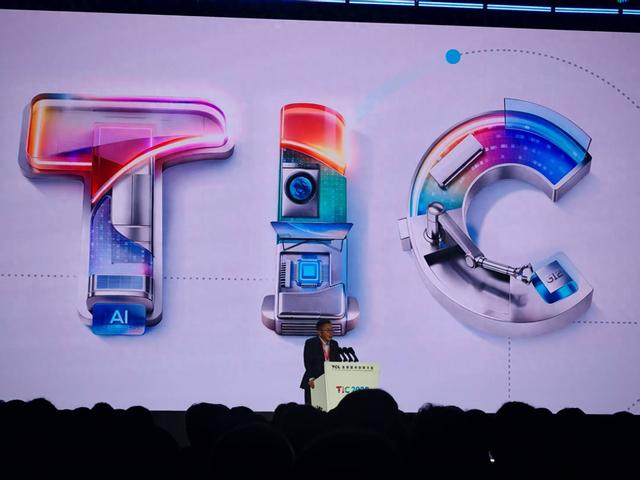
TCL李东生:2025年推进AI落地创造综合效益超10亿元
Xin Lang Ke Ji· 2025-12-12 12:17
Core Viewpoint - TCL is focusing on AI applications to drive innovation across its entire value chain, aiming to create over 1 billion yuan in comprehensive benefits by 2025 [1] Group 1: AI Applications and Innovations - TCL announced ten AI application scenarios and demonstrated results at the 2025 Global Technology Innovation Conference (TIC2025) [1] - The company is launching a global AI talent recruitment plan and sharing advancements in multimodal domain-specific large models, AI-enabled display material development, embodied intelligence, and digital twins [1] - The "X-Intelligence 3.0" model, developed by TCL Huaxing, is the first domain-specific large model in the display field with strong reasoning capabilities, showcasing a comprehensive knowledge system and efficient learning and adaptation abilities [1] Group 2: Strategic Goals and Vision - TCL's founder and chairman, Li Dongsheng, emphasized the company's commitment to increasing investment in AI technology to drive innovation in research and development, manufacturing, supply chain, and operations [1] - The theme of the conference, "AI for Real," reflects TCL's goal to transition from technology to practical applications, creating measurable and sustainable value in every manufacturing process, product, and service [1] - TCL aims to set a benchmark for the intelligent transformation of Chinese manufacturing through the integration of the "Star Intelligence Model" into more core production and research processes [1]
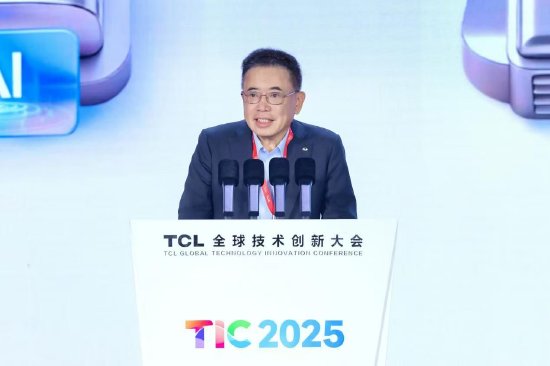
李东生:今年TCL研发费用预计将达到150亿元,“AI应用”将成为未来企业竞争的“胜负手”
Xin Lang Cai Jing· 2025-12-12 12:17
Core Viewpoint - TCL aims to establish itself as a global leader in technology, with a focus on enhancing its technological capabilities to meet international industry standards [1] Group 1: R&D Investment - TCL plans to increase its R&D expenditure to 15 billion yuan by 2025 [1] - The company has made progress in key core technology areas, transitioning from a follower to a leader in some aspects [1] - Despite advancements, TCL acknowledges that there is still a gap between its overall technological capabilities and international benchmarks [1] Group 2: AI Application - TCL emphasizes the importance of AI in driving technological innovation, advanced manufacturing, and operational efficiency [1] - The rapid development of AI is reshaping the global industrial landscape and is seen as a critical factor for future competitive advantage [1] - By 2025, TCL expects to generate over 1 billion yuan in comprehensive benefits through the implementation of AI applications [1]
TCL李东生:AI正从概念走向深度产业化
Bei Ke Cai Jing· 2025-12-12 10:13
Core Insights - The current global technological wave is accelerating, with AI represented by large models and computing systems transitioning from concept to deep industrialization, becoming a key driver of future growth [1] - TCL is significantly increasing its investment in AI technology to drive innovation across the entire value chain, including research and development, manufacturing, supply chain, and operations, aiming to achieve a comprehensive benefit exceeding 1 billion yuan by 2025 through AI application [1] - The arrival of AI large models necessitates practical application across various industries, with a focus on AI for research and development as a primary factor, extending to end-user interaction and embodied intelligence [1] Company and Industry Developments - TCL's commitment to AI technology is expected to enhance its operational efficiency and value creation, indicating a strategic shift towards integrating advanced technologies in manufacturing [1] - Experts emphasize the importance of applying the latest AI technologies comprehensively in production and manufacturing processes within the next couple of years, highlighting the potential for significant advancements in China's manufacturing sector [1]
显示面板的2025:LCD控产保价,OLED千亿对决开场
经济观察报· 2025-12-12 09:50
Core Viewpoint - In 2025, Chinese panel companies have transitioned from mere scale expansion to a phase where technology defines their business models, particularly in the OLED sector, while maintaining a controlled production strategy in the mature LCD market [1][19]. LCD Market Dynamics - The LCD market has shifted from a "full production, full sales" model to an "on-demand production" strategy, where manufacturers adjust production based on actual orders to stabilize prices [6][7]. - Major panel manufacturers have agreed to control production to maintain profitability, leading to a reduction in the operating rate of LCD production lines to below 80% in October 2025 [2][3]. - The market concentration has increased, giving leading companies stronger bargaining power, which has allowed them to implement production control strategies effectively [7][8]. Financial Performance - The financial results reflect the success of the new production strategy, with companies like BOE and TCL reporting significant profit increases in their third-quarter results, with net profits growing by 39.03% and 53.5% respectively [8][9]. OLED Market Strategies - In the OLED sector, leading companies are pursuing different technological paths, with BOE investing 630 billion RMB in a mainstream "evaporation" process, while TCL is adopting a lower-cost "printing" method with an investment of only 295 billion RMB [11][12]. - Visionox is exploring a unique approach using its proprietary ViP technology, which aims to replace traditional masking techniques with semiconductor-like processes [14][15]. - The competition in the OLED market is intensifying as companies aim to capture the growing demand for OLED panels in IT devices, with projections indicating a compound annual growth rate of 33% for OLED in laptops by 2030 [17]. Future Outlook - The race for the 8.6-generation OLED production lines is critical as the smartphone market matures, with companies like BOE and TCL setting ambitious timelines for mass production by 2026 and 2027 respectively [17][18]. - Despite not investing in new OLED lines, Tianma Microelectronics is focusing on enhancing its existing LCD capabilities, particularly in the automotive display sector, which is expected to grow significantly [19].




TCL李东生:2025年,AI落地带来了超10亿综合效益
Tai Mei Ti A P P· 2025-12-12 08:57
Core Insights - TCL is focusing on the practical application of AI technology, emphasizing the theme "AI for Real" at the 2025 Global Technology Innovation Conference, aiming to create tangible value rather than just theoretical concepts [2][3] - The company plans to increase its R&D expenditure to 15 billion yuan by 2025, with a total of 110,000 patent applications, including 19,000 PCT patents, indicating a strong commitment to innovation [3][4] Group 1 - The rapid development of AI technology is reshaping the global industrial landscape and is seen as a key competitive factor for future enterprises [2] - TCL has made significant strides in key core technology areas, transitioning from following to leading in some aspects, although it acknowledges a gap compared to international industry benchmarks [2] - The focus of global AI competition is currently on model parameters and the expansion of computing infrastructure, leading to issues such as resource waste and lack of practical application [2] Group 2 - TCL's product lineup, including TVs, smartphones, and AR/AI glasses, has integrated AI technology, enhancing the core value of consumer products [4] - In the semiconductor display sector, TCL's X-Intelligence 3.0 model ranks first in the display field and 11th globally, demonstrating its advanced capabilities in product development and efficiency improvements [4] - The company has initiated a global AI talent recruitment plan to enhance its technological innovation and collaborative capabilities within the industry [4]
显示面板的2025:LCD控产保价,OLED千亿对决开场
Jing Ji Guan Cha Wang· 2025-12-12 08:52
Core Insights - The display panel industry, often perceived as a mature and stagnant sector, is undergoing significant structural changes driven by supply-side adjustments and technological differentiation [2][3][4] Group 1: LCD Market Dynamics - LCD panel manufacturers are adopting a "just-in-time production" strategy to maintain profitability, moving away from the traditional "full production" model [5][6] - In December, TV panel prices are expected to stabilize due to proactive inventory management by manufacturers in anticipation of demand for the first quarter of 2026 [5][6] - The production capacity utilization rate for LCD lines fell below 80% in October as manufacturers intentionally reduced output to cope with demand fluctuations [3][6] Group 2: OLED Market Strategies - Major players in the OLED sector, including BOE, TCL Technology, and Visionox, are investing over 140 billion RMB in their respective 8.6-generation OLED production lines, each choosing different technological paths [3][4][9] - BOE is focusing on the mainstream "evaporation" process and complex tandem structures to enhance performance, while TCL is pursuing a cost-effective "printing" method [9][11] - Visionox is developing its proprietary "VIP" technology, which utilizes semiconductor photolithography to eliminate the need for traditional masking techniques [11][12] Group 3: Financial Performance and Market Position - The shift to controlled production has led to improved financial results for major manufacturers, with BOE reporting a net profit of 4.601 billion RMB for the first three quarters, a 39.03% increase year-on-year [7] - TCL Technology's panel business achieved a net profit of 6.1 billion RMB, reflecting a 53.5% year-on-year growth [7] - Despite not investing in new OLED lines, Tianma Microelectronics is focusing on enhancing its existing LCD production capabilities, particularly in the automotive display sector [8][16] Group 4: Future Outlook and Competitive Landscape - The transition from LCD to OLED in the IT panel market is expected to accelerate, with a projected compound annual growth rate of 33% for OLED in laptops by 2030 [14] - As the competition intensifies, companies must navigate the high-end market against established players like Samsung Display while leveraging their unique technological advantages [15][16] - The display industry is moving from a phase of scale expansion to one where technology defines business models, marking a critical evolution in the sector [17]