TCL TECH.(000100)

Search documents
TCL科技:12月15日召开董事会会议
Mei Ri Jing Ji Xin Wen· 2025-12-15 10:40
Group 1 - The core point of the article is that TCL Technology announced a board meeting to discuss the acquisition of a stake in Shenzhen Huaxing Optoelectronics Semiconductor Display Technology Co., Ltd. [1] - For the first half of 2025, TCL Technology's revenue composition is as follows: semiconductor display materials accounted for 67.18%, distribution accounted for 17.13%, new energy photovoltaics accounted for 15.64%, and other businesses accounted for 0.12%, with other and offsetting items at -0.07% [1] - As of the report date, TCL Technology has a market capitalization of 93.8 billion yuan [1]

TCL科技控股子公司拟60.45亿元购买深圳华星半导体10.7656%的股权
Bei Jing Shang Bao· 2025-12-15 10:27
Group 1 - TCL Technology announced the acquisition of a 10.7656% stake in Shenzhen Huaxing Semiconductor from Shenzhen Major Industry Development Phase I Fund for a cash consideration of 6.045 billion yuan [1] - Following the transaction, TCL Technology's total control of Shenzhen Huaxing Semiconductor will increase from 84.2105% to 94.9761%, which is expected to enhance the company's profitability [1] - The acquisition does not constitute a related party transaction or a major asset restructuring [1] Group 2 - Shenzhen Huaxing Semiconductor focuses on semiconductor display business and operates two G11 display panel production lines, primarily producing large-size TFT-LCD display devices [1] - The products are mainly used in televisions and commercial displays, with customized production services offered based on customer needs [1] - The acquisition is expected to strengthen TCL Technology's core competitiveness in the semiconductor display industry and consolidate its leading position [1]
“国补”及体育赛事加码,TCL华星拟现金收购深圳华星半导体10.77%股权
Ge Long Hui· 2025-12-15 10:21
Core Viewpoint - TCL Technology plans to acquire a 10.7656% stake in its subsidiary, Shenzhen Huaxing Semiconductor Display Technology Co., Ltd., for 6.045 billion yuan, increasing its total ownership from 84.2105% to 94.9761%, which is expected to enhance the company's profitability significantly [1] Group 1: Acquisition Details - The acquisition is a strategic move to focus on the core semiconductor display business and optimize asset structure, reinforcing TCL's leading position in the global large-size display market [1] - The acquisition will enhance TCL's control over high-generation panel production lines, thereby strengthening its strategic dominance in the large-size TFT-LCD display sector [1][3] Group 2: Financial Performance of Shenzhen Huaxing - As of December 31, 2024, Shenzhen Huaxing's total assets were 68.04 billion yuan, with net assets of 44.85 billion yuan, and it achieved a revenue of 24.158 billion yuan and a net profit of 2.807 billion yuan [4] - By June 30, 2025, total assets decreased to 64.769 billion yuan, net assets increased to 46.564 billion yuan, with revenue of 12.023 billion yuan and net profit of 1.709 billion yuan, indicating a reduction in liabilities and an improved net profit margin from 11.6% to 14% [4] Group 3: Market Outlook - The television panel market is expected to enter a demand explosion period in 2026, driven by major sporting events like the World Cup and the Winter Olympics, which will stimulate consumer demand for large, high-definition displays [6][7] - The continuation of government policies promoting consumption, such as "trade-in" programs, is anticipated to further boost market demand, particularly for high-end large-size televisions [6][7] - With panel prices stabilizing and the trend towards larger sizes accelerating, TCL is well-positioned to capitalize on market opportunities and enhance shareholder value through its strengthened stake in Shenzhen Huaxing [7]
TCL科技:子公司TCL华星拟60.45亿元收购深圳华星半导体10.7656%股权
Mei Ri Jing Ji Xin Wen· 2025-12-15 10:09
(文章来源:每日经济新闻) 每经AI快讯,12月15日,TCL科技(000100.SZ)公告称,公司控股子公司TCL华星拟以现金60.45亿元购 买深圳市重大产业发展一期基金有限公司持有的深圳市华星光电半导体显示技术有限公司10.7656%的 股权。本次交易完成后,公司合计控制深圳华星半导体的股权比例将由84.2105%提高至94.9761%,预 计公司盈利水平将得到有效提升。本次交易不构成关联交易,不构成重大资产重组,无需提交公司股东 会审议。 ...

TCL科技(000100) - 关于收购深圳市华星光电半导体显示技术有限公司部分股权的公告
2025-12-15 10:00
TCL 科技集团股份有限公司 关于收购深圳市华星光电半导体显示技术有限公司部分股权的 公告 TCL 科技集团股份有限公司及董事会全体成员保证公告内容的真实、准确 和完整,没有虚假记载、误导性陈述或者重大遗漏。 一、交易概述 TCL 科技集团股份有限公司(以下简称"TCL 科技"或"公司")聚焦半导 体显示、新能源光伏和半导体材料业务的核心主业发展,为进一步提升在优势显 示产线的持股比例、提升盈利能力,并巩固公司在显示行业的核心竞争力及领先 地位,公司控股子公司 TCL 华星光电技术有限公司(以下简称"TCL 华星") 拟以现金 60.45 亿元购买深圳市重大产业发展一期基金有限公司持有的深圳市华 星光电半导体显示技术有限公司(以下简称"深圳华星半导体")10.7656%的股 权(以下简称"本次交易")。本次交易完成后,公司合计控制深圳华星半导体 的股权比例将由 84.2105%提高至 94.9761%,预计公司盈利水平将得到有效提升。 本次交易已经公司第八届董事会第十七次会议审议通过。根据《深圳证券交 易所股票上市规则》等相关规定,上述交易不构成关联交易,不构成重大资产重 组,本事项无需提交公司股东会审议。 ...
TCL科技(000100) - 第八届董事会第十七次会议决议公告
2025-12-15 10:00
TCL 科技集团股份有限公司及董事会全体成员保证公告内容的真实、准确 和完整,没有虚假记载、误导性陈述或者重大遗漏。 二、备查文件 证券代码:000100 证券简称:TCL 科技 公告编号:2025-099 TCL 科技集团股份有限公司 第八届董事会第十七次会议决议公告 TCL 科技集团股份有限公司(以下简称"上市公司"或"公司")第八届董 事会第十七次会议于 2025 年 12 月 11 日以邮件形式发出通知,并于 2025 年 12 月 15 日以通讯方式召开。本次董事会应出席董事 11 人,实际出席董事 11 人。 本次会议的召开符合《中华人民共和国公司法》(以下简称"《公司法》")及《公 司章程》的有关规定。 一、会议以 11 票赞成,0 票弃权,0 票反对审议并通过《关于收购深圳市华 星光电半导体显示技术有限公司部分股权的议案》 详情请见与本决议公告同日发布在指定信息披露媒体上的公司《关于收购深 圳市华星光电半导体显示技术有限公司部分股权的公告》。 2025 年 12 月 15 日 1、公司第八届董事会第十七次会议决议; 特此公告。 TCL 科技集团股份有限公司 董事会 ...
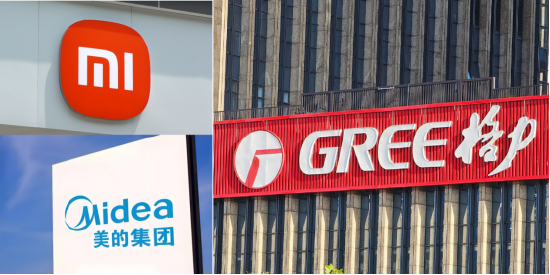
小米美的等抱团“铝代铜”,格力“缺席”:没把握,不跟!
新浪财经· 2025-12-14 09:25
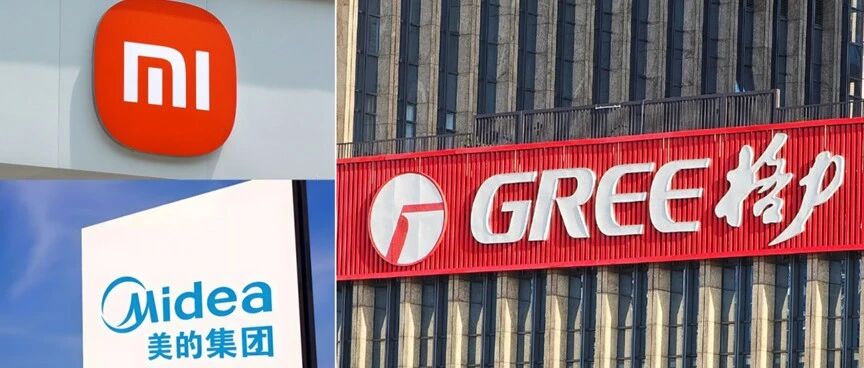
Core Viewpoint - Major air conditioning companies, including Haier, Midea, Xiaomi, and TCL, have committed to adhering to the "Self-Discipline Convention for Aluminum Reinforcement Application Research Working Group" to promote the "aluminum replacing copper" technology, while Gree Electric Appliances has notably opted out of this commitment [2][4][6]. Group 1: Industry Developments - The "aluminum replacing copper" initiative has gained traction among leading air conditioning manufacturers, with a collective push for industry standards and guidelines [4][9]. - Gree Electric Appliances has consistently stated that it does not have plans to adopt aluminum in its products until it can ensure 100% reliability, highlighting its cautious approach to product quality [6][11]. - The air conditioning industry is experiencing a significant shift towards aluminum, driven by the high costs of copper, which can account for 20% of the cost of a single air conditioner, while aluminum costs only about one-tenth of copper [8][9]. Group 2: Strategic Implications - The push for "aluminum replacing copper" is not only a technological evolution but also a strategic necessity for the domestic appliance industry, as over 95% of copper is imported, making the industry vulnerable to supply chain disruptions [9]. - The Ministry of Industry and Information Technology has proposed expanding aluminum consumption in various applications, including air conditioning, as part of a broader strategy for high-quality aluminum industry development from 2025 to 2027 [9]. - Gree's reluctance to adopt aluminum may lead to higher product costs, especially as international copper prices continue to rise, potentially pushing Gree's products out of competitive price ranges [11].





小米美的等抱团“铝代铜”,格力“缺席”:没把握,不跟!
Xin Lang Cai Jing· 2025-12-14 09:13
Core Viewpoint - Major air conditioning companies including Haier, Midea, Xiaomi, and TCL have committed to adhering to the "Self-Discipline Convention" for aluminum reinforcement in air conditioning, while Gree Electric has notably not joined this initiative, indicating a divergence in industry strategy regarding the "aluminum replacing copper" technology [2][3][5]. Group 1: Industry Commitment and Standards - The "Self-Discipline Convention" aims to enhance the industry's overall image and competitiveness, promoting the transition to aluminum in air conditioning systems [2]. - A significant focus at the 2025 China Home Appliance Technology Annual Conference was the innovation and standardization of aluminum applications in air conditioning, with several group standards being developed [3]. - Gree Electric's absence from the convention highlights its cautious stance on the aluminum replacement technology, contrasting with the collective commitment of other leading manufacturers [3][5]. Group 2: Gree Electric's Position - Gree Electric has reiterated its lack of plans to adopt aluminum in air conditioning until it can ensure 100% reliability, emphasizing the advantages of copper in terms of thermal conductivity and long-term reliability [5][6]. - The company has consistently expressed its concerns regarding the quality and performance of aluminum as a substitute for copper, with leadership stating that while aluminum can replace copper, it cannot guarantee the same quality [5][8]. Group 3: Technical and Economic Implications - The cost of copper can account for approximately 20% of the total cost of an air conditioner, while aluminum costs only about one-tenth of copper, suggesting significant potential for cost reduction if aluminum is successfully implemented [6]. - Despite the potential cost benefits, the physical properties of copper present challenges for manufacturers considering the switch to aluminum, leading to varied approaches among different brands [6]. - The push for aluminum replacement is also aligned with national strategies to reduce reliance on imported copper, enhancing supply chain stability [7]. Group 4: Market Dynamics and Future Considerations - The ongoing debate over aluminum versus copper has been fueled by rising copper prices, which have recently surpassed $10,000 per ton, prompting manufacturers to reconsider their material choices [8]. - Gree Electric's conservative approach may protect its brand reputation and customer trust, but it risks falling behind in a market increasingly driven by cost efficiency and material innovation [8].
行业打响AI落地战,TCL李东生:AI应用已创效超10亿
Nan Fang Du Shi Bao· 2025-12-13 13:59
Core Insights - The focus of the manufacturing industry is shifting towards the practical application of AI, aiming to bridge the "last mile" of AI implementation [1][2] - TCL anticipates that its AI applications will generate comprehensive benefits exceeding 1 billion yuan by 2025, with R&D expenses projected to reach 15 billion yuan for the year [1] - The company emphasizes the importance of investing in core competencies despite the reduced costs of AI training due to open-source models [2] Group 1: AI Implementation and Investment - TCL's CTO, Yan Xiaolin, highlighted that while open-source models like DeepSeek have significantly lowered training costs, the company plans to substantially increase its budget for large model training next year [2] - The company aims to develop "domain-specific multimodal large models," with a focus on in-house training for critical processes such as domain training and reinforcement learning [2] - TCL's R&D center in Poland is taking on significant AI development tasks, with plans to establish a 50-person team in Eastern Europe to collaborate with the Shenzhen team [2] Group 2: AI Applications and Efficiency Gains - TCL's "Xingzhi X-Intelligence 3.0" model has been successfully applied in various industrial scenarios, surpassing the capabilities of DeepSeek R1-671B in the semiconductor display domain [3] - The integration of AI in automated design has drastically reduced circuit board design cycles from 15 days to 3 days, and layout design from 3 days to 3 hours, achieving quality comparable to senior engineers [3] - The transition from Automatic Defect Classification (ADC) to Automatic Defect Repair (ADR) has enabled full automation in inspection, judgment, and repair, yielding over 50 million yuan in annual economic benefits [3] Group 3: Future of AI and Industry Perspectives - Experts indicate that current AI models have reached a "graduate level" in knowledge acquisition and understanding, with the next competitive frontier being embodied intelligence [4] - TCL maintains a cautious stance regarding the implementation of embodied intelligence in industrial settings, acknowledging that while progress has been made, there is still a significant gap to achieve the required reliability of 99.9% [4] - The industry is expected to see a pivotal year ahead as leading manufacturing companies shift their focus from technical metrics to tangible economic benefits from AI [4]
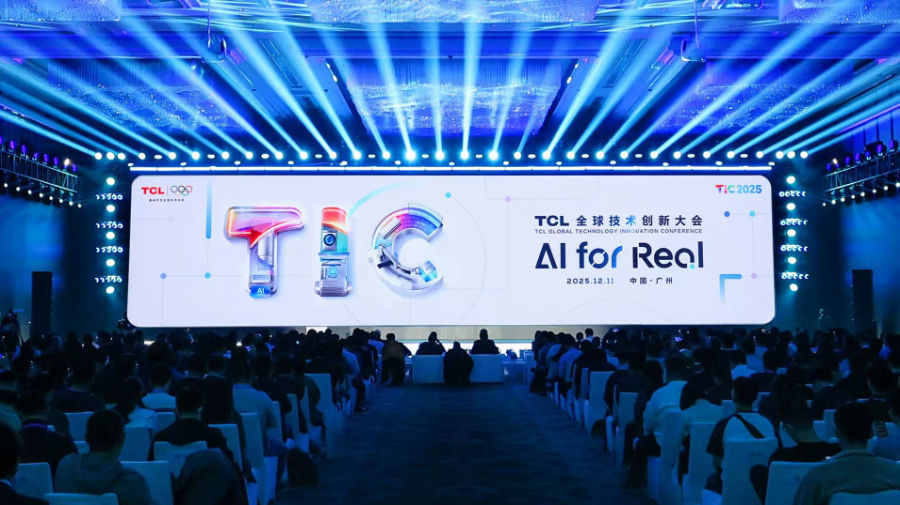
“AI向实”赋能制造升级 TCL以创新实践绘就数智转型新图景
Xin Hua Wang· 2025-12-13 08:07
Core Insights - TCL's 2025 Global Technology Innovation Conference (TIC2025) focuses on the theme "AI for Real," showcasing the practical applications of artificial intelligence in manufacturing and other sectors [1] - The company aligns its achievements with China's "14th Five-Year Plan," emphasizing smart, green, and integrated development in manufacturing [3] - TCL has created over 1 billion yuan in comprehensive benefits through AI applications by 2025, exemplifying the transition from digitalization to intelligence in manufacturing [3] Group 1: Industrial Cluster Development - TCL has established advanced manufacturing clusters in Shenzhen, Guangzhou, and Wuhan, enhancing collaboration and efficiency in technology innovation and results transformation [4] - The Shenzhen base focuses on high-end LCD panels, the Guangzhou base on cutting-edge technologies like oxide semiconductors and printed OLEDs, and the Wuhan base on small and medium-sized display panels [4] - These clusters optimize the entire supply chain through data sharing and technical collaboration, continuously releasing cluster effects [4][5] Group 2: Industrial AI Empowerment - TCL's industrial AI platform, Gechuan Dongzhi, addresses core pain points in manufacturing by creating intelligent applications across the entire process [6] - AI visual inspection systems at TCL Huaxing have improved defect detection accuracy from 85% to 95%, saving over 50 million yuan annually [6] - The RTS intelligent scheduling system at TCL Zhonghuan has reduced unplanned downtime by 50%, enhancing equipment efficiency and flexibility while lowering production costs [6] Group 3: Value Chain Integration - TCL emphasizes the practical application of AI in products, technology, and industry to create tangible value [7] - In the B-end sector, AI is applied to the entire supply chain for quality and efficiency improvements, while also enhancing R&D processes [7] - For the C-end, TCL integrates AI into various lifestyle scenarios, such as real-time translation in AI/AR glasses and improved sleep quality through AI air conditioning [7] Group 4: Talent Ecosystem Development - TCL has launched a global AI talent recruitment initiative to attract top algorithm engineers and build a multi-tiered talent team [8] Group 5: Future Directions - As China's manufacturing sector transitions from digitalization to intelligence, TCL focuses on technological innovation, industrial clusters, and application scenarios to contribute to the country's manufacturing strength [9]