TCL TECH.(000100)

Search documents
一图看懂 | Micro-LED概念股
市值风云· 2026-03-05 10:11
Core Insights - The Micro-LED CPO solution has a unit transmission energy consumption that is only 5% of that of copper cable solutions, positioning it as a promising energy-saving alternative [4]. Group 1: Industry Trends - The recent surge in generative AI has led to an increased demand for high-speed data transmission in data centers, creating challenges for traditional copper cables due to their energy consumption [4]. - Micro-LED technology is recognized for its high brightness, low power consumption, and long lifespan, making it a candidate for the next generation of mainstream display technologies [4]. Group 2: Supply Chain Overview - The supply chain for Micro-LED technology includes various segments: - **Upstream**: Key players include Qianxun Optoelectronics, Sanan Optoelectronics, and Juchuang Optoelectronics [5]. - **Midstream Core Processes**: Companies involved in mass transfer and critical equipment include Inno Laser and Dier Laser [5]. - **Mid-to-Lower Stream**: Packaging, modules, and manufacturing are represented by firms like Jili Zhihui and Mulin Sen [5]. - **Downstream**: Display panels and terminal applications feature brands such as BOE A and TCL Technology [5].




TCL显示器2026年新品发布:以全产业链实力驱动桌面显示“体感狂飙”
WitsView睿智显示· 2026-03-05 09:46
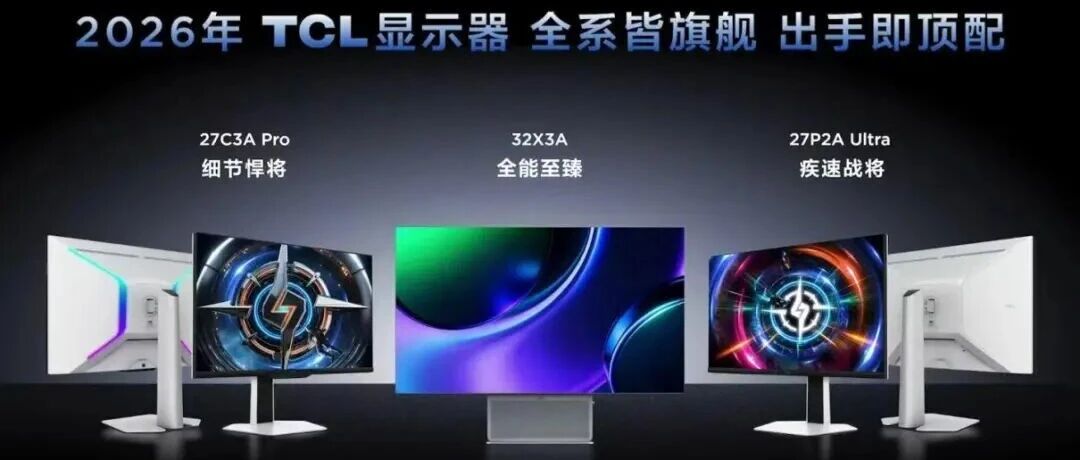
Core Viewpoint - TCL officially enters the domestic display market with the launch of three flagship product series (X, C, P) leveraging OLED and Mini LED technologies, aiming to redefine high-end desktop display experiences by focusing on user perception rather than just parameters [2][4][16] Strategic Entry and Core Asset Construction - The gaming industry’s growth has increased user demands for display performance, leading to a market saturated with parameter competition, which TCL aims to address by enhancing user experience [4][13] - TCL holds the top position in the gaming monitor market, with one in three gaming monitors globally featuring TCL Huaxing panels, and is a leader in Mini LED technology [4][5] - The establishment of the world's first self-production base for gaming monitors in Chengdu, along with a robust R&D team, allows TCL to maintain control over the entire production process [5][14] Product Launch and Targeted User Experience - The X3A series targets high-end users, featuring OLED+ technology with a 4K 240Hz dual-mode panel and 99% color coverage in sRGB and DCI-P3, enhancing text clarity for professional users [7][9] - The C3A Pro series is designed for 3A gaming enthusiasts, utilizing QD-Mini LED technology to deliver exceptional brightness (XDR 2200 nits) and color accuracy (99% DCI-P3 coverage) [9][11] - The P2A Ultra series is the world's first Mini LED gaming monitor with a 1040Hz refresh rate, designed for competitive gamers, featuring advanced technologies to minimize motion blur [11][13] Market Dynamics and Future Outlook - The esports monitor market is projected to reach 32.3 million units globally by 2025, with China expected to exceed 10 million units, highlighting significant growth potential [13][14] - TCL's product launch aims to redefine display standards by focusing on user experience rather than mere specifications, catering to various user needs across different segments [13][16] - The company plans to leverage its manufacturing capabilities and technological advancements to make high-end display technologies more accessible to consumers, fulfilling its commitment to democratizing advanced technology [14][16]
事关芯片,两会最新建言
半导体芯闻· 2026-03-05 09:36
Group 1 - The core viewpoint of the articles emphasizes the rapid development of China's technology sector, with significant advancements in areas such as artificial intelligence, semiconductor manufacturing, and robotics, positioning the country among global leaders in innovation [1][2][3]. - The Ministry of Science and Technology announced that by 2025, total R&D investment in China will exceed 3.92 trillion yuan, with a research intensity of 2.8%, and basic research funding reaching nearly 280 billion yuan, marking a historic high [1]. - The growth in high-tech manufacturing and equipment manufacturing sectors is notable, with value-added growth rates of 9.4% and 9.2% respectively, and production increases in industrial robots and integrated circuits by 28% and 10.9% [2]. Group 2 - Domestic chips are transitioning from being merely "usable" to "usable and effective," with significant improvements in performance and market acceptance, as evidenced by the sales of the Feiteng CPU [3][4]. - The Chinese government is focusing on breaking conventional paths in semiconductor development, emphasizing the need for a systematic approach to overcome challenges in the industry [4]. - The importance of AI in enhancing productivity across various sectors is highlighted, with a shift from technology-driven to demand-driven approaches in AI applications [5]. Group 3 - The discussions at the National People's Congress included calls for more attention to AI chip development and related industries, emphasizing the need for policy guidance to foster breakthroughs in hardware and data processing technologies [8]. - Xiaomi's founder expressed concerns over rising storage chip prices due to increased AI demand, indicating the pressure on smartphone manufacturing costs [9][10]. - Recommendations for enhancing the semiconductor industry include establishing special financing channels and improving capital market support to address technological and investment bottlenecks [10][11]. Group 4 - Suggestions for regional collaboration in the semiconductor industry focus on upgrading clusters and addressing upstream material shortages, with specific proposals for integrating resources across regions [11]. - The integration of AI and chip technology is seen as a core support for new productive forces, with recommendations for optimizing EDA tools and enhancing supply chain resilience [12]. - The role of private enterprises in driving innovation in the semiconductor sector is emphasized, with calls for better support and incentives for talent development and participation in national innovation platforms [13].


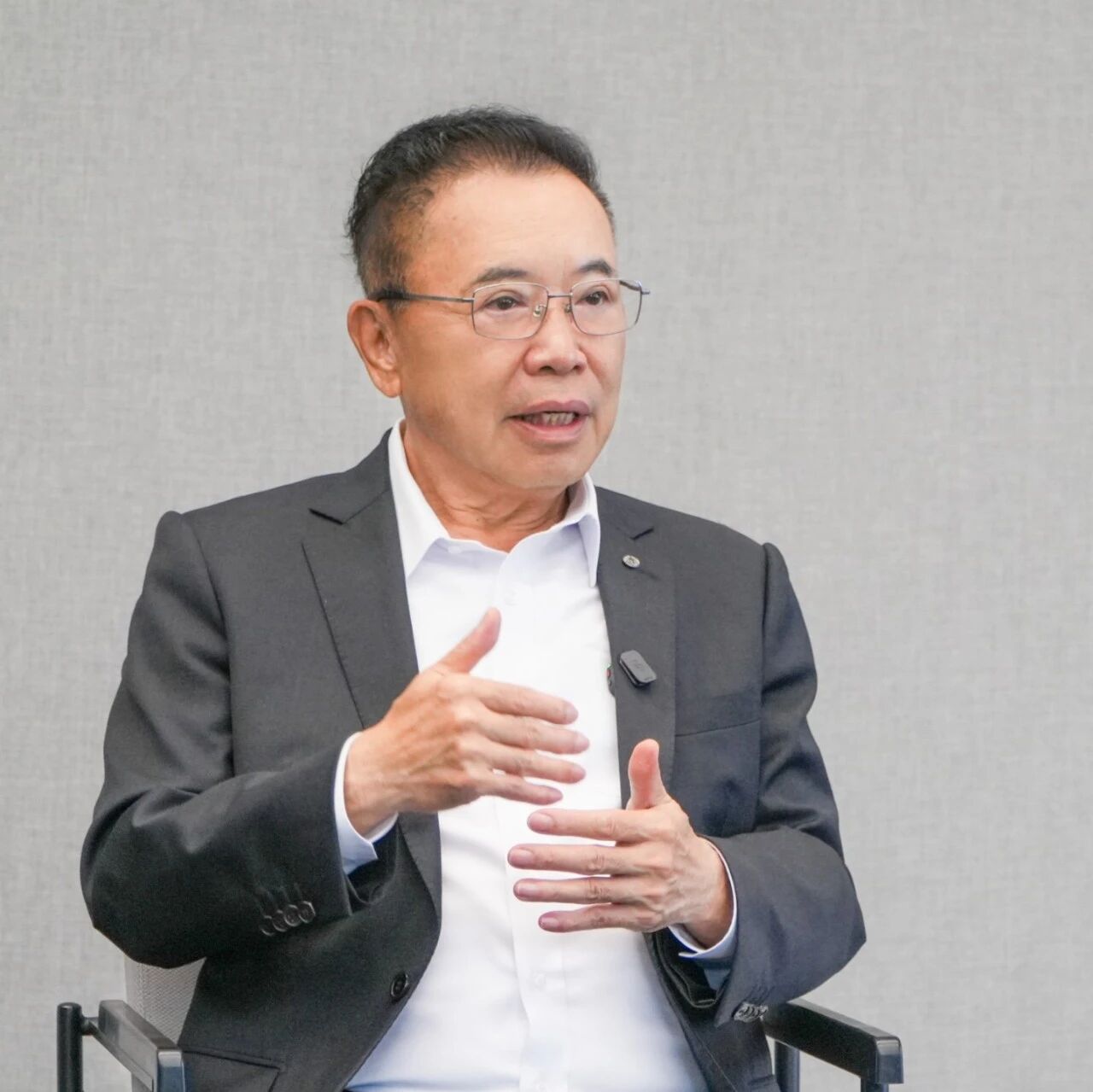
李东生:建议加强资本市场对先进制造企业的融资支持
YOUNG财经 漾财经· 2026-03-04 07:33
Core Viewpoint - The article emphasizes the need for enhanced financing support from the capital market for advanced manufacturing enterprises in China, particularly in high-tech sectors like integrated circuits [1][2]. Group 1: Current State of Manufacturing - China's manufacturing value-added accounts for nearly 30% of the global total, maintaining the largest scale in the world for several consecutive years [1]. - There are still shortcomings in certain high-tech fields, notably in integrated circuits, due to limitations in technology and insufficient capital investment [1]. Group 2: Recommendations for Improvement - To stimulate investment in the integrated circuit industry, it is crucial to enhance capital market refinancing, which is key for private enterprises to engage in advanced manufacturing and achieve sustainable development [1]. - The establishment of special financing rules and channels for high-tech, heavy asset, and long-cycle industries is recommended to better support the development of advanced manufacturing [2]. - Breakthroughs in key technology areas are essential to support the transformation and upgrading of the Chinese economy and improve the core capabilities of the technology manufacturing sector [2].
超350家中国企业亮相MWC:从手机到机器人,AI出海提速
第一财经· 2026-03-04 02:20
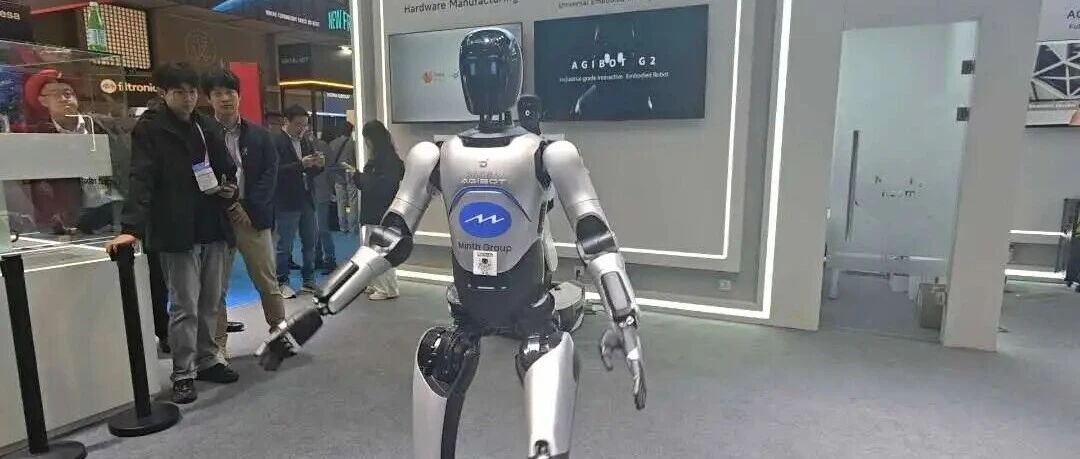
Core Viewpoint - The 2026 Mobile World Congress (MWC) highlights the significant shift towards AI technology, with Chinese companies increasingly focusing on the European market for AI applications and hardware integration [3][4]. Group 1: Chinese Companies at MWC - Approximately 350 Chinese companies participated in MWC 2026, marking a 21% increase from 288 last year, making them the largest overseas contingent after the US and Spain [3]. - The presence of Chinese firms reflects a transition from traditional manufacturing advantages to a focus on AI capabilities and hardware innovation [3][4]. Group 2: AI as the Core Technology - AI emerged as the central theme of MWC 2026, with Qualcomm's CEO emphasizing that AI is transforming human-computer interaction, shifting the focus from applications to intelligent agents [4]. - Honor's Robot Phone features an active camera structure that responds to voice commands, showcasing the integration of AI into hardware design [5][6]. Group 3: Innovations in Mobile Imaging and AI Integration - Vivo introduced a 400mm telephoto lens and modular accessories aimed at transforming smartphones into professional-grade filming tools, highlighting the use of AI to enhance imaging capabilities [8]. - TCL and Lenovo showcased AI-driven products, emphasizing the integration of AI into hardware rather than just software, which is a distinctive approach of Chinese manufacturers [8]. Group 4: Expansion of Robotics and Wearable AI Products - Chinese robotics companies, such as AGIBOT, showcased a range of robots designed for various applications, indicating a strategic focus on B2B markets and European partnerships [11][13]. - Alibaba's AI glasses debuted at MWC, with plans for additional AI wearable products, reflecting a broader strategy to penetrate global markets beyond traditional communication devices [14].



存储涨价冲击消费电子,面板厂突围押注低功耗、大尺寸
第一财经· 2026-03-03 16:19
Core Viewpoint - The panel industry is facing multiple complex factors, including the impact of rising storage prices on demand and the potential growth driven by AI technology and major sporting events in 2026 [3][4][5]. Group 1: Industry Trends - The MWC showcased new technologies from domestic panel manufacturers, emphasizing low power consumption for AI applications and highlighting OLED products [3]. - Omdia reported that memory price increases are nearing or exceeding the cost of mobile display panels, leading smartphone manufacturers to reduce procurement plans, resulting in a decline in global AMOLED panel shipments from 817 million units last year to 810 million units this year [4]. - TrendForce predicts a 5.4% year-on-year decline in global notebook shipments, causing a 7.9% drop in corresponding panel shipments, although OLED panel shipments are expected to maintain growth [4]. - IDC forecasts a more severe outlook for global PC and smartphone shipments, with expected declines of 11.3% and 12.9% respectively due to ongoing storage supply challenges [5]. Group 2: Company Responses - TCL Technology's CEO indicated that the most affected segment by rising storage prices is small-sized mobile communication products, leading to short-term pressure on smartphone OLED display demand [5]. - The company is responding to storage price impacts by improving efficiency and cost reduction, while also optimizing product structure and enhancing technical performance [5]. - Large-sized panel business, particularly in TV and commercial displays, remains stable, with growth in IT and automotive sectors offsetting declines in mobile terminal markets [5]. Group 3: Technological Developments - Low power consumption technology is a key focus for panel manufacturers, with TCL's Super Pixel solution reducing SoC power consumption by approximately 25% [6]. - ViSino's LTPS 20Hz mobile low refresh solution can lower power consumption by over 20%, while smart pixel technology can reduce AMOLED power consumption by more than 38% [6]. - OLED technology is penetrating the mid-size market, with TCL showcasing AI PC products and ViSino presenting flexible AMOLED for smart interactive robots [6]. Group 4: Market Dynamics - CINNO reported that panel prices were supported in January due to international events and domestic subsidy policies, with supply tightening from production control during the Spring Festival leading to rising prices in February [7]. - The price trend in the first quarter will depend on manufacturers' production control pace and market consumption capacity [7].

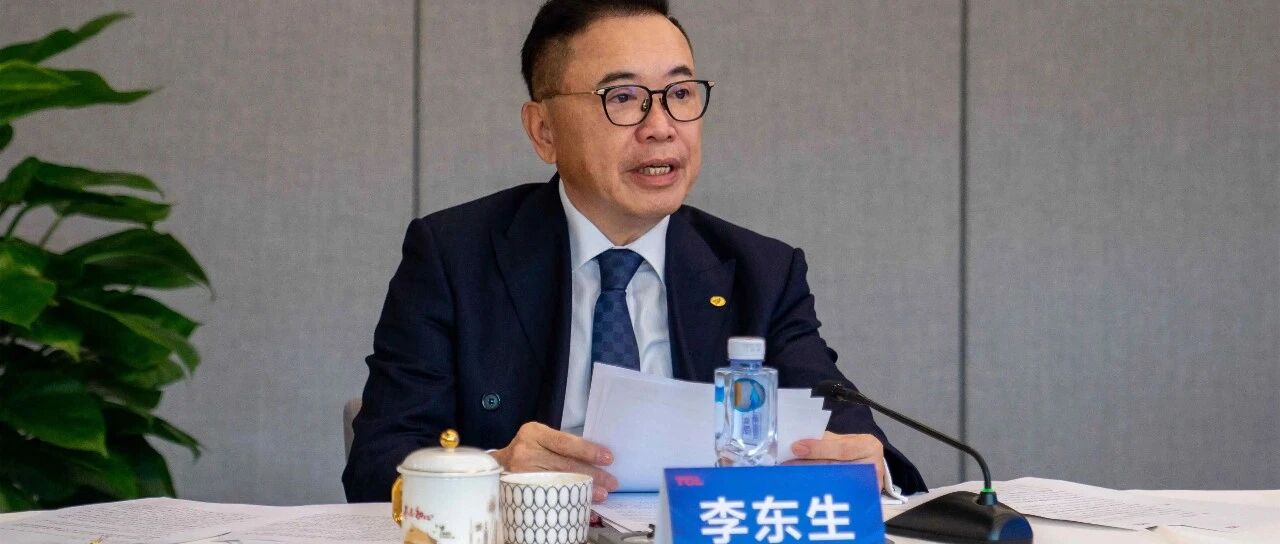
全国人大代表、TCL创始人李东生:国内文化娱乐消费需求需优质内容有效激活
第一财经· 2026-03-03 16:19
Core Viewpoint - The article discusses suggestions from Li Dongsheng, founder and chairman of TCL, regarding the potential for consumption growth in various sectors, including advanced manufacturing financing, solar energy overcapacity, and expanding domestic demand in China [3]. Group 1: Consumption Potential - Li Dongsheng emphasizes the need to unleash consumption potential in education, healthcare, and cultural sectors, highlighting that the Chinese television market saw a shipment decline of 8.5% in 2025, with 32.895 million units sold, while the U.S. market experienced a 1.6% growth with approximately 49.9 million units shipped [3]. - He points out that if the Chinese film industry could reach half of the per capita consumption of the U.S., it could generate an additional market demand of 8 trillion yuan. Even a modest increase of 25% in various sectors could lead to tens of trillions of yuan in demand growth [3][5]. Group 2: Advanced Manufacturing Financing - Li Dongsheng suggests that the core of China's manufacturing transformation lies in developing high-tech, capital-intensive, and long-cycle industries, such as integrated circuits, semiconductor displays, industrial software, and AI models, which require continuous investment [5]. - He recommends that regulatory bodies align with national industrial policy needs by introducing relevant policies to support the development of high-tech and capital-intensive industries, including establishing special financing rules and channels for such projects [5].
TCL华星以技术创新和均衡业务布局,穿越存储涨价迷雾
WitsView睿智显示· 2026-03-03 09:46
Core Viewpoint - TCL Huaxing showcased its latest advancements in FMM/IJP OLED and Micro LED technologies at MWC 2026, emphasizing innovations in pixel architecture under the dual OLED path [2][4]. Group 1: Super Pixel Technology - Super Pixel is a self-developed pixel multiplication technology by TCL Huaxing, featuring a Real RGB pixel arrangement that enhances image clarity and reduces issues like color deviation and jagged edges [6][10]. - The technology allows for high-quality visuals while maintaining low power consumption, addressing the challenges posed by AI-driven devices [7][10]. - TCL Huaxing presented several products utilizing Super Pixel technology, including the world's first Super Pixel high-definition OLED smartphone display with a resolution of 1200×2608 and a pixel density of 420 PPI [8]. Group 2: Product Innovations - The showcased products include the world's first Super Pixel OLED smartphone display with a refresh rate of 165Hz, enhancing dynamic smoothness by 40% [8]. - The technology reduces IC power consumption by 10% and SOC power consumption by 25% compared to traditional virtual pixel solutions, improving refresh rates by 40% [10]. - The APEX brand represents TCL Huaxing's commitment to high-quality display technology, focusing on empowering partners rather than competing directly in the terminal market [11][13]. Group 3: Market Outlook and Challenges - The rise in storage prices is expected to impact the cost of consumer electronics, potentially leading to a 10% decline in global smartphone production in 2026 [17][19]. - Despite challenges from rising storage costs, TCL Huaxing remains confident in maintaining stable growth, leveraging differentiated technologies to sustain competitiveness in the high-end OLED market [19][20]. - The company anticipates strong demand in large-size displays, benefiting from events like the 2026 FIFA World Cup, which helps offset pressures from the mobile segment [20]. Group 4: Strategic Vision - TCL Huaxing aims to build a mobile display ecosystem centered around the APEX brand, showcasing innovations like Super Pixel and printed OLED technologies [21]. - The company emphasizes a unified technical direction across its product lines, ensuring advancements in quality, eye protection, and low-carbon solutions [16]. - The overall health of the panel industry is improving due to increased concentration and a shift towards "on-demand production," leading to optimistic long-term demand growth [20].

启动报名|3/12-13 上海「聚链成势·智启未来」智能终端产业链创新峰会正式官宣
CINNO Research· 2026-03-02 23:03
Core Viewpoint - The article emphasizes the profound adjustments in the global industrial landscape, driven by de-globalization and complex geopolitical relationships, presenting both challenges and strategic transformation opportunities for Chinese companies in the smart terminal industry [2]. Group 1: Event Overview - AWE2026, one of the most influential exhibitions in the global home appliance and consumer electronics sector, will be held in Shanghai, adopting a "one exhibition, two zones" model [3][16]. - The total exhibition area for AWE2026 will reach 170,000 square meters, attracting over 1,200 top domestic and international companies to showcase innovations in technology and smart products [16]. Group 2: Summit Focus - The summit will cover the entire smart terminal industry chain, focusing on macro guidance, technology-driven discussions, market foresight, and core supply chain localization processes [4][5][6]. Group 3: Exhibition Zones - The New International Exhibition Zone will focus on smart home, AI appliances, and various innovative fields, showcasing over 1,000 domestic and international brands [19]. - The Eastern Hub International Business Cooperation Zone will highlight advanced technologies in consumer electronics, including AI smartphones, humanoid robots, and low-altitude economy products [21]. Group 4: Consumer Engagement - AWE2026 will launch a series of consumer promotion activities, including the "AWE Renewal Consumption Festival," which successfully drove appliance sales exceeding 2 billion yuan in the previous year [24]. - The event will also feature "AWE Live Streaming Nights," aiming to surpass the previous year's sales of over 1 billion yuan through live commerce [24]. Group 5: Forums and Discussions - AWE2026 will host a record number of high-level forums and activities, focusing on industry upgrades, new consumption trends, and technological advancements [28][29]. - The event aims to solidify its position as a global benchmark for smart living and foster international technological cooperation and economic development [29].




日系电视四大巨头,被中国厂商“包圆”了
华尔街见闻· 2026-03-02 10:14
Core Viewpoint - The Japanese television industry is undergoing a significant transition, with major companies being acquired or partnering with Chinese firms, marking the beginning of a new era dominated by Chinese manufacturers [4][6][7]. Group 1: Industry Transition - Sharp has sold its business to Hon Hai, Toshiba has been acquired by Hisense, and Panasonic has handed over its European television operations to Skyworth, indicating a complete integration of the once-dominant Japanese TV brands into the Chinese manufacturing ecosystem [5][6][19]. - The exit of major Japanese players like Sony and Panasonic from the television market signifies a long-term restructuring of the industry that began around 2015 [20][21][27]. Group 2: Market Dynamics - The global LCD television panel shipment in 2023 is projected to be 234.6 million units, reflecting a significant year-on-year decline of 10% [38]. - The financial struggles of leading companies like BOE and Huike, with net profit declines of 70.91% and 66.22% respectively in 2022 and 2023, highlight the industry's challenges [39]. Group 3: Supply Chain and Cost Control - Display panels account for approximately 40%-50% of the total cost of a television, making supply chain management crucial for profitability [28]. - The investment in high-generation panel production lines is substantial, with TCL's 8.5 generation LCD line costing around 24.5 billion yuan [31]. Group 4: Future Challenges - The shift in consumer behavior towards mobile devices and the rise of new display technologies like OLED pose significant threats to the traditional television market [51][56]. - Despite the current dominance in LCD production, Chinese manufacturers must invest heavily in next-generation technologies to avoid being left behind as the industry evolves [60][61].