TCL TECH.(000100)

Search documents
京东方、TCL华星等8家OLED企业确认出席,4月23日深圳见
WitsView睿智显示· 2026-03-24 04:08
Core Viewpoint - Since 2025, the technological wave centered around generative AI and spatial computing is reshaping various industries with unprecedented depth and breadth, particularly in display technology [2]. Group 1: Event Overview - TrendForce will hold the 2026 New Display Industry Seminar in Shenzhen on April 22-23, 2023, featuring a special OLED industry summit [2]. - Key representatives from the OLED industry, including BOE, TCL Huaxing, Visionox, and others, will participate, with eight in-depth thematic presentations covering various aspects of the OLED industry [2]. Group 2: Agenda Highlights - The agenda includes discussions on the evolution of large-generation OLED industries, domestic FMM (Fine Metal Mask) challenges, IJP (Inkjet Printing) OLED technology advancements, breakthroughs in domestic OLED materials, and VIP AMOLED technology solutions [4]. - Specific sessions will address strategic opportunities in large-generation OLED, the challenges of domestic FMM, and the balance between picture quality and power consumption in AMOLED technology [4][5].



X @Bloomberg
Bloomberg· 2026-03-23 10:50
Sony is nearing a $1 billion deal to sell a majority stake in its home entertainment business to Chinese rival TCL https://t.co/HrDpDg1KrF ...

雷军、蔡崇信、李东生,最新发声!
券商中国· 2026-03-22 23:40
Core Viewpoint - The article discusses insights from industry leaders on the future of emerging industries and technological innovation in China, emphasizing the importance of a complete industrial ecosystem for growth and the role of AI in societal benefits. Group 1: Xiaomi's Perspective - Xiaomi's founder Lei Jun highlights that China's complete industrial ecosystem will serve as fertile ground for future industry growth, with the current year marking the beginning of the "14th Five-Year Plan" [2] - He emphasizes that the depth and breadth of existing industries directly influence the speed and height of future industry development, citing Xiaomi's focus on embodied intelligence and robotics as an example [2][3] - Lei Jun believes that embracing uncertainty is crucial for cultivating future industries, with China's vast market providing the necessary drive and validation space for technological optimization and commercial implementation [2] Group 2: Alibaba's Perspective - Alibaba's chairman Jack Ma states that China's technological development is based on independent innovation and a philosophy of openness and mutual benefit, marking a transition from a period of accumulation to one of explosive growth [4] - He asserts that the ultimate goal of AI is to make its applications widespread and beneficial to society, with Alibaba committed to continuous innovation across various sectors [4] - Ma expresses confidence in China's market and economy, emphasizing the importance of AI in personal consumption, enterprise, healthcare, and finance [4] Group 3: TCL's Perspective - TCL's founder Li Dongsheng discusses the need for a modern industrial system that requires both hard support (technological breakthroughs and capital investment) and soft environments (institutional innovation and open collaboration) [5] - He points out that emerging industries like integrated circuits and new energy are characterized by high technology, heavy assets, and long cycles, necessitating a dual drive of technology and capital [5] - Li emphasizes the importance of direct financing, particularly equity financing, for the advanced manufacturing sector, advocating for regulatory easing to facilitate capital market access for leading enterprises [5][6]



关于产业发展,雷军、蔡崇信、李东生最新发声!
证券时报· 2026-03-22 13:26
Group 1 - The core viewpoint of the article emphasizes the importance of a complete industrial ecosystem in China as fertile ground for the growth of future industries, highlighting the strategic significance of nurturing and expanding future industries for national development and innovation opportunities [4]. - Lei Jun pointed out that the depth and breadth of existing industrial foundations directly influence the speed and height of future industrial development, with Xiaomi focusing on developing embodied intelligence robots that rely on advanced components and a robust industrial system [4][5]. - The article discusses the unique advantages of China's large-scale market in driving a feedback mechanism from demand to technology, applications, and industries, which is essential for fostering high-uncertainty industries [4]. Group 2 - Jack Ma emphasized that China's technological development is based on independent innovation and an open, mutually beneficial philosophy, marking a transition from a period of accumulation to an explosive phase of innovation across various sectors [6][7]. - The article highlights that the ultimate goal of AI is to make its applications widespread and beneficial to society, with Alibaba focusing on innovation and the application of AI in personal consumption, enterprise, healthcare, and finance [7]. - The article notes that the construction of a modern industrial system requires both hard support through technological breakthroughs and capital investment, as well as soft support through institutional innovation and open collaboration [8]. Group 3 - Li Dongsheng pointed out that emerging pillar industries like integrated circuits and new energy exhibit characteristics of high technology, heavy assets, and long cycles, necessitating a dual drive of technology and capital for successful industrialization [8]. - The article mentions that the "14th Five-Year Plan" categorizes manufacturing into traditional, emerging, and future industries, which are interdependent and mutually beneficial, providing fertile ground for AI technology applications [9]. - It is suggested that companies should actively expand foreign investment and international cooperation to achieve globalization and enhance global resource allocation capabilities [9].

维信诺、TCL华星向韩企采购8.6代OLED产线新设备
WitsView睿智显示· 2026-03-19 04:33
Core Viewpoint - The article discusses the shift of global OLED manufacturers from 6th generation panels to 8.6th generation panels, highlighting significant investments from major companies in the industry to meet future market demands [2]. Group 1: Investment and Production Plans - ELP's 2025 business report indicates that major players like Samsung Display (S Company), BOE (B Company), Visionox (V Company), and TCL Huaxing (C Company) are making investments in 8.6th generation OLED technology, with production expected to ramp up in 2026 [2]. - ELP has secured equipment orders from these companies, with plans to deliver equipment by the end of 2026 [2]. Group 2: Financial Performance - ELP reported its first operating profit in five years, with sales reaching 27.3 billion KRW in 2025, a decrease from the previous year, and an operating profit of 2.3 billion KRW [5]. - The company attributes its return to profitability to increased revenue from low-cost projects and cost reductions, despite a temporary decline in sales due to factors like customer investment timing [5].
8.6代OLED产线放量前夕,谁将率先跨入IT领域?
WitsView睿智显示· 2026-03-18 04:07
Core Viewpoint - The global IT OLED panel investment landscape is diversifying, with major players like Samsung Display, BOE, Visionox, and TCL Huaxing launching their 8.6-generation OLED production lines, indicating a competitive market environment [2][9]. Samsung Display - In 2023, Samsung Display announced an investment plan for its 8.6-generation line, utilizing traditional FMM evaporation technology and planning to incorporate Tandem OLED to extend screen lifespan, with mass production expected to start in Q2 2026, targeting Apple's new MacBook Pro [3]. BOE - BOE also employs FMM evaporation technology and Tandem OLED, announcing a total investment of 63 billion yuan for its 8.6-generation OLED production line, primarily aimed at mid-sized AMOLED panels. The line is expected to begin mass production in the second half of 2026, having achieved early activation five months ahead of schedule [4]. Visionox - Visionox has developed its own technology, ViP, which offers higher PPI and aperture rates compared to traditional FMM. The 8.6-generation OLED production line commenced construction in September 2024, with a total investment of 55 billion yuan, targeting the mid-to-large size AMOLED market across various applications. The line aims for volume production starting in Q1 2027 [5]. TCL Huaxing - TCL Huaxing is utilizing inkjet printing (IJP) technology, which simplifies the process and theoretically reduces material waste by about 30%. The 8.6-generation OLED line was officially launched in October 2025, with a total investment of approximately 29.5 billion yuan, focusing on applications in tablets, laptops, and monitors. The construction progress reached 40% by February 2026, with volume production expected in Q4 2027 [6]. Market Outlook - The FMM camp holds advantages such as stable customer relationships and extensive production experience, while the non-FMM camp is in its early development stage, facing challenges like lower yield rates and material development needs. However, there is significant market interest, suggesting potential for catching up with the FMM camp [9]. - The upcoming 8.6-generation lines from four major panel manufacturers are anticipated to reshape the IT OLED market landscape, with discussions on strategic shifts and opportunities at the 2026 New Display Industry Seminar [9].

最高售价349,999元,TCL发布3款电视新品
WitsView睿智显示· 2026-03-18 04:07
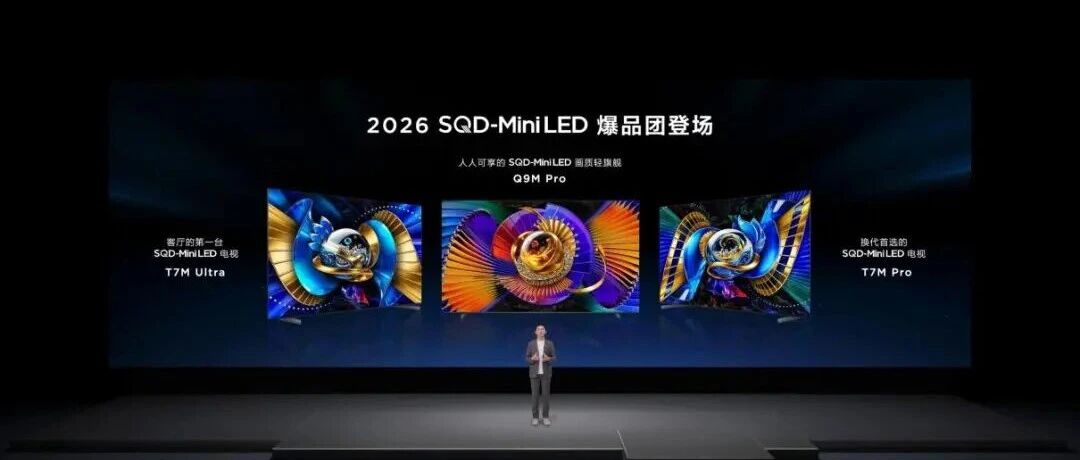
Core Viewpoint - TCL has launched three new SQD-Mini LED TV models, covering a range from high-end flagship to mainstream series, showcasing advancements in display technology and targeting various consumer needs [2][12]. Group 1: Q9M Pro - The Q9M Pro is positioned as an "affordable SQD-Mini LED quality light flagship," available in sizes 55/65/75/85/98 inches, with retail prices ranging from 6,199 to 19,999 yuan and national subsidy prices from 5,269 to 18,499 yuan [4]. - It features a complete SQD-Mini LED technology core with up to 3,552 zones, achieving 100% BT.2020 global high color gamut and a peak brightness of 5,000 nits, along with the world's first butterfly starry screen [4]. - The model supports native 4K at 150Hz refresh rate and can switch to a 300Hz mode for gaming and high-refresh scenarios [5]. Group 2: T7M Ultra - The T7M Ultra is marketed as the "first SQD-Mini LED TV for the living room," offering sizes of 65/75/85/98 inches, with retail prices from 6,799 to 15,999 yuan and national subsidy prices from 5,779 to 14,499 yuan [7]. - It includes up to 2,176 zones, equivalent to 6,528 zones in RGB-Mini LED TVs, supporting 100% BT.2020 global high color gamut and achieving a peak brightness of 3,000 nits, surpassing typical Mini LED products in its price range [7]. Group 3: T7M Pro - The T7M Pro is positioned as the preferred choice for upgrades, being the first in its price segment to adopt SQD-Mini LED technology [10]. - It supports 100% BT.2020 global high color gamut and features 1,152 zones, equivalent to 3,456 zones in RGB TVs, with a peak brightness of 2,200 nits, enhancing color, contrast, and brightness compared to similar products [10]. - The model is equipped with a super butterfly starry screen, Onkyo 2.1.2 Hi-Fi audio, TSR AI light color control chip, and Smart Control System 3.0 for an improved user experience [10]. Group 4: SQD-Mini LED Technology Development - TCL pioneered SQD-Mini LED technology in September 2025 with the flagship model X11L, followed by the Q10M series in January 2026, which introduced the technology to products priced around 10,000 yuan [12]. - By March 2026, TCL expanded the SQD-Mini LED technology to the Q9 and T7 series, achieving significant market penetration with over 600,000 units sold [12]. - Additionally, TCL introduced two Micro LED giant screen products, Max163M Pro and Max163M, priced at 349,999 yuan and 249,999 yuan respectively, targeting high-end luxury markets [12].
不想只刷存在感:TCL的冬奥样本
虎嗅APP· 2026-03-17 09:37
Core Insights - The article discusses the evolving landscape of brand marketing during the Olympics, emphasizing that brands must now focus on their role in the event rather than just gaining visibility [2][3] - It highlights TCL's approach to the Milan Winter Olympics as a test of its global brand capabilities, moving beyond mere sponsorship to creating a narrative that resonates with audiences [3][4] Group 1: Brand Marketing Evolution - Traditional Olympic marketing strategies focused on visibility through sponsorships and celebrity endorsements, but this approach is becoming less effective in a fragmented media environment [2][3] - Brands are now evaluated on their ability to engage audiences meaningfully within the event context, rather than just being present [2][3] Group 2: TCL's Strategy at the Winter Olympics - TCL's participation in the Milan Winter Olympics is framed as a significant opportunity to validate its global brand identity and technological capabilities [3][4] - The brand's marketing strategy involved a high-frequency content distribution model, utilizing a "mother content + integrated distribution" approach to maintain engagement [6][7] Group 3: Content Creation and Distribution - TCL created a narrative framework that included various content types, such as long-form videos and social media interactions, to engage different audience segments [7][10] - The brand's strategy involved leveraging algorithms to maximize visibility and engagement across multiple platforms, effectively turning fragmented content into a cohesive narrative [10][11] Group 4: Athlete and Influencer Engagement - TCL's use of athletes and influencers was strategic, assigning them specific roles that aligned with the brand's messaging rather than treating them as mere endorsements [16][19] - The brand's content strategy included high-profile moments, such as the collaboration with athlete Gu Ailing, which generated significant social media buzz and engagement [19][22] Group 5: Global Brand Positioning - TCL's approach reflects a shift in Chinese brands' global strategies, moving from price and supply chain advantages to engaging in global cultural events and narratives [33][34] - The brand's ability to adapt its messaging for different markets while maintaining a unified narrative demonstrates a sophisticated understanding of global branding [39][40] Group 6: Systematic Marketing Approach - The article emphasizes the importance of a systematic approach to marketing, where every resource is integrated into a cohesive strategy rather than treated as isolated efforts [27][31] - TCL's marketing during the Olympics is presented as a model for other brands, showcasing how to effectively engage with global audiences through localized content and narratives [41][42]

韩媒:三星已向TCL华星订购1500万片OLED手机面板
WitsView睿智显示· 2026-03-17 04:34
Core Viewpoint - Samsung Electronics' MX division has decided to purchase approximately 15 million OLED panels from TCL Huaxing Optoelectronics (CSOT) for mid-range smartphones, citing TCL's superior price competitiveness as the primary reason for this decision [2][4]. Group 1: Supply Chain and Cost Management - Historically, Samsung's A series OLED panels were exclusively supplied by Samsung Display, ensuring stable quality and maintaining internal supply chains [4]. - Rising memory prices have increased manufacturing costs, prompting Samsung's MX division to seek supply chain diversification to lower display panel costs [4]. - TCL's OLED panels are estimated to be at least 20% cheaper than those from Samsung Display, making them an attractive alternative for Samsung [4][5]. Group 2: Impact on Samsung Display and Market Dynamics - The decision to source panels from TCL has led to significant internal conflict between Samsung's MX division and Samsung Display, with the latter seeking intervention from the group organization to reverse the decision [5]. - The shift to TCL's panels is expected to impact Samsung Display's profitability, especially with reduced orders for the A series and rising memory prices leading to a cutback in low-end product lines [5]. - Samsung Electronics shipped approximately 240 million smartphones last year, with the A series being a flagship product line that accounts for over half of its sales [5].
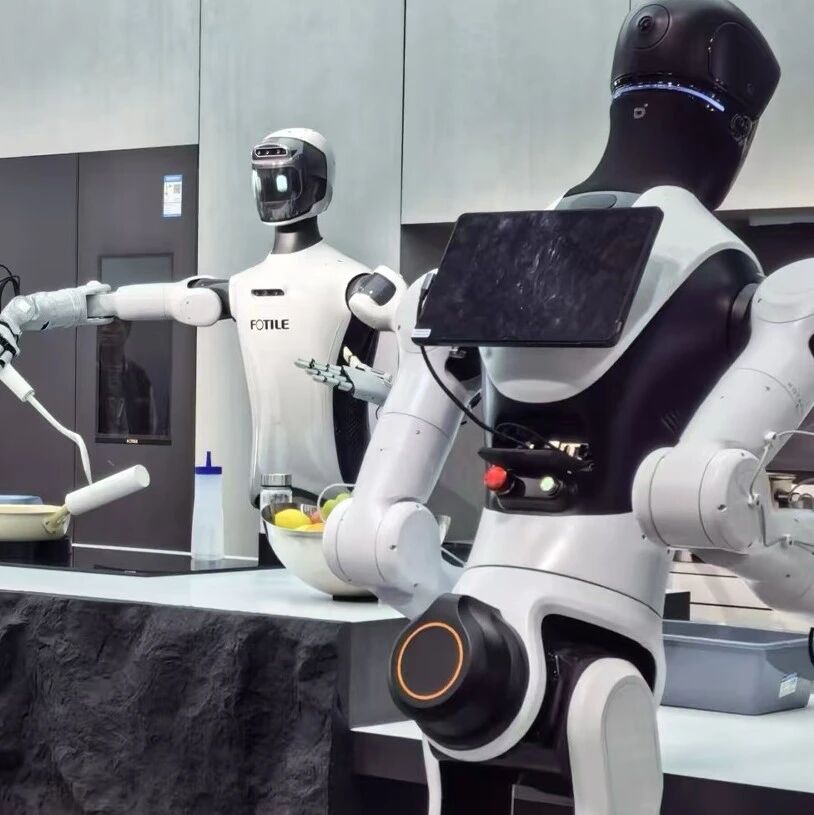
中国最大家电展上,一批想帮你做家务的机器人来了!
36氪· 2026-03-16 13:37
Core Insights - The article discusses the emergence of embodied intelligent robots in the home appliance sector, highlighting their evolving roles from emotional support to practical household tasks [4][5][6]. Group 1: Industry Trends - The 2026 AWE showcased a shift from traditional home appliances to embodied intelligent robots, with major home appliance companies leading the charge [4]. - Companies are focusing on household services as the core objective for robots, demonstrating functionalities like home patrol, elder protection, and basic chores [4]. Group 2: Company Innovations - **Chasing**: Introduced a "wheelchair robot" capable of navigating the home and assisting elderly users, featuring a multifunctional bionic hand for controlling other appliances [8][11]. - **Ecovacs**: Launched the "Bajie" robot, designed to act as a user's avatar at home, capable of performing tasks like organizing and cleaning, although it currently faces speed and stability issues [14][18]. - **Haier**: Presented a penguin-shaped companion robot that can monitor elderly individuals for falls and remind them to take medication, along with a cleaning robot that addresses traditional cleaning challenges [20][23]. - **TCL**: Showcased the AiMe robot, which features a modular design allowing for interaction and emotional support, while also being able to change its appearance [29][32]. - **Hisense**: Unveiled the Savvy robot, which can interact with other home appliances to perform tasks like laundry and adjusting home conditions based on user activities [35][36]. - **MOVA**: Introduced a flying vacuum robot that can navigate multiple floors, addressing the need for efficient cleaning across levels [40]. - **Leshare Technology**: Developed the M1 robot, which can autonomously charge and is designed for quiet operation during nighttime, with future capabilities for monitoring and companionship [44][46]. - **Tesla**: Announced the upcoming Optimus V3 robot, expected to begin production in 2026, which will utilize advanced AI and technology from Tesla's electric vehicles [50][51]. - **FOTILE**: Demonstrated a kitchen robot system capable of cooking tasks, although it is currently a prototype without plans for mass production [61][65].