
BOE(000725)

Search documents
京东方A(000725) - 004-2026年1月22日投资者关系活动记录表
2026-01-23 01:04
Group 1: LCD TV Product Price Trends - The demand for TV products has increased due to preparations for upcoming sporting events, leading to higher procurement by brand manufacturers since December 2025 [1] - The overall production rate in the industry remains high as manufacturers adopt a "production based on demand" strategy [1] - As of January 2026, prices for mainstream TV products across various sizes have risen significantly [1] Group 2: OLED Technology Development - AMOLED technology is becoming a key choice for high-end IT products due to its high picture quality and lightweight characteristics [2] - The company's 8.6 generation AMOLED production line was successfully lit up five months ahead of schedule on December 30, 2025, marking a significant breakthrough in mid-size OLED technology [2] - Mass production of this line is expected to begin in the second half of 2026, enhancing the company's competitiveness in the display industry [2] Group 3: Depreciation and Capital Expenditure Trends - The depreciation of existing production lines is continuously decreasing, with capital expenditures expected to peak in 2025 [3] - From 2027 onwards, a significant decline in capital expenditures is anticipated [3] Group 4: Perovskite Project Progress - The company is leveraging its long-term experience in the display industry to advance the research and production of perovskite solar cells [4] - The efficiency of perovskite photovoltaic components has reached industry-leading levels, with rigid single-junction components achieving a champion efficiency of 27.61% [4] - The company is focused on improving the efficiency and lifespan of perovskite products to address industrialization challenges [5] Group 5: Glass-Based Packaging Technology - The company has completed the construction of a pilot line for large glass-based packaging boards and has initiated technical and product development collaborations with leading domestic and international clients [5] Group 6: Shareholder Return Planning - In May 2025, the company completed the cancellation of inventory shares valued at nearly 1 billion yuan and distributed approximately 1.87 billion yuan in cash dividends in June 2025 [5] - The company plans to execute a share repurchase scheme exceeding 1.5 billion yuan within the year and is committed to its shareholder return plan for 2025-2027 [5]

京东方A(000725) - 003-2026年1月22日投资者关系活动记录表
2026-01-23 01:04
Group 1: Market Trends and Product Pricing - The demand for TV products has increased since December 2025 due to preparations for upcoming sporting events, leading to higher procurement by brand manufacturers and an overall increase in TV product prices as of January 2026 [1][2]. - The overall operating rate in the industry remains high as manufacturers adopt a "production based on demand" strategy, adjusting their operating rates accordingly [2]. Group 2: OLED Technology Development - The company's 8.6 generation AMOLED production line was successfully lit up five months ahead of schedule on December 30, 2025, marking a significant breakthrough in mid-size OLED technology [3]. - The production line is expected to enter mass production in the second half of 2026, enhancing the company's ability to meet high-end IT product demands [3]. Group 3: Financial Projections - The company's depreciation amount is expected to peak in 2025, with a continuous reduction in depreciation for existing production lines [4]. - Capital expenditures are projected to peak in 2025, primarily due to investments in the Chengdu 8.6 generation AMOLED production line and the Beijing 6th generation LCD LTPO/LTPS production line [5][6]. - A significant decrease in capital expenditures is anticipated starting in 2027 [6]. Group 4: Perovskite Project Progress - The company has achieved industry-leading efficiency levels in perovskite solar cell components, with rigid single-junction components reaching a champion efficiency of 27.61% [7]. - The company is focused on improving the efficiency and lifespan of perovskite products, addressing challenges in the industrialization of perovskite thin-film solar cell technology [7]. Group 5: Glass-Based Packaging Technology - The company has completed the construction of a pilot line for large glass substrate packaging and has begun technical and product development collaborations with leading domestic and international clients [9].
京东方取得显示面板及刷新方法专利
Sou Hu Cai Jing· 2026-01-23 01:03
成都京东方光电科技有限公司,成立于2007年,位于成都市,是一家以从事仪器仪表制造业为主的企 业。企业注册资本2500000万人民币。通过天眼查大数据分析,成都京东方光电科技有限公司参与招投 标项目920次,专利信息5000条,此外企业还拥有行政许可522个。 北京京东方技术开发有限公司,成立于2016年,位于北京市,是一家以从事计算机、通信和其他电子设 备制造业为主的企业。企业注册资本3800万人民币。通过天眼查大数据分析,北京京东方技术开发有限 公司共对外投资了1家企业,参与招投标项目92次,专利信息3849条,此外企业还拥有行政许可4个。 声明:市场有风险,投资需谨慎。本文为AI基于第三方数据生成,仅供参考,不构成个人投资建议。 来源:市场资讯 国家知识产权局信息显示,京东方科技集团股份有限公司取得一项名为"一种显示面板、显示装置及刷 新方法"的专利,授权公告号CN118486280B,申请日期为2024年5月。 天眼查资料显示,京东方科技集团股份有限公司,成立于1993年,位于北京市,是一家以从事计算机、 通信和其他电子设备制造业为主的企业。企业注册资本3741388.0464万人民币。通过天眼查大数 ...
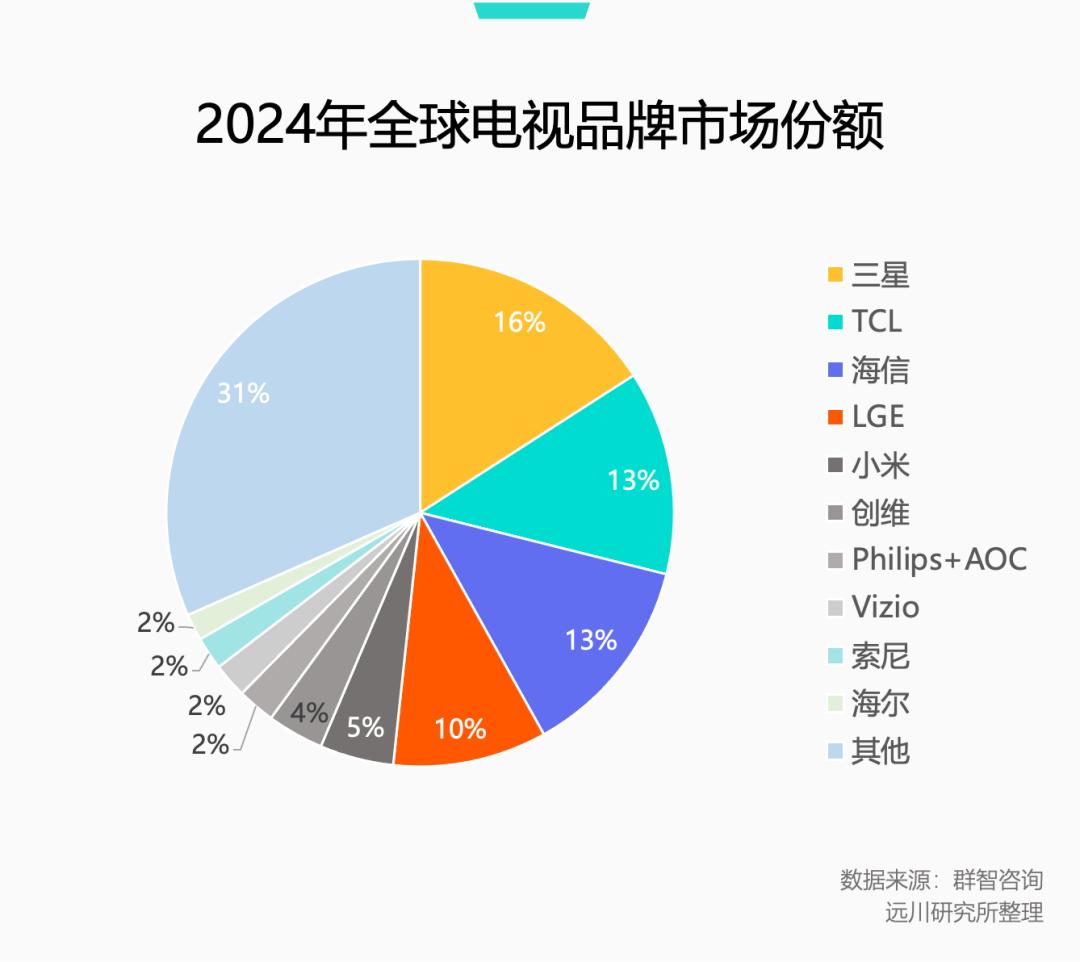
索尼退场,日本电视全军覆没
3 6 Ke· 2026-01-23 00:36
Core Viewpoint - Sony has announced a joint venture with TCL to manage its home entertainment business, with TCL holding a 51% stake, effectively transferring Sony's television operations and the BRAVIA brand to TCL, marking a significant shift in the consumer electronics market [1][5]. Group 1: Sony's Strategic Shift - Sony lacks display panel production capabilities, which are crucial for maximizing profits in the television market, relying on LG and TCL for panel supply and Mediatek for picture quality chips [1]. - Sony's television market presence is minimal, consistently ranking in the "others" category, and its television segment is less profitable compared to its other businesses like CIS chips, gaming, and music [1][5]. - The move signifies Sony's exit from the competitive global television market, following a trend where Japanese brands have been selling off their consumer electronics divisions [5][7]. Group 2: TCL's Positioning - For TCL, acquiring Sony's brand equity is a strategic asset that, combined with its own panel production capabilities, positions it to challenge Samsung's dominance in the global market [5]. - TCL is currently the only domestic television brand in China with display panel production capabilities, which is essential for maintaining competitive pricing and product quality [18][27]. Group 3: Decline of Japanese Brands - The exit of Sony marks the end of Japan's independent television brands, with other major players like Sharp, Toshiba, and Panasonic also having exited or significantly downsized their television operations [5][15]. - The decline of Japanese television brands is attributed to their loss of panel production capabilities, which has resulted in a lack of pricing power in the market [16][23]. - The financial crisis of 2008 and subsequent strategic missteps led to a shift in focus for Japanese companies from consumer electronics to higher-margin components, further diminishing their presence in the television market [7][12][13].






1月22日深证国企股东回报(970064)指数跌0.25%,成份股山金国际(000975)领跌
Sou Hu Cai Jing· 2026-01-22 10:44
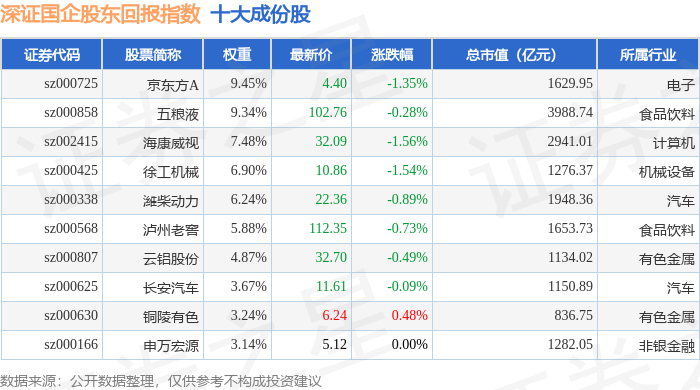
Core Viewpoint - The Shenzhen State-Owned Enterprises Shareholder Return Index (970064) closed at 1740.66 points, down 0.25%, with a trading volume of 37.125 billion yuan and a turnover rate of 1.46% [1] Group 1: Index Performance - On the day, 31 constituent stocks rose, with North New Building Materials leading with a 4.99% increase, while 17 stocks fell, with Shanjin International leading the decline at 2.07% [1] - The index's top ten constituent stocks include: - BOE Technology Group (sz000725) with a weight of 9.45%, closing at 4.40 yuan, down 1.35% [1] - Wuliangye Yibin (sz000858) with a weight of 9.34%, closing at 102.76 yuan, down 0.28% [1] - Hikvision (sz002415) with a weight of 7.48%, closing at 32.09 yuan, down 1.56% [1] - XCMG Machinery (sz000425) with a weight of 6.90%, closing at 10.86 yuan, down 1.54% [1] - Weichai Power (sz000338) with a weight of 6.24%, closing at 22.36 yuan, down 0.89% [1] Group 2: Capital Flow - The net outflow of main funds from the index's constituent stocks totaled 872 million yuan, while retail investors saw a net inflow of 1.149 billion yuan [1] - Detailed capital flow for selected stocks includes: - Yuexiu Capital (000987) with a main fund net inflow of 107 million yuan, but retail outflows of 54.4 million yuan [2] - Huazhong Steel (000932) with a main fund net inflow of 85.6 million yuan, but retail outflows of 33.9 million yuan [2] - Yun Aluminum (000807) with a main fund net inflow of 54.8 million yuan, but retail outflows of 68.3 million yuan [2]




又一例“人工心脏”植入手术在合肥京东方医院完成
Ke Ji Ri Bao· 2026-01-22 09:47
Core Viewpoint - The successful implantation of an "artificial heart" at Hefei BOE Hospital represents a significant advancement in treating end-stage heart failure, providing a new treatment option for patients who cannot undergo heart transplants [1][2]. Group 1: Technology and Procedure - The implanted "artificial heart" weighs only 90 grams and is made from new materials, functioning as a mechanical device that assists the heart by pumping blood from the ventricle into the aorta [1]. - The device consists of an internal blood pump and tubing connected to the heart, and an external controller and battery pack that allow patients to move freely [1]. - The patient who received the implant had a left ventricular ejection fraction (LVEF) of only 15%, significantly below the normal standard of 55%, due to dilated cardiomyopathy, a hereditary condition with no current cure [1]. Group 2: Clinical Impact and Collaboration - The implantation procedure was performed by a multidisciplinary team, including experts from cardiac surgery, cardiology, anesthesia, extracorporeal circulation, intensive care, and ultrasound, demonstrating effective collaboration and precision [1][2]. - This marks the second successful "artificial heart" implantation at Hefei BOE Hospital, which is enhancing its capabilities in multidisciplinary teamwork, precise treatment, and meticulous management to improve access to high-end medical resources for local and surrounding patients [2].
2025年面板价格回顾与2026年Q1展望
WitsView睿智显示· 2026-01-22 05:43
Core Viewpoint - The global display industry shifted from scale competition to a value game focused on profits and control capabilities in 2025, with supply-side adjustments significantly influencing price trends as capacity expansion cycles ended and industry concentration increased [1]. Group 1: TV Panel Market Dynamics - In 2025, TV panel prices exhibited clear phase characteristics, rising in the first half due to demand and policy drivers, then adjusting downwards in the second half due to inventory corrections, stabilizing by year-end under strong supply-side interventions [2]. - The first half of 2025 saw strong market demand, driven by China's "old-for-new" policy, particularly boosting demand in lower-tier markets, alongside a trend towards larger sizes, which increased panel manufacturers' confidence and pricing power [2]. - In the latter half of 2025, demand cooled as promotional effects waned, leading to high inventory levels among brand manufacturers, who adopted conservative procurement strategies, resulting in price declines of $1 to $3 across various panel sizes [2][3]. Group 2: IT Panel Market Performance - The IT panel market remained relatively stable in 2025, with minor price fluctuations, as the U.S. temporarily exempted certain IT products from tariffs, leading to a mild price increase in Q2 due to concentrated procurement [5]. - Despite a decrease in demand in the second half of 2025, prices did not significantly drop, supported by strong cost factors and a long-standing loss situation for mainstream display panels, leading manufacturers to maintain firm pricing stances [5]. - The notebook panel market experienced a steady yet pressured state throughout 2025, with prices remaining flat in the first half due to cautious strategies amid complex international trade environments, and slight price reductions in Q4 due to rising costs from memory prices [7]. Group 3: Industry Consolidation and Technology Shift - The price fluctuations in 2025 reflected a deep restructuring of the competitive landscape, with the LCD sector entering an oligopolistic phase and OLED technology becoming a new investment focus [9]. - Mergers and acquisitions became the main theme in capacity layout, with significant consolidations like BOE acquiring a stake in Xianyang Rainbow and TCL Huaxing merging with LGD, further increasing industry concentration [9]. - Investment in the LCD sector has stagnated, with funds increasingly directed towards OLED technology, which accounted for 55% of the nearly 180 billion yuan planned investments by major domestic panel manufacturers over the past two years [9][12]. Group 4: Q1 2026 Outlook - The TV panel market is expected to see a "good start" in Q1 2026, with prices projected to rise by $1 across various sizes due to strong supply-side adjustments and proactive production cuts by major manufacturers ahead of the Chinese New Year [13][15]. - Demand factors for Q1 2026 include the FIFA World Cup, which typically boosts demand for large TVs, and the continuation of the "old-for-new" policy, which supports domestic sales [15]. - The IT panel market is anticipated to maintain stable prices in January, with potential upward support from the TV panel price increase and production cuts, while notebook panel prices may face downward pressure due to seasonal demand [15]. Group 5: Long-term Industry Strategies - The market operation in 2025 indicates that adjusting production rates to balance supply and demand has become a normalized strategy for panel manufacturers, with a focus on leveraging market opportunities from sports events in 2026 [16]. - Long-term strategies for panel companies should include upgrading product structures towards larger sizes and accelerating the layout of mid-size OLED technology to enhance profitability and competitive barriers [16].

京东方A(000725) - 京东方科技集团股份有限公司2026年面向专业投资者公开发行科技创新公司债券(第一期)票面利率公告
2026-01-21 12:30
| 证券代码:000725 | 证券简称:京东方 | A | 公告编号:2026-005 | | --- | --- | --- | --- | | 证券代码:200725 | 证券简称:京东方 | B | 公告编号:2026-005 | 京东方科技集团股份有限公司 2026 年面向专业投资者公开发行科技创新公司债券 (第一期)票面利率公告 发行人:京东方科技集团股份有限公司 年 月 日 本公司及董事会全体成员保证信息披露的内容真实、准确、 完整,没有虚假记载、误导性陈述或重大遗漏。 京东方科技集团股份有限公司(以下简称"发行人")发行不超过 人民币 100 亿元公司债券已获得中国证券监督管理委员会(证监许可 〔2024〕1330 号文)批复。京东方科技集团股份有限公司 2026 年面 向专业投资者公开发行科技创新公司债券(第一期)(以下简称"本 期债券")发行规模为不超过 10 亿元(含 10 亿元)。 2026 年 1 月 21 日,发行人和主承销商在网下向专业机构投资者 进行了票面利率询价,利率询价区间为 1.50%-2.50%。根据网下向专 业机构投资者询价结果,经簿记建档,最终确定本期债券票面利率为 ...
京东方A(000725) - 关于延长京东方科技集团股份有限公司2026年面向专业投资者公开发行科技创新公司债券(第一期)簿记建档时间的公告
2026-01-21 09:14
| 证券代码:000725 | 证券简称:京东方 | A | 公告编号:2026-004 | | --- | --- | --- | --- | | 证券代码:200725 | 证券简称:京东方 | B | 公告编号:2026-004 | 关于延长京东方科技集团股份有限公司 2026 年面向专业投资者公开发行科技创新公司债券 (第一期)簿记建档时间的公告 本公司及董事会全体成员保证信息披露的内容真实、准确、 完整,没有虚假记载、误导性陈述或重大遗漏。 京东方科技集团股份有限公司(以下简称"发行人")公开发行不 超过人民币 100 亿元公司债券已获得中国证券监督管理委员会(证监 许可〔2024〕1330 号文)批复。 根据《京东方科技集团股份有限公司 2026 年面向专业投资者公 开发行科技创新公司债券(第一期)发行公告》,发行人和簿记管理 人定于 2026 年 1 月 21 日 15 点到 18 点以簿记建档的方式向网下投资 者进行利率询价,并根据簿记建档结果确定本期债券的最终票面利 率。 因簿记建档日部分投资者履行程序的原因,经发行人、簿记管理 人及其他簿记参与方协商一致,现将簿记建档结束时间由 2026 ...
筑牢“关键支撑” 2026年四川830个重点项目出炉
Zhong Guo Fa Zhan Wang· 2026-01-21 03:20
Core Viewpoint - The Sichuan provincial government has announced a list of 830 key projects for 2026, with an expected total investment of 762.48 billion yuan, emphasizing project investment as a crucial driver for economic growth and high-quality development [1][4]. Group 1: Project Overview - The 830 key projects include 526 ongoing projects with an expected investment of 590.31 billion yuan and 304 new projects with an expected investment of 172.17 billion yuan for 2026 [1]. - The projects are categorized into four main types: industrial projects, infrastructure projects, livelihood and social projects, and ecological construction and environmental protection projects [1]. Group 2: Industrial Focus - Among the projects, industrial projects account for 425, with an expected investment of 363.75 billion yuan, representing 48.2% of the total number and 37.1% of the expected investment [1]. - Notable projects include a 63 billion yuan AMOLED production line by BOE Technology Group, which is expected to capture over 20% of the global market and 50% of the national market for flexible displays [2]. Group 3: Technological Innovation - Over 240 projects supporting new productive forces are included, with an expected investment exceeding 200 billion yuan, highlighting a focus on technological innovation [3]. - Specific projects include a 35 billion yuan aviation equipment manufacturing base and a 93.5 billion yuan intelligent manufacturing project, which will significantly enhance production capabilities in their respective sectors [3]. Group 4: Regional Contributions - Chengdu has 168 key projects listed, with a total investment of nearly 1.3 trillion yuan, accounting for 20.2% of the total projects and 24.4% of the total investment in the province [5]. - Key projects in Chengdu include a 236 billion yuan integrated transportation hub and a 1.128 trillion yuan housing project aimed at improving urban living conditions [5].