
太阳能电池

Search documents
2026年1-2月经济数据点评:投资带动开年经济向好
BOHAI SECURITIES· 2026-03-17 08:13
Economic Growth Indicators - In January-February 2026, industrial added value increased by 6.3% year-on-year, exceeding the expected 5.3% and the 2025 annual growth of 5.9%[2] - Retail sales of consumer goods rose by 2.8% year-on-year, surpassing the expected 2.5% and the 2025 annual growth of 3.7%[2] - Fixed asset investment grew by 1.8% year-on-year, significantly better than the expected decline of 5.1% and the 2025 annual decline of 3.8%[2] Industrial Performance - The growth rate of industrial added value in January-February 2026 improved compared to the 2025 annual level, with export delivery value growth reaching a recent high, indicating strong external demand[3] - High-tech manufacturing sectors showed growth rates significantly above the overall level, supported by the transition of new and old growth drivers[3] Consumer Behavior - The retail sales growth reversed the downward trend seen in the second half of 2025, with service retail boosted by an extended Spring Festival holiday[4] - Consumption patterns showed divergence, with limited contributions from certain goods due to reduced subsidies and previous consumption overextension[4] Investment Trends - Fixed asset investment saw a substantial increase, with manufacturing investment growth rising by 2.5 percentage points to 3.1% year-on-year, driven by high export growth and technological upgrades[5] - Infrastructure investment rebounded significantly, supported by fiscal deposit allocations and a robust increase in public utilities and transportation sectors[5] Real Estate Market - Real estate sales area and value showed a year-on-year decline, with first-tier cities experiencing slight positive changes in new and second-hand home prices, but overall market remains weak[6] - The decline in personal mortgages and down payments has negatively impacted real estate investment funding sources, with new construction and project completions also declining[7]
我国自主研发,世界最强超高强度碳纤维首发;亚马逊将斥资7.5亿澳元在澳大利亚新建机器人物流中心丨智能制造日报
创业邦· 2026-03-12 06:04
Group 1 - China's T1200-grade ultra-high-strength carbon fiber has been globally launched, marking a significant breakthrough in the production field, with the capability of mass production at a scale of hundreds of tons [2] - The T1200-grade carbon fiber has a diameter less than one-tenth of a human hair, yet its tensile strength is ten times that of ordinary steel, with a density only one-fourth that of steel, making it suitable for applications in aerospace, low-altitude economy, and humanoid robotics [2] Group 2 - Amazon plans to invest over 750 million AUD to build a new robotic logistics center in Brisbane, Australia, with an annual processing capacity exceeding 125 million packages, expected to be completed by 2028 [2] Group 3 - Researchers from the Chinese Academy of Sciences have achieved a significant breakthrough in industrial-grade TOPCon solar cell technology, collaborating with Jinko Solar and other institutions, with results published in the journal Nature Energy [2] Group 4 - NIO's founder Li Bin expressed hopes that the self-developed Shenji high-performance inference chip could be supplied to more partners across various industries, while stating that there are currently no plans for further business spin-offs [2]


每日市场观察-20260227
Caida Securities· 2026-02-27 01:49
Market Overview - The Shanghai Composite Index closed slightly down, while the Shenzhen Component Index rose by 0.19% on February 27, 2026, indicating a mixed market performance[1] - The number of stocks rising and falling was roughly equal, with the electric grid industry chain leading the gains due to AI-related expectations[1] Investment Insights - The electric grid industry shows high investment value as AI-related hotspots are expanding from downstream to upstream sectors[1] - AI concepts are regaining market attention, suggesting potential for further exploration in related sectors, although short-term volatility is expected due to upcoming annual and quarterly reports[1] Fund Flow - On February 26, 2026, net inflows were 14.184 billion CNY for the Shanghai Stock Exchange and 12.538 billion CNY for the Shenzhen Stock Exchange, with the top three inflow sectors being components, communication equipment, and semiconductors[4] Industry Developments - In 2025, 25.745 million new business entities were established in China, with a 9.9% increase in new enterprises related to emerging industries[5] - The Beijing-Tianjin-Hebei region's foreign trade value grew by 25.7% over 12 years, reaching 4.7 trillion CNY in 2025[8] Automotive Sector - In January 2026, sales of Chinese brand passenger cars totaled 1.329 million units, reflecting a month-on-month decline of 32.1% and a year-on-year decline of 8.9%[9] Aviation Sector - By the end of 2025, there will be 270 certified transport airports in China, with passenger throughput reaching 1.529 million and cargo throughput at 2.186 million tons, marking growth rates of 4.8% and 9.0% respectively[12] Fundraising Trends - The public fund sector is preparing for a significant influx of capital, with nearly 140 new funds expected to bring in around 100 billion CNY[13] - New fund issuance has surpassed 200 billion CNY this year, with many funds exceeding 5 billion CNY in size, indicating strong market demand[14]
【智研咨询报告】2025年中国钙钛矿电池行业市场研究及发展前景预测
Xin Lang Cai Jing· 2026-02-24 05:16
Core Insights - Perovskite batteries are emerging as a new type of solar battery with significant potential for efficiency improvement and cost reduction, along with a wide range of applications [2][5][19] - China's research in the perovskite battery field started relatively late but has made rapid progress, with breakthroughs in technology and the establishment of GW-level production lines [9][23] - The market for perovskite batteries in China is projected to grow significantly, reaching a scale of 3.75 billion yuan by 2025 and potentially exceeding 10 billion yuan by 2026 [7][21] Industry Definition and Classification - Perovskite solar cells utilize compounds with a perovskite crystal structure as light-absorbing semiconductor materials, characterized by ideal bandgap width, high absorption coefficients, low electron-hole binding energy, balanced carrier mobility, and long carrier lifetimes [17] - They can be classified into planar and mesoporous perovskite solar cells, with further subdivisions based on structural configurations [17] Industry Development Status - The perovskite battery industry in China has seen rapid development, with commercial support for initial industrial transformations and market release [21][23] - The market size is expected to grow from 130 million yuan in 2022 to 3.75 billion yuan in 2025, with a forecasted market size of over 10 billion yuan in 2026 [21][23] - New production capacity is projected to reach 4 GW by 2025 and approximately 16 GW by 2026, with a target of 161 GW by 2030 [9][23] Key Companies - Listed companies in the perovskite battery sector include Trina Solar [688599], Tongwei Co. [600438], JA Solar [002459], Canadian Solar [688472], CATL [300750], and China National Petroleum [601857] [2][16] - Related companies include GCL-Poly, Xinao Photovoltaic, JinkoSolar, LONGi Green Energy, and BYD, among others [2][16]
2025年中国太阳能电池(光伏电池)产量为83274.3万千瓦 累计增长7.6%
Chan Ye Xin Xi Wang· 2026-02-19 01:39
Core Viewpoint - The report highlights the competitive landscape and investment recommendations for the solar cell industry in China from 2026 to 2032, indicating a decline in production in December 2025 and a cumulative growth for the year [1] Industry Summary - In December 2025, China's solar cell (photovoltaic cell) production was 74.44 million kilowatts, representing a year-on-year decrease of 9.7% [1] - The cumulative production of solar cells in China for the year 2025 was 832.743 million kilowatts, showing a cumulative growth of 7.6% [1] - The data is sourced from the National Bureau of Statistics and compiled by Zhiyan Consulting, a leading industry consulting firm in China [1]


太空能源-砷化镓专家交流
2026-02-04 02:27
Summary of Key Points from the Conference Call on Gallium Arsenide Solar Cells Industry Overview - Gallium arsenide (GaAs) solar cells play a crucial role in the commercial aerospace sector, particularly in high-reliability space environments, outperforming silicon-based and perovskite cells, thus becoming the mainstream choice [1][4] - Major companies in this field include Gan Zhao Company, which previously held an 80% market share in the commercial aerospace sector [2] Core Insights and Arguments - The actual conversion efficiency of GaAs rigid and flexible solar cells can reach over 43.5%, significantly higher than the approximately 38% efficiency for ground applications [1][5] - Future development directions include simulating full-spectrum light and developing corresponding epitaxial structures to enhance absorption range and conversion efficiency, with theoretical efficiency limits potentially reaching 60%-70% [1][9] - Multi-junction GaAs solar cells can achieve around 43% light absorption conversion rate by targeting more wavelengths, with ongoing efforts to expand absorption into blue and infrared regions [1][8] Cost Structure and Reduction Strategies - The cost structure of GaAs solar cells consists mainly of substrates, epitaxial layers, and devices, with substrate costs decreasing due to domestic production of MO sources [2] - Key cost reduction strategies include increasing the domestic production ratio of equipment and materials, enhancing overall technology levels, and improving automation, which could lower graphite component costs by 50%, labor costs by 30%, and material costs by 30% [1][14] - Current chip prices range from 2,000 to 3,000 yuan, with potential reductions to around 1,500 yuan as commercial aerospace develops, indicating a 30%-50% decrease [3][17] Technological Developments and Challenges - The current mature product in the industry is the triple-junction GaAs solar cell, with future iterations focusing on expanding the design to cover more wavelengths for improved performance [7] - The production process from substrate to chip involves complex steps, including the procurement of substrates and the growth of epitaxial structures [6] - Domestic suppliers like Beifang Huachuang and Jing Sheng Jidian are working on MOCVD equipment, but challenges remain in high-end applications requiring rare metals [12] Market Dynamics and Competitive Landscape - The market is characterized by significant competition, with domestic companies like Qian Zhao, Kai Xun, and Dehua leading in GaAs solar cell research and development [27] - The integration of downstream processes poses challenges due to the aging verification cycle of chips, which can take 2-3 years [19] Additional Important Insights - GaAs solar cells exhibit superior radiation resistance compared to silicon-based cells, making them suitable for high-altitude applications [25] - Flexible GaAs solar wings are seen as a necessary trend for future applications requiring high power output, with designs allowing for increased flexibility and power density [26] - The use of X-ray and Vico equipment in production varies significantly, impacting the choice of technology based on the specific requirements of solar cell production [24]
2025年我国规上轻工业增加值同比增长5.3%
Xin Hua Wang· 2026-02-03 12:35
Core Insights - The light industry in China is expected to maintain a stable economic operation in 2025, with a year-on-year growth of 5.3% in added value for large-scale light industry [1] - The light industry accounts for 13% of national industrial assets, contributing to 16.5% of national industrial revenue and 18.8% of profits [1] Group 1: Economic Performance - In 2025, the added value growth rates for certain sectors are projected to exceed 20%, including electric vehicles, batteries, and plastic furniture manufacturing [1] - The agricultural and food processing industries are expected to see added value growth of 5.6% and 5.3% respectively [1] - Among 90 major light industrial products, 35 are expected to see production increases, with electric bicycle production growing by 21.6% and solar cell production by 7.6% [1] Group 2: Domestic Consumption - Retail sales of 11 categories of light industrial goods are projected to reach 86,719 billion yuan, reflecting a year-on-year growth of 7.8% [1] - Specific categories such as home appliances and audio-visual equipment are expected to see retail sales growth of 11%, while furniture sales are projected to grow by 14.6% and cultural office supplies by 17.3% [1] Group 3: Export Performance - Among 22 major export categories in the light industry, 11 are expected to see year-on-year growth in export value [1] - Exports of batteries and battery parts are projected to reach 84.73 billion USD, with a growth of 22.3%, while daily chemical products and light machinery are expected to grow by 10.9% and 11.6% respectively [1] Group 4: Future Outlook - The President of the China Light Industry Federation, Zhang Chonghe, indicates that in 2026, the light industry will continue to show resilience and stable development due to ongoing economic stabilization and consumption promotion policies [2] - The light industry is expected to exhibit overall stability and differentiated growth characteristics, maintaining a medium-speed growth trend [2]
研判2026!中国钙钛矿电池行业产业链、产能、市场规模、重点企业布局情况及发展趋势分析:应用范围十分宽广,市场规模有望突破100亿元[图]
Chan Ye Xin Xi Wang· 2026-02-03 01:28
Core Viewpoint - Perovskite batteries are emerging as a promising technology with significant potential for efficiency improvement and cost reduction, with a wide range of applications. China has made rapid progress in this field despite a late start, with breakthroughs in technology and the establishment of GW-level production lines leading to initial industrial transformation and market release [1][4]. Group 1: Market Size and Capacity - The market size for perovskite batteries in China is projected to grow from 130 million yuan in 2022 to 3.75 billion yuan by 2025, with an expected capacity increase to 4 GW [4]. - By 2026, the market size is anticipated to exceed 10 billion yuan, with new capacity reaching approximately 16 GW [4]. - The total capacity of perovskite batteries in China is expected to reach 161 GW by 2030 [4]. Group 2: Industry Chain - The upstream of the perovskite battery industry chain includes materials such as TCO glass, target materials, POE adhesive films, and butyl rubber, as well as equipment like coating and laser devices [4]. - The midstream involves the production and manufacturing of perovskite batteries and components, while the downstream applications are primarily in the photovoltaic sector, including BIPV, vehicle-mounted photovoltaics, and indoor photovoltaics [4]. Group 3: Competitive Landscape - Leading research teams globally include the European Thin-Film Solar Cell Research Alliance, Berlin University of Technology, Helmholtz Berlin Institute, UNIST, and several prominent universities and research institutions in the U.S. and China [6][7]. - The domestic landscape features key players such as GCL-Poly, Xinao Photovoltaic, and Extreme Electric Energy, alongside traditional photovoltaic giants like LONGi Green Energy, Trina Solar, and JA Solar [7]. Group 4: Development Trends - Perovskite solar cells have made significant advancements in efficiency and stability over the past decade, positioning them as a key technology in the photovoltaic field, comparable to silicon-based solar cells and other technologies [7][8]. - Future trends indicate a focus on further theoretical research, overcoming technical bottlenecks, reducing costs, enhancing stability, and optimizing structures, which are essential for the development of perovskite batteries [7].

他让“十五的月亮”光也能发出电来
Chang Jiang Ri Bao· 2026-01-25 00:54
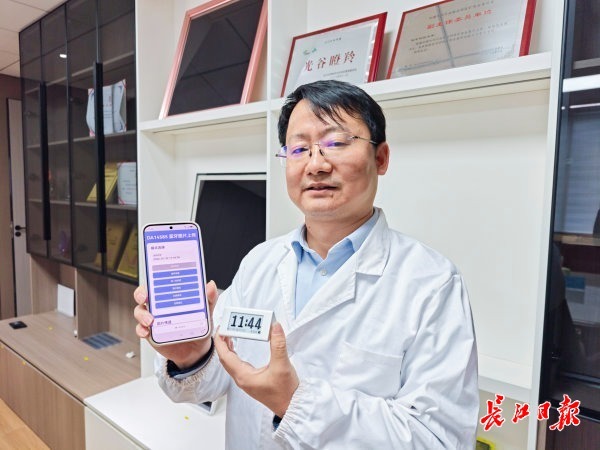
Core Insights - The research led by Professor Chen Wei demonstrates that moonlight can generate electricity, albeit in small amounts, highlighting the potential of perovskite solar cells to improve efficiency and reduce costs significantly [1][3]. Group 1: Perovskite Solar Cell Technology - Perovskite solar cells are recognized as a leading technology in the thin-film solar cell sector, with theoretical efficiencies higher than traditional silicon cells and lower production costs due to simpler manufacturing processes [3][6]. - The stability of perovskite cells has been a major challenge; however, breakthroughs in understanding their instability have been achieved, leading to improved efficiency levels that are nearing the world record of 27.8% for silicon cells [3][6]. Group 2: Commercialization and Applications - The establishment of Jiuyue Optoelectronics in Wuhan, focusing on perovskite materials and technology, marks a significant step towards commercialization, with the first trans-perovskite photovoltaic module expected to be produced in 2024 [3][6]. - Perovskite technology is particularly advantageous in low-light conditions, allowing for applications in various devices such as clocks, calendars, electronic price tags, and IoT sensors, which do not require direct sunlight [7][10]. Group 3: Production and Market Position - Jiuyue Optoelectronics has achieved a production milestone of 10,000 perovskite weak-light components per day, positioning itself among the top tier in the industry for both production volume and technical specifications [10]. - The company's testing equipment has been integrated into the supply chains of leading firms like CATL and BOE, indicating strong market validation and demand for perovskite solar products [10].
产业、消费、外贸齐发力 2025年上海GDP增速5.4%
Zhong Guo Xin Wen Wang· 2026-01-21 06:51
Economic Growth - In 2025, Shanghai's GDP is projected to reach 56,708.71 billion yuan, with a year-on-year growth of 5.4%, surpassing the national growth rate of 5% and improving by 0.4 percentage points from 2024 [1] - The growth is attributed to three main factors: new economic drivers, a recovering consumer market, and resilient foreign trade [1] Industrial Development - The three leading industries (integrated circuits, biomedicine, and artificial intelligence) are expected to drive significant growth, with a manufacturing output increase of 9.6% year-on-year [1] - Specifically, the integrated circuit and artificial intelligence sectors are projected to grow by 15.1% and 13.6%, respectively [1] - The output of strategic emerging industries is anticipated to rise by 6.5% [1] Service Sector Performance - The added value of Shanghai's tertiary industry is expected to grow by 6% year-on-year, outpacing the national average, with the information service sector leading at a growth rate of 15.3% [2] - From January to November 2025, the revenue of the software and information technology service industry is projected to increase by 24.2% [2] - The research and experimental development service industry is also expected to see a revenue increase of 15.1% during the same period [2] Consumer Market - Shanghai's total retail sales of consumer goods are projected to reach 16,600.93 billion yuan in 2025, with a year-on-year growth of 4.6%, reflecting a gradual increase throughout the year [2] Foreign Trade - The total import and export volume for Shanghai is expected to reach 4.51 trillion yuan, with a year-on-year growth of 5.6% [2] - Exports are projected to grow by 10.8% to 2.02 trillion yuan, while imports are expected to increase by 1.8% to 2.49 trillion yuan [2] - The export of "new three types" products, including electric passenger vehicles, lithium batteries, and solar cells, is expected to reach 160 billion yuan, with a growth of 17.4% [3] Infrastructure and Connectivity - Shanghai continues to strengthen its connections with global industrial, supply, and innovation chains, enhancing its status as a financial hub [4] - By 2025, the number of domestic and foreign financial institutions in Shanghai is expected to reach 1,813 [4] - Shanghai's port container throughput is projected to reach 55.063 million standard containers, maintaining its position as the world's largest for 16 consecutive years [4]