
BOE(000725)

Search documents
京东方等在上海成立显示技术公司
2 1 Shi Ji Jing Ji Bao Dao· 2026-02-11 06:21
Core Insights - Tongcheng Dongfang (Shanghai) Display Technology Co., Ltd. has been established with a registered capital of 100 million RMB, focusing on new material technology research and promotion, chemical product sales, and electronic materials sales [1][2]. Company Information - The legal representative of the company is Zhang Wang, and it is co-owned by Beijing BOE Materials Technology Co., Ltd. and Shanghai Tongcheng Electronic Materials Co., Ltd. [1][3]. - The company is registered in Shanghai and has a business duration from February 11, 2026, to October 31, 2030 [2]. Business Scope - The operational scope includes general projects such as new material technology research and promotion services, as well as sales of chemical products (excluding licensed activities) [2].


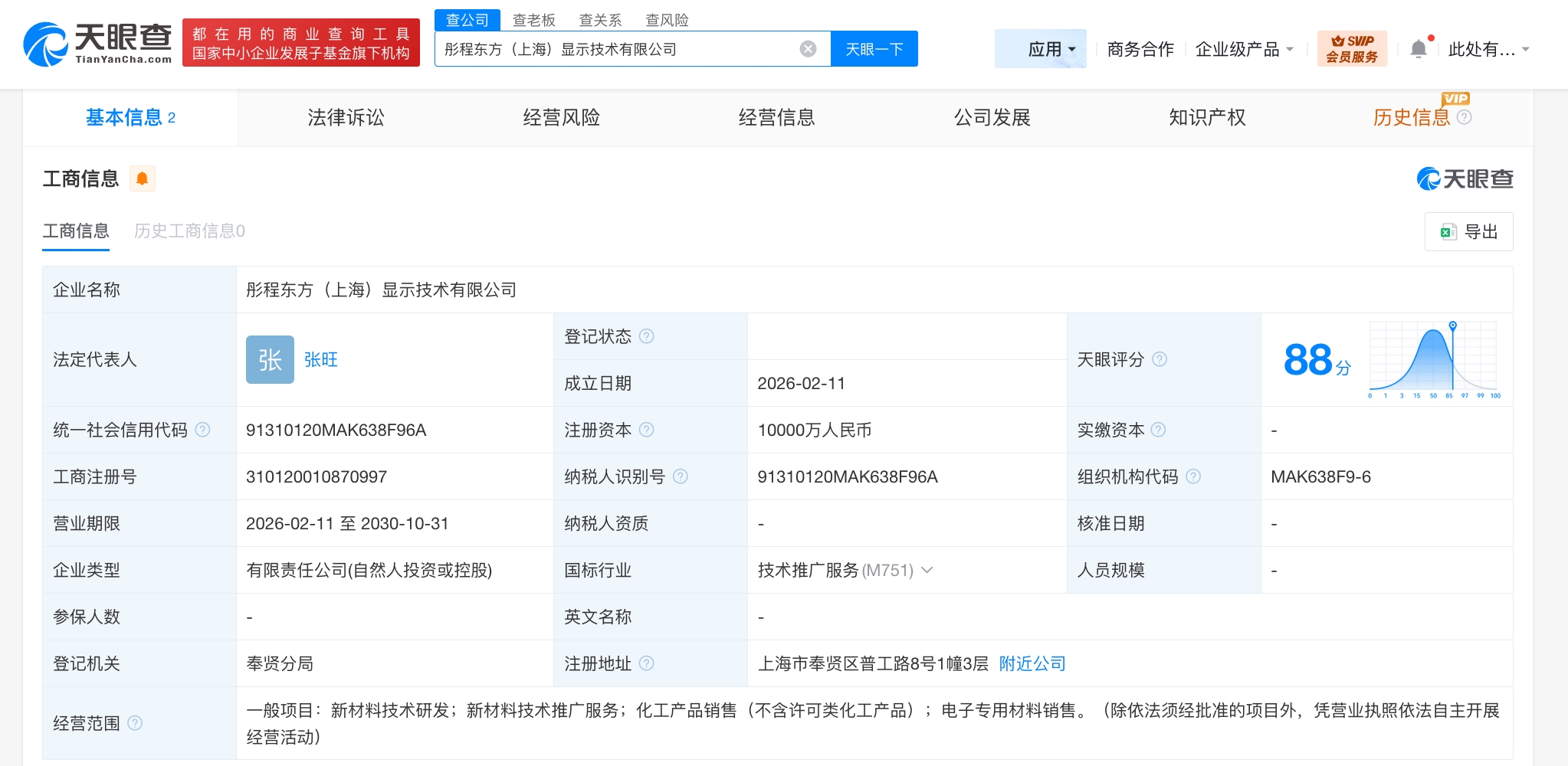
彤程东方(上海)显示技术有限公司成立,注册资本1亿
Xin Lang Cai Jing· 2026-02-11 06:21
Group 1 - The core point of the article is the establishment of Tongcheng Dongfang (Shanghai) Display Technology Co., Ltd. on February 11, with a registered capital of 100 million RMB [1] - The legal representative of the new company is Zhang Wang [1] - The business scope includes research and development of new material technology, promotion services for new material technology, sales of chemical products, and sales of electronic special materials [1] Group 2 - The company is jointly owned by Beijing BOE Materials Technology Co., Ltd., a subsidiary of BOE Technology Group, and Shanghai Tongcheng Electronic Materials Co., Ltd. [1]
2026 CES全球触控显示行业新技术、新产品集锦
CINNO Research· 2026-02-11 05:50
Group 1 - The article highlights the advancements in the global touch display industry showcased at the 2026 CES, focusing on innovations in smart human-machine interaction interfaces [2] - Samsung presented a "no crease" OLED foldable screen and launched the world's first inward-folding triple-fold smartphone [2] - GoerTek displayed a piezoelectric ceramic solution for consumer electronics, while BOE showcased a liquid crystal display with an under-screen camera suitable for automotive applications [2] Group 2 - TCL Huaxing, Visionox, and LGD exhibited flexible and slideable OLED displays for automotive use [2] - BOE, Tianma, and Innolux presented wood grain hidden display screens for vehicles [2] - Huike showcased In-Cell touch display technology for laptops, and Lenovo introduced a concept laptop with horizontal and vertical rollable screens [2]
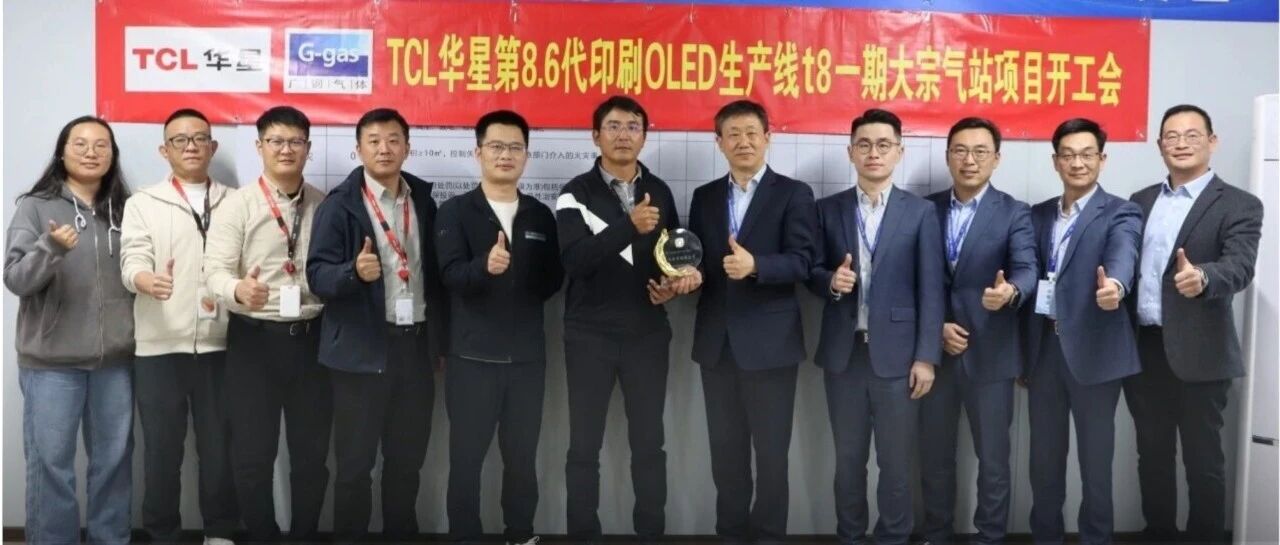
TCL华星第8.6代印刷OLED产线配套项目启动
WitsView睿智显示· 2026-02-11 04:34
Core Viewpoint - Guangzhou Industrial Control Group's subsidiary, Guanggang Gas, will supply electronic gases for TCL Huaxing's 8.6-generation printed OLED display panel production line project, known as the "t8 project" [1][2]. Group 1: TCL Huaxing t8 Project - The TCL Huaxing t8 project has a total investment of 29.5 billion yuan and will have a processing capacity of approximately 22,500 glass substrates measuring 2290mm × 2620mm per month upon completion [2]. - The production line utilizes TCL Huaxing's self-developed, cutting-edge 8.6-generation substrate specifications and inkjet printing technology, which is significant for advancing China's semiconductor display industry [2]. Group 2: Role of Electronic Gases - Electronic gases are crucial throughout the manufacturing process of semiconductor display panels, impacting thin film deposition, etching, and packaging, with their purity and stability directly affecting product yield and performance [2]. - Guanggang Gas will provide high-quality, high-purity electronic gas solutions for the t8 project, marking a deepening of the collaboration between Guanggang Gas and TCL Huaxing, which has lasted for 15 years [2]. Group 3: Other Projects in the Industry - Besides TCL Huaxing, projects for gas supply to BOE and Visionox's 8.6-generation OLED production lines are also progressing: - In May 2025, Messer's bulk gas station system project will be established in Hefei High-tech Zone, with a total investment of 340 million yuan, expected to start production in the second half of 2026 [4]. - In June 2025, a gas supply project for BOE's Chengdu 8.6-generation AMOLED production line will commence, with an initial investment of approximately 250 million yuan [4].

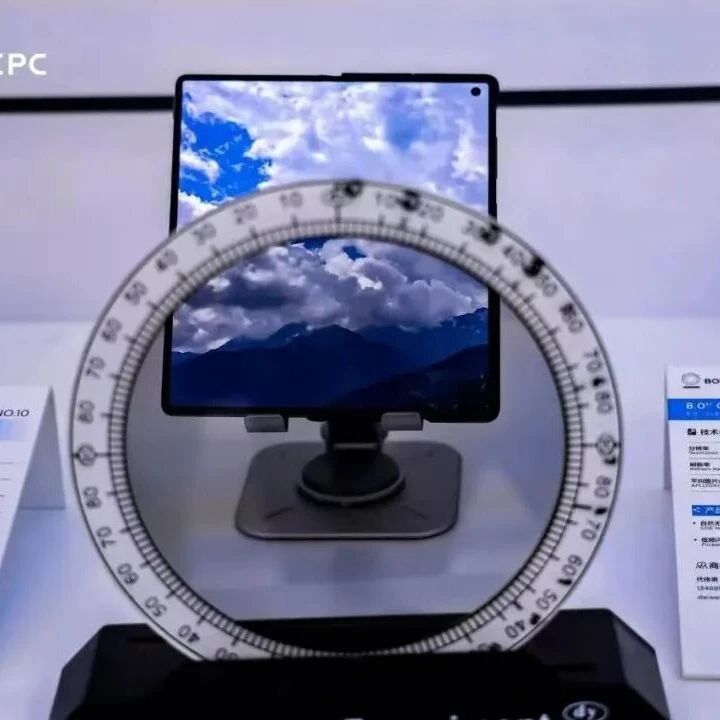
中国好屏,标准为尺:全球显示迎来“中国时刻”
WitsView睿智显示· 2026-02-11 04:34
Core Viewpoint - The article emphasizes that technological innovation is the core driver of high-quality development, particularly in the display industry, which is undergoing a significant transformation from "parameter competition" to "experience definition" and from "technical realization" to "standard leadership" [1][7]. Group 1: Industry Standards and Innovations - Two globally pioneering display standards have been released: the "Evaluation Method for OLED Display Clarity" and the "Characterization and Testing Method for Natural Light Display Performance," which redefine what constitutes a good screen beyond mere specifications [1][2]. - BOE (京东方), a leader in the display industry, is at the forefront of these standards, marking China's transition from a "manufacturer" and "follower" to a "definer" and "leader" in high-end display technology [1][9]. Group 2: Bridging the Gap in User Experience - Historically, there has been a disconnect between precise laboratory parameters and subjective user experiences regarding screen quality, necessitating a quantifiable and comparable scientific bridge [7][9]. - BOE's standards address this gap by breaking down "transparency" into quantifiable optical factors and systematizing "natural light health display" into multi-dimensional technical specifications, thus transforming technical innovations into tangible user value [9][10]. Group 3: Market Impact and Competitive Advantage - The establishment of a scientific definition and evaluation system for "good screens" by BOE enhances its market position, transitioning from production and technology advantages to "standard definition advantages" [10][11]. - The unified standards facilitate communication across the supply chain, reducing collaboration costs and accelerating the industrialization of advanced technologies, thereby promoting a high-quality upgrade of China's display industry [15][16]. Group 4: Future Implications for the Industry - The release of these standards signifies a critical elevation in competitive dimensions, allowing companies that define "what is good" to occupy a strategic ecological high ground [15][16]. - BOE's dual approach of "technological innovation + standard leadership" aims to extend its definition capabilities beyond display quality to broader fields such as smart interaction and cross-industry integration, showcasing its commitment to driving high-quality development in the entire Chinese display industry [15][16].
技术硬件与设备行业2025年信用回顾与2026年展望
新世纪评级· 2026-02-11 01:17
Investment Rating - The technology hardware and equipment industry is rated as stable for 2025 and 2026 [1] Core Insights - The technology hardware and equipment industry is experiencing a slow recovery driven by inventory replenishment cycles and AI technology, despite overall pressure from weak global economic growth since 2025. There is significant differentiation among sub-industries, with strong demand for data center equipment driven by computing power, while traditional telecom equipment shows sluggish growth [2][3] - The Chinese government has established a policy framework to support the industry, focusing on short-term growth stabilization, medium-term supply chain strengthening, and long-term innovation promotion, primarily through domestic substitution to overcome high-end equipment and material bottlenecks [2] - The industry is expected to benefit from the deepening of digital China initiatives and the industrialization of cutting-edge technologies like AI, entering a structurally growth-driven cycle. However, geopolitical disturbances and rapid technological iterations may lead to uneven recovery across the industry [5] Summary by Sections Industry Overview - The electronic information manufacturing industry is closely tied to global economic conditions, showing signs of recovery since 2024 due to inventory replenishment and AI-driven demand. It is a core industry in China's economic structure transformation and upgrade [7][8] - In 2024, the added value of China's electronic information manufacturing industry grew by 11.8%, outperforming overall industrial and high-tech manufacturing growth rates [8] Financial Performance - Sample companies in the technology hardware and equipment industry reported positive revenue growth year-on-year in 2025, aligning with industry recovery trends. However, high R&D investments and asset impairment losses have pressured net profits, while EBITDA showed year-on-year growth, indicating profit resilience [3] - The debt scale and liability ratios of sample companies have increased, with a decline in the EBITDA coverage ratio for rigid debt, although interest coverage has improved due to lower financing costs [3] Sub-Industry Insights Communication Equipment - The communication equipment sector is experiencing growth opportunities driven by AI and industrial interconnectivity, with significant demand for data center equipment but slow growth in traditional telecom network equipment. The market is highly competitive and concentrated [24][27] - The deployment of high-speed optical modules and data center switches is expected to grow significantly, while traditional telecom equipment investments are declining as operators shift focus to computing power networks [28] Computers and Peripheral Devices - The global PC and server markets are stable, with Chinese manufacturers gaining market share due to domestic substitution. The AI PC segment is becoming a core growth driver, with AI PC shipments expected to increase significantly [37][38] - The global server market is experiencing robust growth driven by AI computing demand, with significant revenue increases expected in the coming years [42] Electronic Devices, Instruments, and Components - The electronic devices, instruments, and components sector is seeing overall recovery driven by AI innovation and domestic supply chain localization. Key areas of growth include computing power chips and advanced packaging [48][49] - The semiconductor industry is entering an upward trend, with significant sales growth expected in both global and Chinese markets [56]



消息称京东方iPhone OLED面板生产遇挫,三星显示接手数百万片订单
Xin Lang Cai Jing· 2026-02-10 23:53
Core Viewpoint - BOE, Apple's screen supplier, is facing production issues with OLED panels, leading to the transfer of millions of orders to Samsung Display [1] Group 1: Production Issues - BOE has not resolved production interruptions that occurred between November and December of last year, affecting the supply of OLED panels for iPhone models [1] - The production problems are attributed to certain process issues, resulting in the forced halt of some products [1] - The supply issues extend beyond the technically challenging iPhone 17 LTPO OLED panels to include previously stable LTPS OLED panels for iPhone 15 and 16, causing confusion in the industry [1] Group 2: Future Supply Efforts - BOE is working to ensure stable supply of OLED panels for the upcoming iPhone 17e model, which is scheduled for release in the first half of this year [1] - BOE is the supplier with the highest number of orders for iPhone 17e OLED panels among panel manufacturers [1]

沪深北交易所同日“亮剑”:再融资新政对A股影响(附精选股票)
Sou Hu Cai Jing· 2026-02-10 06:14
Core Viewpoint - The simultaneous release of refinancing optimization measures by Shanghai, Shenzhen, and Beijing stock exchanges marks a significant transformation in China's capital market, aimed at enhancing capital allocation efficiency and reshaping the A-share market landscape [1]. Group 1: Policy Framework and Differences - The policy frameworks of the three exchanges are highly similar, focusing on "supporting the strong, limiting the weak, promoting innovation, and enhancing convenience and regulation" [2]. - Shanghai Stock Exchange emphasizes "main board" characteristics, tailoring financing rules for large, mature technology companies [2]. - Shenzhen Stock Exchange adopts a bolder stance on supporting technology innovation, easing fundraising restrictions for growth-oriented enterprises [2]. - Beijing Stock Exchange focuses on "innovative small and medium-sized enterprises," addressing their financing challenges with flexible policies [2]. Group 2: Strategic Insights on Separate Announcements - The decision to release policies on the same day rather than a joint announcement reflects the nuanced wisdom of tiered regulation in China's capital market [3]. - Different market positioning allows each exchange to cater to the unique characteristics and needs of the enterprises they serve, avoiding a one-size-fits-all approach [3]. - The simultaneous release creates a strong policy resonance, reinforcing market perception of deepening capital market reforms while maintaining the distinct identities of each exchange [3]. Group 3: Deep Impacts on Market Perception - The new measures aim to shift the long-standing fear of "blood-sucking" effects of refinancing, which was believed to drain market funds and destabilize the market [4]. - The principle of "supporting the strong, limiting the weak" will act as a catalyst for market differentiation, favoring quality companies, especially in hard technology, while raising barriers for poorly performing firms [4]. - The policy directs resources towards "new productive forces," providing strong support for leading companies in sectors like semiconductors, AI, biomedicine, and high-end manufacturing [5]. - Allowing companies that have experienced stock price declines to raise funds through methods like private placements and convertible bonds offers a lifeline to solid businesses facing temporary challenges [6]. - A complete regulatory loop is established, tightening post-fundraising supervision while relaxing initial approvals, transforming refinancing from a mere "money-raising tool" to an "engine" for corporate development [7]. Group 4: Implications for Investors - The coordinated actions of the three exchanges signify the entry of China's refinancing mechanism into a "precise drip irrigation" era, providing tailored financing support for different types of enterprises [8]. - Investors are advised to focus on genuinely innovative and well-governed companies while avoiding those that merely chase trends without substance [8]. - The transformation of refinancing from a "blood-sucking machine" to a "blood-producing pump" is expected to enhance the value discovery function of the A-share market, leading to a healthier and more vibrant capital market [8].






OLED显示器持续高增速放量 产业链公司加速布局
Zheng Quan Ri Bao Wang· 2026-02-09 13:00
Group 1 - UBI Research forecasts that OLED display shipments will reach 3.2 million units in 2025, a significant increase of 64% compared to 1.95 million units in 2024, with a growth rate of over 50% expected for this year [1] - The rapid penetration of OLED in high-end IT applications, driven by leading manufacturers like Apple and Huawei, is also expanding into automotive displays and smart wearables, contributing to the growth of OLED displays [1] - Companies in the OLED supply chain are accelerating technological innovation and capacity expansion, which is expected to drive down costs and further enhance market penetration [1] Group 2 - China currently leads the global OLED shipment market, with AMOLED smartphone panel shipments accounting for 50.6% of the market share [2] - Some panel manufacturers have begun production on their 8.6-generation OLED production lines, with increasing domestic production rates of organic light-emitting materials and PCB components, indicating a shift towards mid-to-high-end products [2] - BOE Technology Group announced that its 8.6-generation AMOLED production line will begin mass production in the second half of 2026, enhancing its competitiveness in the display industry [2] Group 3 - Visionox's 8.6-generation AMOLED production line project in Hefei is set to start cleanroom delivery in the second quarter of this year [3] - The upstream material companies in the OLED supply chain are also accelerating their development, with companies achieving breakthroughs in domestic OLED terminal materials [3] - The company is focusing on the development of new generation narrow-spectrum dopant materials and other advanced technologies to promote domestic substitution and strengthen the supply chain's autonomy [3] Group 4 - OLED is expanding from consumer electronics into more diverse and high-value fields, with a clear trend towards high-end consumer electronics and commercial applications [4] - Domestic OLED is transitioning from merely existing to focusing on quality, with the industry collectively pushing towards high-end markets and increasing international market share [4] - Technological innovation is identified as a key factor for companies to overcome competition and meet high-end demands [4]


中国光学光电子行业展望:预计2026年在政策持续推动,供需关系趋于动态平衡的因素下,行业信用水平将维持稳定。
Zhong Cheng Xin Guo Ji· 2026-02-09 11:09
Investment Rating - The investment rating for the optical and optoelectronic industry is stable, with expectations for credit quality to remain unchanged over the next 12 to 18 months [4][7]. Core Insights - The optical and optoelectronic industry is expected to maintain stable operational performance due to continuous policy support and a dynamic balance in supply and demand, leading to a slight improvement in overall credit risk [7][8]. - The industry is witnessing a structural trend towards high-end technology investments, with traditional sectors focusing on inventory consolidation [7][8]. - The competitive landscape has shifted towards a panel-dominated structure, with positive cash flow across various segments, although growth trends are diverging [7][36]. - Future upward adjustments to the industry outlook may occur if product prices rise significantly, operational cash generation improves, and high-end product penetration accelerates [7][8]. Industry Fundamentals Analysis - The industry is characterized by a focus on "cost reduction, technological breakthroughs, and demand stimulation" as key policy points, which are expected to reshape the supply-demand structure towards high-end expansion and low-end clearance [9][10]. - The panel industry is stabilizing, with a significant shift towards larger display sizes and increased penetration of OLED technology, supported by upcoming events like the World Cup [15][19]. - The global panel industry is projected to exceed $100 billion in value, with LCD technology dominating while OLED and Mini LED segments are expected to grow significantly [16][18]. Credit Performance of Industry Enterprises - The overall credit quality of the optical and optoelectronic industry is expected to remain good, with manageable short-term debt risks and a need for optimization in debt maturity structures [36][37]. - The industry is primarily driven by a few major players, particularly in the panel sector, which has seen a concentration of market share among leading companies [37][38]. Conclusion - The optical and optoelectronic industry is poised for stable growth, with a focus on high-end technology and a favorable policy environment supporting demand and supply dynamics [4][7][8].