
HISENSE H.A.(000921)

Search documents
中国家电凭实力“破壁”
Jing Ji Wang· 2025-06-16 07:31
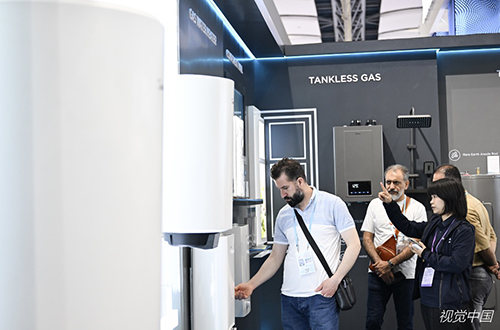
Core Viewpoint - The 137th Canton Fair highlights the resilience of the Chinese home appliance industry amidst the ongoing tariff challenges from the U.S., with large enterprises showing better preparedness and adaptability compared to smaller firms [1][3][5]. Group 1: Impact of Tariffs on Large Enterprises - Large home appliance companies have limited exposure to U.S. tariffs due to strategic planning and diversified supply chains, with many having established manufacturing bases in emerging markets [4][5]. - For instance, Midea Group reported a revenue of 409.1 billion yuan and a net profit of 38.5 billion yuan for the year ending December 31, 2024, with a low revenue share from the U.S. market [4]. - Haier Smart Home achieved an overseas revenue of 143.814 billion yuan in 2024, marking a year-on-year growth of 5.43%, with significant growth in emerging markets [4]. Group 2: Adaptation Strategies of the Industry - The home appliance industry has proactively adjusted to tariff impacts by shifting production capacities and exploring new markets, reducing reliance on the U.S. market [5][6]. - Companies like TCL and Hisense have minimized direct exports to the U.S. by utilizing production facilities in Mexico and Southeast Asia, thus mitigating tariff impacts [5][6]. - The overall export value of China's home appliance industry reached 112.42 billion USD in 2024, with exports to the U.S. accounting for 20.71 billion USD, reflecting a 4.3% year-on-year increase but a reduced share of total revenue [5]. Group 3: Challenges Faced by Small Enterprises - Smaller home appliance companies are facing significant challenges due to their heavy reliance on the U.S. market, with many experiencing customer defaults on orders [7][8]. - The Canton Fair has introduced initiatives to assist small enterprises in finding new clients, particularly in countries involved in the Belt and Road Initiative [8][9]. - Experts suggest that small enterprises should adjust their strategies by expanding overseas production and tapping into domestic markets through e-commerce platforms [9].




5月线上零售喜人,价格内卷或步入尾声
Orient Securities· 2025-06-13 09:45
Investment Rating - The report maintains a "Positive" investment rating for the home appliance industry, indicating an expectation of returns exceeding the market benchmark by more than 5% [5]. Core Insights - Domestic home appliance sales are expected to benefit from policy support, with the air conditioning peak season anticipated to see high temperatures and low inventory, making the second quarter demand promising. Changes in national subsidy methods are expected to have limited disruption [3][8]. - The online retail performance in May was strong, with significant year-on-year growth in various categories, including a 31.7% increase in TV sales and a 46.0% increase in air conditioning sales [8]. - The report highlights the potential for emerging markets in exports, while concerns regarding exports to the U.S. due to global capacity layout are deemed manageable. The reshaping of the global supply chain presents new opportunities [3][8]. Summary by Sections Domestic Market Performance - In May, online retail sales for home appliances showed impressive growth, with air conditioning sales up 46.0% year-on-year and cumulative growth of 26.9% from January to May [8]. - The average price of air conditioning units decreased slightly by 0.7% in May, but the report predicts that price declines are nearing an end as the peak season approaches [8]. Policy and Subsidy Impact - The report discusses changes in national subsidy methods, suggesting that the new approach will likely alleviate price competition among mid-to-low-end brands. The expected shift to a dual-channel distribution for subsidies is anticipated to maintain consumer spending [8]. Investment Recommendations - The report recommends focusing on quality white goods leaders that benefit from domestic policy continuation and are actively expanding overseas, such as Midea Group and Haier Smart Home [3]. - It also suggests monitoring companies that are likely to benefit from the reshaping of market shares in mature overseas markets, such as Hisense Visual Technology and Ousheng Electric [3].



海信家电(000921) - 关于召开2024年度暨2025年第一季度业绩说明会的公告
2025-06-13 08:45
(四)参会方式: 海信家电集团股份有限公司 关于召开 2024 年度暨 2025 年第一季度业绩说明会的公告 本公司及董事会全体成员保证信息披露内容的真实、准确、完整,没有虚假记载、 误导性陈述或重大遗漏。 海信家电集团股份有限公司(「本公司」)为加强与投资者的交流,使广大投资者更 全面了解本公司 2024 年度及 2025 年第一季度业绩和经营情况,谨定于 2025 年 6 月 20 日(星期五)下午 4:00-5:00 召开本公司 2024 年度暨 2025 年第一季度业绩说明会,就投 资者普遍关心的问题进行交流,欢迎广大投资者积极参与。 一、业绩说明会的召开安排 (一)召开时间:2025 年 6 月 20 日(星期五)下午 4:00-5:00 (二)召开方式:网络远程互动 (三)本公司出席人员:董事长高玉玲女士,董事、总裁胡剑涌先生,独立董事李志 刚先生,财务负责人孙长春先生,董事会秘书张裕欣女士。 股票代码:000921 股票简称:海信家电 公告编号:2025-043 1、本次业绩说明会将通过深圳证券交易所提供的"互动易"平台举行,投资者可于 2025 年 6 月 20 日下午 4:00-5:00 登 ...
基小律观点 | 从申请案例看上市公司设立私募基金管理人的路径与合规要点
Sou Hu Cai Jing· 2025-06-12 23:46
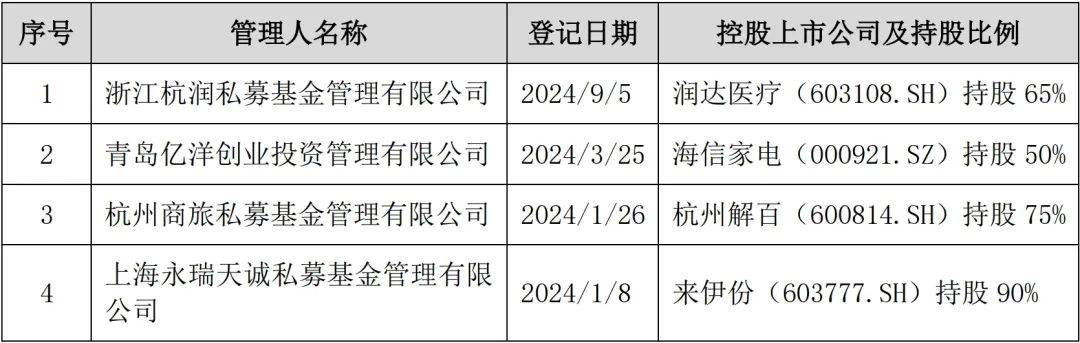
Core Viewpoint - The rapid development of the private equity investment sector has led to A-share listed companies engaging in various forms of private equity investments to discover and incubate quality targets within their industry and supply chains, while also expanding their investment paths. CVC funds led by listed companies have become a crucial force in the private equity market, but they face scrutiny due to potential conflicts of interest and regulatory restrictions, particularly after the implementation of the "Private Investment Fund Registration and Filing Measures" on May 1, 2023 [1][14]. Pathways for Establishing Private Fund Managers - A total of 16 private fund managers related to A-share listed companies have been approved by the Asset Management Association of China (AMAC) from May 1, 2023, to May 1, 2025. These include 1 wholly-owned subsidiary, 4 controlled by listed companies, 10 directly or indirectly invested by listed companies, and 1 established by the actual controller of a listed company [2]. Pathway One: Wholly Owned Establishment - Listed companies can establish private fund managers wholly owned by themselves. This pathway is subject to strict regulatory scrutiny due to the potential classification as "quasi-financial" businesses [3][6]. Pathway Two: Controlling Establishment - Listed companies can also establish controlling private fund managers where they hold more than 50% of the shares. However, this pathway has seen limited success due to regulatory concerns, with only 4 such managers registered since the new regulations [3][4]. Pathway Three: Joint Establishment with Third Parties - This pathway involves listed companies partnering with third parties to establish private fund managers, where the listed company acts as a financial or strategic investor. This has proven to be a more viable option, with 10 managers established under this model since the new regulations [4][5]. Pathway Four: Establishment by Actual Controllers - Actual controllers of listed companies can establish private fund managers directly. This pathway is less restricted, provided that the listed company does not directly invest in the fund manager [6][10]. Compliance Points for Each Pathway - Pathways one and two face stricter regulatory requirements due to the direct control by listed companies, necessitating good financial health and adherence to internal decision-making and disclosure procedures [7][8]. - Pathway three requires careful attention to the legitimacy of the investment purpose and compliance with disclosure obligations, especially regarding related party transactions [10][11]. - Pathway four mandates that the actual controller disclose their relationship with the fund manager and comply with related party transaction regulations if the listed company invests in the fund [12][13]. Risk Prevention Measures - Listed companies and their affiliates must be vigilant against risks such as insider trading, conflicts of interest, and the misuse of non-public information. Establishing robust internal controls and compliance mechanisms is essential to mitigate these risks [12][13]. Conclusion - The article summarizes four pathways for listed companies to establish private fund managers, highlighting the regulatory landscape and compliance requirements. The core controversy revolves around the "quasi-financial" risks associated with these activities, emphasizing the need for a balance between industrial investment demands and financial regulatory boundaries. Future policies may exhibit flexibility, recognizing the value of supporting the real economy while preventing unchecked capital expansion [14].


如何看待白电龙头打造高管“IP”?
Changjiang Securities· 2025-06-12 15:22
Investment Rating - The industry investment rating is "Positive" and maintained [9] Core Viewpoints - The home appliance industry is witnessing a strategic upgrade with the creation of executive "IP" by leading companies like Haier and Midea, enhancing direct interaction with consumers through social media platforms [2][4][26] - This approach allows for a restructured market research process in product design, providing consumers with a greater sense of participation and improving brand recognition through the personal charisma of executives [2][4][26] Summary by Sections Executive "IP" Development - Haier and Midea are actively developing executive "IP" to enhance brand influence, with executives engaging on social media platforms to connect with consumers [4][16] - The strategy aims to create a more relatable corporate image, allowing consumers to better understand the company's culture and values [4][26] Capturing Consumer Demand - In the current market, home appliance companies face higher demands for product innovation and consumer engagement, with social media providing a platform for direct communication [5][27] - The example of Haier's three-tub washing machine illustrates how consumer feedback can lead to rapid product development, achieving over 88,000 pre-orders within a week of launch [5][30] Brand Image and Trust - The creation of executive "IP" enhances brand image and fosters emotional connections with consumers, breaking down barriers between executives and the public [6][38] - Executives' personal engagement on social media can significantly boost brand recognition and consumer trust, as seen with Haier's CEO gaining popularity through relatable content [6][38] Investment Recommendations - In light of potential uncertainties, the report suggests focusing on companies with lower exposure to U.S. tariffs and strong domestic sales supported by government subsidies, such as Gree Electric, Hisense Home Appliances, and Midea Group [7][41] - Companies with significant domestic production capacity and compliance with trade agreements are also highlighted as strong investment opportunities [7][41]
海信家电: 关于2022年A股限制性股票激励计划第二个解除限售期解除限售股份上市流通的提示性公告
Zheng Quan Zhi Xing· 2025-06-09 10:23
股票代码:000921 股票简称:海信家电 公告编号:2025-042 海信家电集团股份有限公司 同日,本公司召开第十一届监事会 2022 年第四次会议,审议及批准《关于<2022 年 A 股限制性股票激励计划(草案)>及其摘要的议案》《关于<2022 年 A 股限制性股票激 励计划实施考核管理办法>的议案》及《关于核实公司 2022 年 A 股限制性股票激励计划 激励对象名单的议案》等议案,本公司监事会对本激励计划的相关事项进行核实并发表 了相关核查意见。 关于 2022 年 A 股限制性股票激励计划第二个解除限售期 解除限售股份上市流通的提示性公告 本公司及董事会全体成员保证信息披露内容的真实、准确、完整,没有虚假记 载、误导性陈述或重大遗漏。 特别提示: 计 458 名,可解除限售的限制性股票数量为 6,397,866 股。 限为 24 个月,上市流通日为 2025 年 6 月 13 日。 本公司于 2025 年 5 月 30 日召开第十二届董事会 2025 年第三次临时会议,审议通 过了《关于 2022 年 A 股限制性股票激励计划第二个解除限售期解除限售条件成就的议 案》,同意 458 名激励对象获 ...
海信家电(000921) - 关于2022年A股限制性股票激励计划第二个解除限售期解除限售股份上市流通的提示性公告
2025-06-09 09:45
股票代码:000921 股票简称:海信家电 公告编号:2025-042 海信家电集团股份有限公司 关于 2022 年 A 股限制性股票激励计划第二个解除限售期 解除限售股份上市流通的提示性公告 本公司及董事会全体成员保证信息披露内容的真实、准确、完整,没有虚假记 载、误导性陈述或重大遗漏。 特别提示: 1、海信家电集团股份有限公司(「本公司」)本次符合解除限售条件的激励对象共 计 458 名,可解除限售的限制性股票数量为 6,397,866 股。 2、本公司为 A+H 上市公司,A 股目前股本为 926,026,997 股,H 股目前股本为 459,589,808 股,本次可解除限售的限制性股票 6,397,866 股占本公司目前总股本 1,385,616,805 股的 0.46%。 3、本次解除限售的限制性股票限售起始日期为 2023 年 5 月 23 日,承诺的限售期 限为 24 个月,上市流通日为 2025 年 6 月 13 日。 本公司于 2025 年 5 月 30 日召开第十二届董事会 2025 年第三次临时会议,审议通 过了《关于 2022 年 A 股限制性股票激励计划第二个解除限售期解除限售条件 ...
格力原高管接触美博谈合作还是换工作?空调中小品牌谋求生存空间
Di Yi Cai Jing· 2025-06-06 14:58
Core Viewpoint - The air conditioning industry is experiencing intense price competition, leading to significant personnel changes and strategic partnerships among key players, including the potential collaboration between Huang Hui and Meibo Air Conditioning [2][6]. Company Developments - Huang Hui, former president of Gree Electric, has reportedly joined Meibo Air Conditioning, although the specifics of his role remain undisclosed [2]. - Huang Hui previously left Gree in February 2021 for Philips Air Conditioning, where he served as chairman and oversaw the establishment of a major production base in Chuzhou, Anhui, with an investment of 10 billion yuan [2][4]. - Philips Air Conditioning has struggled to gain market share, failing to break into the top 20 in both online and offline channels in China [3]. Market Dynamics - The air conditioning market is facing a price war, with brands like Xiaomi offering low-cost models, which has pressured mid-tier and lower-tier brands [6][7]. - Data indicates that from May 26 to June 1, 2023, online sales in the air conditioning market saw a slight decline in both sales volume and average price, while offline sales experienced a minor increase [6]. - The competitive landscape is shifting, with leading brands like Midea and Gree now targeting lower price segments, which could threaten smaller brands [7]. Strategic Partnerships - Meibo Air Conditioning is in discussions with Huang Hui, potentially related to the transfer of his 19% stake in Enboli (Philips Air Conditioning) [5]. - Meibo aims to leverage Huang Hui's experience to enhance the quality and reputation of its air conditioning products [5][7]. - The collaboration may face challenges due to Meibo's focus on cost-effective products, which may not align with Huang Hui's previous experience in higher-end markets [8].
海信家电20250605
2025-06-06 02:37
Summary of Hisense Home Appliances Conference Call Industry Overview - The air conditioning market is highly competitive, with significant price pressure on flow models and cost-effective models. The national subsidy policy is being utilized quickly in coastal eastern regions, although some areas face funding shortages, which are expected to be resolved later. The policy has a significant positive effect on consumer demand [2][3][7] - The home appliance industry is experiencing single-digit growth in domestic sales, particularly after the 618 shopping festival began on May 13. Online sales growth has significantly improved in May, with a notable change in sales structure for refrigerators, air conditioners, and washing machines compared to the same period last year [3][21] Company Performance - Hisense's air conditioning installation card growth in May was in the high single digits, with new air conditioning installations exceeding 50% growth, accounting for over 20% of domestic sales. The company is actively expanding online channels for its flow models [4][5] - Hisense employs a K-shaped pricing strategy, improving the average price of high-end products while reducing prices for flow models due to intense competition [6] - The company anticipates that the effects of the national subsidy policy will become evident in the second quarter, with expectations for additional government funding to stimulate consumption [7][8] Market Dynamics - The central air conditioning market is expected to remain weak in the second quarter, with inventory levels around 90 days. The C-end and public construction sectors are expected to maintain single-digit growth, with profit margins stabilizing around 17% [9][10][11] - The overseas market, particularly in emerging regions like ASEAN, is expected to see strong growth, with overseas revenue growth and profit margin improvements being more certain than in the domestic market [12][13][14] Challenges and Strategies - Issues with the national subsidy policy include regional funding shortages and irregularities, which may lead to localized market disruptions. However, the overall impact is expected to be positive as more funds are anticipated to be allocated [7][19] - Hisense's strategy in response to the national subsidy policy involves requiring dealers to pre-finance, which may affect promotional activities during the 618 shopping festival [8][18] - The company plans to leverage the 618 shopping festival for marketing, with strategies tailored to optimize sales performance based on current trends [21][23] Future Outlook - Hisense aims to continue pushing for high-end product offerings, with plans to launch more products priced above 10,000 yuan. The company is also focusing on energy efficiency upgrades in the refrigerator sector [22] - The overseas marketing strategy includes sponsorship of major sports events like the World Cup and NBA, with a focus on expanding into new markets in the Middle East, Africa, ASEAN, and Latin America [25] Conclusion - Hisense Home Appliances is navigating a competitive landscape with strategic pricing and marketing initiatives while responding to government policies and market demands. The company is optimistic about growth in both domestic and international markets, particularly in emerging regions, despite facing challenges related to funding and competition.
中证全指家用电器指数上涨0.3%,前十大权重包含四川长虹等
Jin Rong Jie· 2025-06-05 11:41
Core Viewpoint - The China Securities Index for Home Appliances has shown a slight increase of 0.3% recently, with a current value of 11,215.49 points, while the index has experienced a 1.25% increase over the past month, a 3.37% decrease over the past three months, and a 0.80% decline year-to-date [1] Group 1: Index Performance - The China Securities Index for Home Appliances opened high and fluctuated, with a trading volume of 19.674 billion yuan [1] - The index is categorized into various industry levels, including 11 primary industries, 35 secondary industries, over 90 tertiary industries, and more than 200 quaternary industries [1] Group 2: Index Composition - The top ten weighted companies in the index are Gree Electric Appliances (16.07%), Midea Group (15.58%), Haier Smart Home (12.57%), Sanhua Intelligent Control (8.23%), Sichuan Changhong (5.1%), Roborock Technology (4.44%), Megmeet (2.8%), Hisense Visual Technology (2.46%), Bull Group (1.92%), and Hisense Home Appliances (1.74%) [1] - The market share of the index's holdings is 65.47% from the Shenzhen Stock Exchange and 34.53% from the Shanghai Stock Exchange [1] Group 3: Sample Adjustments - The index samples are adjusted biannually, with adjustments occurring on the next trading day after the second Friday of June and December [2] - Weight factors are generally fixed until the next scheduled adjustment, with temporary adjustments made in response to changes in the index samples [2] Group 4: Related Funds - Public funds tracking the home appliance index include: Harvest CSI Home Appliance Index C, Fortune CSI Home Appliance Linked A, Guotai CSI Home Appliance ETF Linked A, and several others [2]

