
Infore Environment Technology (000967)

Search documents
环保设备板块8月14日跌0.98%,恒合股份领跌,主力资金净流出3800.48万元
Zheng Xing Xing Ye Ri Bao· 2025-08-14 08:40
从资金流向上来看,当日环保设备板块主力资金净流出3800.48万元,游资资金净流出2773.64万元,散户 资金净流入6574.13万元。环保设备板块个股资金流向见下表: | 代码 | 名称 | 主力净流入(元) | | 主力净占比 游资净流入 (元) | | 游资净占比 散户净流入(元) | | 散户净占比 | | --- | --- | --- | --- | --- | --- | --- | --- | --- | | 603126 | 中材节能 | | 1.04亿 | 16.26% | -3119.63万 | -4.86% | -7323.55万 | -11.40% | | 000967 | 盈峰环境 | | 4022.54万 | 9.66% | -1154.12万 | -2.77% | -2868.42万 | -6.89% | | 300210 | 森远股份 | | 2356.31万 | 10.83% | 952.04万 | 4.38% | -3308.35万 | -15.21% | | 600388 龙净环保 | | | 1500.16万 | 6.97% | -1428.66万 | -6.64% ...


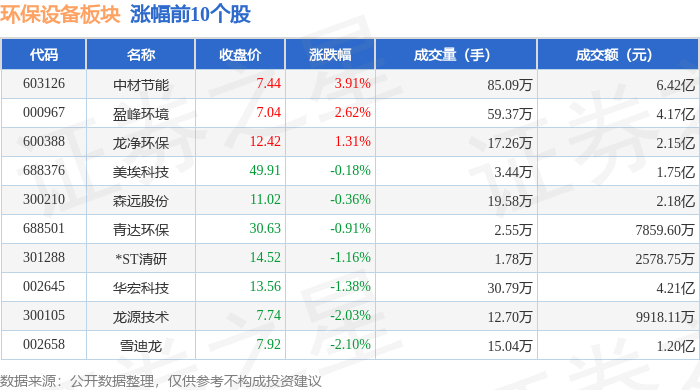
人形含量超70%的机器人ETF鹏华(159278)多股飘红,世界人形机器人运动会今晚开幕
Xin Lang Cai Jing· 2025-08-14 06:49
Group 1 - The core viewpoint is that humanoid robots are accelerating towards terminal application implementation, with industrial manufacturing scenarios expected to achieve large-scale adoption first [2] - The 2025 World Robot Conference successfully sold 19,000 robots and related products, generating over 200 million yuan in sales [1] - The National Robot Industry Index (980022) reflects the price changes of listed companies related to the robot industry in the Shanghai and Shenzhen stock exchanges [2] Group 2 - As of July 31, 2025, the top ten weighted stocks in the National Robot Industry Index accounted for 40.09% of the index, with notable companies including Stone Technology and Ecovacs [3] - The highest application scenario for humanoid robots at the conference was commercial services (including medical), accounting for 41%, followed by industrial manufacturing at 22% [2] - The pricing gradient for humanoid robots is structured as "industrial > commercial > research," indicating a strong market for high-end industrial products [2]




智元机器人推出全球首个机器人世界模型开源平台!“全市场唯一百亿规模”机器人ETF(562500)交投火爆,盘中成交金额超14亿!
Mei Ri Jing Ji Xin Wen· 2025-08-14 06:15
Group 1 - The Robot ETF (562500) experienced a decline of 0.53% as of 1:45 PM, influenced by a market pullback, with a maximum intraday drop of 2% before recovering [1] - Major component stocks included Matrix Technology, which rose by 5.95%, and Yingfeng Environment and Robot, both increasing by over 3%. Conversely, Jingpin Special Equipment fell by 6.66%, with Huachen Equipment and Oat Technology also declining by over 3% [1] - Trading volume was significant, with a total transaction amount of 1.479 billion and a turnover rate of 9.05%, indicating active market participation [1] Group 2 - On August 14, Zhiyuan Robotics launched the industry's first open-source platform for robot world modeling, Genie Envisioner (GE), aimed at unifying robot control modes and innovating traditional workflows [1] - The 2025 World Robot Conference concluded successfully on August 12, showcasing 123 new products, highlighting the latest breakthroughs in the robotics field [1] - The first global humanoid robot sports event will be held in Beijing from August 14 to 17, with a recommendation to focus on humanoid robot developments and investment opportunities in the supply chain as production routes become clearer [1] Group 3 - The Robot ETF (562500) is the only robot-themed ETF in the market with a scale exceeding 100 billion, covering various segments such as humanoid robots, industrial robots, and service robots, facilitating investors' access to the entire robotics industry chain [2]


环卫无人系列深度1小吨位环卫无人设备经济性渐近,订单呈散点放量趋势
2025-08-13 14:54
Summary of the Conference Call on Sanitation Automation Industry Industry Overview - The conference focused on the sanitation automation industry, particularly the adoption of unmanned sanitation equipment and its economic viability [1][2][3]. Key Points and Arguments 1. **Economic Viability of Small Tonnage Equipment**: - Small tonnage equipment is highlighted as having stronger economic feasibility and is approaching a high cost-performance stage [2]. - Companies such as Fulongma, Jinglv Environment, Qiaoyin Co., and Yuhua Tian are identified as having significant sanitation service revenue, which contributes to their performance elasticity [2]. 2. **Employment Impact**: - The transition to automation in sanitation may create short-term employment pressures, particularly for low-income labor groups [3]. - Long-term trends indicate that aging populations will lead to a labor shortage in the sanitation sector, necessitating automation [4]. 3. **Market Size and Growth**: - The total market size for sanitation equipment is estimated to be around 200 billion, with significant growth potential as automation adoption increases [5]. - The industry is expected to see a 130% growth rate in the coming year, driven by policy support in major cities like Guangzhou and Shenzhen [6]. 4. **Types of Unmanned Equipment**: - Three categories of unmanned sanitation equipment are discussed: small tonnage cleaning devices, L4 level unmanned sanitation vehicles, and humanoid robots for sanitation tasks [10][11][12]. - The economic analysis indicates that small tonnage devices can replace 2-3 workers, achieving cost parity within 3-4 years [12][24]. 5. **Market Dynamics**: - The market is characterized by a fragmented landscape with significant participation from sanitation service companies, equipment manufacturers, and technology firms [18][19]. - Government-led initiatives are prevalent, with many cities implementing policies to promote the use of unmanned sanitation equipment [16][17]. 6. **Future Projections**: - The market for small tonnage unmanned devices is projected to reach approximately 575 billion, while L4 level vehicles could reach 761 billion, indicating a combined market potential exceeding 1 trillion [15]. - The report anticipates that small tonnage equipment will lead the market in the next 1-2 years due to its economic advantages [28]. Additional Important Insights - The aging workforce in sanitation services is a critical factor driving the need for automation [4][5]. - The report emphasizes the importance of policy support in facilitating the adoption of unmanned sanitation technologies [16][17]. - Companies are encouraged to leverage technological advancements to enhance operational efficiency and reduce costs [27][28]. This summary encapsulates the key insights from the conference call regarding the sanitation automation industry, highlighting its economic potential, market dynamics, and the implications of workforce changes due to automation.


小吨位环卫无人设备经济性渐近,订单呈散点放量趋势
2025-08-12 15:05
Summary of the Conference Call on the Sanitation Industry Industry Overview - The sanitation industry is facing challenges such as aging workforce and rising labor costs, making automation technology a pressing need for long-term development. The market size for sanitation equipment is expected to reach 200 billion yuan [1][5][15]. Key Insights and Arguments - In the first half of 2025, the number of projects applying for unmanned sanitation equipment exceeded 90, doubling from 2024, with an expected industry growth rate of 130% for the year, primarily driven by policy support [1][6]. - Unmanned technology significantly enhances corporate performance, with some companies experiencing performance elasticity exceeding 70%. Beneficiaries include companies like Fulongma, Jinjing Environment, Qiaoyin Co., and Yuhua Tian [1][7]. - Small-tonnage intelligent sanitation equipment (under 3 tons) is suitable for closed or semi-closed environments, capable of replacing 2-3 workers. Initial pricing at 300,000 yuan can achieve economic parity in 3-4 years, while a reduction to 200,000 yuan accelerates this to 2-3 years [1][13]. - Large-tonnage L4 unmanned sanitation vehicles (over 6 tons) are designed for open municipal roads, with initial costs around 1 million yuan. Economic viability is not apparent in the short term and requires a price drop to around 600,000 yuan to achieve economic parity in 2-3 years [1][13]. Market Potential - The current operational ratio of unmanned equipment is estimated at 20%, with the small equipment market space around 57.5 billion yuan and large equipment around 76.1 billion yuan, totaling over 100 billion yuan. In a neutral optimistic scenario, the market could reach 200-250 billion yuan [1][15]. - The sanitation unmanned equipment market is expected to approach 10 billion yuan by 2025, with major players including Fulongma, Jingyu, Qiaoyin, Yuhua Tian, Yufeng, and Yutong [2][15]. Current Application Status - By 2024, 82 projects were mandated to apply unmanned sanitation equipment, with over 90 projects in the first half of 2025, indicating a doubling growth rate. Key cities like Guangzhou and Shenzhen have policies requiring smart equipment in environmental service contracts [6][9]. Economic Impact on Companies - The introduction of small-tonnage unmanned equipment significantly impacts operational profitability. For instance, Fulongma shows a 177% elasticity in operational profit contribution, followed by Yuhua Tian at 85% and Qiaoyin at 72% [19]. Development Trends - The sanitation industry is undergoing a necessary upgrade from electrification to automation and unmanned technology. The aging workforce and rising labor costs necessitate this shift, with policies driving the adoption of unmanned orders [8][25]. - The market space is substantial, and the industry is at a critical juncture for adopting unmanned technology, with significant policy support from major cities [15][25]. Company Progress - Companies like Yinfeng Environment and Yutong Heavy Industry have made significant advancements in unmanned sanitation technology, with product launches and pilot applications in major cities [17][18]. Conclusion - The sanitation unmanned equipment market is poised for significant growth, driven by policy support and technological advancements. Companies that adapt to this trend are likely to benefit from enhanced operational efficiency and reduced costs, making it a crucial area for investment and development in the coming years [27].
环保设备行业财务总监CFO观察:仕净科技张丽华大专学历薪酬为66万元上涨20%而公司归母净利润下滑456%
Xin Lang Cai Jing· 2025-08-11 04:42
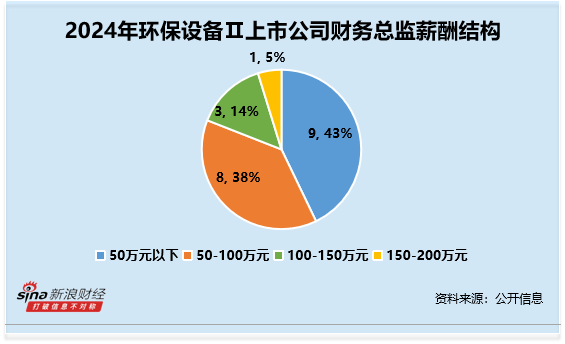
Group 1 - The total salary scale of CFOs in A-share listed companies for 2024 reaches 4.27 billion yuan, with an average salary of approximately 675,800 yuan in the environmental equipment II industry [1] - The highest salary among CFOs is 1.55 million yuan for Qiu Shucai from Longjing Environmental Protection, while the lowest is 461,800 yuan for Zhou Xianyun from Wanyi Technology [1] - The average age of CFOs is 46.9 years, with the oldest being 54 years old and the youngest at 37 years old [1] Group 2 - There is a reverse correlation between salary and education level among CFOs, with average salaries of 488,700 yuan for PhDs, 710,800 yuan for Masters, 758,100 yuan for Bachelors, and 452,800 yuan for those with associate degrees [1] - Some CFOs' salaries are not aligned with company performance, indicating a disconnect between compensation and company profitability [1] - Two CFOs received warnings or public notifications for violations in 2024-2025 [1] Group 3 - Wang Qingbo from Yingfeng Environment received two warnings but has a salary of 1.1998 million yuan for 2024, an increase of 398,800 yuan or 50% from 2023 [2] - Wang Jin from Bixing Wulian received one warning, with a salary of 574,100 yuan, due to failure to update semi-annual performance forecasts and timely disclose significant contracts [2]




环保设备行业财务总监CFO观察:*ST节能吴凯为博士学历 薪酬49万元低于行业平均 难挽业绩颓势
Xin Lang Zheng Quan· 2025-08-11 03:33
Core Insights - The total compensation for CFOs in A-share listed companies reached 4.27 billion yuan in 2024, with an average annual salary of 814,800 yuan [1] - The highest-paid CFO in the environmental equipment sector is Qiu Shoucai from Longjing Environmental, earning 1.55 million yuan, while the lowest is Liu Yanlu from Guolin Technology, earning 215,900 yuan [1] - The age distribution of CFOs shows an average age of 46.9 years, with the oldest being 54 years old and the youngest at 37 years old [3] - There is a reverse correlation between education level and salary among CFOs, with those holding a doctorate earning an average of 488,700 yuan, while those with a college diploma earn 452,800 yuan [5] - Some CFOs have seen salary increases despite their companies experiencing significant declines in net profit, indicating a disconnect between compensation and performance [7] Salary Distribution - The average salary for CFOs in the environmental equipment sector is approximately 675,800 yuan, with 43% of CFOs earning below 500,000 yuan [1] - CFO Zhang Lihua from Shijin Technology received a salary of 658,300 yuan in 2024, despite the company’s net profit declining by 456.1% [7] - CFO Wang Qingbo from Yingfeng Environment received a salary of 1.1998 million yuan, a 50% increase from the previous year, despite receiving two warning letters for violations [8] Education and Performance - The educational background of CFOs includes 1 PhD, 5 Master's degrees, 11 Bachelor's degrees, and 4 with college diplomas, with corresponding average salaries reflecting a reverse relationship with education [5] - CFO Wu Kai from *ST Jieneng, despite holding a doctorate, earned 488,700 yuan, which is below the industry average, and the company faced a 21.5% decline in revenue [5] - CFOs with lower educational qualifications, such as Zhang Lihua from Shijin Technology, earned salaries close to the industry average, indicating that performance may not align with educational attainment [5] Compliance Issues - Two CFOs received warnings or public notifications for compliance violations in 2024-2025 [7] - Wang Qingbo from Yingfeng Environment, despite receiving two warnings, had a significant salary increase, raising questions about the relationship between compliance and compensation [8] - Wang Jin from Bixing Wulian received one warning and earned 574,100 yuan, highlighting ongoing compliance challenges within the industry [8]


深圳“蜂巢”落地:盈峰环境助力智慧环卫
Jing Ji Guan Cha Wang· 2025-08-08 08:19
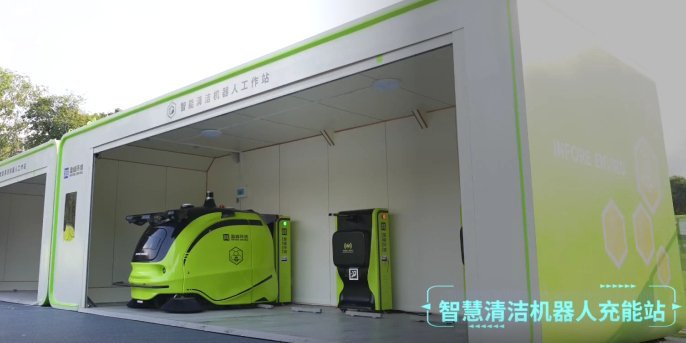
Core Insights - The launch of the "Sanitation Robot Home (Hive)" in Longgang District, Shenzhen marks a significant advancement in the sanitation industry, transitioning from "mechanical replacement of labor" to an "intelligent collaborative ecosystem" [2][4] - The "Hive" system developed by Yingfeng Environment enables five "Little Bee" sanitation robots to autonomously charge and operate in a coordinated manner, addressing traditional issues such as short battery life and inefficient scheduling [2][9] Company Overview - Yingfeng Environment has evolved from a traditional sanitation service provider to a comprehensive environmental operation service provider since its establishment in 1993, with a diverse portfolio including monitoring, water services, waste incineration, sanitation equipment, and sanitation services [5][6] - The company has achieved a market share of 19.3% in the environmental equipment sector, leading the industry in both sales volume and market share [6] Technology and Innovation - The "Hive" system employs a "central brain + terminal matrix" architecture, achieving breakthroughs in dynamic energy management, AI cluster scheduling, and multi-model collaboration, significantly enhancing operational efficiency [5][9] - The "Little Bee" sanitation robot integrates advanced technologies such as 5G, AI, machine vision, and deep self-learning, capable of replacing four laborers and operating over 12 hours daily [3][9] Market Trends - The sanitation robot industry in China is experiencing rapid growth, with the country becoming a major player in the global robotics market, particularly in service robots, where Chinese manufacturers accounted for 84.7% of global shipments in 2024 [7][8] - Government policies are actively promoting the intelligent transformation of the sanitation sector, with initiatives encouraging the purchase of smart, unmanned sanitation equipment [8][9] Future Outlook - Yingfeng Environment plans to expand its sanitation robot projects across multiple cities, focusing on product success, efficiency-driven operations, and smart management to become a global leader in cleaning maintenance equipment and services [6][9] - The "Hive" system is set to be fully launched in the market by 2025, aiming to reshape traditional sanitation operations and contribute to the development of smart cities [9]
小吨位环卫无人设备经济性渐近,订单呈散点放量趋势 | 投研报告
Zhong Guo Neng Yuan Wang· 2025-08-08 02:59
Core Viewpoint - The report highlights the accelerating growth of orders for automated sanitation equipment, indicating a trend of scattered volume increase in the market for unmanned sanitation solutions [1][4]. Investment Highlights - The automation and intelligence of urban sanitation operations are achieved through unmanned equipment, categorized into small-tonnage and large-tonnage devices, as well as humanoid robots for closed-loop scenarios [2]. - Small-tonnage unmanned devices are expected to be more economical, with one unit plus one operator potentially replacing 3-4 workers, leading to significant cost savings [2]. - The market for unmanned sanitation equipment is projected to reach a scale of hundreds of billions, with varying estimates based on the adoption rate of unmanned operations [3]. Market Space Estimation - The market space for small and large-tonnage unmanned devices is estimated at 575 billion to 1,522 billion yuan, depending on the adoption rate of 20%, 30%, or 40% [3]. - The report emphasizes the need for active participation and strategic positioning by various stakeholders in the unmanned sanitation sector to address labor shortages and enhance mechanization rates [4]. Order Growth and Trends - The number of awarded projects for automated sanitation is expected to increase significantly, with 82 projects worth 4.87 billion yuan in 2024 and over 90 projects worth 5.58 billion yuan in the first half of 2025 [1][4]. - The estimated total for awarded projects in 2025 is projected to exceed 180, with a total value of approximately 11.16 billion yuan, reflecting a year-on-year growth of about 129% [1][4]. Economic Analysis - The economic viability of small-tonnage unmanned devices is highlighted, with a price point of 300,000 yuan per unit, which could become economically advantageous as prices decrease to 200,000 yuan [2]. - Large-tonnage unmanned vehicles currently lack economic feasibility but could become viable if prices drop to 600,000 yuan [2]. Company Participation - Various companies are actively developing and deploying unmanned sanitation solutions, including 盈峰环境, 宇通重工, 福龙马, and others, indicating a robust competitive landscape [4]. - The report suggests that the transition to unmanned sanitation will help companies reduce costs and increase profitability, with projected performance elasticity for several companies ranging from 76% to 296% [5].
环卫无人化系列深度1:小吨位环卫无人设备经济性渐近,订单呈散点放量趋势
Soochow Securities· 2025-08-08 01:32
Investment Rating - The report maintains an "Accumulate" rating for the environmental protection industry [1] Core Viewpoints - The automation and intelligence of urban sanitation operations are being achieved through unmanned sanitation equipment, which can be categorized into small-tonnage, large-tonnage, and humanoid robots [4][10] - Small-tonnage unmanned equipment is expected to be more economical and will likely see earlier market adoption [4][13] - The market potential for unmanned sanitation and driving equipment is estimated to reach a trillion yuan level, with various scenarios predicting market sizes ranging from 575 billion to 1,522 billion yuan depending on the adoption rates [4][15] - The industry is actively engaging in the layout of intelligent and unmanned solutions, addressing labor shortages and aging workforce issues in the sanitation sector [4][18] - Orders for unmanned sanitation equipment are accelerating, showing a trend of scattered volume growth, with significant government contracts [4][40] Summary by Sections 1. Automation and Intelligence in Sanitation - Unmanned sanitation equipment utilizes advanced technologies for automation and intelligence, categorized into small-tonnage, large-tonnage, and humanoid robots [10] - Small-tonnage equipment serves semi-enclosed areas, while large-tonnage equipment is designed for open environments [12] 1.2 Economic Analysis - Small-tonnage unmanned equipment can replace 3-4 workers, with a current price of around 300,000 yuan, becoming economically viable as prices drop to 200,000 yuan [13] - Large-tonnage unmanned vehicles currently lack economic viability but could become competitive if prices decrease to 600,000 yuan [13] 1.3 Market Potential - The market for unmanned sanitation equipment is projected to be substantial, with estimates of 575 billion yuan under conservative assumptions and up to 1,522 billion yuan under optimistic scenarios [15] 2. Active Participation in Unmanned Solutions - Various companies are actively developing and deploying unmanned sanitation solutions, addressing labor challenges and enhancing mechanization rates [18][19] 3. Order Growth Trends - The number of contracts for unmanned sanitation projects is increasing, with projections indicating a 129% year-on-year growth in total contract value for 2025 [40][41]