Bank Of Lanzhou(001227)

Search documents
11亿蹊跷贷款,3家A股公司卷入局中局
Feng Huang Wang· 2025-08-01 07:34
Core Viewpoint - The article reveals a complex financial scandal involving a bank, a real estate company, and multiple shell companies, highlighting potential regulatory breaches and challenges to financial rules [2][42]. Group 1: Background of the Case - A lawsuit has brought to light an 11 billion yuan loan that had been dormant for eight years, raising questions about regulatory compliance and the integrity of financial practices [2][6]. - The case involves three listed companies and two delisted companies, with significant financial implications for the parties involved [6][18]. Group 2: Details of the Loan and Companies Involved - The loan originated from Lanzhou Bank, which issued 11 billion yuan to three trade companies, all of which have questionable backgrounds and connections to a larger corporate restructuring [6][17]. - The companies involved, including Hangzhou Hexiu, Hangzhou Douang, and Hangzhou Mudong, have minimal registered capital and dubious operational legitimacy, raising concerns about the bank's lending practices [7][11][13]. Group 3: The Role of Guarantors and Legal Proceedings - The loan was backed by 16 guarantors, including several companies and individuals closely linked to the restructuring of Jianxin Group, which had previously filed for bankruptcy [16][24]. - The legal proceedings have seen multiple parties being sued, with allegations of selective accountability in the pursuit of repayment [24][28]. Group 4: Implications for Lanzhou Bank - Lanzhou Bank's actions, including the original loan issuance and subsequent debt transfer to a third party, have drawn scrutiny regarding its risk management and compliance with financial regulations [38][41]. - The bank's high non-performing loan ratio and significant exposure to related parties raise concerns about its financial health and governance practices [39][41]. Group 5: Broader Industry Concerns - The case highlights systemic issues within the banking sector, including potential erosion of credit rules and oversight, as well as the need for stricter regulations to prevent similar occurrences in the future [42].



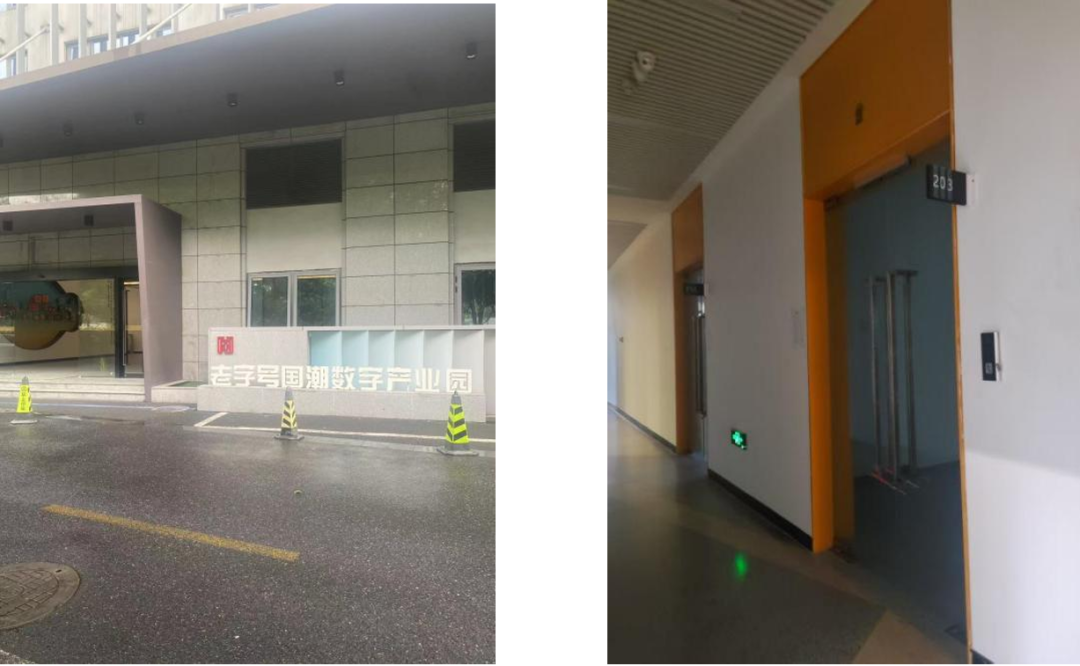
11亿蹊跷贷款,3家A股公司卷入局中局
财联社· 2025-08-01 07:24
Core Viewpoint - The article discusses a complex financial case involving a significant loan of 11 billion yuan that has been under litigation for eight years, revealing potential regulatory challenges and breaches of financial rules [5][50]. Group 1: Background of the Case - The case involves a bank, a real estate company, three loan entities, and 16 guarantors, including three listed companies and two delisted companies [2]. - The loan of 11 billion yuan originated in May 2017 from Lanzhou Bank, with multiple companies involved in the borrowing and guaranteeing process [10][20]. Group 2: Details of the Loan and Companies Involved - The loan was issued to three trade companies with minimal registered capital and questionable operational legitimacy, raising concerns about the bank's lending practices [11][14]. - The trade companies, including Hangzhou Hexiu, Hangzhou Douang, and Hangzhou Mudong, had connections to a larger corporate restructuring involving Jianxin Group, which had previously declared bankruptcy [20][22]. Group 3: Legal Proceedings and Debt Collection - The original creditor, Sanwei Huicheng Real Estate Co., acquired the debt from Lanzhou Bank at face value, despite the apparent risks associated with the non-performing loans [23][24]. - The legal actions taken by Sanwei Huicheng have led to multiple court hearings, with a focus on the responsibilities of various guarantors [29][31]. Group 4: Implications for Lanzhou Bank - Lanzhou Bank's role in the loan issuance and subsequent debt transfer raises questions about its risk management and compliance with financial regulations [44][45]. - The bank's high non-performing loan ratio and significant exposure to related parties indicate potential vulnerabilities in its financial health [46][47]. Group 5: Broader Industry Concerns - The case highlights systemic issues within the banking sector, including inadequate risk controls, governance failures, and potential regulatory evasion [51][52]. - The involvement of various parties in this financial web suggests a need for tighter regulations to prevent similar occurrences in the future [52].

股票行情快报:兰州银行(001227)7月31日主力资金净买入3290.68万元
Sou Hu Cai Jing· 2025-07-31 12:59
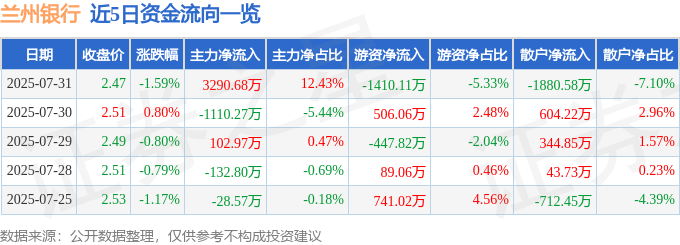
证券之星消息,截至2025年7月31日收盘,兰州银行(001227)报收于2.47元,下跌1.59%,换手率 2.54%,成交量106.91万手,成交额2.65亿元。 7月31日的资金流向数据方面,主力资金净流入3290.68万元,占总成交额12.43%,游资资金净流出 1410.11万元,占总成交额5.33%,散户资金净流出1880.58万元,占总成交额7.1%。 近5日资金流向一览见下表: 资金流向名词解释:指通过价格变化反推资金流向。股价处于上升状态时主动性买单形成的成交额是推 动股价上涨的力量,这部分成交额被定义为资金流入,股价处于下跌状态时主动性卖单产生的的成交额 | | | | | 日期 收盘价 涨跌幅 主力净流入 主力净占比 游资净点比 散户净流入 散户净占比 | | | | | | --- | --- | --- | --- | --- | --- | --- | --- | --- | | 2025-07-31 | 2.47 | -1.59% | 3290.68万 | 12.43% | -1410.11万 | -5.33% | -1880.58万 | -7.10% | | 2025-07-3 ...
城商行板块7月31日跌1.69%,青岛银行领跌,主力资金净流入3.55亿元
Zheng Xing Xing Ye Ri Bao· 2025-07-31 08:32
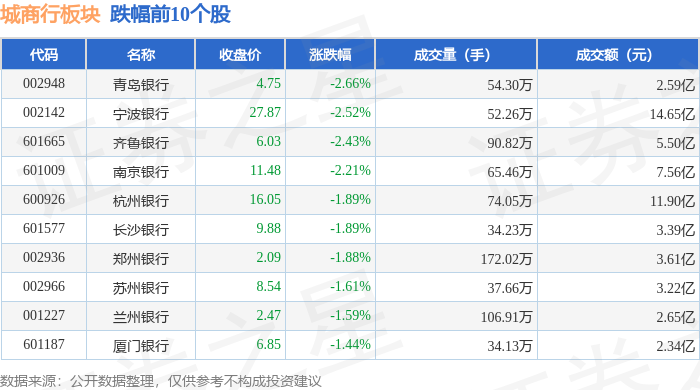
证券之星消息,7月31日城商行板块较上一交易日下跌1.69%,青岛银行领跌。当日上证指数报收于 3573.21,下跌1.18%。深证成指报收于11009.77,下跌1.73%。城商行板块个股涨跌见下表: 从资金流向上来看,当日城商行板块主力资金净流入3.55亿元,游资资金净流出3.48亿元,散户资金净流 出672.91万元。城商行板块个股资金流向见下表: | 代码 | 名称 | 主力净流入(元) | 主力净占比 游资净流入 (元) | | 游资净占比 散户净流入(元) | | 散户净占比 | | --- | --- | --- | --- | --- | --- | --- | --- | | 601009 南京银行 | | 1.36亿 | 18.02% | -7561.65万 | -10.00% | -6062.50万 | -8.02% | | 600926 杭州银行 | | 8796.45万 | 7.39% | -6639.21万 | -5.58% | -2157.24万 | -1.81% | | 002966 苏州银行 | | 5001.57万 | 15.54% | -2207.49万 | -6.86% ...



城商行板块7月30日涨0.39%,苏州银行领涨,主力资金净流出3679.61万元
Zheng Xing Xing Ye Ri Bao· 2025-07-30 08:27
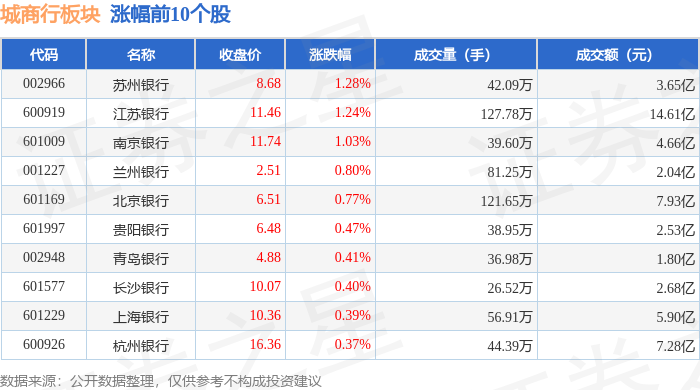
证券之星消息,7月30日城商行板块较上一交易日上涨0.39%,苏州银行领涨。当日上证指数报收于 3615.72,上涨0.17%。深证成指报收于11203.03,下跌0.77%。城商行板块个股涨跌见下表: 从资金流向上来看,当日城商行板块主力资金净流出3679.61万元,游资资金净流出5601.63万元,散户 资金净流入9281.24万元。城商行板块个股资金流向见下表: 以上内容为证券之星据公开信息整理,由AI算法生成(网信算备310104345710301240019号),不构成投资建议。 | 代码 | 名称 | 收盘价 | 涨跌幅 | 成交量(手) | 成交额(元) | | --- | --- | --- | --- | --- | --- | | 002966 | 苏州银行 | 8.68 | 1.28% | 42.09万 | 3.65亿 | | 616009 | 江苏银行 | 11.46 | 1.24% | 127.78万 | 14.61亿 | | 600109 | 南京银行 | 11.74 | 1.03% | 39.60万 | 4.66亿 | | 001227 | 兰州银行 | 2.51 | 0.80% ...



42家上市银行分红大比拼:华夏银行股息率超5%,郑州银行“垫底”
Sou Hu Cai Jing· 2025-07-30 07:38
经济导报记者 刘勇 与此同时,多家银行已经披露2025年中期分红计划。 受访的业内人士认为,银行推出中期分红可以让投资者更早享受银行成长红利。"从已披露2025年半年度业绩快报看,部分银行上半年营业收入和归母净 利润均有所增长,因此中期分红的总额也会有一定程度的增长。"银行业分析师张鹏博表示。 7月22日,成都银行发布2024年年度权益分派实施公告。根据公告,本次利润分配以总股本42.38亿股为基数,每股派发现金红利0.891元(含税),合计派 发现金红利约37.76亿元。股权登记日为7月25日,除权(息)日及现金红利发放日均为7月28日。 | 证券代码 | 证券名称 | 2024年度分红总额(亿元) | 2024年度现金分红比例(%) | | --- | --- | --- | --- | | 000001.SZ | 平安银行 | 117.9880 | 26.5094 | | 001227.SZ | 兰州银行 | 5.7527 | 30.4727 | | 002142.SZ | 宁波银行 | 59.4323 | 21.9089 | | 002807.SZ | 江阴银行 | 4.9228 | 24.1691 ...



A股银行股集体上涨,邮储银行、平安银行涨超2%
Ge Long Hui A P P· 2025-07-30 02:16
Core Viewpoint - The A-share market has seen a collective rise in bank stocks, with notable increases in Postal Savings Bank and Ping An Bank exceeding 2% [1] Group 1: Stock Performance - Postal Savings Bank (601658) increased by 2.67%, with a total market value of 691.7 billion and a year-to-date increase of 6.39% [2] - Ping An Bank (000001) rose by 2.11%, with a market value of 244.5 billion and a year-to-date increase of 11.07% [2] - Qingnong Commercial Bank (002958) saw a rise of 1.99%, with a market value of 19.9 billion and a year-to-date increase of 21.86% [2] - Other banks such as Chongqing Rural Commercial Bank (601077), CITIC Bank (601998), Agricultural Bank of China (601288), and others also reported increases ranging from 1.08% to 1.78% [2] Group 2: Market Trends - The overall trend indicates a positive sentiment in the banking sector, with multiple banks showing significant year-to-date performance improvements, particularly Qingnong Commercial Bank and Agricultural Bank of China, both exceeding 20% [2] - The collective rise in bank stocks suggests a potential recovery or growth phase in the banking industry, attracting investor interest [1]


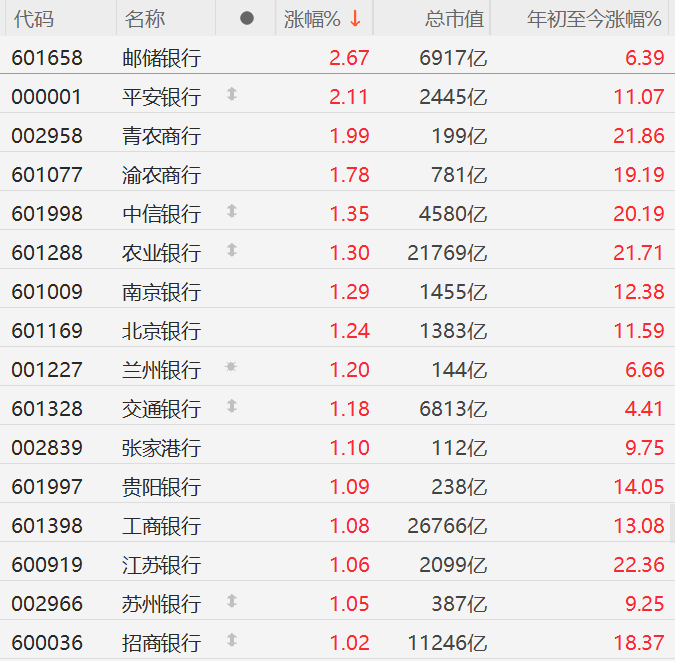
A股银行股出现反弹,邮储银行涨逾2%,青农商行涨近2%,兰州银行、渝农商行等涨逾1%。
news flash· 2025-07-30 02:00
A股银行股出现反弹,邮储银行涨逾2%,青农商行涨近2%,兰州银行、渝农商行等涨逾1%。 ...

年内“二永债”发行近9000亿元
Jin Rong Shi Bao· 2025-07-18 01:00
Core Viewpoint - The issuance of "perpetual bonds" and "subordinated bonds" by commercial banks in China has significantly accelerated, particularly in the second quarter, with a total issuance of 894.56 billion yuan across 57 bonds by July 15, 2023 [1] Group 1: Issuance Trends - The issuance volume of "perpetual bonds" and "subordinated bonds" has notably increased in the second quarter, with 43 bonds issued totaling 638.7 billion yuan, compared to only 9 bonds and 173.86 billion yuan in the first quarter [2] - Major state-owned banks, including Industrial and Commercial Bank of China, Agricultural Bank of China, Bank of China, and China Construction Bank, have been the primary issuers, with significant amounts raised in May 2023 [2] Group 2: Reasons for Acceleration - The acceleration in issuance is driven by stricter regulatory requirements, necessitating banks to enhance their capital levels to meet standards and mitigate potential risks, especially under the pressures of credit expansion and non-performing asset management [2][3] - Increased support for the real economy has also prompted banks to strengthen their capital bases to facilitate higher credit disbursements [3] Group 3: Challenges for Smaller Banks - While state-owned banks lead in issuance, smaller banks, including regional and rural commercial banks, have seen a significant increase in issuance compared to the previous year, highlighting their capital replenishment pressures [4][5] - Smaller banks face challenges in capital replenishment due to limited internal capital generation capabilities and constrained external funding options, making the issuance of "perpetual bonds" and "subordinated bonds" crucial [5] Group 4: Future Outlook - The issuance of "perpetual bonds" is expected to continue, with a divergence in supply between different types of banks; state-owned banks may see a decrease in issuance due to reduced capital pressures, while smaller banks will remain active participants in the market [8] - Smaller banks may encounter higher funding costs and weaker subscription conditions when issuing "perpetual bonds," necessitating improvements in operational quality and brand image to enhance their issuance capabilities [8]


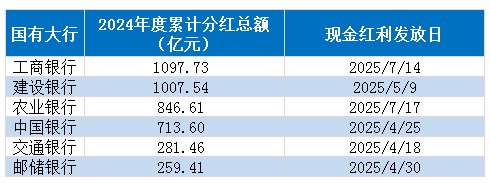
“红包雨”来了!30余家上市行年度分红“到账”,哪家出手最阔绰?
Xin Lang Cai Jing· 2025-07-16 00:40
Core Viewpoint - A-share listed banks are experiencing a peak in dividend distribution for the 2024 fiscal year, with over thirty banks having completed their annual dividends and several others announcing dividend implementation plans [1][3][4]. Group 1: 2024 Annual Dividends - The Industrial and Commercial Bank of China (ICBC) leads with a total cash dividend of approximately 109.77 billion yuan for the previous year [3][4]. - The six major state-owned banks have collectively distributed over 420 billion yuan in dividends for 2024, with ICBC, China Construction Bank, Agricultural Bank of China, and Bank of China being the top contributors [4][6]. - Other banks such as China CITIC Bank and Beijing Bank have also announced significant cash dividends, with CITIC Bank distributing around 19.46 billion yuan [4][5]. Group 2: 2025 Mid-Year Dividend Plans - Several banks, including China Merchants Bank and Hangzhou Bank, have initiated plans for mid-year dividends in 2025, aiming to enhance investor returns [1][8][10]. - The focus on mid-year dividends is seen as a strategy to improve liquidity and provide more consistent cash flow to investors, which may support long-term stock price appreciation [10]. - Banks like Su Nong Bank and Changsha Bank have expressed intentions to implement mid-year dividend plans based on their financial performance and regulatory requirements [8][9]. Group 3: Stock Performance and Market Trends - The banking sector has shown strong performance in the A-share market, with several banks achieving significant stock price increases in the first half of the year [12][13]. - The overall dividend yield of the banking sector remains attractive, particularly in a low-interest-rate environment, making it appealing for long-term investors [10][13]. - Some banks have faced challenges in executing share buyback plans due to stock price fluctuations, indicating a cautious approach to capital management [11][14].