KSTAR(002518)

Search documents
AI 基础设施系列:AI 数据中心电力创新,从 UPS 到高压直流与固态变压器-AI Infra Series #7 - AIDC Power Innovation, From UPS to HVDC and SST
2025-12-08 00:41
Summary of Key Points from the Conference Call Industry Overview - The conference call focused on the **AIDC (Artificial Intelligence Data Center)** power systems, highlighting innovations in power supply and distribution, cost breakdowns, and opportunities in energy storage systems (ESS) [1][2][3] Core Insights Power Supply System Innovations - AIDC's power supply systems are evolving to accommodate increasing rack power density due to AI workloads, with projections indicating that by 2028, new cabinet architectures like NVIDIA's Kyber could reach **1MW per rack** [2] - The transition from traditional **415VAC** to **800VDC** systems is prioritized, allowing for higher current capacity, reduced losses, and lower capital expenditures (capex) [2] - Solutions for managing dynamic loads include software-based load management and integrating energy storage systems to buffer power fluctuations [2] Power Distribution System Innovations - The distribution system is shifting from legacy AC architectures to advanced **HVDC** and hybrid models, with four identified stages of evolution [3] - The adoption of **solid-state transformers (SSTs)** is deemed inevitable as they significantly enhance power density and reduce the footprint compared to traditional transformers [3] Cost Breakdown for AIDC Capex - For a **1GW GB200 AIDC**, the capex distribution is as follows: - IT: **57.4%** - Mechanical and electrical infrastructure: **31.9%** - Construction: **11.2%** - Transmission (including transformers): **9.9%** - Backup power (UPS, BBU): **4.6%** - Rack-level power delivery: **0.9%**, increasing with next-gen server platforms [4] SST's Application - SSTs are crucial for the next phase of AIDC power distribution, offering a footprint at least **50% smaller** than traditional solutions and enabling direct medium-voltage DC distribution [5] - Challenges include insulation, heat dissipation, and reliability as power densities increase [5] Backup Power Solutions - The backup power landscape is transitioning from diesel generators and centralized UPS to a mix of gas turbines, BESS, and distributed battery backup units (BBUs) [9] - The adoption of UPS is declining among leading cloud providers, with BESS and BBUs providing faster, modular backup solutions [9] Opportunities in Energy Storage Systems (ESS) - ESS are becoming integral for dynamic load management and grid interaction, smoothing power fluctuations and supporting grid stability [10] - The U.S. market is moving towards mandatory storage integration, benefiting suppliers of batteries and related components, although regulatory uncertainties pose challenges for Chinese suppliers [10] Company-Specific Insights Kehua Data Co., Ltd. - Valued at a price target of **Rmb 86.07**, implying a **40x 2026E P/E** ratio [13] - Key risks include weaker-than-expected domestic AI capex and increased competition [13] Shenzhen Kstar Science and Technology - Valued at a price target of **Rmb 64.86**, also implying a **40x 2026E P/E** [14] - Similar risks as Kehua Data, including competition and expansion challenges [14] Additional Important Information - The report includes analyst certifications and disclosures regarding potential conflicts of interest, emphasizing the importance of considering this report as one of many factors in investment decisions [6][33]


2026年AI算力硬件出海逻辑及重大边际变化梳理
傅里叶的猫· 2025-12-07 13:13
Group 1: Optical Modules - The optical module industry is experiencing the highest growth and performance realization among AI hardware this year, driven by high verification barriers for North American CSP tech giants and increasing demand due to the acceleration of supernode technology [2][4] - The average ratio of optical modules to GPUs is continuously increasing, with demand for 800G and 1.6T optical modules being revised upwards, indicating a strong upward resonance in demand [2][4] - By 2026, the demand for 1.6T optical modules is expected to exceed 30 million units, with an average price of $900-1000 per unit, while high-end EML optical chips are projected to face a 25-30% supply shortage [4][5] Group 2: Liquid Cooling - The liquid cooling industry has seen fluctuating trends this year, with initial enthusiasm dampened by low penetration rates, followed by a resurgence in August and significant breakthroughs in November [5][9] - The demand for liquid cooling in North America is expected to expand rapidly by 2026, with penetration rates in the NVIDIA ecosystem projected to rise from 20-30% to over 80-90% [7][9] - A leading domestic manufacturer is anticipated to capture a market share of 13-17% in North America by 2026, with Google expected to implement liquid cooling solutions for over 200,000 TPU V7 chips, creating a market space exceeding $24-28 billion [9][10] Group 3: AI PCB - The AI PCB industry is thriving, with companies like Shenghong, Huidian, and Shengyi achieving performance realization in North America, despite some quarterly fluctuations [10][12] - The supply side is seeing an increase in product value and manufacturing difficulty due to upgrades in customer chips and cabinet solutions, leading to a marginal differentiation in the supply landscape [10][12] - By 2026, the introduction of orthogonal backplanes is expected to significantly increase unit value, with M9 material processing anticipated to break through, although mass production is expected to ramp up in 2027 [12][13] Group 4: Server Power Supply - The server power supply market has shown similar trends to liquid cooling, with initial excitement followed by a divergence in performance among manufacturers [13][14] - The supply side is dominated by Taiwanese manufacturers, with a high concentration of market share, while domestic manufacturers are expected to make significant breakthroughs in North America by 2026 [14][15] - The adoption of HVDC technology is projected to replace traditional UPS solutions, with an expected market scale exceeding $20-30 billion by 2026 [15]





新能源产业链持续反弹,光伏ETF易方达(562970)、储能电池ETF(159566)标的指数涨近2%
Mei Ri Jing Ji Xin Wen· 2025-12-05 06:49
Core Viewpoint - The renewable energy sector, particularly solar and energy storage, is experiencing a strong rebound, with significant gains in related stocks and indices, indicating a positive market sentiment and growth potential in these industries [1]. Industry Summary - The 2025 China Energy Storage CEO Summit highlighted that despite challenges, the energy storage industry is in a high-growth phase, with global installed capacity expected to reach 550GWh-600GWh by 2025 [1]. - Open Source Securities reported that the solar industry is seeing positive effects from a "de-involution" trend, with upstream segments expected to significantly reduce losses in Q3, indicating a potential bottom reversal [1]. - The energy storage sector is experiencing robust supply and demand dynamics, with domestic and international demand resonating, leading to a situation where new energy storage components are in high demand, and leading battery companies are operating at full capacity [1]. Index Performance - The China Photovoltaic Industry Index, which includes leading companies across the solar supply chain, is expected to benefit from the "de-involution" trend, with a reported increase of 1.9% [1]. - The National New Energy Battery Index, covering the core energy storage battery supply chain, is projected to benefit from strong supply and demand, with energy storage systems accounting for approximately 65% of the index [1]. Investment Opportunities - The E Fund Photovoltaic ETF (562970) and the Energy Storage Battery ETF (159566) are suggested as investment vehicles for investors looking to capitalize on leading companies within the solar and energy storage sectors [1].


电池走强,阳光电源涨近3%,电池50ETF(159796)涨超1%强势两连阳,孚能科技牵手广汽埃安,订单电量超10GWh!
Xin Lang Cai Jing· 2025-12-05 06:41
Core Viewpoint - The battery sector is experiencing significant growth, driven by increased production, demand, and favorable market conditions, particularly in the energy storage and solid-state battery segments [3][4][5]. Group 1: Market Performance - The China Battery Theme Index (931719) rose by 0.90%, with notable increases in component stocks such as Keda (7.25%) and Funeng Technology (4.55%) [1]. - The Battery 50 ETF (159796) has seen a 24.80% increase over the past three months, with a recent price of 0.96 yuan [1]. - The trading volume for the Battery 50 ETF reached 2.3 billion yuan, with a turnover rate of 2.53% [1]. Group 2: Fund Flows and Investment Trends - The Battery 50 ETF's scale increased by 60.10 billion yuan over the past three months, with a share increase of 59.40 billion [2]. - Despite a recent net outflow of 31.26 million yuan, the ETF attracted a total of 545 million yuan over the last 22 trading days [2]. - Leverage funds are actively investing, with the latest margin buying amounting to 9.30 million yuan and a margin balance of 85.54 million yuan [2]. Group 3: Industry Insights - Battery production is expected to increase in December, with a 2.3% month-on-month rise to 143.3 GWh, marking the first increase since 2022 [3]. - The demand for energy storage batteries is strong, with supply constraints leading to price increases across various lithium battery materials [3]. - A recent meeting organized by the Ministry of Industry and Information Technology aims to enhance the competitive order and promote high-quality development in the battery industry [3]. Group 4: Policy and Market Dynamics - The recent industry meeting is expected to significantly impact the dynamics of the power and energy storage battery sectors, potentially improving profitability and market concentration [4]. - The collaboration between Funeng Technology and GAC Aion for the European market signifies a breakthrough for the company's SPS battery products, with total orders exceeding 10 GWh [2][4]. - The integration of AI and energy demands is anticipated to drive further investment in power grid infrastructure, benefiting related equipment suppliers [4]. Group 5: Investment Strategy - The Battery 50 ETF is recommended for investors looking to capitalize on the booming battery sector, particularly due to its high exposure to energy storage and solid-state battery technologies [5][7]. - The ETF's index has a significant allocation to battery chemicals (27.3%), which is expected to benefit from rising upstream material prices [7][9]. - The ETF's management fee is competitive at 0.15% per year, making it an attractive option for investors [10].




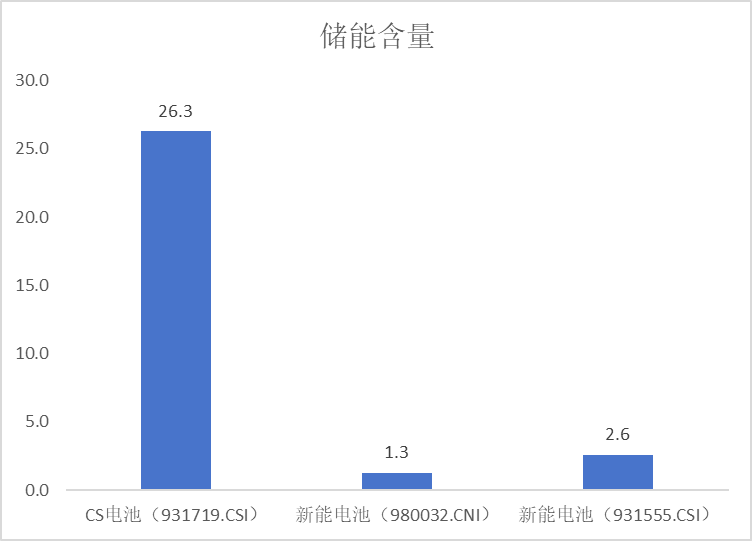
光伏概念震荡走高 拓日新能拉升涨停
Xin Lang Cai Jing· 2025-12-05 02:41
Core Viewpoint - The photovoltaic sector is experiencing a significant upward trend, with several companies seeing substantial stock price increases, indicating a positive market sentiment towards the industry [1] Group 1: Company Performance - Tuori New Energy has reached its daily limit increase in stock price [1] - Double Star New Materials and Maoshuo Power previously hit their price limits [1] - Zhongneng Electric, International Composites, and Keqiang Co. have all seen stock price increases exceeding 10% [1] - Other companies such as Double Jie Electric, New Wind Light, Xizi Clean Energy, Keda, and Huato Cable are also experiencing stock price increases [1]


科士达跌2.00%,成交额1.55亿元,主力资金净流出833.72万元
Xin Lang Cai Jing· 2025-12-01 02:37
Core Viewpoint - The stock of Keda Technology Co., Ltd. has experienced fluctuations, with a current price of 44.07 yuan per share, reflecting a year-to-date increase of 97.62% and a recent decline over the past 20 days [1][2]. Group 1: Stock Performance - As of December 1, Keda's stock price decreased by 2.00%, with a trading volume of 1.55 billion yuan and a turnover rate of 0.61%, resulting in a total market capitalization of 25.659 billion yuan [1]. - The stock has seen a net outflow of 8.3372 million yuan from main funds, with significant buying and selling activities recorded [1]. - Year-to-date, Keda's stock has risen by 97.62%, with a 2.56% increase over the last five trading days, a 1.23% decrease over the last 20 days, and a 19.11% increase over the last 60 days [1]. Group 2: Financial Performance - For the period from January to September 2025, Keda achieved an operating income of 3.609 billion yuan, representing a year-on-year growth of 23.93%, and a net profit attributable to shareholders of 446 million yuan, up 24.93% year-on-year [2]. - Since its A-share listing, Keda has distributed a total of 1.544 billion yuan in dividends, with 602 million yuan distributed in the last three years [3]. Group 3: Shareholder Structure - As of September 30, 2025, Keda had 45,000 shareholders, with an average of 12,558 circulating shares per person [2]. - The second-largest circulating shareholder is Hong Kong Central Clearing Limited, holding 10.6908 million shares, an increase of 2.45 million shares from the previous period [3]. - Several new institutional shareholders have entered the top ten list, including Bosera Huixing and E Fund Technology Innovation, indicating growing interest in Keda's stock [3].
东吴证券:HVDC将是下一代AIDC供电的方向 供电革命创千亿蓝海市场
智通财经网· 2025-12-01 01:25
Core Insights - The application of high-voltage direct current (HVDC) distribution technology is expected to significantly reduce energy consumption and improve power density in data centers, positioning HVDC as the future direction for AIDC power supply [1][3] - The global SST market is projected to exceed 100 billion by 2030, with SST expected to become the mainstream solution for AIDC external power supplies by 2029-2030 [1][3] Group 1: Domestic Market Insights - Domestic data center external DC power applications have advanced earlier, with two main technology routes: 240/336V modular HVDC power and Panama power, the latter showing high integration and efficiency up to 97.5% [2] - The domestic HVDC market is expected to exceed 80 billion by 2030, with a compound annual growth rate (CAGR) of approximately 122% from 2025 to 2030 [2] Group 2: International Market Dynamics - The core driver for overseas AIDC high-voltage direct current is the requirement for 800V DC power supply for the next-generation NV Rubin GPU, with significant penetration expected by 2027 [3] - The overseas HVDC market is projected to exceed 140 billion by 2030, with a CAGR of about 170% from 2025 to 2030 [3] Group 3: Technological Advancements - SST technology eliminates the need for frequency transformers, leading to significant improvements in size and efficiency, with domestic progress outpacing global developments [3][4] - International Tier 1 companies are actively seeking partnerships with domestic firms to develop HVDC power and SST solutions, indicating strong growth potential in the North American market [4] Group 4: Investment Recommendations - Key recommendations for comprehensive external power suppliers (SST + HVDC) include companies like Sungrow Power Supply and Jinpan Technology, while specific HVDC power recommendations include Zhongheng Electric and Keda Technology [5] - SST-focused recommendations include companies like Sifang Co. and China West Electric, with attention to core component manufacturers [5]



AI 基础设施-GB300 冷却架构与创新更新-AI Infra Series #6 - Updates on GB300 Cooling Architecture and Innovation
2025-12-01 00:49
Summary of Key Points from the Conference Call Industry Overview - The conference call focused on the **liquid cooling technology** within the **data center** industry, particularly the **GB300 cooling system architecture** and its implications for suppliers, especially in China [1][3]. Core Insights and Arguments 1. **GB300 System Architecture**: - The GB300 servers did not utilize the **Cordelia motherboard architecture** due to design challenges, opting instead for a **Bianca-style "T-shaped" layout** with improved liquid-to-air ratios [2][3]. - The current design retains eight fans, indicating it is not fully liquid-cooled [2]. 2. **Product Innovation**: - Liquid cooling is transitioning from a niche to a mainstream solution due to increasing rack power densities and sustainability goals [3]. - Innovations include: - **Electrical System Liquid Cooling**: This approach addresses thermal and electrical challenges as rack power levels exceed 300 kW, with OCP specifications now including liquid-cooled busbar standards [4]. - **Two-Phase Liquid Cooling**: This method enhances thermal performance but presents engineering challenges such as pressure stability and leak detection [4]. 3. **Coolant Distribution Units (CDUs)**: - CDUs are critical for liquid cooling infrastructure, with three dominant architectures emerging [5][9]. 4. **Customer Landscape**: - Google's **Open Rack initiative** promotes interoperability among suppliers, with several companies showcasing prototypes at the OCP summit [6]. - Major integrators prefer local brands for critical components, indicating a trend towards localized supply chains [6]. 5. **Opportunities for Chinese Suppliers**: - Chinese vendors, such as **Envicool**, are positioned to benefit from these trends, with advancements in localized service centers and compliance with Open Rack standards [7]. - Emerging technologies like micro-channel cold plates present additional opportunities for differentiation [7]. 6. **Investment Recommendations**: - **Shenzhen Envicool Technology** is valued at a price target of **Rmb85.64** based on a **60x 2026E PE**, with risks including fluctuations in global AI Capex and competition [10]. - **Shenzhen Kstar Science and Technology** is valued at **Rmb64.86**, implying a **40x 2026E P/E**, with risks related to domestic AI Capex and competition [11]. Additional Important Insights - The evolution of liquid cooling products has been slower than anticipated, with many legacy designs still prevalent, limiting opportunities for local manufacturers [8]. - The integration of advanced leak detection technologies in cooling systems enhances safety and operational efficiency [2][4]. - The report emphasizes the importance of robust safety measures and advanced sealing technologies for the successful deployment of two-phase cooling systems [4]. This summary encapsulates the critical insights from the conference call, highlighting the evolving landscape of liquid cooling technology and the strategic positioning of companies within this sector.

突发!昨夜11家上市公司披露减持计划,7家拟减持超1%,包括石油,电子龙头
Sou Hu Cai Jing· 2025-11-29 03:15
Market Overview - The A-share market experienced a volatile session, with the ChiNext Index initially rising by 2.21% before a significant drop in the afternoon, leading to both the ChiNext and Shenzhen Composite Index closing in the red [1] - A total of 11 companies announced shareholder reduction plans, with 7 planning to reduce their holdings by more than 1% [1] Shareholder Reduction Trends - Notable companies involved in the reduction include Zhongman Petroleum and Yidelong, both of which have seen significant stock price increases recently [1] - Yidelong's stock price rebounded from a low of 12.38 yuan to a high of 56.30 yuan, marking a maximum increase of 355%. A major shareholder plans to reduce 3.2 million shares, accounting for 2% of total shares, expecting to cash out approximately 116 million yuan [2] - Zhongman Petroleum's stock price increased from 5.83 yuan to 26.66 yuan over five years, a maximum increase of 357%. However, the company reported a 32.18% decline in net profit for Q3, prompting shareholders to plan a reduction of up to 13.87 million shares, or 3% of total shares, with an expected cash-out of 323 million yuan [3] Broader Market Implications - The trend of shareholder reductions is not isolated, with significant reductions totaling over 380 billion yuan in the first eight months of 2025, and a 62% year-on-year increase in the first two weeks of August alone [3] - The primary drivers of these reductions are not retail investors but rather company insiders, with controlling shareholders and actual controllers accounting for 40.3% of the reductions [3] - Sectors with the highest reduction activity include electronics, pharmaceuticals, and new materials, which collectively account for over 42% of the reductions [3] Sector-Specific Insights - In the technology sector, 106 companies announced major shareholder reduction plans since September, with the electronics industry being the most affected [5] - Notable examples include Lanke Technology, where shareholders announced a reduction of 11.45 million shares, potentially cashing out around 3.29 billion yuan after a 75.18% increase in stock price [5] - Other companies like Zhongji Xuchuang and Anda Intelligent also saw significant shareholder reductions despite their stock price increases, indicating a trend of insiders cashing out at high valuations [5][7] Market Behavior and Patterns - Historical data indicates that stock prices tend to drop following shareholder reduction announcements, with a probability exceeding 50% for declines shortly after such announcements [9] - The timing of reductions shows a clear seasonal pattern, with the highest number of reductions occurring in December, followed by September and November [9] - Venture capital firms have also become significant players in this reduction wave, with over 80 companies involved since August, collectively cashing out over 10 billion yuan [11]


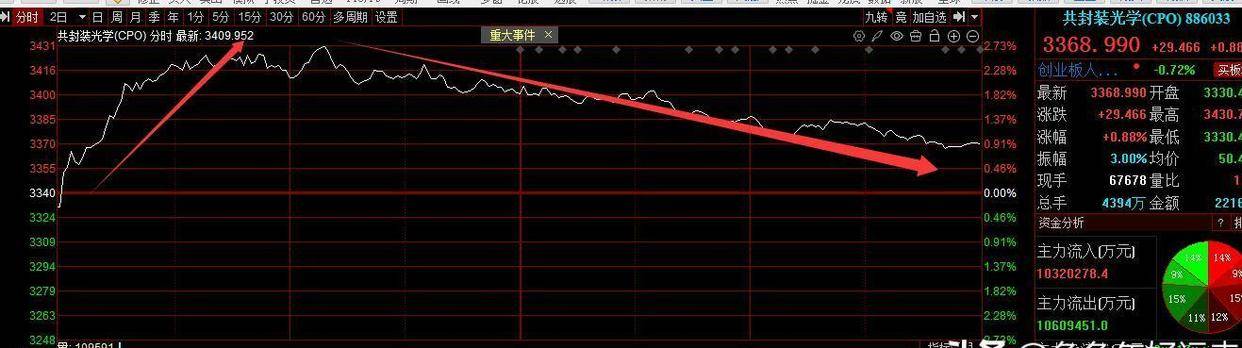
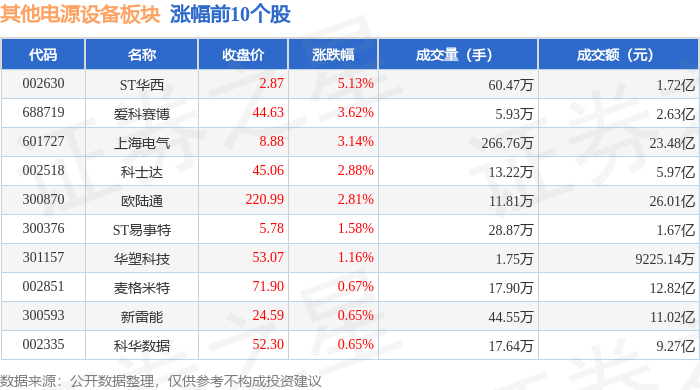
其他电源设备板块11月26日涨0.59%,ST华西领涨,主力资金净流出4.15亿元
Zheng Xing Xing Ye Ri Bao· 2025-11-26 09:12
Market Overview - The other power equipment sector increased by 0.59% compared to the previous trading day, with ST Huaxi leading the gains [1] - The Shanghai Composite Index closed at 3864.18, down 0.15%, while the Shenzhen Component Index closed at 12907.83, up 1.02% [1] Stock Performance - ST Huaxi (002630) closed at 2.87, up 5.13% with a trading volume of 604,700 shares and a turnover of 172 million yuan [1] - Aikesaibo (688719) closed at 44.63, up 3.62% with a trading volume of 59,300 shares and a turnover of 263 million yuan [1] - Shanghai Electric (601727) closed at 8.88, up 3.14% with a trading volume of 2,667,600 shares and a turnover of 2.348 billion yuan [1] - Other notable stocks include Keda (002518) at 45.06 (+2.88%), Oulu Tong (300870) at 220.99 (+2.81%), and ST Yishite (300376) at 5.78 (+1.58%) [1] Capital Flow - The other power equipment sector experienced a net outflow of 415 million yuan from institutional investors, while retail investors saw a net inflow of 342 million yuan [2] - The capital flow for key stocks shows that Shanghai Electric had a net inflow of 17.5 million yuan from institutional investors, while ST Huaxi had a net inflow of 27.7 million yuan [3] - Aikesaibo and Keda also saw net inflows from retail investors, indicating interest in these stocks despite the overall sector outflow [3]