Risen Energy(300118)

Search documents
太空算力时代-太空光伏万亿蓝海
2026-02-10 03:24
Summary of Key Points from the Conference Call on Space Photovoltaics Industry Overview - The focus is on the space photovoltaic (PV) industry, which is expected to grow significantly due to increasing demand for space-based computing power and advancements in solar technology [1][10][23]. Core Technologies and Companies - **Gallium Arsenide (GaAs) Solar Cells**: - Highest efficiency (31.5%-34.5%) but very high cost (RMB 200,000-300,000 per square meter) [1][2][12]. - Leading companies: GanZhao Photovoltaics and Sanan Optoelectronics [2][5]. - **P-Type Heterojunction (HJT) Solar Cells**: - Efficiency of 26%-27% (up to 30% when stacked) with lower costs (a few thousand RMB per square meter) [1][2][4]. - Notable progress by Dongfang Risheng in ultra-thin HJT technology [2][5]. - **Perovskite Solar Cells**: - Single-layer efficiency around 20%, can exceed 35% when stacked; lower raw material costs but complex manufacturing [1][2][4]. - Companies like GCL-Poly and Shanghai Gangwan are making significant advancements [2][5]. Cost and Efficiency Challenges - GaAs cells face limited cost reduction potential due to material scarcity and complex manufacturing processes [3][11]. - HJT is seen as a promising short-term technology due to its lower manufacturing costs and reliability [4]. - Perovskite technology has great potential if stability issues can be resolved [4]. Special Requirements for Space Applications - Space PV materials must withstand extreme temperature variations (from -180°C to +120°C) and UV radiation [16]. - Low-temperature silver paste and light conversion technologies are critical for performance in space [16]. Packaging and Materials - Space PV packaging uses CPI or UTG films instead of traditional glass, with UTG offering better performance but at a higher cost (RMB 6,000-8,000 per square meter) [20][21]. - The cost structure of packaging materials is influenced by raw materials (40%-50%), core processes (25%-35%), and yield losses (10%-15%) [22]. Market Dynamics and Future Outlook - The space PV market is expected to expand significantly in the next 3-5 years, driven by satellite launches and technological advancements [23]. - The demand for PV components will increase as more satellites are deployed, potentially leading to explosive market growth [23]. Risks and Challenges - Key risks include the ability of companies to survive until the market matures and the adaptability of technologies to space environments [29]. - Companies must address challenges related to UV resistance and thermal shock to succeed in the space PV market [29]. Conclusion - The space photovoltaic industry is poised for growth, with various technologies and companies leading the charge. However, significant challenges remain in terms of cost, efficiency, and material stability in the harsh space environment.

东方日升(300118):深耕光伏前沿技术 抢占太空光伏高地
Xin Lang Cai Jing· 2026-02-09 10:36
Core Insights - The company is focusing on advanced photovoltaic technologies, significantly increasing investment in cutting-edge research and development [1] - The company has established a strong position in the space photovoltaic sector by leveraging its P-type thin wafer HJT technology [2] - Revenue projections for the company are optimistic, with expected revenues of 13.78 billion, 14.69 billion, and 18.35 billion yuan for the years 2025 to 2027 [3] Group 1: Technology Development - The company has a comprehensive layout in photovoltaic component technology, with products including TOPCon and HJT components, and has shipped over 12 GW of its Fuxi series heterojunction products [1] - The company has developed proprietary technologies such as 0BB battery technology, 210 ultra-thin silicon wafer technology, and stress-free battery interconnection technology [1] - The Fuxi PRO heterojunction component has achieved a power output of over 740 Wp and a conversion efficiency of 23.8% [1] Group 2: Space Photovoltaic Strategy - The company has years of experience in producing and delivering P-type ultra-thin heterojunction batteries, which have advantages in production cost control and adaptability for space applications [2] - The company has successfully delivered small batches of its 50 μm ultra-thin P-type HJT batteries and has the capability to further reduce thickness [2] - A strategic partnership with Shanghai Port has been established to focus on the research and industrialization of "perovskite + P-type HJT battery stacking technology" to enhance space energy applications [2] Group 3: Financial Projections - The company is projected to achieve revenues of 13.78 billion, 14.69 billion, and 18.35 billion yuan in 2025, 2026, and 2027 respectively, with net profits expected to be -2.6 billion, -1.02 billion, and 660 million yuan [3] - The company is recommended for investment due to its technological advancements and early entry into the space photovoltaic market [3]
全球航天强国加码太空光伏!卫星组网驱动产业化提速,海内外共振拉升产业估值中枢
Xin Lang Cai Jing· 2026-02-09 10:09
Core Viewpoint - The articles highlight the growing interest and investment in space photovoltaic technology among various companies in China, indicating a significant potential for growth in this sector by 2026 as commercialization accelerates. Group 1: Company Overview - Xizi Clean Energy (002534) is a leading clean energy equipment manufacturer in China, focusing on high-performance perovskite photovoltaic technology and aiming to become a core supplier of materials for space photovoltaics by 2026 [1][24]. - Shanghai Port Construction (605598) is a major infrastructure company that is expanding into space photovoltaic systems, leveraging its engineering capabilities to support commercial space projects [2][25]. - TuoRi New Energy (002218) has a long-standing presence in the photovoltaic industry and is optimizing its space photovoltaic products, expecting to increase market share by 2026 [3][26]. - Mingyang Smart Energy (601615) is acquiring technology to enhance its capabilities in space solar cell development, aiming to integrate its wind and solar energy expertise [4][28]. - Woge Optoelectronics (603773) specializes in flexible solar wing materials for satellites, with a focus on high-temperature resistant films, anticipating significant growth in the space photovoltaic sector [5][29]. Group 2: Growth Outlook - Companies are expected to benefit from the rapid commercialization of space photovoltaics, with projections indicating substantial growth opportunities by 2026 [1][2][3][4][5]. - The synergy between commercial aerospace and space photovoltaic industries is anticipated to drive rapid business growth for companies like Shanghai Port Construction and Mingyang Smart Energy [2][4]. - The demand for flexible solar wings and high-efficiency photovoltaic materials is expected to surge, positioning companies like Woge Optoelectronics and TuoRi New Energy as key players in the market [3][5]. Group 3: Technological Advancements - Companies are focusing on developing materials that can withstand extreme space conditions, such as high-performance perovskite and flexible solar films, which are crucial for the success of space photovoltaic applications [1][5][6]. - The integration of advanced technologies, such as N-type solar cells and high-efficiency components, is being prioritized by firms like Junda Co. (002865) and Sanan Optoelectronics (600703) to enhance their competitive edge in the space photovoltaic market [6][10][35]. - The ongoing research and development efforts in high-efficiency solar technologies are expected to yield breakthroughs that will facilitate the commercialization of space photovoltaic solutions by 2026 [3][4][5][6].



太空光伏最新8大核心龙头企业,这篇文章帮你梳理清楚
Xin Lang Cai Jing· 2026-02-09 04:51
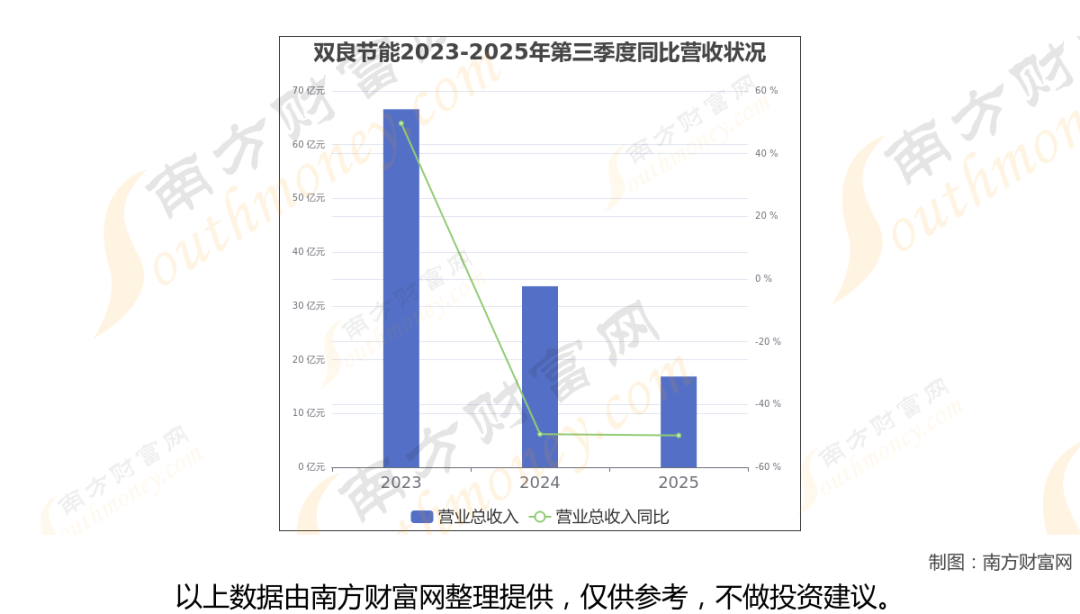
Core Concept - Space photovoltaic technology captures solar energy in space and transmits it to Earth, providing stable and efficient power supply regardless of ground conditions Group 1: Company Performance - Shuangliang Energy reported a main business revenue of 1.688 billion yuan, a decrease of 49.86% year-on-year [3] - Shuangliang Energy achieved a net profit of 53.18 million yuan, with a year-on-year growth rate of 164.75% and a gross margin of 20.43% [4] - Saiwu Technology's main business revenue reached 687 million yuan, an increase of 4.84% year-on-year [8] - Saiwu Technology reported a gross margin of -2.18%, a net margin of -6.78%, and a net profit of -44.89 million yuan, with a year-on-year growth of 43.92% [9] - JinkoSolar's revenue for the third quarter was 16.155 billion yuan, a decline of 34.11% year-on-year [13] - JinkoSolar reported a net loss of 1.012 billion yuan, with a gross margin of 3.76% [15] - GCL-Poly's revenue was 3.998 billion yuan, an increase of 3.12% year-on-year [17] - GCL-Poly reported a net loss of 228 million yuan, with a year-on-year growth rate of -691.81% and a gross margin of 2.52% [19] - Qianzhao Optoelectronics achieved a main business revenue of 1.007 billion yuan, an increase of 65.8% year-on-year [21] - Qianzhao Optoelectronics reported a net profit of 18.72 million yuan, with a year-on-year growth of 56.01% and a gross margin of 9.08% [23] - Dongfang Risen's revenue was 3.024 billion yuan, a decrease of 31.95% year-on-year [25] - Dongfang Risen reported a net loss of 254 million yuan, with a year-on-year growth of 57.39% and a gross margin of 1.4% [27] - Jiejia Weichuang's revenue was 4.734 billion yuan, a decline of 17.26% year-on-year [29] - Jiejia Weichuang reported a gross margin of 28.06%, a net margin of 18.13%, and a net profit of 858 million yuan, with a year-on-year growth of 7.72% [31] - Maiwei's revenue reached 1.991 billion yuan, a decrease of 31.3% year-on-year [33] - Maiwei reported a net profit of 26.9 million yuan, with a year-on-year decline of 9.42% and a gross margin of 39.81% [35]


东方证券:海内外同步催化驱动太空光伏景气度向上 优选高市占率设备厂及核心材料企业
智通财经网· 2026-02-09 03:32
Group 1 - The core viewpoint is that the space photovoltaic industry has significant potential, driven by both domestic and international developments, particularly with SpaceX's plans for a solar energy satellite network and China's increasing satellite launch capabilities [1][2] - The global market for space photovoltaics could reach 8GW annually, with a potential market size of 8 trillion yuan, even if the cost of components decreases significantly [2] - China's photovoltaic industry is strong, with leading manufacturers in equipment and materials, such as Maiwei and Aotwei, which are expected to gain incremental orders due to the expansion of overseas leaders [3] Group 2 - The report suggests focusing on key photovoltaic equipment manufacturers like Aotwei, Maiwei, and others that are likely to benefit from the expansion of overseas leaders [3] - It also highlights core material manufacturers like Dongfang Risen and others that have established deep relationships with overseas clients, which will drive profit growth [3]





钙钛矿电池板块大涨 中来股份涨幅居前
Xin Lang Zheng Quan· 2026-02-09 02:24
Group 1 - The perovskite battery sector experienced a significant surge, with multiple companies reaching their daily price limit [1] - Notable companies that saw substantial gains include Hangxiao Steel Structure, Jinjing Technology, Xizi Clean Energy, Shanghai Port Bay, and Tuori New Energy [1] - Other companies with notable price increases include Zhonglai Co., Maiwei Co., Mingyang Smart Energy, Dongfang Risheng, and JA Solar Technology [1]


TOPCon电池板块走强 中来股份涨幅居前
Xin Lang Zheng Quan· 2026-02-09 02:24
Group 1 - The TOPCon battery sector has shown strong performance, with companies such as GCL-Poly Energy, Aiko Solar, and Sinew Technology reaching their daily price limit [1] - Other notable stocks with significant gains include Zhonglai Co., Huamin Co., Shijin Technology, Linyang Energy, Dongfang Risheng, Yijing Photovoltaic, and Robotec [1]


HJT电池板块活跃 雅博股份涨停
Xin Lang Cai Jing· 2026-02-09 02:12
Group 1 - The HJT battery sector is experiencing significant activity, with stocks such as Yabo Co., Hangxiao Steel Structure, GCL-Poly Energy, and Tuori New Energy reaching their daily limit up [1] - Other notable stocks with substantial gains include Zhongli Group, Saiwu Technology, Huamin Co., Dongfang Risen, TCL Zhonghuan, and Mingyang Smart Energy [1]


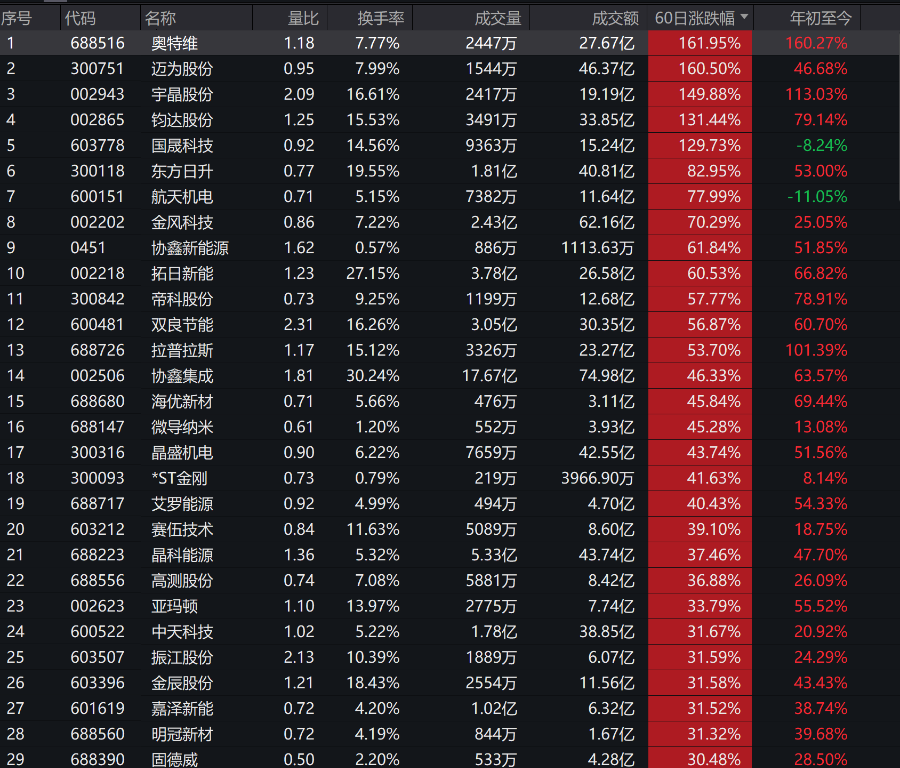
马斯克点火A股光伏,奥特维等股价翻倍
2 1 Shi Ji Jing Ji Bao Dao· 2026-02-07 01:48
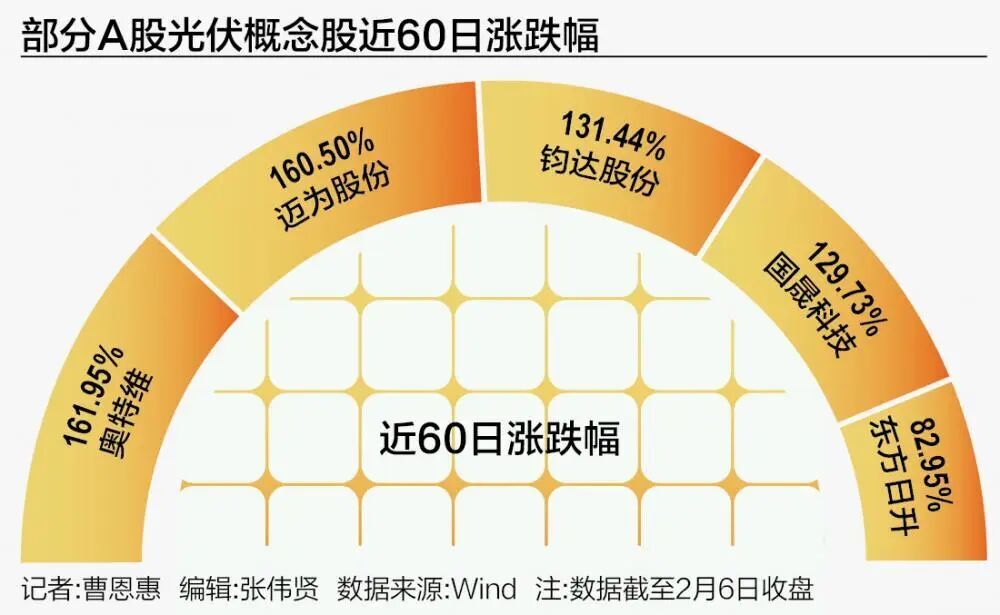
Core Viewpoint - Elon Musk is significantly influencing the Chinese A-share photovoltaic sector, with his comments on solar energy and its potential to provide substantial power, which has led to a surge in stock prices within the sector [2][3][4]. Group 1: Market Reaction - On January 23, 2026, following Musk's remarks at the World Economic Forum, 24 photovoltaic stocks in China hit their daily limit up, with the photovoltaic index rising by 7.46% [2]. - Two weeks later, Musk's interest in Chinese photovoltaic companies, including JinkoSolar and TCL Zhonghuan, further ignited stock price increases, with many stocks reaching their daily limit up again [3]. - The excitement surrounding Musk's "space photovoltaic" vision has injected new vitality into the previously stagnant A-share photovoltaic market [3][4]. Group 2: Industry Context - The photovoltaic industry is currently facing challenges, with nearly 70% of A-share photovoltaic companies reporting losses due to low prices in the supply chain [8]. - Despite some companies showing signs of recovery, the overall market sentiment remained negative, as indicated by a 4.10% decline in the Wind photovoltaic index during a week of earnings announcements [8]. - Musk's "space photovoltaic" concept has shifted the focus of the industry from terrestrial applications to potential space-based solutions, which could represent a new growth avenue for the sector [12]. Group 3: Future Prospects - Analysts predict that the "space photovoltaic" market could become a significant growth area, with estimates suggesting a market size of approximately 295 billion RMB by 2030, which is ten times the current scale [15]. - Musk's plans for deploying 100GW of solar power in space could potentially open up vast opportunities for new technologies and applications in the photovoltaic sector [15]. - However, the current competitive landscape and the need for immediate solutions to existing challenges in the industry remain pressing concerns [16].



中国光伏估值,因马斯克重塑?
2 1 Shi Ji Jing Ji Bao Dao· 2026-02-06 12:10
Core Viewpoint - Elon Musk's recent statements and activities have significantly influenced the A-share photovoltaic sector, leading to a surge in stock prices for various companies in this industry [2][3][5]. Group 1: Market Reaction - On January 23, 2026, 24 photovoltaic stocks reached their daily limit up, with the photovoltaic index rising by 7.46%, outperforming the overall market [2]. - Following Musk's remarks about the potential of solar energy in China, several companies, including JinkoSolar and TCL Zhonghuan, saw their stock prices rapidly increase [3][6]. - The A-share photovoltaic sector experienced a collective surge, with stocks like Aotaiwei and Maiwei doubling in price over a two-month period [6]. Group 2: Industry Fundamentals - Despite the recent stock price increases, many photovoltaic companies are still facing financial difficulties, with nearly 70% of 75 companies reporting losses for 2025 [4]. - The photovoltaic industry is currently at a low point, and while some companies are seeing a narrowing of losses, this has not translated into positive market sentiment [4][12]. - The concept of "space photovoltaics" has emerged as a potential new growth area for the industry, driven by the need for new market opportunities amid intense competition in ground-based solar energy [10][13]. Group 3: Future Prospects - Analysts predict that the space photovoltaic market could reach significant sizes, with estimates suggesting a potential market space of 200 billion yuan if 10,000 satellites are launched annually [10]. - Musk's exploration of Chinese photovoltaic companies signals a demand for support from the Chinese supply chain for his space energy ambitions [10][12]. - The push for space photovoltaics may compel companies to focus on new technologies and product quality, potentially leading to a return to value development in the industry [14].