AstraZeneca(AZN)

Search documents
达成超900项成果!2025年服贸会闭幕,共启服务贸易新征程
Bei Jing Ri Bao Ke Hu Duan· 2025-09-14 13:16
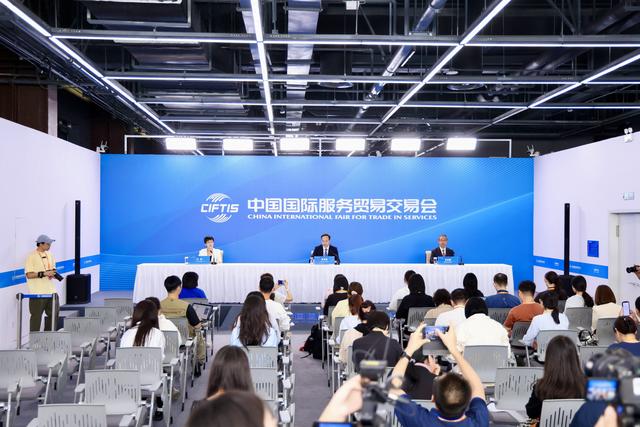
Core Insights - The 2025 China International Service Trade Fair concluded with significant achievements, including nearly 2,000 offline exhibitors, around 5,600 online exhibitors, over 250,000 attendees, and more than 900 agreements reached, showcasing China's commitment to high-level openness and quality development [1][10] Group 1: Event Overview - The fair served as a platform for global service cooperation, featuring nearly 800 international guests from over 30 countries, discussing mutual benefits in service trade [1][3] - Australia had the largest guest country exhibition, achieving 15 cooperation intentions in finance and education, highlighting its commitment to expanding in the Chinese market [3] - The event attracted participation from 85 countries and international organizations, with over 20% of offline exhibitors being international, covering the top 30 service trade nations [3] Group 2: Industry Innovations - The fair showcased numerous new products and services, including the world's first photon counting CT and various smart solutions, emphasizing the vitality of technology in service development [3][6] - A significant focus was placed on AI in education, with a strategic agreement signed for the application of AI education in Beijing's primary and secondary schools [4] - AstraZeneca established a large exhibition space to showcase its achievements in China and signed agreements to enhance the accessibility of innovative drugs and quality medical services [6] Group 3: Engagement and Experience - The event featured 27 promotional activities and 48 industry exchange events, with a 12% increase in professional attendees compared to the previous year, totaling approximately 116,000 [7] - The fair included interactive experiences such as robot demonstrations and digital platforms facilitating over 3,000 project matches, enhancing engagement with attendees [7][8] - A variety of cultural and sports activities were organized, creating an immersive experience for participants and promoting investment opportunities [8]


OS为尺,衡量肿瘤药真章:4年OS,阿斯利康如何脱颖而出?
Ge Long Hui· 2025-09-13 19:39
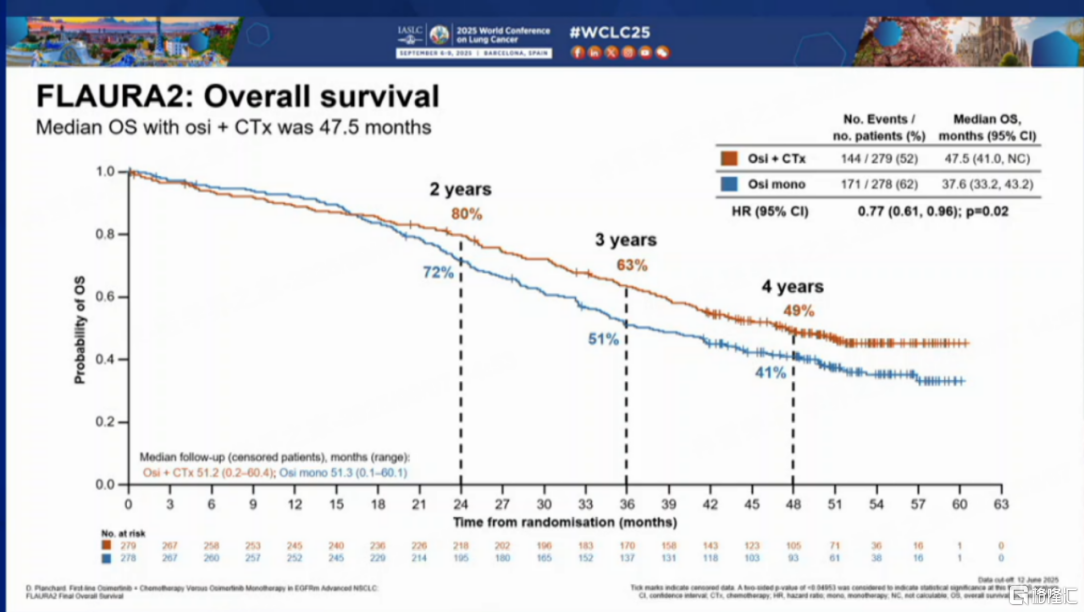
Core Viewpoint - The FDA's draft guideline emphasizes the central role of Overall Survival (OS) in oncology clinical trials, marking a shift from reliance on surrogate endpoints to a focus on patient survival benefits, which is exemplified by AstraZeneca's strategic foresight with its drug Osimertinib [1][2][3]. Group 1: Importance of OS in Lung Cancer Treatment - OS is the most direct reflection of patient survival benefits and is crucial for establishing treatment protocols in lung cancer [1]. - The FDA's draft highlights the need for a patient-centered approach, reinforcing OS as the "gold standard" for evaluating drug efficacy and approval [1][2]. - AstraZeneca's Osimertinib has demonstrated significant OS benefits, confirming its leading position in lung cancer treatment [4][6]. Group 2: Competitive Landscape and AstraZeneca's Strategy - The EGFR-TKI market is highly competitive, and relying solely on secondary endpoints like PFS and ORR is insufficient for market success [2][3]. - AstraZeneca's strategy focuses on providing indisputable OS data to differentiate itself in the crowded market [4][6]. - The FLAURA2 study results show that Osimertinib combined with chemotherapy significantly extends OS, with a median OS of 47.5 months compared to 37.6 months for monotherapy [4][6]. Group 3: Comprehensive Pipeline and Innovative Approaches - AstraZeneca has a rich pipeline in lung cancer treatment, including various modalities such as immunotherapy and ADCs, indicating a strong competitive edge [7][10]. - The company employs a precise pipeline strategy focused on OS, with successful approvals like Durvalumab for limited-stage small cell lung cancer showing substantial OS benefits [10][11]. - AstraZeneca's "Go Combo, Go Earlier" strategy emphasizes the importance of combination therapies and early intervention in lung cancer treatment [12][15]. Group 4: Collaborative Ecosystem and Future Goals - AstraZeneca aims to create a comprehensive innovation ecosystem by collaborating with various stakeholders to enhance lung cancer treatment options [12][14]. - The company has set ambitious goals to provide medications to over 50% of lung cancer patients globally by 2030, aligning with national health objectives [12][13]. - AstraZeneca's focus on patient-centered strategies and innovative collaborations positions it as a leader in the lung cancer treatment landscape [16].
AstraZeneca, Lilly latest to reevaluate U.K.investments (AZN)
Seeking Alpha· 2025-09-12 18:55
Group 1 - AstraZeneca and Eli Lilly are reconsidering their investment options in the U.K. following Merck's cancellation of a £1 billion research center in London [2] - The decision by Merck may influence other pharmaceutical companies' strategies in the region [2] - The shift in investment sentiment reflects broader concerns within the pharmaceutical industry regarding the U.K. as a viable location for research and development [2]



AstraZeneca pauses £200mn Cambridge investment amid UK pharma uncertainty
Invezz· 2025-09-12 18:20
Core Insights - AstraZeneca has paused a planned £200 million ($271 million) expansion of its Cambridge research site, marking a significant reduction in investment in the United Kingdom by a major drugmaker [1] Company Actions - The decision to halt the expansion reflects broader trends among pharmaceutical companies reconsidering their investments in the UK [1] - AstraZeneca's move follows similar actions by other major drugmakers, indicating a potential shift in the industry landscape [1] Financial Implications - The paused investment of £200 million ($271 million) represents a notable financial commitment that will not be realized, impacting local economic growth and job creation in the region [1]

AstraZeneca follows Merck’s pullback in Britain (AZN:NASDAQ)
Seeking Alpha· 2025-09-12 17:59
Core Insights - AstraZeneca has paused plans for a £200 million (~$271 million) investment in its Cambridge research site, reflecting a reconsideration of investment options in Britain [2] Company Actions - The decision to halt the investment follows a similar move by Merck, indicating a trend among leading drugmakers to reassess their commitments in the UK [2]
AstraZeneca pauses $270 million investment in Britain
Yahoo Finance· 2025-09-12 16:38
Core Points - AstraZeneca has paused a planned £200 million ($271.26 million) investment in its Cambridge research site, which was expected to create 1,000 jobs [1][3] - The decision follows a previous cancellation of a £450 million investment in a vaccine manufacturing plant in northern England due to reduced government support [2] - Merck & Co has also abandoned plans for a new research center in London, highlighting the challenging business environment in the UK [2][3] Company Actions - AstraZeneca confirmed that its expansion plans in Cambridge are currently on hold, with no further comments provided on the situation [3] - The company reassesses its investment needs regularly, indicating a strategic approach to its funding decisions [3] Industry Context - The retreat of AstraZeneca and Merck from the UK market reflects broader concerns regarding the business climate for pharmaceutical companies in the region [2][3] - The pause in investment from major players like AstraZeneca may impact the growth of the life sciences sector in the UK, particularly in Cambridge, which is a key hub [1][3]
Exclusive: AstraZeneca pauses $270 million investment in Britain
Reuters· 2025-09-12 16:38
Group 1 - AstraZeneca has paused a planned investment of 200 million pounds ($271.26 million) in its Cambridge research site [1] - This decision marks the latest retreat by a drugmaker from the UK [1]

最惠国价倒计时! 特朗普向大型药企施压 要求9月29日前降低美国药价
智通财经网· 2025-09-12 12:38
Core Viewpoint - The U.S. government, led by President Trump, is pressuring major pharmaceutical companies to lower drug prices in the U.S. by adhering to the "most-favored-nation" (MFN) pricing policy, which aims to align U.S. drug prices with the lowest prices in other developed countries [1][2][3] Group 1: Government Actions - President Trump has set a deadline of September 29 for pharmaceutical companies to comply with the MFN policy [2] - Multiple federal departments are being mobilized to support this initiative, indicating a coordinated effort to enforce the price reductions [2][3] Group 2: Pharmaceutical Companies Involved - Major pharmaceutical companies receiving Trump's letter include Eli Lilly (LLY.US), Pfizer (PFE.US), Merck (MRK.US), Gilead (GILD.US), Bristol-Myers Squibb (BMY.US), Johnson & Johnson (JNJ.US), Regeneron (REGN.US), Amgen (AMGN.US), AbbVie (ABBV.US), and several European firms such as Merck KGaA, Sanofi (SNY.US), GlaxoSmithKline (GSK.US), AstraZeneca (AZN.US), Novo Nordisk (NVO.US), Roche (RHHBY.US), and Novartis (NVS.US) [1] Group 3: Implications of High Drug Prices - The long-term high drug prices in the U.S. create significant pressure on both public welfare and government finances, making the MFN policy a direct and quantifiable approach to reduce costs [3] - The lack of price regulation in the U.S. compared to other countries contributes to higher drug prices, as U.S. pharmaceutical companies can raise prices without negotiation [3]


特朗普想断中国新药出海“财路”,业内评:杀敌一千自损八百
3 6 Ke· 2025-09-12 09:29
Core Viewpoint - The Trump administration is preparing a new executive order targeting the Chinese pharmaceutical industry, particularly focusing on the licensing-out (BD) of innovative drugs, which may restrict U.S. pharmaceutical companies from importing new drugs from China and impose stricter reviews on drug licensing transactions and clinical data from China [1][3]. Group 1: Impact on the Market - Following the news, shares of innovative drug companies in both A-shares and H-shares fell, with companies like BeiGene and Rongchang Bio experiencing declines, while the Hang Seng Biotechnology Index saw a significant drop [1]. - Despite initial declines, the innovative drug sector showed signs of recovery, with a partial rebound observed on September 12 [1]. Group 2: Details of the Proposed Executive Order - The draft executive order includes four main points: limiting U.S. pharmaceutical companies from importing in-development drugs from China, requiring licensing transactions to undergo mandatory review by the Committee on Foreign Investment in the United States (CFIUS), enhancing FDA scrutiny on projects using Chinese clinical data, and promoting domestic drug production in the U.S. [3][5]. - The proposed restrictions are seen as a response to the increasing trend of U.S. pharmaceutical companies acquiring Chinese innovative drug pipelines, which has raised concerns among some U.S. investors [3][4]. Group 3: Industry Reactions and Feasibility - Industry insiders express skepticism about the feasibility of the executive order due to the complex interests involved, suggesting that even if the order is implemented, it may only affect the most sensitive areas like cell therapy and human genetic resources, while allowing other transactions to proceed normally [2][6]. - The potential impact of the order on U.S. pharmaceutical companies is significant, as it could limit their access to innovative drugs and hinder their development capabilities [6][7]. Group 4: Economic Implications - The executive order is perceived as a move that could harm both U.S. and Chinese companies, as it may restrict BD transactions that are crucial for innovation and collaboration in the pharmaceutical sector [2][6]. - The financial stakes in BD transactions are substantial, with the potential for significant profits for multinational companies, as evidenced by BioNTech's recent acquisition and subsequent sale of a Chinese innovative drug [7].


体内CAR-T带火上游卖水人?
Xin Lang Cai Jing· 2025-09-12 05:49
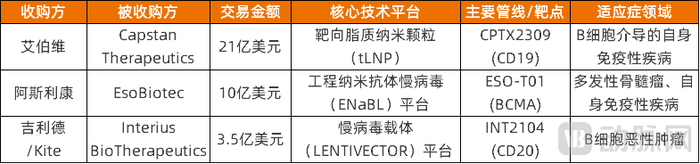
Core Insights - The in vivo CAR-T therapy market is rapidly gaining traction, with significant mergers and acquisitions by major multinational corporations (MNCs) indicating a strategic shift towards this innovative treatment approach [1][2][3] - The advancements in delivery vector technologies are driving the development of in vivo CAR-T therapies, with a focus on improving targeting efficiency and safety [3][4] Group 1: Mergers and Acquisitions - AstraZeneca acquired EsoBiotec for $1 billion to enhance its in vivo CAR-T therapy portfolio [1][2] - AbbVie announced the acquisition of Capstan Therapeutics for up to $2.1 billion, marking a significant investment in the in vivo CAR-T space [1][2] - Gilead's Kite acquired Interius for $350 million, further expanding its capabilities in cell therapy [1][2] Group 2: Technology Platforms - EsoBiotec's core technology is the engineered nanobody lentivirus (ENaBL) platform, which enhances the specificity of immune cell transfection [4] - Interius utilizes a lentiviral vector to deliver CAR genes, generating CAR-T and CAR-NK cells directly in vivo for targeting B-cell malignancies [3][4] - The mRNA-LNP (lipid nanoparticle) delivery system is gaining attention for its safety profile, allowing for transient CAR expression without permanent genetic modification [7][8] Group 3: Clinical Developments - EsoBiotec's product ESO-T01 has shown promising clinical trial results for multiple myeloma, indicating potential effectiveness in treating relapsed or refractory cases [15][17] - Capstan Therapeutics' candidate CPTX2309 is currently in Phase I trials for autoimmune diseases, showcasing the therapeutic potential of the LNP delivery approach [8][9] Group 4: Industry Trends - The shift from ex vivo to in vivo CAR-T therapies is reshaping the ecosystem, with increased collaboration among technology partners and a focus on delivery efficiency [3][6] - The reliance on upstream CXO (Contract Research Organization) services is significant, with over 65% of CGT (Cell and Gene Therapy) projects involving CXO participation [6][12] - The industry is witnessing a dual approach, with companies like AbbVie investing in both lentiviral and mRNA-LNP technologies to mitigate risks associated with single technology pathways [16][17]