
度伐利尤单抗

Search documents
阿斯利康,豪赌中国
Ge Long Hui· 2026-02-13 17:24
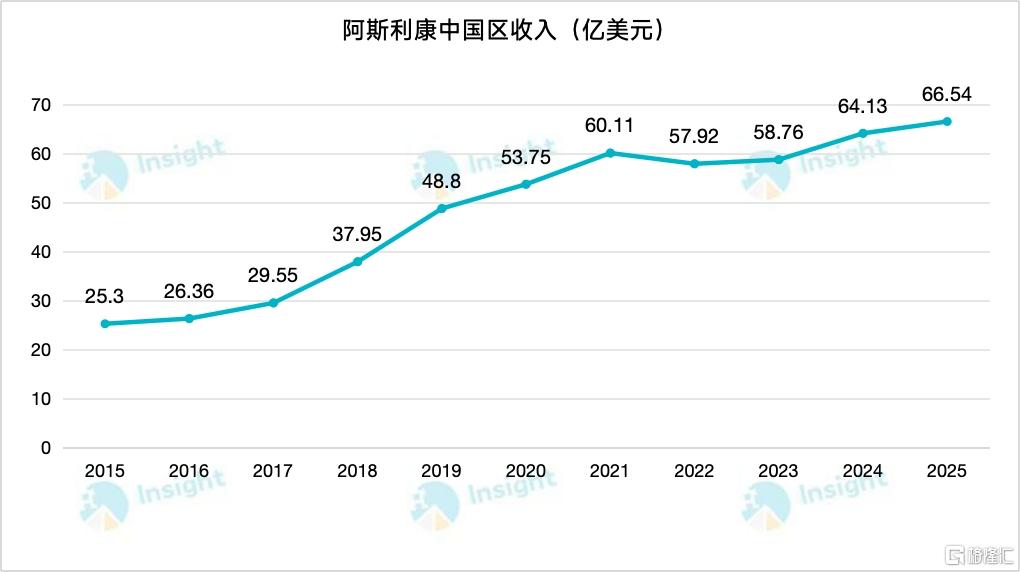
Core Insights - AstraZeneca achieved a record revenue of $6.664 billion in China for 2025, marking a significant milestone in its 30-year history in the market [1] - The company plans to invest $15 billion in China by 2030 and has established a $18.5 billion collaboration with CSPC Pharmaceutical Group [1] Revenue Performance - AstraZeneca is the second-largest market for the company, with 2024 revenues reaching $54.073 billion, and China contributing $6.413 billion, a year-on-year increase of 11% [1] - In 2025, total revenue reached $58.739 billion, with China contributing $6.654 billion, accounting for 11% of total revenue, maintaining the top position among multinational pharmaceutical companies in China [1][3] Product Portfolio - Since entering the Chinese market in 1993, AstraZeneca has introduced over 40 innovative drugs, including key products in oncology and chronic disease management [3] - The inhaled budesonide suspension is the highest-selling drug in China, although its sales have declined due to policy price adjustments [3] - Osimertinib is expected to become a new flagship product in China, potentially replacing budesonide due to the large market for non-small cell lung cancer patients [3][4] Strategic Focus - AstraZeneca is focusing on a comprehensive "innovation offensive" in China, particularly in oncology, cardiovascular, renal, and metabolic disease areas [6] - The company has a robust pipeline in oncology, with several promising drugs set to launch in China, including novel AKT inhibitors and TROP2 ADCs for breast cancer treatment [6] - The pipeline also includes treatments for chronic diseases and rare diseases, addressing the diverse needs of the Chinese market [7][8] Investment Plans - AstraZeneca's $15 billion investment will focus on expanding drug manufacturing and R&D capabilities, particularly in cell therapy and radiolabeled drug conjugates [12][13] - The company has made 23 collaborations in China since 2021, totaling over $40 billion, with a significant focus on oncology and chronic disease treatments [9][12] Market Positioning - AstraZeneca aims to leverage China's scientific and manufacturing strengths to provide cutting-edge treatment solutions, positioning itself as a leader in cell therapy capabilities [13] - The company has established global strategic R&D centers in Beijing and Shanghai and operates multiple production bases across China [13][14] Conclusion - AstraZeneca's deep integration into the Chinese market signifies a shift from merely selling products to becoming a core participant in China's healthcare ecosystem, evolving into a global innovation center rooted in China [15]


阿斯利康前中国区总裁王磊被正式起诉
Bei Jing Shang Bao· 2026-02-12 08:36
Group 1 - AstraZeneca disclosed multiple lawsuits related to personal information infringement and illegal trade in its 2025 annual report [1] - In October 2025, AstraZeneca (China) received a final assessment from Shenzhen Customs indicating unpaid import taxes totaling 24 million RMB (approximately 3.5 million USD) related to specific drugs [1] - AstraZeneca (China) prepaid the compensation amount in full, but could face fines of 1 to 5 times the unpaid import tax if found liable for illegal trade [1] Group 2 - In November 2025, the Shenzhen People's Procuratorate completed its assessment, leading to public prosecution of AstraZeneca (China), a former executive vice president, and a former senior employee for illegal collection of personal information and illegal trade [1] - The former executive vice president and senior employee were additionally charged with medical insurance fraud, although AstraZeneca (China) was not prosecuted for this charge [1] - The mentioned cases have been consolidated into a single litigation process at the Shenzhen Intermediate People's Court, with no trial date scheduled yet [1]
针对无法手术的晚期肺癌患者,强生尝试优化治疗方案;丹诺医药二次递表港交所,创新药投资真降温了?|掘金创新药
Mei Ri Jing Ji Xin Wen· 2026-02-10 13:48
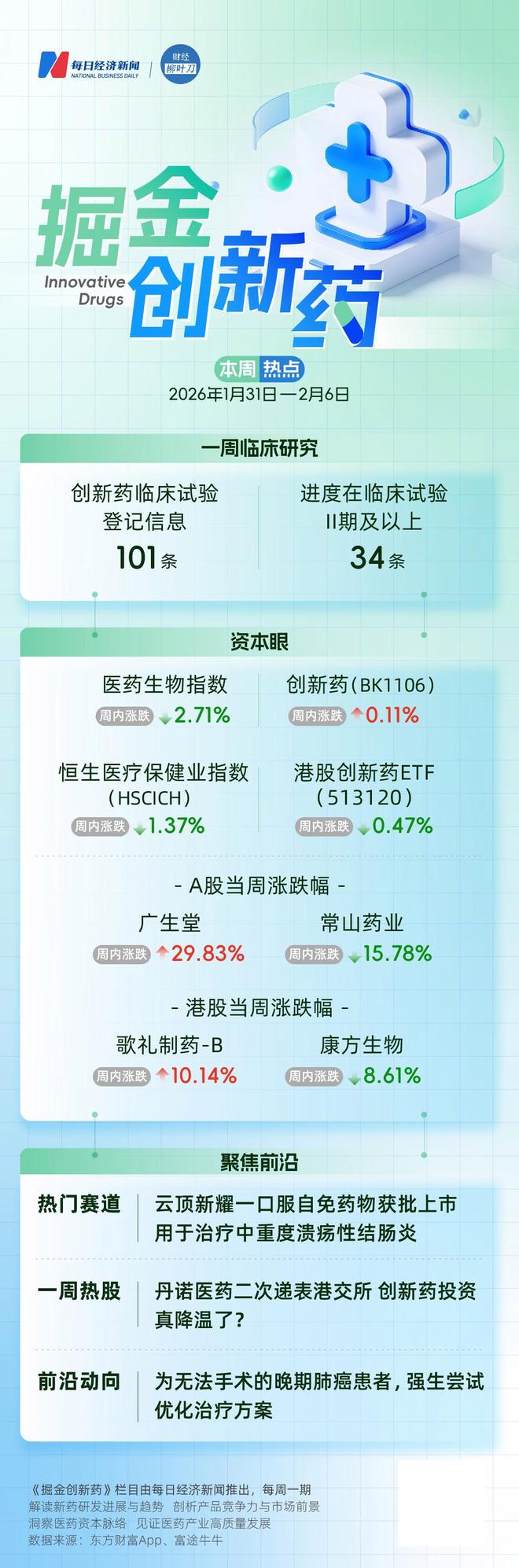
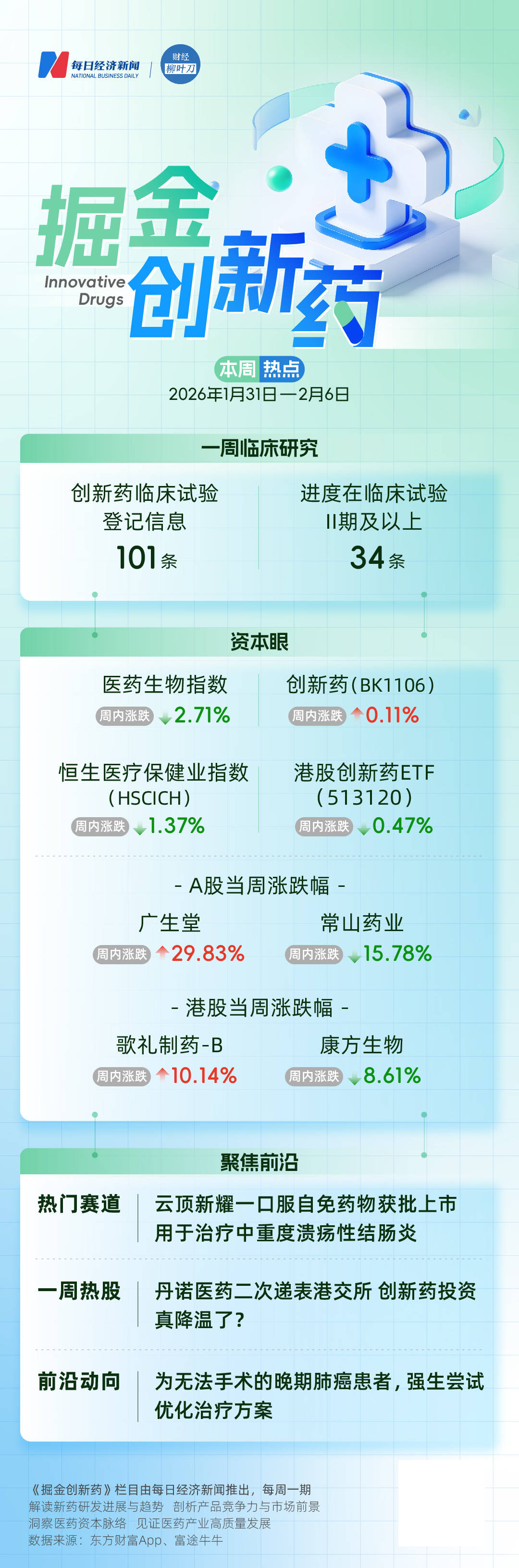
Market Overview - The pharmaceutical and biotechnology index decreased by 2.71%, underperforming the Shanghai Composite Index by 1.44 percentage points [4] - The innovative drug index (BK1106) saw a slight increase of 0.11%, while the Hang Seng Healthcare Index (HSCICH) fell by 1.37% [4] - The Hong Kong innovative drug ETF (513120) also experienced a decline of 0.47% [4] Sector Performance - The overall pharmaceutical sector weakened, lagging behind the Shanghai Composite Index, but the innovative drug sector showed relative resilience [5] - Specific stocks like Guangshentang surged due to the completion of Phase III clinical trials for hepatitis B treatments, while Changshan Pharmaceutical faced significant declines due to credit risks and expected losses [5] - In the Hong Kong market, Gilead Sciences-B received substantial investment from GIC, boosting its stock price, while Kangfang Biologics saw a notable drop due to stricter FDA approval standards [5] New Drug Developments - Danno Pharmaceuticals submitted a second listing application to the Hong Kong Stock Exchange, indicating a more rational investment environment focused on clinical viability and cash flow health [6][7] - The company has seven products in development, with TNP-2198 being the most advanced, expected to be approved in China by 2026 [6] - Three innovative drugs were approved during the week, including a treatment for type 2 diabetes and a drug for moderate to severe ulcerative colitis [12][13] Clinical Trials - From January 31 to February 6, 101 clinical trial registrations were disclosed, with 34 being in Phase II or above [8] - Notable trials include those for treatments targeting conditions such as obstructive sleep apnea and systemic lupus erythematosus [10][11] Emerging Trends - The investment landscape for innovative drugs is shifting towards a focus on clinical outcomes and commercial viability rather than merely the number of drug candidates [7] - The demand for effective treatments for ulcerative colitis is rising, with a significant increase in patient numbers expected by 2031 [14][15]

针对无法手术的晚期肺癌患者,强生尝试优化治疗方案;丹诺医药二次递表港交所,创新药投资真降温了? | 掘金创新药
Sou Hu Cai Jing· 2026-02-10 12:00
Core Insights - The pharmaceutical and biotechnology sector experienced a decline, with the pharmaceutical index dropping by 2.71% from January 31 to February 6, underperforming the Shanghai Composite Index by 1.44 percentage points [4] - The innovative drug sector showed relative resilience, with the innovative drug index (BK1106) increasing by 0.11% during the same period [4] - The market is witnessing a shift in investment focus towards clinical viability and financial sustainability rather than just pipeline quantity and novelty [7] Market Performance - The pharmaceutical and biotechnology index fell by 2.71%, while the Hang Seng Healthcare Index decreased by 1.37% [4] - The innovative drug ETF in Hong Kong (513120) also saw a decline of 0.47% [4] - Notable stock movements included Guangsheng Tang, which surged by 29.83% due to positive clinical trial news, and Changshan Pharmaceutical, which faced a decline due to credit risks and expected losses [5] Clinical Trials and Approvals - A total of 101 clinical trial registrations were disclosed, with 34 trials in Phase II or above [8] - Three innovative drugs received approval, including a new oral drug for moderate to severe ulcerative colitis by Cloudtop New Medicine [12][14] - Johnson & Johnson is exploring an upgraded treatment regimen for inoperable stage III non-small cell lung cancer, aiming to enhance the standard treatment protocol [15] Investment Trends - The investment environment for innovative drugs is becoming more rational, focusing on clinical certainty, commercial viability, and cash flow health [7] - The overall pharmaceutical industry has seen a 3.28% increase since the beginning of 2026, outperforming the CSI 300 index, with significant growth in hospital services, offline pharmacies, and outsourced drug development [5] New Drug Developments - The approval of the new drug by Cloudtop New Medicine addresses a significant unmet need in the treatment of ulcerative colitis, with a growing patient population expected to reach approximately 1.5 million by 2031 [13] - The drug is designed to provide rapid efficacy and deep mucosal healing, which is crucial for improving patient quality of life [14]
驱动基因阴性NSCLC专题:下一代治疗范式:双抗、IO+ADC
Southwest Securities· 2026-02-10 03:06
Investment Rating - The report does not explicitly state an investment rating for the industry Core Insights - The proportion of driver gene-negative non-small cell lung cancer (NSCLC) patients is approximately 31% in both China and the United States, indicating a significant market opportunity for treatments targeting this demographic [2][15] - The estimated market size for immune drugs used in first-line treatment of driver gene-negative NSCLC is projected to be around 7.5 billion CNY (approximately 1.1 billion USD) in China and 18 billion CNY (approximately 2.7 billion USD) in the United States by 2030 [2] - The current first-line treatment for advanced driver gene-negative NSCLC primarily relies on PD(L)-1 inhibitors combined with chemotherapy, but there are limitations in long-term efficacy and options for patients intolerant to chemotherapy [3] Summary by Sections Section 1: NSCLC Global Overview - Lung cancer is the leading cancer type globally, with new cases accounting for approximately 12% of all cancer cases in 2022, translating to about 2.5 million new lung cancer cases [10] - In China, lung cancer represents about 22% of new cancer cases, with approximately 1.06 million new cases in 2022 [10] Section 2: Market Potential for Driver Gene-Negative NSCLC - The report highlights the significant market potential for immune therapies in treating driver gene-negative NSCLC, with a focus on the limitations of current treatment options [2][3] Section 3: Next-Generation Immunotherapy Approaches - The report discusses the advancements in dual (multi) antibody therapies and immune-oncology (IO) combined with antibody-drug conjugates (ADC), emphasizing their potential to improve treatment outcomes for patients with driver gene-negative NSCLC [5][8] - The clinical data supporting these new therapies is expected to catalyze further investment and development in this area [5] Section 4: Treatment Guidelines Comparison - The report compares treatment guidelines for driver gene-negative NSCLC between the United States and China, noting differences in treatment stratification and recommended therapies [32][34] - The U.S. guidelines emphasize PD-L1 expression levels, while Chinese guidelines focus more on performance status (PS) [32][34] Section 5: Future Catalysts - Key upcoming clinical data releases and studies are highlighted as potential catalysts for investment opportunities in the sector, particularly regarding dual antibodies and ADC therapies [5][8]



2025全球罕见病行业发展报告:政策演进、市场趋势与领先企业布局
摩熵咨询· 2026-01-28 13:53
Investment Rating - The report does not explicitly provide an investment rating for the rare disease industry. Core Insights - The rare disease sector is characterized by significant policy evolution and market trends, with a focus on the accessibility of treatments and the development of orphan drugs [1][2][5]. Summary by Sections Overview of the Rare Disease Industry - The report analyzes the policies regarding rare diseases in China, the United States, Japan, and Europe, highlighting the differences in definitions and management frameworks across these regions [6][12]. - China has included 207 diseases in its rare disease directory, while the U.S. has no unified directory but manages information through the GARD database [10][11]. Patient Population and Management Status - The report indicates that rare diseases affect over 200 million people globally, with China having more than 20 million affected individuals [12][14]. - The management systems in China are still developing, with significant gaps in data accuracy and epidemiological tracking compared to established systems in the U.S. and Europe [13][14]. Drug Availability and Accessibility - As of 2024, China has approved 55 rare disease drugs, while the U.S. has approved 26, and the EU has approved 15 [15][16]. - The report notes that 70.5% of rare diseases globally have available treatments, but many patients in China still face challenges in accessing these medications due to high costs and limited insurance coverage [16][17]. Leading Companies in Rare Disease Drug Development - The report identifies key players in the rare disease drug development space, emphasizing the growing pipeline of domestic research in China, although it still lags behind international pharmaceutical companies in innovation [16][17].
BMS开展5项PD-L1/VEGF-A双抗头对头研究,挑战4款PD-(L)1药物
Xin Lang Cai Jing· 2026-01-26 11:09
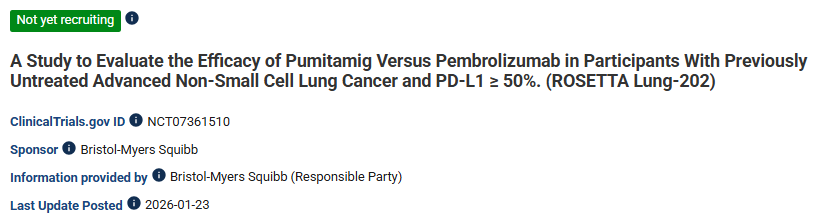
Core Viewpoint - Bristol-Myers Squibb (BMS) has initiated two new Phase III clinical trials (ROSETTA Lung-201 and ROSETTA Lung-202) for Pumitamig, a PD-L1/VEGF-A dual antibody, indicating a strong commitment to advancing its oncology pipeline [1][7]. Group 1: Clinical Trials - ROSETTA Lung-201 aims to enroll 850 patients with unresectable stage III non-small cell lung cancer (NSCLC) who have not experienced disease progression after platinum-based chemotherapy, evaluating the efficacy and safety of Pumitamig compared to durvalumab as a subsequent treatment [1][8]. - ROSETTA Lung-202 plans to include 750 previously untreated patients with advanced NSCLC and PD-L1 expression ≥50%, assessing the efficacy and safety of Pumitamig versus pembrolizumab as a first-line treatment [3][10]. Group 2: Development History - Pumitamig was initially discovered by Prometheus Biosciences, which granted global development, production, and commercialization rights outside of China to BioNTech in November 2023. Prometheus was subsequently acquired by BioNTech for a total of $950 million [1][8]. - In June 2025, BMS acquired global collaboration and commercialization rights for Pumitamig from BioNTech for $11.1 billion, highlighting the strategic value placed on this asset [1][8]. Group 3: Competitive Landscape - To date, Pumitamig has been involved in five head-to-head Phase II/III or III clinical trials against PD-(L)1 drugs, with positive control drugs including pembrolizumab, nivolumab, durvalumab, and atezolizumab [5][12]. - BMS is noted for its proactive approach in advancing clinical development for introduced products, particularly in the context of PD-(L)1 dual antibodies [5][12].

阿斯利康(AZN.US)宣布PD-L1单抗在华获批新适应症 针对子宫内膜癌
Zhi Tong Cai Jing· 2026-01-23 06:46
Core Viewpoint - AstraZeneca's drug Imfinzi (durvalumab) has been approved by China's National Medical Products Administration (NMPA) for first-line treatment of adult patients with mismatch repair deficient (dMMR) advanced or recurrent endometrial cancer, in combination with carboplatin and paclitaxel, followed by monotherapy maintenance [1]. Group 1: Drug Approval and Mechanism - Imfinzi is a humanized PD-L1 monoclonal antibody that binds to the PD-L1 protein, blocking its interaction with PD-1 and CD80, thereby preventing tumor immune evasion and restoring suppressed immune responses [1]. - The approval in China is based on subgroup analysis results from the DUO-E Phase III trial, which is a three-arm, randomized, double-blind, placebo-controlled, multicenter study [1]. Group 2: Clinical Trial Results - In the trial, the combination of durvalumab with carboplatin and paclitaxel, followed by durvalumab monotherapy maintenance, reduced the risk of disease progression or death by 58% compared to the control group [2]. - The median progression-free survival (PFS) for the durvalumab group has not yet been reached, while the median PFS for the control group is 7.0 months [2]. Group 3: Safety Profile - The overall safety and tolerability of the durvalumab combination therapy are good, consistent with previous clinical trial results, and no new safety signals have been reported [2].
和誉-B(02256.HK):匹米替尼获批上市 正式迈入商业化阶段
Ge Long Hui· 2026-01-07 05:49
Group 1 - CSF-1R highly selective small molecule Pimitinib has been approved for the treatment of symptomatic adult patients with tenosynovial giant cell tumor (TGCT) that may lead to functional limitations or serious complications after surgical resection [1] - Pimitinib is the company's first self-developed innovative drug product, demonstrating good efficacy and safety [1] - The MANEUVER III phase study showed an overall response rate (ORR) of 54.0% at 25 weeks for patients treated with Pimitinib, increasing to 76.2% at a median follow-up of 14.3 months [1] Group 2 - Patients who switched to Pimitinib from the control group also experienced clinical benefits, with an ORR of 64.5% at a median follow-up of 8.5 months [2] - Pimitinib has a higher ORR compared to existing drugs like Pexidartinib and Vimseltinib, which have ORRs of 39% and 40% respectively, and Pimitinib does not carry the risk of cholestatic liver toxicity [2] - The global commercialization process for Pimitinib is accelerating, with approvals in China and recognition from the FDA and EMA for breakthrough therapy designation and priority medicine status [2] Group 3 - ABSK043 is designed for combination therapy and is currently undergoing three phase II clinical trials in conjunction with other treatments [3] - The most common driver gene mutation in non-small cell lung cancer (NSCLC) is the EGFR mutation, and third-generation EGFR-TKIs have become the standard first-line treatment [3] - Previous studies indicate that the efficacy of third-generation EGFR-TKIs is inferior in patients with high PD-L1 expression compared to those with low or negative expression [3] Group 4 - In a phase II clinical trial of ABSK043 combined with Vemurafenib, the disease control rate (DCR) reached 71% and the ORR was 25% among patients with EGFR mutations and positive PD-L1 [4] - The company has a robust pipeline with over 10 clinical-stage oncology products, including the Pan-KRAS inhibitor ABSK211 expected to enter clinical stages by 2026 [4] - Revenue forecasts for the company are projected at 630 million, 685 million, and 637 million yuan for 2025-2027, with net profits expected to be 45 million, 70 million, and 102 million yuan respectively [4]
ASH数据催化临近,关注血液病与商保目录受益标的
Great Wall Glory Securities· 2025-12-02 08:09
Investment Rating - The investment rating for the industry is "Positive" and the rating has been maintained [2] Core Views - The pharmaceutical and biotechnology industry index experienced a decline of 4.40%, ranking 23rd among 31 primary industries, underperforming the CSI 300 index which fell by 2.19% [6][18] - The valuation of the pharmaceutical and biotechnology industry as of November 28, 2025, is a PE (TTM overall method, excluding negative values) of 29.46x, down from 30.89x in the previous period, indicating a downward trend and below the average [22] - The report highlights potential beneficiaries from the upcoming ASH data, particularly in blood diseases and companies with solid grassroots channels, as well as those with differentiated advantages in oncology, autoimmune, and rare disease products [10] Summary by Sections Industry Review - The pharmaceutical and biotechnology industry index fell by 4.40%, with chemical preparations and medical devices showing declines of 2.86% and 2.95% respectively, while offline pharmacies and vaccines saw larger declines of 8.22% and 6.42% [6][18] - The PE ratio for the pharmaceutical and biotechnology industry is 29.46x, with the highest valuations in the vaccine (47.56x), hospital (41.17x), and medical device (36.77x) sectors, while pharmaceutical circulation has the lowest at 14.58x [22] Important Industry News - The National Administration of Traditional Chinese Medicine and the National Healthcare Security Administration released a directory for traditional Chinese medicine diseases suitable for disease-based payment [26][27] - AstraZeneca's drug "Durvalumab" received FDA approval for a new indication in perioperative treatment of gastric cancer [32] - Otsuka Pharmaceutical's new drug for IgA nephropathy, "Sibeprenlimab," has been approved by the FDA [38] - Bayer's first-in-class lung cancer drug "Sevabertinib" has been approved by the FDA for specific patient populations [40] Investment Recommendations - Focus on innovative pharmaceutical companies that may benefit from the medical insurance or commercial insurance directories, blood cancer targets with imminent ASH data releases, and biotech and CXO leaders with solid technology platforms and international collaboration expectations [10]


