
Boeing(BA)

Search documents
波音二季度亏损收窄
Xin Hua She· 2025-07-30 02:40
Core Viewpoint - Boeing reported a net loss of $612 million in Q2 2023, a reduction from a net loss of $1.439 billion in the same period last year [1] Financial Performance - Boeing's revenue for Q2 2023 was $22.75 billion, representing a 35% year-over-year increase [1] - The increase in revenue was primarily driven by a rise in commercial aircraft deliveries, with Boeing delivering 150 commercial aircraft in the quarter, a 63% increase year-over-year [1] Production and Future Outlook - Boeing increased the production rate of the 737 model to 38 aircraft per month, with plans to raise it to 42 aircraft per month later this year [1] - The current production rate for the 787 model stands at 7 aircraft per month [1] - Boeing's CEO, David Calhoun, stated that the company is undergoing transformations to enhance product safety and quality, indicating an ongoing commitment to performance recovery in the second half of the year [1]

谁在发战争财?
Hu Xiu· 2025-07-30 02:05
Group 1 - Despite presidential claims to reduce overseas military engagements and control spending, U.S. military expenditures remain high, with unusual "bottomless pit" projects emerging [1] - The "Iron Dome" defense system, announced by Trump, is expected to cost $175 billion, with initial funding included in the "Big and Beautiful Act" [2] - From 2020 to 2024, the five major defense contractors received approximately $771 billion in government contracts from the U.S. Department of Defense, with additional revenue from arms sales due to conflicts in Ukraine and the Middle East [3] Group 2 - U.S. military aid to Israel exceeded $18 billion in the first year after October 2023, while total military aid to Ukraine since the outbreak of the Russia-Ukraine conflict reached around $100 billion [4] - Most of these aid funds ultimately benefit U.S. defense contractors, as they are delivered in the form of weapons and ammunition to Israel and Ukraine [5] - The Pentagon has "classified contracts" with annual budgets exceeding $100 billion, which are not disclosed to the public, indicating that defense contractors may receive more than reported [6] Group 3 - The budget for U.S. nuclear weapons design, manufacturing, and maintenance falls under the Department of Energy's Nuclear Security Administration, while counter-terrorism funding is allocated to the FBI, suggesting that actual government contracts for defense contractors are even higher when these budgets are included [7] - Defense contractors engage in lobbying, election support, and "revolving door" practices to secure a larger share of the national budget [9] - Due to short tenures of U.S. officials, many prioritize building relationships with defense contractors over addressing actual security needs [11] Group 4 - Major defense contractors include Lockheed Martin ($313 billion), RTX (formerly Raytheon, $145 billion), Boeing ($115 billion), General Dynamics ($116 billion), and Northrop Grumman ($81 billion), each specializing in various advanced military technologies [13] - The phenomenon of government officials transitioning to high-paying positions in the private sector after leaving office is common, with many returning to government roles when their party regains power [14][18] Group 5 - Recent years have seen a shift in Pentagon procurement budgets towards high-tech companies, with firms like SpaceX, Palantir, and Anduril competing for contracts traditionally held by the five major defense contractors [23] - Palantir, for instance, has secured contracts worth $618 million for AI data platforms and other advanced systems with the U.S. Army and Special Operations Command [25] Group 6 - Defense contractors are promoting narratives of "great power competition" and "emerging military technology revolutions" to justify continued high budgets, suggesting that $1 trillion annually is still "not enough" [28] - A report by the Congressional Strategic Posture Commission recommended that the Pentagon invest $2 trillion over 30 years to develop new nuclear weapon systems, with ties to defense contractors like Northrop Grumman [29][30] Group 7 - The competition between traditional defense contractors and emerging tech companies in areas like AI, unmanned systems, and data integration is expected to escalate, potentially leading to increased Pentagon budgets to satisfy both sectors [36][37]


美媒:特朗普称最快明年2月乘坐由卡塔尔赠机改装的“空军一号”
Huan Qiu Wang· 2025-07-30 02:03
Core Points - President Trump announced that he could first fly on the Qatar-donated modified "Air Force One" as early as February next year, stating that he is unsure of the specific modification costs of the aircraft [1][3] - Trump emphasized that this aircraft is not an ordinary Boeing 747 and will be available to him 1.5 to 2 years earlier than other presidential aircraft currently being built by Boeing [1] - The modification costs of the aircraft are uncertain, with Trump mentioning that it depends on the military and that the Air Force tends to spend a significant amount of money [3] Financial Implications - The U.S. Department of Defense indicated that the modification of the aircraft to "Air Force One" could potentially cost the Air Force nearly $400 million [3] - Democratic lawmakers have suggested that the modification costs could exceed $1 billion, raising concerns about ethics, legality, and the use of government funds [3]
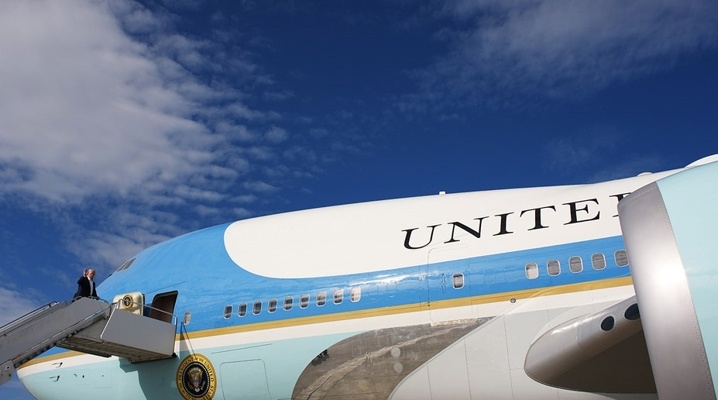
特朗普最快于明年二月乘上卡塔尔赠予的“空军一号”
news flash· 2025-07-29 23:00
Core Viewpoint - The U.S. President Trump is expected to use a new "Air Force One" aircraft, gifted by Qatar, as early as February next year, following delays and budget overruns in the project to replace the aging presidential aircraft [1] Group 1: Aircraft Replacement Project - Boeing was originally scheduled to deliver two modified 747 aircraft last year to replace the current aging "Air Force One" [1] - The project has faced significant delays, running years behind schedule and exceeding budget by billions of dollars [1] - The U.S. Air Force Secretary estimated the project could cost several hundred million dollars, while Democratic lawmakers suggested the modification costs might exceed 1 billion dollars [1]
土耳其航空一架波音777客机因故障紧急降落
news flash· 2025-07-29 19:23
Core Viewpoint - A Turkish Airlines Boeing 777 aircraft made an emergency landing due to hydraulic system failure, with all passengers safely evacuated and no injuries reported [1] Incident Details - The incident occurred on July 29, when the aircraft was en route from Istanbul to Antalya [1] - After landing, the landing gear emitted smoke, prompting the crew to deploy emergency slides for passenger evacuation [1] - Initial inspections indicated that the smoke originated from a technical failure in the hydraulic pipeline [1] Response and Follow-up - A technical team has commenced a comprehensive inspection of the aircraft [1] - Replacement flights will be arranged for affected return journeys [1]
Boeing(BA) - 2025 Q2 - Quarterly Report
2025-07-29 16:20
[Part I. Financial Information](index=3&type=section&id=Part%20I.%20Financial%20Information) [Financial Statements](index=3&type=section&id=Item%201.%20Financial%20Statements) Boeing reported increased Q2 2025 revenues and a narrowed net loss, with improved operating cash flow and changes in cash and debt [Condensed Consolidated Statements of Operations](index=3&type=section&id=Condensed%20Consolidated%20Statements%20of%20Operations) Q2 2025 revenues increased to **$22.7 billion**, with net loss narrowing to **$612 million** and improved diluted loss per share | (Dollars in millions, except per share data) | Three months ended June 30, 2025 | Three months ended June 30, 2024 | Six months ended June 30, 2025 | Six months ended June 30, 2024 | | :--- | :--- | :--- | :--- | :--- | | **Total revenues** | $22,749 | $16,866 | $42,245 | $33,435 | | **Earnings/(loss) from operations** | ($176) | ($1,090) | $285 | ($1,176) | | **Net loss attributable to Boeing shareholders** | ($611) | ($1,439) | ($648) | ($1,782) | | **Diluted loss per share** | ($0.92) | ($2.33) | ($1.09) | ($2.90) | [Condensed Consolidated Statements of Financial Position](index=5&type=section&id=Condensed%20Consolidated%20Statements%20of%20Financial%20Position) As of June 30, 2025, total assets decreased slightly, cash and equivalents significantly declined, while shareholders' deficit improved | (Dollars in millions) | June 30, 2025 | December 31, 2024 | | :--- | :--- | :--- | | **Cash and cash equivalents** | $7,087 | $13,801 | | **Total current assets** | $127,301 | $127,998 | | **Total assets** | $155,120 | $156,363 | | **Long-term debt** | $44,604 | $52,586 | | **Total liabilities** | $158,416 | $160,277 | | **Total shareholders' deficit** | ($3,295) | ($3,908) | [Condensed Consolidated Statements of Cash Flows](index=6&type=section&id=Condensed%20Consolidated%20Statements%20of%20Cash%20Flows) H1 2025 saw significantly improved operating cash flow, with cash used in investing and financing activities reflecting strategic shifts | (Dollars in millions) | Six months ended June 30, 2025 | Six months ended June 30, 2024 | | :--- | :--- | :--- | | **Net cash used by operating activities** | ($1,389) | ($7,285) | | **Net cash used by investing activities** | ($3,946) | ($26) | | **Net cash (used)/provided by financing activities** | ($725) | $5,538 | | **Net decrease in cash & cash equivalents** | ($6,026) | ($1,798) | [Summary of Business Segment Data](index=9&type=section&id=Summary%20of%20Business%20Segment%20Data) Q2 2025 saw BCA revenue surge and loss narrow, BDS achieve profit, and BGS maintain steady growth in revenue and earnings | (Dollars in millions) | Three months ended June 30, 2025 | Three months ended June 30, 2024 | | :--- | :--- | :--- | | **Revenues** | | | | Commercial Airplanes | $10,874 | $6,003 | | Defense, Space & Security | $6,617 | $6,021 | | Global Services | $5,281 | $4,889 | | **Earnings/(loss) from operations** | | | | Commercial Airplanes | ($557) | ($715) | | Defense, Space & Security | $110 | ($913) | | Global Services | $1,049 | $870 | [Notes to Condensed Consolidated Financial Statements](index=10&type=section&id=Notes%20to%20Condensed%20Consolidated%20Financial%20Statements) Notes detail the Spirit AeroSystems acquisition, Digital Aviation Solutions sale, fixed-price contract risks, and 737 MAX legal settlements - Boeing has agreed to acquire **Spirit AeroSystems** in an **all-stock transaction**, expected to close in **2025**. The deal is subject to regulatory approvals and the sale of certain Spirit operations related to Airbus[33](index=33&type=chunk)[34](index=34&type=chunk)[38](index=38&type=chunk) - The company entered an agreement to sell portions of its **Digital Aviation Solutions business** (including Jeppesen and ForeFlight) to Thoma Bravo for **$10.55 billion**, with the transaction expected to close in **2025**[43](index=43&type=chunk) - Several fixed-price development programs, including VC-25B, KC-46A Tanker, MQ-25, T-7A Red Hawk, and Commercial Crew, continue to face **risks of additional material losses** in future periods[85](index=85&type=chunk)[86](index=86&type=chunk)[87](index=87&type=chunk) - Boeing reached a **non-prosecution agreement** with the U.S. Department of Justice regarding the 737 MAX, which includes a **$244 million** fine, a commitment to invest **$455 million** in compliance and safety, and **$445 million** in additional compensation for victims' families[121](index=121&type=chunk) - Total backlog increased to **$618.5 billion** as of June 30, 2025, with approximately **21%** expected to be converted to revenue through 2026[133](index=133&type=chunk) [Management's Discussion and Analysis of Financial Condition and Results of Operations](index=40&type=section&id=Item%202.%20Management's%20Discussion%20and%20Analysis%20of%20Financial%20Condition%20and%20Results%20of%20Operations) Management discusses improved financial results driven by higher deliveries and defense performance, alongside safety plan implementation and program updates [Consolidated Results of Operations and Financial Condition](index=40&type=section&id=Consolidated%20Results%20of%20Operations%20and%20Financial%20Condition) H1 2025 consolidated revenue increased to **$42.2 billion**, operating earnings turned positive, and total backlog grew to **$618.5 billion** - Following the January 2024 737-9 incident, Boeing submitted a **comprehensive safety and quality plan** to the FAA and **slowed production rates** to improve quality[153](index=153&type=chunk)[154](index=154&type=chunk) | (Dollars in millions) | Six months ended June 30, 2025 | Six months ended June 30, 2024 | | :--- | :--- | :--- | | **Revenues** | $42,245 | $33,435 | | **Earnings/(loss) from operations** | $285 | ($1,176) | | **Core operating loss (Non-GAAP)** | ($234) | ($1,780) | - Total backlog increased to **$618.5 billion** at June 30, 2025, from **$521.3 billion** at December 31, 2024, driven by an **$87.0 billion** increase in BCA backlog[175](index=175&type=chunk) [Commercial Airplanes](index=47&type=section&id=Commercial%20Airplanes) BCA H1 2025 revenue rose to **$19.0 billion** with narrowed operating loss, driven by increased deliveries and production rate adjustments | Program | H1 2025 Deliveries | H1 2024 Deliveries | | :--- | :--- | :--- | | **737** | 209 | 137 | | **777** | 20 | 7 | | **787** | 37 | 22 | | **Total** | 280 | 175 | - The 737 production rate gradually increased to **38 per month** during the first half of 2025[196](index=196&type=chunk) - Certification for the 737-7 and 737-10 models is now expected to occur in **2026**[198](index=198&type=chunk) - The company continues to anticipate the first delivery of the 777-9 in **2026**[203](index=203&type=chunk) [Defense, Space & Security](index=50&type=section&id=Defense,%20Space%20%26%20Security) BDS H1 2025 revenue was stable at **$12.9 billion**, achieving an operating profit of **$265 million** due to lower charges on fixed-price programs - BDS operating earnings for H1 2025 were **$265 million**, compared to a **$762 million** loss in H1 2024[211](index=211&type=chunk)[216](index=216&type=chunk) - The improved earnings were driven by **significantly lower charges** on major fixed-price development programs compared to the prior year. However, management notes that **risk remains that additional reach-forward losses may be required** in future periods on these programs[216](index=216&type=chunk)[221](index=221&type=chunk) [Global Services](index=52&type=section&id=Global%20Services) BGS H1 2025 revenue increased to **$10.3 billion**, with operating earnings growing to **$2.0 billion** due to higher services volume | (Dollars in millions) | Six months ended June 30, 2025 | Six months ended June 30, 2024 | | :--- | :--- | :--- | | **Revenues** | $10,344 | $9,934 | | **Earnings from operations** | $1,992 | $1,786 | | **Operating margins** | 19.3% | 18.0% | - The increase in revenue was primarily due to **higher government services**, while the increase in earnings was due to **higher government and commercial services revenue** and a 2025 **gain on asset disposition**[223](index=223&type=chunk)[225](index=225&type=chunk) [Liquidity and Capital Resources](index=53&type=section&id=Liquidity%20and%20Capital%20Resources) Operating cash flow significantly improved in H1 2025, with the company maintaining strong liquidity despite a **$53.3 billion** total debt balance - Net cash used by operating activities decreased by **$5.9 billion** to **$1.4 billion** for H1 2025, primarily driven by higher commercial airplane deliveries and working capital improvements[228](index=228&type=chunk) - As of June 30, 2025, the company had **$7.1 billion** cash, **$15.9 billion** short-term investments, and **$10.0 billion** unused borrowing capacity on revolving credit lines[235](index=235&type=chunk) - Total debt balance was **$53.3 billion** as of June 30, 2025, down from **$53.9 billion** at the end of 2024[234](index=234&type=chunk) [Quantitative and Qualitative Disclosures About Market Risk](index=56&type=section&id=Item%203.%20Quantitative%20and%20Qualitative%20Disclosures%20About%20Market%20Risk) No significant changes to the company's market risk have occurred since December 31, 2024 - There have been **no significant changes** to the company's market risk since the end of the previous fiscal year[248](index=248&type=chunk) [Controls and Procedures](index=57&type=section&id=Item%204.%20Controls%20and%20Procedures) Disclosure controls and procedures were effective as of June 30, 2025, with no material changes to internal control - Management concluded that disclosure controls and procedures were **effective** as of the end of the quarter[250](index=250&type=chunk) - **No material changes** were made to internal control over financial reporting during the second quarter of 2025[251](index=251&type=chunk) [Part II. Other Information](index=58&type=section&id=Part%20II.%20Other%20Information) [Legal Proceedings](index=58&type=section&id=Item%201.%20Legal%20Proceedings) This section refers to Note 18 of the financial statements for detailed discussion of legal proceedings - For information on legal proceedings, the report refers to **Note 18** of the Condensed Consolidated Financial Statements[253](index=253&type=chunk) [Risk Factors](index=58&type=section&id=Item%201A.%20Risk%20Factors) The company updates risk factors, highlighting significant exposure to non-U.S. sales and geopolitical trade tensions, particularly with China - A significant portion of revenue (**46%** in 2024) comes from non-U.S. sales, exposing the company to risks from **tariffs, trade restrictions, and geopolitical instability**[255](index=255&type=chunk) - The **U.S.-China trade relationship** is specifically highlighted as a challenge. In Q2 2025, certain Chinese customers **paused accepting deliveries** due to tariff negotiations, though deliveries have since resumed[259](index=259&type=chunk) - Potential deterioration in trade relationships, particularly with China and the EU, could have a **material adverse impact** on the company's financial position and results[260](index=260&type=chunk) [Unregistered Sales of Equity Securities and Use of Proceeds](index=59&type=section&id=Item%202.%20Unregistered%20Sales%20of%20Equity%20Securities%20and%20Use%20of%20Proceeds) During Q2 2025, **21,510 shares** were transferred for tax withholding, with no open market stock repurchases - During Q2 2025, **21,510 shares** were acquired from employees to cover tax withholding on vested RSUs. **No open market repurchases** were made under any publicly announced plan[261](index=261&type=chunk)
CEO Kelly Ortberg on improving the work culture at Boeing
CNBC Television· 2025-07-29 16:01
Culture & Operational Improvement - The company faced serious issues in manufacturing effectiveness, safety, and efficiency [1] - The company is seeing very positive signs of a turnaround, with teams rallying around cultural improvements [2] - A different Boeing is emerging in the marketplace, according to customer feedback [2] - The company acknowledges that there is still a lot of work to do to continue improving the culture [2] Future Outlook - The company expects continued cultural improvements to help through next year [2]

Boeing(BA) - 2025 Q2 - Earnings Call Transcript
2025-07-29 15:32
Financial Performance - The company reported revenue of $22.7 billion, a 35% increase primarily driven by higher commercial delivery volume [28] - Core loss per share improved to $1.24 compared to the previous year, attributed to higher commercial deliveries and improved operational performance [28] - Free cash flow usage was $200 million in the quarter, reflecting better performance than expectations [28] Business Segment Performance Boeing Commercial Airplanes (BCA) - BCA delivered 150 airplanes in the quarter, with revenue of $10.9 billion and an operating margin of -5.1% [29] - The backlog increased to $522 billion, up more than $60 billion sequentially, including over 5,900 airplanes [30] - The 737 program delivered 104 airplanes, with production ramping up to 38 per month [30][31] Boeing Defense, Space & Security (BDS) - BDS booked $19 billion in orders, with revenue of $6.6 billion, up 10% [35] - Operating margin improved to 1.7%, reflecting better operational performance [35] - The demand for defense products remains strong due to the global threat environment [37] Boeing Global Services (BGS) - BGS reported revenue of $5.3 billion, an 8% increase year-over-year [38] - Operating margin was 19.9%, up 210 basis points compared to last year [38] - The business received $5 billion in orders, with a backlog of $22 billion [38] Market and Strategic Insights - The company is focused on stabilizing production and improving program execution as part of its recovery plan [7][23] - Recent trade agreements are expected to positively impact Boeing's order momentum and pricing strategies [51][56] - The company is monitoring supply chain dynamics closely, with 80% of commercial supply chain spending going to U.S. suppliers [20][21] Management Commentary - Management expressed optimism about the recovery plan's progress and the strong market demand across business segments [7][8] - The company is preparing for potential rate increases in production, with a focus on maintaining stability and quality [12][63] - Management acknowledged the challenges in the operating environment but remains confident in the company's long-term prospects [41][42] Other Important Information - The company is transitioning to a new CFO, Jay Malavi, as Brian West moves to a senior advisory role [26] - The company is committed to managing its balance sheet prudently, with a focus on maintaining an investment-grade rating [40] Q&A Session Summary Question: Free cash flow performance - Management indicated that a free cash flow target of around $3 billion for the year is reasonable, with expectations for positive cash flow in the fourth quarter [45][48] Question: Tariff impacts and order momentum - Management discussed the positive effects of recent trade agreements on order momentum and pricing strategies, particularly regarding input tariffs [51][56] Question: Delivery guidance for MAX and 777 - Management confirmed that deliveries for the 737 MAX are tracking ahead of the 400 target for the year, with expectations for continued strong performance [72] Question: Engine anti-icing issue - Management explained that delays in the engine anti-icing solution for the 737 MAX are due to design challenges that require additional work [76][77] Question: BDS margin improvement - Management expressed confidence in returning BDS to mid to high single-digit margins, emphasizing the importance of entering appropriate contract types [96][98]
Boeing CEO Kelly Ortberg: Confident in turning to positive cash flow in Q4
CNBC Television· 2025-07-29 15:30
Financial Outlook - The company aims to achieve cash flow positivity in the second half of the year, targeting a positive cash flow by the fourth quarter [1] - The turnaround of cash burn is expected to occur in 2026 [1] - A potential one-time significant payment related to the DOJ settlement is anticipated in the third quarter [1] Production and FAA Approval - The company's second-quarter production rate is nearing the FAA-imposed maximum of approximately 38 units per month [2] - The company intends to request FAA approval to increase production to 42 units per month [2] - The company is monitoring key performance indicators with the FAA to ensure production line stability [3] - The company plans to work with the FAA in the third quarter to obtain approval for the increased production rate [3]

Boeing(BA) - 2025 Q2 - Earnings Call Transcript
2025-07-29 15:30
Financial Performance - Revenue for the quarter was $22.7 billion, up 35% primarily driven by higher commercial delivery volume [24] - Core loss per share improved to $1.24 compared to the previous year, reflecting higher commercial deliveries and improved operational performance [24] - Free cash flow usage was $200 million in the quarter, better than expectations, driven by higher commercial delivery volume and improved working capital [24][25] Business Segment Performance Boeing Commercial Airplanes (BCA) - BCA delivered 150 airplanes in the quarter, with revenue of $10.9 billion and an operating margin of -5.1% [25] - BCA booked 455 net orders in the quarter, with a backlog of $522 billion, up more than $60 billion sequentially [26] - The 737 program delivered 104 airplanes in Q2, with production steadily increasing to 38 per month [27] Boeing Defense, Space & Security (BDS) - BDS booked $19 billion in orders during the quarter, with revenue of $6.6 billion, up 10% [31] - Operating margin improved to 1.7%, reflecting better operational performance [31] - BDS delivered 34 aircraft and two satellites in the quarter, with a focus on stabilizing production and improving margins [31][32] Boeing Global Services (BGS) - BGS revenue was $5.3 billion, up 8% year-over-year, with an operating margin of 19.9% [33] - BGS received $5 billion in orders, ending the quarter with a backlog of $22 billion [33] Market and Strategic Insights - The company is seeing strong market demand and is focused on stabilizing production and executing planned increases [5][6] - Recent trade agreements are expected to positively impact Boeing's order momentum and pricing strategies [50][54] - The company is committed to a culture change aimed at improving accountability and performance [20][21] Management Commentary - Management expressed optimism about the recovery plan's progress and the stability of operations, while acknowledging the work still ahead [5][6] - The company is focused on maintaining a strong supply chain and managing input costs amid a dynamic trade environment [17][18] - Future cash flow expectations are positive, with a target of achieving positive free cash flow in Q4 [38][46] Q&A Session Summary Question: Free cash flow performance and guidance - Management indicated that a free cash flow target of around $3 billion for the year is reasonable, with Q3 expected to resemble Q2 usage [42][46] Question: Impact of tariffs and trade agreements - Management discussed the positive effects of recent trade agreements on input tariffs and order momentum, emphasizing the importance of maintaining favorable trade conditions [49][54] Question: Long-term delivery guidance and inventory management - Management confirmed that they are tracking ahead of delivery targets for the MAX program and are managing inventory levels effectively [70][71] Question: Engine anti-icing issue with 737 models - Management explained that delays in the engine anti-icing design are due to ongoing testing and design adjustments [74][75] Question: Future rate increases and production capacity - Management expressed confidence in achieving planned rate increases, supported by inventory levels and production stability [80][81] Question: BDS margin improvement and strike risks - Management reassured that the potential impact of strikes on BDS operations is manageable and that they are focused on returning to high single-digit margins [94][95]