
Bank of America(BAC)

Search documents
Is Bank of America Stock a Buy, Sell, or Hold in 2026?
The Motley Fool· 2025-12-27 14:30
Core Viewpoint - Bank of America has outperformed the S&P 500 year to date and has shown consistent performance over the past five years, supported by strong revenue growth and a solid dividend yield [1][2]. Financial Performance - In Q3, Bank of America reported an 11% year-over-year revenue growth, reaching $28.1 billion, with net income increasing by 23% to $8.5 billion [5]. - The bank's Global Wealth and Investment Management services grew by 10% year over year, generating $6.3 billion in Q3, driven by higher asset fees and increased assets under management [8]. Market Position - Bank of America is one of the largest global banks, gaining market share as consumers turn to established institutions during financial uncertainties [4]. - The bank's consumer banking segment has seen its 27th consecutive quarter of net account growth, adding 212,000 new checking accounts and overseeing $580 billion in consumer investment assets, a 17% increase year over year [6]. Consumer Behavior - Personal consumption expenditures rose by 2.8% year over year in September, indicating continued consumer spending, which is crucial for Bank of America's growth [9]. - Despite rising consumer spending, nearly 70% of Americans report feeling financial uncertainty, which could impact future spending patterns [10]. Investment Consideration - The current economic backdrop and Bank of America's diversified business model make it a favorable stock to buy, with a 2% dividend yield providing cash flow for investors [12]. - While declines in consumer spending could pose risks, the current trend of rising spending supports a positive outlook for Bank of America's stock [13].


Warren Buffett Is Leaving Investors With a Clear Warning Before He Retires in January. Here's What Investors Can Do Heading Into 2026.
Yahoo Finance· 2025-12-27 13:39
Core Insights - The significant difference between the amounts bought and sold in Berkshire Hathaway's portfolio is attributed to rising market valuations, especially among large-cap stocks [1] - Warren Buffett has been a net seller of stocks for 12 consecutive quarters, resulting in nearly $184 billion in net sales over the past three years [3] - Buffett's actions and comments indicate a cautious approach to the stock market as he prepares for retirement, emphasizing the importance of valuation awareness [5][6] Portfolio Management - Additions to the portfolio have been modest, primarily involving a few hundred million dollars to existing positions, with notable new investments in Chubb, Alphabet, and Sirius XM [2] - Berkshire Hathaway's stock portfolio is currently valued at approximately $315 billion, but it could exceed $500 billion if not for the significant stock sales over the last three years [4] Market Valuation Trends - Apple trades at 33 times forward earnings, a significant increase from when Buffett initially purchased it at around 10 times forward earnings [7] - The S&P 500 index is trading at roughly 22 times forward earnings, a level rarely seen since the early 2000s, with the CAPE ratio reaching 40 for only the second time in history [8] Investment Strategies - Investors are advised to take gains when appropriate, as holding onto high-valuation stocks can be risky, exemplified by Berkshire's heavy reliance on Apple [11][12] - Maintaining a cash position is recommended as valuations rise, allowing for downside protection and opportunities during market corrections [14][15] - Holding high-conviction stocks is crucial, as demonstrated by Buffett's long-term investments in American Express and Coca-Cola, which he has held for over 30 years [16][17]

Bank of America (NYSE: BAC) Stock Price Prediction and Forecast 2026-2030 (January 2026)
247Wallst· 2025-12-27 12:15
Core Viewpoint - Bank of America (NYSE: BAC) shares experienced a gain of 6.15% over the past month following a slight decline of 0.06% in the previous month [1] Company Performance - The stock price of Bank of America increased by 6.15% in the last month [1] - Prior to this increase, the stock had a marginal decrease of 0.06% [1]
年内调研近万次!外资巨头盯上这些标的
Shang Hai Zheng Quan Bao· 2025-12-27 10:18
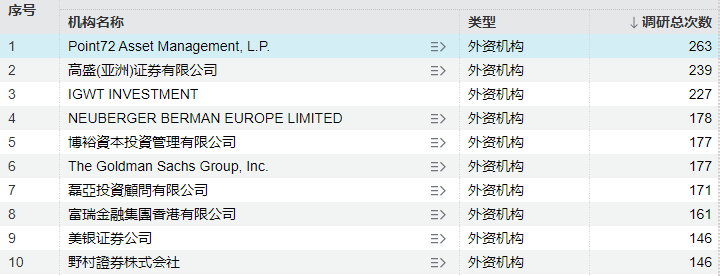
Group 1 - Nearly 800 foreign institutions have conducted approximately 9,308 research visits to A-share listed companies since 2025, with Point 72 Asset Management leading with 263 visits [1][2] - Major international banks such as Goldman Sachs and Bank of America have also conducted over 100 research visits this year [2][3] - The primary focus of foreign institutions is on the technology and pharmaceutical sectors, indicating strong interest in these areas [3][5] Group 2 - The top three companies receiving the most foreign institution research visits are Huichuan Technology (733 visits), Mindray Medical (404 visits), and Optoelectronics (331 visits) [3][4] - The technology sector, particularly AI, is expected to drive significant growth in corporate profits, with an estimated annual increase of 3% over the next decade due to cost savings and productivity improvements [5] - The pharmaceutical sector in China is gaining international recognition, with local innovative drug companies entering the global first tier in terms of research pipeline quantity [6]





Bank of America Unusual Options Activity - Bank of America (NYSE:BAC)
Benzinga· 2025-12-26 17:01
Core Insights - Deep-pocketed investors are adopting a bearish stance towards Bank of America, indicating potential significant market movements ahead [1] - The options activity shows a stark divide among investors, with 80% bearish and only 10% bullish sentiment [2] Options Activity Summary - Recent tracking revealed 10 notable options activities for Bank of America, with a total of $1,151,428 in puts and $298,954 in calls [2] - Significant investors are targeting a price range of $40.0 to $58.0 for Bank of America over the past three months [3] Volume and Open Interest Analysis - The analysis of volume and open interest provides insights into liquidity and investor interest in Bank of America's options, particularly within the $40.0 to $58.0 strike price range over the last 30 days [4] Significant Options Trades - A summary of significant options trades includes: - Bearish put trade with a total price of $1.1 million at a strike price of $50.00 [8] - Bearish call trades with varying strike prices and total trade prices, indicating a cautious outlook among investors [8] Company Overview - Bank of America is a major financial institution in the U.S. with over $3.2 trillion in assets, operating in consumer banking, global wealth management, global banking, and global markets [9] Analyst Ratings - Recent analyst ratings show a mixed outlook, with target prices ranging from $56 to $68, reflecting varying levels of confidence among analysts [12]
Bank of America: The NII Trough May Be A Turning Point (NYSE:BAC)
Seeking Alpha· 2025-12-26 16:15
Core Insights - The article discusses the investment analysis services provided by Beyond the Wall Investing, which offers insights into Wall Street buying and selling ideas through a subscription model [1]. Company Analysis - Bank of America Corporation (BAC) has been the subject of analysis, with the latest article published in February 2025 [1]. - The analysis is conducted by Daniel Sereda, a chief investment analyst at a family office, who specializes in filtering vast amounts of data to identify critical investment ideas [1]. Investment Strategy - Beyond the Wall Investing aims to provide access to information that institutional market participants prioritize, enhancing the quality of investment analysis [1].
Bank of America: The NII Trough May Be A Turning Point
Seeking Alpha· 2025-12-26 16:15
Core Insights - The article discusses the investment analysis services provided by Beyond the Wall Investing, highlighting the expertise of Daniel Sereda in navigating complex financial data to identify critical investment ideas [1]. Company Analysis - Bank of America Corporation (BAC) has been the subject of analysis, with the latest article published in February 2025 [1]. - The investment group Beyond the Wall Investing offers insights similar to those prioritized by institutional market participants, indicating a focus on high-quality analysis [1]. Analyst Background - Daniel Sereda is identified as the chief investment analyst at a family office, emphasizing his experience in managing diverse asset classes across different regions [1]. - The article underscores the importance of filtering vast amounts of information to extract valuable investment insights [1].

受监管放松推动,今年美国六大银行市值增加6000亿美元
Ge Long Hui A P P· 2025-12-26 15:21
Core Viewpoint - The article highlights that the six largest banks in the U.S. are projected to gain a combined market value of $600 billion by 2025, driven by regulatory rollbacks under the Trump administration and a recovery in investment banking [1] Group 1: Market Value Growth - The combined market value of the six largest U.S. banks—JPMorgan Chase, Bank of America, Citigroup, Wells Fargo, Goldman Sachs, and Morgan Stanley—rose to $2.37 trillion as of Tuesday's close, up from $1.77 trillion at the end of last year [1]


Are stock markets and banks open in US the day after Christmas? What to know after Trump’s Dec 26 federal holiday order
MINT· 2025-12-26 13:47
Group 1 - President Trump's executive order designates December 26, 2025, as a federal holiday for executive branch departments and agencies, creating a five-day holiday for many federal employees [2] - The executive order does not apply to private-sector businesses, state and local governments, or independent federal entities like the US Postal Service [2] - The US stock markets, including the NYSE and Nasdaq, are open and operating on a normal trading schedule on December 26 [3] Group 2 - Most banks, including JPMorgan Chase, Bank of America, Wells Fargo, and Citibank, are open on December 26, providing standard banking services [4] - The Federal Reserve does not observe December 26 as a holiday, ensuring the core banking system functions normally [4] - The US Postal Service is operating normally on December 26, as the federal executive order does not apply to it [6] Group 3 - Private carriers such as FedEx and UPS are back to normal operations, with standard pickup and delivery services running [7] - Federal executive branch offices and some federal buildings may be closed or have limited operations on December 26 [8]
美国各大银行首席执行官谈人工智能对员工规模的影响
Xin Lang Cai Jing· 2025-12-26 09:20
Core Viewpoint - The CEOs of major U.S. banks are optimistic about the transformative efficiency changes that artificial intelligence (AI) can bring to the industry, but there are concerns about potential job reductions for bank employees [1][16]. Group 1: Statements from JPMorgan Chase - Jamie Dimon, CEO of JPMorgan Chase, stated that job cuts are inevitable due to the AI wave, emphasizing that AI will eliminate certain positions [3][17]. - Dimon mentioned that AI could serve as a "work assistant" and take over tedious tasks, potentially leading to job losses [3][17]. - In the short term, if AI implementation goes smoothly, JPMorgan Chase's employee count may remain stable or even slightly increase [3][17]. - The core goal of JPMorgan Chase's AI strategy is to enhance operational efficiency, with expectations of a 40% to 50% increase in productivity in the operations department over the next five years [4][19]. - The company is focusing on controlling hiring and shifting towards efficiency improvements [5][19]. Group 2: Statements from Goldman Sachs - David Solomon, CEO of Goldman Sachs, indicated that AI will be a key driver for efficiency improvements, which may lead to a slowdown in hiring and the streamlining of certain roles [6][20]. - Solomon believes that while AI will reduce manpower in some areas, it will also allow the firm to focus on attracting high-value talent for customer service [7][21]. - Goldman Sachs expects to see employee growth by the end of 2025, despite the current focus on optimizing recruitment structures [6][20]. Group 3: Statements from Citigroup - Jane Fraser, CEO of Citigroup, expressed that AI is expected to significantly enhance work efficiency in the short term and reshape all business segments in the long term [9][24]. - Fraser reported that AI has already led to over 1 million automated code reviews this year, saving approximately 100,000 hours of work per week [10][25]. - She acknowledged concerns that AI might initially compress job positions before the industry realizes its benefits, noting that the current AI penetration rate is only 10% [10][25][11][26]. Group 4: Statements from Wells Fargo - Charles Scharf, CEO of Wells Fargo, indicated that the bank's workforce has already decreased by nearly 25% since he took over in 2019, and this trend is likely to continue [12][27]. - Scharf emphasized that the potential of AI is undeniable and that many in the industry are aware that it will lead to job reductions [13][28]. - He noted that AI tools have improved the efficiency of engineers by 30% to 35%, allowing the bank to accomplish more with fewer employees [13][28]. Group 5: Statements from Bank of America - Brian Moynihan, CEO of Bank of America, stated that the implementation of AI has already led to reductions in workforce in certain departments [14][29]. - The bank's strategy focuses on employee training to prepare them for roles that AI cannot replace, emphasizing the importance of skill development [15][30]. - Moynihan highlighted that the bank's digital interactions reached 1.4 billion in November, which has saved approximately 11,000 full-time equivalent positions [15][30].