
BlackRock(BLK)

Search documents
3 BlackRock Debt Funds Dwindle In Quality Amid Falling Treasury Yields
Benzinga· 2025-09-16 10:49
Group 1 - Three BlackRock fixed-income closed-end funds have seen significant declines in their quality rankings, placing them in the market's bottom decile for operational efficiency and financial health [1][3] - The funds affected are BlackRock Credit Allocation Income Trust (BTZ), BlackRock Debt Strategies Fund Inc. (DSU), and BlackRock Corporate High Yield Fund Inc. (HYT), highlighting challenges in the credit sectors as traditional safe havens lose appeal amid fluctuating yields [3][7] - The decline in quality rankings coincides with a decrease in U.S. Treasury yields, impacting credit markets [1][3] Group 2 - BTZ's quality percentile score dropped from 14.9 to 8.12, a decline of 6.78 points week-on-week, with a year-to-date gain of 5.43% and a slight decline of 0.09% over the year [9] - DSU experienced a more drastic fall from 20.05 to 5.22, a change of 14.83 points, with a year-to-date decrease of 2.21% and a 3.63% decline over the year [9] - HYT's score fell from 16.74 to 9.11, a weekly decline of 7.63 points, with a year-to-date drop of 3.13% and a 5.05% decline over the year [9] Group 3 - With all three funds now ranking among the lowest deciles for quality, investors may look for alternatives that offer better balance sheet resilience and higher fundamental quality in a challenging market [7]



BlackRock ETH ETF Hits Highest Inflows in 30 Days, Ethereum Comeback Guaranteed?
Yahoo Finance· 2025-09-16 09:10
Group 1 - BlackRock's Ethereum ETF (ETHA) experienced its largest inflows in a month, attracting 80,768 ETH (approximately $363 million) on September 15, marking a significant turning point for the cryptocurrency [1] - Prior to this surge, ETHA faced a challenging period with $787 million in outflows from September 5 to 12, contributing to a broader weakness in the crypto market [2] - In the week following the outflows, Ethereum spot funds recorded $638 million in net inflows, with Fidelity's FETH leading at $381 million, while BlackRock's ETHA added $165 million [2] Group 2 - As of September 12, Ethereum ETFs collectively managed $30.35 billion in assets, with BlackRock controlling over half at $17.25 billion, representing roughly 3% of Ethereum's market capitalization [3] - BlackRock has been rotating its exposure between Ethereum and Bitcoin, with its Bitcoin trust attracting $366 million in inflows earlier in the month while ETHA briefly saw outflows [3] Group 3 - Standard Chartered's head of digital assets research, Geoffrey Kendrick, indicated that Ethereum may emerge stronger than Bitcoin and Solana due to its staking yield and established treasury ecosystem [4] - Ethereum digital asset treasuries (DATs) currently hold more than 3.1% of the total ETH supply, with firms like BitMine Immersion continuing to accumulate aggressively [5] Group 4 - Crypto analyst Michael van de Poppe suggested that Ethereum is likely to experience increased volatility, with potential corrective dips and upside acceleration [6] - If Ethereum fails to maintain support, prices could drop below the $4,100 mark, while a recovery above resistance zones around $4,400–$4,600 could lead to renewed momentum [7] - Analysts see potential for Ethereum to climb back toward the $5,000–$5,200 range if it sustains institutional inflows and capitalizes on treasury adoption [7]
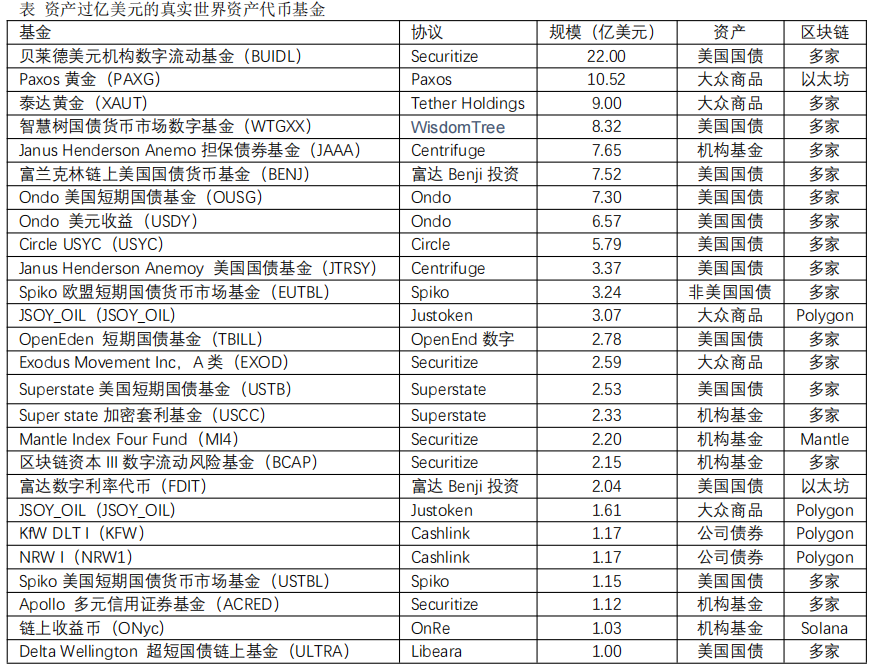
真实世界资产代币规模超2000亿元,211家发行商入局
2 1 Shi Ji Jing Ji Bao Dao· 2025-09-16 07:05
Core Insights - The tokenization of real-world assets (RWAs) has rapidly gained momentum, achieving significant milestones in a short period, with a total market value of $29.27 billion as of September 12, 2023 [1][5][7] - Major asset classes in tokenization include private credit ($16.72 billion), U.S. Treasury bonds ($7.42 billion), and commodities ($2.01 billion), among others [1][5] - The development of asset tokenization faced challenges due to legal uncertainties and a lack of market infrastructure, but recent legislative changes have paved the way for growth [4][5][10] Market Overview - As of September 12, 2023, there are 389,136 asset holders and 211 issuers, including prominent asset management firms like BlackRock and Fidelity [1][5] - The market for asset tokenization has surged from $5 billion to nearly $30 billion in the past two years, indicating a strong upward trend [5][10] Historical Context - Early attempts at asset tokenization faced significant hurdles, including legal gaps and weak investor participation, leading to a high failure rate of projects [3][4] - Notable early projects included a luxury hotel and a student housing tokenization, both of which encountered liquidity issues and legal challenges [3][4] Legislative Developments - The passage of the GENIUS ACT in July 2023 has removed legal barriers for asset tokens and stablecoins, facilitating a more structured approach to asset tokenization [4][5] - BlackRock's issuance of U.S. Treasury tokens in March 2024 is a strategic move to demonstrate the feasibility of asset tokenization to both political and investment communities [4][5] Advantages of Asset Tokenization - Asset tokenization offers several advantages over traditional finance, including transparency through shared ledgers, flexible custody arrangements, programmability via smart contracts, and enhanced accessibility to financial markets [10][11] - The ability to fractionalize large assets allows for broader participation in financial markets, reducing barriers to entry for investors [10][11] Future Potential - The private market remains largely untapped, with significant potential for asset tokenization in areas such as private equity, private credit, infrastructure, and real estate [13][14] - BlackRock anticipates that the demand for U.S. infrastructure investment will reach $68 trillion from 2024 to 2040, highlighting a key area for future growth in asset tokenization [14] Regional Developments - Hong Kong's approach to asset tokenization differs from the U.S., focusing on a diverse range of asset classes and emphasizing the construction of a digital finance ecosystem [15] - The launch of the RWA registration platform in Hong Kong signifies a commitment to establishing standards and guidelines for asset tokenization [15] Impact on Financial Systems - The rise of asset tokenization and stablecoins is expected to disrupt traditional financial systems, potentially leading to a new international monetary and financial order [17][18] - Predictions suggest that the global market for tokenized assets could exceed $30 trillion by 2030, indicating a transformative shift in the financial landscape [17][18]

真实世界资产代币规模超2000亿元,211家发行商入局
21世纪经济报道· 2025-09-16 06:57
Core Insights - The article discusses the rapid growth of real-world asset tokenization, which has reached a market size of $29.27 billion as of September 12, 2023, with 389,136 asset holders and 211 issuers, including major asset management firms like BlackRock and Fidelity [1][4] - The article highlights the historical challenges faced by asset tokenization projects, with over 90% failing to achieve basic trading volumes before 2021 due to legal, market, and liquidity issues [3][4] Development of Asset Tokenization - The initial attempts at asset tokenization faced significant hurdles, including legal ambiguities, a weak investor base, and a lack of market makers or liquidity mechanisms [3] - Major investment institutions have been advocating for clearer legal frameworks to support asset tokenization, with the recent passage of the GENIUS ACT in July 2023 removing legal barriers [4] Advantages of Asset Tokenization - Asset tokenization offers several advantages over traditional finance, including shared ledger information, flexible custody arrangements, programmability through smart contracts, enhanced financial inclusion, and interoperability across blockchains [6][7] Potential of Private Markets - The article emphasizes the untapped potential of private markets, noting that a significant portion of companies with revenues over $100 million remain unlisted, particularly in the UK, EU, and the US [9] - BlackRock identifies four key areas for future investment in private markets: private equity, private credit, infrastructure, and real estate [9] Hong Kong's Unique Approach - Hong Kong's asset tokenization framework focuses on five asset categories: financial assets, renewable energy assets, real estate, intangible assets, and computing power assets, aiming for a more diversified and service-oriented approach [10][11] Future of Digital Finance - The article predicts that by 2030, the global market for tokenized assets could exceed $30 trillion, indicating a significant shift in the financial services landscape [13] - Asset tokenization and stablecoins are expected to disrupt the existing international monetary and financial systems, providing equal competition opportunities for various currencies [14] Stability of Stablecoins - The relationship between stablecoins and fiat currencies is crucial for their stability, with risks associated with maintaining a 1:1 exchange rate [15]

Ahead Of Fed Rate Meeting, BlackRock Remains 'Risk-On' US Equities Despite Sticky Core Inflation - SPDR S&P 500 (ARCA:SPY)
Benzinga· 2025-09-16 06:20
Group 1 - The BlackRock Investment Institute maintains a "risk-on" investment stance, remaining overweight in U.S. equities despite sticky core inflation [1] - A softening labor market is expected to provide the Federal Reserve with justification to cut interest rates, which is a key driver for BlackRock's positive outlook on equities [2][3] - The AI theme is a primary pillar of BlackRock's strategy, significantly contributing to U.S. equity performance and corporate earnings, with the tech sector accounting for over 40% of the S&P 500's total return [4] Group 2 - BlackRock has upgraded its position on long-term U.S. Treasuries from underweight to neutral, anticipating further yield declines as the Fed begins its cutting cycle [5] - The firm is prepared to adjust its strategy if the labor market weakens more than expected or if hiring rebounds, potentially reigniting inflation [6] - The SPDR S&P 500 ETF Trust (SPY) and Invesco QQQ Trust ETF (QQQ) ended higher, indicating positive market sentiment [7]

X @Token Terminal 📊
Token Terminal 📊· 2025-09-16 05:26
Tokenized Investment Funds - The AUM of tokenized investment funds has reached an all-time high of $7.7 billion [1] - Asset managers are showing increased interest in tokenizing fund products and bringing them onchain [1] Key Players - BlackRock BUIDL is the largest tokenized fund by AUM, powered by Securitize & wormhole [1]
211家发行商入局,真实世界资产代币化是喧嚣还是新趋势?
2 1 Shi Ji Jing Ji Bao Dao· 2025-09-16 01:49
Core Insights - The rapid growth of real-world asset tokenization has reached a market size of $29.27 billion as of September 12, 2023, with 389,136 asset holders and 211 issuers, including major asset management firms like BlackRock and Fidelity [1][3] - The tokenized assets are primarily categorized into private credit ($16.72 billion), U.S. Treasury bonds ($7.42 billion), commodities ($2.01 billion), and alternative funds, among others [1][3] - The legalization of asset tokenization in the U.S. has been facilitated by legislative efforts, notably the GENIUS ACT, which has removed legal barriers and allowed for a surge in market activity [3][10] Group 1: Historical Context and Challenges - The journey of asset tokenization has faced significant challenges, with over 90% of projects failing to achieve basic trading volumes before 2021 due to legal uncertainties, weak investor participation, and lack of liquidity mechanisms [2][3] - Early attempts at asset tokenization, such as the St. Regis Aspen hotel project, faced liquidity issues and investor dissatisfaction due to complex structures and additional fees [2] Group 2: Advantages of Asset Tokenization - Asset tokenization offers several advantages over traditional finance, including shared ledger information that enhances transparency and reduces information asymmetry [4][5] - The flexibility in custody arrangements and programmability through smart contracts improve operational efficiency and user experience [6][7] - Tokenization enhances financial inclusion by breaking down large assets into smaller units, making them more accessible to a broader range of investors [6][7] Group 3: Future Potential and Market Trends - The private market holds significant untapped potential, with a focus on private equity, private credit, infrastructure, and real estate as key areas for future growth [8] - The global market for tokenized assets is projected to exceed $30 trillion by 2030, indicating a transformative shift in the financial landscape [10][11] - Hong Kong's approach to asset tokenization emphasizes a diverse range of asset classes and a focus on building a digital financial ecosystem, contrasting with the U.S. model [9][10] Group 4: Impact on Global Financial Systems - Asset tokenization and stablecoins are expected to disrupt the traditional dollar-based international monetary system, providing equal competition for currencies from other regions [10][12] - The evolution of a new international monetary and financial system based on blockchain technology is anticipated to occur more rapidly than previous shifts in economic power [12]
贝莱德上调美债评级至“中性” 预计美联储本周开启降息周期
智通财经网· 2025-09-15 22:29
Core Viewpoint - BlackRock, the world's largest asset management company, has upgraded its rating on U.S. long-term Treasuries from "underweight" to "neutral" as investors anticipate a potential interest rate cut by the Federal Reserve this week [1] Group 1: Investment Strategy Adjustments - BlackRock's tactical investment stance for U.S. long-term Treasuries has been adjusted to "neutral" for the next 6 to 12 months, ending a long-standing "underweight" strategy [1] - The company has also downgraded its position on short-term Treasuries from "overweight" to "neutral" [1] - The adjustment is based on the expectation of a short-term decline in Treasury yields, despite structural factors pushing yields higher in the long term [1] Group 2: Economic Indicators and Market Sentiment - The U.S. 10-year Treasury yield fell by 2.3 basis points to 4.034%, marking its fourth consecutive week of decline, although it remains above the 52-week low of 3.622% reached last September [1] - The CME FedWatch tool indicates that investors widely expect the Federal Reserve to announce a 25 basis point rate cut, lowering the federal funds rate target range to 4% to 4.25% [1] - BlackRock's Jean Boivin noted that a weak labor market provides a reasonable basis for the Fed to cut rates, which could help alleviate inflationary pressures [1] Group 3: Long-term Economic Outlook - Despite inflation risks, BlackRock maintains a "risk-on" stance, believing that U.S. economic growth, while slowing, remains resilient, and corporate earnings will continue to be stable [2] - The market's driving factors are shifting from tariffs and policy uncertainty to a balance between inflation, economic growth, and government debt [2] - BlackRock's long-term strategic allocation still favors inflation-linked bonds over long-term government bonds [2] Group 4: Market Reactions and Future Considerations - U.S. stock indices closed higher, with the S&P 500 and Nasdaq reaching all-time highs, indicating positive market sentiment [3] - BlackRock views the Fed's upcoming policy decision as a potential turning point for global markets, with the possibility of supporting both U.S. equities and long-term Treasuries if the rate cut occurs under controlled inflation and sustained economic growth [3] - However, the market must remain vigilant regarding the potential resurgence of inflation [3]
BlackRock turns ‘neutral' on long-term Treasurys ahead of potential Fed rate cuts
MarketWatch· 2025-09-15 20:41
Core Viewpoint - BlackRock has adjusted its tactical outlook on long-term Treasurys, indicating a shift in investment strategy due to a "murky" macroeconomic environment [1] Group 1 - The company has changed its stance on long-term Treasurys, reflecting a more cautious approach in light of current economic conditions [1] - The macroeconomic backdrop is described as "murky," suggesting uncertainty in economic indicators and market trends [1]

BRK.B vs. BLK: Which Financial Conglomerate Is the Smarter Pick Now?
ZACKS· 2025-09-15 18:56
Core Insights - The Federal Reserve has maintained interest rates at 4.25%–4.5% since December 2024, with speculation about potential rate cuts in 2025, while equity markets are performing well due to economic growth [1] Factors to Consider for Berkshire Hathaway (BRK.B) - Berkshire Hathaway is a diversified conglomerate with over 90 subsidiaries across various industries, primarily in insurance, which accounts for about 25% of total revenues [2][5] - The company generates significant earnings from energy, transportation, manufacturing, and consumer goods, providing steady cash flows and resilience against sector-specific volatility [3] - Berkshire follows a disciplined investment strategy led by Warren Buffett, focusing on undervalued assets with long-term potential, with major investments in companies like Coca-Cola and Apple [4] - The insurance float has grown from approximately $114 billion in 2017 to $174 billion by Q2 2025, providing low-cost capital for investments [5] - With over $100 billion in cash reserves and minimal debt, Berkshire's balance sheet reflects strong financial strength [6] - The return on equity for Berkshire is 7%, slightly below the industry average of 7.7%, but shares have gained 9% year-to-date, outperforming the industry's 8.2% increase [7] Factors to Consider for BlackRock (BLK) - BlackRock is a leading investment management firm with $11.6 trillion in assets under management (AUM) as of December 31, 2024, and offers technology services through its Aladdin platform [8] - The company is expanding its private markets platform, aiming to raise $400 billion by 2030, which is a rapidly growing sector in global finance [9] - BlackRock's return on equity is 15.5%, significantly higher than the industry average of 9.9%, and shares have gained 9.6% year-to-date [10][11] Estimates for BRK.B and BLK - The Zacks Consensus Estimate for BRK.B's 2025 revenues indicates a 4.8% year-over-year increase, while EPS is expected to decrease by 7.6% [12] - For BLK, the 2025 revenue estimate suggests a 15% year-over-year increase, with EPS expected to decrease by 9.1% [14] Valuation Metrics - Berkshire is trading at a price-to-book multiple of 1.59, above its five-year median of 1.41 [14] - BlackRock's price-to-book multiple is at 3.53, also above its five-year median of 3.0 [14] Conclusion - Berkshire Hathaway is recognized for its diversified portfolio and strong management under Warren Buffett, while BlackRock is positioned for growth through its substantial AUM and expansion strategies [17][18]