Costco(COST)

Search documents
How Costco Stock Falls To $700?
Forbes· 2026-01-26 13:45
Core Viewpoint - Costco Wholesale (COST) shares have increased by 16% over the past month, currently trading at $983.25, but a multi-factor evaluation suggests it may be prudent to sell the shares due to a very high valuation and a negative outlook on the stock [1][3]. Valuation - Costco has a market capitalization of $437 billion, but its valuation appears very high, with a suggested target price of $687 [5][4]. - The stock is considered unattractive due to its very high valuation despite moderate operational efficiency and financial health [3][4]. Growth - Costco has experienced an average revenue growth rate of 6.7% over the last three years, with revenues increasing by 8.3% from $259 billion to $280 billion in the past 12 months [7]. - Quarterly revenues rose by 8.3%, reaching $67 billion in the most recent quarter, up from $62 billion a year prior [7]. Profitability - Over the last 12 months, Costco's operating income was $11 billion, resulting in an operating margin of 3.8% [8]. - The company generated approximately $15 billion in operating cash flow during this period, with a cash flow margin of 5.3% [8]. - Costco's net income for the same timeframe was nearly $8.3 billion, leading to a net margin of around 3.0% [8]. Financial Stability - As of the end of the most recent quarter, Costco had a debt of $8.1 billion, with a debt-to-equity ratio of 1.9% [9]. - The company holds $17 billion in cash (including cash equivalents) within total assets of $83 billion, resulting in a cash-to-assets ratio of 20.8% [9]. Downturn Resilience - Costco has shown more resilience than the S&P 500 index during various economic downturns, recovering quickly from declines [10]. - Historical data indicates that Costco shares have fully recovered from significant drops during the 2022 inflation shock, the 2020 COVID pandemic, and the 2008 global financial crisis [12].


Costco's $4.99 chicken under fire over 'no preservatives' claim
Yahoo Finance· 2026-01-26 19:17
Core Viewpoint - Costco's $4.99 rotisserie chicken, while popular, is facing a class-action lawsuit over alleged false advertising regarding its ingredients [3][4][6] Group 1: Product Popularity and Perception - The rotisserie chicken has sold over 100 million units annually since 2020, indicating its strong market presence [1] - Celebrity chef David Chang criticized the chicken's taste, stating it lacks proper seasoning, which is essential for cold consumption [2] Group 2: Legal Issues - A proposed class-action lawsuit has been filed in San Diego federal court, claiming Costco falsely advertises that its rotisserie chicken contains "no preservatives" [3] - The lawsuit alleges that the chicken contains additives such as sodium phosphate and carrageenan, contradicting Costco's marketing claims [4] - Plaintiffs argue that consumers rely on clear claims like "No Preservatives" when making food choices, and the presence of these additives is unlawful and unfair [4] - The lawsuit claims that Costco has potentially cheated customers out of tens to hundreds of millions of dollars due to this alleged false advertising [6]
美股市场速览:整体市场平静,能源变数较大
Guoxin Securities· 2026-01-24 15:19
Market Performance - The S&P 500 decreased by 0.4% this week, while the Nasdaq fell by 0.1%[1] - Small-cap value (Russell 2000 Value) outperformed with a gain of 0.2%, compared to large-cap value (Russell 1000 Value) which declined by 0.2%[1] - The energy sector saw a notable increase of 3.1%, while the banking sector experienced a decline of 2.8%[1] Fund Flows - Estimated fund flow for S&P 500 constituents was +$5.6 billion this week, up from -$1.7 billion last week[2] - Key sectors with inflows included automotive and auto parts (+$9.2 million) and semiconductor products (+$9.2 million)[2] - Significant outflows were observed in the financial sector, particularly in diversified financials (-$13.6 million) and capital goods (-$7.4 million)[2] Earnings Forecast - The forward 12-month EPS expectation for S&P 500 constituents increased by 0.2% this week, slightly down from 0.3% last week[3] - Notable upward revisions were seen in real estate (+2.0%) and semiconductor products (+0.7%), while the energy sector was revised down by 2.0%[3] - Risks include uncertainties in economic fundamentals, international political situations, U.S. fiscal policies, and Federal Reserve monetary policies[3]





Wolfe Research Flags Tax Refund Tailwinds as a Positive for Costco Wholesale (COST)
Yahoo Finance· 2026-01-24 13:41
Group 1 - Costco Wholesale Corporation (NASDAQ:COST) is projected to benefit from an expected increase in U.S. consumer spending due to significant tax refunds in 2026, particularly for households earning under $200,000 [2][3] - Wolfe Research anticipates an incremental $75 billion in tax refunds for lower-income households, translating to approximately $500 per filer, alongside an additional $20 billion for those earning between $200,000 and $500,000 [3] - The company declared a quarterly cash dividend of $1.30 per share, payable on February 13, 2026, and received a 'Buy' rating from Deutsche Bank with a price target of $1,044 [4] Group 2 - Costco operates membership-based warehouse clubs in the U.S., Canada, and internationally, focusing on bulk merchandise at low prices with a high-renewal, fee-driven business model [5]
Is Costco Stock a Buy in 2026?
Yahoo Finance· 2026-01-23 18:43
Core Insights - Costco Wholesale has seen its shares increase by 540% over the last decade, indicating strong long-term returns for investors [2] - The company's membership model has created a loyal customer base that values deals and convenience, often leading to higher total spending due to bulk purchases [2] Economic Context - As of 2026, U.S. consumers are facing budget constraints, a slowing job market, and economic uncertainty, particularly affecting middle-class families [3] - Despite a seemingly strong economy with inflation at 2.7% and GDP growth projected at 2.5%, the economic landscape is complex and requires careful analysis [4] Consumer Behavior - Consumer spending is primarily driven by higher-income shoppers, while middle- and lower-income groups are struggling, with rising home foreclosures and vehicle repossessions [5] - The average Costco shopper earns over $125,000 annually, indicating that this demographic has maintained spending power and prefers bulk buying for better value [6] Competitive Advantage - Costco's economic moat stems from its size and operational efficiency, allowing it to purchase products in large quantities and offer savings to consumers [7] - The retailer attracts customers with low-priced items, such as hot dog combos and rotisserie chicken, enhancing its appeal to frugal shoppers [7] - The company has a strong and expanding competitive moat, with customers willing to pay an annual fee for membership [8]
10 Best Stocks to Buy and Hold for 20 Years
Insider Monkey· 2026-01-23 17:11
Core Viewpoint - The article discusses the best stocks to buy and hold for 20 years, emphasizing the importance of durable fundamentals and long-term investment strategies in a complex market environment marked by geopolitical risks and economic uncertainties [2][5]. Market Environment - The investment landscape in 2026 is characterized by geopolitical risks, U.S. midterm elections, a leadership transition at the Federal Reserve, and diverging global monetary policies [2]. - Analysts project modest gains for equities in the U.S., Europe, and Japan, with over half of market participants predicting a potential correction due to concerns over AI-driven valuations [2]. Long-term Outlook - Despite short-term cautious sentiment, the long-term outlook remains positive, with historical trends suggesting that market pullbacks are temporary pauses in a bull cycle [3]. - AI is viewed as a solution to structural labor shortages, with the potential to support durable growth even if some stocks underperform [3]. Earnings Momentum - Earnings momentum for U.S. small caps is expected to improve as rate pressures ease, with optimism building around anticipated Federal Reserve rate cuts in 2026 [4]. - Goldman Sachs has a positive outlook based on strong economic momentum, easing inflation, healthy corporate balance sheets, and sustained AI-driven investment [4]. Stock Selection Methodology - The list of the "10 best stocks to buy and hold for 20 years" was curated using AI chatbots to identify stocks with strong fundamentals and positive analyst and hedge fund sentiment [5][7]. - Hedge fund sentiment was measured using Insider Monkey's database, which tracks 978 stocks as of Q3 2025, and stocks were ranked by upside potential [8]. Stock Highlights - **Costco Wholesale Corporation (NASDAQ:COST)**: Expected to benefit from increased consumer spending due to tax refunds, with a projected incremental $75 billion in refunds for households earning under $200,000 [11]. The company declared a quarterly cash dividend of $1.30 per share [12]. - **Berkshire Hathaway Inc. (NYSE:BRK-B)**: Possibly exiting its 27.5% stake in Kraft Heinz, with the potential resale of 325.4 million shares valued at approximately $7.7 billion [14][15]. The company also finalized a $9.7 billion acquisition of OxyChem, reflecting a strategy to focus on stable, cash-generative assets [17]. - **Eli Lilly and Company (NYSE:LLY)**: Received FDA Breakthrough Therapy designation for a new cancer treatment, enhancing its oncology pipeline visibility [20]. The company is advancing into a global Phase 3 trial for this asset, which addresses a high unmet need in ovarian cancer [21].


A Closer Look at Costco Wholesale's Options Market Dynamics - Costco Wholesale (NASDAQ:COST)
Benzinga· 2026-01-23 15:00
Core Viewpoint - Investors with significant capital have adopted a bearish stance on Costco Wholesale, indicating potential market movements or insider knowledge regarding upcoming events [1][2]. Options Trading Activity - The sentiment among large-money traders is predominantly bearish, with 63% of positions being bearish and only 36% bullish. Notably, there were 11 options trades identified, including 1 put option worth $37,000 and 10 call options totaling $643,669 [3][2]. - The major market movers are focusing on a price range between $740.0 and $1060.0 for Costco Wholesale over the past three months, suggesting a strategic interest in this price band [4]. Volume and Open Interest - The mean open interest for Costco Wholesale options trades is 346.2, with a total trading volume of 156.00, indicating a moderate level of activity in the options market [5]. Largest Options Trades - Significant options trades include a bearish call sweep with a total trade price of $162.6K and various bullish trades with total prices ranging from $61.2K to $112.0K, reflecting mixed sentiments among traders [9]. Company Overview - Costco Wholesale operates approximately 910 warehouses globally, serving over 80 million members. The company generates about 73% of its revenue from the US, with grocery offerings accounting for 55% of fiscal 2025 revenue [10]. - Analysts have issued ratings for Costco Wholesale, with a consensus target price of $1066.67, reflecting a generally positive outlook despite current bearish options activity [11]. Current Stock Performance - The stock price of COST is currently at $977.35, showing a slight increase of 0.12%. Analysts maintain optimistic ratings, with target prices of $1000 and $1100 from different firms [13].

Wall Street Breakfast Podcast: Winter Storm, Carts Filling
Seeking Alpha· 2026-01-23 11:49
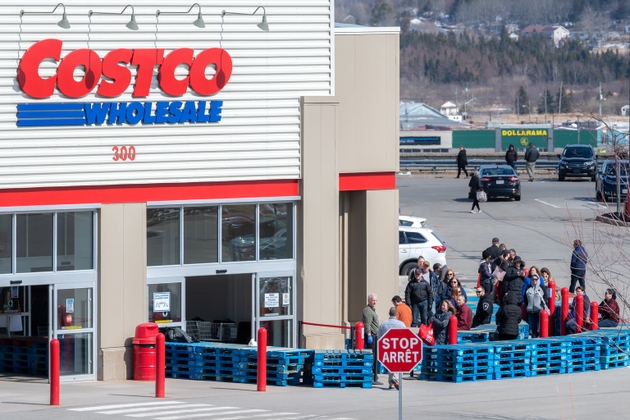
Weather Impact on Retail - A winter storm is expected to affect a significant portion of the U.S., potentially impacting consumer behavior and retail sales [2][3] - Costco (COST) is anticipated to benefit from increased sales as consumers engage in pantry-loading ahead of the storm, similar to past events [4] - Anecdotal evidence shows crowded Costco stores in states like Texas and Florida, with shares up 13% year-to-date [5] Restaurant and Retail Sector Challenges - Dine-in restaurants and discretionary retail are likely to face revenue headwinds due to consumers staying indoors during the storm [5][6] - Several restaurant companies have previously reported traffic declines during severe winter weather [6] Capital One Acquisition - Capital One (COF) has announced the acquisition of fintech company Brex for $5.15 billion, with the deal structured as 50% cash and 50% stock [7][8] - This acquisition aims to enhance Capital One's capabilities in serving corporate clients through Brex's technology for corporate cards and expense management [8] Intel Earnings Report - Intel (INTC) reported stronger-than-expected Q4 results but provided a Q1 outlook that fell below analyst expectations, leading to a 12% drop in premarket shares [9][10] - The company expects Q1 revenue between $11.7 billion and $12.7 billion, with adjusted earnings per share projected to break even [10]



Wall Street Breakfast Podcast: Winter Storm Brewing, Carts Filling
Seeking Alpha· 2026-01-23 11:49
Group 1: Weather Impact on Retail - A winter storm is expected to affect a significant portion of the U.S., potentially impacting consumer behavior and retail sales [2][3] - Costco (COST) is anticipated to benefit from increased sales as consumers engage in pantry loading in preparation for the storm, similar to past events [4] - Anecdotal evidence shows crowded Costco stores in states like Texas and Georgia, with shares of Costco up 13% year-to-date [5] Group 2: Restaurant Sector Challenges - Dine-in restaurants and discretionary retail are likely to face revenue headwinds due to consumers sheltering indoors during the storm [5] - Several restaurant companies, including Dunkin' and McDonald's, have previously noted that severe winter weather negatively impacts customer traffic [6] Group 3: Capital One Acquisition - Capital One (COF) has agreed to acquire fintech company Brex for $5.15 billion, with the deal structured as 50% cash and 50% stock [7][8] - This acquisition aims to enhance Capital One's capabilities in serving corporate clients, particularly in corporate card issuance and expense management [8] Group 4: Intel Earnings Report - Intel (INTC) reported stronger-than-expected Q4 earnings but provided a Q1 revenue outlook below analyst expectations, leading to a 12% drop in premarket shares [9][10] - The company expects Q1 revenue between $11.7 billion and $12.7 billion, with adjusted earnings per share anticipated to break even, below the expected $0.08 [10]

Costco Introduced a Controversial Perk Last Year -- and It Plans to Follow This Up With 4 New Benefits in 2026
The Motley Fool· 2026-01-23 09:06
Core Insights - Costco is continuously evolving its membership model, introducing new perks for its over 81 million paying members, which is crucial for maintaining customer satisfaction and loyalty [1][5][9] Industry Overview - The global retail industry is projected to grow from approximately $29.8 trillion in 2026 to about $41.5 trillion by 2031, with a compound annual growth rate of nearly 6.9% [2] - The retail space is highly competitive, making it challenging for companies to differentiate themselves while maintaining profitability [3] Company Developments - Costco plans to introduce four new benefits for its members in 2026, aimed at enhancing the value of membership [11] - The company raised its annual membership fee in September 2024, with Executive members receiving enhanced perks, including a 2% cash back reward of up to $1,250 and a $10 monthly credit with Instacart [6][8] New Member Benefits - **Digital Membership Scanning at Food Courts**: Starting in 2026, members will need to scan their membership cards to access food court items, reinforcing the value of membership [12][13] - **Standalone Gas Station**: Costco is opening its first standalone gas station in Mission Viejo, California, which will only be accessible to paying members [14][15] - **Expansion of Pre-scan Technology**: The company will enhance its pre-scanning technology at checkout, potentially reducing checkout times by up to 20% [17][18] - **Prescription Drug Price Transparency**: A partnership with Navitus will allow members to see the cost of prescription drugs, promoting transparency in pricing [19][20][21] Financial Insights - Membership fees, while a small fraction of Costco's net revenue, are high-margin and contribute significantly to operating income [9]