Costco(COST)

Search documents
3 Reasons Costco Stock Deserves to Trade at a Sky-High Valuation
Yahoo Finance· 2026-03-18 18:20
Core Viewpoint - Costco Wholesale is currently trading at a high valuation of approximately 51 times earnings, indicating that the market expects significant future growth in sales and store count, yet the company justifies this premium due to its strong performance metrics and growth potential [1][2]. Group 1: Comparable Store Sales - Costco has demonstrated robust comparable store sales growth, with total company comparable sales increasing by 7.4% year over year during the fiscal second quarter [4]. - When excluding the effects of gasoline prices and foreign exchange rates, comparable sales grew by 6.7%, showing a slight acceleration from previous quarters [4]. - The adjusted comparable sales growth for fiscal 2025 is projected at 7.6%, indicating a consistent performance trend [4]. Group 2: International Expansion Potential - Costco has significant international expansion opportunities, with 924 warehouses globally, primarily concentrated in North America [5]. - The "Other International" segment, which excludes the U.S. and Canada, saw comparable sales jump by 13%, maintaining a robust growth rate of 7.1% after adjusting for currency and gas [6]. - The company plans to open 28 net new warehouses in fiscal 2026 and aims for over 30 openings annually in the long term, highlighting its potential for physical expansion in underpenetrated markets across Europe and Asia [7].

Some Costco members may pay more to renew their memberships
Yahoo Finance· 2026-03-18 16:33
Core Insights - Costco membership provides significant savings and benefits, with a Gold Star membership costing $65 and an Executive membership costing $130, which includes additional perks such as a 2% reward on purchases and early shopping hours [2][4] Membership Pricing and Tax Implications - Some members may experience higher renewal costs due to sales tax applied to membership fees, which varies by state [4][5] - For example, New York and Arizona memberships are subject to sales tax, while Connecticut memberships are not [5] - Costco is obligated to collect sales tax where required by law, and this tax is remitted to the respective states, not retained as revenue by Costco [6][7] Customer Experience and Company Improvements - Costco is recognized for its strong customer service and is actively working on enhancements such as a faster checkout process and digital improvements [9]
Is Costco Wholesale a Recession-Proof Business?
Yahoo Finance· 2026-03-18 13:05
Core Insights - Costco Wholesale is recognized for its resilience during economic downturns, contrasting with the general trend of retail businesses suffering in recessions [1][2] Group 1: Business Model - The membership-based model provides a stable revenue foundation, with membership revenue exceeding $5 billion annually in fiscal 2025 [3] - High renewal rates, typically around 90% globally and even higher in the U.S. and Canada, create a recurring revenue base that traditional retailers lack [4] - This recurring income acts as a cushion, smoothing earnings across economic cycles, making Costco resemble a subscription-driven business [5] Group 2: Consumer Behavior - During economic downturns, consumers become more price-sensitive, often shifting their spending towards value retailers like Costco [7] - Costco's business model is tailored for such environments, with product markups generally kept between 14% to 15%, and specifically around 12.5% in fiscal year 2025 [8]
Costco shares good news as gas prices spike
Yahoo Finance· 2026-03-17 17:47
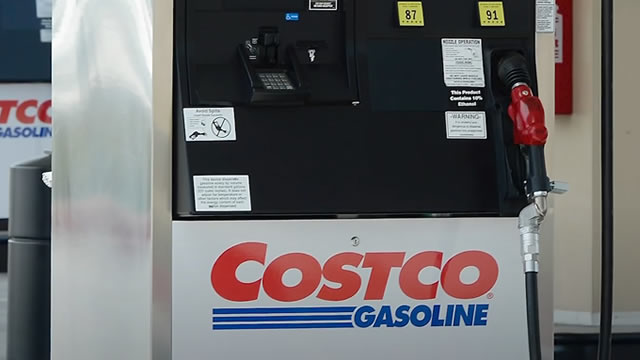
Core Insights - Costco employs a pricing strategy for gas that involves raising prices more slowly than traditional gas stations, allowing for competitive pricing while maintaining lower margins during price increases [1][2] - The company's gas prices are influenced by external factors such as geopolitical events, notably the war in Iran, which has led to rising gas prices [2] - Costco's pricing strategy not only drives gas sales but also encourages member visits to its warehouses, enhancing overall shopping savings for members [3][6] Pricing Strategy - Costco's gas prices are approximately 21% lower than those of Walmart, indicating a significant pricing advantage in the grocery sector [3] - A study by Consumer Reports revealed that price differences between grocery chains can exceed 33%, with warehouse clubs like Costco offering even lower prices compared to major discount grocers [4][5] Member Behavior - About half of the members who purchase gas at Costco also shop at the warehouse, demonstrating the interconnectedness of gas sales and warehouse shopping [6] - The majority of Costco's profits, estimated at up to 70%, are derived from membership fees, which range from $65 to $130, highlighting the importance of membership in the company's revenue model [7]
Why Costco Stock Is Up 16% in 2026 While the Broader Market Sells Off
Yahoo Finance· 2026-03-17 14:34
Core Viewpoint - Costco (COST) is a leading retailer with a strong membership model that contributes to significant free cash flow growth and stock price appreciation over time [1]. Group 1: Stock Performance - Costco's stock experienced a decline to around $850 per share late last year but has since rebounded to just above $1000, indicating renewed investor interest [2]. - The stock is currently trading near a key psychological threshold of $1000, reflecting a bullish narrative around Costco's growth strategies [2]. Group 2: Market Position and Valuation - Costco is trading at nearly 50 times forward earnings, making it one of the most expensive growth stocks in the retail sector [5]. - The premium membership model, along with the company's value, quality, and fresh merchandise, contributes to its high valuation and loyal customer base [6]. Group 3: Business Drivers - Strong past earnings results have shown consistent performance across all lines, particularly in the fuel business, which benefits from below-market pricing [7]. - Rising gasoline prices are expected to drive more consumers to Costco for discounted fuel, increasing foot traffic in stores [7].
How Kirkland Quietly Became Costco's Most Powerful Moat
The Motley Fool· 2026-03-17 09:25
Core Insights - Costco's membership model is well-known, but the Kirkland Signature private-label brand is equally crucial for the company's strategy [1][16] - Kirkland has evolved from a simple store brand into a strategic asset that enhances pricing power, customer loyalty, and competitive advantage [2][16] Private-Label Brand Scale - Kirkland generated $90 billion in annual sales in fiscal year 2025, accounting for approximately 25% to 33% of Costco's total sales of $270 billion [5][16] - Unlike typical private labels, Kirkland aims to match or exceed the quality of leading brands while providing better value [6][16] Customer Trust and Loyalty - Many Kirkland products are produced in partnership with well-known suppliers, ensuring high quality while maintaining competitive pricing [9][10] - This strategy fosters customer trust in the Kirkland label, leading to a behavioral shift where members prefer Kirkland products over national brands [10][11] Negotiating Leverage - Kirkland provides Costco with significant negotiating leverage with suppliers, as it serves as a credible alternative to national brands [12][13] - This leverage helps maintain competitive pricing and protect profit margins, reinforcing Costco's value proposition [13][14] Long-Term Business Model Support - Kirkland strengthens Costco's overall business model by enhancing customer loyalty, supporting disciplined pricing strategies, and creating exclusivity [14][15] - The brand's exclusivity encourages repeat visits from members, further solidifying Costco's competitive moat [15][16] Investment Implications - Kirkland Signature is a vital component of Costco's long-term success, combining scale, quality, and value to enhance customer loyalty and supplier negotiations [16][17] - The company's success is attributed to multiple reinforcing advantages, with Kirkland being a powerful contributor [17]

3 Consumer Staples Stocks Built to Create Long-Term Wealth
The Motley Fool· 2026-03-17 04:30
Core Insights - Consumer staples stocks are generally considered defensive, showing resilience during bear and bull markets, with a history of profitability and consistent dividend growth [1] Group 1: Costco Wholesale - Costco Wholesale has shown impressive performance, with total returns of approximately 220% over the past five years, compared to 82% for the S&P 500 [4] - The stock currently trades at a forward earnings multiple of 49.5, which is higher than other retailers like Amazon and Walmart, indicating a potentially overvalued status [6] - For the last quarter, Costco reported revenue of $69.6 billion and earnings of $4.55 per share, reflecting year-over-year increases of 8.1% in sales and 10.9% in earnings [7] Group 2: Altria Group - Altria Group has historically been a strong performer in wealth generation among consumer staples, with shares recently outperforming the S&P 500 despite a long-term decline in cigarette usage [9] - The company offers a high dividend yield of 6.13%, and reinvestment of dividends has led to a total return of 23% over the past year [11] - Altria's ability to maintain a secure dividend yield and potential for growth in smokeless products could enhance its long-term valuation [14] Group 3: Walmart - Walmart has outperformed the S&P 500 in total returns over the past decade, largely due to its successful transition to e-commerce [15] - The stock currently trades at 42 times forward earnings, raising questions about its valuation, but potential catalysts for growth include further e-commerce expansion and AI integration [17][18] - Walmart's dividend yield is currently 0.74%, with a recent increase of 9.2%, suggesting that future dividend growth could contribute significantly to total returns [19]



Is It Too Late to Buy Costco?
Yahoo Finance· 2026-03-16 19:35
Core Viewpoint - Costco's shares have generated a total return of 17,000% over the last 30 years, raising questions about whether it is still a good time to invest in the company as growth may slow down in the future [1]. Group 1: Company Performance - Costco reported net sales of $68 billion in Q2 2026, making it the world's third-largest retailer [4]. - The company has a competitive advantage due to its lower number of stock-keeping units (SKUs), averaging 4,000 compared to 30,000 for typical supermarkets, allowing for significant cost advantages and low prices for consumers [5]. - Costco's net income grew at a compound annual rate of 13% from fiscal 2015 to fiscal 2025, but this growth rate is expected to decelerate in the coming years [6]. Group 2: Expansion Plans - Costco plans to open 28 net new warehouses in fiscal 2026, increasing its total to 942, with management indicating opportunities for further expansion in both the U.S. and international markets [7]. Group 3: Market Valuation - Costco's shares have a price-to-earnings ratio of 52.2, which is over 100% higher than the S&P 500 and 40% more expensive than Nvidia, indicating high market expectations [8]. - The premium valuation reflects investor perception of Costco as a safe investment, but the high starting valuation raises concerns about potential weak performance in the future [9].
The Best 4 Retail Stocks to Buy and Hold for Decades
The Motley Fool· 2026-03-16 05:15
Core Viewpoint - The retail sector presents numerous investment opportunities, particularly in established companies with strong market positions and economic moats [1][4]. Group 1: Investment Opportunities - Amazon (AMZN) holds a dominant position in U.S. e-commerce, accounting for approximately 40% of all online spending, supported by its extensive logistics network [7]. - Walmart (WMT) is the largest global retailer by revenue, achieving $706 billion in net sales for fiscal 2026, with a 24% increase in e-commerce sales in Q4 [8]. - Costco (COST) leads the warehouse club sector with $68 billion in net sales for the second quarter of fiscal 2026, benefiting from a membership model that fosters customer loyalty and recurring revenue [9]. - Home Depot (HD) is the leader in the home improvement industry, with long-term growth potential driven by aging homes and significant untapped home equity in the U.S. [10]. Group 2: Company Characteristics - The companies mentioned possess wide economic moats due to their cost advantages and strong brand recognition, which contribute to their long-term sustainability [4]. - The competitive nature of the retail industry suggests that smaller players may struggle to survive in the long term, making established companies a safer investment choice [5]. - These companies have demonstrated resilience and adaptability, maintaining strong performance even in challenging economic conditions [8][10].



Is Costco Wholesale Corporation (COST) A Good Stock To Buy Now?
Insider Monkey· 2026-03-16 00:36
Core Insights - Generative AI is viewed as a transformative technology by Amazon's CEO Andy Jassy, indicating its potential to significantly enhance customer experiences across the company [1] - Elon Musk predicts that by 2040, humanoid robots could create a market worth $250 trillion, representing a major shift in the global economy driven by AI innovation [2][3] - Major firms like PwC and McKinsey acknowledge the multi-trillion-dollar potential of AI, suggesting a broad consensus on its economic impact [3] Company and Industry Analysis - A breakthrough in AI technology is redefining work, learning, and creativity, leading to increased interest from hedge funds and top investors [4] - There is speculation about an under-owned company that may play a crucial role in the AI revolution, with its technology posing a threat to competitors [4][6] - Prominent figures in technology and investment, including Bill Gates and Warren Buffett, recognize AI as a significant advancement with the potential for substantial social benefits [8]