
Costco(COST)

Search documents
Costco (NASDAQ: COST) Price Prediction and Forecast (January 2026)
247Wallst· 2026-01-06 12:30
Group 1 - Costco Wholesale Corporation's shares experienced a decline of 2.12% over the past month [1] - The company also faced a loss of 4.77% in the month prior [1]


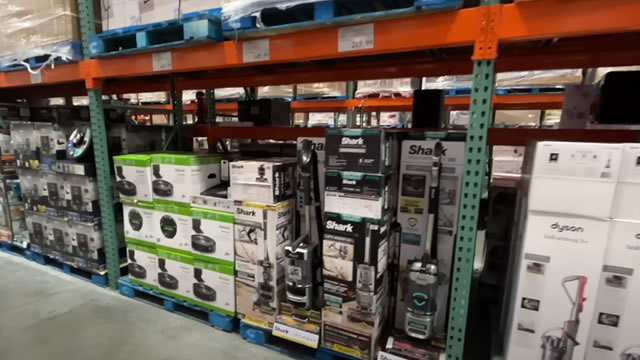
Is Costco Stock Set to Rebound Higher in 2026?
The Motley Fool· 2026-01-05 22:05
Core Viewpoint - Costco Wholesale has demonstrated strong business growth, but its stock price valuation raises concerns about whether it is justified given its current earnings multiple [1][10]. Business Performance - In the first quarter of fiscal 2026, Costco's total sales increased by 8.2% year over year to approximately $66 billion, with comparable sales rising by 6.4% and digitally enabled comparable sales increasing by 20.5% [4]. - The growth in comparable sales was attributed to both increased customer traffic and higher average transaction sizes [4]. - Costco's "other international" markets, excluding the U.S. and Canada, showed faster comparable sales growth, with a 6.8% increase in fiscal Q1 compared to 5.9% in the U.S. [5]. - For fiscal 2025, total sales rose by 8.1% year over year to about $270 billion [6]. Membership Growth - Membership fee income rose by 14% year over year to approximately $1.33 billion in the first quarter, outpacing sales growth [8]. - A membership price increase in September contributed to nearly half of the membership income growth, while the membership base also expanded, with paid executive memberships increasing by 9.1% to 39.7 million and total paid members rising by 5.2% to 81.4 million [9]. Valuation Concerns - Costco's price-to-earnings ratio stands at 47, with a forward price-to-earnings ratio of 42, which may be considered too high for the current market [10]. - The high valuation introduces risks, as shares could revert to a lower valuation despite strong business execution [10][11]. - Costco's valuation is currently higher than that of major tech companies like Nvidia and Amazon, which raises questions about its sustainability [11]. Competitive Landscape - The competitive environment is intensifying, particularly from e-commerce players like Amazon and brick-and-mortar competitors such as Walmart's Sam's Club and grocery chains like Kroger and BJ's Wholesale [12].
Why Costco's stock could still get to $1,000 despite sluggish sales and membership growth
MarketWatch· 2026-01-05 21:04
Core Viewpoint - The retailer's current issues are deemed temporary and attributed to excessive consumer demand according to an analyst [1] Group 1 - The problems faced by the retailer are not indicative of long-term challenges but rather a short-term phenomenon [1] - An analyst suggests that the situation reflects a mismatch between supply and heightened consumer demand [1]
Hyundai Motor Group plans to deploy humanoid robots at US factory from 2028
Reuters· 2026-01-05 21:03
Core Insights - Hyundai Motor Group plans to deploy humanoid robots at its U.S. manufacturing plant in Georgia starting in 2028, aiming to automate higher-risk and repetitive manufacturing tasks [1] Group 1: Company Strategy - The introduction of humanoid robots is part of Hyundai's broader strategy to enhance automation in manufacturing processes [1] - This initiative reflects the company's commitment to improving efficiency and safety in its production lines [1] Group 2: Industry Impact - The deployment of humanoid robots could set a precedent in the automotive industry, potentially influencing other manufacturers to adopt similar technologies [1] - This move aligns with the growing trend of automation in manufacturing, which is expected to reshape labor dynamics and operational practices within the industry [1]

Costco's Digital Ecosystem Emerges as a Powerful Growth Engine
ZACKS· 2026-01-05 15:36
Core Insights - Costco's digital ecosystem is a primary growth driver, with a 20.5% increase in digitally enabled comparable sales for Q1 FY26, significantly outpacing the overall comparable sales growth of 6.4% [1][9] - Key contributors to online sales growth include a 24% rise in e-commerce site traffic and a 13% increase in average order value [1][9] Digital Engagement and Personalization - The company is enhancing shopping experiences through improved product display pages and personalization capabilities, leading to higher conversion rates [2] - Same-day delivery services via Instacart, Uber Eats, and DoorDash have seen strong member adoption, contributing to sales growth [3] Integration of Digital Tools - Costco is integrating digital tools in warehouses, such as the Costco Digital Wallet and pre-scanning technology, which have increased checkout speeds by up to 20% [4] - AI is being utilized to optimize pharmacy inventory and gas station management, improving in-stock levels to over 98% and supporting mid-teen growth in pharmacy scripts filled [4] Competitive Landscape - Walmart reported a 27% global e-commerce growth in Q3 FY26, with 35% of digital orders delivered in under three hours, indicating a strong focus on convenience and digital innovation [6] - BJ's Wholesale Club reported a 30% growth in digitally enabled comparable sales in Q3 FY25, emphasizing the value of digitally engaged members [7] Financial Metrics - Costco's stock has declined 7.4% over the past year, while the industry has grown by 4% [8] - The forward 12-month price-to-earnings ratio for Costco is 41.21, higher than the industry average of 29.45 [10] - Zacks Consensus Estimates indicate year-over-year growth of 7.5% in sales and 11.7% in earnings per share for the current financial year [11]
5 Predictions for the Stock Market in 2026 -- and Which Stocks Will Soar the Most If They're Right
The Motley Fool· 2026-01-04 08:45
Market Predictions for 2026 - The S&P 500 is expected to deliver single-digit gains in 2026, ending a streak of double-digit gains over the past three years, but no major market sell-off is anticipated due to strong economic and corporate earnings [4][5] - Small- and mid-cap stocks are predicted to outperform larger stocks, with Mirum Pharmaceuticals highlighted as a potential winner after its share price nearly doubled in 2025, and expected positive results from clinical studies in 2026 [6][7][8] - The AI sector is expected to shift from hype to tangible returns, with Alphabet predicted to continue benefiting from its Google Cloud unit and agentic AI technology, which is anticipated to drive growth [9][10][12] - The renewable energy sector is expected to continue its rebound, driven by strong AI growth and increased demand for energy to power data centers, with Brookfield Renewable and Clearway Energy expected to perform well [13][15] - Political dynamics in the mid-term election year are expected to create volatility in the stock market, but once the uncertainty fades, stocks are predicted to move higher, with potential winners in the cannabis industry if Democrats gain control [16][18]

History of Costco: Company timeline and facts
Yahoo Finance· 2026-01-03 16:36
Core Insights - Costco operates with a limited selection of approximately 4,000 stock-keeping units (SKUs), significantly fewer than the 30,000 typically found in supermarkets, focusing on quality, price, brand, and features [1] - Despite rising costs due to inflation, Costco has maintained the price of its hot dog and soda combo at $1.50 since its introduction in 1985, subsidized by sales and membership revenue [2] - The company offers three membership types: Business ($65), Gold Star ($65), and Executive ($130), with over 145 million members, more than double that of its closest competitor, Sam's Club [3] Company History - Costco was founded in 1983 by James Sinegal and Jeff Brotman, focusing on a members-only retail model, and quickly expanded its warehouse locations [4][5] - The merger with Price Club in 1993 created a significant player in the warehouse retail industry, initially named PriceCostco, which later became simply Costco [5][18] - The company has seen substantial growth since its inception, with sales exceeding $1 billion by 1984 and continuing to expand internationally [4][18] Leadership and Expansion - Costco has had three CEOs since its merger: James Sinegal (1983–2011), W. Craig Jelinek (2012–2023), and Ron Vachris (2024–present), with each contributing to the company's growth and expansion [8][10][11] - Under Jelinek, Costco's sales surpassed $100 billion in 2013, and the company successfully navigated the challenges posed by the COVID-19 pandemic [10] - Vachris has ambitious plans for expansion, targeting the opening of 28 new stores in the U.S. and internationally in 2026, as part of a $6.5 billion expansion strategy [11][12] Financial Performance - Costco's revenue from membership fees has shown consistent growth, reaching $5.3 billion in 2025, with total sales approaching $250 billion [39] - The company’s net income exceeded $8 billion in 2025, reflecting its strong market position and operational efficiency [39] - Costco's market capitalization has grown significantly, surpassing $475 billion by 2025, indicating robust investor confidence and market performance [39]
Telsey Reaffirms Outperform on Costco Ahead of December Sales Update
Financial Modeling Prep· 2026-01-02 22:59
Core Viewpoint - Telsey Advisory Group maintains an Outperform rating and a price target of $1,100 for Costco Wholesale ahead of the December sales report [1] Sales Forecast - Costco is expected to release December sales results after market close on January 7, with total comparable sales growth projected at 2.2% for December 2025, a decrease from 7.4% in the previous year [2] - Core merchandise comparable sales growth is forecasted at 2.0%, down from 9.9% a year earlier, excluding an estimated net benefit of approximately 20 basis points from gasoline prices and foreign exchange [2] Regional Performance - U.S. comparable sales excluding gas are expected to rise by 1.0%, compared to 9.8% last year [3] - Canada’s comparable sales excluding gas and foreign exchange are projected at 4.0%, down from 10.3% [3] - Other international markets are expected to post comparable sales of 5.0% excluding foreign exchange, compared to 9.8% in the prior year [3] External Factors - Gasoline prices declined in the low single-digit range during December, creating a roughly 20 basis point headwind to comparable sales [4] - A weaker U.S. dollar is expected to provide an estimated 40 basis point tailwind based on recent currency trends [4] Traffic and Ticket Growth - Traffic growth is projected at 0.5%, down from 5.5% last year, as consumers continue to seek value [5] - Average ticket growth is expected to be 1.7%, roughly in line with the prior year, supported by tariff-related inflation and positive category trends [5] Digital Sales - Digital sales are forecasted to increase by 5.0%, compared to 34.4% last year, reflecting gains in non-food categories and ongoing benefits from assortment expansion and targeted marketing [6] - Non-food sales are expected to benefit from holiday and gift-driven demand, while Food & Sundries and Fresh Foods are anticipated to remain solid due to at-home consumption trends and Costco's value-focused assortment [6]

4 hidden Costco finds no one’s talking about, and the major savings you’re probably leaving on the table
Yahoo Finance· 2026-01-02 18:45
Core Insights - Costco is the third-largest retailer globally by revenue, with nearly one-third of U.S. consumers shopping there [1][2] Membership Structure - Costco offers two membership tiers: the Gold Star Membership at $65 plus taxes per year and the Executive Membership at $130 plus taxes per year, which includes additional benefits such as 2% cashback and service discounts [1] Cost Savings - Shopping at Costco can lead to significant savings on groceries, with examples showing chicken thighs are 44.3% cheaper, Kellogg's Frosted Flakes are 39.3% cheaper, and pork chops are 25.7% cheaper compared to competitors [2] - A comparison indicated that consumers could save over $1,000 annually by shopping at Costco for groceries alone, excluding other categories like gas and electronics [2] Product Recommendations - Costco offers under-the-radar items that can provide additional savings, such as generic allergy medication, protein powder, and larger purchases like appliances [3] - The in-house brand allergy medication, Kirkland Aller-tec, can save consumers up to 90% compared to name-brand alternatives, providing a one-year supply [4]
Costco upgrades perks for members amid slowing growth
Yahoo Finance· 2026-01-01 20:47
Core Insights - Costco's membership card is the most significant item sold, with membership revenue increasing by 5% to $4.8 billion and a membership base of nearly 137 million cardholders, maintaining a 90% renewal rate [1][2] - The company raised its membership fees for the first time in seven years, increasing the Gold Star Membership by $5 and the Executive Membership by $10, with plans to invest the additional revenue to enhance member and employee experiences [2] - Membership fees contribute approximately 60-70% of Costco's operating profits, providing a stable income stream that mitigates the impact of discretionary spending volatility [3] Membership Growth - Membership growth has slowed recently, prompting Costco to take measures to address this trend [3][4] - Despite the slowdown, Costco's CFO expressed satisfaction with the overall membership results, particularly among younger demographics, with a growth rate of just over 5% and Executive Membership growth at 9% [5][6] - Year-over-year growth has decelerated slightly, attributed to the comparison with strong growth from the previous year, but the company remains optimistic about membership health [6] Value Proposition - Costco membership is perceived as a good value, with savings on gas and regular purchases often offsetting the membership fee [7] - The company is committed to enhancing membership value through initiatives such as extended opening hours and additional benefits like Instacart and gas discounts [9][10] - Retail analysts affirm that the Costco brand holds significant value for customers, suggesting that members would be willing to pay more for the benefits associated with membership [10][11]