Estée Lauder(EL)

Search documents
欧莱雅们找到第二个中国市场了?
3 6 Ke· 2026-02-06 01:00
Core Insights - The competition among beauty giants in India has intensified, with Unilever investing millions in local brands and L'Oréal committing nearly 30 billion RMB to establish a global AI beauty technology center in India, indicating a strategic focus on this emerging market [1][2]. Group 1: Market Potential - India's population has surpassed China's, with projections indicating it will reach over 1.6 billion by 2050, creating a significant consumer base for the beauty market [3]. - The Indian beauty market is expected to grow to $40 billion (approximately 278.28 billion RMB) by 2035, with a steady annual growth rate of 5.6% [4]. - The current low penetration of high-end beauty products in India suggests substantial room for market upgrades and potential growth [5]. Group 2: Investment Trends - Unilever has made over ten investments in Indian brands in the past two years, focusing on skincare to enhance its brand portfolio, including a notable acquisition of the high-end beauty brand Minimalist for approximately 2.509 billion RMB [6][7]. - Other companies, such as Kose and LVMH, are also accelerating their investments in India, with Kose acquiring a 10% stake in the DTC skincare brand Foxtale [10]. Group 3: Cultural Insights - Many successful local brands in India are rooted in Ayurveda, reflecting a consumer preference for natural ingredients, with over 47% of Indian consumers prioritizing natural components in skincare products [12][14]. - The Ayurveda market is projected to reach $28.83 billion (approximately 200.59 billion RMB) by 2030, growing at a compound annual growth rate of 12.3% [14]. Group 4: Strategic Approaches - International beauty giants are leveraging established e-commerce platforms like Nykaa to penetrate the Indian market quickly, reducing entry barriers and costs [15]. - L'Oréal has invested 3.5 billion euros (approximately 28.93 billion RMB) to establish a global beauty technology center in India, enhancing its technological capabilities [18]. Group 5: Leadership Dynamics - The rise of Indian-origin executives in key positions within major beauty companies is shaping market strategies, with 14 Indian-origin CEOs leading Fortune Global 500 companies as of 2024 [19][26]. - These leaders are instrumental in bridging cultural gaps and ensuring effective execution of localized strategies [26]. Group 6: Performance Metrics - L'Oréal reported a 12.2% year-on-year growth in the SAPMENA-SSA region, with India being a significant contributor to this growth [30]. - Nykaa's financial performance indicates a 25% year-on-year revenue growth, with beauty products contributing 92% of its total revenue, highlighting the market's potential [32]. Group 7: Competitive Landscape - The competition among beauty giants in India is evolving from mere capital investment to deep operational engagement, focusing on local brand acquisitions, the influence of Indian executives, and the market's growth potential [33]. - Companies face challenges related to consumer preferences, distribution channels, and supply chain complexities, necessitating a balance between global strategies and local insights for sustainable growth [33].






Estée Lauder Shares Plunge 20% Despite Earnings Beat as Tariff Risks Cloud Outlook
Financial Modeling Prep· 2026-02-05 23:06
Core Insights - Estée Lauder Companies experienced a significant drop in share price, falling over 20% intra-day due to quarterly results and tariff concerns [1] - The company reported second-quarter earnings per share of $0.89, exceeding analyst expectations of $0.83, and a 43% increase from the previous year [1] - Revenue for the quarter rose 6% year over year to $4.23 billion, slightly above the consensus estimate of $4.22 billion [1] Sales Performance - Net sales in skin care and fragrance increased by 6%, while hair care returned to growth with a 5% increase [2] - Makeup sales declined by 1%, primarily due to weakness in the Estée Lauder brand, although MAC showed strength [2] - Mainland China exhibited strong performance with 13% organic sales growth, while Europe, the UK, the Middle East, and Africa posted 2% organic growth; the Americas reported flat organic sales [2] Profitability Outlook - Despite raising its full-year outlook, Estée Lauder warned that tariff-related pressures would reduce fiscal 2026 profitability by approximately $100 million, mainly in the second half of the year [3] - The company highlighted tariffs, including a 39% rate on Swiss imports and a 35% rate on Canadian imports into the U.S. [3] - Reported and adjusted gross margin expanded by 40 basis points to 76.5%, benefiting from the Profit Recovery and Growth Plan, although offset by tariffs, inflation, and changes in product mix [4] Future Projections - Estée Lauder raised its fiscal 2026 outlook, now expecting organic net sales growth of 1% to 3% and adjusted earnings per share of $2.05 to $2.25 [4]

Estée Lauder Stock Tumbled 20% Today. Here's What Dragged the Shares Lower
Investopedia· 2026-02-05 22:30
Core Viewpoint - Estée Lauder's stock dropped approximately 19% despite reporting better-than-expected second-quarter results and raising its full-year outlook, primarily due to concerns over tariffs impacting profits and high investor expectations following a significant stock price increase over the past year [1][1][1] Financial Performance - The company reported $4.2 billion in sales for the quarter ended December 31, marking a 6% increase from the previous year and slightly exceeding analyst estimates [1][1] - Adjusted earnings per share were $0.89, surpassing the anticipated $0.82 by analysts [1][1] - Estée Lauder raised its earnings outlook for the full fiscal year, expecting an adjusted operating profit margin of 9.8% to 10.2%, an increase from the previous guidance of 9.4% to 9.9% [1][1] Market Reaction - The stock closed at its lowest level since December, finishing 19% lower after a significant drop, despite a brief recovery from intraday lows [1][1] - The stock is now approximately 15% below Wall Street's consensus price target, indicating a negative investor sentiment following the earnings report [1][1] Strategic Insights - The company is experiencing sales growth in Europe, China, and other Asian markets, and is regaining market share in the Americas by expanding sales channels beyond traditional department stores to platforms like Amazon, TikTok, and Sephora [1][1] - CEO Stéphane de la Faverie highlighted that enacted tariffs are negatively affecting consumer confidence in Latin America, which poses a challenge for the company [1][1]
Tech Sell-Off Drags Major Indexes Lower as Job Market Woes Persist; Alphabet, Qualcomm Tumble
Stock Market News· 2026-02-05 22:07
Market Overview - U.S. equities faced a challenging day on February 5, 2026, with significant sell-offs in technology stocks and negative job market reports impacting investor sentiment [1] - The S&P 500 fell 1.2% to close at 6,798.40, marking its sixth decline in seven trading days since reaching an all-time high [2] - The Nasdaq Composite dropped 1.6% to 22,540.59, while the Dow Jones Industrial Average decreased by 1.2% to 48,908.72 [2] - Bitcoin prices fell below $64,000, reaching their lowest level since October 2024, further exacerbating the downturn [2] Major Market Movers and Corporate News - Alphabet (GOOGL) saw a decline of 0.8% despite stronger-than-expected sales, as investors were concerned about projected capital expenditures for AI infrastructure, estimated at $175 billion to $185 billion for 2026, nearly double the $91.45 billion spent in 2025 [3] - Qualcomm (QCOM) experienced an 8.5% drop due to a disappointing outlook, citing a tightening global memory shortage affecting the smartphone market [4] - Advanced Micro Devices (AMD) fell sharply by 17.3% on a weak outlook, contributing to the semiconductor sector's struggles [4] - Uber Technologies (UBER) declined by 5.2% after missing earnings expectations, while Amgen (AMGN) surged 8.2% on positive earnings results [5] - Eli Lilly (LLY) jumped 10.3% due to strong sales of its drugs, and McKesson (MCK) soared 16.5% after exceeding profit and revenue expectations [5] - Peloton Interactive (PTON) plummeted 28% after reporting weaker-than-expected results, while Estee Lauder (EL) and Snap (SNAP) retreated by 19% and 12%, respectively [6] Job Market Developments - Amazon (AMZN) announced plans to cut approximately 16,000 corporate roles, while UPS revealed 30,000 job cuts [7] - Dow (DOW) reduced its workforce by 4,500 jobs, with Home Depot (HD) and Nike (NKE) also making cuts [7] Economic Indicators - Initial jobless claims for the week ending January 31 rose to 231,000, exceeding economists' estimates [9] - U.S. employers announced over 108,000 layoffs in January, the highest for that month since 2009, with job openings falling to 6.5 million in December, the lowest since 2020 [9] - The Consumer Price Index rose 2.7% over the year in December, indicating persistent inflation despite potential interest rate cuts by the Federal Reserve [10] Upcoming Market Events - Investors are awaiting the release of January U.S. Non-Farm Payrolls, Unemployment Rate, and Average Hourly Earnings data on February 6, which will provide further insights into the labor market [8]




Why Estée Lauder Plunged Today
Yahoo Finance· 2026-02-05 21:16
Core Viewpoint - Estée Lauder's stock fell 18.4% following the release of its earnings report, which, despite showing some progress, did not meet investor expectations after a significant prior increase in stock value [1]. Financial Performance - In the latest quarter, Estée Lauder reported a revenue growth of 5.8%, reaching $4.23 billion, and adjusted earnings per share (EPS) increased by 43% to $0.89 [2]. - The revenue growth of 5.8% marked an acceleration from the previous quarter's growth of 3.5%, but still fell short of market expectations [3]. Market Dynamics - Estée Lauder has successfully regained market share while implementing cost-cutting measures, with a notable recovery in China contributing to a 13% growth in that market last quarter. All regions reported positive growth, with Europe and the Middle East up 9%, and the U.S. and Asia Pacific (excluding China) each up 1% [4]. Future Outlook - The company's forward guidance for the fiscal year ending June 2026 indicates a growth expectation of only 3% to 5%, which is a deceleration from previous forecasts. Adjusted EPS is projected to be between $2.05 and $2.25. The company has already achieved $1.21 in adjusted EPS in the first two quarters of fiscal 2026, leading to potential investor disappointment regarding full-year guidance [5]. - Management anticipates a $100 million negative impact from tariffs in the current fiscal year [5]. Valuation Concerns - Estée Lauder's stock valuation remains high at 44 times this year's adjusted EPS estimates, suggesting that investors may have overly optimistic expectations for continued growth and profit recovery [8]. - Despite some positive trends in recent quarters, management does not express confidence in significant acceleration of results in the near term, particularly given the premium nature of its products which rely on a strong global consumer base [9].
Estée Lauder's stock heads for worst day ever, as investors were betting on much higher profits
MarketWatch· 2026-02-05 18:55
Core Viewpoint - Estée Lauder's stock is experiencing a significant decline, heading towards its worst day ever, as the company's profit outlook raised is not sufficient to meet high investor expectations despite beating earnings estimates [1] Earnings Results - Estée Lauder reported fiscal second-quarter results, raising its full-year profit outlook, but this was not enough to satisfy investors [1] - The company is facing challenges such as tariffs and increased investments in its turnaround plans, which have contributed to the stock's decline [1] Management Commentary - CEO Stéphane de La Faverie expressed optimism regarding the company's turnaround efforts, which include cost-cutting measures, layoffs, and initiatives to enhance operational agility [1] - He described the current changes as "the biggest operational, leadership, and cultural transformation in our history" [1]
The China Secret That’s Making Smart Money Load Up on Estee Lauder While Everyone Else Runs for the Exit
Yahoo Finance· 2026-02-05 18:50
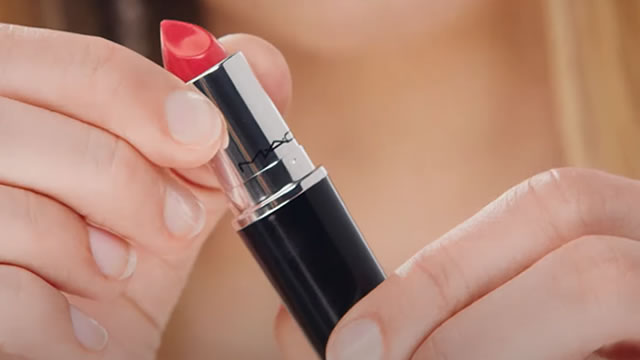
Financial Performance Highlights - Estée Lauder reported a mixed quarter, beating earnings expectations with an operating income of $401 million, a significant improvement from the $(580) million loss in the prior year, which included $861 million in impairments [3] - Gross margin increased by 40 basis points to 76.5%, and first-half free cash flow surged to $581 million from $114 million a year earlier [3] Revenue Breakdown - Makeup sales declined 1% organically to $1.16 billion, affected by an accrual for returns ahead of the Double Wear relaunch [4] - Skin care sales grew 6% organically to $2.05 billion, driven by brands like La Mer, Estée Lauder, and The Ordinary [4] - Fragrance sales also rose 6% to $812 million, supported by TOM FORD and Le Labo [4] China Market Performance - Sales in Mainland China increased by 13%, marking the second consecutive quarter of double-digit growth, which helped mitigate weaknesses in Northern Asian travel retail [5] Guidance and Outlook - Management raised full-year guidance, projecting organic sales growth of 1% to 3% and adjusted EPS of $2.05 to $2.25 [6] - The company anticipates approximately $100 million in tariff-related headwinds in the second half, which may temper growth expectations [6] - CEO Stéphane de La Faverie highlighted the ongoing transformation of the company, emphasizing the impact of the "Beauty Reimagined" initiative [6] Strategic Initiatives - The company plans to expand M·A·C into Sephora US stores by March 2026 and enhance its digital presence on platforms like Amazon and TikTok Shop [7] Stock Market Reaction - Despite the raised guidance, shares fell 18.7% due to revenue miss and anticipated tariff headwinds, with a forward P/E ratio of 58x [8] - Adjusted operating margin improved by 290 basis points to 14.4% from the prior year [8] - EPS was reported at $0.89, beating estimates of $0.86, while revenue was $4.23 billion, in line with estimates [8]
The China Secret That's Making Smart Money Load Up on Estee Lauder While Everyone Else Runs for the Exit
247Wallst· 2026-02-05 18:50
Estée Lauder delivered a mixed quarter, beating earnings expectations while revenue met estimates. ...

Estee Lauder: Valuation Premium Is Unjustified
Seeking Alpha· 2026-02-05 17:40
Shares of Estee Lauder ( EL ) have recovered solidly over the past year, gaining over 40%, though its earnings on Thursday reminded investors this is not a linear recovery by any means. While the company beat its Q2 earnings, the updated outlook provided alongsideOver fifteen years of experience making contrarian bets based on my macro view and stock-specific turnaround stories to garner outsized returns with a favorable risk/reward profile. If you want me to cover a specific stock or have a question for an ...

Estee Lauder Q2 Earnings Beat Estimates, 2026 Guidance Raised
ZACKS· 2026-02-05 17:36
Core Insights - The Estee Lauder Companies Inc. (EL) reported strong second-quarter fiscal 2026 results, with both revenue and earnings exceeding expectations and showing year-over-year growth [1][2]. Financial Performance - Adjusted earnings per share were 89 cents, surpassing the Zacks Consensus Estimate of 84 cents, and increased 43% from 62 cents in the same quarter last year [3]. - Quarterly net sales reached $4,229 million, beating the Zacks Consensus Estimate of $4,226 million, and increased by 6% year over year. Organic net sales rose 4% to $4,155 million [3]. Category-Wise Revenue Results - Skin Care sales increased by 6% year over year to $2,054 million, driven by brands like La Mer and Estée Lauder [4]. - Makeup revenues declined by 1% year over year to $1,164 million, primarily due to Estee Lauder's performance, although operating performance improved [5]. - Fragrance category revenues rose by 6% to $812 million, led by luxury brands such as TOM FORD and Le Labo [6]. - Hair Care sales totaled $168 million, up 5% year over year, supported by strong demand for The Ordinary [7]. Regional Revenue Results - Sales in the Americas were stable at $1,218 million, while revenues in the EUKEM region increased by 2% to $1,183 million. Asia-Pacific sales rose by 2% to $900 million, with Mainland China seeing a 13% increase to $928 million [8]. Margin Insights - Adjusted gross margin expanded by 40 basis points year over year to 76.5%, aided by the Profit Recovery and Growth Plan (PRGP), despite challenges from tariffs and inflation [9]. - Operating earnings were reported at $401 million, a significant improvement from a loss of $580 million in the prior year [10]. Restructuring and Future Outlook - The company is advancing its PRGP, which is expected to generate annual gross benefits of $0.80-$1.00 billion, with a net workforce reduction of 5,800-7,000 positions [14]. - EL raised its fiscal 2026 outlook, now forecasting net sales growth of 3-5% and adjusted earnings per share of $2.05-$2.25, reflecting strong first-half performance [15][16].