
GM(GM)

Search documents
GM Eyes Ex-Tesla Autopilot Exec Sterling Anderson As Potential CEO Successor To Mary Barra: Report - General Motors (NYSE:GM)
Benzinga· 2025-12-19 09:32
Group 1 - General Motors Co. is considering Sterling Anderson, its current Chief Product Officer and former Tesla executive, as a potential successor to CEO Mary Barra [1][2] - Anderson's ability to enhance hardware and software integration for both internal combustion engine (ICE) and electric vehicles (EVs) is seen as a key factor for his potential promotion [2] - GM's stock price has been upgraded by Wedbush Securities to a target of $95, with the current trading price at $81.16, reflecting a 0.81% increase during pre-market trading [3][4] Group 2 - Dan Ives from Wedbush noted that GM is managing its cash flow effectively and is better positioned than competitors in the EV sector, despite some setbacks [4] - GM has commenced production of the Chevrolet Bolt EV, priced at $28,995, with availability expected in January 2026 [5] - The company reported a $1.6 billion charge related to EVs, with $1.2 billion attributed to capacity changes and $400 million to contract cancellations [6]


What Has General Motors (GM) Stock Done for Investors?
The Motley Fool· 2025-12-19 09:30
Core Insights - General Motors (GM) has shown strong performance in the investment community, with a trailing-12-month revenue of $187 billion and 1.6 million units sold in the latest quarter [1] Financial Performance - Over the past five years, GM shares have produced a total return of 101%, matching the performance of the S&P 500 [3] - In the past 12 months and three years, GM has achieved total returns of 56% and 117%, respectively, with the stock currently trading at an all-time high [4] - GM reported adjusted EPS of $2.80 and revenue of $48.6 billion for the third quarter of 2025, exceeding Wall Street estimates for 13 consecutive quarters [6] Market Position and Strategy - The belief that electric vehicles would rapidly dominate the market has not materialized, reducing a key risk factor for GM, which primarily generates revenue from gas-powered cars [5] - GM's leadership has implemented a capital allocation policy that allows for stock buybacks, reducing the outstanding share count by 15% in the past 12 months [7] Valuation Metrics - Despite strong performance, GM's stock is trading at a forward price-to-earnings ratio of 6.9, indicating an attractive valuation [8] Market Challenges - GM faces cyclical demand trends, significant capital expenditures, low margins, and intense competition, which may temper investor enthusiasm [9]
Wedbush上调通用汽车目标价至95美元
Ge Long Hui· 2025-12-19 08:12
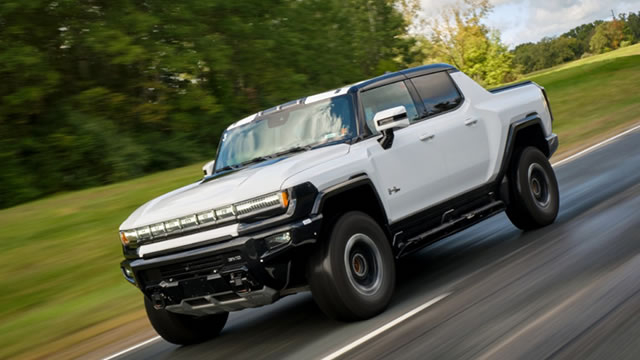
Wedbush将通用汽车的目标价从75美元上调至95美元,维持"跑赢大市"评级。(格隆汇) ...
前特斯拉Autopilot主管斯特林・安德森有望接任GM CEO,通用技术转型成关键考验
Sou Hu Cai Jing· 2025-12-19 06:13
Core Viewpoint - General Motors (GM) is evaluating the potential of Sterling Anderson, the current Chief Product Officer, to succeed CEO Mary Barra, focusing on his ability to integrate advanced software and autonomous driving technology into GM's product lineup [1][3]. Group 1: Leadership Transition - Anderson joined GM in June and is seen as a strong candidate for CEO if he meets Barra's expectations for transforming GM into a "smart car" and autonomous driving company [3]. - Barra, who is nearing 64 years old, does not have a mandatory retirement timeline, leaving her position open for an extended period [4]. - Mark Reuss, GM's current president, is also considered a potential successor to Barra [4]. Group 2: Technological Transformation - Anderson is tasked with enhancing in-car computing power to allow software to take over more mechanical functions, including steering and braking, and to develop subscription-based software features for long-term revenue [4]. - GM aims to launch a complete vehicle software system by 2028, targeting hands-free and eyes-free driving capabilities on highways, with plans to extend this to urban environments [8]. Group 3: Electric Vehicle Challenges - GM's electric vehicle (EV) business has faced setbacks, including a $1.6 billion impairment charge in Q3 due to slowing EV sales after the U.S. government eliminated a $7,500 federal tax credit [6]. - The company has invested over $10 billion in the Cruise autonomous taxi project, which was halted after pedestrian accidents [6]. - Anderson is collaborating with GM's battery and propulsion systems VP to implement a lithium manganese-rich battery solution, which could reduce the cost of large EVs by approximately $10,000 [9]. Group 4: Software Development Issues - GM's initial attempts at software-defined vehicles have encountered difficulties, such as the Chevrolet Blazer EV being temporarily halted due to software issues [7]. - The company is in the process of rebuilding its software team after previous layoffs and is actively recruiting talent from the autonomous driving sector [8]. Group 5: External Challenges - Anderson faces historical resistance from traditional Detroit automakers towards "outsider" executives, which could pose a challenge to his leadership [10]. - His initial strategy involves engaging with thousands of engineers and managers to understand GM's operations before implementing significant changes [11].

销量腰斩,车企停产,美国电动车进入寒冬
Xin Lang Ke Ji· 2025-12-19 02:44
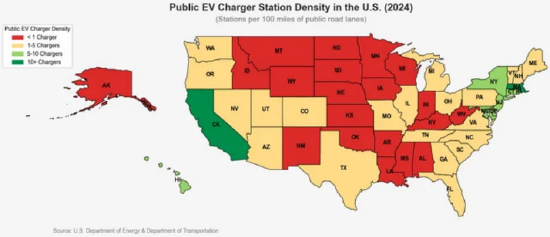
Core Viewpoint - The cancellation of federal electric vehicle tax credits by the Trump administration has plunged the U.S. electric vehicle industry into a downturn, leading to a significant drop in sales and a shift in focus among traditional automakers towards hybrid and gasoline vehicles [1][2][4]. Group 1: Impact of Policy Changes - The federal electric vehicle tax credit, which provided $7,500 for new electric vehicle purchases and $4,000 for used ones, was abruptly terminated, causing a dramatic 30.3% year-on-year drop in electric vehicle sales in October [2][3]. - In November, electric vehicle sales further declined by 40% year-on-year, with a total of 76,000 units sold, marking a return to early 2022 sales levels [3][4]. - The market share of electric vehicles fell to 5.1% in November, down from a peak of 12.4% in September, indicating a severe contraction in consumer demand [3][4]. Group 2: Traditional Automakers' Response - Major automakers like General Motors and Ford are scaling back their electric vehicle ambitions, shifting focus to hybrid and gasoline models due to the financial losses in their electric vehicle divisions [9][10]. - Ford announced a $1.95 billion asset write-down, with $8.5 billion attributed to its electric vehicle division, and is now prioritizing hybrid models and small electric vehicles [11][12]. - General Motors has delayed the production of electric trucks and reduced its electric vehicle production targets, citing changes in government policy and a slowdown in electric vehicle adoption [10][11]. Group 3: Market Dynamics and Consumer Behavior - The average price of electric vehicles remains significantly higher than gasoline vehicles, with a price gap of 25%, exacerbated by the removal of tax credits [6][7]. - Consumer concerns about charging infrastructure and the practicality of electric vehicles persist, with a lack of charging stations and high insurance costs further deterring potential buyers [6][7]. - The U.S. electric vehicle market is heavily reliant on government incentives, and the abrupt policy changes have led to a loss of consumer confidence and demand [4][5]. Group 4: Comparison with China - In contrast to the U.S. market, China's electric vehicle sales reached 11 million units last year, accounting for 40% of global sales, highlighting a significant disparity in market performance [4][5]. - The U.S. electric vehicle industry faces structural issues, including a lack of policy continuity and predictability, which hampers long-term planning for automakers [5][6]. - Traditional automakers in the U.S. are recognizing the technological advancements of Chinese electric vehicle manufacturers, which are perceived to be ahead in terms of cost, quality, and digital integration [14][15].

销量腰斩,车企停产,美国电动车进入寒冬|硅谷观察
Xin Lang Cai Jing· 2025-12-19 00:06
Core Viewpoint - The cancellation of federal electric vehicle tax credits by the Trump administration has plunged the U.S. electric vehicle industry into a downturn, leading to a significant drop in sales and a shift in focus by traditional automakers towards hybrid and gasoline models [2][28]. Group 1: Impact of Policy Changes - The federal electric vehicle tax credit, which provided $7,500 for new electric vehicle purchases and $4,000 for used ones, was terminated on October 1, marking a significant turning point for the industry [3][29]. - Following the announcement, electric vehicle sales surged by 40% in September, but plummeted by 30.3% year-over-year and 49% month-over-month in October, with sales dropping to 91,000 units and market penetration falling to 5.8% [3][29]. - November saw an even steeper decline, with sales down 40% year-over-year to 76,000 units and market penetration further decreasing to 5.1% [4][30]. Group 2: Market Dynamics and Brand Performance - Tesla's sales fell by 35% and 23% in October and November, respectively, yet its market share increased from 43% to 57% [6][32]. - Other automakers faced severe declines, with Kia EV6/EV9 sales down 71% and 68%, Ford's Mach-E/F-150 Lightning down 61%, and Honda's Prologue down 80% and 87% [6][32]. - Rivian was one of the few brands to show growth, with a 7.6% increase in November despite a 15% decline in October [6][32]. Group 3: Structural Issues in the U.S. Market - The U.S. electric vehicle market's reliance on government support has been highlighted, with analysts predicting a continued decline in sales and market penetration in the coming years [7][33]. - The lack of continuity and predictability in U.S. electric vehicle policies has created challenges for long-term planning among automakers [9][35]. - The average price of electric vehicles remains significantly higher than gasoline vehicles, with a $5,920 difference, exacerbated by the removal of tax credits [10][36]. Group 4: Traditional Automakers' Strategic Shifts - Traditional automakers are shifting from aggressive electrification goals to more conservative strategies, focusing on hybrid and gasoline models due to the current market conditions [14][40]. - General Motors announced a $1.6 billion impairment loss related to its electric vehicle business and adjusted its production targets downward [15][42]. - Ford has also made significant adjustments, including a $19.5 billion asset impairment and a shift in focus from electric to hybrid models, with plans to halt production of the F-150 Lightning electric truck [19][45]. Group 5: Comparison with China - The disparity between the U.S. and Chinese electric vehicle markets is stark, with China accounting for a significant portion of global electric vehicle sales [7][33]. - U.S. automakers face challenges not only in sales but also in technological advancements, with executives acknowledging the need to catch up with Chinese competitors [24][50].
Wedbush: GM better positioned than peers as EV demand cools
Proactiveinvestors NA· 2025-12-18 19:59
Company Overview - Proactive is a financial news publisher that provides fast, accessible, informative, and actionable business and finance news content to a global investment audience [2] - The company has a team of experienced news journalists who produce independent content across various financial markets [2] Market Focus - Proactive specializes in medium and small-cap markets while also covering blue-chip companies, commodities, and broader investment stories [3] - The content delivered includes insights into sectors such as biotech and pharma, mining and natural resources, battery metals, oil and gas, crypto, and emerging digital and EV technologies [3] Technology Adoption - Proactive is recognized for its forward-looking approach and enthusiastic adoption of technology to enhance workflows [4] - The company utilizes automation and software tools, including generative AI, while ensuring that all content is edited and authored by humans [5]
U.S. car maker wins 2025 sales race with 2.8 million vehicles sold
Yahoo Finance· 2025-12-18 17:03
Car buying patterns in 2025 have been all over the place as consumers and the industry have adjusted to the automotive tariffs that dominated the conversation this year. While the U.S. eventually got tariff burdens down to 15% for most of its trade partners, for much of the year, importers were paying 25% on autos and auto parts. While carmakers made it clear that they would not raise prices in response to the tariffs, the threat of increased prices caused consumers to flock to car dealerships. Ford us ...
The electric car transition unravels slowly, then all at once
The Economic Times· 2025-12-18 05:22
Core Insights - The electric vehicle (EV) industry is entering a more uncertain and contested phase, with significant pullbacks from major manufacturers and a shift in regulatory timelines [1][12] - The European Commission has relaxed its aggressive timeline for phasing out internal combustion engines, allowing more time for manufacturers and consumers to transition [1][9] - Major automakers like Ford, General Motors, and Volkswagen are incurring substantial financial charges as they adjust their electric strategies, indicating a broader industry reckoning [2][6][7] Company-Specific Developments - Ford Motor Co. announced $19.5 billion in charges related to its retreat from an aggressive electric strategy, including the cancellation of a planned electric F-Series truck line and a shift towards gas and hybrid vehicles [1][11] - General Motors incurred $1.6 billion in charges tied to reducing EV production capacity and has indicated that more such moves may follow [6][12] - Volkswagen AG is ceasing production of its electric ID.3 hatchbacks, marking the first time in 88 years that it will halt production at a German assembly plant, and has booked €4.7 billion ($5.5 billion) in charges related to its subsidiary Porsche AG's retreat from EVs [7][13] Industry Trends - Tesla Inc. is experiencing a decline in worldwide vehicle deliveries, poised to drop for the second consecutive year, as the company's focus shifts away from its initial electric vehicle goals [3][12] - The transition to EVs is not being abandoned, with industry leaders like GM reaffirming their commitment to electric vehicles as a long-term strategy [8][12] - Despite the challenges, the EV segment is still growing, but sales are not increasing at the pace required to meet future targets set by policymakers [9][12]


GM and Ford Make Merry Amid EV Woes: Which Stock Is a Better Buy for 2026?
Yahoo Finance· 2025-12-17 19:24
Core Insights - Detroit auto giants, particularly GM, are reporting strong profits from their internal combustion engine (ICE) operations despite losses in electric vehicle (EV) sectors [1][5] - GM expects adjusted pre-tax profits between $12 billion and $13 billion in 2025, with adjusted earnings per share (EPS) guidance raised to between $9.75 and $10.50 [1] - Ford has announced a significant $19.5 billion charge related to its EV strategy, halting production of the all-electric F-150 and shifting focus to hybrids and extended-range electric vehicles (EREVs) [2] Financial Performance - GM's financial performance has been impressive, with a 49% rise in stock value over the past year, outperforming Ford [7] - Ford and GM have gained 38% and 53% in stock value respectively this year, despite challenges from tariffs [5] - GM's share count has decreased by 15% year-over-year due to aggressive share repurchases, which are expected to continue [7][8] Market Dynamics - The U.S. automotive industry is experiencing a shift due to the phasing out of the EV tax credit and changes in fuel economy standards [4] - Tesla's CEO anticipates "a few rough quarters" ahead for EV adoption rates, indicating broader challenges in the EV market [3] - Morgan Stanley upgraded GM based on its capital discipline while downgrading Rivian and Tesla amid industry challenges [9] Future Outlook - GM's forward price-to-earnings (P/E) multiple is currently at 7.8x, with expected earnings growth of 12.7% next year, resulting in a PEG multiple of 0.92x [10] - While significant gains like those seen in the past may not recur in 2026, GM is expected to continue benefiting from its legacy ICE business [11]