
电动车补贴政策

Search documents
德国突然复活电车补贴,中国车也不例外
汽车商业评论· 2026-01-20 23:15
Group 1 - The core viewpoint of the article is the introduction of a new car subsidy program in Germany aimed at low- to middle-income families, with a budget of €3 billion to support approximately 800,000 vehicles by 2029 [3][4][9] - The subsidy amounts range from €1,500 to €6,000, with specific criteria based on family size and income levels, emphasizing support for families with children and lower-income households [7][14] - The program includes electric vehicles (BEV), eligible plug-in hybrids (PHEV), and range-extended electric vehicles (REEV), with specific emissions and range requirements for certain models to qualify for subsidies [7][8] Group 2 - The subsidy program is a response to a significant decline in electric vehicle demand in Germany, following the abrupt termination of previous subsidies in late 2023, which led to a cooling market in 2024 [4][12] - The new policy aims to stabilize the automotive manufacturing sector affected by market fluctuations, with a focus on new car purchases rather than used vehicles [9][12] - The program allows for the inclusion of imported vehicles, including those manufactured in China, marking a shift towards a more open market compared to other European countries that have imposed restrictions [15][18] Group 3 - The subsidy structure is designed to target private low-income families, with the intention of making electric vehicles more accessible to those who might be deterred by prices [13][14] - The government has set specific income thresholds for eligibility, with a maximum taxable annual income of €80,000 for families, and additional allowances for children [7][9] - The program's implementation timeline is crucial, as it allows for vehicles registered after January 1, 2026, to qualify for subsidies, with an online application platform expected to launch in May 2026 [8][9]

大行评级|大摩:电动车“国补”延续可确保明年电池行业有高单位数增长 行业首选宁德时代
Ge Long Hui· 2025-12-31 02:43
Group 1 - The core viewpoint of the article is that the introduction of the "national subsidy" policy in mainland China in 2026 will link subsidy amounts to vehicle prices, differing from the fixed subsidy of 2025, but the subsidy cap and covered vehicle models will remain largely unchanged [1] - The continuation of subsidies for electric passenger vehicles is expected to ensure high single-digit growth in the electric vehicle battery industry in 2026 [1] - Strong performance in electric trucks and energy storage systems is anticipated to further enhance industry profitability [1] Group 2 - If strong demand leads to a sustained increase in battery material prices, the company believes that CATL will be able to pass on cost pressures through pricing strategies [1] - The target price for CATL's A-shares is set at 490 yuan, with an "overweight" rating, positioning it as the industry favorite [1]

销量腰斩,车企停产,美国电动车进入寒冬
Xin Lang Ke Ji· 2025-12-19 02:44
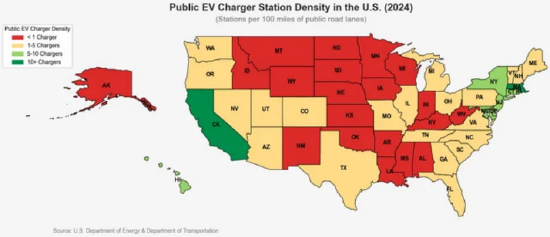
Core Viewpoint - The cancellation of federal electric vehicle tax credits by the Trump administration has plunged the U.S. electric vehicle industry into a downturn, leading to a significant drop in sales and a shift in focus among traditional automakers towards hybrid and gasoline vehicles [1][2][4]. Group 1: Impact of Policy Changes - The federal electric vehicle tax credit, which provided $7,500 for new electric vehicle purchases and $4,000 for used ones, was abruptly terminated, causing a dramatic 30.3% year-on-year drop in electric vehicle sales in October [2][3]. - In November, electric vehicle sales further declined by 40% year-on-year, with a total of 76,000 units sold, marking a return to early 2022 sales levels [3][4]. - The market share of electric vehicles fell to 5.1% in November, down from a peak of 12.4% in September, indicating a severe contraction in consumer demand [3][4]. Group 2: Traditional Automakers' Response - Major automakers like General Motors and Ford are scaling back their electric vehicle ambitions, shifting focus to hybrid and gasoline models due to the financial losses in their electric vehicle divisions [9][10]. - Ford announced a $1.95 billion asset write-down, with $8.5 billion attributed to its electric vehicle division, and is now prioritizing hybrid models and small electric vehicles [11][12]. - General Motors has delayed the production of electric trucks and reduced its electric vehicle production targets, citing changes in government policy and a slowdown in electric vehicle adoption [10][11]. Group 3: Market Dynamics and Consumer Behavior - The average price of electric vehicles remains significantly higher than gasoline vehicles, with a price gap of 25%, exacerbated by the removal of tax credits [6][7]. - Consumer concerns about charging infrastructure and the practicality of electric vehicles persist, with a lack of charging stations and high insurance costs further deterring potential buyers [6][7]. - The U.S. electric vehicle market is heavily reliant on government incentives, and the abrupt policy changes have led to a loss of consumer confidence and demand [4][5]. Group 4: Comparison with China - In contrast to the U.S. market, China's electric vehicle sales reached 11 million units last year, accounting for 40% of global sales, highlighting a significant disparity in market performance [4][5]. - The U.S. electric vehicle industry faces structural issues, including a lack of policy continuity and predictability, which hampers long-term planning for automakers [5][6]. - Traditional automakers in the U.S. are recognizing the technological advancements of Chinese electric vehicle manufacturers, which are perceived to be ahead in terms of cost, quality, and digital integration [14][15].


销量腰斩,车企停产,特朗普取消联邦购车退税补贴,美国电动车行业进入寒冬!中美电车行业为何冰火两重天?
Sou Hu Cai Jing· 2025-12-19 01:28
Core Viewpoint - The cancellation of federal electric vehicle tax credits by the Trump administration has plunged the U.S. electric vehicle industry into a downturn, leading to a significant drop in sales and a shift in focus among traditional automakers towards hybrid and gasoline vehicles [2][3][7]. Group 1: Impact of Policy Changes - The federal electric vehicle tax credit, which provided $7,500 for new electric vehicle purchases and $4,000 for used ones, was abruptly terminated, causing a dramatic decline in electric vehicle sales [3][10]. - In September, prior to the policy change, electric vehicle sales surged by 40% year-on-year, but in October, sales plummeted by 30.3% year-on-year and 49% month-on-month, resulting in only 91,000 units sold [3][4]. - By November, sales further declined by 40% year-on-year to 76,000 units, with the market penetration rate dropping to 5.1%, a level not seen since early 2022 [4][6]. Group 2: Market Dynamics and Brand Performance - Tesla's sales fell by 35% and 23% in October and November, respectively, yet its market share increased from 43% to 57% [6]. - Other automakers faced even steeper declines, with Kia's EV6/EV9 sales down 71% and 68%, Ford's Mach-E/F-150 Lightning down 61%, and Honda's Prologue down 80% and 87% [6]. - Rivian was one of the few brands to show growth, with a 7.6% increase in November despite a 15% drop in October [6]. Group 3: Structural Issues in the U.S. Market - The U.S. electric vehicle market's reliance on government support has been highlighted, with analysts predicting a continued decline in demand due to the lack of incentives [7][9]. - The U.S. electric vehicle market is expected to see a slight decline in sales and penetration rate next year, with projections indicating a return to single-digit penetration rates by 2025 [9][10]. - The cancellation of subsidies and the lack of consistent policy have created an unpredictable environment for automakers, hindering long-term planning [9][10]. Group 4: Consumer Sentiment and Market Conditions - The price gap between electric and gasoline vehicles remains significant, with electric vehicles averaging $59,200 compared to $47,500 for gasoline vehicles, a 25% difference [10][11]. - The cancellation of subsidies exacerbates this price disadvantage, making electric vehicles less appealing to consumers, especially as gasoline prices decline [10][11]. - Concerns about charging infrastructure and the overall cost of ownership further deter potential buyers, with a significant shortage of charging stations relative to the number of electric vehicles [13][14]. Group 5: Traditional Automakers' Strategic Shifts - Traditional automakers are scaling back their electric vehicle ambitions, shifting focus to hybrid and gasoline models in response to market realities [14][15]. - General Motors announced a $1.6 billion impairment loss related to its electric vehicle business and adjusted its production targets downward [15][18]. - Ford reported a $19.5 billion asset impairment, with significant losses in its electric vehicle division, leading to a strategic pivot towards hybrid models [19][21]. Group 6: Competitive Landscape and Global Context - The U.S. electric vehicle market is lagging behind China, which accounted for 1.1 million electric vehicle sales last year, representing a 40% year-on-year growth [9][24]. - Ford's CEO acknowledged the technological gap between U.S. and Chinese electric vehicle manufacturers, emphasizing the need for U.S. companies to adapt and innovate [24][26].
销量腰斩,车企停产,美国电动车进入寒冬|硅谷观察
Xin Lang Cai Jing· 2025-12-19 00:06
Core Viewpoint - The cancellation of federal electric vehicle tax credits by the Trump administration has plunged the U.S. electric vehicle industry into a downturn, leading to a significant drop in sales and a shift in focus by traditional automakers towards hybrid and gasoline models [2][28]. Group 1: Impact of Policy Changes - The federal electric vehicle tax credit, which provided $7,500 for new electric vehicle purchases and $4,000 for used ones, was terminated on October 1, marking a significant turning point for the industry [3][29]. - Following the announcement, electric vehicle sales surged by 40% in September, but plummeted by 30.3% year-over-year and 49% month-over-month in October, with sales dropping to 91,000 units and market penetration falling to 5.8% [3][29]. - November saw an even steeper decline, with sales down 40% year-over-year to 76,000 units and market penetration further decreasing to 5.1% [4][30]. Group 2: Market Dynamics and Brand Performance - Tesla's sales fell by 35% and 23% in October and November, respectively, yet its market share increased from 43% to 57% [6][32]. - Other automakers faced severe declines, with Kia EV6/EV9 sales down 71% and 68%, Ford's Mach-E/F-150 Lightning down 61%, and Honda's Prologue down 80% and 87% [6][32]. - Rivian was one of the few brands to show growth, with a 7.6% increase in November despite a 15% decline in October [6][32]. Group 3: Structural Issues in the U.S. Market - The U.S. electric vehicle market's reliance on government support has been highlighted, with analysts predicting a continued decline in sales and market penetration in the coming years [7][33]. - The lack of continuity and predictability in U.S. electric vehicle policies has created challenges for long-term planning among automakers [9][35]. - The average price of electric vehicles remains significantly higher than gasoline vehicles, with a $5,920 difference, exacerbated by the removal of tax credits [10][36]. Group 4: Traditional Automakers' Strategic Shifts - Traditional automakers are shifting from aggressive electrification goals to more conservative strategies, focusing on hybrid and gasoline models due to the current market conditions [14][40]. - General Motors announced a $1.6 billion impairment loss related to its electric vehicle business and adjusted its production targets downward [15][42]. - Ford has also made significant adjustments, including a $19.5 billion asset impairment and a shift in focus from electric to hybrid models, with plans to halt production of the F-150 Lightning electric truck [19][45]. Group 5: Comparison with China - The disparity between the U.S. and Chinese electric vehicle markets is stark, with China accounting for a significant portion of global electric vehicle sales [7][33]. - U.S. automakers face challenges not only in sales but also in technological advancements, with executives acknowledging the need to catch up with Chinese competitors [24][50].
大行评级|里昂:预计吉利汽车今年销量超300万辆目标 维持“高确信跑赢大市”评级
Ge Long Hui· 2025-09-17 02:57
Core Viewpoint - Geely Automobile benefits from its internal combustion engine (ICE) and new energy vehicle (NEV) strategies, which may mitigate potential risks from electric vehicle subsidy policies [1] Group 1: Market Positioning - The company maintains a target price of HKD 23 and a "high conviction outperform" rating [1] - Geely is expected to achieve a market share of over 29% in the new energy vehicle segment this year, with export volumes reaching 420,000 units [1] Group 2: Growth Prospects - The company is entering new markets in Latin America and Europe while launching more new energy models overseas, which supports confidence in achieving its targets [1] - Monthly sales of the Geely Galaxy are projected to exceed 150,000 units, with overall sales expected to surpass the target of 3 million units for the year, and internal combustion engine sales anticipated to reach at least 1 million units [1]

销量连跌7月!特斯拉欧洲颓势加剧,德国、英国市场重挫
Hua Er Jie Jian Wen· 2025-08-05 13:43
Core Insights - Tesla's sales in major European markets are declining despite the launch of the upgraded Model Y, with significant drops reported in Germany and the UK [1][2][3] - The decline in sales is attributed to multiple factors, including CEO Elon Musk's controversial political stance, increased competition, and uncertainty regarding electric vehicle subsidy policies [1][2][3] Group 1: Sales Performance - In Germany, Tesla sold only 1,110 vehicles in July, a year-on-year decrease of 55.1%, with total sales for the first seven months at 10,000 units, down 57.8% compared to the previous year [1][2] - In the UK, Tesla's registrations fell from 2,462 vehicles last July to 987 in July this year, marking a 60% decline [1][2] - Other European markets also showed declines, with France down 27% to 1,307 vehicles, Sweden down 86% to 163 vehicles, and Belgium down 58% to 460 vehicles [1] - Conversely, Spain and Norway saw increases in registrations, with growth rates of 27% and 83%, respectively [1] Group 2: Market Context - The overall demand for electric vehicles in Germany remains strong, with new registrations increasing by 58% in July to 48,614 vehicles, highlighting Tesla's competitive disadvantage [2] - The UK automotive market experienced a 5% decline in overall registrations, but Tesla's drop was significantly larger than the market average [2] Group 3: Competitive Landscape and Challenges - Chinese electric vehicle manufacturer BYD is performing well in Europe, with sales in Germany increasing nearly fivefold to 1,126 vehicles and registrations in the UK growing over fourfold to 3,184 vehicles [3] - Consumer sentiment towards Elon Musk has declined, with a 26% drop in favorability towards him and a 32% decrease in favorability towards the Tesla brand, impacting future purchase likelihood [3] - In response to these challenges, Tesla's board approved a new compensation package of 96 million shares for Musk to incentivize performance improvement [3]
海外车情|英国出台电动车补贴政策,中国品牌或被排除在外
Guan Cha Zhe Wang· 2025-07-23 23:15
Group 1 - The UK government announced a new subsidy policy for electric vehicles (EVs) totaling £650 million, which will assess subsidy eligibility based on the carbon emissions of the electricity used in vehicle production [1] - EVs priced below £37,000 can receive a maximum subsidy of £3,750 for the lowest emissions models, while slightly higher emissions models can receive up to £1,500 [1] - The policy has caused confusion within the automotive industry, with some companies establishing "war rooms" to analyze which models fall under the various emission categories [1] Group 2 - Industry experts warn that the policy may suppress new car sales in the short term and negatively impact second-hand EV prices in the long term [1] - The British Vehicle Rental and Leasing Association (BVRLA) expressed concerns that stimulating new car demand without supporting the second-hand market could accelerate depreciation of used car prices [2] - The Chinese Embassy in the UK urged the government to ensure a fair and non-discriminatory environment for investments from all countries, criticizing the policy as exclusionary and protectionist [2] Group 3 - BYD's executive vice president criticized the subsidy policy as "meaningless," suggesting it aims to exclude Chinese brands and acts as a "backdoor tariff" [2] - BYD plans to open approximately 280 stores in the UK, creating over 5,000 jobs, with each store expected to employ around 20 people [3] - BYD aims to localize production in Europe through factories in Hungary and Turkey, and plans to establish 2,000 retail stores across Europe, with Chinese brands currently holding nearly 5% market share in the UK and European EV markets [3]

硅谷观察:马斯克不管特斯拉死活了?自立门户开干驴象两党
Xin Lang Ke Ji· 2025-07-06 23:09
Core Points - Elon Musk has officially established a new political party called the "America Party" to challenge the existing Democratic and Republican parties, driven by dissatisfaction with the recently passed "Big Beautiful Bill" [3][5][6] - The new party aims to participate in upcoming midterm elections, with Musk's immediate goal being to secure seats in the Texas congressional elections [7][24] - The "Big Beautiful Bill" is expected to significantly impact Tesla and the broader electric vehicle and renewable energy sectors by eliminating subsidies and incentives that have supported their growth [17][19][20] Group 1: Formation of the America Party - Musk's decision to create the America Party follows his public discontent with the "Big Beautiful Bill," which he believes will exacerbate the national debt and eliminate crucial subsidies for electric vehicles [5][17] - The party's registration process is straightforward, but the challenge lies in meeting the requirements to participate in elections, which Musk is likely to navigate successfully due to his influence and resources [6][24] - Musk's America Party aims to win 1-2 Senate seats and 8-10 House seats, potentially influencing contentious legislation if successful [24] Group 2: Impact of the Big Beautiful Bill - The "Big Beautiful Bill" is projected to increase the national debt by $3-5 trillion over the next decade, which Musk has publicly criticized [17][21] - The bill will eliminate federal tax credits for electric vehicle purchases, significantly affecting Tesla's market demand and profitability [18][19] - The removal of subsidies and incentives for renewable energy projects, including solar and geothermal, will likely lead to a downturn in the industry, impacting Tesla as a major player [18][20] Group 3: Political and Business Implications - Musk's political involvement may jeopardize Tesla's business interests, as the company could become a target for retaliation from the Republican party if the America Party threatens their electoral base [27][28] - Analysts have expressed concerns that Musk's political activities could distract him from managing Tesla, potentially leading to further declines in sales, which have already seen significant drops in recent quarters [27][28] - The relationship between Musk and Trump has soured, with Trump warning that Musk's previous subsidies could be revoked, which would have dire consequences for Tesla's operations [21][27]
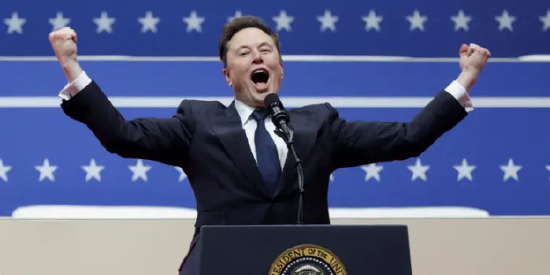
特斯拉暴泻14%!特朗普与马斯克“对战”升级,市值蒸发逾1500亿美元
Di Yi Cai Jing Zi Xun· 2025-06-05 23:04
Core Viewpoint - The conflict between Tesla CEO Elon Musk and former President Donald Trump has intensified, leading to significant market concerns regarding Tesla's future and its valuation [1][2]. Group 1: Market Reaction - Tesla's stock price dropped by 14.2%, marking its largest single-day decline since 2020, resulting in a market capitalization loss of over $150 billion [1]. - Following Musk's criticism of the congressional spending bill, institutional investors engaged in large-scale selling of Tesla shares [2]. - The stock's trading volume was nearly double the average of the past 100 days, indicating heightened market activity and concern [3]. Group 2: Legislative Impact - The House version of the budget bill proposes to phase out the $7,500 federal tax credit for electric vehicle purchases by the end of 2025, which has raised alarms among investors [2]. - Morgan Stanley estimates that if the bill passes, Tesla could face a profit pressure of up to $3.2 billion due to additional regulatory constraints [2]. Group 3: Political Dynamics - Musk's shifting political stance, from supporting Trump to criticizing his administration's policies, has led to skepticism from both Democratic and Republican supporters [2]. - The public confrontation between Musk and Trump could expose Tesla to uncontrollable business risks, as highlighted by investment manager Jed Ellerbroek [2]. - Steve Bannon, a former senior advisor to Trump, suggested that if Trump returns to power, a comprehensive review of government contracts and subsidies for Musk's companies would be necessary [3]. Group 4: Valuation Concerns - Tesla's stock has declined by 29.5% year-to-date, with a significant portion of its gains from last summer being erased due to political controversies and protests [2]. - The company's current trading price reflects a valuation of 140 times future earnings, which remains high compared to other major tech stocks like Nvidia [3].