Alphabet(GOOG)

Search documents
瑞银警告AI基础设施已接近峰值,谷歌发行罕见“世纪债券”
第一财经· 2026-02-11 05:20
作者 | 第一 财经 钱童心 封图 | AI生成 当地时间2月10日,瑞银警告称,AI基础设施支出可能已接近峰值。瑞银首席投资办公室当天下调了 美国科技板块评级至中性。 在瑞银发出最新警告后,当天美股收盘,科技板块股价普遍下跌。谷歌股价下跌近1.8%,Meta、亚 马逊等公司股价均下跌近1%。 瑞银下调评级的举措发生在美国软件股经历了一周惨重的暴跌之后。投行杰富瑞分析师也在近期的一 份报告中指出,AI资本支出将面临放缓,这是目前科技行业投资面临最大的不利因素。 不过科技公司扩大AI资本支出的野心并未受到影响。谷歌已于周一发行了罕见的100年期的"世纪债 券",以支持AI基础设施的扩张。根据IFR的数据,谷歌百年债券的认购额几乎是目标金额的十倍, 收益率为 6.05%。 上周,甲骨文也发行了价值250亿美元的债券,并成为2026年首家试水债务市场的大型科技公司。 此外,据市场消息,Meta也计划在今年进行大规模债券发行,以期加速推进在美国境内建设数据中 2026.02. 11 本文字数:1062,阅读时长大约2分钟 大型科技公司转向债券市场也引发了投资者的担忧。一些分析师认为,债券收益未能跟上美国科技巨 头在人 ...



每日债市速递 | 银行间市场资金面整体偏紧
Sou Hu Cai Jing· 2026-02-11 04:40
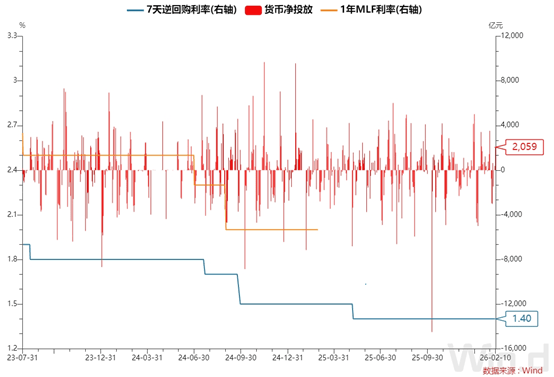
Group 1: Monetary Policy and Market Operations - The central bank conducted a 7-day reverse repurchase operation on February 10, with a fixed rate and a total amount of 311.4 billion yuan, at an interest rate of 1.40%, resulting in a net injection of 205.9 billion yuan for the day after accounting for 105.5 billion yuan in reverse repos maturing [2][4] - The interbank market showed a tightening in liquidity, with the weighted average rate of DR001 rising over 9 basis points to 1.36%, while overnight borrowing rates for non-bank institutions increased to above 1.6% and 1.65% for overnight and cross-period funding, respectively [4] - The latest overnight financing rate in the US was reported at 3.64% [6] Group 2: Financial Instruments and Yield Trends - The latest transaction rate for one-year interbank certificates of deposit from major banks was around 1.59%, showing a slight increase from the previous day [7] - The closing yields for government bond futures showed a slight increase, with the 30-year and 10-year contracts rising by 0.01%, while the 5-year and 2-year contracts remained unchanged [12] Group 3: Fiscal Policy and Investment Trends - In the context of increasing fiscal revenue and expenditure contradictions, there is a noticeable shift in China's fiscal spending structure, with more funds being directed towards human capital and a decline in infrastructure investment. However, manufacturing and high-tech service investments remain resilient, indicating a transition in investment structure from traditional infrastructure to new productive forces [13] - The Ministry of Finance and the People's Bank of China conducted a tender for 2026 central treasury cash management deposits on February 10, with a total bid amount of 150 billion yuan at an interest rate of 1.73% [13] Group 4: Bond Market Developments - Fitch Ratings upgraded Vanke's long-term foreign and local currency issuer ratings from "RD" to "CC" [15] - The first batch of ESG standardized bonds for financing leasing in Tianjin has been issued [15] - Following refinancing policy changes, Zhongke Shuguang plans to issue convertible bonds not exceeding 8 billion yuan [15]



Google Cloud Is Turning AI Demand Into Profits. Should You Buy the Stock?
The Motley Fool· 2026-02-11 04:23
Core Insights - Alphabet is experiencing strong demand for its AI cloud services, with significant revenue and profit growth driven by Google Cloud [1][4] - Google Cloud's operating income surged 154% year over year in Q4, contributing to Alphabet's overall double-digit earnings growth [2][4] - Cloud revenue increased by 48% year over year, accelerating from a previous 34% increase, with operating income reaching $5.3 billion in Q4 [4] Financial Performance - Google Cloud currently contributes 15% of Alphabet's total operating profit, while digital advertising remains the primary revenue source at 72% of Q4 revenue [4] - Alphabet's stock price has seen a significant recovery, increasing by 107% in 2025 after a sell-off in April [1] - The current market capitalization of Alphabet is $3.9 trillion, with a stock price of $318.57 [5] Investment Outlook - Alphabet is planning to double its capital spending in 2026, which may create short-term pressure on share prices [6] - The company is focusing on investing in AI infrastructure, positioning itself to capture future profits from AI technology [7] - Despite higher share prices, the stock is trading at 28 times 2026 earnings estimates, which is considered reasonable for a company of its caliber [7]
不要低估内嵌式AI
Sou Hu Cai Jing· 2026-02-11 04:22
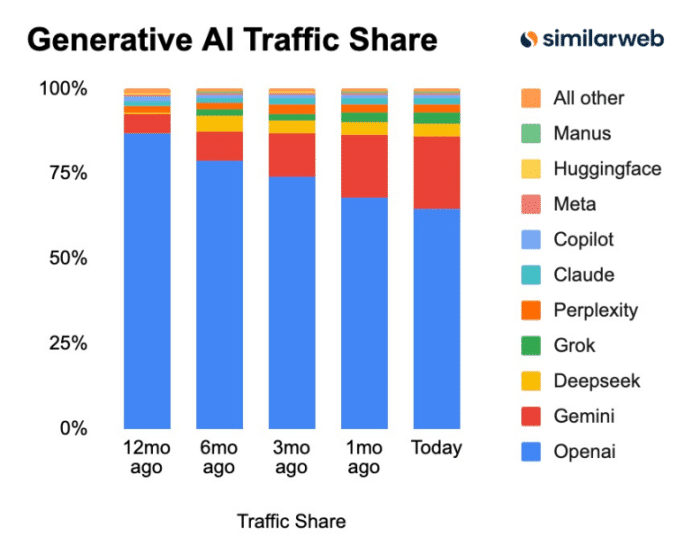
Group 1 - The core competition among major tech companies during the 2026 Spring Festival revolves around AI assistants, with significant marketing budgets exceeding 5 billion yuan from Baidu, Tencent, ByteDance, and Alibaba [1] - Companies are adopting different strategies: some are creating independent AI apps, while others are embedding AI into existing applications to leverage their established user bases [2][8] - The success of Google's embedded AI strategy, which has significantly increased user engagement, suggests that integrating AI into existing platforms can be more effective than standalone applications [3][4] Group 2 - Baidu's approach focuses on integrating its AI assistant, Wenxin, into the Baidu app, capitalizing on its large user base of over 700 million monthly active users [8][15] - The trend indicates that AI applications that are deeply integrated into user scenarios will likely see better user retention compared to those that create new demands [15][21] - The competition is not just about individual products but about the overall ecosystem and the ability to provide comprehensive services that meet user needs [17][21] Group 3 - The current AI landscape shows that user retention rates for major AI assistants are low, with many users abandoning the apps after initial use, indicating a need for improvement in product offerings [14][15] - Baidu's strategy includes exploring AI in social contexts, allowing users to interact with multiple AI agents in group chats, enhancing the user experience [11][12] - The battle for AI market share is intensifying, with companies like Alibaba and Tencent also launching aggressive marketing campaigns to capture user attention during the Spring Festival [20]

狂砸6500亿美元押注AI,科技巨头们的“烧钱叙事”能走多远?
Guo Ji Jin Rong Bao· 2026-02-11 04:13
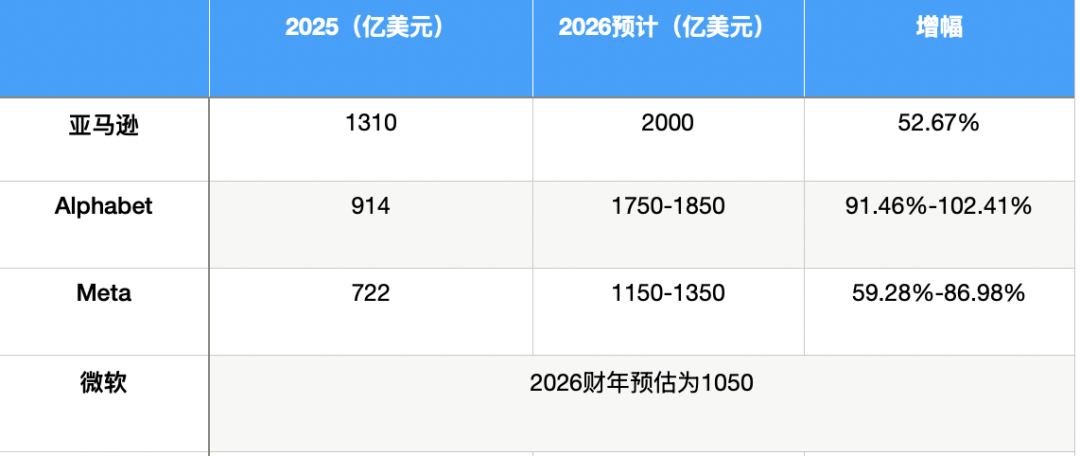
Core Viewpoint - The focus of the market has shifted towards the substantial capital expenditure budgets set by major tech companies for 2026, which are significantly higher than expected, totaling approximately $650 billion, indicating a strong commitment to AI development despite concerns from investors about the aggressive spending plans [1][4]. Group 1: Capital Expenditure Plans - Amazon is projected to have a capital expenditure of $200 billion in 2026, exceeding analyst expectations of $144.7 billion, representing a year-over-year increase of over 50% from $131 billion in 2025 [2][3]. - Alphabet (Google) anticipates capital expenditures between $175 billion and $185 billion for 2026, a significant increase from $91.4 billion in 2025, reflecting a growth rate of approximately 91.5% to 102.4% [3]. - Meta plans to double its capital expenditure to between $115 billion and $135 billion in 2026, compared to $72.2 billion in 2025, indicating a growth rate of 59.3% to 87% [3]. - Microsoft is expected to reach a capital expenditure of $105 billion for its fiscal year ending in June 2026, with a reported $37.5 billion in capital expenditures for the second fiscal quarter, marking a 66% year-over-year increase [2][3]. Group 2: Investment Focus and Strategy - The investment strategies of these companies are aligned, focusing on the strong demand for AI while addressing capacity constraints that require increased investment [4]. - Meta is prioritizing investments in computational infrastructure, with plans to build large-scale data centers to support AI models and ensure stable power supply [4]. - Alphabet aims to enhance its computational and cloud services capabilities, with approximately 60% of its 2026 capital expenditures allocated to servers and 40% to data centers and network equipment [5]. - Amazon's capital expenditures will primarily support its cloud business (AWS) to meet strong customer demand, emphasizing the ability to quickly deploy computing resources [6]. Group 3: Market Performance and Concerns - The cloud business is becoming a high-return investment area in the AI sector, with notable performances from major cloud service providers during the earnings season [7]. - Amazon's AWS sales reached $35.6 billion in Q4 2025, a 24% year-over-year increase, while Microsoft's cloud revenue grew 26% to $51.5 billion, and Alphabet's cloud revenue increased 48% to $17.7 billion [8]. - Despite the strong order backlog, which includes $240 billion for Google Cloud and $244 billion for AWS, there are concerns about the pressure on profitability and cash flow due to the need for continued capital investment [8][9]. Group 4: Financial Health and Investor Sentiment - Amazon's free cash flow has dropped significantly from $38.2 billion to $11.2 billion over the past year, with predictions of a negative free cash flow of $17 billion in 2026 [9]. - Alphabet is also facing challenges, with projections indicating a 58% and 80% drop in free cash flow per share for the fiscal years 2026 and 2027, respectively [9]. - Microsoft's aggressive capital expenditure plans have raised concerns among investors, leading to a 10% drop in its stock price following its earnings report, the largest single-day decline since March 2020 [9][10].



谷歌Chrome深夜爆更,Agent不用「装」人了,前端最后防线崩了?
3 6 Ke· 2026-02-11 04:12
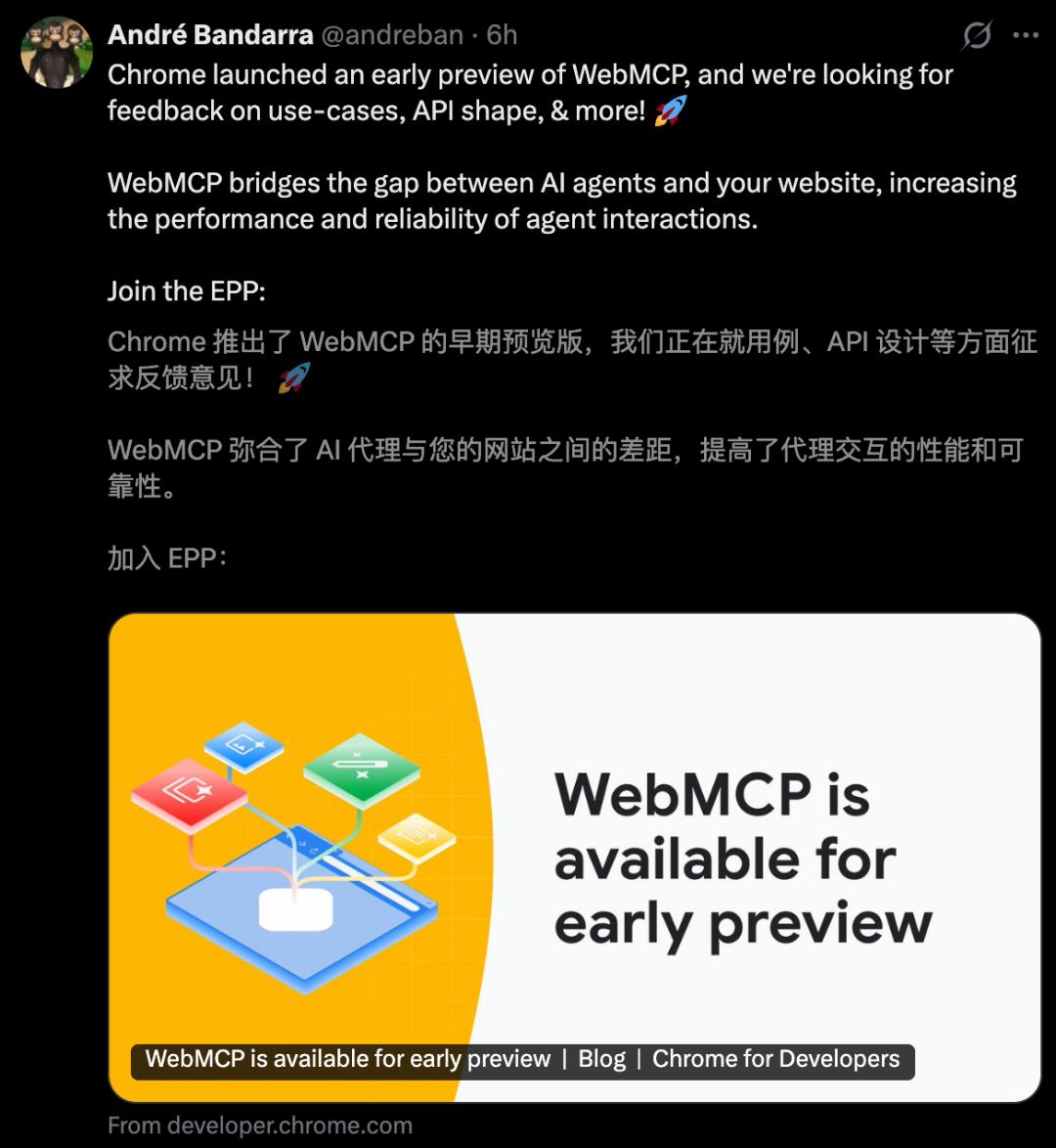
Core Insights - Google Chrome team has introduced WebMCP (Web Model Context Protocol), allowing AI agents to interact directly with websites and web applications, bypassing the human user interface [1][6][7] Group 1: WebMCP Overview - WebMCP enables AI agents to skip visual simulations and interact with web applications through a direct API, enhancing efficiency [6][12] - The protocol represents a significant shift from traditional web interaction paradigms, moving towards a logic-based connection [7][9] - WebMCP is seen as a "superpower" for agents, allowing them to execute commands directly on websites without manual navigation [6][9] Group 2: Advantages of WebMCP - The protocol offers three main advantages: code reuse, unified interface for users and agents, and enhanced accessibility for assistive technologies [27][25] - It allows agents to perform tasks like booking flights or making purchases more efficiently by directly calling functions instead of navigating through UI [28][30] - WebMCP aims to create a collaborative environment where users, web pages, and agents can work together seamlessly [20][25] Group 3: Development and Collaboration - WebMCP is a collaborative project initiated by Google and Microsoft, indicating a joint effort to redefine web interactions [21][23] - Developers are provided with two flexible API access methods: declarative API for standard operations and imperative API for complex interactions [18][19] Group 4: Future Implications - The introduction of WebMCP is expected to accelerate the transition from manual searches to automated execution by AI agents, marking a new era in web interaction [39][38] - The future web may evolve into a two-layer structure, focusing on discovery of tools and clear data schemas, enhancing the interaction between users and AI [36][37]
瑞银警告AI基础设施已接近峰值 谷歌发行罕见“世纪债券”
Di Yi Cai Jing· 2026-02-11 04:08
上周,甲骨文也发行了价值250亿美元的债券,并成为2026年首家试水债务市场的大型科技公司。此外,据市场消 息,Meta也计划在今年进行大规模债券发行,以期加速推进在美国境内建设数据中心的计划。 最新的财报则预计,微软、谷歌、亚马逊、Meta和甲骨文等公司今年在AI基础设施方面支出的投入可能高达7000亿 美元。 当地时间2月10日,瑞银警告称,AI基础设施支出可能已接近峰值。瑞银首席投资办公室当天下调了美国科技板块评 级至中性。 在瑞银发出最新警告后,当天美股收盘,科技板块股价普遍下跌。谷歌股价下跌近1.8%,Meta、亚马逊等公司股价 均下跌近1%。 瑞银下调评级的举措发生在美国软件股经历了一周惨重的暴跌之后。投行杰富瑞分析师也在近期的一份报告中指 出,AI资本支出将面临放缓,这是目前科技行业投资面临最大的不利因素。 不过科技公司扩大AI资本支出的野心并未受到影响。谷歌已于周一发行了罕见的100年期的"世纪债券",以支持AI基 础设施的扩张。根据IFR的数据,谷歌百年债券的认购额几乎是目标金额的十倍,收益率为 6.05%。 相关统计数据显示,过去3年里,科技巨头在AI基础设施方面的支出增长了超过4倍。而最 ...


“AI之战”输不得!如果美股Mag 7今年就把现金流“烧成负数”,这对市场意味着什么?
美股IPO· 2026-02-11 04:01
Core Viewpoint - The AI capital expenditure is projected to reach $740 billion by 2026, representing a year-on-year growth of approximately 70%, which is consuming the operating cash flow of major US tech companies, with the exception of Microsoft, whose free cash flow may turn negative for others [1][6][12]. Group 1: AI Capital Expenditure - The combined capital expenditure guidance for major cloud providers, including Google, Amazon, Microsoft, and Meta, is approximately $650 billion for 2026 [4]. - Including Oracle and CoreWeave, the total capital expenditure rises to $740 billion, which is significantly higher than market expectations and represents a doubling of the anticipated growth rate [5][6]. - This $740 billion figure is close to the total annual operating cash flow of the entire large-scale cloud provider ecosystem [6]. Group 2: Cash Flow and Debt Implications - Goldman Sachs analysts indicate that if capital expenditures reach $700 billion in 2026, it would nearly equal the total operating cash flow of large-scale cloud providers [11]. - Only Microsoft is expected to maintain operating cash flow sufficient to cover capital expenditures by 2026, while other companies may exhaust their free cash flow even if stock buybacks are halted [12][16]. - AI-related debt constitutes about 14% of the US investment-grade bond market, indicating a significant shift of funds from the equity market to the debt market [18][23]. Group 3: Market Reactions and Risks - Major tech companies are increasingly turning to the debt market to finance their AI expenditures, with Oracle issuing a record $25 billion bond and Google following with a $20 billion bond issuance [19][20]. - The demand for bonds remains strong, but signs of strain are beginning to appear, with widening spreads in investment-grade corporate bonds [26]. - The software industry is facing valuation challenges as AI tools threaten to render traditional software products obsolete, leading to a decline in software company bond prices [30][31]. Group 4: Strategic Dilemmas and Future Scenarios - Tech giants are caught in a "prisoner's dilemma," where the rational choice is to continue investing heavily in AI despite the risks of financial strain and potential market share loss [37][39]. - The outcome of this investment strategy hinges on the return on investment (ROI), with a significant gap between projected profits and required returns [40][41]. - Two potential scenarios are outlined: a bullish scenario where AI adoption mirrors cloud computing success, and a bearish scenario reminiscent of past tech failures, indicating that not all giants may achieve sufficient long-term profitability [44].
AI巨额支出引投资人警告:科技七巨头恐被压垮 谷歌拥致胜法宝
Xin Lang Cai Jing· 2026-02-11 02:57
来源:格隆汇APP Hawtin还指出,人工智能竞赛中一个关键因素可能决定胜负:专有数据。"数据的所有权将绝对决定谁 能最终胜出。"并以谷歌母公司Alphabet去年的强劲表现为例。Hawtin表示,尽管Alphabet去年起初表现 不佳,但最终仍成为"科技七巨头"中表现最好的公司,全年涨幅达65%,而"这主要归功于其庞大的专 有数据集"。 格隆汇2月11日|"科技七巨头"——苹果、微软、亚马逊、Alphabet、Meta、特斯拉和英伟达——不断 增长的资本支出,预示着投资者面临的风险增加,并可能成为这些主导公司最终跑输大盘的催化剂。这 是英国基金管理公司Liontrust全球股票主管Hawtin的最新观点。他指出,最近财报中宣布的激进支出计 划是那些寻求可靠回报的股东们最关心的问题。 ...

手机上80%的App面临失业?
3 6 Ke· 2026-02-11 02:48
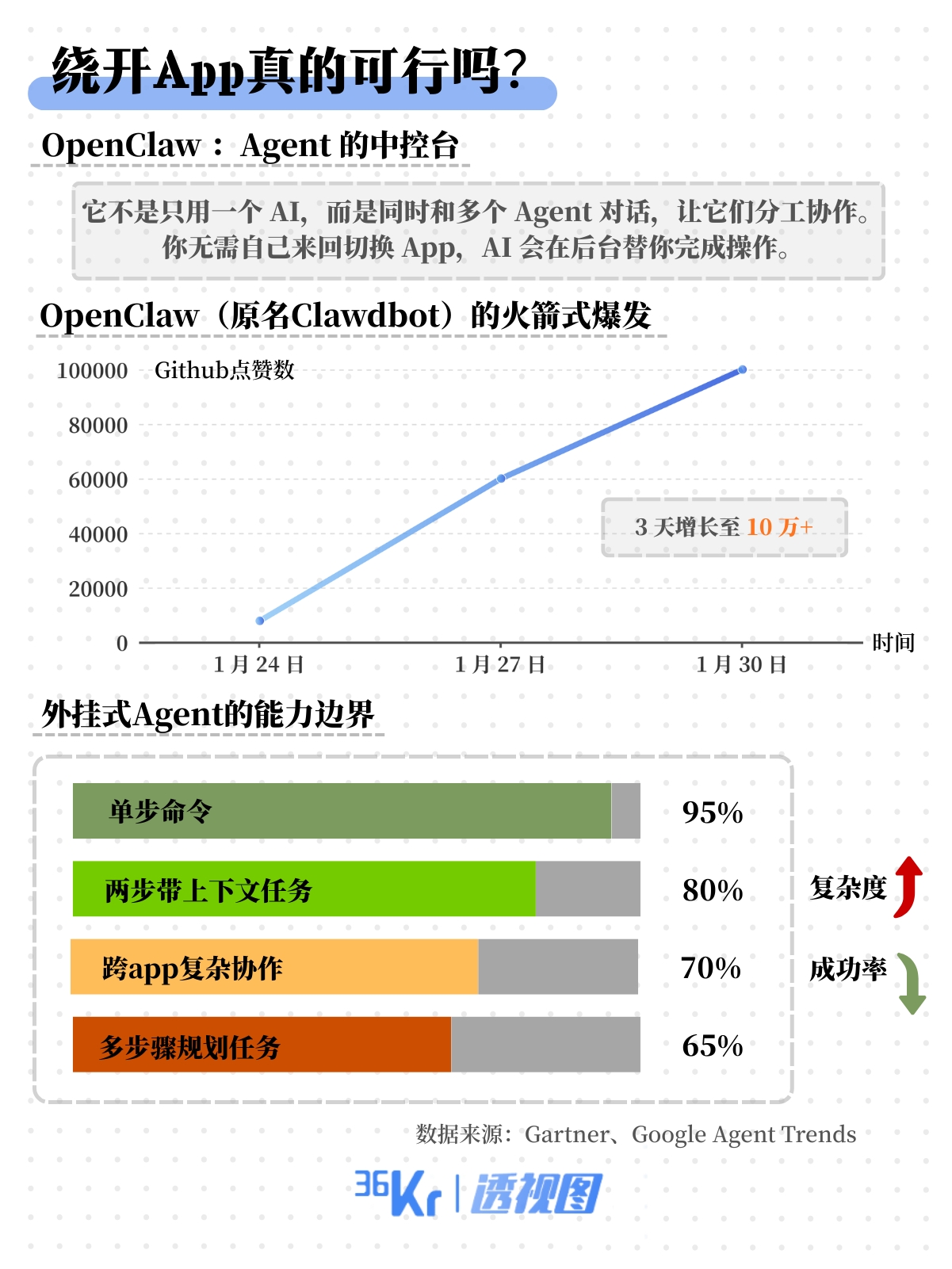
Group 1 - The core idea of the article is that the future operating systems will shift from traditional app-based interactions to intent-based interactions, potentially leading to the obsolescence of 80% of apps as they will no longer be actively opened by users [1] - OpenClaw operates on a "swarm" model, coordinating multiple agents to function as a central control panel, transforming AI from a responder to an executor, indicating a new execution structure above apps [3] - ByteDance is taking a direct approach by utilizing visual recognition to enable AI to "use apps" independently, demonstrating the potential for interface-level takeover, although current limitations in edge computing power result in delays and lower success rates [6] Group 2 - The competitive landscape is shifting between Apple and Google, with significant changes in their roles and strategies [8] - Financial flows are changing, as Google has historically paid Apple around $20 billion annually to maintain its default search status, while Apple may soon pay $1 billion to access Gemini, indicating a shift in pricing power for entry points from search boxes to system-level AI [10] - While apps will not disappear, their roles are becoming marginalized as AI can directly understand user intent and execute processes, leading to a future where the initiation of actions will be based on intent rather than app interactions [12]