
Alphabet(GOOG)

Search documents
机械设备行业周报:海外财报回顾:AI领域资本支出有望加码,相关设备订单表现向好-20260211
Donghai Securities· 2026-02-11 08:59
Investment Rating - The report rates the machinery equipment industry as "Overweight" [1] Core Insights - The machinery equipment sector is experiencing significant growth driven by increased demand for efficient cooling solutions in data centers and AI infrastructure [3][22] - Major companies like Trane Technologies and Johnson Controls are reporting strong order growth, indicating a robust market environment [9][15] - Google's substantial capital expenditure plans for 2026 highlight the increasing investment in AI and cloud infrastructure, which is expected to further boost demand for related equipment [21] Summary by Sections 1. Trane Technologies Financial Review - Trane Technologies reported Q4 2025 revenue of $5.1 billion, a 6% year-over-year increase, with adjusted EPS of $2.86, up 10% [9] - The company saw a 24% increase in new orders, with a record backlog of $7.8 billion, indicating strong future revenue potential [10] - The commercial HVAC business is a key growth driver, with orders up over 35% in Q4 2025 [10] 2. Johnson Controls Performance - Johnson Controls achieved Q1 2026 revenue of $5.8 billion, a 7% increase year-over-year, with a 39% rise in self-owned business orders [15] - The company has raised its adjusted EPS guidance for FY 2026 to approximately $4.70, reflecting a 25% year-over-year growth [15] - The introduction of new products like the YORK YDAM chiller is aimed at enhancing data center cooling solutions [20] 3. Google's Cloud Business - Alphabet reported Q4 2025 revenue of $113.8 billion, an 18% increase, with cloud revenue growing 48% due to AI infrastructure demand [21] - The company plans to invest $175 to $185 billion in capital expenditures for 2026, nearly doubling its previous year's investment [21] 4. Investment Recommendations - The report suggests that the growth in data centers will create opportunities for Chinese cooling equipment manufacturers, such as Ice Wheel Environment and Linde Co., to capitalize on the demand for cooling solutions [22] - Companies like Invek, which provide comprehensive liquid cooling solutions, are also highlighted as potential beneficiaries of this trend [22] 5. Caterpillar Financial Review - Caterpillar reported 2025 revenue of $67.6 billion, a 4% increase, with Q4 revenue reaching a record $19.1 billion [28] - The power and energy segment saw a 23% increase in sales, driven by demand from data centers [29] - The construction machinery segment also grew, but profit margins were pressured by rising costs [29]




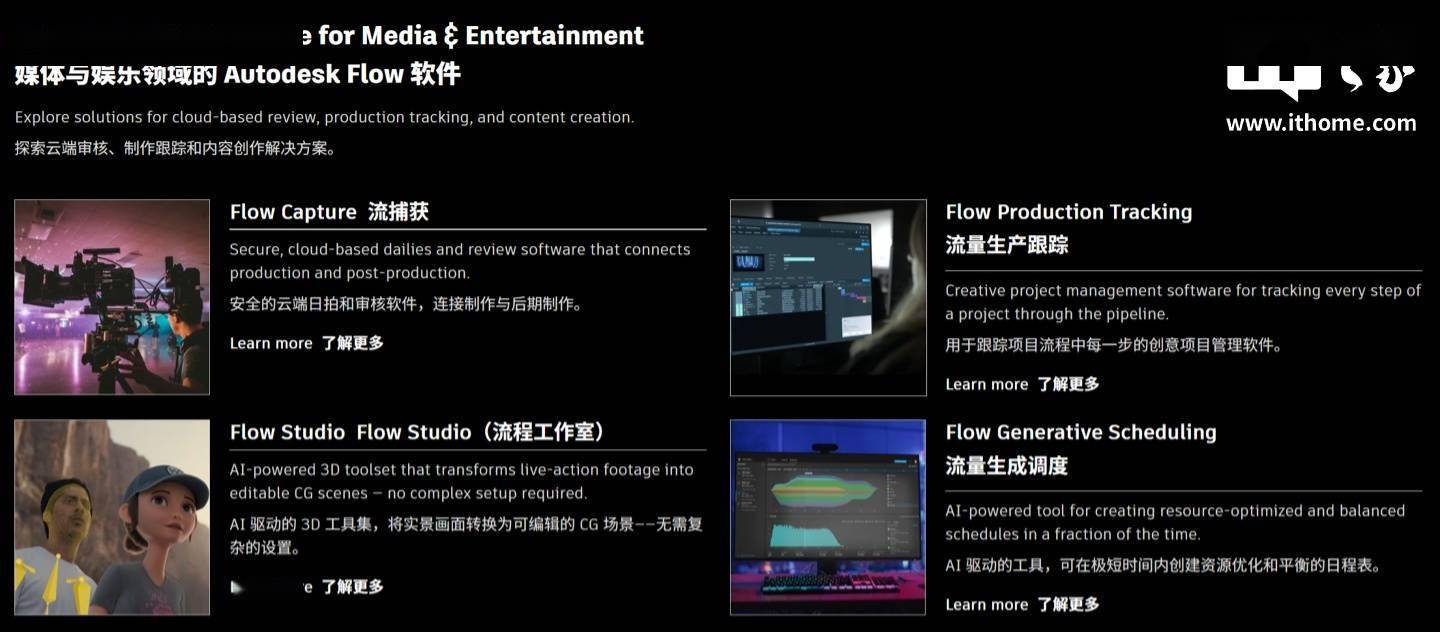
Autodesk起诉谷歌AI软件侵犯“Flow”商标权
Sou Hu Cai Jing· 2026-02-11 07:48
Core Viewpoint - Google is seeking trademark protection for its software named Flow, which overlaps with Autodesk's existing Flow brand, potentially threatening Autodesk's market position [2][4][5] Group 1: Company Actions - Autodesk began using the Flow brand in September 2022 for visual effects and production management products [2] - Google plans to launch its Flow software in May 2025, targeting similar user groups as Autodesk, including film, television, and game producers [2] Group 2: Legal and Market Implications - The lawsuit claims that Google's intention is to gain time to potentially overpower Autodesk's market presence [5] - Google is promoting its Flow brand at industry events, including the Sundance Film Festival, to enhance its visibility and market reach [4]


OpenClaw带动AIAgent渗透提速
Guoxin Securities Co., Ltd· 2026-02-11 07:25
Investment Rating - The industry investment rating is "Positive" with expectations that the industry index will outperform the market index by over 5% in the next six months [17]. Core Insights - The AI sector has transitioned from "dialogue interaction" to "agent action," with the OpenClaw project marking a significant milestone, demonstrating the feasibility and practicality of AI agents [2][9]. - The demand for AI agents is accelerating in the consumer market, with major tech companies like Google, Tencent, and Baidu expanding their offerings, indicating a shift from niche applications to mainstream tools [2][10]. - The infrastructure supporting AI agents faces dual challenges of performance and cost, as prices for essential hardware components like storage chips and CPUs are rising, increasing operational costs for cloud service providers [2][11]. - The expansion of demand is driving significant capital investments from cloud providers, with Alphabet planning capital expenditures of $175 billion to $185 billion and Amazon increasing its spending to $200 billion, a 56% year-on-year increase [2][12][13]. - Security concerns are paramount, as OpenClaw has been reported to have hundreds of vulnerabilities, highlighting the need for robust security measures in commercial applications [2][14]. Summary by Sections Transition from "Dialogue Interaction" to "Agent Action" - The AI agent paradigm shift is exemplified by the rapid rise of OpenClaw, which has gained significant attention in the tech community, indicating broad market acceptance and validation of AI agent technology [9]. Acceleration of Personal AI Assistants in the Consumer Market - The application of AI agents is moving quickly from early developers to the general public, with major companies integrating AI capabilities into their platforms, thus driving demand for computational and storage resources [10]. Infrastructure Challenges - The global AI infrastructure is undergoing performance upgrades while facing increased operational costs due to rising prices of key hardware components, which has led cloud service providers to raise service prices [11]. Demand Expansion Driving Strategic Investments by Cloud Providers - The increasing use of AI agents is prompting cloud companies to significantly boost their capital expenditures, with Alphabet and Amazon announcing substantial increases in their spending plans for 2026 [12][13]. Security Issues - The enhancement of AI agent capabilities brings security risks, as OpenClaw has been found to have numerous vulnerabilities, necessitating effective measures to prevent malicious command injections and manage high-level access [14]. Investment Clues - The development of AI agents presents clear investment opportunities, particularly in the cloud services and computing supply chain, as well as in hardware sectors like edge computing devices and vector databases, which are essential for the deployment of AI technologies [3][15].

苹果和谷歌承诺对其在英国的应用商店进行多项关键调整
Huan Qiu Wang Zi Xun· 2026-02-11 07:19
Core Viewpoint - The UK Competition and Markets Authority (CMA) has announced that Apple and Google have formally committed to making significant adjustments to their app store operations in the UK in response to allegations of an "effective duopoly" [1][5]. Group 1: Regulatory Actions - The CMA determined that Apple's App Store and Google's Play Store hold a "strategic market position" in the UK mobile operating system market, creating an "effective duopoly" that restricts fair competition in the app ecosystem [5]. - As part of the agreement, Apple and Google have committed to not giving preferential treatment to their own applications over third-party developers, ensuring transparency in the review and listing processes for third-party apps, and prohibiting unfair use of non-public data obtained from third-party developers [5][6]. - CMA Director Sarah Cardell stated that these commitments will promote a healthy development of the UK app economy and are a practical first step in addressing the identified issues [5]. Group 2: Industry Reactions - Both Apple and Google welcomed the cooperation but expressed concerns that excessive regulation could impact innovation and security [5]. - Apple emphasized that it faces intense competition in every market and is committed to providing the best products and user experience [5]. - Google stated that its existing policies for the Play Store already adhere to principles of fairness and transparency, but it welcomes collaboration to address CMA's concerns [5]. Group 3: Future Oversight - The CMA will closely monitor the progress of Apple and Google in fulfilling their commitments, and if the companies fail to comply, the CMA will initiate formal enforcement procedures to implement more binding corrective measures [7].


STARTRADER外汇:AI淘金热变恐慌潮 华尔街共识 躲开易被颠覆公司
Sou Hu Cai Jing· 2026-02-11 06:40
Core Insights - The AI investment frenzy has shifted to a growing fear of AI disruption, leading Wall Street to adopt a new consensus to avoid companies that may be disrupted by AI technology [1] - The market logic has transitioned from "blindly chasing AI-related assets" to "carefully selecting AI winners and losers," resulting in significant differentiation in capital flows and stock price movements [1] Group 1: Market Trends - In recent months, AI concepts gained traction, becoming a hot investment theme on Wall Street, with major tech companies announcing annual capital expenditure plans totaling $610 to $660 billion, primarily for AI data centers and chip investments [3] - However, during the recent earnings season, anxiety over AI investment returns has grown, leading investors to scrutinize the actual returns on substantial investments [3] - Morgan Stanley predicts that Amazon's free cash flow could be negative $17 billion by 2026, and the average net profit margin of seven major tech companies may drop from 27.8% in 2024 to 18.5% in 2026, triggering a sell-off in tech stocks [3] Group 2: Market Sentiment and Strategy - The rapid iteration of AI technology has caused market panic, particularly with new AI tools threatening traditional software subscription models and wealth management services, leading to significant declines in stock prices of companies like Charles Schwab and LPL Financial [4] - Wall Street has formed a new consensus to actively avoid companies that could be disrupted by AI, with a more stringent selection process emerging [4] - Hedge funds are increasingly shorting U.S. stocks, with short positions rising by 42% since Q4 of last year, targeting tech stocks, traditional retail, and financial sectors, with short positions in the tech sector exceeding $128 billion [4] Group 3: Investment Shifts - There is a noticeable market divergence, with funds flowing out of high-valuation, easily disrupted sectors and into defensive sectors or core beneficiaries of the AI industry [5] - The Invesco Technology Software ETF has dropped 20% this year, while the VanEck Semiconductor ETF has risen 13%, with AI chip stocks like Nvidia and AMD seeing gains of over 25% [5] - Morgan Stanley's strategy team believes the market is overly pessimistic about AI's disruption of the software industry, recommending increased investment in high-quality software stocks resistant to AI disruption [5] Group 4: Ongoing Market Dynamics - As of February 11, the AI50 index has shown a fluctuating trend, with a 7.88% increase over the past three months but significant recent volatility reflecting market sentiment divergence [6] - Institutions like Goldman Sachs and Morgan Stanley continue to adjust their ratings on AI-related companies, with hedge fund short positions contrasting sharply with long positions, indicating ongoing uncertainty regarding the risks of disruption and opportunities presented by AI [6]


北美CSP资本支出强劲增长,建议关注上游AI新材料发展机遇
Shanxi Securities· 2026-02-11 06:34
Investment Rating - The report maintains a rating of "Outperform" for the new materials sector, indicating a positive outlook for investment opportunities in this industry [2]. Core Insights - The new materials sector has experienced a decline, with the new materials index dropping by 1.53%, outperforming the ChiNext index by 1.76%. Over the past five trading days, various sub-sectors showed mixed performance, with battery chemicals slightly increasing by 0.09% while semiconductor materials fell by 3.70% [3][17]. - Strong capital expenditure growth is observed in North America, particularly among major cloud service providers like Amazon AWS, Microsoft, Google, and Meta, with a combined capital expenditure exceeding $670 billion in 2026, representing a year-on-year growth of over 60%. This investment is expected to drive demand for AI servers and related materials [6]. Summary by Sections 1. Secondary Market Performance - The new materials sector has seen a decline, with the Shanghai Composite Index and ChiNext Index also experiencing negative movements. The new materials index's performance is highlighted as it has outperformed the ChiNext index [3][13]. 2. Industry Chain Data Tracking - Price tracking for various materials shows fluctuations, with amino acids like valine at 13,850 RMB/ton (-1.42%) and vitamins such as vitamin A at 60,500 RMB/ton (-1.63%). Prices for biodegradable plastics remain stable, indicating a steady market for these materials [4][12]. 3. Industry News - The report emphasizes the importance of AI infrastructure development, which is expected to enhance the demand for high-frequency and high-speed copper-clad laminates and related materials. Companies such as Shengquan Group and Dongcai Technology are highlighted for their potential in the resin sector, while Zhongcai Technology and Honghe Technology are noted for electronic fabrics [6]. 4. Investment Recommendations - The report suggests focusing on upstream material development opportunities, particularly in AI-related sectors, as the demand for advanced materials is anticipated to grow significantly due to the increasing need for AI server infrastructure [5][6].


AI行业的气穴期要来了?
3 6 Ke· 2026-02-11 06:25
视频里分析师指着柱状图讲: 昨天晚上刷YouTube时,正好刷到Bloomberg刚出的一个深度视频,标题是《Big Tech's $650 Billion Gamble》(科技巨头的6500亿豪赌)。 2026年,就亚马逊、谷歌、微软这几家,预计就要砸进去6500亿美金的资本支出(Capex)。 紧接着,他抛出一个特尴尬的结论:投入是指数级涨的,收入是线性涨的;如果不解决这个问题,2026 年的 AI 产业,很有可能撞上一个巨大的气穴。 就跟飞机似的,飞着飞着突然掉进真空里,那种失重的感觉,大家应该都能想象到。所以,看完这个视 频我认为,这不光是华尔街的焦虑,更是整个AI行业的过渡时刻。 咱们看看这6500亿美金是怎么来的,到底能烧出点啥? Bloomberg视频里说的6500亿美金,是个挺微妙的数。我特意去翻了高盛的原始研报才发现,这数背后 是一种特别罕见的「倒挂」。 怎么理解这个倒挂? 基建都跑到平流层了,应用还在慢慢爬坡。你看亚马逊、微软、谷歌、Meta这几家,2026年的资本支 出也差不多是这个数;这笔钱都花哪儿了? 全用来买卡、建数据中心,甚至去抢电力资源了,这种投入力度,已经是「赌国运」级别的基 ...
Which Big Tech Stocks Have the Most Debt, and Why It Matters
The Motley Fool· 2026-02-11 06:05
Core Viewpoint - The competition among Big Tech firms in the AI sector is driving significant borrowing, raising concerns about the sustainability of their debt levels and the potential risks associated with their investments in AI technology [1][2]. Debt Levels and Financial Metrics - Morgan Stanley estimates that hyperscalers will raise approximately $400 billion in corporate bonds by 2026 to support AI scaling efforts [2]. - AI and data center firms constitute 14.5% of JPMorgan's $10 trillion investment-grade bond index, equating to nearly $1.5 trillion in existing debt [2]. - Key hyperscalers include Nvidia, Oracle, Alphabet, Apple, Microsoft, Meta, and Amazon, all of which are heavily investing in AI and related infrastructure [5]. Debt-to-Equity and Debt-to-Capital Ratios - Oracle has a debt-to-equity (D/E) ratio of 519.6% and a debt-to-capital (D/C) ratio of 83.9%, indicating high leverage [6]. - Apple follows with a D/E ratio of 152.4% and a D/C ratio of 60.4%, also reflecting significant debt levels [6]. - Other firms like Amazon, Microsoft, Meta, Alphabet, and Nvidia maintain lower D/E and D/C ratios, suggesting healthier balance sheets [6]. Cash Reserves and Long-Term Debt - Alphabet has total cash and short-term investments of $98.5 billion against long-term debt of $21.6 billion [7]. - Nvidia holds $60.6 billion in cash with $7.5 billion in long-term debt, while Microsoft has $89.5 billion in cash and $35.4 billion in long-term debt [7]. - Apple and Oracle are the only firms with long-term debt exceeding their cash reserves, with Apple at $78.3 billion in debt against $54.7 billion in cash, and Oracle at $100 billion in debt against $19.8 billion in cash [7]. Credit Ratings - All analyzed firms maintain investment-grade ratings from S&P and Moody's, with Oracle being the only one rated in the B range (BBB by S&P and Baa2 by Moody's) [11]. - Oracle's debt is under negative watch, indicating a potential downgrade risk, while other firms have A ratings or higher [11]. Conclusion - The analysis highlights the significant spending and debt accumulation by Big Tech firms to scale AI operations, with particular concern regarding Oracle's high debt levels, although it may still benefit from the growing demand for AI solutions [12].



中金:人工智能十年展望:2026关键趋势之模型技术篇
中金· 2026-02-11 05:58
Investment Rating - The report maintains a positive outlook on the AI industry, particularly focusing on advancements in large model technologies and their applications in various productivity scenarios [2][3]. Core Insights - In 2025, global large model capabilities advanced significantly, overcoming challenges in reasoning, programming, and multimodal abilities, although issues like stability and hallucination rates remain [2][3]. - Looking ahead to 2026, breakthroughs in reinforcement learning, model memory, and context engineering are anticipated, moving from short context generation to long reasoning chain tasks and from text interaction to native multimodal capabilities [2][3][4]. - The scaling law for pre-training is expected to continue, with flagship models achieving higher parameter counts and intelligence limits, driven by advancements in NVIDIA's GB series chips and the adoption of more efficient model architectures [3][4]. Summary by Sections Model Architecture and Optimization - The report emphasizes the continuation of the Transformer architecture, with a consensus on the efficiency of the Mixture of Experts (MoE) model, which balances performance and efficiency [40][41]. - Various attention mechanisms are being optimized to enhance computational efficiency, with a focus on hybrid approaches that combine different types of attention for better performance [49][50]. Model Capabilities - The report highlights significant improvements in reasoning, programming, agentic capabilities, and multimodal tasks, indicating that large models have reached a level of real productivity in various fields [13][31]. - The ability of models to perform complex reasoning tasks has improved, with the introduction of interleaved thinking chains allowing for seamless transitions between thought and action [24][28]. Market Dynamics - The competition among leading global model manufacturers remains intense, with companies like OpenAI, Anthropic, and Gemini pushing the boundaries of model intelligence and exploring AGI [31][32]. - Domestic models are catching up, maintaining a static gap of about six months behind their international counterparts, with significant advancements in capabilities [32][33]. Future Outlook - The report anticipates that the introduction of continuous learning and model memory will address the "catastrophic forgetting" problem, enabling models to adapt dynamically based on task importance [4][5]. - The integration of high-quality data and large-scale computing resources is crucial for enhancing the capabilities of reinforcement learning, which is expected to play a key role in unlocking advanced model functionalities [3][4].
半导体 - 亚太焦点:谷歌 TPU 崛起 —— 识别供应链中的赢家- Global IO Semiconductors-APAC Focus Rise of Google TPUs – identifying winners in the supply chain
2026-02-11 05:56
Summary of Key Points from the Conference Call Industry Overview - The report focuses on the semiconductor industry, particularly the competitive dynamics between Google's Tensor Processing Units (TPUs) and Nvidia's Graphics Processing Units (GPUs) in cloud-based AI computing [2][7][8]. Core Insights - **TPU Growth**: Google's TPUs are expected to grow more rapidly than Nvidia's GPUs from a smaller base, with TPUs offering superior efficiency in performance per watt and per dollar for large-scale AI workloads [2][8]. - **Internal Usage**: Google relies heavily on TPUs for its internal AI training and inference, indicating the platform's maturity and reliability [2][28]. - **Market Forecast**: TPU shipments are projected to reach 4 million units in 2026 and grow to 7.2 million units in 2027, with MediaTek's share expanding from 8% in 2026 to 28% in 2027 [3][44]. Competitive Landscape - **Dual TPU Tracks**: Google is adopting a dual-track strategy for TPU development, collaborating with both Broadcom and MediaTek. This approach allows Google to diversify its supply chain and manage costs effectively [3][36][44]. - **Cost Efficiency**: MediaTek's service fees for TPUs are over 50% lower than Broadcom's, making it a significant player in the TPU supply chain [3][37]. Key Beneficiaries - **TSMC**: As the leading-edge foundry, TSMC is expected to benefit significantly from the demand for TPUs [4]. - **Other Suppliers**: Companies like ASE, KYEC, Advantest, and Celestica are also positioned to gain from the growing TPU market [4]. Technical Advantages of TPUs - **Design Efficiency**: TPUs are specifically designed for neural network computing, offering competitive performance-per-watt and performance-per-dollar compared to general-purpose GPUs [11][14]. - **Architecture**: The TPU architecture allows for higher compute utilization and efficiency, minimizing runtime loss compared to GPUs [16]. Software Integration - **OpenXLA**: Google's development of the OpenXLA software standard facilitates easier migration for developers transitioning from Nvidia GPUs to TPUs, enhancing the appeal of TPUs for external users [20][29]. Future Outlook - **Market Position**: Google is positioned as a key player in the frontier AI model development alongside OpenAI and Anthropic, driving substantial demand for TPUs [31][35]. - **Cloud Revenue Growth**: The cloud revenue for major hyperscalers, including Google, is expected to grow at a robust 29% CAGR from 2026 to 2028, driven by the shift towards AI-centric workloads [32][33]. MediaTek's Role - **Strategic Partnership**: MediaTek's collaboration with Google is expected to significantly enhance its market position, with potential sales from TPU v8X projected between $8 billion to $17 billion in 2027 [58]. - **Technology Development**: MediaTek is also advancing its SerDes IP technology, which is crucial for the TPU v8X project, potentially positioning it for future growth in the cloud and edge AI markets [56][58]. Conclusion - The competitive dynamics between TPUs and GPUs are evolving, with Google's strategic partnerships and technological advancements positioning it favorably in the semiconductor landscape. The expected growth in TPU shipments and the increasing reliance on AI workloads underscore the significant opportunities within this sector [2][3][8][31].

