Intel(INTC)

Search documents
AI芯片高景气延续!RBC预测:三年内规模有望突破5500亿美元
智通财经网· 2026-01-16 02:17
Group 1 - The core viewpoint of the article is that semiconductor revenue from AI applications is expected to grow significantly, from $220 billion in 2025 to over $550 billion by 2028, according to RBC Capital Markets [1] - Current market supply is tight, with enterprise order delivery cycles extended to 18 months, which clarifies the industry's outlook [1] - Infrastructure bottlenecks may delay some projects, but this could smooth out the spending cycle in the AI sector rather than being a negative factor [1] Group 2 - RBC Capital Markets has initiated coverage on several semiconductor companies, giving them an "outperform" rating, including Nvidia, Micron Technology, Marvell Technology, Arm, Astera Labs, ASML, Applied Materials, Lam Research, and Lattice Semiconductor [1] - For companies like Broadcom, AMD, Intel, KLA, SanDisk, Qualcomm, Skyworks, and Silicon Labs, RBC has assigned a "market perform" rating [2] Group 3 - High Bandwidth Memory (HBM) demand is expected to be a core growth driver, potentially reducing the cyclical volatility of the memory market [3] - AI workloads are shifting towards reinforcement learning and distributed inference, which require high memory performance [3] - The upcoming HBM4 iteration is anticipated to be beneficial, with average prices expected to increase by 30-50% [3] - The demand for high-capacity server memory (DIMM) and solid-state drives (NAND eSSD) is also driven by the explosion of generative AI [3] - Despite high memory prices potentially impacting demand in the PC and smartphone markets, the memory industry is expected to remain in a supply-demand imbalance until 2027 [3] - Capital expenditures in the wafer fabrication equipment (WFE) sector are projected to maintain strong growth over the next two years [3] - Technological trends such as backside power delivery, advanced packaging, and three-dimensional structures are expected to drive at least high single-digit growth in the wafer fabrication equipment market over the next two years [3]


英特尔的先进封装,太强了
半导体行业观察· 2026-01-16 01:48
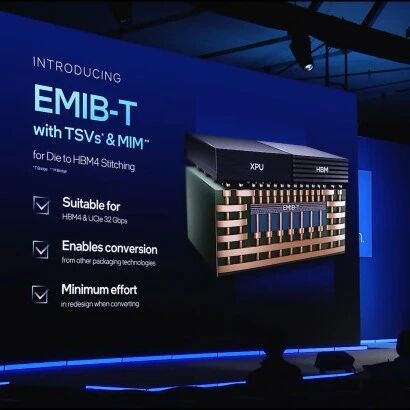
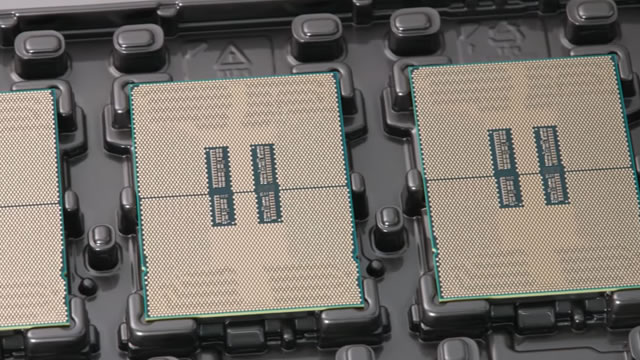
Core Viewpoint - Intel's EMIB interconnect solution demonstrates advantages over traditional 2.5D technology in advanced chip packaging design, showcasing its application in various products and its potential for next-generation chip production [1][17]. Group 1: EMIB Technology and Comparison - Intel's EMIB technology has been applied in several products, including Ponte Vecchio, Sapphire Rapids, Granite Rapids, Sierra Forest, and the upcoming Clearwater Forest series [1]. - Competitors like TSMC utilize 2.5D and 3D packaging technologies, which involve silicon interposers and TSV (Through-Silicon Vias) for interconnections, contrasting with Intel's smaller interconnect bridges [3]. - 2.5D packaging has drawbacks, such as additional costs for silicon interposers and increased complexity and reduced yield with larger chip sizes [8]. Group 2: Advantages of EMIB - EMIB technology eliminates the need for silicon interposers between chips and packages, allowing for flexible chip placement and integration [11]. - The key advantages of EMIB include improved layout flexibility, support for 2D and 3D scaling, cost-saving opportunities, and simplified design processes [14][16]. - Intel's EMIB-T technology enhances bandwidth and chip integration by incorporating TSVs, making it suitable for high-performance applications [13][20]. Group 3: Future Developments and Market Position - Intel is increasing investments in wafer fabrication and aims to establish a new era of advanced chip production in the U.S. with its 14A technology [17][31]. - The company showcased its scalable packaging capabilities with multi-chip products using 18A/14A nodes, Foveros 3D, and EMIB-T technology, setting standards for high-performance computing and AI [18][20]. - Intel's advanced packaging solutions are expected to intensify competition with TSMC's CoWoS solutions, which also integrate multiple HBM chips [18]. Group 4: Industry Collaboration and Customer Focus - Intel is developing a diverse ecosystem participation plan to accelerate product launch and enhance supply chain resilience [29]. - The recent advanced packaging chip demonstration targets external customers, particularly highlighting the advantages of the 14A process node designed for third-party clients [31]. - The success of Intel's advanced packaging technology will depend on securing orders from third parties, which is crucial for the adoption of its 14A technology [33].

原油,大跌!刚刚,白银、黄金跳水
Zhong Guo Ji Jin Bao· 2026-01-16 00:28
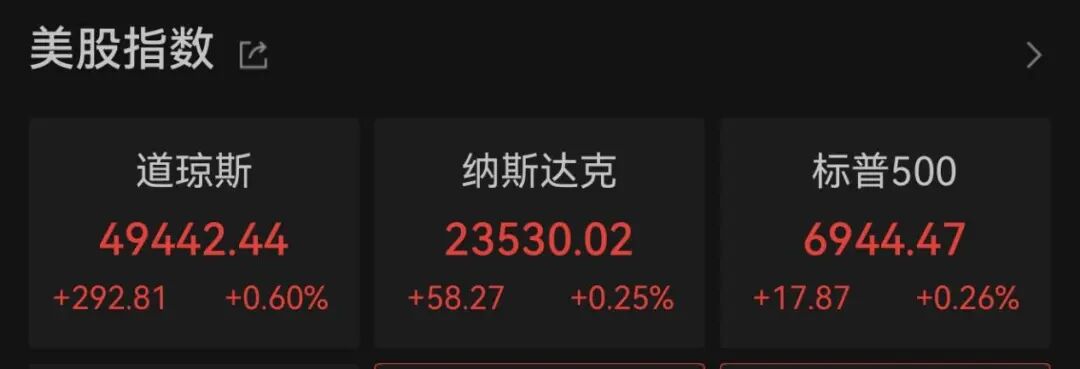
Market Overview - US stock market closed higher, led by gains in bank and chip stocks, with the Dow Jones up 292.81 points (0.60%) at 49,442.44, Nasdaq up 58.27 points (0.25%) at 23,530.02, and S&P 500 up 17.87 points (0.26%) at 6,944.47 [1] Chip Sector - The semiconductor sector saw a broad increase following TSMC's earnings report, with the Philadelphia Semiconductor Index rising 1.76% to a new historical high [4] - The White House announced a 25% import tariff on certain semiconductors and related equipment starting January 15, affecting products like Nvidia's H200 chip and AMD's MI325X AI accelerator chip, while excluding semiconductors for data centers and R&D [4] - TSMC reported a 35% increase in net profit for Q4 2025, reaching approximately $16 billion, marking a record high and exceeding expectations [5] Technology Sector - Major tech stocks showed mixed performance, with Nvidia up over 2%, Facebook up 0.86%, and Amazon up 0.65%, while Google down nearly 1%, Apple down 0.67%, and Microsoft down 0.59% [6] - Apple announced an expansion of Apple Pay's cross-border payment support for users of specific Chinese banks [7] Banking Sector - Bank stocks generally rose, with JPMorgan up 0.48%, Goldman Sachs up over 4%, Citigroup up over 4%, Morgan Stanley up nearly 6%, and Bank of America up 0.16%, while Wells Fargo fell 0.34% [8] - Goldman Sachs and Morgan Stanley reported record high revenues in their trading divisions, with Goldman planning to issue $16 billion in investment-grade bonds, the largest such issuance in Wall Street history [9] Commodity Market - Brent crude oil futures fell by $2.76 (4.15%), and WTI crude oil futures dropped by $2.83 (4.56%) [10] - Gold and silver prices experienced significant declines, with silver down over 1.5% [10]





台积电董事长霸气回应英特尔竞争 魏哲家:大客户订单不松动
Jing Ji Ri Bao· 2026-01-15 23:36
Group 1 - TSMC's Chairman Wei Zhejia firmly stated that there will be no loosening of orders from major clients like Nvidia and Apple, despite potential collaborations between Intel and these companies [1] - Wei emphasized that the complexity of advanced processes and system integration means that competition cannot be won merely by increasing capital expenditure [1] - The timeline for developing advanced technology and achieving mass production typically spans several years, making it difficult to alter supply chain choices in the short term [1] Group 2 - Intel's latest technology advancement is the Intel 18A process, focusing on optimizing internal product demands, which will serve as a key technological foundation for future client and server products [2] - The upcoming 14A process is being developed with external (foundry) demands in mind from the outset [2] - Nvidia has announced collaborations with Intel to develop customized data center and PC products, including tailored x86 CPUs for data centers and integrated x86 systems with Nvidia's RTX GPU chips for personal computing [2]

Trump Takes Credit For Intel's Surge But Hesitant To Raise Stake: 'I'll Invest More In Other Things'
Yahoo Finance· 2026-01-15 23:01
Core Insights - President Trump claims his intervention has led to significant gains for Intel Corporation, although he is uncertain about further investments in the company [1][2] - Intel's valuation has increased following Trump's assistance, attracting investments from major players like Apple and Nvidia [2] - The U.S. government acquired a 10% stake in Intel through an $8.9 billion investment linked to the CHIPS Act, making it Intel's largest shareholder [3] - Intel secured a $5 billion investment from Nvidia as part of its AI reset strategy, along with a separate $2 billion commitment from SoftBank [3] - Intel has approached Apple regarding a potential investment and discussions about outsourcing chip production, with speculation about a future partnership [4] Group 1 - Trump's comments indicate a positive outlook on Intel's recent performance and potential future investments in other companies [1][2] - The U.S. government's significant stake in Intel highlights the strategic importance of the semiconductor industry [3] - The investments from Nvidia and SoftBank signal confidence in Intel's AI initiatives and growth potential [3] Group 2 - The potential collaboration with Apple regarding chip manufacturing could enhance Intel's market position and revenue streams [4] - The Ambler Road Project in Alaska reflects the government's strategy to unlock mineral potential through strategic investments [2]
Intel Stock Just Got a New Street-High Price Target. Should You Buy INTC Here?
Yahoo Finance· 2026-01-15 18:51
Core Viewpoint - Intel's shares increased over 7% following an upgrade to "Overweight" by KeyBanc Capital Markets, which set a price target of $60 due to significant progress in manufacturing and AI-driven chip sales [1] Group 1: Financial Performance - In Q3 of 2025, Intel reported revenue of $13.7 billion and gross margins of 40%, both exceeding estimates [4] Group 2: Market Demand and Supply - Intel is experiencing strong demand for data center server CPUs, with supply chain checks indicating that the company is "almost sold out for the year" due to high demand from Big Tech for AI workloads [2] - Server demand has shown unexpected strength as hyperscale customers are refreshing their installed base after focusing on AI infrastructure [5] - Intel is facing supply constraints in both its PC and server businesses, particularly with Intel 10 and Intel 7 manufacturing nodes, limiting its ability to meet customer demand [6] Group 3: Strategic Developments - A potential key catalyst for Intel's growth is a rumored manufacturing deal with Apple, where Intel is expected to produce low-end PC chips using its next-generation 18A-P process, marking a significant win for its foundry business [3] - Intel's shares have risen nearly 150% over the past year, indicating investor confidence in the company's manufacturing revival [4]
Nasdaq Plays Catch-Up: Is the Tech-Heavy Index Ready to Breakout?
ZACKS· 2026-01-15 17:21
Market Overview - The stock market performance in 2025 has exceeded expectations, continuing a multi-year rally with positive signs for the year ahead [1] - Inflation measures have significantly decreased from 2022 peaks, with December CPI showing a 0.3% monthly increase and a 2.7% annual increase, both aligning with expectations [1] - Core consumer prices rose 0.2% month-over-month and 2.6% year-over-year, marking the slowest annual inflation pace since March 2021 [2] Corporate Earnings and Economic Factors - A weakening U.S. dollar is positively impacting corporate earnings, and Treasury yields have decreased from their highs, creating favorable conditions for stock performance [3] - The earnings outlook remains strong, supported by a healthy U.S. consumer [7] Semiconductor Industry Insights - Semiconductor stocks, particularly Intel (INTC) and AMD (AMD), are experiencing upward momentum due to robust data center demand and tightening memory supply [8] - AMD has shown remarkable performance, with shares rising nearly 80% in 2025, driven by AI server revenue growth and data center dominance [10] - Intel has undergone a significant turnaround, with shares more than doubling from around $20 to nearly $50, supported by foundry progress and emerging AI PC traction [13] Strategic Developments - AMD's CEO highlighted the transformative scale of AI, predicting over 5 billion active AI users in the next five years, and emphasized the company's focus on AI-skilled roles [11] - Intel's narrative has shifted under the Trump administration's focus on domestic chip manufacturing, with a historic deal granting the U.S. government a 10% equity stake in exchange for $8.9 billion in funding [12] - Nvidia's acquisition of a $5 billion stake in Intel aims to foster joint AI infrastructure development, providing Intel with capital for foundry expansion [15] Future Outlook - The AI server market is in its early stages, with multi-year hyperscaler expansions providing visibility for growth [16]


TSMC just issued a warning that warrants buying Intel stock
Invezz· 2026-01-15 17:19
Taiwan Semiconductor Manufacturing (NYSE: TSM) is pushing higher on Thursday after posting yet another blockbuster quarter, marked by record revenue of NT$1.034 trillion. But an even bigger story is p... ...
Can Intel's Upgradation in AI PCs Strengthen Its Business Growth?
ZACKS· 2026-01-15 17:15
Core Insights - Intel Corporation (INTC) is focusing on expanding its presence in the artificial intelligence (AI) market through next-generation AI PCs that enhance everyday computing with powerful on-device AI capabilities [1] - The company has launched Panther Lake processors, branded as Intel Core Ultra Series 3, which improve AI performance, graphics, and efficiency using advanced 18A process technology [3] - Intel has secured partnerships with companies like HP, Microsoft, and NVIDIA to enhance AI capabilities and develop future AI infrastructure and PC products [4][8] Product Features - Intel's AI-powered PCs feature powerful processors, including CPUs, GPUs, and dedicated AI engines, enabling fast on-device AI tasks and enhancing productivity, creativity, security, and intelligent assistance [2] - Core Ultra processors accelerate tasks such as writing, creating, editing, and organizing, while also boosting gaming performance and ensuring data security without constant Internet access [2] Competitive Landscape - Intel faces competition from Qualcomm, which has entered the AI PC market with its Snapdragon X chip, and AMD, which is expanding with its Ryzen AI processors and Radeon GPUs [5][6] - Qualcomm's Snapdragon X chip is a 4nm 8-core processor designed for AI-focused PCs, while AMD's offerings provide fast on-device AI and improved performance for work and gaming [5][6] Financial Performance - Intel's shares have surged 147.1% over the past year, significantly outperforming the industry's growth of 33.7% [7] - The company's shares currently trade at a price/book ratio of 1.99, lower than the industry average of 32.17 [9] - Earnings estimates for 2025 have increased by 6.3% to 34 cents per share, while estimates for 2026 have declined by 1.7% to 58 cents [10]
Intel Is Getting Better. That Doesn't Make the Stock a Buy, This Analyst Says.
Barrons· 2026-01-15 14:58
Intel stock has risen 34% over the past month but RBC's Srini Pajjuri is cautious on its prospects. ...