J&J(JNJ)

Search documents
“世界经营者会议”开幕,强生CEO:中国医疗技术进步令人惊讶
日经中文网· 2025-11-04 08:00
Group 1 - The core theme of the conference is "Leadership Image in Times of Crisis - The Power to Turn Crisis into Opportunity" [4] - Joaquin Duato, CEO of Johnson & Johnson, stated that the medical field will achieve the same level of progress in the next 10 years as it has in the past 100 years, driven by innovations such as artificial intelligence (AI) [2][5] - Duato emphasized the importance of combining medical technology with IT to enable efficient and rapid detection of major diseases like cancer [5] Group 2 - Duato highlighted that health should be viewed as an investment opportunity that can yield economic returns, rather than solely focusing on the negative impacts of rising social costs [5] - He expressed surprise at the advancements in medical technology in China and stressed that the priority should be the interests of patients, advocating for the adoption of the best technological innovations regardless of their origin [5] - The conference will feature discussions among business leaders on how to prioritize decisions and communicate effectively in an environment of uncertainty, influenced by geopolitical tensions and cybersecurity threats [4]



AI Innovation Asia 2025 to guide executives from insight to impact in the AI economy
The Manila Times· 2025-11-04 05:20
Core Insights - The AI Innovation Asia event will take place on December 2nd at The Four Seasons Singapore, focusing on the challenges businesses face in implementing AI for growth and achieving ROI [1][2] - The event will gather 500 executives to discuss practical applications of AI through case studies and panel discussions, providing actionable strategies for scaling AI in Asia [2][3] Event Details - The opening keynote will feature Janil Puthucheary, senior minister of state for the Ministry of Education and the Ministry of Sustainability and the Environment in Singapore [1][2] - The event is sponsored by notable companies including Boston Consulting Group, TikTok, Silverfort, Boomi, Lenovo, and ViSenze [4] Key Themes - The regulatory outlook for firms in Asia, focusing on compliance challenges in a fragmented regulatory ecosystem [4] - Measuring ROI on AI projects to justify spending and ensure profitability [4] - Understanding agentic AI's impact on customer experience and responsible utilization [4] - Addressing the 'black box' dilemma of explainable AI to maintain visibility in AI systems without compromising effectiveness [4]

Global Markets Grapple with Currency Volatility, Geopolitical Tensions, and Central Bank Stances
Stock Market News· 2025-11-04 03:08
Currency Markets - The Singapore Dollar (SGD) has depreciated to 1.307 against the U.S. Dollar (USD), marking its weakest level since May 12, indicating broader currency volatility [2][8] - Japanese Finance Minister Katayama is monitoring foreign exchange movements with urgency, highlighting concerns over rapid currency fluctuations and the need for stability [3][8] - The Bank of Japan (BOJ) is maintaining a cautious approach to interest rate hikes, influenced by the need to assess economic trends amid potential U.S. tariffs and a government shutdown [3][8] Geopolitical Developments - An explosion at a petrochemical facility in Russia's Bashkortostan region resulted in a partial workshop collapse, raising safety concerns in the context of ongoing geopolitical tensions [4][8] - A meeting between Chinese President Xi Jinping and Russian Prime Minister Mikhail Mishustin focused on enhancing economic, industrial, and technological cooperation, aiming to strengthen the China-Russia strategic partnership [5][8] Healthcare Sector - Johnson & Johnson (JNJ) CEO Joaquin Duato anticipates significant advancements in healthcare technology over the next decade, driven by a deeper understanding of disease biology and advancements in AI and machine learning [6][8] - Duato envisions a "golden era of medical innovation," leveraging data science solutions to deliver transformative medical technologies and medicines globally [6][8]

Kimberly-Clark CEO Mike Hsu goes one-on-one with Jim Cramer
Youtube· 2025-11-04 01:05
Core Viewpoint - The acquisition of Kenvue by Kimberly-Clark is valued at over $40 billion, creating the second largest consumer packaged goods company globally, but Wall Street is skeptical, leading to a 14% drop in stock price [1][2]. Group 1: Rationale for the Acquisition - The merger aims to create a leading global health and wellness company by combining two iconic American brands [3]. - The deal is expected to generate significant shareholder value through both cost and revenue synergies, with potential value creation in the tens of billions [4][5]. - The complementary nature of the product and geographic portfolios is highlighted, with both companies strong in different markets and product categories [7][9]. Group 2: Market Opportunities - Kimberly-Clark has a strong presence in markets like Indonesia, South Korea, and Mexico, while Kenvue excels in India and Western Europe, presenting growth opportunities [11]. - The companies plan to leverage their strengths in online sales, which accounted for 100% of Kimberly-Clark's growth in North America this year [13][14]. Group 3: Legal and Regulatory Considerations - Concerns regarding potential liabilities from lawsuits, particularly related to Tylenol and talc claims, have been acknowledged, but the company is confident in its due diligence and legal strategy [15][16][18][22]. - The acquisition is expected to face scrutiny from regulatory bodies, but the companies believe it will ultimately benefit consumers and shareholders [25][26]. Group 4: Brand Strategy and Consumer Trends - The companies aim to enhance their brand portfolios, with aspirations to grow existing brands and potentially add new ones [27]. - Despite economic challenges, there is evidence of strong demand for premium products, and the companies are adapting to consumer preferences by offering value-oriented options [30][32].


Wall Street Lunch: Amazon, OpenAI Sign $38B Cloud Deal
Seeking Alpha· 2025-11-03 18:52
Group 1: OpenAI and Nvidia Partnership - OpenAI has signed a seven-year deal with Amazon Web Services (AWS) valued at $38 billion to access hundreds of thousands of Nvidia GPUs, with potential expansion to tens of millions of CPUs for scaling workloads [6][7] - The partnership is described by OpenAI as a "declaration of adulthood," marking a shift from its previous exclusive relationship with Microsoft [7] - The deal aims to enhance the performance and reliability of AI infrastructure, benefiting millions of ChatGPT users [7] Group 2: Nvidia Valuation and Market Impact - Loop Capital has set a new price target of $350 for Nvidia, up from $250, which would imply a market capitalization of $8.5 trillion [8] - Analyst Ananda Baruah anticipates a surge in GPU shipments for Nvidia over the next 12 to 15 months, supported by its GB200 NVL72 racks [8] Group 3: Kimberly-Clark Acquires Kenvue - Kimberly-Clark is acquiring Kenvue in a cash-and-stock deal valued at $48.7 billion, with Kenvue's shares rising nearly 20% following the announcement [9][10] - The acquisition price of $21.01 per share represents a 46% premium over Kenvue's closing price prior to the announcement, although Kimberly-Clark's stock has since declined by over 10% [11] - Kimberly-Clark CEO Mike Hsu will lead the combined company as chairman and CEO [11] Group 4: Other Notable Market Movements - The UK Competition and Markets Authority has referred the merger between Getty Images and Shutterstock for a Phase 2 investigation, causing Shutterstock's shares to drop by more than 10% [12] - MongoDB's stock is rallying after announcing a new CEO and positive Q3 guidance [12] - Data center company IREN has secured a $9.7 billion contract with Microsoft for AI cloud services, leading to a significant stock rally [13] - Beyond Meat is experiencing a decline due to a delay in releasing Q3 results related to asset impairment [14] - The technology sector has seen a notable uptick in short covering, with Info Tech emerging as the most net bought sector for the first time in three weeks [15]



The CEO Revolving Door Speeds Up
Forbes· 2025-11-03 17:12
CEO Turnover and Trends - In Q3, 174 global CEOs left their positions, with average CEO tenure declining to 7.2 years, down from 8.4 years two years ago [1][2] - 88% of new CEOs appointed globally in 2025 are first-timers, indicating a search for new perspectives amid multifaceted business challenges [3] - U.S. companies reported that 69% of new CEO hires were internal, reflecting a balance between institutional knowledge and the need for fresh viewpoints [3] Economic Impact of Government Shutdown - The ongoing government shutdown could cost the U.S. between $7 billion to $14 billion in GDP, affecting federal workers and food benefits [6] - The expiration of health insurance subsidies under the Affordable Care Act is leading to significant premium increases, with an average rise of 17% in state-run exchanges and 30% in federally managed programs [7] Consumer Confidence and Economic Outlook - Consumer confidence dropped to a seven-month low of 94.6 in October, with some sectors potentially in recession [8][9] - The Federal Reserve cut interest rates by a quarter point for the second consecutive month, with mixed opinions among governors regarding future cuts [10] Major Corporate Deals - Kimberly-Clark announced plans to acquire Kenvue for $48.7 billion, positioning itself as the second-largest seller of health and wellness products globally, with expected annual revenue of $32 billion [11][13] - Kenvue's stock had fallen over 22% since September but rose more than 16% following the acquisition announcement [13] Workforce Changes Due to AI - Amazon announced layoffs of 14,000 corporate staff, with projections that AI and automation could replace 600,000 jobs by 2033 [14][15] - Other tech companies, including Microsoft and Meta, have also reduced headcounts, with Goldman Sachs estimating 6% to 7% of the U.S. workforce could be displaced by AI [15][16] AI in Customer Service - ReflexAI focuses on using AI to train human call center employees rather than replacing them, emphasizing the importance of human interaction for customer satisfaction [18][23] - The company aims to enhance training simulations to better prepare agents for handling various customer emotions and situations [21][22]




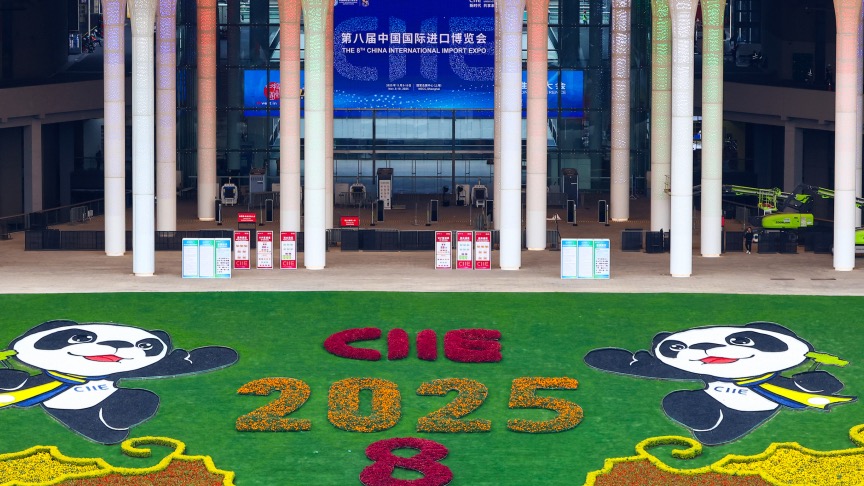
聚焦进博会|助听眼镜、人工心脏,这些医疗“黑科技”将首次亮相进博会
Di Yi Cai Jing· 2025-11-03 14:33
Core Insights - The trend in medical device development is shifting towards digitalization, intelligence, and precision, with innovative products debuting at the China International Import Expo (CIIE) [1] - China is increasingly recognized as a major player in the global medical innovation ecosystem, with many multinational pharmaceutical and medical device companies leveraging the CIIE platform to introduce innovative medical products and technologies [1] Group 1: Innovative Products - EssilorLuxottica will showcase the Nuance Audio smart hearing glasses, designed for individuals with mild to moderate hearing loss, integrating advanced open-ear hearing technology into eyewear [3] - Siemens Healthineers will present a high-gradient magnetic resonance device that aids Neuralink in brain-machine interface clinical trials, transitioning invasive surgeries from "blind insertion" to a more visible and controlled process [4] - Johnson & Johnson will debut the Impella artificial heart product, the only FDA-approved left ventricular assist device, which has been used in over 400,000 cases globally [4] Group 2: Market Statistics and Projections - According to the China Hearing Health Management Association, over 33% of individuals aged 65 and above in China suffer from moderate to severe hearing loss, affecting more than 120 million elderly people [3] - The Impella device and its accompanying host have received approval for clinical use in the Guangdong-Hong Kong-Macao Greater Bay Area, allowing for early patient treatment [5] - The ChondroFiller Liquid product, designed for cartilage regeneration, has been used in over 21,000 cases across Asia and Europe, and is now included in the medical insurance reimbursement list in the Greater Bay Area [6]
Kimberly-Clark agrees to buy Tylenol owner Kenvue in $48.7 billion deal, creating consumer staples giant
CNBC· 2025-11-03 12:56
Core Viewpoint - Kimberly-Clark has announced an agreement to acquire Kenvue for $48.7 billion, creating a significant player in the consumer staples sector [1][2]. Group 1: Deal Overview - The acquisition is a mix of cash and stock, with Kenvue's shares rising 20% in premarket trading, while Kimberly-Clark's shares fell 14% [1]. - The combined entity will feature brands such as Huggies, Kleenex, Band-Aid, and Tylenol, totaling 10 billion-dollar brands [2]. - The transaction is anticipated to close in the second half of 2026 [2]. Group 2: Strategic Intent - Kimberly-Clark's CEO Mike Hsu emphasized the company's commitment to leveraging science and technology for enhanced consumer care, marking this acquisition as a pivotal step in their transformation towards higher-growth, higher-margin businesses [2][3]. - Kenvue, which was spun off from Johnson & Johnson in May 2023, has seen its shares decline nearly 35% since its IPO, trading at about $14 per share with a market cap of approximately $27 billion [2]. Group 3: Financial Projections - The combined company is projected to generate annual net revenues of around $32 billion and adjusted EBITDA of approximately $7 billion by 2025 [3]. - Kimberly-Clark and Kenvue expect to achieve about $1.9 billion in cost synergies within the first three years post-acquisition [4].

Johnson & Johnson Stock: Is Wall Street Bullish or Bearish?
Yahoo Finance· 2025-11-03 09:31
Company Overview - Johnson & Johnson (JNJ) is a global healthcare conglomerate with a market cap of $455 billion, headquartered in New Brunswick, New Jersey, and founded in 1886. The company operates in innovative prescription medicines, advanced surgical and medical technologies, and legacy consumer brands [1]. Performance Metrics - JNJ has outperformed the broader market in 2025, with stock gains of 30.6% year-to-date and 17.6% over the past 52 weeks, compared to the S&P 500 Index's gains of 16.3% and 17.7% respectively [2]. - In the healthcare sector, JNJ has also outperformed the Health Care Select Sector SPDR Fund (XLV), which has risen 4.9% in 2025 and experienced a 2.6% decline over the past 52 weeks [3]. Financial Results - For Q3 2025, JNJ reported a revenue growth of 6.8% year-over-year to $24 billion and an adjusted EPS increase of 16% to $2.80, indicating solid growth in both top and bottom lines. The company raised its full-year 2025 revenue guidance midpoint to approximately $93.2 billion while maintaining its adjusted EPS guidance at around $10.85 [4]. - Analysts project an adjusted EPS of $10.86 for fiscal 2025, reflecting an 8.8% year-over-year increase, with JNJ having exceeded Wall Street's earnings expectations in each of the last four quarters [5]. Analyst Ratings - The stock has a consensus "Moderate Buy" rating, with 25 analysts covering it, including 13 "Strong Buys," two "Moderate Buys," and 10 "Holds" [5]. - A month ago, the configuration was slightly less bullish, with 11 analysts giving "Strong Buy" recommendations. J.P. Morgan analyst Chris Schott reiterated a "Hold" rating on JNJ with a price target of $205 [6]. - The mean price target for JNJ is $202.35, indicating a modest 7.1% upside potential, while the highest target of $225 suggests a notable 19.1% premium to current price levels [6].
Johnson & Johnson Showcases Latest Advancements in Pulsed Field Ablation with Multiple Clinical and Real-world Studies at APHRS and JPHRS
The Manila Times· 2025-11-03 06:54
Core Insights - Johnson & Johnson MedTech is presenting new clinical and real-world data from its VARIPULSE™ Platform for pulsed field ablation procedures at the APHRS and JHRS joint annual meeting in November 2025 [1][3][4] Group 1: Product and Platform Details - The VARIPULSE™ Platform includes the VARIPULSE™ Catheter, TRUPULSE™ Generator, and CARTO™ 3 Mapping System, and is approved for use in multiple regions including the U.S., Europe, and Asia Pacific [2] - Over 25,000 procedures have been performed using the VARIPULSE™ Platform across various countries [2] Group 2: Clinical Evidence and Presentations - Key presentations at the conference will cover various studies, including the QUEST AF study on persistent atrial fibrillation ablation and the VARIPURE study on workflow efficiency in AF procedures [5] - Additional sessions will focus on the impact of age and diagnosis-to-ablation time on outcomes, as well as procedural characteristics related to same-day discharge after pulsed field ablation [5] Group 3: Commitment to Innovation - Johnson & Johnson MedTech emphasizes its commitment to advancing scientific knowledge and improving patient outcomes through collaborations and real-world evidence expansion [3][6] - The company aims to accelerate patient-centered innovation in atrial fibrillation care [6]