Coca-Cola(KO)

Search documents
These 3 Dividend Stocks Are Not Concerned With Tariff Noise
MarketBeat· 2025-07-11 12:01
Group 1: Lockheed Martin - Lockheed Martin's dividend yield is 2.84% with an annual dividend of $13.20, and it has a 22-year track record of dividend increases [2][5] - The company derives over 70% of its revenue from the U.S. government, providing insulation against macroeconomic headwinds [3] - Despite challenges in the F-35 program and a lost contract in 2024, these issues are already reflected in the stock price, which is near critical support [2][4] - Revenue growth is inconsistent quarterly but shows an annual upward trend, with a mid-single-digit growth pace expected to sustain balance sheet health [4] - Share repurchases have reduced the share count by an average of 2.6% year-over-year in the first quarter [5] Group 2: Coca-Cola - Coca-Cola's dividend yield is 2.92% with an annual dividend of $2.04, and it has a 64-year track record of dividend increases [8] - The company relies heavily on a localized supply chain, which helps mitigate tariff impacts through price hedging and efficiency improvements [8] - Despite struggling with growth in 2025, Coca-Cola's diversified beverage strategy allows for steady revenue, maintaining balance sheet health [9] - Analyst trends indicate a consensus Buy rating with an expected price target increase of about 8% [10] Group 3: Walmart - Walmart's dividend yield is 0.99% with an annual dividend of $0.94, and it has a 53-year track record of dividend increases [12] - The company benefits from a well-localized supply chain and is positioned as a primary shopping destination in North America, leading industry growth [13] - Walmart's dividend payout ratio is under 40%, indicating reliable growth and a healthy balance sheet [14] - Analyst activity is driving Walmart shares to new all-time highs, with a Moderate Buy rating and a consensus price target suggesting a potential 10% gain [15]


Best Stock to Buy Right Now: Coca-Cola vs. McDonald's
The Motley Fool· 2025-07-10 10:22
Core Insights - Coca-Cola and McDonald's are two iconic consumer goods companies with a long history, but their future positioning and investment potential differ significantly [1] Coca-Cola - Coca-Cola offers a diverse range of beverages, including sodas, water, sports drinks, and plant-based options, catering to changing consumer preferences [3] - The company has a strong global presence, making it difficult for competitors to match its brand recognition and distribution capabilities [3] - In the first quarter, Coca-Cola's revenue dropped 2% due to foreign currency exchange, but adjusted revenue grew by 6% when excluding this factor [4] - Adjusted operating income increased by 10%, driven by price changes and product mix, contributing five percentage points to revenue growth, with higher volume adding one percentage point [4] - Coca-Cola anticipates manageable cost increases from tariffs and projects a revenue growth of 5% to 6% for the year [5] - Over the past year, Coca-Cola's stock gained 11.4%, or 15.2% including dividends, outperforming the S&P 500's return of 14.3% [11] - The company's shares have a price-to-earnings (P/E) ratio of 28, which is lower than the S&P 500's P/E of 30, indicating a relatively reasonable valuation [12] McDonald's - McDonald's operates primarily through franchising, with 95% of its restaurants franchised, generating about 60% of its annual revenue [6][7] - The company collects royalty fees based on sales percentages and rent from franchisees, making it less capital-intensive [7] - In the first quarter, same-store sales dropped 1%, with a 3.6% decline in U.S. locations, primarily due to lower customer traffic [8] - Despite a 16.9% stock gain over the past year, concerns remain about McDonald's sales challenges and the impact of price increases on customer loyalty [10] - Adjusted operating income for McDonald's fell by 1%, indicating struggles in maintaining revenue growth amid economic pressures [8][9]

The Best Consumer Staples Stocks To Buy
Kiplinger· 2025-07-09 20:59
Core Viewpoint - The consumer staples sector is viewed as a safe investment during economic uncertainty, as it includes companies that produce essential goods that people need daily [1][5]. Group 1: Definition and Characteristics of Consumer Staples - Consumer staples stocks consist of companies that produce or sell basic goods, such as groceries and personal-care items [6]. - The Global Industry Classification Standard (GICS) categorizes the Consumer Staples sector as including food and staples retail, food and beverage production, and household and personal product manufacturing [7]. - These stocks are considered defensive, generating stable revenues and producing significant free cash flow, often returned to shareholders as dividends [8]. Group 2: Investment Rationale - Investors are drawn to consumer staples stocks because they provide a steady demand for necessities, making them less sensitive to economic fluctuations [8]. - Historical performance shows that consumer staples outperformed the S&P 500 during major downturns, such as the Great Recession and the COVID-19 crash [10]. - Despite their defensive nature, consumer staples may have limited growth potential during economic expansions, as demand for basic goods does not significantly increase [11]. Group 3: Identifying Quality Consumer Staples Stocks - A quality screen for consumer staples stocks includes criteria such as being part of the S&P Composite 1500, having a long-term estimated earnings-per-share growth rate of at least 5%, and having at least five covering analysts [12][13][14]. - Stocks should also have a consensus Buy rating of 2.5 or less and a dividend yield of at least 1.5% to ensure they provide better income than the S&P 500 [15][16]. Group 4: Recommended Consumer Staples Stocks - The following companies are highlighted as strong consumer staples stocks based on the outlined criteria: - Dollar General (DG): Long-term EPS growth of 6.5%, consensus rating of 2.39, dividend yield of 2.1% [16] - Tyson Foods (TSN): Long-term EPS growth of 19.6%, consensus rating of 2.29, dividend yield of 3.5% [16] - Kroger (KR): Long-term EPS growth of 6.1%, consensus rating of 2.16, dividend yield of 1.8% [16] - Sysco (SYY): Long-term EPS growth of 6.1%, consensus rating of 2.10, dividend yield of 2.6% [16] - Keurig Dr Pepper (KDP): Long-term EPS growth of 7.2%, consensus rating of 1.91, dividend yield of 2.7% [16] - Philip Morris International (PM): Long-term EPS growth of 11.4%, consensus rating of 1.88, dividend yield of 3.0% [16] - Coca-Cola (KO): Long-term EPS growth of 6.1%, consensus rating of 1.62, dividend yield of 2.9% [16]



Can Coca-Cola Maintain Its Momentum Amid Flat North America Volumes?
ZACKS· 2025-07-09 16:31
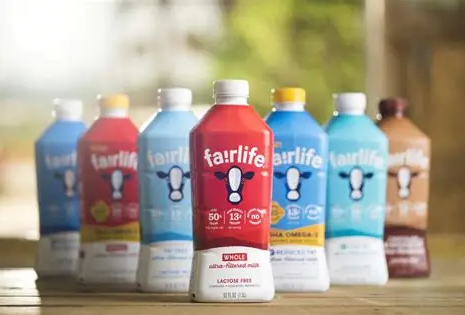
Core Insights - The Coca-Cola Company (KO) demonstrated resilience with a 6% year-over-year organic revenue growth in Q1 2025, despite volume softness in North America due to weak Hispanic consumer sentiment and calendar shifts [1][9] - Key brands like Coca-Cola Zero Sugar and fairlife have been significant contributors to growth, with fairlife adding the most retail dollars to the U.S. beverage sector [2] - The company is implementing strategies focused on affordability, faster decision-making, and hyperlocal marketing to reaccelerate growth, particularly through campaigns like "Hecho en Mexico" and "Made in the USA" [3] - Coca-Cola's robust brand portfolio valued at $30 billion and its extensive local distribution network position it well to navigate macroeconomic uncertainties [4] North America Strategy - Coca-Cola's North America strategy emphasizes agility, affordability, and hyperlocal execution, providing strategic insights for peers like PepsiCo Inc. (PEP) and Monster Beverage Corporation (MNST) [5] - PepsiCo's North America strategy aligns with Coca-Cola's focus on zero-sugar sodas and functional hydration, achieving strong profit gains in its beverage unit while facing challenges in its food segment [6] - Monster Beverage's North America performance in Q1 2025 faced disruptions but core energy drink sales remained resilient, with a 1.9% increase in sales on a currency-adjusted basis [7] Financial Performance - KO shares have increased by 12.8% year-to-date, outperforming the industry's growth of 8.6% [8] - The company reported a forward price-to-earnings ratio of 22.71X, higher than the industry's 18.62X [10] - The Zacks Consensus Estimate indicates year-over-year earnings growth of 3.1% for 2025 and 8.2% for 2026, with recent upward revisions for 2025 earnings estimates [12]
可口可乐与蒙牛的“可牛了”,牛不起来
Guan Cha Zhe Wang· 2025-07-09 00:00
Core Viewpoint - The collaboration between Coca-Cola and Mengniu for the fairlife brand has officially ended, with the joint venture "Keniule" being dissolved after failing to gain traction in the Chinese market [1][6]. Group 1: Background of the Collaboration - The fairlife brand was initially established in 2012 as a joint venture between Coca-Cola and Select Milk Producers, launching ultra-filtered milk in 2014 that doubled protein content and removed lactose [2]. - Mengniu began discussions with Coca-Cola in early 2018 to introduce fairlife to the Chinese market, leading to Coca-Cola acquiring full ownership of fairlife for $980 million in December 2019 [2][3]. - "Keniule" was officially established in October 2020, with Coca-Cola holding 51% and Mengniu 49%, and a significant investment of 2.1 billion yuan was made to build a factory in Bengbu [3]. Group 2: Product Launch and Features - The fairlife brand was launched in China in September 2021, introducing three key products: whole milk, low-fat milk, and chocolate milk, which were representative of the brand in North America [3]. - Fairlife's unique selling proposition included higher protein and calcium content, longer shelf life, and zero lactose, achieved through an "over-filtration" production process [5]. - Fairlife's pricing was positioned higher than most competitors, with whole milk priced at approximately 11.9 yuan for 195ml and 34.9 yuan for 710ml, making it about 30% more expensive than regular high-end milk [6]. Group 3: Market Challenges and Withdrawal - Despite the backing of two major companies, fairlife struggled to convince Chinese consumers to pay a premium for its products, leading to a decline in sales and eventual withdrawal from various retail channels by early 2022 [6][9]. - The brand attempted to penetrate the market through both retail and B2B channels, including a partnership with Costa Coffee, but failed to replicate the success of competitors like OATLY [7]. - By April 2023, fairlife was completely withdrawn from both online and offline sales, with the companies citing a need for strategic evaluation [9]. Group 4: Future Directions - Following the cessation of fairlife, Coca-Cola is continuing to explore the dairy market in China with the launch of a new product called "Lubeile," which focuses on high-nutrition milk [10]. - The new product, priced at 8 yuan for a 256ml bottle, emphasizes high protein content and aims to align better with the preferences of Chinese consumers [11].

Coca-Cola Stock Reflects Modest Growth in 3 Months: Buy Now or Wait?
ZACKS· 2025-07-08 15:56
Core Viewpoint - The Coca-Cola Company (KO) has experienced modest stock performance with a 1.5% increase over the past three months, reflecting investor caution despite stable fundamentals [1][3]. Financial Performance - In the first quarter of fiscal 2025, Coca-Cola reported a 3% organic revenue growth, driven by strong pricing and product mix, although volume growth was slower in North America due to inflation and cautious consumer behavior [2][8][13]. - The company maintained a conservative full-year outlook, indicating potential macroeconomic headwinds and limited near-term earnings acceleration [2][15]. - The Zacks Consensus Estimate for Coca-Cola's 2025 revenues and EPS implies year-over-year growth of 2.5% and 3.1%, respectively, while estimates for 2026 suggest growth of 5.3% and 8.2% [17][18]. Market Position - Coca-Cola's stock has outperformed the Zacks Beverages – Soft Drinks industry, which declined by 0.3% in the same period, but underperformed the broader Zacks Consumer Staples sector and the S&P 500 [3][4]. - The current share price of $71.01 is 4.5% below its 52-week high of $74.38 and 17.1% above its 52-week low of $60.62 [7]. Competitive Landscape - Coca-Cola's performance is weaker compared to Monster Beverage, which saw a 7.6% increase, but it outperformed PepsiCo and Keurig Dr Pepper, which declined by 7.7% and 2.7%, respectively [4][3]. - Coca-Cola trades at a forward P/E of 22.97X, significantly higher than the industry average of 18.66X, raising concerns about whether its valuation is justified [19][21]. Strategic Initiatives - The company is focusing on digital transformation and innovation, with marketing strategies aimed at deepening consumer engagement, particularly in emerging markets [14][15]. - Coca-Cola's ability to maintain pricing strength and product mix without compromising competitiveness highlights the durability of its brand portfolio [13][15]. Investment Outlook - Despite trading at a premium compared to peers, Coca-Cola offers a mix of steady returns, defensive stability, and long-term growth potential, making it a compelling investment option [23][24]. - The stock's premium valuation reflects strong investor expectations for growth, and any market pullbacks may present strategic entry points for investors [22][24].

Is Coca-Cola Still a Good Dividend Growth Stock to Buy in 2025?
The Motley Fool· 2025-07-08 08:35
Core Viewpoint - Coca-Cola is a reliable dividend stock with a yield of 2.9%, significantly higher than the S&P 500 average of 1.2%, but faces potential challenges in growth and future dividend increases due to changing market dynamics and economic conditions [1][2]. Dividend Growth - Coca-Cola has a strong history of increasing its dividend, marking a 5% increase for the 63rd consecutive year [4]. - Over the past decade, quarterly payouts have risen by approximately 55%, averaging a compounded annual growth rate of 4.5%, which typically exceeds inflation rates [6]. Profitability and Payout Ratio - The company's payout ratio has averaged around 80% over the past five years, indicating a significant portion of earnings is distributed as dividends, though a lower ratio generally suggests a safer dividend [8]. - Current profitability levels raise questions about the sustainability of future dividend increases, despite past performance [7]. Revenue and Earnings Projections - Coca-Cola anticipates organic revenue growth of 5% to 6% for the year, although comparable earnings per share are projected to increase by no more than 3% due to currency-related challenges [10]. Investment Outlook - Coca-Cola is considered a strong long-term dividend growth stock, adapting well to changing consumer preferences and market conditions, making it a suitable option for investors seeking stability [11]. - The stock has generated year-to-date returns of around 15%, reinforcing its position as a solid buy for dividend-focused portfolios [12].

Could Investing $10,000 in Coca-Cola Make You a Millionaire?
The Motley Fool· 2025-07-06 09:25
Core Viewpoint - Coca-Cola is a dominant player in the beverage industry with a strong brand presence and consistent product quality, making it a potentially attractive investment for those seeking steady income rather than high capital appreciation [3][4][9]. Brand Strength and Pricing Power - Coca-Cola's strong brand contributes to its economic moat, allowing the company to maintain product quality and effective marketing strategies [3]. - The company experienced a 5% increase in prices in Q1 2025, demonstrating its pricing power and customer loyalty [4]. Resilience and Revenue Growth - Coca-Cola's products are small, repeat purchases, making the company resilient to recessionary pressures, as consumers are unlikely to cut spending on these items during tough economic times [5]. - In Q1 2025, Coca-Cola reported a 6% year-over-year increase in organic revenue and a 2% growth in unit volume, indicating strong performance amid macroeconomic uncertainty [6]. Operational Efficiency - By outsourcing bottling and distribution, Coca-Cola has created an efficient organization, resulting in significant profits, with Q1 operating income reported at $3.7 billion and an operating margin of 32.9% [7]. Long-term Durability - Coca-Cola has been in business for over 100 years, showcasing its durability and stability in a slower-paced beverage market compared to tech-driven industries [8]. Dividend Performance - Coca-Cola is recognized as a Dividend King, having raised its dividend payout for 63 consecutive years, reflecting its strong profitability and commitment to returning value to shareholders [9]. - The current dividend yield stands at 2.81%, providing a reliable income stream for investors focused on consistent returns [10]. Growth Potential - Despite its attractive traits, Coca-Cola is considered a mature business with limited growth potential, as evidenced by a total return of 146% over the past 10 years, which is below the broader S&P 500 Index [11].
Is Coca-Cola Stock a Long-Term Buy?
The Motley Fool· 2025-07-06 08:15
Core Viewpoint - Coca-Cola is considered an evergreen investment due to its consistent growth and long-term reliability, despite challenges in the beverage market [1][12] Group 1: Company Strengths - Coca-Cola has diversified its product portfolio beyond soda to include bottled water, tea, fruit juices, sports drinks, energy drinks, coffee, and alcoholic beverages, which helps mitigate declining soda consumption [3] - The company's capital-light business model, focusing on selling concentrates and syrups while bottling partners handle production, allows for consistent profits and insulation from inflation and regional macro challenges [4] - From 1984 to 2024, Coca-Cola achieved a revenue and split-adjusted EPS CAGR of 5% and 6%, respectively, maintaining stable growth through five global recessions and being a Dividend King with 63 consecutive years of dividend increases [5] - Analysts project Coca-Cola's revenue and EPS to grow at a CAGR of 5% and 11% from 2024 to 2027, driven by expansion in emerging markets, wellness-oriented brands, strategic acquisitions, and AI-driven efficiencies [6][7] Group 2: Company Weaknesses - Growth is slowing in developed markets like the U.S. and Europe, where competition from healthier and private label beverages is increasing, necessitating greater investment in emerging markets [8] - Ongoing trade wars and elevated tariffs, particularly on aluminum for cans, could lead to price increases from bottlers, potentially impacting shipments and margins during economic downturns [9] - Compared to PepsiCo, Coca-Cola's valuation at 24 times forward earnings appears less attractive, especially as PepsiCo offers a higher forward dividend yield of 4.3% [10] - Coca-Cola has underperformed the S&P 500 over the past 40 years, which has generated a total return of 3,460%, indicating that Coca-Cola may not be the best performer during bull markets [11]
2 Dividend Stocks That Could Help Set You Up for Life
The Motley Fool· 2025-07-04 09:05
Group 1: Microsoft - Microsoft has successfully diversified its business beyond PC operating systems, becoming a leader in cloud computing, generating nearly $27 billion in revenue each quarter [5][9] - The company has consistently paid dividends since 2003, with the latest quarterly dividend declared at $0.83 per share, yielding approximately 0.7% [7][8] - Analysts expect Microsoft to achieve around 14% growth in both earnings per share and revenue for fiscal 2025 compared to the previous year [9][10] Group 2: Coca-Cola - Coca-Cola remains a dominant player in the beverage industry, with its core product being high-margin and straightforward, primarily consisting of sugar and water [12][14] - For the year 2024, Coca-Cola's revenue increased by only 2% to $46.8 billion, while net income slightly decreased to $10.6 billion [13] - The company maintains a high net margin of 23% and has sufficient free cash flow to support its quarterly dividend, which is currently $0.51 per share, yielding 2.9% [15][16]