Coca-Cola(KO)

Search documents
Is PepsiCo A Better Stock Than Coca-Cola?
Forbes· 2025-07-03 10:05
Group 1: Stock Performance - PepsiCo's stock has decreased by 10% this year, while Coca-Cola's stock has risen by 16%, primarily due to PepsiCo's sluggish North American operations [2] - Since early January 2021, Coca-Cola's stock has increased approximately 40%, while PepsiCo's stock has only risen about 4% [10] - Both Coca-Cola and PepsiCo underperformed relative to the S&P 500 in 2021, 2023, and 2024, with Coca-Cola showing more consistent positive returns [11] Group 2: Revenue Growth - Coca-Cola achieved a 7% average annual revenue growth from 2021 to 2024, increasing from $38.7 billion to $47.1 billion, while PepsiCo's growth was 5%, rising from $79.5 billion to $91.9 billion [4] - Coca-Cola's revenue growth is driven by strong performance in both at-home and away-from-home channels, supported by effective pricing strategies [5] - PepsiCo's revenue growth was impacted by operational difficulties, including a significant recall in its Quaker Foods division, but it still achieved annual revenue growth [6] Group 3: Profitability Metrics - Coca-Cola's net margin declined from 25.3% to 22.6% from 2021 to 2024, while PepsiCo's net margin increased from 9.6% to 10.4% during the same period [8] - Coca-Cola has a better financial risk profile with a debt-to-equity ratio of 16% compared to PepsiCo's 27% [9] Group 4: Valuation Metrics - PepsiCo's stock trades at 17 times its trailing adjusted earnings of $8.03 per share, significantly lower than its four-year average P/E ratio of 22 times, indicating it is undervalued [12] - Coca-Cola's stock is trading at 25 times its trailing adjusted earnings of $2.89 per share, above its four-year average P/E of 22 times [13] Group 5: Future Outlook - Despite recent challenges, PepsiCo is expected to recover, with revenues anticipated to return to mid-single-digit growth starting next year [14] - Investors seeking reduced volatility may consider alternative investment strategies, such as the High Quality portfolio, which has outperformed the S&P 500 [15]


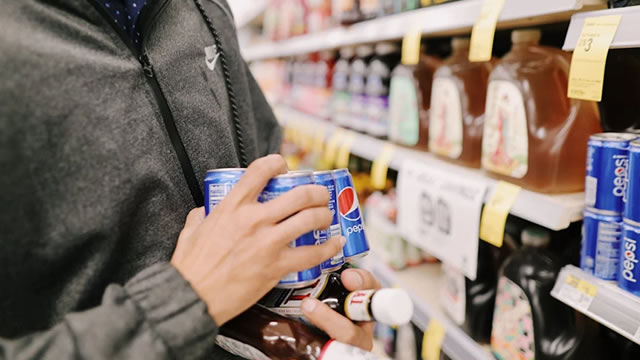
2 Top S&P 500 Dividend Stocks to Buy Now
The Motley Fool· 2025-07-03 07:50
Group 1: Coca-Cola - Coca-Cola is a durable brand with steady sales and profits, allowing for consistent dividend payments [3][4] - The company has increased its dividend for 63 consecutive years, currently paying about 75% of its earnings in dividends, with a recent quarterly increase of 5% to $0.51 [4][6] - Analysts expect Coca-Cola to achieve 6% annualized earnings growth, with significant opportunities in emerging markets, which represent 80% of the global population [5] - Coca-Cola has successfully adapted its beverage portfolio to meet changing consumer preferences, with 30 brands generating over $1 billion in annual sales [6] - The non-alcoholic beverage market is valued at $1 trillion and is projected to grow at 5% annually through 2029, with Coca-Cola likely to outperform this estimate [7] - The stock's forward dividend yield is 2.84%, making it an attractive option for passive income [7] Group 2: Nike - The athletic apparel industry is valued at over $400 billion in 2024 and is expected to grow at 9% annually through 2030 [8] - Nike is the leading brand in this industry, with trailing revenue exceeding $46 billion, and its stock has recently seen a decline, resulting in a high forward dividend yield of over 2.17% [9] - The company faces near-term challenges due to higher costs from tariffs, but this has created an opportunity for investors to acquire shares at an attractive yield [9] - Nike's new CEO is implementing strategies to return the business to growth by aligning inventory with demand and shifting focus from lifestyle to sports-oriented products [10] - Despite a lower earnings forecast, Nike can sustain its current quarterly dividend of $0.40, with expectations of earnings recovery to $2.47 by fiscal 2027 [11][12] - The stock is trading at its lowest price-to-sales multiple in over a decade, indicating potential undervaluation and solid returns for investors over the next five years [12]

Has Coca-Cola (KO) Outpaced Other Consumer Staples Stocks This Year?
ZACKS· 2025-07-02 14:40
Group 1 - Coca-Cola has outperformed the Consumer Staples sector with a year-to-date return of approximately 15.1%, compared to the sector's average gain of 6.3% [4] - The Zacks Rank for Coca-Cola is currently 2 (Buy), indicating a positive earnings outlook with a 0.3% increase in the consensus estimate for full-year earnings over the past quarter [3] - Coca-Cola belongs to the Beverages - Soft drinks industry, which has an average gain of 8.1% this year, further highlighting its strong performance within its specific industry [5] Group 2 - Unilever PLC, another stock in the Consumer Staples sector, has a year-to-date return of 8.4% and also holds a Zacks Rank of 2 (Buy) with a 0.2% increase in its consensus EPS estimate over the past three months [4][5] - The Beverages - Soft drinks industry, which includes Coca-Cola, is ranked 163 in the Zacks Industry Rank, while Unilever falls under the Consumer Products - Staples industry, ranked 156, which has seen a decline of -1.7% since the beginning of the year [5][6]
金十图示:2025年07月01日(周二)美股热门股票行情一览(美股收盘)




news flash· 2025-07-01 20:10
Market Capitalization Summary - Oracle has a market capitalization of 806.88 billion, while Visa stands at 655.99 billion [2] - Procter & Gamble has a market capitalization of 378.02 billion, and ExxonMobil is at 512.70 billion [2] - Mastercard's market capitalization is 470.87 billion, and Bank of America is at 375.11 billion [2] - UnitedHealth has a market capitalization of 308.53 billion, while ASML is at 310.77 billion [2] - Coca-Cola's market capitalization is 295.75 billion, and T-Mobile US Inc is at 273.60 billion [2] Stock Performance - Oracle's stock increased by 0.46 (+0.47%), while Visa's rose by 0.47 (+0.13%) [2] - Procter & Gamble's stock saw a slight increase of 2.68 (+0.48%), while ExxonMobil's stock increased by 1.92 (+1.20%) [2] - Mastercard's stock increased by 1.46 (+1.35%), and Bank of America's stock rose by 3.15 (+2.06%) [2] - UnitedHealth's stock decreased by 11.21 (-1.40%), while ASML's stock increased by 0.93 (+1.31%) [2] - Coca-Cola's stock increased by 14.05 (+4.50%), and T-Mobile US Inc's stock rose by 3.31 (+1.39%) [2] Additional Company Insights - McDonald's has a market capitalization of 212.78 billion, while AT&T is at 207.73 billion [3] - Uber's market capitalization is 192.79 billion, and Verizon's is at 184.08 billion [3] - Caterpillar's market capitalization is 183.87 billion, while Qualcomm is at 174.99 billion [3] - BlackRock has a market capitalization of 163.25 billion, and Citigroup is at 161.13 billion [3] - Boeing's market capitalization is 158.16 billion, while Pfizer is at 142.36 billion [3] Recent Market Movements - Intel's stock increased by 0.45 (+1.99%), while Dell Technologies rose by 0.82 (+0.16%) [4] - Rio Tinto's market capitalization is 746.07 billion, and Newmont is at 654.78 billion [4] - General Motors has a market capitalization of 494.87 billion, while Target is at 472.00 billion [4] - Ford's market capitalization is 451.14 billion, and Valero Energy is at 432.26 billion [4] - Vodafone's market capitalization is 241.45 billion, while Pinterest is at 270.30 billion [5]

Coca-Cola (KO) Upgraded to Buy: Here's Why
ZACKS· 2025-07-01 17:01
Core Viewpoint - Coca-Cola (KO) has received an upgrade to a Zacks Rank 2 (Buy), indicating a positive trend in earnings estimates which is a significant factor influencing stock prices [1][3]. Earnings Estimates and Stock Price Impact - The Zacks rating system is based on the consensus measure of EPS estimates from sell-side analysts, reflecting the company's changing earnings picture [1][2]. - Changes in earnings estimates are strongly correlated with near-term stock price movements, influenced by institutional investors who adjust their valuations based on these estimates [4]. Business Outlook - The upgrade in Coca-Cola's rating suggests an improvement in the company's underlying business, which is expected to lead to higher stock prices as investors respond positively [5][10]. - For the fiscal year ending December 2025, Coca-Cola is projected to earn $2.97 per share, with a 0.3% increase in the Zacks Consensus Estimate over the past three months [8]. Zacks Rank System - The Zacks Rank system classifies stocks into five groups based on earnings estimates, with a strong historical performance, particularly for Zacks Rank 1 stocks which have averaged a +25% annual return since 1988 [7]. - Coca-Cola's upgrade to Zacks Rank 2 places it in the top 20% of Zacks-covered stocks, indicating a strong potential for market-beating returns in the near term [10].
元气森林、盼盼盯上的“高浓度无糖茶”,在日本喝出77亿元规模
创业邦· 2025-06-30 10:49
Core Viewpoint - The article discusses the rising popularity of "concentrated tea" in Japan, particularly focusing on the market dynamics and product innovations that have led to a significant market share for concentrated green tea beverages, estimated at approximately 157.5 billion yen (77 billion RMB) in 2024 [6][12][70]. Group 1: Market Overview - The concentrated green tea market in Japan has grown to account for about 30% of the overall green tea beverage market, which is projected to reach 525.219 billion yen in 2024 [6][12]. - Major players in the concentrated tea market include Ito En, Kirin, Coca-Cola, and Suntory, with a noticeable increase in product launches since 2020 [30][31]. Group 2: Product Innovations - Ito En launched the "Oi Ocha Concentrated Tea" in 2004, which has seen significant sales, reaching 10 million cases in its first year [20][21]. - Kirin's "Namacha Rich," introduced in September 2023, uses ten times the amount of tea powder compared to regular green tea, achieving over 10 million cases sold within two weeks [8][30]. - The introduction of functional labeling for products, such as Ito En's "Oi Ocha Concentrated Tea," has attracted younger consumers by emphasizing health benefits related to catechin content [22][27]. Group 3: Consumer Trends - The concentrated tea trend has expanded beyond traditional demographics, with younger consumers increasingly interested in these products, as seen with Ito En's new offerings [27][70]. - The article suggests that the high concentration of tea polyphenols and other beneficial compounds could be a potential direction for domestic brands in China to explore, as the market for unsweetened tea becomes more competitive [12][56][70]. Group 4: Competitive Landscape - The competitive landscape in Japan has intensified, with brands differentiating their products through higher catechin content and unique packaging designs that emphasize the "concentrated" aspect [41][44]. - The article highlights that the concentrated tea market in Japan has evolved from a niche segment to a mainstream category, driven by consumer preferences for richer flavors and health benefits [70].

Coca-Cola Pushes for Premiumization: Is This Strategy Working?
ZACKS· 2025-06-26 17:55
Core Insights - The Coca-Cola Company is implementing a premiumization strategy to enhance growth in global markets, focusing on brand innovation and a diverse pricing spectrum [1][3] - Despite macroeconomic challenges, Coca-Cola achieved strong organic revenue growth and expanded margins, demonstrating resilience in adapting to market dynamics [1][3] Product Innovation and Marketing - Coca-Cola's premiumization strategy is highlighted by successful higher-end products like Fairlife and Coca-Cola Zero Sugar, with Fairlife being the top dollar-contributing brand in U.S. retail [2][8] - The return of the "Share a Coke" campaign and digital customization efforts aim to elevate brand engagement and perceived value, supporting the premiumization strategy [2][8] Competitive Landscape - Competitors like PepsiCo and Keurig Dr Pepper are also focusing on premiumization to capture a larger share of the high-margin beverage market [4][5][6] - PepsiCo is transforming its portfolio with premium offerings and strategic acquisitions, while Keurig is expanding its premium coffee segment [5][6] Financial Performance - Coca-Cola's shares have increased by approximately 11.8% year to date, outperforming the industry's growth of 5.8% [7] - The company trades at a forward price-to-earnings ratio of 22.58X, significantly higher than the industry average of 17.59X [9] - The Zacks Consensus Estimate for Coca-Cola's EPS indicates year-over-year growth of 3.1% for 2025 and 8.2% for 2026, with recent estimates showing slight upward movement [10]
6月25日电,摩根士丹利发布研报,重申对可口可乐的“增持”评级,目标价为81美元,并列为首选股。
news flash· 2025-06-25 08:33
智通财经6月25日电,摩根士丹利发布研报,重申对可口可乐的"增持"评级,目标价为81美元,并列为 首选股。 ...
AI扫脸测“班味”,可口可乐这瓶“解压水”真能让打工人自愿掏钱?
3 6 Ke· 2025-06-25 02:59
Group 1 - The article discusses the concept of "banwei," a term used to describe the fatigue and stress experienced by office workers, and the growing demand for solutions to alleviate this condition [1][3] - Coca-Cola, through its investment in the relaxation beverage brand CHILL OUT, has launched an AI tool called "Stress Check Mirror" to help individuals identify their stress levels and promote the consumption of relaxation drinks [3][10] - CHILL OUT, positioned as a relaxation beverage, emphasizes the need for relaxation rather than energy, with its mission to alleviate stress for both individuals and the planet [5][8] Group 2 - The latest version of CHILL OUT contains 28mg of GABA, along with other relaxing ingredients like L-theanine and hops extract, and features a unique flavor profile designed to promote relaxation [5][8] - The relaxation beverage market is experiencing rapid growth, with the U.S. market projected to increase from approximately $193.1 million in 2018 to $1.01 billion by 2026, particularly in California [5][8] - In Japan, around 60% of the population faces work-related stress, indicating a significant market opportunity for relaxation beverages, despite low public awareness of this new category [5][8] Group 3 - Coca-Cola has been leveraging AI in its marketing strategies, including the use of AI-generated content and interactive campaigns to engage consumers and enhance brand experience [15][18] - The company has launched various AI-driven initiatives, such as the "Create Real Magic" competition, which encourages global artists to create content using AI tools, resulting in over 120,000 original artworks [18][21] - Despite facing challenges and criticisms regarding AI-generated advertisements, Coca-Cola remains committed to exploring the intersection of technology and creativity in its marketing efforts [26][29]

大厂正在将AI广告带入“伪人”时代?
Hu Xiu· 2025-06-24 11:29
Core Insights - The advertising industry is increasingly adopting AI technologies, with major companies like TikTok and Meta launching new AI advertising tools to streamline the creation of video content [1][2][3] - The cost-effectiveness of AI-generated advertisements is a significant advantage, with some tools reducing production costs by up to 95% compared to traditional methods [3][5][6] - Despite the benefits, there are concerns about the quality and reception of AI-generated content, particularly regarding the "uncanny valley" effect and the potential for homogenized advertising [19][20][30] Group 1: AI Advertising Tools - TikTok introduced a new AI advertising feature that generates 5-second video ads from images or text prompts [1] - Meta upgraded its image-to-video advertising tool, allowing marketers to create multi-scene video ads using AI [2] - Google's Veo3 tool can create complete videos from a single prompt, significantly reducing production time and costs [3] Group 2: Cost Efficiency - AI-generated advertisements can be produced at a fraction of the cost of traditional ads, with some companies claiming costs as low as $1 per ad compared to $200 previously [6][8] - The use of AI tools allows for faster production timelines, with some ads being completed in just a few days [3][8] Group 3: Industry Trends - A significant portion of advertisers (53.1%) are already using AI-generated content in their marketing strategies, indicating a shift towards AI integration in advertising [2] - The trend towards AI in advertising is expected to continue, with many small and medium-sized companies adopting these technologies to remain competitive [11][13] Group 4: Quality Concerns - There are growing concerns about the quality of AI-generated content, with some users expressing dissatisfaction with the "creepy" appearance of AI-generated characters [19][20] - Reports indicate that AI-generated ads may lack the emotional connection and engagement that traditional ads provide, leading to a negative perception among consumers [23][24][30] Group 5: Future Outlook - The debate over the effectiveness of AI-generated content versus traditional advertising is likely to persist, as companies weigh the cost benefits against potential drawbacks in consumer engagement [31][33] - While AI tools are becoming more accessible, there remains a belief in the value of human creativity and expertise in advertising [18][33]