Coca-Cola(KO)

Search documents
可口可乐或放弃出售Costa;海底捞张勇归来;Alo将开中国首店|品牌周报
36氪未来消费· 2026-01-18 12:12
Group 1: Coca-Cola and Costa Coffee - Coca-Cola has reportedly abandoned plans to sell Costa Coffee due to bids falling short of expectations, marking a setback for the company [3] - The expected sale price for Costa Coffee was around £2 billion (approximately ¥187 billion), which is about half of the £3.9 billion paid during its acquisition in 2018 [3] - Costa Coffee's financial performance has declined, with 2024 revenue at £1.2 billion (approximately ¥112 billion) and operating losses exceeding £13.5 million (approximately ¥1.25 million), attributed to weak foot traffic and competition from low-cost rivals [4] Group 2: Haidilao Management Changes - Haidilao announced significant executive and board changes, with founder Zhang Yong returning as CEO effective January 13, 2026, following a series of leadership transitions [5][6] - The company has been implementing various initiatives, including the "Red Pomegranate Plan," and has expanded its brand portfolio to include 14 restaurant brands with a total of 126 outlets [6] Group 3: Salia's Financial Performance - Salia reported a record high net profit of ¥1.3 billion for the September to November 2025 period, a 16% year-on-year increase, driven by a low-price strategy and increased customer numbers [7] - Sales during the same period grew by 15% to ¥31.7 billion, with operating profit rising 19% to ¥2 billion [7] Group 4: Alo Yoga's Expansion in China - Alo Yoga is set to open its first store in China in Shanghai's Jing'an Kerry Center in the second quarter, with a second store planned for Beijing's Sanlitun area [8][9] - The brand, founded in 2007, emphasizes high-quality yoga and activewear and has expanded its product range to include various lifestyle items [9] Group 5: Dongpeng Beverage's Profit Forecast - Dongpeng Beverage expects a net profit increase of 30.46% to 37.97% for 2025, projecting a profit of ¥4.34 billion to ¥4.59 billion [19] - The company aims to enhance its channel management and explore multi-category development to sustain growth [19] Group 6: Mamut's Potential Acquisition - Swiss outdoor brand Mammut is reportedly considering a sale, with an estimated transaction value of €500 million, and Anta Group is seen as a potential buyer [23]



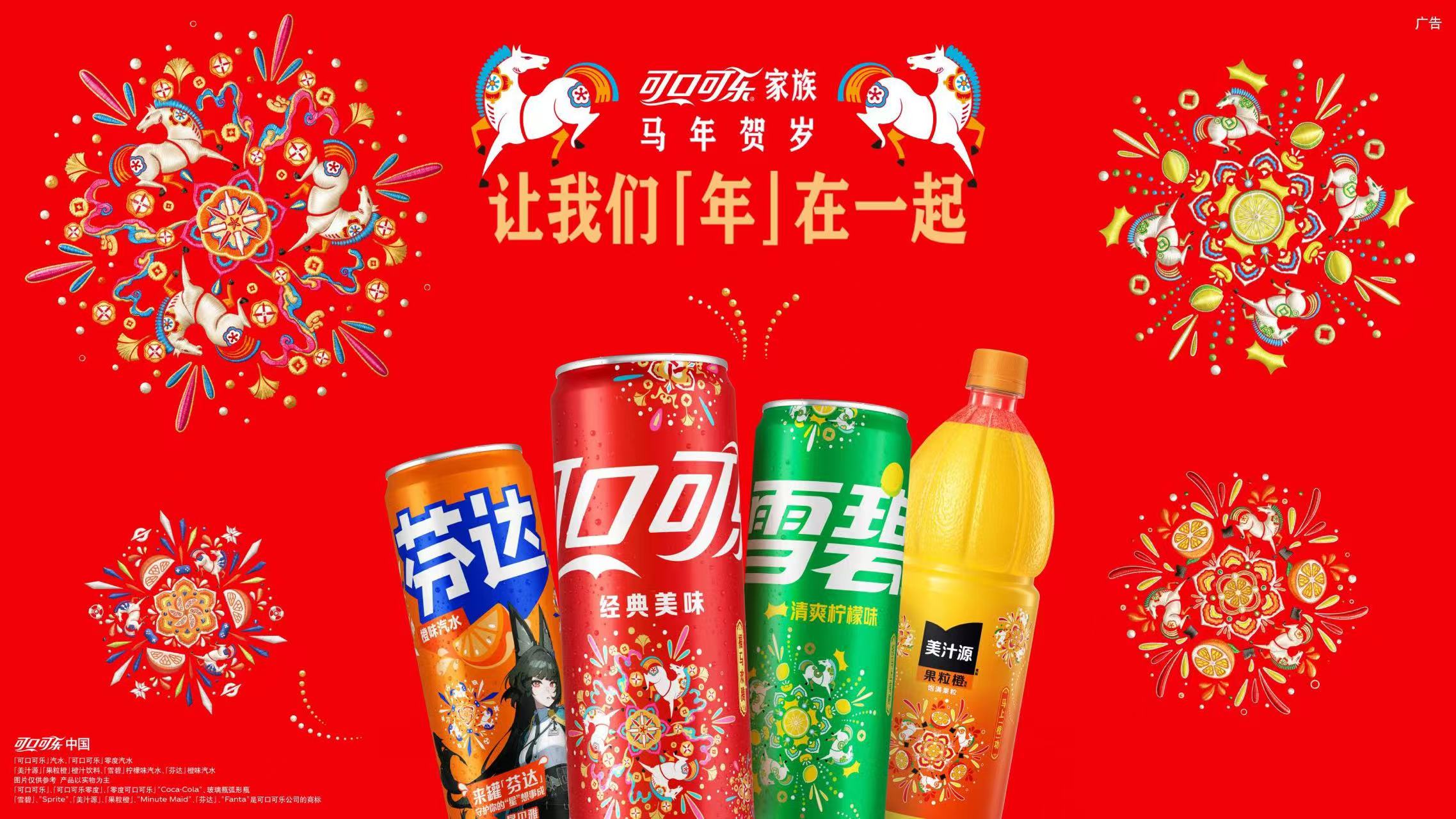
可口可乐中国启动2026马年新春系列活动
Di Yi Cai Jing· 2026-01-18 07:04
Core Viewpoint - Coca-Cola China is launching a series of activities for the 2026 Year of the Horse Spring Festival, focusing on cultural expression, product innovation, and market layout to meet diverse consumer needs during this important holiday [1][3]. Group 1: Event Launch - Coca-Cola China held a themed fireworks display in Chongqing to kick off the 2026 Year of the Horse Spring Festival series, inviting around 700 consumers to participate both offline and online [1][3]. - The fireworks display incorporated elements of the Spring Festival and the Year of the Horse, with live streaming allowing online viewers to engage through comments and interactions [3]. Group 2: Product Innovation - Coca-Cola China has been integrating traditional Chinese culture into product innovation, launching limited edition packaging since the 2022 Year of the Tiger, and continuing with the 2025 Year of the Snake and the upcoming 2026 Year of the Horse [5]. - The 2026 limited edition features designs based on the Year of the Horse and fireworks, incorporating auspicious symbols and traditional embroidery art to enhance the festive product offerings [5]. Group 3: Multi-Brand Collaboration - During the Spring Festival, multiple brands under Coca-Cola China, including Coca-Cola, Sprite, Minute Maid, Fanta, and Costa Coffee, will collaborate to cover various consumer scenarios such as stocking up, family reunions, and entertainment [7]. - These brands will utilize digital interactions and cross-industry collaborations to launch diverse marketing activities tailored to consumer preferences during the holiday [7]. Group 4: Supply Chain and Market Strategy - Coca-Cola China is enhancing its supply chain capabilities by collaborating with three major bottling partners and 46 factories to ensure stable product supply during the peak consumption period of the Spring Festival [8][9]. - A "Market Impact Week" will be initiated before the festival, involving various teams to engage with consumers and gather insights for future product planning and market strategies [8]. - Over the past three years, Coca-Cola China has invested in upgrading multiple production bases to improve efficiency and delivery capabilities, with five factories already modernized [9].
Costco Switches Food Court Back to Coke After Decade With Pepsi
Yahoo Finance· 2026-01-17 19:21
Core Viewpoint - Costco Wholesale Corporation has ended its partnership with PepsiCo and returned to Coca-Cola for its food courts, marking a significant shift after a decade-long relationship [1][2]. Group 1: Partnership Transition - The transition back to Coca-Cola began in late 2025 and was completed in early 2026 [1]. - Costco had been exclusively partnered with Pepsi since 2013, initially switching to Pepsi as a cost-saving measure to maintain the price of its popular hot dog and soda combo at $1.50 [2]. Group 2: Reasons for the Switch - The reasons for the switch back to Coca-Cola have not been officially disclosed, but customer preference and Coca-Cola's renewed commitment to quality and partnership with Costco are suggested factors [2]. Group 3: Market Performance - Costco has outperformed the market over the past 20 years by 7.13% on an annualized basis, achieving an average annual return of 16.0% [3]. - The current market capitalization of Costco Wholesale is $426.19 billion [3].


In war on sugar, PepsiCo and Coca-Cola could be the first targets
Yahoo Finance· 2026-01-17 15:37
Core Insights - The affordability of sugary drinks is increasing in many countries, which poses a challenge for public health and presents a market opportunity for investors [1][2] - The World Health Organization (WHO) is advocating for higher taxes on sugary beverages, alcohol, and tobacco to curb consumption and generate revenue [3][9] Group 1: Market Dynamics - In 2024, sugary drinks were more affordable in 62 countries compared to 2022, while beer affordability increased in 56 countries during the same period [2][8] - The WHO's "3 by 35" campaign aims to raise prices of sugary drinks and beer by 50% over the next decade, potentially generating $1 trillion by 2035 [3][8] Group 2: Impact on Major Companies - Companies like PepsiCo and Coca-Cola may face increased scrutiny and potential market share shifts as governments implement sugar taxes [6] - The effectiveness of local taxes in cities like Philadelphia and San Francisco has shown a decrease in consumption, indicating that tax policies can significantly impact sales for these companies [7]
Best Stock to Buy Right Now: Uber vs. Coca-Cola
Yahoo Finance· 2026-01-17 15:29
Group 1: Uber - Uber is recognized as a highly innovative company, creating a new category in on-demand ride-hailing and delivery services, with a market cap of $177 billion after a 35% increase in share price in 2025 [1] - The ride-hailing segment saw bookings increase by 20% in Q3 2025, reaching $25.1 billion, while the delivery division experienced a 25% year-over-year growth in bookings, contributing to a 20% overall revenue increase for the company [3] - Only 15% of the adult population in the U.S. uses Uber's services, indicating significant growth potential, especially through cross-selling between mobility and delivery services [4] - Uber's advertising operations generated run-rate sales of $1.5 billion in Q1 2025, showcasing the company's ability to create additional revenue streams [5] - The multi-sided ecosystem of Uber has established strong network effects, enhancing its competitive position as more riders and drivers participate in the platform [6] Group 2: Coca-Cola - Coca-Cola is a mature company with a long history, recognized globally, and produced a total return of 16% in 2025, including dividends [2] - The company operates over 200 beverage brands, with 2.2 billion servings consumed daily, making significant expansion challenging from its already extensive base [9] - Coca-Cola's brand strength supports its pricing power and profitability, appealing to investors focused on capital appreciation [8]

1 Prediction for KO in 2026
Yahoo Finance· 2026-01-16 20:25
Group 1 - Coca-Cola's stock experienced a significant increase due to a viral video featuring soccer star Lionel Messi, resulting in an estimated $13 billion boost in market value [1] - The company announced the creation of a chief digital officer position, to be filled by Sedef Salingan Sahin, as part of a digital transformation strategy [2] - Coca-Cola has a strong history as a Dividend King, having raised its dividend for 63 consecutive years, indicating financial stability [3][7] Group 2 - The company's stock price has risen 45% over the past five years, which is below the S&P 500's return of 82%, suggesting potential for growth [4] - Coca-Cola aims to rejuvenate its growth prospects through partnerships with celebrities like Messi and the new digital strategy, potentially exceeding its five-year CAGR of 7.32% by 2026 [5] - Despite recent stock performance, analysts have identified other stocks as better investment opportunities than Coca-Cola [6]
Thunder on wheels: Coca-Cola expands last-mile reach with micromobility
MINT· 2026-01-16 14:20
Core Insights - Coca-Cola is enhancing its direct distribution strategy in India by utilizing small vehicles for last-mile delivery to retail stores, aiming to improve access in hard-to-reach areas [1][2][3] Group 1: Distribution Strategy - The direct-to-store delivery approach allows Coca-Cola to reduce reliance on middlemen and traditional wholesale channels, thereby gaining better control over costs and profitability [2] - The company is investing significantly to strengthen last-mile access, although specific financial details have not been disclosed [2] - Coca-Cola operates nearly 6 million retail outlets in India and has a growing fleet of over 5,000 electric vehicles for product distribution [3] Group 2: Market Competition - Local competitors like Campa Cola and Lahori Jeera are increasing their market share in the carbonated soft drinks sector, with their combined share rising to nearly 15% from about 7% year-on-year [8] - The market share of Coca-Cola and PepsiCo has declined from 93% to around 85% during the same period, indicating increased competitive pressure [9] - The competitive landscape is prompting Coca-Cola to remain agile and responsive to market dynamics [10] Group 3: Financial Performance - Hindustan Coca-Cola Beverages reported revenues of ₹12,751 crore for FY25, reflecting a 9% year-on-year decline due to the sale of several manufacturing plants [11] - The bottler is preparing for an initial public offering (IPO) to raise approximately $1 billion [11] Group 4: Consumer Trends - There is a growing consumer preference for healthier beverage options, with low- and no-sugar products gaining traction [12][13] - Coca-Cola is expanding its portfolio to include healthier choices, such as Diet Coke and Coke Zero, which are becoming more visible in retail outlets [13][14] - The company is also innovating with new product offerings like Thums Up XForce and Schweppes Zero, aligning with the trend towards healthier consumption [14]
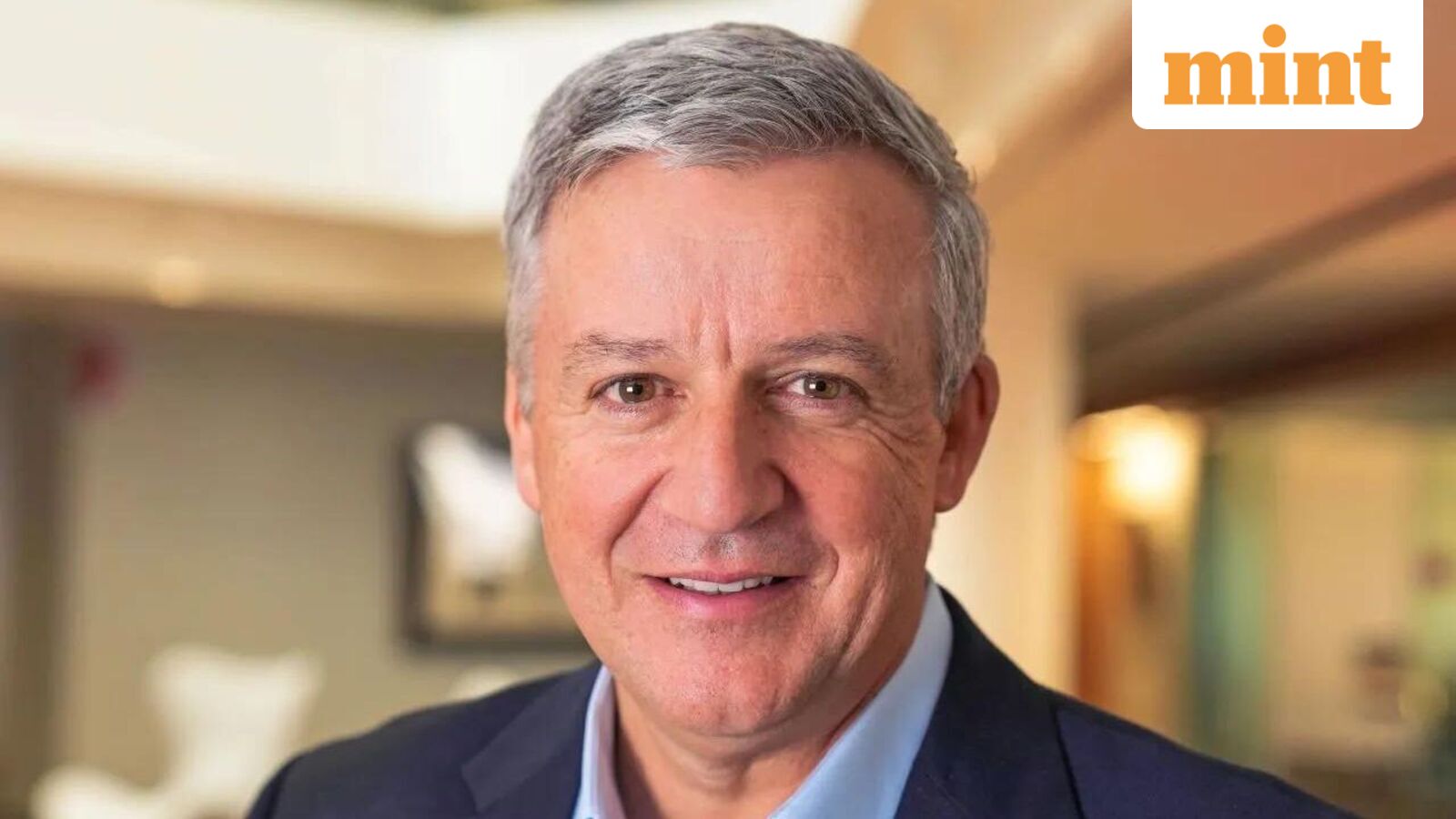
India to be among top three markets of Coca-Cola in coming years: Global President John Murphy
The Economic Times· 2026-01-16 13:00
Core Viewpoint - Coca-Cola maintains a positive outlook for the Indian market, expecting it to become one of its top three global markets due to strong consumer sentiment and a vibrant retail landscape [1][9]. Market Performance - India is currently the fifth largest market for Coca-Cola by volume, with operations through its bottling arm Hindustan Coca-Cola Beverages (HCCB) and various bottling partners [2][9]. - Despite challenges in 2025, including a short summer season caused by higher-than-normal monsoons, Coca-Cola anticipates robust growth momentum in 2026 [5][9]. Growth Drivers - The Indian government has implemented measures over the past 10 to 15 years to stimulate consumption, including investments in infrastructure, universal electrification, and digitization of the economy [6][9]. - The digitization of the economy is expected to serve as a significant tailwind for Coca-Cola's business, particularly in the context of e-commerce and hyperlocal delivery platforms [7][10]. Strategic Insights - Coca-Cola's leadership believes that India's journey to becoming a top market is a long-term process that requires continued investment in foundational areas to stimulate the economy [7][10]. - The company has recently completed the divestment of a 40% stake in HCCB to the Jubilant Bhartia Group, although there are no comments on potential IPO plans for HCCB [8][10].

Coke creates chief digital officer role to keep pace with tech demands
Yahoo Finance· 2026-01-16 10:23
Core Insights - Coca-Cola is enhancing its digital marketing strategy by creating a new executive role for a chief digital officer to unify digital initiatives across the company during a period of technological change for consumer packaged goods (CPG) brands [3][8] - The appointment of Sedef Salingan Sahin as chief digital officer is part of a broader organizational restructuring, which includes changes in leadership roles and responsibilities to improve consumer engagement and technology adoption [4][6][8] - The incoming CEO, Henrique Braun, emphasizes the importance of understanding consumers deeply and evolving the organizational structure to enable faster and smarter operations across all markets [7] Organizational Changes - Sahin will take over strategic duties from CFO John Murphy and will report directly to the new CEO, Braun [5] - The role of CMO Manolo Arroyo is being expanded to include customer and commercial leadership responsibilities, with a title change to chief marketing and customer commercial officer [5] - The structural adjustments also include the formation of two new market groupings aimed at bringing the organization closer to consumers [6] Digital Transformation Focus - Coca-Cola has been integrating artificial intelligence into various business areas, including marketing, although the recent announcement did not explicitly mention AI's impact [7] - The company has utilized AI-generated commercials in its holiday campaigns over the past two years, receiving mixed consumer responses [7]
First-Ever Coke Studio Bharat LIVE Debuts Across Delhi and Guwahati
BusinessLine· 2026-01-16 09:37
GUWAHATI, India and NEW DELHI, Jan. 15, 2026 /PRNewswire/ -- Coca-Cola marked a landmark moment in India’s cultural journey with the launch of the first-ever Coke Studio Bharat LIVE, taking its celebrated music platform from screen to stage for the very first time. Designed as a large-scale live extension of Coke Studio Bharat, the initiative brought together artists, audiences and communities to celebrate India’s diverse musical voices through shared unforgettable moments, an experience that truly reflecte ...