Meta Platforms(META)

Search documents
Meta: Buy The Dip, Ad Surge Is Paying For Capex Ambitions (NASDAQ:META)
Seeking Alpha· 2026-01-13 14:19
Group 1 - The large-cap tech sector was the primary driver of stock market gains in 2025, with investors heavily investing in AI despite significant capital expenditure intentions from companies [1] Group 2 - Gary Alexander has extensive experience in covering technology companies and has been a contributor to Seeking Alpha since 2017, providing insights into industry trends [2]



Meta: Buy The Dip, Ad Surge Is Paying For Capex Ambitions
Seeking Alpha· 2026-01-13 14:19
Group 1 - The large-cap tech sector was the primary driver of stock market gains in 2025, with investors heavily investing in AI despite significant capital expenditure intentions from companies [1] - There is a strong enthusiasm among investors regarding future growth opportunities in the tech industry, particularly in AI [1] Group 2 - Gary Alexander has extensive experience in covering technology companies and has been a contributor to Seeking Alpha since 2017, providing insights into current industry themes [2]

'Big Short' investor Michael Burry explains why he's betting against Nvidia, not Meta or Microsoft
Business Insider· 2026-01-13 14:19
Core Viewpoint - Michael Burry is betting against Nvidia due to its vulnerability to a potential downturn in the AI boom, considering it a "pure play" in the sector [1][2] Nvidia's Market Position - Nvidia is projected to sell $400 billion worth of chips this year, while there are less than $100 billion in application layer use cases [2] - The company's stock price has surged 12-fold since the beginning of 2023, making it the world's most valuable public company with a market capitalization of $4.5 trillion [6] Comparison with Other Tech Giants - Burry believes that shorting companies like Meta, Alphabet, and Microsoft would involve betting against their overall dominance in social media, search, and productivity software, respectively [7][8] - These companies are not seen as "pure shorts on AI" and are expected to adjust their spending and asset valuations without losing their global dominance [8] Concerns about AI and Technology - Burry expressed concerns about the potential for technological obsolescence in Nvidia's products, suggesting that the company introduces new chip solutions too frequently [10] - He highlighted the risks associated with AI stocks, drawing parallels between the current AI boom and historical technological bubbles, such as the electricity and data transmission bubbles [11][12][13] Broader Industry Implications - Burry warned of an inventory problem in the AI buildout due to the current power generation setup, suggesting that the industry may face significant challenges ahead [14]


Meta(META.US)战略大转移!启动千人裁员 重心由元宇宙转向AI穿戴设备
智通财经网· 2026-01-13 13:39
Group 1 - Meta Platforms has begun notifying over 1,000 employees in its Reality Labs department about layoffs, representing approximately 10% of the department's workforce of about 15,000 employees [1] - The company is shifting its focus from virtual reality and metaverse products to AI wearable devices and mobile functionalities, as stated by CTO Andrew Bosworth [1] - Reality Labs has incurred losses exceeding $70 billion since early 2021, with most investments not generating significant revenue [1] Group 2 - The metaverse, envisioned as a virtual world for work, entertainment, and exercise, has become a costly venture for Meta, which invested heavily in high-end VR headsets and digital features [2] - Meta's executives previously discussed a budget cut of up to 30% for the metaverse department to reallocate resources towards AI glasses projects [2] - The company will continue to develop the metaverse but will focus on mobile platforms rather than fully immersive VR headsets, with a commitment to enhancing the Horizon software experience for mobile users [2]
Meta启动Reality Labs部门裁员计划,千余岗位将被裁减
Xin Lang Cai Jing· 2026-01-13 13:31
1月13日,据报道,Meta开始启动对Reality Labs部门的裁员计划,逾千个岗位将被裁减。根据Meta首席 技术官安德鲁·博斯沃思的内部公告,受影响的员工将从周二(13日)上午起陆续收到裁员通知。 据此前报道称,此次裁员预计将影响Reality Labs部门约10%的员工,该部门目前拥有约1.5万名员工, 负责包括元宇宙在内的产品研发。 博斯沃思在备忘录中表示,作为裁员调整的一部分,Meta正在将其元宇宙发展重心转向移动设备。此 外,博斯沃思还写道,公司计划削减虚拟现实投资,以使该业务"更具可持续性"。 ...
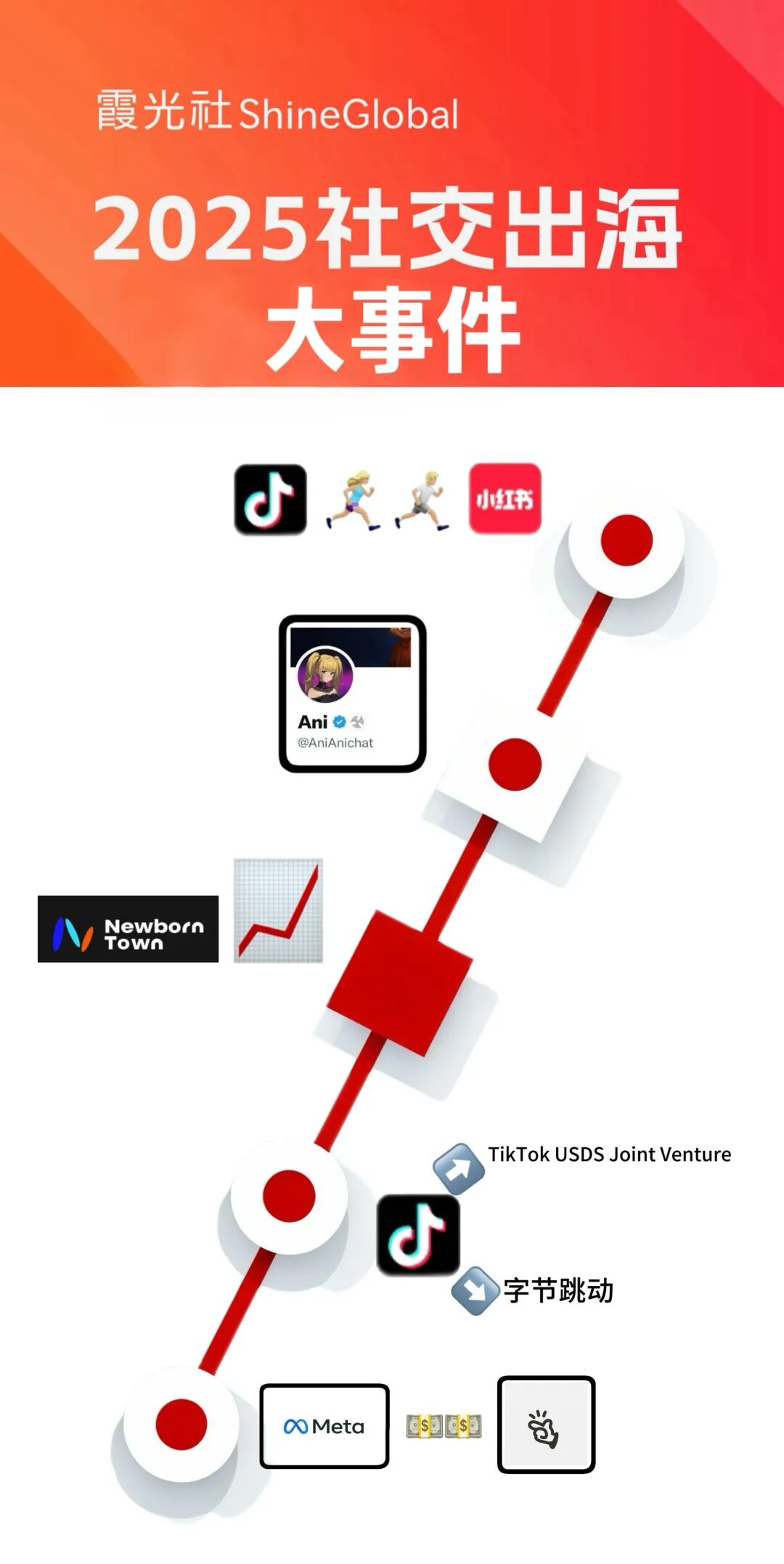
2025出海盘点:社交出海大年,成也AI败也AI
3 6 Ke· 2026-01-13 12:28
Core Insights - 2025 is marked as a significant year for social media expansion, with notable events such as the influx of users from TikTok to Xiaohongshu and the launch of AI-driven social applications [1][2][6] Group 1: Social Media Trends - The year saw a surge in social media applications, particularly in the Middle East, with 74,256 new social apps launched in countries like Saudi Arabia and the UAE [7] - Southeast Asia is emerging as a new growth area for social media, with platforms integrating local influencers to enhance user engagement [14][16] - The competitive landscape in the Middle East is intensifying, with many new entrants struggling to gain traction against established players [11][12] Group 2: AI Integration - The integration of AI in social applications has become a focal point, with significant advancements leading to a surge in user engagement and monetization opportunities [17][20] - Successful AI-driven applications, such as BeautyCam, have achieved top rankings in multiple countries, showcasing the potential of AI in enhancing user experience [21][23] - The AI social sector is characterized by a mix of opportunities and challenges, with many new entrants failing to sustain their growth [28][26] Group 3: Marketing Strategies - The marketing approach for social media applications is shifting from aggressive user acquisition to more refined strategies focusing on brand value and user retention [35][36] - Influencer marketing has gained prominence as a key strategy for connecting brands with users, particularly in markets where user safety and community trust are paramount [38] Group 4: Localization Efforts - Localization remains a critical strategy for social media companies, particularly in the Middle East, where adapting to local cultures and user preferences is essential for success [39][41] - The concept of "invisible localization" is emerging, where local companies act as intermediaries while leveraging the expertise of Chinese firms in technology and operations [42][45] Group 5: Regulatory Challenges - The social media landscape is facing increased regulatory scrutiny, leading to the shutdown of numerous applications due to compliance issues [48][49] - Companies are urged to diversify their market presence and enhance local operations to mitigate risks associated with regulatory changes [50]



Brazil orders Meta to suspend policy banning third-party AI chatbots from WhatsApp
TechCrunch· 2026-01-13 12:21
Core Viewpoint - Brazil's competition authority has mandated WhatsApp to suspend its policy that restricts third-party AI companies from utilizing its business API for chatbot services, initiating an investigation into potential anti-competitive practices by Meta [1][2][3]. Group 1: Investigation and Regulatory Actions - The Brazilian competition watchdog, CADE, is examining whether Meta's new WhatsApp Business Solution Terms are exclusionary and favor Meta's own AI offerings over competitors [2][3]. - CADE's investigation follows similar antitrust inquiries launched by the European Union and Italy regarding Meta's policy changes, which could result in significant fines if violations are found [5]. Group 2: Policy Changes and Implications - Meta revised its terms of use for the WhatsApp Business API in October, prohibiting third-party AI companies from providing chatbots on the platform, effective January 15 [4]. - Despite the new policy, businesses are still permitted to offer their own chatbots within WhatsApp, whether AI-powered or not [4]. - Meta has indicated that AI providers can continue to offer their chatbots to users in Italy, suggesting a potential similar approach in Brazil following CADE's order [6]. Group 3: Company Position and Rationale - Meta has expressed that AI chatbots are placing undue strain on its systems, which were designed for different applications of the business API, and has encouraged users to utilize alternative platforms for different chatbots [8]. - A Meta spokesperson emphasized that the WhatsApp Business API is intended to assist businesses in customer support and relevant updates, focusing on supporting numerous businesses utilizing the platform [9].

主题投资改变世界-2026年第一季度主题精选及股票清单(全球)-Transforming World - Q1 2026 Thematic Primer Picks & Stocklist (Global)
2026-01-13 11:56
Thematic Investing - Q1 2026 Summary Industry and Company Overview - **Industry Focus**: The report centers on thematic investing across various sectors, highlighting trends and companies that are positioned to benefit from these themes. - **Key Companies Mentioned**: - WeRide (L4 autonomous vehicles) - Klarna (buy now pay later, fintech) - BETA (electric aviation) - DEWA (UAE's largest electricity & water provider) - Chery Auto (China EVs) - Others include Masimo, Scholar Rock, and more [2][14] Core Insights and Arguments - **Thematic Additions**: New companies added to the thematic stock list include WeRide, Klarna, InnoScience, BETA, and DEWA, indicating a focus on innovation in autonomous vehicles, fintech, and renewable energy [2][15]. - **Private Capital Growth**: The report notes that if private capital AUM were a country, it would be the world's second-largest economy, with a combined valuation of $1.5 trillion from 16 transformative companies, representing over 1% of global GDP [3]. - **Investment Themes**: The report categorizes various investment themes such as: - **Energy Efficiency**: Projected investments of $8-14 trillion over the next 20 years across multiple sectors [9]. - **Future Mobility**: A $1.5 trillion market opportunity by 2030 in electric, autonomous, connected, and shared mobility [9]. - **Climate Change**: Emphasizes the transition to net zero and the associated investment opportunities [9]. Important but Overlooked Content - **Thematic Exposure**: Companies are characterized based on their exposure to themes, categorized as Low, Medium, or High, which impacts their growth potential [11][13]. - **Market Dynamics**: The report highlights the importance of tracking theme-related exposure as a long-term growth driver, despite the challenges in linking thematic exposure directly to share price performance [11]. - **Additions and Deletions**: The report provides a detailed list of companies added and removed from the thematic stock list, indicating shifts in market focus and investment strategies [14][15]. Conclusion - The Q1 2026 thematic investing report provides a comprehensive overview of emerging trends and companies that are expected to drive significant growth in various sectors. The focus on innovative technologies and sustainable practices reflects broader market shifts towards a more transformative economic landscape.

2026年互联网展望:2026年上半年热门主题与股票-Year-Ahead 2026_ Top themes and stocks for 1H‘26
2026-01-13 11:56
Summary of Key Points from the Conference Call Industry Overview - **Dominant Theme**: AI is expected to remain the dominant theme in 2026, with significant stock performance improvements noted for Alphabet following the Gemini launch and TPU deals. The peak optimism for AI may not occur until highly visible AI decacorns go public [1][10] - **Top AI Sector Themes for 2026**: Key themes include AI capex returns, Agentic AI adoption, Open Internet traffic disruption, and OpenAI's ad ramp. The most significant event anticipated is Meta's Avocado LLM launch, with Agentic AI traction being a major theme for Google, OpenAI, and Amazon [1] Macro Economic Outlook - **GDP Growth Projections**: BofA economists forecast global growth at 3.2% and US growth at 2.4% for 2026. Key macro trends include potential impacts from US tax refunds, a K-shaped economy, and lower interest rates positively affecting valuations [2][25] - **Consumer Spending Dynamics**: Consumer and online media spending are positively correlated with GDP growth. The report highlights a K-shaped economy where higher-income households are expected to see better spending growth compared to lower-income households [37][45] Valuations and Market Performance - **Sector Valuations**: Internet sector valuations are currently below historical averages, with a forward year EV/EBITDA of 12x compared to a 5-year average of 16x. The P/E ratio for the sector is at 23x for 2027, also below the 5-year average of 34x [4][17] - **Stock Performance**: In 2025, larger caps outperformed small caps, with a 29% increase for large caps compared to a 9% decrease for small caps. Online travel and media sectors are expected to perform well in 1H'26 [5][12] Key Stocks and Recommendations - **Top Stock Picks for 1H'26**: - **Large Cap**: Amazon (benefits from cloud acceleration and AI deals) - **Travel and Transportation**: Expedia (expected bookings upside) - **Small Cap**: Wayfair (gains from tax refunds and logistics adoption) - **Gaming & Ad Networks**: AppLovin and Roblox [5][9] AI Revenue Opportunities - **Projected AI Revenue Growth**: The report estimates over $1 trillion in revenue opportunities driven by AI across cloud, digital advertising, and subscriptions. Specific projections include $500 billion in incremental cloud revenue, $400 billion in digital advertising, and over $200 billion in AI subscriptions [52][53] - **Enterprise AI Subscription Market**: The enterprise AI subscription market is expected to grow significantly, with estimates suggesting it could reach $100 billion by 2030 [67] Risks and Challenges - **Sector Risks**: Potential risks include poor returns on capex spending, AI business model disruptions, and increasing pressure on consumer spending. The report warns of a possible overbuild in sector capacity leading to lower ROI on capex [9][52] - **K-Shaped Economy Impact**: Companies with higher exposure to lower-income consumers, such as eBay and Carvana, may face growth slowdowns due to diverging spending patterns [45][46] Conclusion - The report emphasizes the importance of AI in shaping the future of the internet sector, with significant revenue opportunities and challenges ahead. Investors are advised to consider macroeconomic factors, sector valuations, and individual stock performance when making investment decisions [9][52]

全球 AI 网络超级周期-2026 年(及 2027 年起)展望_ Global AI networking supercycle - What to expect in 2026F (and 2027F onwards)
2026-01-13 11:56
Summary of Key Points from the Conference Call Industry Overview - The report discusses the **global AI networking supercycle** driven by technology upgrades and supply shortages, particularly in the optical transceiver market [3][6][12]. - The focus is on **AI infrastructure investments** from global hyperscale AI cloud companies, which are expected to continue through **2026 and 2027** due to competition in large language model (LLM) training and inference [6][14]. Core Companies and Recommendations - **InnoLight (300308 CH)**: Maintained as a **Buy**; expected to dominate the high-end market due to strong R&D and production capabilities, benefiting from the transition to **1.6T transceivers** and **SiPh technology** [3][12]. - **YOFC (6869 HK)**: Upgraded to **Buy** from Neutral; the AIDC business is experiencing strong demand, and the telecom market is stabilizing [3][12]. - **TFC (300394 CH)** and **T&S (300570 CH)**: Both rated as **Buy**; expected to benefit from the CPO value chain and demand for high-end optical transceivers [3][12]. Market Dynamics - **Transceiver Shipments**: Estimated growth from **20 million** units of 800G transceivers and **2.5 million** units of 1.6T transceivers in **2025** to **43 million** and **20 million** units respectively in **2026** [3][7]. - **Market Share**: SiPh transceivers are projected to capture **50-70%** of the market share in the 1.6T segment by **2026** [7]. - **Component Shortages**: Persistent shortages in optical chips are expected to continue, benefiting dominant players with potential price and margin increases [6][7]. Technology Trends - **Optical Transceivers**: The migration to **SiPh** and the introduction of **CPO** technologies are key drivers for the market in **2026** [7][12]. - **Copper Cables**: Despite narratives suggesting a shift to optical communication, copper cables are expected to maintain a significant role in scale-up networks due to their cost advantages and efficiency [8][10]. - **AI Switches**: The adoption of **CPO switches** is increasing, with companies like **Broadcom** and **Nvidia** leading the charge in developing high-performance networking solutions [11][12]. Financial Projections - The report anticipates that the **high-speed copper cable market** could double, reaching **USD 2.8 billion** by **2028** [10]. - The **AI data center** market is expected to expand significantly, with increased demand for high-bandwidth and low-latency solutions [6][14]. Competitive Landscape - Major players in the optical transceiver market include **Nvidia**, **Google**, and **Meta**, each developing proprietary technologies to enhance their AI infrastructure [37][51]. - The competition is intensifying as companies strive to establish their networking standards, such as **Nvidia's NVLink** and **Broadcom's SUE** [20][27]. Conclusion - The global AI networking market is poised for significant growth driven by technological advancements and increasing demand from hyperscale AI companies. Key players are expected to benefit from ongoing innovations and market dynamics, making them attractive investment opportunities.