AI穿戴设备

Search documents
Meta宣布今年不启动绩效裁员,股价近期波动下行
Jing Ji Guan Cha Wang· 2026-02-15 16:47
Group 1 - Meta announced that it will not initiate performance-based layoffs this year, marking a shift in its human resource strategy compared to 2025 when it eliminated the bottom 5% of low-performing employees [1] - Last month, Meta optimized its metaverse division, Reality Labs, by laying off approximately 10% of its workforce, which is over 1,000 employees, to focus on core areas such as AI wearable devices [1] - The adjustments are aimed at achieving efficient resource allocation while balancing organizational stability and business development needs [1] Group 2 - In the past 7 trading days, Meta's stock price has shown a downward trend, with a closing price of $668.69 on February 11, 2026, down 0.30% for the day [2] - As of February 13, 2026, the stock price was $639.77, reflecting a single-day decline of 1.55%, with a cumulative drop of 6.67% in February and a year-to-date decline of 3.08% [2] - Trading activity has decreased recently, with a volume of 14.32 million shares on February 11, 2026, indicating a reduction in overall trading [2]
Meta官宣今年不裁员低绩效员工,却悄悄优化元宇宙部门
Huan Qiu Wang· 2026-02-14 01:43
Group 1 - Meta has announced that it will not initiate a new round of performance-based layoffs this year, breaking previous speculation about a potential restart of such actions [1][4] - The company's recent personnel adjustments are described as individual cases and not part of a broader strategy, contrasting sharply with its earlier stance in early 2025 when performance-based layoffs were indicated as a potential annual practice [4] - Last month, Meta laid off approximately 10% of its Reality Labs department, affecting over 1,000 employees, as part of a strategic contraction to focus resources on core areas like AI and wearable devices [4][5] Group 2 - Analysts suggest that Meta's decision to abandon the 5% performance-based layoff mechanism may be linked to a strategic shift, favoring targeted optimization of non-core departments over broad layoffs [5] - The company aims to efficiently allocate resources towards high-potential areas such as AI and smart hardware while maintaining organizational stability and meeting business development needs [5] - Meta has not disclosed any plans for targeted layoffs in other departments for this year [5]



Meta(META.US)战略大转移!启动千人裁员 重心由元宇宙转向AI穿戴设备
智通财经网· 2026-01-13 13:39
Group 1 - Meta Platforms has begun notifying over 1,000 employees in its Reality Labs department about layoffs, representing approximately 10% of the department's workforce of about 15,000 employees [1] - The company is shifting its focus from virtual reality and metaverse products to AI wearable devices and mobile functionalities, as stated by CTO Andrew Bosworth [1] - Reality Labs has incurred losses exceeding $70 billion since early 2021, with most investments not generating significant revenue [1] Group 2 - The metaverse, envisioned as a virtual world for work, entertainment, and exercise, has become a costly venture for Meta, which invested heavily in high-end VR headsets and digital features [2] - Meta's executives previously discussed a budget cut of up to 30% for the metaverse department to reallocate resources towards AI glasses projects [2] - The company will continue to develop the metaverse but will focus on mobile platforms rather than fully immersive VR headsets, with a commitment to enhancing the Horizon software experience for mobile users [2]
直击CES:“AI正急切地走出屏幕”
Xin Lang Cai Jing· 2026-01-10 00:55
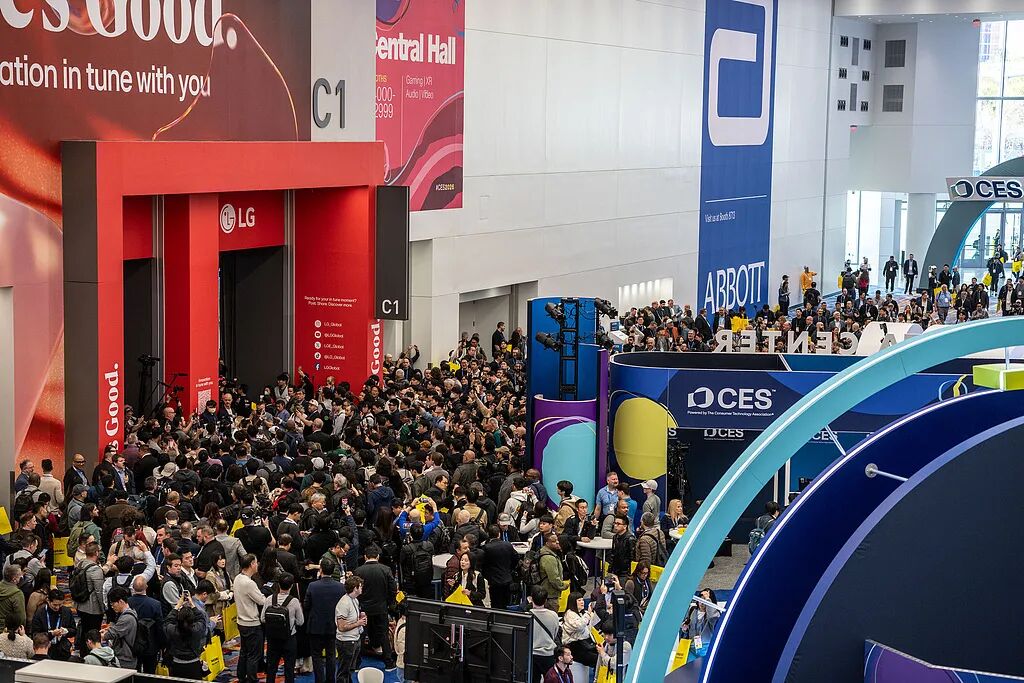
Core Insights - The CES 2023 showcased a significant shift towards consumer-oriented technology, emphasizing the integration of AI into everyday products and experiences [5][20][21] - Chinese companies made a notable impact at CES, with a strong presence in robotics and AI applications, reflecting a growing trend of innovation and market engagement [15][17][18] Group 1: Event Overview - CES is described as a "global technology spring festival," attracting a diverse audience including tech professionals and curious consumers [3][5] - The event is characterized by a more accessible and consumer-friendly atmosphere, moving away from purely business-focused interactions [5][10] Group 2: AI and Robotics - AI applications were prominently featured, with a focus on practical implementations such as robots performing various tasks and AI-enhanced wearable devices [7][9] - The number of robotic exhibitors increased significantly, with a dedicated theme area for "embodied intelligence" [7][15] Group 3: Chinese Companies' Participation - Over 1,200 Chinese exhibitors participated, making up approximately 30% of the total, with a strong emphasis on innovation and market readiness [15][17] - Many Chinese startups showcased their products for the first time, indicating a shift towards proactive international engagement [12][13] Group 4: Market Trends and Consumer Engagement - The feedback from international markets has been overwhelmingly positive, with many products exceeding expectations in terms of interest and potential sales [13][18] - The focus has shifted from merely showcasing AI capabilities to demonstrating measurable value in real-world applications [20][22] Group 5: Competitive Landscape - The event highlighted the competitive dynamics between major AI nations, with Chinese companies focusing on commercialization while U.S. firms emphasized foundational technologies [17][18] - The presence of Korean companies also contributed to the competitive landscape, showcasing strengths in smart manufacturing and AI applications [17][18] Group 6: Future Directions - The integration of AI into physical products is seen as a key trend, with a focus on creating embedded capabilities that enhance user experiences [20][21] - The concept of digital twins is emerging as a foundational element for AI applications in industrial settings, facilitating design and optimization processes [22]
直击CES:“AI正急切地走出屏幕”
吴晓波频道· 2026-01-10 00:21
Core Insights - The CES 2023 showcased a significant shift towards consumer-oriented technology, emphasizing the integration of AI into everyday life and products [4][10][39] - The event highlighted the growing presence of Chinese companies, with over 1,200 exhibitors, reflecting a proactive approach to global markets and innovation [22][28] Group 1: Event Overview - CES is described as a "global technology spring festival," attracting a diverse audience including tech enthusiasts and ordinary consumers [4][9] - The event's theme, "Innovators Show Up," underscores the emergence of new companies and technologies, particularly in AI and robotics [21][22] Group 2: AI and Robotics - AI applications at CES 2023 were notably diverse, featuring robots capable of various tasks and AI-enhanced wearable devices [11][12] - The focus has shifted from merely showcasing AI capabilities to demonstrating how AI can create measurable value in the physical world [16][39] Group 3: Chinese Companies' Impact - Chinese enterprises dominated the robotics and AI application sectors, with a significant number of exhibitors and innovative products [28][29] - The enthusiasm of Chinese companies at CES is attributed to the AI-driven innovation ecosystem in China and a shift towards more aggressive international market strategies [22][26] Group 4: Market Trends and Consumer Engagement - The event revealed a trend towards practical, market-ready products rather than mere conceptual showcases, indicating a maturation of the tech industry [13][39] - There was a notable increase in consumer engagement, with many attendees expressing excitement over AI products that enhance daily life [23][26] Group 5: Industry Comparisons - A comparison of Chinese and American companies revealed differing focuses, with Chinese firms emphasizing product commercialization while American companies concentrated on foundational technologies and software ecosystems [29][42] - Korean companies also made a significant impact, leveraging cross-border supply chains and focusing on home service applications [32]

慢牛下的春季躁动
AVIC Securities· 2025-12-29 03:09
Core Insights - The report indicates that the current economic transition is characterized as a "slow bull" market, with the upcoming spring rally expected to be more stable and prolonged compared to previous years [4][6] - The report highlights that the A-share market has solidified its lower trading range amidst global concerns over AI bubbles and interest rate hikes, suggesting a clear starting point for the spring rally [4][6] - Historical analysis of major tech investment cycles in A-shares, such as the mobile internet and new energy vehicle trends, reveals that these cycles typically unfold in three phases: capital expenditure recovery, performance validation, and peak performance leading to market decline [4][8] Industry Analysis - The AI industry has seen a significant increase in capital expenditure since the launch of ChatGPT in November 2022, with major Chinese internet companies committing to AI strategies [27][28] - Currently, only the optical module segment appears to be in the performance validation phase, while other segments of the AI industry are still in the initial phase of capital expenditure driving valuation increases [27][28] - The report anticipates that 2026 will be a pivotal year for the stock market as the AI technology revolution gains full momentum [27][28] Investment Recommendations - The report suggests a balanced investment strategy focusing on sectors with marginal catalysts, as the current market phase is characterized by a gradual upward trend rather than aggressive speculation [5][6] - It emphasizes the importance of waiting for new catalysts to emerge before making significant investments, as the A-share market is expected to reach new highs in the future [4][5]
科技感拉满!义乌小商品凭实力圈粉全球外商
Zhong Guo Xin Wen Wang· 2025-12-24 13:02
Core Viewpoint - A batch of "tech-enabled" small products from Yiwu, Zhejiang, is gaining popularity among global foreign merchants, featuring smart toys that speak multiple languages and multifunctional AI wearable devices, which are attracting the attention of international buyers and entering the global market [2] Group 1 - The smart products from Yiwu are equipped with cutting-edge technology [2] - These products include intelligent toys and versatile AI wearable devices [2] - The global market is showing increasing interest in these tech-enabled small goods [2]

北京商报社社长兼总编辑李波涛:潮流时尚是消费创新破局和竞争力聚变的现实切口
Bei Jing Shang Bao· 2025-11-28 11:45
Group 1 - The core theme of the 20th Beijing Business Academic Conference is "Consumption Innovation: Shaping High-Quality Life and Urban Competitiveness," emphasizing the characteristics of consumption as "diverse, fast, good, and economical" [1][2] - The concept of "fashion sense" is highlighted as a defining feature of "good consumption," which aids in expanding the supply of quality consumer goods and services, and creating new consumption scenarios [2] - The human-shaped robot industry is entering a phase of mass production, with leading companies in China planning production capacities that meet the global demand by 2026, reflecting a significant shift in commercial investment logic [1][2] Group 2 - The first category of innovative products includes hard technology-driven functional products such as drones, new energy vehicles, and AI wearable devices, which can achieve strong market feedback with even a 10-30% innovation [2] - The second category focuses on products with strong emotional and social attributes, such as trendy toys and luxury goods, while the third category emphasizes experiential consumption that integrates culture, commerce, and travel [2] - Upcoming events like the 2025 Beijing Business Forum will focus on "fashion breaking" and "fashion fusion," aiming to provide insights for upgrading Beijing's commercial landscape and helping brands break through [2]
事关AI赋能消费,工业和信息化部发声
Shang Hai Zheng Quan Bao· 2025-11-27 09:08
Core Insights - The integration of new technologies like artificial intelligence (AI) is rapidly transforming consumer behavior and market dynamics, as highlighted in the recent implementation plan aimed at enhancing the adaptability of supply and demand in consumer goods [1] - The Ministry of Industry and Information Technology (MIIT) emphasizes the need for AI to go beyond mere technical demonstrations, focusing on user insights, market trends, and business model construction to create actionable products and services [1][2] Industry Developments - AI applications in the consumer goods sector are already showing results, particularly in the home appliance industry, where smart appliances can generate shopping lists based on user behavior, enhancing convenience [2] - In the apparel sector, AI is reshaping production and consumption models by predicting fashion trends and enabling flexible production, catering to diverse consumer needs [2] - The MIIT is promoting the penetration of AI into various consumer scenarios to create new experiences and stimulate demand, having already identified 213 application scenarios for digital technology to enhance product variety, quality, and branding [2] Market Trends - The AI integration is accelerating in specific areas such as smart homes and health care, with initiatives aimed at creating interconnected smart living experiences and enhancing elderly care services [3] - The consumer experience is becoming a central demand, with AI significantly improving personalization and engagement in consumption scenarios [3] - As of mid-2023, the user base for generative AI products in China reached 515 million, indicating strong market demand for AI-driven consumer products [3] Financial Projections - The AI terminal market in China generated sales revenue of 34.41 billion yuan in 2023, with projections to reach 1,481.23 billion yuan by 2030, reflecting a compound annual growth rate (CAGR) of 37.33% from 2024 to 2030 [5] - The global AI market is also experiencing rapid growth, with its size increasing from $1.917 trillion in 2019 to $4.7327 trillion in 2023, and expected to exceed $11.6 trillion by 2027 [6] - The investment in generative AI within the retail and consumer goods sectors is accelerating, indicating a shift from being a supplementary tool to a core driver of long-term business strategy [6]
兴业证券:Q3主动公募加仓AI上游网络通信硬件和芯片存储 减仓中游算法技术和软件
Zhi Tong Cai Jing· 2025-10-30 13:19
Core Insights - The report from Industrial Securities indicates that in Q3 2025, active public funds are aligning with the AI industry trend, showing a significant shift towards "increasing hardware and decreasing software" [1][10] Group 1: TMT Sector Allocation - The allocation ratio of active public funds to the TMT sector has increased significantly by 11.3 percentage points to 39.9% in Q3 2025, nearing historical highs last seen at the end of 2020 [2] - The TMT sector has grown to encompass over 1,000 companies, with a free float market capitalization exceeding 25%, allowing for a larger capacity for fund allocation [2] - The adjusted indicator of "active public fund allocation ratio/free float market capitalization ratio" for TMT in Q3 2025 is 1.52, which is not extreme compared to historical highs [3][6] Group 2: AI Subsector Analysis - In Q3 2025, active public funds have notably increased their positions in upstream network communication hardware (mainly North American computing chains) and chip storage (mainly domestic computing chains), while reducing positions in midstream algorithm technology and software [10][12] - The allocation in upstream network communication hardware is at 19.4%, with a significant increase in configurations for components like optical modules and PCBs [11] - The midstream software sector has seen a reduction in most areas, with application software and office software showing historically low allocation ratios [12][13] Group 3: Downstream AI Applications - The downstream AI sector has seen an increase in allocations towards consumer electronics such as AI phones and wearable devices, while humanoid robots have been reduced [13] - Most downstream AI applications have experienced a decrease in allocations, with gaming and a few other sectors showing some increases, but overall configurations remain at historically low levels [13]