Novo Nordisk(NVO)

Search documents
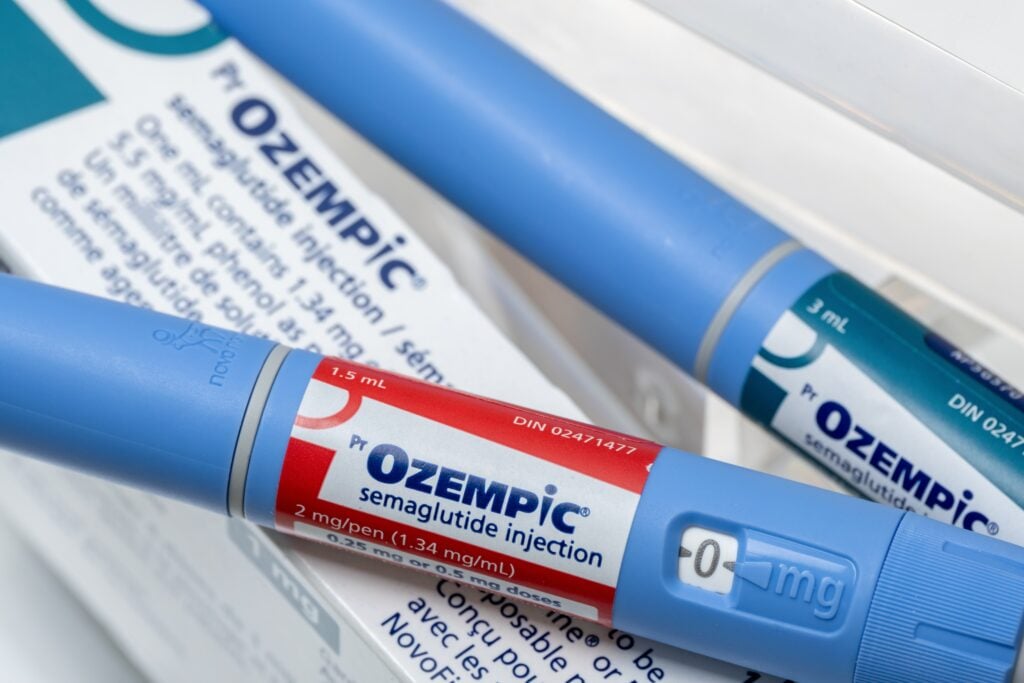
Novo Nordisk Wants FDA Nod For A Higher-Dose Wegovy
Benzinga· 2025-11-26 18:27
Core Viewpoint - Novo Nordisk has submitted a supplemental marketing application to the FDA for a higher dose of semaglutide injection (7.2 mg) aimed at chronic weight management, with expectations for regulatory decisions in various regions, including the EU by Q1 2026 [1][2]. Group 1: Application Details - The application includes results from the STEP UP trial, a 72-week phase 3 study that assessed the efficacy and safety of semaglutide 7.2 mg against placebo and semaglutide 2.4 mg in 1,407 adults with obesity [3]. - Patients with diabetes were excluded from the trial [3]. Group 2: Trial Results - Participants treated with semaglutide 7.2 mg experienced an average weight loss of 20.7% after 72 weeks, compared to 17.5% for semaglutide 2.4 mg and 2.4% for placebo, starting from a mean baseline weight of 249 pounds [4]. - 33.2% of patients on semaglutide 7.2 mg achieved a weight loss of 25% or more, compared to 16.7% for semaglutide 2.4 mg and 0.0% for placebo [4]. Group 3: Additional Findings - When including participants who discontinued, those on semaglutide 7.2 mg achieved an 18.7% weight loss, while semaglutide 2.4 mg and placebo resulted in 15.6% and 3.9% weight loss, respectively [5]. - 90.7% of participants on semaglutide 7.2 mg achieved at least a 5% reduction in body weight, compared to 89.9% for semaglutide 2.4 mg and 36.8% for placebo [5]. - 31.2% of those receiving semaglutide 7.2 mg achieved a weight loss of 25% or more, compared to 15.3% for semaglutide 2.4 mg and 0.0% for placebo [6]. Group 4: Market Reaction - Following the news, Novo Nordisk shares rose by 3.77%, reaching $48.83 at the time of publication [6].


Why Medicare price negotiations matter for Novo Nordisk, AstraZeneca, and other European pharma companies
CNBC· 2025-11-26 17:18
Core Insights - Drug pricing is a significant concern for pharmaceutical companies and investors, particularly in light of the Inflation Reduction Act and President Trump's push for lower medicine prices [1][11] - The U.S. market is crucial for large-cap pharmaceutical companies due to higher prices for branded medicines, with a substantial portion of their sales originating from this market [7] Drug Pricing Legislation - The Inflation Reduction Act (IRA), enacted in 2022, allows the Centers for Medicare & Medicaid Services (CMS) to negotiate drug prices for Medicare patients, impacting global pharmaceutical companies [2][4] - Newly negotiated prices for 15 blockbuster drugs, including significant discounts for Novo Nordisk's Ozempic (71% discount) and GSK's Trelegy (73% discount), are set to take effect in 2027, with overall discounts ranging from 38% to 85% [4][9] Company Responses and Market Reactions - European pharmaceutical companies, including AstraZeneca and Novo Nordisk, are making substantial U.S. investments to adapt to the changing market dynamics and pricing pressures [3][11] - Stock market reactions have been muted, with AstraZeneca and GSK shares rising less than 1%, while Novo shares increased by 4.7% following the announcement of price negotiations [8][9] Future Considerations - The CMS is expected to publish a list of 15 drugs selected for negotiations for 2028 by February 1, 2026, indicating ongoing scrutiny and potential changes in drug pricing [9] - Companies are exploring ways to mitigate the impact of price reductions, including voluntary price cuts and investments in U.S. manufacturing to avoid tariffs [11][13]


NVO Stock Up as Amycretin Shows Strong Weight Loss in Type 2 Diabetes
ZACKS· 2025-11-26 16:45
Core Insights - Novo Nordisk's shares increased by 4.7% following positive phase II study results for amycretin, a treatment for type 2 diabetes [1] - The study demonstrated significant weight loss and HbA1c reductions in patients inadequately controlled on metformin [8][9] Company Overview - Amycretin is a novel co-agonist targeting GLP-1 and amylin receptors, aimed at treating obesity and type 2 diabetes [2] - The company has seen a year-to-date stock decline of 45.3%, contrasting with a 15.9% industry rally [5] Phase II Study Details - The phase II study involved multiple ascending doses of amycretin, with participants treated for up to 36 weeks [6] - Subcutaneous amycretin led to a weight loss of up to 14.5% from a baseline of 99.2 kg, while oral amycretin resulted in a 10.1% weight loss from a baseline of 101.1 kg [7] - HbA1c levels were reduced by up to 1.8% for subcutaneous and 1.5% for oral amycretin by week 36 [8][10] Future Plans - Phase III trials for amycretin are scheduled to begin in 2026 [11] - Novo Nordisk is also developing next-generation obesity treatments, including CagriSema and monlunabant, with regulatory submissions planned for 2026 [13][14] Competitive Landscape - The obesity market is competitive, with Eli Lilly's Mounjaro and Zepbound directly competing with Novo Nordisk's products [15] - Pfizer's recent acquisition of Metsera for around $10 billion highlights the growing interest in the obesity treatment sector [16]

“老钱”与“新贵”:礼来向上 诺和诺德向下 但减肥药“双子星”终极对决尚未到来
Mei Ri Jing Ji Xin Wen· 2025-11-26 15:21
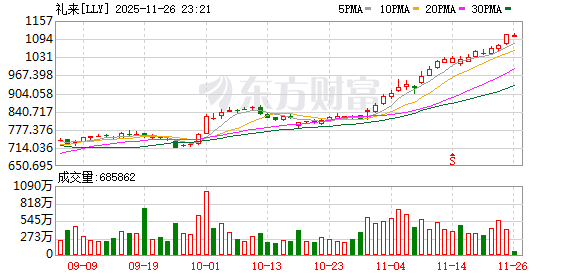
Core Viewpoint - Eli Lilly has successfully entered the trillion-dollar market capitalization club, surpassing Walmart, while Novo Nordisk's stock has plummeted nearly 50% this year, indicating a significant shift in investor sentiment between the two companies in the weight loss drug sector [1][2]. Group 1: Market Performance - Eli Lilly's stock has increased by over 35% this year, leading to a market capitalization exceeding one trillion dollars, making it the first pharmaceutical company to achieve this milestone [2]. - In contrast, Novo Nordisk's stock has dropped nearly 50% year-to-date, resulting in a market capitalization loss of approximately $190 billion [2]. Group 2: Competitive Landscape - Novo Nordisk was previously the leader in the weight loss drug market with its semaglutide, while Eli Lilly has emerged as a strong competitor with the introduction of tirzepatide [4][5]. - The competition has intensified, with Eli Lilly's tirzepatide showing superior efficacy in clinical trials compared to Novo Nordisk's semaglutide, leading to a shift in market dynamics [8][9]. Group 3: Clinical Trials and Efficacy - Eli Lilly's SURMOUNT-5 trial demonstrated that tirzepatide resulted in a 20.2% average weight loss at 72 weeks, significantly outperforming semaglutide, which achieved a 13.7% average weight loss [8]. - The trial results have coincided with a growing demand for effective weight loss solutions, as early users of semaglutide face challenges such as drug tolerance and weight regain [8]. Group 4: Future Prospects - The market for Alzheimer's treatment is projected to grow significantly, with Eli Lilly's donanemab positioned to capture a substantial share, contrasting with Novo Nordisk's reliance on GLP-1 therapies [11][12]. - Novo Nordisk is under pressure to diversify its product pipeline beyond GLP-1 drugs, as evidenced by its attempts to expedite the approval of oral semaglutide and its interest in acquiring new drug candidates [12][13].

Medicare Slashes Ozempic's Price Tag 71%; Why Novo Nordisk Rallied
Investors· 2025-11-26 15:04
Core Insights - Novo Nordisk's stock rose due to a lighter-than-expected discount for its semaglutide-based products, Ozempic and Wegovy, under the Inflation Reduction Act, with discounts ranging from 38% to 85% [1][3] - The Centers for Medicare and Medicaid Services (CMS) estimates that price negotiations will save patients $685 million in out-of-pocket costs, focusing on the 15 most expensive drugs in Medicare [2] - Teva Pharmaceutical's Austedo received a 38% discount, with projected sales of $2.5 billion in 2027, contributing to a 4% rise in its stock [5][6] Novo Nordisk - Semaglutide will face a 71% discount, reducing its Medicare price to $274 per month in 2027 from a list price of $959 in 2024 [3] - The discount aligns with a Most Favored Nation deal, allowing Medicare to cover obesity drugs for the first time [4] - Novo Nordisk's stock is currently trading below key moving averages, indicating potential pressure [9] Teva Pharmaceutical - Teva's Austedo will see its price drop from $6,623 to $4,093 by 2027, leading to a positive outlook for the drug [5] - Teva's stock increased by over 4% following the news, reflecting investor confidence [6] AstraZeneca and BeOne Medicines - AstraZeneca's Calquence faces a 40% discount, dropping from $14,228 to $8,600 per month by 2027, but is not expected to significantly impact its market position against BeOne's Brukinsa [7][8] - BeOne's stock rose more than 2%, indicating a favorable market response despite AstraZeneca's discount [8]
美股三大指数集体高开,英伟达反弹超2%
Ge Long Hui· 2025-11-26 14:45
Group 1 - The probability of a Federal Reserve interest rate cut in December has increased, leading to a collective rise in the three major U.S. stock indices: Nasdaq up 0.6%, S&P 500 up 0.4%, and Dow Jones up 0.22% [1] - Nvidia shares rose by 2.2%, with the company stating that its technology remains a generation ahead of the industry and is the only platform capable of running all AI models across all computing scenarios [1] - Tesla shares increased by 1.4%, as Elon Musk announced that the Austin Robotaxi fleet size will double next month [1] Group 2 - Novo Nordisk shares surged over 3% after the company applied to the U.S. FDA for approval of a higher dosage of its Wegovy injection [1] - Dell Technologies shares rose over 6%, driven by strong performance in AI server orders for the third fiscal quarter, prompting an upward revision of its full-year earnings guidance [1]


勇闯“死亡谷”的中国药企越来越多,能否破局?
Mei Ri Jing Ji Xin Wen· 2025-11-26 14:02
Core Insights - The pharmaceutical industry is witnessing a shift in Alzheimer's disease (AD) drug development, with Chinese companies increasingly entering the field while multinational corporations face setbacks [1][2][3] Group 1: Current Developments in AD Drug Research - Novo Nordisk announced that its two large Phase III trials for Semaglutide in treating Alzheimer's did not meet primary endpoints, indicating challenges in the AD drug development landscape [1] - Chinese pharmaceutical companies, such as Green Leaf Pharmaceutical and Kangfang Biotech, are advancing their own AD drug candidates, with Green Leaf's LY03017 recently receiving FDA approval for clinical trials [1][2] - The number of drugs under development for AD in China ranks second globally, following the United States, highlighting the growing interest and investment in this area [2] Group 2: Challenges Faced by Multinational Corporations - Major multinational companies like Pfizer, Roche, and Johnson & Johnson have faced failures in AD drug development due to unclear disease mechanisms and ineffective clinical trial results [2][3] - Notably, Biogen's Aducanumab is set to exit the AD treatment space due to contradictory Phase III trial results, while other drugs like Lecanemab and Donanemab have received mixed responses from regulatory bodies [3] Group 3: Factors Driving Chinese Companies' Confidence - Chinese companies are motivated by advancements in diagnostic technologies and a significant unmet clinical need in the AD space, particularly for psychiatric symptoms associated with the disease [4] - The combination of improved diagnostic methods and a large patient population with unmet needs is driving the confidence of Chinese firms in pursuing AD drug development [4] - Green Leaf Pharmaceutical is exploring multiple indications for its LY03017, indicating a strategic approach to address various aspects of AD and related disorders [4]

Novo Nordisk Seeks FDA Approval of Higher Dose of Wegovy Weight-Loss Shot
WSJ· 2025-11-26 13:42
Core Insights - The FDA is implementing a priority program to expedite the review of products that address significant health priorities [1] Group 1 - The program aims to accelerate the review process for health-related products [1]
Novo shares rise as US Medicare price cuts come in largely as expected
Reuters· 2025-11-26 13:22
Core Insights - Novo Nordisk shares increased by 5% following analysts' reports that U.S. price cuts for semaglutide were largely in line with expectations [1] Company Summary - The price adjustments for semaglutide, a key product of Novo Nordisk, were anticipated by analysts, leading to a positive market reaction reflected in the share price increase [1]

Medicare Announces Price Cuts For 15 Drugs— Novo Nordisk's Wegovy And Ozempic To Cost $274 A Month - AstraZeneca (NASDAQ:AZN), Eli Lilly (NYSE:LLY)
Benzinga· 2025-11-26 10:11
Core Insights - The U.S. Centers for Medicare and Medicaid Services (CMS) has negotiated lower prices for 15 high-cost medications, leading to significant annual savings on prescription expenses [1][3] - The new prices, effective in 2027, include a monthly cost of $274 for Novo Nordisk's GLP-1 drug, semaglutide, marketed as Wegovy, Ozempic, and Rybelsus [2] - Other drugs, such as AstraZeneca's Calquence, Boehringer's Ofev, and Pfizer's Ibrance, have seen price reductions of 40%-50% from their estimated net prices, with Medicare enrollees expected to save approximately $685 million in out-of-pocket costs and Medicare itself saving $12 billion [3] Drug Price Reductions - The changes are part of the Inflation Reduction Act (IRA) signed into law by former President Joe Biden, aimed at reducing drug costs for Medicare beneficiaries [4] - The pharmaceutical industry has faced pressure to lower drug prices, with recent agreements to reduce costs for weight-loss drugs like Zepbound and Wegovy, bringing patient costs down to $50–$350 per month from over $1,000 [5] - Pfizer was the first company to reach an agreement under the Trump administration to align U.S. drug prices with the lowest prices in other developed countries [6]