Oracle(ORCL)

Search documents
GE Vernova, Adobe And 3 Stocks To Watch Heading Into Wednesday - Oracle (NYSE:ORCL)


Benzinga· 2025-12-10 06:47
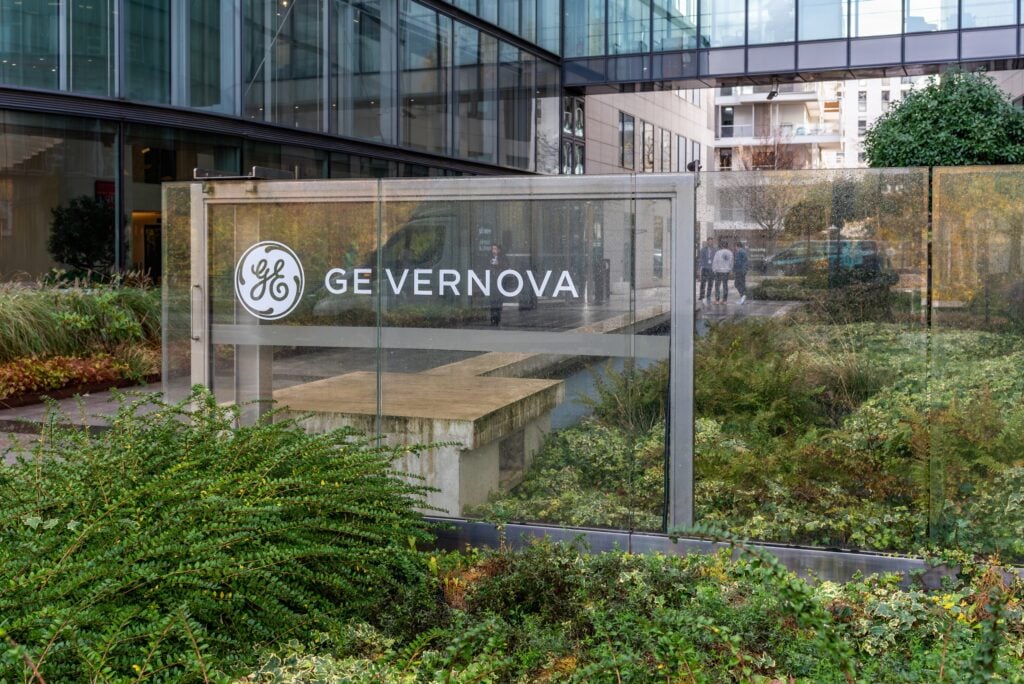
Group 1: Earnings Reports and Expectations - Chewy Inc. is expected to report quarterly earnings of 12 cents per share on revenue of $3.10 billion [1] - Braze Inc. reported third-quarter revenue of $190.84 million, exceeding the estimate of $184.08 million, and raised its fiscal 2026 guidance [1] - Adobe Inc. is anticipated to post quarterly earnings of $5.39 per share on revenue of $6.11 billion [1] - Oracle Corp. is expected to report quarterly earnings of $1.64 per share on revenue of $16.22 billion [1] Group 2: Stock Performance - Chewy shares rose 0.9% to $35.16 in after-hours trading [1] - Braze shares surged 11.3% to $34.10 in after-hours trading [1] - Adobe shares increased by 0.3% to $345.18 in after-hours trading [1] - GE Vernova shares jumped 6.3% to $664.50 in after-hours trading [1] - Oracle shares gained 0.8% to $223.31 in after-hours trading [1] Group 3: Corporate Actions - GE Vernova doubled its dividend to 50 cents per share and raised its multi-year outlook, with a share repurchase program increase to $10 billion from $6 billion [1]

财报前夕甲骨文CDS创历史新高,3000亿美元豪赌OpenAI引发债市恐慌
Hua Er Jie Jian Wen· 2025-12-10 06:34
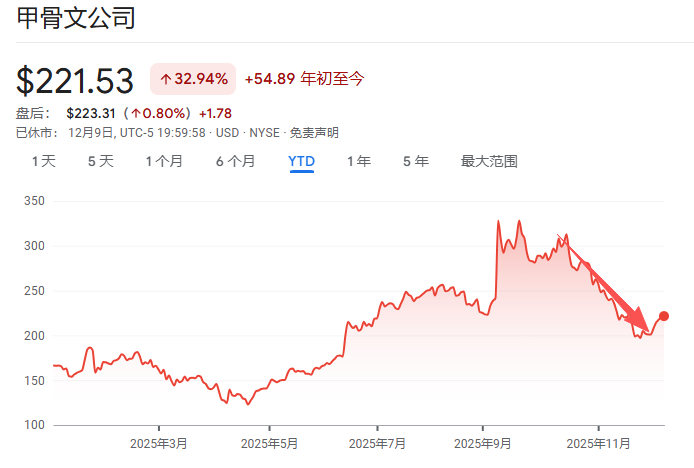
Core Viewpoint - Oracle is set to release its Q2 financial report, with market focus on its debt-driven AI infrastructure expansion and heavy reliance on OpenAI, amid rising concerns over the AI bubble [1] Group 1: Financial Performance and Market Reaction - Oracle's stock price surged 36% after announcing a backlog of contracts with OpenAI but has since retraced all gains and is testing the 200-day moving average, with a 23% decline in October marking its worst monthly performance since 2001 [1] - Despite a year-to-date increase of over 30%, the company's five-year credit default swap (CDS) prices have soared to historical highs, indicating heightened investor concern over AI-related credit risks [1] Group 2: Debt and Financing Challenges - Oracle has become the largest investment-grade bond issuer among non-financial companies, raising $18 billion in September alone, with analysts estimating a need to raise $20-30 billion in debt annually over the next three years [3] - The company's total debt has increased from $84.5 billion a year ago to $111.6 billion, while cash and equivalents have slightly decreased from $10.6 billion to $10.45 billion [4] - Various financing options are being considered by Oracle, including off-balance-sheet financing, bond issuance, equity financing, and potential involvement from sovereign wealth funds [4] Group 3: Dependency on OpenAI and Associated Risks - A significant portion of Oracle's capital expenditures is tied to data centers related to OpenAI, raising concerns about the sustainability of revenue from a single client [5] - Analysts highlight that the $300 billion contract with OpenAI exposes Oracle to unprecedented revenue risk from a single customer, with potential implications if OpenAI fails to meet its financial commitments [5] Group 4: Growth Expectations and Market Sentiment - Analysts maintain an optimistic outlook for Oracle's performance, with expectations of a 15.3% revenue growth in Q2, reaching $16.21 billion, marking the fastest growth in over two years [3] - Oracle's cloud infrastructure revenue is projected to surge by 71.3% during the September-November period, surpassing the previous quarter's growth rate of 55% [6] - The remaining performance obligations are expected to exceed $500 billion, reflecting a 359% year-over-year increase, although the stock has since retraced its gains [6]
Investors Brace for Revelations in New AI Bellwether Oracle’s Latest Report
Yahoo Finance· 2025-12-10 05:01
When tech giant Oracle, a linchpin of the artificial intelligence boom, reports quarterly earnings today, investors expect it to live up to its name — which in antiquity referred to a medium providing insight into the unknown. The unknown being where AI, an increasingly agita-prone trade, is heading in 2026. SUBSCRIBE: Receive more of our free The Daily Upside newsletter. READ ALSO: SpaceX May Launch IPO Market To The Moon and Worried You Don’t Have Enough Money to Retire? New Rules in ’26 Make It Easier ...
软件:30 年软件分析师生涯的 12 条经验-Americas Technology_ Software_ 12 Lessons Over 30 Years as a Software Analyst
2025-12-10 02:49
Summary of Key Points from the Conference Call Industry Overview - The focus is on the software industry, particularly enterprise/business software companies that generate significant revenues. Notable companies include Microsoft (MSFT), Oracle (ORCL), Salesforce (CRM), Adobe (ADBE), Intuit (INTU), ServiceNow (NOW), and Workday (WDAY) [1][5][12]. Core Insights and Arguments 1. **Challenges in Scaling Software Companies** - Creating a profitable software franchise is difficult, with only a few companies achieving over $10 billion in revenue. Most companies in the $100-500 million range struggle to scale [1]. 2. **Importance of Selective Optimism** - Investors should be selectively optimistic about a few companies' potential to scale profitably, especially in unproven categories. Successful companies often start with a solution that addresses a significant market need, which then expands the Total Addressable Market (TAM) [1]. 3. **Sustained Growth in Established Companies** - Companies like CRM, INTU, and ADBE have consistently outperformed GDP growth, demonstrating the ability to sustain above-average growth rates over time [5][7]. 4. **R&D Investment and Product Development** - Successful software companies maintain a balance between high R&D investment and profitability. New products should be introduced at a pace that customers can manage, avoiding over-reliance on a single hit product [9]. 5. **M&A Strategy and Organic Growth** - Transitioning from organic growth to M&A can unsettle investors, as seen with Salesforce. Successful acquisitions should enhance organic growth without negatively impacting operating margins [12]. 6. **Power of Incumbency** - Established companies become harder to dislodge during tech transitions. Historical examples show that incumbents like Intuit and Adobe have successfully navigated disruptive periods [13]. 7. **Balancing Growth and Free Cash Flow (FCF) Margins** - Companies that maintain a balance between growth and profitability tend to perform well across different market cycles. A focus on profitability can hinder growth if not managed carefully [14][16]. 8. **Opportunities During Tech Transitions** - Transitions between tech cycles, such as from cloud to AI, can create investment opportunities despite initial market uncertainty. Companies that adapt quickly can benefit significantly [17]. 9. **Value Creation through TAM and Unit Economics** - A combination of a large TAM and attractive unit economics is rare but essential for long-term value creation. Companies must manage their sales and marketing expenses effectively to maintain healthy unit economics [19][21]. 10. **Challenges of Disruption** - For disruption to be sustainable, new entrants must offer significantly better pricing and functionality than incumbents. The balance between gross margins and revenue scale is crucial [31]. 11. **Residual Value in AI** - The AI landscape is complex, with various players (foundation models, hyperscalers, and application companies) vying for value. Companies like Microsoft and Alphabet have unique advantages that may allow them to capture significant residual value [34]. Additional Important Insights - **Emerging Companies with Potential** - Smaller companies with potential for significant growth include Snowflake (SNOW), Datadog (DDOG), MongoDB (MDB), and others [1]. - **Market Dynamics and Historical Context** - Historical market cycles provide context for current dynamics, illustrating how companies can emerge stronger after periods of uncertainty [17]. - **Framework for Investing in Software** - A structured approach to investing in software includes evaluating TAM, unit economics, and the balance between growth and profitability [24]. This summary encapsulates the key points discussed in the conference call, providing insights into the software industry's current landscape and future opportunities.



4Q25 AI 服务器动态- 加入 OpenAI 阵营延续热潮-Global Semiconductors, Hardware, Internet & Software-4Q25 AI Server Pulse joining the OpenAI club to keep the party going
2025-12-10 02:49
Summary of Key Points from the Conference Call Industry Overview - The conference call focuses on the **Global Semiconductors, Hardware, Internet & Software** industry, particularly the **AI server market** and the **AI supply chain** dynamics [1][2]. Core Insights and Arguments 1. **Investment in Data Centers**: Total investment in upcoming and under-construction data centers is approximately **US$840 billion**. Major projects include OpenAI's agreements with semiconductor and cloud service providers (CSPs) [3][38]. 2. **AI Capital Expenditure (Capex)**: Following 3Q25 earnings, consensus estimates for 2026 capex for major CSPs have been raised by nearly **20%**, projecting total capex to grow at a **36% CAGR** to around **US$630 billion** from 2024 to 2027 [3][37]. 3. **Server Shipment Growth**: Global server and high-end GPU AI server shipments are expected to grow at **3%** and **31% CAGR**, respectively, from 2025 to 2027. High-end GPU server shipments are projected to increase by **46%** in 2026 [4][58]. 4. **ASIC and GPU Demand**: ASIC adoption is increasing, with projections indicating that ASICs will comprise **47%** of total CoWoS-based AI chip shipments in 2026. The demand for TPUs is also expected to grow by approximately **75% YoY** [4][5]. 5. **Financial Performance of Suppliers**: ASIC supply chain stocks have recently outperformed GPU supply chains, driven by significant orders from Broadcom and successful product launches from OpenAI and Google [6][34]. Additional Important Insights 1. **Circular Financing Concerns**: There are concerns regarding "circular financing" among AI giants, particularly with OpenAI's substantial commitments to various suppliers, which may lead to a "too big to fail" scenario [34][35]. 2. **OpenAI's Revenue Projections**: OpenAI's revenue for 1H25 was reported at **US$4.3 billion**, with a target of **US$13 billion** for the full year. However, the company has significant purchase commitments exceeding **US$1 trillion** over the next 5-7 years [35][36]. 3. **Major CSPs' Capex Guidance**: Companies like Microsoft, Amazon, and Google have increased their capex guidance significantly for 2025, indicating a strong focus on AI infrastructure [57]. 4. **Emerging Neoclouds**: Neoclouds are gaining traction with flexible "build-to-order" models, showcasing a growing revenue backlog and partnerships with major tech firms [43]. Investment Ratings and Price Targets - **Chroma**: Rated Outperform, Price Target (PT) = NT$830 [11] - **Delta**: Rated Outperform, PT = NT$1190 [12] - **Unimicron**: Rated Outperform, PT = NT$220 [13] - **Quanta**: Rated Underperform, PT = NT$250 [14] - **Google**: Rated Market-Perform, PT = $305 [15] - **Meta**: Rated Outperform, PT = $870 [16] - **Amazon**: Rated Outperform, PT = $300 [17] - **Microsoft**: Rated Outperform, PT = $645 [18] - **AMD**: Rated Market-Perform, PT = $200 [19] - **NVIDIA**: Rated Outperform, PT = $275 [21] - **TSMC**: Rated Outperform, PT = NT$1,444 [25] This summary encapsulates the key points discussed in the conference call, highlighting the significant trends, financial projections, and investment opportunities within the AI server and semiconductor industries.



Dow Futures Hold Steady Ahead Of Federal Reserve Meeting On Interest Rates: Investors Keep Eye On Oracle, Adobe Along With Jerome Powell's Speech - Adobe (NASDAQ:ADBE), Oracle (NYSE:ORCL)
Benzinga· 2025-12-10 01:44
U.S. stock futures are down on Tuesday night ahead of the Federal Open Market Committee’s key interest rates decision on Wednesday. All three major indices are currently in the red, with Nasdaq Futures down 0.19%, or 49 points, trading at 25,650.75, while the S&P 500 Futures are down 0.08% and 5.25 points, at 6,843.00, followed by the Dow Jones Futures at 47,594.00, down 0.04% or 19 points.See Also: Where Labor Data Goes, FED Should Shortly FollowThe markets expect the final FOMC meeting of the year to resu ...

千亿债务堆算力,甲骨文(ORCL.US)的“AI豪赌”今夜迎来裁决时刻
Zhi Tong Cai Jing· 2025-12-10 01:44
Core Viewpoint - Oracle has experienced a tumultuous year, with a significant stock price drop in October, yet it has seen an overall increase of over 30% year-to-date, indicating investor interest in its position within the AI sector [1] Group 1: Financial Performance and Debt - Oracle's stock fell 23% in October, marking its worst monthly performance since 2001, but has rebounded with a nearly 10% increase in December [1] - The company raised $18 billion through a massive bond issuance, the largest in tech history, to fund its infrastructure plans [1] - As of August, Oracle's total debt reached $111.6 billion, up from $84.5 billion the previous year, while cash and equivalents decreased from $10.6 billion to $10.45 billion [2] - Analysts estimate Oracle will need to raise $20 billion to $30 billion in debt annually over the next three years to meet its growing capacity needs [2] Group 2: AI and Market Position - Oracle has become a key player in the AI sector, largely due to a $300 billion deal with OpenAI for computing power over the next five years [1] - The company is exploring various funding options, including off-balance-sheet financing and potential foreign investments, to support its AI initiatives [2] - Concerns have arisen regarding Oracle's ability to manage its debt while meeting the demands of clients like OpenAI [2] Group 3: Market Sentiment and Credit Risk - The rise in credit default swaps (CDS) for Oracle indicates growing investor anxiety about the company's financial stability amid its AI investments [4] - Analysts from Barclays and Morgan Stanley have recommended purchasing Oracle's five-year CDS as a hedge against risks associated with AI transactions [4] - Investors are advised to focus on companies actively adopting AI technologies rather than those merely spending on related technologies, as credit spreads are constraining capital expenditures [5] Group 4: Revenue and Growth Expectations - Analysts expect Oracle's revenue for the latest quarter to grow by 15% to $16.2 billion, with remaining performance obligations projected to exceed $500 billion, a fivefold increase from the previous year [5] - Oracle's remaining performance obligations surged by 359% to $455 billion in September, leading to a 36% stock price increase, although this gain has since been erased [5] - The core database business, which has higher profit margins, will be closely monitored to assess Oracle's flexibility in capital markets [6]
I think Oracle relief rally will continue, says 'Fast Money' trader Guy Adami
CNBC Television· 2025-12-09 22:42
And the market is saying it's a 90% chance we get a rate cut at tomorrow's Fed meeting. But what kind. We'll have to listen closely to Chair Powell's comments for clues on the future cuts and the balance sheet.Joining us now is fast money trader guy Adami, co-founder of Risk Reversal Media. Guy, good to see you. What are you listening for from Powell.Assuming I mean 90% hey that we get the cut. >> Well, it's amazing and thank you. Hello Morgan. Hello John.Thanks for having me as always. It's amazing that at ...
I think Oracle relief rally will continue, says 'Fast Money' trader Guy Adami
Youtube· 2025-12-09 22:42
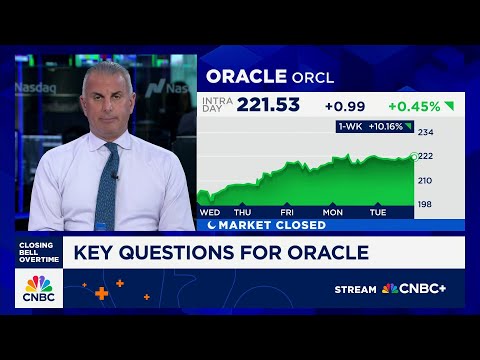
Federal Reserve and Interest Rates - The market indicates a 90% chance of a rate cut at the upcoming Federal Reserve meeting, a significant shift from a 35% chance just three weeks prior [1][2] - Attention is focused on Chair Powell's comments regarding future rate cuts and the balance sheet, particularly if he reverts to a more cautious stance on inflation [3][4] Oracle Corporation - Oracle's stock has seen a 10% increase in the past week but is down 21% for the quarter, prompting close monitoring of its recovery potential [5] - The company previously announced a substantial revenue deal, but there were concerns about earnings, leading to stock price fluctuations [6][7] - The expected equilibrium price for Oracle's stock is around $255, with a bounce anticipated between $250 and $255 levels [8]
Tuesday's Final Takeaways: Jobs Uptick Ahead of Fed Decision & ORCL Earnings
Youtube· 2025-12-09 22:10
分组1 - Nvidia is under pressure but will be allowed to ship H200 chips to approved customers in China, with 25% of the payment going to the US, which is seen as a positive for the company [1] - Wells Fargo has an overweight rating on Nvidia with a price target of $265, while Bernstein also views the news positively, reiterating an outperform rating [1] - China is limiting access to US-made tech products, but there is still demand, as evidenced by the detention of individuals attempting to smuggle Nvidia chips worth at least $160 million [1] 分组2 - The October jolts report shows 7.67 million job openings, exceeding the expected 7.2 million, indicating a stable job market [1] - Despite more job openings, hiring activity has decreased, layoffs have increased, and fewer workers are quitting, suggesting little change in labor market conditions since summer [1] - The market is pricing in a high chance of a 25 basis point rate cut by the Fed, but the focus will be on the Fed's communication rather than the action itself [1] 分组3 - Oracle is expected to report adjusted EPS of $1.63 on revenue exceeding $16 billion for the quarter [2] - Oracle shares rallied over 35% post-earnings in September, driven by a record $455 billion in remaining performance obligations (RPO) [3] - However, Oracle's stock has given back those gains over the last three months, with widening credit default swap spreads indicating investor concern over the company's debt levels related to the AI boom [4]