
Oracle(ORCL)

Search documents
The Big 3: ORCL, CVNA, WDC
Youtube· 2025-11-20 19:00
Market Overview - Nvidia's strong earnings report has eased concerns about the AI growth story, positively impacting related stocks [3][4] - The overall market remains in a risk-off trend, struggling for gains despite some outliers like Google [3] Oracle - Oracle's stock has pulled back 18.5% in the last month despite a robust earnings report, indicating market skepticism about future revenue [4][5] - The critical price levels for Oracle are 210 (support) and 230 (resistance), with potential upside targets at 260 and 275 [7][9][12] - Historical trends suggest a possible Santa Claus rally, which could benefit Oracle if it maintains above the 200-day moving average [8][9] Carvana - Carvana's CEO announced a growth plan with a predicted 40% growth rate, leading to a slight boost in stock performance [17][18] - The stock is currently at a critical support level around 325, with potential upside targets of 347 to 350 [19][20] - Concerns remain regarding high default rates on auto loans, but Carvana has shown resilience compared to other growth stocks [18][19] Western Digital - Western Digital received a price target upgrade from Bank of America, suggesting a potential upside of 25-26% [30] - The critical price level for Western Digital is 150, which needs to be maintained for a rebound towards 170 [32][34] - The stock has shown strong performance year-to-date, up over 240%, but faces potential downside risks if it breaks below 150 [39]



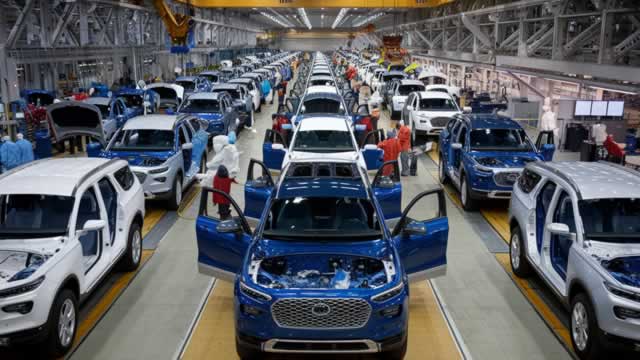
Direxion's 5 Single-Stock ETFs, Including Coinbase and Robinhood
Etftrends· 2025-11-20 17:09
Core Insights - Direxion has expanded its single-stock ETF offerings by introducing five new funds focused on Oracle, Coinbase, Robinhood, and Intel, enhancing its existing lineup to over 50 ETFs [1][2] Group 1: New Fund Offerings - The new funds provide traders with additional exposure to specific stocks without requiring a margin account, and they also offer inverse exposure for tactical hedging or standalone short trades [2] - The newly introduced funds include: - Direxion Daily ORCL Bull 2X and Bear 1X ETFs (ORCU/ORCS): 200% bullish or 100% inverse exposure to Oracle's stock - Direxion Daily COIN Bull 2X ETF (CONX): 200% bullish exposure to Coinbase stock - Direxion Daily HOOD Bull 2X ETF (HODU): 200% bullish exposure to Robinhood stock - Direxion Daily INTC Bull 2X ETF (LINT): 200% bullish exposure to Intel stock [6] Group 2: Market Trends and Demand - There is increasing investor interest in cryptocurrencies, with firms like Coinbase and Robinhood experiencing robust demand from traders [3] - Direxion aims to provide tools for short-term, active traders to express high-conviction views amid volatile market conditions [3] Group 3: Sector Exposure Options - For traders looking to mitigate concentration risk from single stock exposure, Direxion offers sector-specific products, such as the Direxion Daily Semiconductor Bull 3X Shares (SOXL) and the Direxion Daily Healthcare Bull 3X ETF (CURE) [4] - Direxion has also launched the Titans Leveraged & Inverse ETFs suite, targeting the top five companies in a sector with equal weight allocations, allowing for more targeted exposure compared to traditional cap-weighted indices [5]




美股异动 | 大型科技股普涨 特斯拉(TSLA.US)涨超5.9%




智通财经网· 2025-11-20 15:57
智通财经APP获悉,周四,大型科技股普涨,截至发稿,特斯拉(TSLA.US)涨超5.9%,英伟达 (NVDA.US)涨超4%,谷歌(GOOG.US,GOOGL.US)涨超4%,亚马逊(AMZN.US)涨超1.8%,Meta Platforms(META.US)涨超2%,甲骨文(ORCL.US)涨超1.8%。 ...
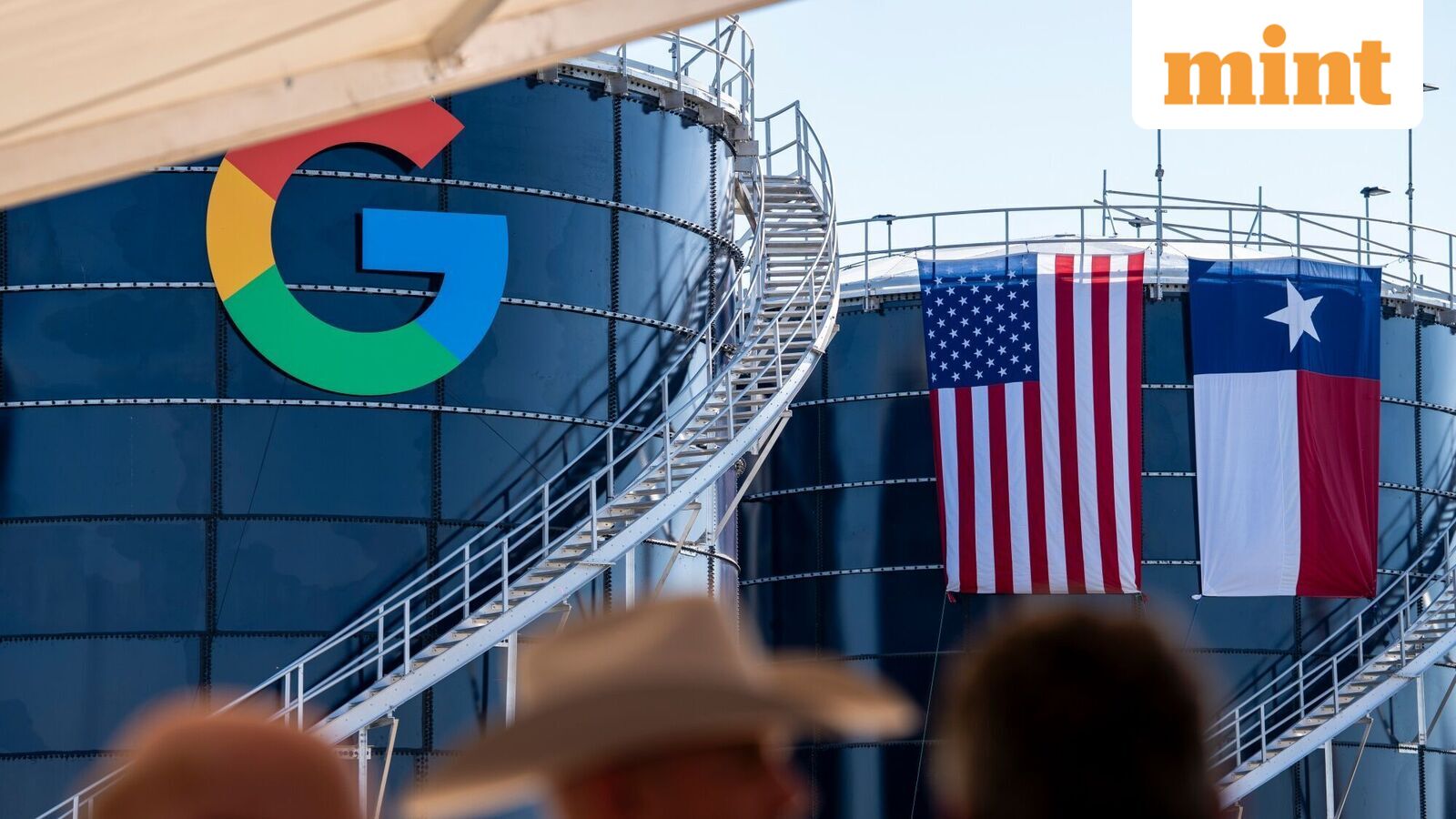
Google, Meta, Amazon, Microsoft and Oracle issued $121 billion in debt to fund AI bets — 4x than usual: Report
MINT· 2025-11-20 14:54
Core Insights - The five major AI hyperscalers (Google, Meta, Amazon, Microsoft, and Oracle) are significantly increasing their debt levels this year, issuing a total of $121 billion, which is four times their average annual debt over the past five years [1][2][3] Debt Issuance - The total debt issued by these companies in 2023 is $121 billion, with Meta alone accounting for $27 billion for a new data center in Los Angeles, and Amazon issuing $15 billion on November 17 [2][3] - Historically, these companies averaged $28 billion in debt issuance annually over the last five years, indicating a substantial increase in borrowing [3] Market Impact - The influx of investment-grade corporate bonds has widened the spreads for these companies, with Oracle's spreads increasing by 48 basis points, Meta's by 15 basis points, and Google's by 10 basis points since September [4] - The widening of spreads ranges from 27% to 49%, indicating underperformance compared to the overall investment-grade index [4] Future Debt Expectations - Analysts predict that the debt levels for these AI hyperscalers will continue to rise, with an expected additional $100 billion in debt issuance over the next year [5] - Despite generating sufficient cash flow to cover operations, the increasing debt complicates the investment case for these stocks [5] AI Investment Plans - Amazon plans to invest approximately $100 billion in capital expenditures in AI by 2025 [6] - Meta has committed to investing at least $600 billion over the next few years, with $70-$72 billion earmarked for AI capital expenditures in 2025 [7] - Alphabet (Google) has raised its AI expenditure forecast to $85 billion for 2025 and recently announced a $15 billion investment in India for an AI data center [7] - Microsoft and Oracle are also making significant investments in AI, contributing to their status as AI hyperscalers [8]


As market rallied to record highs last quarter, ultra-rich family offices bought beaten up stocks
CNBC· 2025-11-20 12:30
Core Insights - Private investment firms of ultra-wealthy individuals capitalized on beaten-down stocks in the last quarter, driven by AI enthusiasm that propelled global markets to record highs [1] Group 1: Investment Strategies - Hedge-fund billionaire David Tepper's family office, Appaloosa, completely exited its stake in Oracle during the three months ending September 30, while Oracle's shares increased by nearly 29% during that period [2] - Appaloosa locked in gains from "Magnificent Seven" stocks by divesting from Intel and reducing its Meta holdings by 8% [2] Group 2: Stock Performance and Adjustments - Appaloosa significantly increased its investment in Whirlpool by 2,000%, holding 5.5 million shares valued at $432 million, making it the firm's third-largest holding at the quarter's end; Whirlpool's stock has declined by almost 31% in the second half of the year [3] - The firm also raised its stake in Goodyear Tire & Rubber, which has seen a 13% decrease in stock value this year [3]



X @The Wall Street Journal
The Wall Street Journal· 2025-11-20 10:02
Oracle has never given up gains this big, this fast https://t.co/vfvHAapinD ...
AI投资狂潮的另一面:科技巨头们发债逐梦AI 资金却悄然撤离投资级公司债
智通财经网· 2025-11-20 07:25
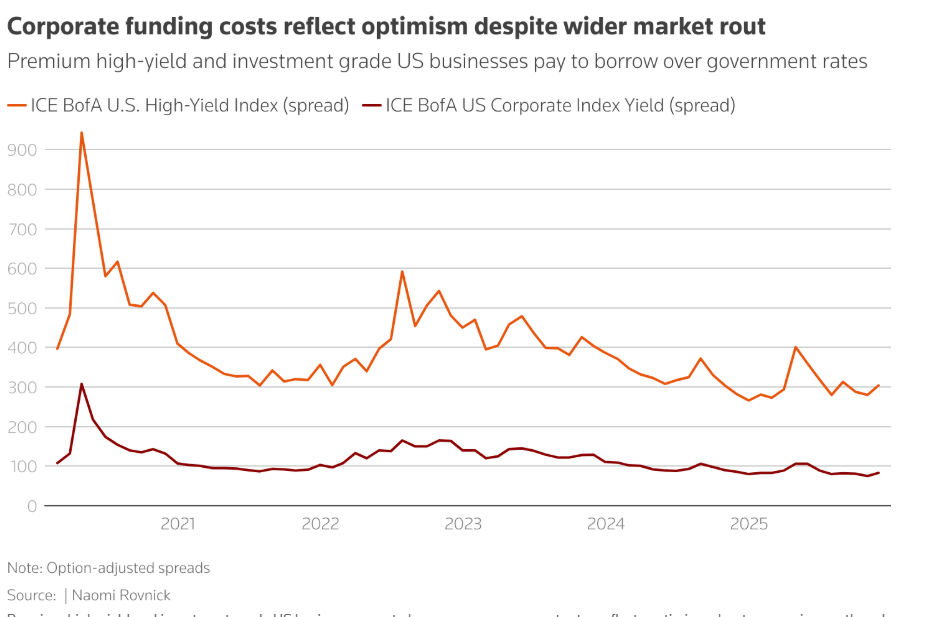
Core Viewpoint - The surge in borrowing and bond issuance by major US tech companies, including Meta, Amazon, and Oracle, alongside signs of panic in the private credit market, is causing caution among investors in the investment-grade bond market, potentially leading to increased financing costs and impacting global corporate earnings [1][2][3] Group 1: Market Sentiment and Trends - Investors are showing increased caution towards high-rated investment-grade bonds despite current credit spreads being near historical lows, influenced by fears of a market sell-off related to AI investment bubbles and upcoming US economic data releases [1][2] - Major Wall Street investment firms are reducing their exposure to top-rated bonds, with some even shorting this asset class due to concerns over pricing and risk [2][3] - The MSCI global stock index has dropped 3% this month, reflecting broader market fears and impacting various asset classes, including cryptocurrencies and commodities [1] Group 2: Credit Market Dynamics - The ICE-BofA index tracking top-rated US corporate bonds indicates spreads are only slightly above 27-year lows, suggesting limited additional yield for taking on corporate credit risk [3][7] - The private credit market, valued at $3 trillion, is experiencing anxiety as some investment firms implement measures to limit fund redemptions, indicating a lack of confidence in the pricing of investment-grade debt [2][3] - The pricing of investment-grade bonds does not adequately reflect the risks associated with potential economic downturns or credit events, leading to concerns about future performance [3][12] Group 3: Predictions and Strategies - Analysts predict that the next major point of concern in the market could be high-rated investment-grade debt, with some firms already taking profits on existing positions [3][4] - Investment strategies are shifting towards short positions in investment-grade bonds, particularly those linked to companies heavily investing in AI, as the financial environment is expected to tighten [16][17] - The anticipated reduction in the pace of interest rate cuts by central banks may signal the end of the current favorable financing conditions for heavily indebted sectors, including tech [16][17]
高盛:AI热潮,哪些企业更受益?
美股IPO· 2025-11-20 02:41
Core Insights - Goldman Sachs reports that capital expenditures for the five major tech giants are projected to soar to $533 billion by 2026, driven by accelerated investments in AI infrastructure [1][5][6] - The investment focus is shifting from infrastructure to two types of companies: AI platform companies that can achieve direct revenue growth and productivity beneficiaries that can significantly enhance efficiency through AI [1][3][10] Capital Expenditure Projections - The consensus estimate for capital expenditures of the five hyperscalers has increased from $467 billion at the beginning of the earnings season to $533 billion, reflecting a year-on-year growth of 34% [5][6] - Analysts believe that the current capital expenditure estimates may still be conservative, with a potential upward adjustment of $200 billion [6][7] Financial Health and Debt Capacity - Despite concerns about cash flow and balance sheet capabilities limiting future expenditures, data shows that these tech giants have significant debt financing capacity, with the ability to increase net debt by $700 billion without exceeding a net leverage ratio of 1x [7][9] - The collective net debt/EBITDA leverage ratio for these companies is only +0.2x, indicating strong profitability growth [7] Market Dynamics and Investment Focus - The market is witnessing increasing return dispersion within the AI infrastructure sector, driven by investor confidence in the revenue potential of AI investments and the scale of leverage used to fund these investments [5][6] - As AI adoption rates rise, investor focus is shifting towards AI platform stocks and productivity beneficiaries, which are expected to benefit from the implementation of AI technologies [10][11] Employment Implications - While the shift towards AI platform stocks may signal positive news for Wall Street, the potential for job displacement due to automation raises concerns for the general public [11]

美国科技行业 - 2025 年第三季度大盘股机构持仓:英伟达仍是机构持仓比例最低的大型科技股-US Technology-Large-Cap Institutional Ownership 3Q25 NVDA Remains The Most Under-Owned Mega-Cap Tech Stock
2025-11-20 02:17
Summary of Key Points from the Conference Call Industry Overview - **Industry**: US Technology, specifically focusing on large-cap tech stocks - **Key Findings**: Mega-cap tech stocks are currently the most under-owned in over 16 years, with a widening gap compared to the S&P 500 Core Insights - **Under-Ownership of Mega-Cap Tech Stocks**: - The gap in institutional ownership for mega-cap tech stocks compared to the S&P 500 increased to -148 basis points (bps) at the end of Q3 2025, up from -140 bps at the end of Q2 2025 [2][12] - Nvidia (NVDA) is identified as the most under-owned large-cap tech stock, followed by Apple (AAPL), Microsoft (MSFT), Amazon (AMZN), and Broadcom (AVGO) [1][2] - **Specific Stock Analysis**: - **Nvidia (NVDA)**: - Institutional ownership decreased by 20 bps quarter-over-quarter (QoQ), ending at -2.61% [9] - **Apple (AAPL)**: - Institutional ownership increased by 36 bps QoQ to 4.45%, while S&P 500 weighting rose by 90 bps, resulting in a widening gap of 53 bps to -2.19% [15] - The iPhone 17 cycle is expected to benefit from a longer replacement cycle and upgrades, with a price target of $305 [15] - **Microsoft (MSFT)**: - Institutional ownership increased by ~40 bps QoQ to 5.1%, but remains ~200 bps below its S&P 500 weighting of 7.1% [16] - The company is positioned well for growth beyond GenAI, with a focus on accelerating revenue growth and margin expansion [16] - **Amazon (AMZN)**: - Remains under-owned with a weighting approximately 144 bps below the S&P 500 [17] - AWS revenue growth is expected to accelerate, with a price target of $315 [17] - **Meta (META)**: - Under-owned with a weighting about 40 bps below the S&P 500, with a price target of $820 [19] - **Alphabet (GOOGL)**: - Under-owned with a price target of $330, driven by GenAI innovation and cloud business growth [17][19] Additional Insights - **Institutional Ownership Trends**: - The average active ownership for large-cap tech stocks is significantly lower than their S&P 500 weightings, indicating potential for future stock performance improvements [12] - The analysis suggests a statistically significant relationship between low active ownership and future stock performance, indicating potential upward price movement for under-owned stocks [12] - **Market Dynamics**: - The report highlights the importance of understanding the dynamics of institutional ownership as it relates to stock performance, particularly in the context of mega-cap tech stocks [12] - **Risks and Considerations**: - Rising commodity input costs may pressure margins for companies like Apple, but manageable due to better supply chain leverage [15] - Concerns regarding the broader return on investment for Nvidia's AI spending, despite strong demand indicators [25] Conclusion - The current landscape for mega-cap tech stocks presents a unique investment opportunity due to their under-ownership status, particularly for stocks like Nvidia, Apple, and Microsoft. The analysis indicates potential for upward price movement as institutional ownership adjusts to reflect their market performance.


美国股票观点_人工智能资本支出的发展轨迹及企业人工智能应用的下一批受益者US Equity Views_ The trajectory of AI capex and the next beneficiaries of corporate AI adoption
2025-11-20 02:17
Summary of Key Points from the Conference Call Industry Overview - The report focuses on the AI infrastructure sector, particularly the capital expenditure (capex) trends among major AI hyperscalers including Amazon (AMZN), Google (GOOGL), Meta (META), Microsoft (MSFT), and Oracle (ORCL) [3][6][22]. Core Insights and Arguments - **Capex Growth Estimates**: Consensus estimates for 2026 capex for AI hyperscalers have increased from $467 billion (20% year-over-year growth) to $533 billion (34% year-over-year growth) during the 3Q earnings season [3][6][22]. - **Return Dispersion**: There is a notable increase in return dispersion within the AI infrastructure complex, driven by investor confidence in revenue generation from AI investments and the leverage used to fund these investments [3][6]. - **Future Capex Deceleration**: Analysts predict a significant slowdown in AI capex growth, from a current 76% year-over-year growth rate to 25% by the end of 2026. However, past estimates have been conservative, suggesting potential upside of $200 billion to current estimates [3][22][29]. - **Debt Capacity**: Large public AI hyperscalers have the capacity to increase net debt significantly without raising their net leverage above 1x. They have collectively increased net debt by $295 billion since 2021, with a current net debt/EBITDA leverage of +0.2x [3][22][42]. - **Supply Constraints**: Supply bottlenecks, particularly in power supply, may limit near-term capex growth more than cash flows or balance sheet capacity [54][55]. - **Investor Sentiment**: Investors are increasingly focused on companies that can demonstrate a clear link between capex and revenue growth. Negative reactions to capex surprises could lead management to reconsider future capex growth [55][66]. Additional Important Insights - **AI Platform Stocks**: Companies providing AI platforms are expected to benefit from increased corporate AI adoption, with a focus on those with high labor costs and exposure to AI automation [4][73]. - **Performance of AI Stocks**: The GS AI basket has outperformed the S&P 500 significantly, returning 40% year-to-date, driven by strong AI investment spending [11][15]. - **Investor Concerns**: There is growing anxiety among investors regarding the leverage and cash flow challenges faced by smaller firms in the AI ecosystem, particularly neoclouds [3][60]. - **Corporate AI Adoption**: Nearly half of S&P 500 companies discussed AI in their earnings calls, indicating a trend towards increased AI integration in business operations [68][72]. Conclusion - The AI infrastructure sector is experiencing significant capex growth, but future growth may be constrained by supply issues and investor scrutiny. Companies that can effectively link their investments to revenue generation are likely to be favored by investors. The ongoing corporate adoption of AI presents opportunities for AI platform stocks and productivity beneficiaries.