Pfizer(PFE)

Search documents
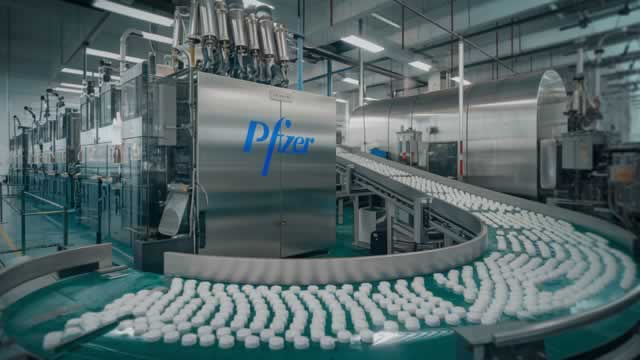
Pfizer says patient dies after receiving hemophilia drug in trial
Reuters· 2025-12-23 16:24
A patient who was being treated with Pfizer's hemophilia drug, Hympavzi, as part of a long-term study died after experiencing serious side effects, the company said. ...


X @Bloomberg
Bloomberg· 2025-12-23 15:06
A patient died after receiving Pfizer’s drug for hemophilia, marking another setback for the company in the treatment of blood disorders https://t.co/WvA7hlIKGb ...
Bet on These Top-Ranked Healthcare ETFs Before 2025 Ends
ZACKS· 2025-12-22 19:46
Key Takeaways U.S. healthcare challenged the S&P 500 in 2025, with biotech leading as the industry index rose 23.2%. GLP-1 drug breakthroughs, AI-driven efficiency and strong earnings beats fueled the sector's rally. ETF exposure offers diversified access as M&A activity and demographic tailwinds support 2026 growth. As we approach the final weeks of 2025, the U.S. healthcare sector has transitioned from a defensive stalwart to a primary market leader. Evidently, while the S&P 500 has delivered a solid ret ...


GLP-1赛道掉队的辉瑞 看上复星口服药
BambooWorks· 2025-12-22 10:59
Core Insights - The article highlights the significant collaboration between Shanghai Fosun Pharmaceutical and Pfizer regarding the oral GLP-1 receptor agonist YP05002, with a potential total deal value exceeding $2.085 billion [2][4][6]. Group 1: Company Developments - Fosun Pharma's innovative drug business revenue grew by 18.09% year-on-year in the first three quarters, becoming a crucial growth engine for the company [2][8]. - The collaboration with Pfizer is seen as a milestone in Fosun Pharma's strategy for innovation and internationalization, enhancing its brand influence in the global market [8]. Group 2: Product and Market Insights - YP05002 is designed to treat type 2 diabetes and obesity by activating GLP-1 receptors, promoting insulin secretion, and reducing appetite, with potential indications including long-term weight management and metabolic disorders [4][5]. - The GLP-1 drug class is gaining traction due to its effectiveness in controlling blood sugar and weight loss, with significant sales growth reported by competitors like Novo Nordisk and Eli Lilly [6]. Group 3: Financial Performance - Fosun Pharma reported a revenue decline of 4.91% to 29.393 billion yuan in the first three quarters, while net profit increased by 25.50% due to the sale of non-core assets [7]. - The company's current price-to-earnings ratio is approximately 17 times, indicating potential valuation recovery compared to peers like Hengrui Medicine, which has a P/E ratio of about 59 times [8].
Should You Forget Novo Nordisk and Buy This Magnificent High-Yield Drug Stock Instead?
Yahoo Finance· 2025-12-22 08:58
Core Insights - Novo Nordisk's stock has significantly declined, losing over two-thirds of its value since mid-2024, despite initial excitement over its GLP-1 weight loss drugs [1] - Eli Lilly's weight loss drug tirzepatide has outperformed Novo Nordisk, with Zepbound sales increasing by 185% year over year in Q3, while Novo Nordisk reported only 12% sales growth in its obesity treatment and diabetes care operations [3] - Pfizer is making aggressive moves to re-enter the GLP-1 market, indicating a potential investment opportunity as it seeks to recover from recent pressures [4][7] Industry Dynamics - The pharmaceutical industry faces challenges in developing new drug candidates, which is a costly and complex process [1] - Being first to market does not guarantee success, as differences in drug effects, costs, and outcomes can significantly impact market performance [2] - Eli Lilly currently holds the leading position in the GLP-1 weight loss space, demonstrating that early leadership does not ensure sustained market dominance [6]

493亿!中国市场创新药“销冠”诞生
Xin Lang Cai Jing· 2025-12-22 04:16
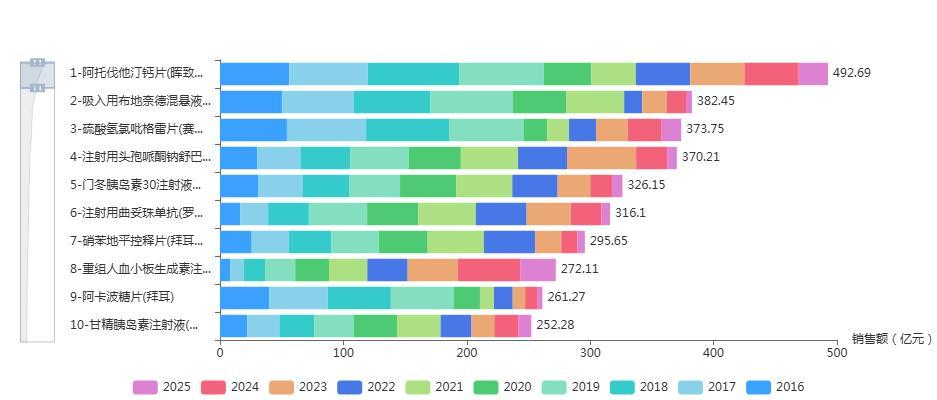
Core Insights - The article highlights that Pfizer's Atorvastatin Calcium Tablets have achieved a cumulative sales figure of 492.7 billion yuan, making it the top-selling innovative drug in China's public medical institutions over the past decade [1][13][15] - Atorvastatin's market share is approximately 15% of the total sales in the top 10 innovative drugs, significantly surpassing the second-place inhaled Budesonide suspension by 110 billion yuan [2][15] Sales Performance Analysis - From 2016 to 2019, Atorvastatin experienced a golden growth period, with sales increasing from 5.612 billion yuan to 6.854 billion yuan, peaking at 7.405 billion yuan in 2018 [4][17] - In 2020, sales dropped to 3.847 billion yuan due to national procurement policies, but stabilized between 4.3 billion and 4.4 billion yuan from 2021 to 2024, with a forecast of 4.1 billion yuan for 2025 [4][19] - The drug's resilience in the market post-policy adjustments is evident, with 2.375 billion yuan in sales achieved in the first half of 2025 [4][19] Market Dynamics - The success of Atorvastatin is attributed to the large patient base suffering from cardiovascular diseases, which have high incidence and mortality rates, necessitating long-term management [5][18] - The demand for lipid-lowering medications is driven by the rising prevalence of dyslipidemia, with a reported 35.6% prevalence among adults over 18 years old in China [5][18] - The innovative drug market in China is heavily influenced by chronic diseases, with cardiovascular and metabolic drugs dominating the top 10 sales list, accounting for 59.9% of total sales [20][21] Competitive Landscape - The top 10 innovative drugs list is predominantly occupied by foreign pharmaceutical companies, which hold a market share of 92%, showcasing their strong market position due to patent protections and established marketing strategies [22] - The only domestic product in the top 10 is the recombinant human thrombopoietin injection, which has shown significant growth, increasing from 849 million yuan in 2016 to an expected 5.076 billion yuan in 2024 [22] Future Outlook - The article speculates that the next leading drug could emerge from the oncology or autoimmune sectors, with advancements in ADCs, bispecific antibodies, and cell therapies showing promise [24][25] - Chronic disease management, particularly with GLP-1 receptor agonists, is expected to gain traction, potentially replicating or surpassing the market trajectory of Atorvastatin [24][25]
The Trump Market: A Rollercoaster of Tweets, Tariffs, and Unexpected Fusion
Stock Market News· 2025-12-21 18:00
Group 1: Market Volatility and Reactions - The year 2025 has been marked by significant market volatility, heavily influenced by presidential announcements, particularly from Donald Trump, leading to rapid fluctuations in market values [1] - Following the announcement of a 10% universal tariff on all US imports, the S&P 500 dropped over 10%, erasing approximately $5 trillion from global markets [5] - A subsequent 90-day pause on new reciprocal tariffs resulted in a market rebound, with the S&P 500 surging 9.52% [5][6] Group 2: Trump Media & Technology Group (DJT) - Trump Media & Technology Group (DJT) saw its stock surge 13.03% after announcing a merger with TAE Technologies, a nuclear fusion company, indicating a pivot from social media to energy [3] - DJT stock closed at $16.80 before the merger announcement, marking a significant rise, and trading volume reached 99.5 million shares, 1,265% above its three-month average [3] - Despite the recent surge, DJT stock remains down 58% over the past year, highlighting ongoing volatility [3] Group 3: Pharmaceutical Industry Developments - Trump announced new drug pricing deals with nine major pharmaceutical companies, including Merck and Pfizer, aimed at lowering Medicaid drug prices [7] - Merck committed to approximately 70% discounts on diabetes treatments, while Pfizer agreed to significant price cuts and a $70 billion investment in U.S. research [8] - These deals included a three-year exemption from Section 232 tariffs for the pharmaceutical companies, creating a win-win scenario for both the industry and consumers [8] Group 4: Nvidia and Geopolitical Dynamics - The U.S. government approved the export of Nvidia's H200 chips to select Chinese customers, with a 25% revenue cut going to the government, reflecting complex geopolitical dynamics [9][10] - Nvidia's stock saw a positive reaction, closing at $176.29 and rising to $183.40 following the announcement, despite ongoing investor caution regarding China exposure [10] Group 5: Economic Overview - Despite stock market gains of 13% to 20% year-to-date, public sentiment regarding the economy remains low, with 70% of Americans describing it as "poor" [11] - Trump's approval rating on economic performance has dropped to between 31-39%, indicating a disconnect between market performance and public perception [11] - The Federal Open Market Committee has been cutting interest rates to stimulate the economy, reflecting concerns about rising prices and unemployment [12]



Jim Cramer on Pfizer: “I’m Going to Say Just Weak Hold”
Yahoo Finance· 2025-12-21 15:07
Pfizer Inc. (NYSE:PFE) is one of the stocks Jim Cramer shed light on. During the lightning round, a caller sought Cramer’s opinion on the stock, and he said: “Okay, Pfizer, really good yield, not a lot of momentum. Didn’t like the update yesterday. I’m going to say just weak hold.” Photo by Spencer Davis on Unsplash Pfizer Inc. (NYSE:PFE) creates and sells medicines and vaccines for several health conditions, including heart disease, infections, COVID-19, and rare diseases. Cramer was asked about the ...
Our Top 10 High-Growth Dividend Stocks - December 2025
Seeking Alpha· 2025-12-20 13:00
Group 1 - The primary goal of the "High Income DIY Portfolios" service is to provide high income with low risk and capital preservation for DIY investors [1] - The service offers seven portfolios designed for income investors, including retirees, featuring three buy-and-hold portfolios, three rotational portfolios, and a conservative NPP strategy portfolio [1] - The portfolios aim to create stable, long-term passive income with sustainable yields, including two high-income portfolios and two dividend growth investment (DGI) portfolios [1] Group 2 - The "Financially Free Investor" focuses on investing in dividend-growing stocks with a long-term horizon and employs a unique 3-basket investment approach [2] - This approach aims for 30% lower drawdowns, 6% current income, and market-beating growth over the long term [2] - The service includes a total of 10 model portfolios with varying income targets, buy and sell alerts, and live chat for portfolio management and asset allocation [2]




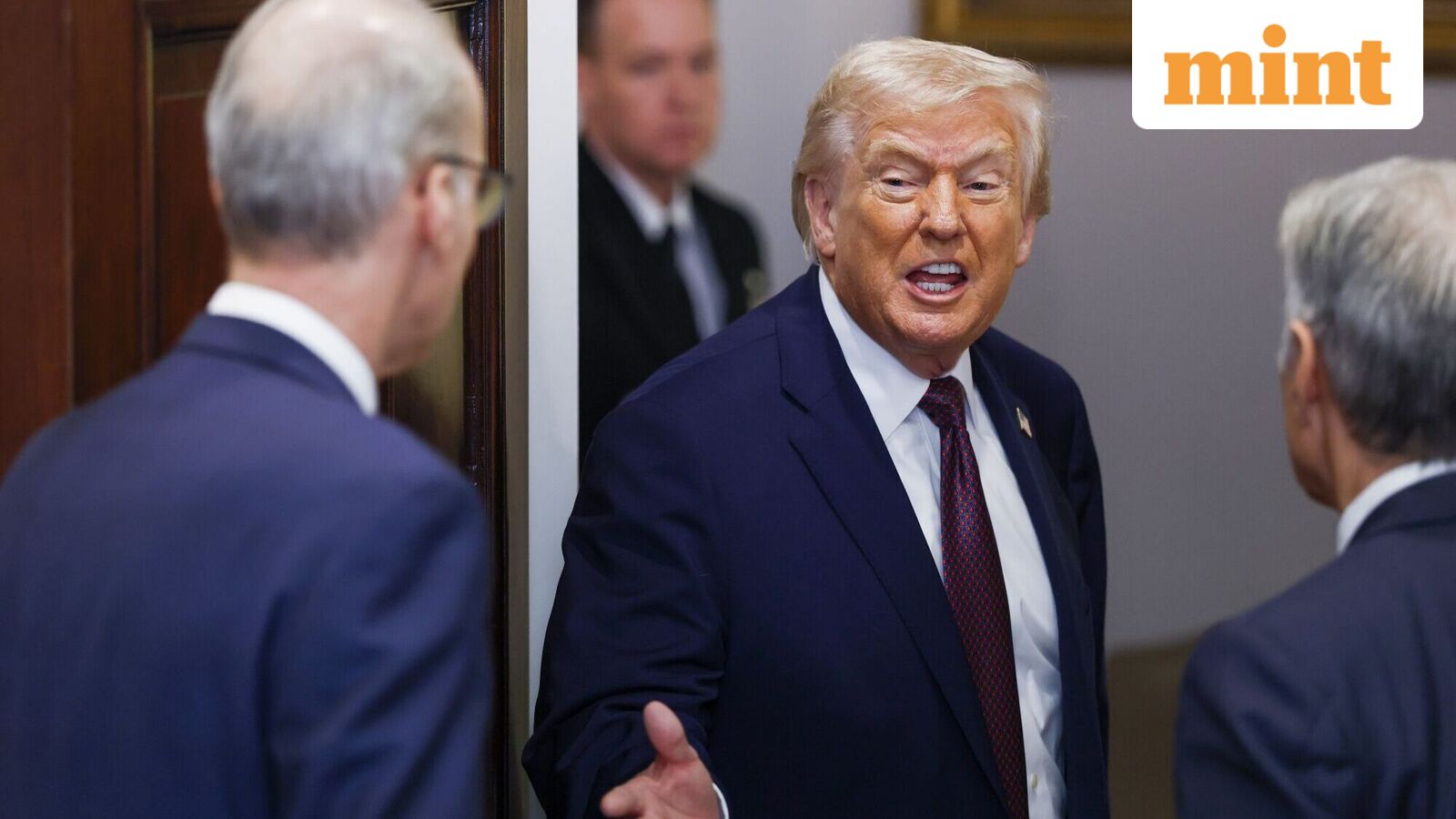
Trump unveils major drug price deals with 9 Pharma giants, launches TrumpRx.gov to cut medicine costs in US
MINT· 2025-12-19 23:46
Core Insights - President Trump announced a set of drug-pricing agreements with nine major pharmaceutical companies, aiming to align U.S. medicine costs with those in Europe [1][2] - The initiative includes a new direct-to-consumer portal, TrumpRx.gov, allowing patients to purchase certain medicines directly from manufacturers [2][4] Group 1: Agreements and Participants - The agreements involve 14 out of 17 drugmakers that Trump previously urged to lower prices, including Amgen, GSK, and Merck [2][3] - Drug companies are motivated to negotiate to avoid potential regulatory measures that could impact their profits [3] Group 2: TrumpRx.gov Functionality - TrumpRx.gov will serve as a central directory for patients to access selected medicines directly from manufacturers' websites [4] - The portal is expected to be fully operational by January, following a promotional launch [4] Group 3: Pricing Details - Highlighted medicines include Amgen's Repatha at $239/month, GSK's Advair Diskus at $89/month, and Merck's Januvia at $100/month [6] - Gilead's Epclusa will be priced at $2,492/month, despite lower costs for insured patients [6] Group 4: Impact on Medicaid and Medicare - Companies committed to launching new medicines in the U.S. at prices comparable to those in other wealthy countries [8] - Medicaid programs are legally entitled to the lowest drug prices, with Bristol Myers Squibb offering Eliquis free to Medicaid [9] Group 5: Industry Response and Future Outlook - Health policy experts express skepticism about the agreements' impact on overall drug prices for most Americans [10] - The agreements do not impose mandatory price controls and leave many brand-name drug costs unchanged [15] - Ongoing discussions with additional manufacturers like AbbVie and Johnson & Johnson may lead to further agreements [14]