SINO BIOPHARM(SBHMY)

Search documents
大行评级|交银国际:上调中国生物制药目标价至9.1港元 上调经调整净利润预测
Ge Long Hui· 2025-08-20 02:37
Group 1 - The core viewpoint of the report indicates that China Biopharmaceutical has experienced double-digit revenue growth in the first half of the year, driven by the expansion of innovative drugs and biosimilars [1] - The company benefited from investment income, leading to significant overall profit growth; however, the core pharmaceutical business's segment profit is slightly under pressure in the short term due to increased R&D investment [1] - Looking ahead, the firm remains optimistic about the rapid market penetration of its already launched innovative products, the long-term value realization of its self-developed pipeline, and the potential impact of recent significant BD transactions on revenue and stock price [1] Group 2 - The profit forecast for China Biopharmaceutical has been raised for the years 2025 to 2027, with adjusted net profit estimates of 5.1 billion, 4.4 billion, and 5.3 billion respectively [1] - The target price has been increased from 8 HKD to 9.1 HKD, maintaining a "buy" rating [1]

中国生物制药(01177):丰富且差异化的创新管线将持续驱动出海授权交易
Zhao Yin Guo Ji· 2025-08-20 02:14
Investment Rating - The report maintains a "Buy" rating for the company with a target price of HKD 9.40, representing a potential upside of 27.2% from the current price of HKD 7.39 [3][6]. Core Insights - The company reported a revenue growth of 10.7% year-on-year to RMB 17.57 billion in 1H25, with adjusted net profit increasing by 101.1% to RMB 3.09 billion. The revenue and adjusted net profit for 1H25 accounted for 54.6% and 79.6% of the full-year forecasts, respectively [1][6]. - The revenue from innovative products grew strongly by 27.2% year-on-year to RMB 7.80 billion, representing 44.4% of total revenue, indicating sustained rapid growth in innovative products [1][6]. - The management maintains a full-year guidance for double-digit organic growth based on the rapid growth of innovative products and stable expectations for generic drug business [1][6]. Financial Summary - For FY25E, the company is projected to achieve sales revenue of RMB 34.38 billion, reflecting a year-on-year growth of 19.1% [2][7]. - Adjusted net profit for FY25E is expected to reach RMB 6.27 billion, with a significant growth rate of 81.3% compared to the previous year [2][7]. - The adjusted earnings per share (EPS) for FY25E is forecasted at RMB 0.33, with an adjusted price-to-earnings (P/E) ratio of 20.5 times [2][7]. Pipeline and Market Potential - The company has a rich and differentiated pipeline, with several products showing potential for global top-tier status. The acquisition of Lixin Pharmaceutical has further strengthened its R&D capabilities [6][9]. - Key products such as TQB2868 (PD-1/TGF-β dual antibody) have shown impressive efficacy in clinical trials, with an overall response rate (ORR) of 63.9% in Phase II trials for pancreatic cancer, significantly higher than traditional chemotherapy [6][9]. - The company is expected to announce multiple important clinical data releases in 2H25, which could further enhance its market position [6][9].
中国生物制药(01177):经调整净利润显著超预期
SPDB International· 2025-08-19 10:23
Investment Rating - The report maintains a "Buy" rating for China Biopharmaceutical (1177.HK) and raises the target price to HKD 9.1, indicating a potential upside of 15% from the current price of HKD 7.91 [5][6]. Core Insights - In 1H25, the adjusted net profit significantly exceeded expectations, primarily benefiting from a doubling of dividend income from Sinovac. The total revenue for 1H25 was approximately RMB 17.57 billion, reflecting a year-on-year increase of 10.7% and a quarter-on-quarter increase of 35.3% [2][3]. - The company reiterated its guidance for double-digit revenue and adjusted net profit growth for the full year, with the oncology segment showing the fastest growth rate among all segments at 24.9% year-on-year [2][3]. Summary by Sections Financial Performance - For 1H25, the company achieved total revenue of RMB 17.57 billion, with adjusted net profit reaching RMB 3.09 billion, marking a year-on-year increase of 101.1% and a quarter-on-quarter increase of 60.7%. The profit margin improved, with gross margin at 82.5% and adjusted net profit margin at 17.6% [2][3]. - The revenue from innovative products accounted for 44.4% of total revenue, with expectations to increase to 50% by the end of the year. The innovative product revenue reached RMB 7.8 billion, growing 27.2% year-on-year [3][4]. Product Development and Market Expansion - The company is expected to finalize its first overseas licensing deal soon, with several research pipelines anticipated to yield data releases shortly. Key products include TQC3721 and TQB2102, among others, which are expected to show promising results in upcoming clinical trials [4][5]. - The management has indicated that the innovative drugs are projected to achieve over 30% revenue growth, supported by new product launches in 2023-2024 [3][4]. Valuation and Forecast - The adjusted net profit estimates for 2025, 2026, and 2027 have been raised to RMB 5.3 billion, RMB 5.8 billion, and RMB 6.5 billion, respectively, due to the inclusion of sustainable BD income and slight adjustments in innovative drug revenue growth [5][6]. - The DCF valuation model, with a WACC of 8.2% and a perpetual growth rate of 3%, supports the new target price of HKD 9.1 [5][6].
中国生物制药(01177):中报业绩超预期,收购礼新进一步扩充创新管线
Shenwan Hongyuan Securities· 2025-08-19 10:21
Investment Rating - The report maintains a "BUY" rating for the company, with a target price raised from HK$4.9 to HK$10.2, indicating a potential upside of 29% [6][17]. Core Insights - The company reported a 10.7% year-on-year increase in revenue for the first half of 2025, reaching Rmb17.58 billion, and a 12.3% increase in net profit to Rmb3.39 billion. Adjusted net profit, excluding one-off gains, surged by 101.1% to Rmb3.09 billion, surpassing expectations [6][13]. - The gross margin improved by 0.4 percentage points to 82.5%, while the selling, general, and administrative expenses ratio decreased by 0.2 percentage points to 42.9% [6][13]. - R&D expenses rose by 23.6% to Rmb3.19 billion, with an R&D expense ratio of 18.1%. The company has a cash reserve of approximately Rmb30.5 billion and net cash of Rmb18.5 billion as of June 2025 [6][13]. Summary by Sections Financial Performance - Revenue for the first half of 2025 was Rmb17.58 billion, a 10.7% increase year-on-year. Net profit reached Rmb3.39 billion, up 12.3% year-on-year. Adjusted net profit, excluding one-off items, was Rmb3.09 billion, reflecting a 101.1% increase [6][13]. - The company’s gross margin increased to 82.5%, and the SG&A ratio decreased to 42.9% [6][13]. Innovative Product Growth - Sales of innovative products grew by 27% year-on-year to Rmb7.80 billion, contributing 44% to total revenue in the first half of 2025, up from 39% in the same period last year [7][14]. - The company launched two innovative products in the first half of 2025 and expects to increase the number of innovative products to 21 by 2025 and over 35 by 2027 [8][15]. Acquisition and Pipeline Expansion - The acquisition of LaNova Medicines for a net consideration of US$500 million is expected to enhance the company’s R&D capabilities and expand its innovative pipeline [9][16]. - LaNova Medicines has eight clinical-stage products and over 20 pre-clinical assets, with collaborations with major pharmaceutical companies [9][16].
中国生物制药(01177):LM-302“CLDN18.2 ADC”纳入突破性治疗药物程序
Zhi Tong Cai Jing· 2025-08-19 08:53
Core Insights - China National Pharmaceutical Group's subsidiary, Lixin Pharmaceutical Technology, has developed an innovative drug LM-302, which has been included in the Breakthrough Therapy Designation (BTD) program by the Center for Drug Evaluation (CDE) in China for the treatment of CLDN18.2 positive locally advanced or metastatic gastric and gastroesophageal junction adenocarcinoma in combination with PD-1 monoclonal antibody [1][2] - LM-302 is a first-in-class antibody-drug conjugate (ADC) targeting CLDN18.2, showing clinical efficacy in patients with gastric cancer, pancreatic cancer, and biliary tract cancer, including those with low expression of Claudin 18.2 and PD-L1 [1] - Recent data presented at the 2025 American Society of Clinical Oncology (ASCO) annual meeting indicated an overall response rate (ORR) of 65.9% and a disease control rate (DCR) of 85.4% in 41 evaluable patients, with ORR of 71.9% and DCR of 96.9% in 32 patients with CLDN18.2 expression ≥25% [1] Clinical Development - LM-302 is currently undergoing Phase III clinical trials in China for the treatment of CLDN18.2 positive locally advanced or metastatic gastric and gastroesophageal junction adenocarcinoma after progression on two or more lines of systemic therapy [2] - The inclusion in the Breakthrough Therapy Designation program is expected to accelerate the approval process for LM-302, providing innovative treatment options for more CLDN18.2 positive gastric cancer patients [2]


中国生物制药:LM-302“CLDN18.2 ADC”纳入突破性治疗药物程序
Zhi Tong Cai Jing· 2025-08-19 08:47
Core Viewpoint - China National Pharmaceutical Group's subsidiary, Lixin Pharmaceutical Technology, has developed the innovative drug LM-302, which has been included in the Breakthrough Therapy Designation (BTD) program by the CDE for treating CLDN18.2 positive locally advanced or metastatic gastric and gastroesophageal junction adenocarcinoma in combination with PD-1 monoclonal antibody [1][2] Group 1: Drug Development and Clinical Trials - LM-302 is a first-in-class antibody-drug conjugate (ADC) targeting CLDN18.2, showing clinical efficacy in patients with gastric cancer, pancreatic cancer, and biliary tract cancer [1] - The latest research data presented at the 2025 ASCO annual meeting indicates an overall response rate (ORR) of 65.9% and a disease control rate (DCR) of 85.4% in 41 evaluable patients [1] - In patients with CLDN18.2 expression ≥25%, the ORR was 71.9% and the DCR was 96.9%, demonstrating good anti-tumor activity and controllable safety in CLDN18.2 positive patients [1] Group 2: Regulatory and Market Implications - LM-302 is currently undergoing Phase III clinical trials in China for treating CLDN18.2 positive locally advanced or metastatic gastric and gastroesophageal junction adenocarcinoma after progression on second-line or higher systemic therapy [2] - The inclusion in the Breakthrough Therapy Designation program is expected to accelerate the market entry of LM-302, providing innovative treatment options for more CLDN18.2 positive gastric cancer patients [2]
中国生物制药(01177) - 自愿公告 - LM-302「CLDN18.2 ADC」纳入突破性治疗...
2025-08-19 08:33
香港交易及結算所有限公司及香港聯合交易所有限公司對本公告的內容概不負責,對其準確性或完 整性亦不發表任何聲明,並明確表示,概不對因本公告全部或任何部份內容而產生或因倚賴該等內 容而引致的任何損失承擔任何責任。 中國生物製藥有限公司(「本公司」,連同其附屬公司統稱「本集團」)董事會(「董事會」)宣佈,本集團全 資附屬公司禮新醫藥科技(上海)有限公司(「禮新醫藥」)自主研發的創新藥LM-302「CLDN18.2 ADC」 已被中國國家藥品監督管理局藥品審評中心(CDE)納入突破性治療藥物程序(BTD),用於聯合PD-1單 抗一線治療CLDN18.2陽性的局部晚期或轉移性胃及胃食管交界部腺癌。 LM-302是一款潛在同類首創(first-in-class)的靶向CLDN18.2的抗體偶聯藥物(ADC),已在胃癌、胰腺 癌和膽道癌患者中觀察到臨床療效,且Claudin 18.2低表達和PD-L1低表達的患者也有臨床獲益。 2025年美國臨床腫瘤學會(ASCO)年會上,禮新醫藥公布了LM-302聯合PD-1單抗治療胃癌的最新研 究數據:在41例療效可評估的患者中,ORR為65.9%,DCR為85.4%。CLDN18.2 ...
花旗给予中国生物制药买入评级
Xin Lang Cai Jing· 2025-08-19 07:50
Group 1 - Citigroup gives a "Buy" rating to China Biologic Products with a target price raised to HKD 10.5, expecting over 19 new products to be approved in the next three years, many with sales potential exceeding HKD 20 billion [1] - CMB International maintains a "Buy" rating for Sea Group, raising the target price to HKD 28, citing significant profit growth and improved profitability due to strong volume and price increases in the first half of the year [4] - CITIC Securities maintains a "Buy" rating for JD Health, highlighting strong sales growth in pharmaceuticals and health products, and the efficiency improvements from AI medical applications [2] Group 2 - CITIC Securities maintains a "Buy" rating for Netease-S, raising the target price to HKD 240, driven by steady growth in gaming revenue and expectations of new game launches boosting future income [3] - CITIC Securities maintains a "Buy" rating for Leap Motor, raising the target price to HKD 89.2, with expectations of accelerated new car cycles leading to sustained sales and profit growth [5] - CITIC Securities maintains a "Buy" rating for Xtep International, noting robust growth driven by e-commerce and double-digit growth in same-store sales for its subsidiary [6] Group 3 - CICC maintains an "Outperform" rating for Standard Chartered Group, with second-quarter results exceeding expectations, particularly in non-interest income and wealth management [7] - Huaxing Securities maintains a "Buy" rating for Tencent Holdings, raising the target price to HKD 685, citing strong performance across all business segments, particularly in AI-driven advertising revenue [8]



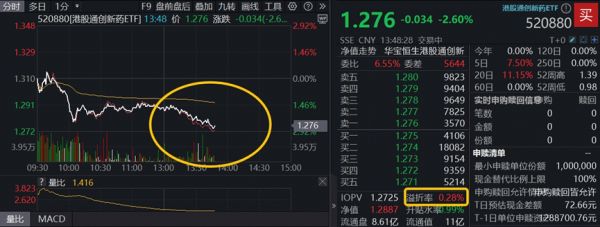
创新药意外跳水,中国生物制药领跌7%!行情到哪了?
Xin Lang Cai Jing· 2025-08-19 06:45
Core Viewpoint - The Hong Kong stock market for innovative drugs experienced a notable pullback, with the Hong Kong Innovative Drug ETF (520880) declining by 2.6% on August 19, despite a positive sentiment indicated by a real-time premium rate of 0.28% [1][3]. Group 1: Company Performance - China National Pharmaceutical Group reported a revenue of 17.57 billion yuan and a net profit of 3.39 billion yuan for the first half of the year, reflecting year-on-year growth of 10.7% and 140.2% respectively, marking three consecutive reporting periods of double-digit stable growth [3]. - The strong performance of China National Pharmaceutical Group was attributed to better-than-expected revenue growth from innovative products and dividend income [3]. Group 2: Market Trends - As of August 18, the Hong Kong Innovative Drug ETF (520880) tracked the Hang Seng Hong Kong Innovative Drug Selected Index, which has seen a year-to-date increase of 112.33%, significantly outperforming the Hang Seng Index (23.50%) and the Hang Seng Technology Index (22.05%) by 86.82 and 87.46 percentage points respectively [3]. - The adjustment in the market is viewed as a technical correction following a rapid increase, with long-term support expected from domestic policy and overseas value recognition for Chinese innovative drugs [3][6]. Group 3: Industry Outlook - The innovative drug industry is anticipated to undergo a value reassessment, supported by national policy and a clear trend of industry development and upgrading [5][6]. - The innovative drug sector is entering a 2.0 era, with domestic products gradually transitioning from following to leading innovation, benefiting from a favorable environment including engineer advantages, rich clinical resources, and supportive policies [6]. - The Hong Kong Innovative Drug ETF (520880) is the first ETF to passively track the Hang Seng Hong Kong Innovative Drug Selected Index, focusing on the innovative drug industry chain with a high concentration of leading stocks [6].
中国生物制药 - 2025 年上半年销售额和核心利润符合预期;业务发展仍是近期重点-Sino Biopharmaceutical-1H25 Sales and Core Profit In Line; BD Remains A Near-term Focus
2025-08-19 05:42
Summary of Sino Biopharmaceutical Conference Call Company Overview - **Company**: Sino Biopharmaceutical (1177.HK) - **Industry**: China Healthcare - **Current Stock Price**: HK$7.91 (as of August 18, 2025) - **Market Capitalization**: HK$11,783 million - **Price Target**: HK$8.40, indicating a 6% upside potential [5][68] Key Financial Highlights - **1H25 Revenue**: Rmb17.5 billion, representing a 10.7% year-over-year increase - **Core Profit**: Rmb3.1 billion, a significant increase of 101% year-over-year - **Excluding Dividend Income**: Core profit growth would have been 13.0% year-over-year in 1H25 [7] - **Sales Growth from New Products**: Increased by 27% year-over-year in 1H25, on track to meet full-year guidance of 25% [7] Margin and Efficiency - **Gross Profit Margin (GPM)**: 82.5%, an increase of 0.4 percentage points due to biosimilar production capacity expansion and operational efficiency [2] - **SG&A Ratio**: Decreased by 0.2 percentage points year-over-year, attributed to better per capita output and digitalization tools [2] - **R&D Expense Ratio**: Increased by 1.9 percentage points year-over-year to 18.1%, with only ~4.3% capitalized, indicating strong commitment to pipeline advancement [2] Pipeline and Product Development - **Upcoming Drug Launches**: Five innovative drugs expected to launch in 2026 and over ten in 2027 [3] - **Late-stage Candidates**: Management highlighted additional candidates with estimated peak sales of over Rmb2 billion in China [3] - **Key Pipeline Drugs**: - TQB3616 (CDK2/4/6): Estimated peak sales of Rmb2 billion, targeting 50% of China's breast cancer patient base - Zongertinib (HER2 TKI): Estimated peak sales of Rmb1.5 billion, indicated for HER2+ NSCLC [8] Strategic Focus - **Internationalization Strategy**: Remains a top priority, with management confident in securing out-licensing deals in the near future [7] - **Growth Expectations**: Management anticipates accelerated growth driven by an increasing number of new drugs, which are expected to contribute approximately 60% of revenue by 2027 [7] Risks and Considerations - **Upside Risks**: - Early launches of key pipeline drugs - Smaller-than-expected price cuts from centralized procurement rounds - Potential for accretive M&A activity or positive in-licensing deals [13] - **Downside Risks**: - Delays in the launch of key pipeline drugs - Greater-than-expected price cuts and margin erosion from centralized procurement - Impact from adjuvant drug policies [13] Valuation Methodology - **Discounted Cash Flow (DCF)**: WACC of 9.6% and a perpetual growth rate of 3% - **Sum-of-the-Parts (SOTP) Valuation**: - Generics valued at 10x 2025e P/E - Existing innovative drugs & biosimilars at 2.5x P/peak sale - Pipeline innovative drugs at 2.5x P/peak sale - Implied business development value of Rmb20 billion [11] Conclusion - **Investment Rating**: Overweight, with an attractive industry view [5][68] - **Future Outlook**: Positive growth trajectory anticipated, driven by new product launches and strategic internationalization efforts.